If you do a Google search of “F. Edwin Church” the first result is for Frederic Edwin Church, the famous landscape painter and Hudson River School artist. Herein lies the problem because F. Edwin Church is an entirely different artist, albeit one named exactly after the search’s first result. (In fairness, Google does fetch the correct F. Edwin Church for the second and third results.)
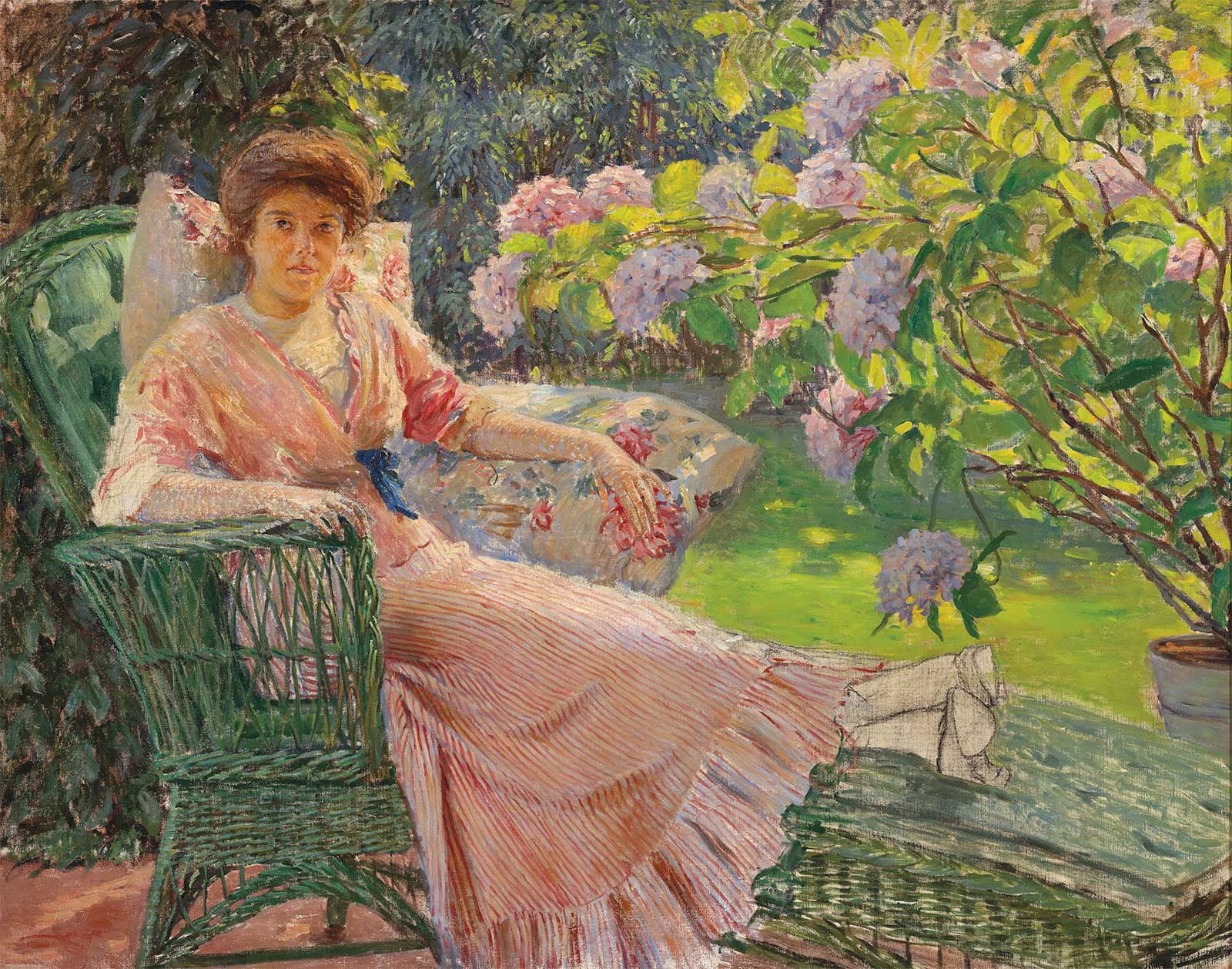
F. Edwin Church (1876-1975), Alice in the Garden. Oil on canvas, 36 x 46 in. © Jud McCrehin Photography, 2024.
Church (F. Edwin from here on out), an East Coast impressionist painter, was the subject of a New York retrospective in 1975, the year he died. The artist was 98 years old at the time but attended the event and was even photographed in the gallery by the Oyster Bay Guardian. Now, 50 years since that momentous salute to his career, the North Shore Historical Museum is celebrating Church once again with the exhibition Revealing F. Edwin Church, American Impressionist. The exhibition runs through August 17.
The show is organized by Jan Wiley, the director of F. Edwin Church Catalogue Raisonné Project. Wiley was married to Church’s grandson who died in 2001. Many of the works from the exhibition are loaned through Wiley as part of a collaboration with the F. Edwin Church Catalogue Raisonné Project. A handful of the works have never been on view, and several (including Oyster Bay House and Girl in White) have never been printed in a magazine before now.
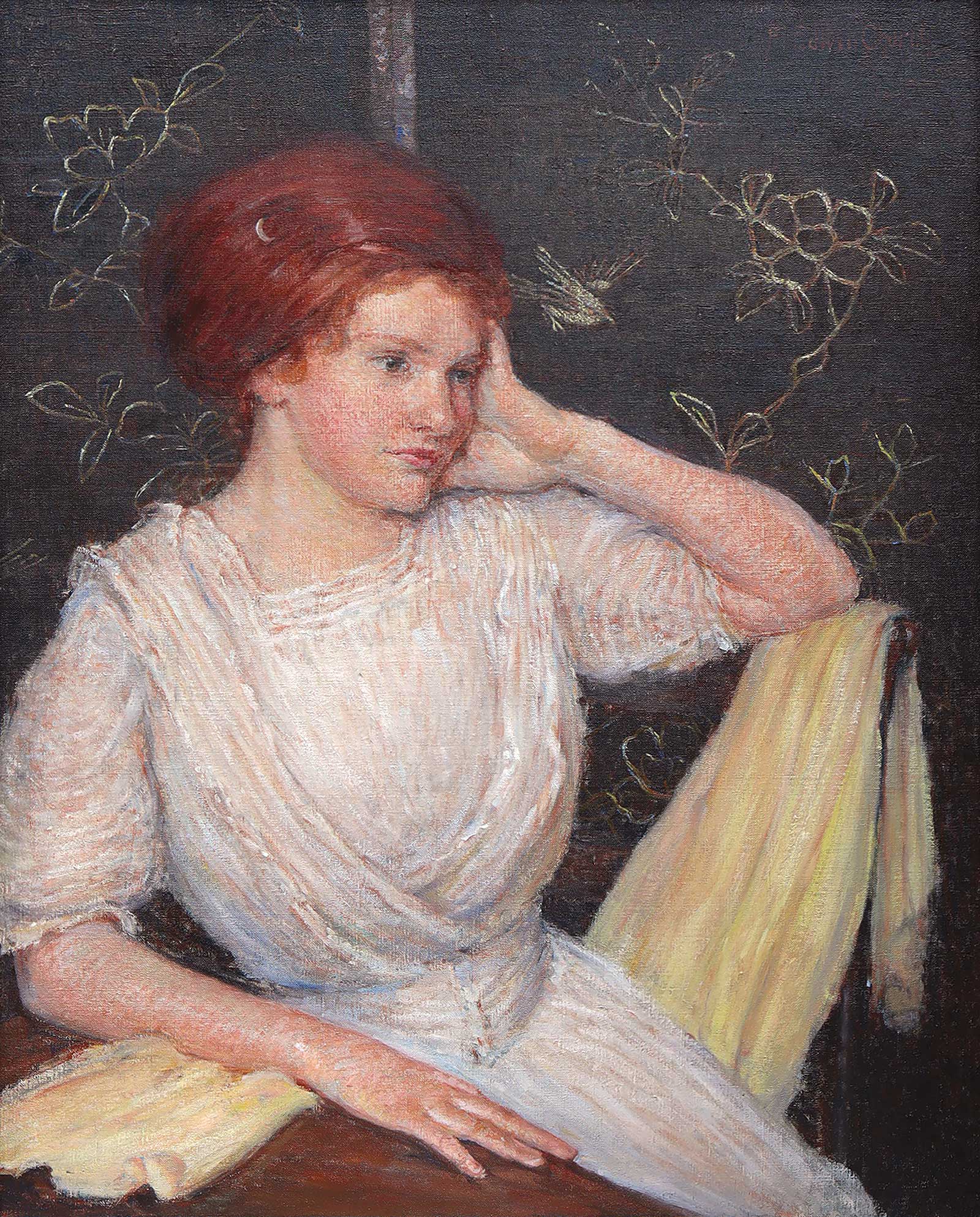
F. Edwin Church (1876-1975), Girl in White, 1910. Oil on canvas, 32 x 26 in.
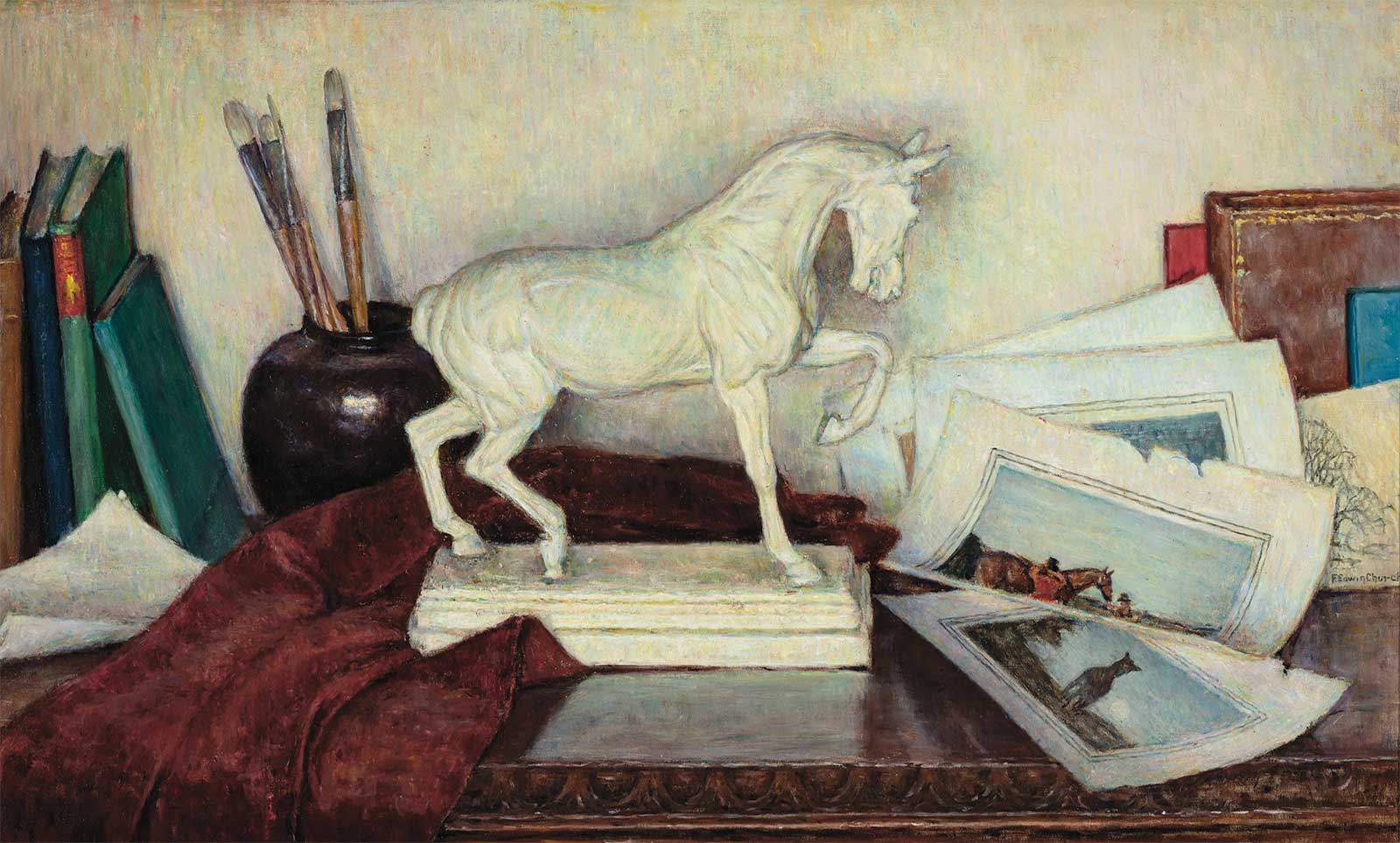
F. Edwin Church (1876-1975), The Horse Statue, ca. 1952. Oil on canvas, 22 x 36 in. © Jud McCrehin Photography, 2024.
Wiley notes that this exhibition is an opportunity for museumgoers to learn about an important artist whose works are not as widely seen or appreciated—and should be. “That’s a very vital part of this exhibition. There are a lot of artists from that era that deserve recognition and they simply didn’t get it. Like today, there are superstars who get picked up by the press and promoted, and yet we all know there are other excellent people who are doing work just as good. That’s F. Edwin Church,” Wiley says. “I think in the past 15 years or so, we’re seeing museums and galleries bringing up lesser-known artists because they see the kind of work they were doing. It allows us to explore art from a different era, art that maybe wasn’t seen enough back when it was created.”
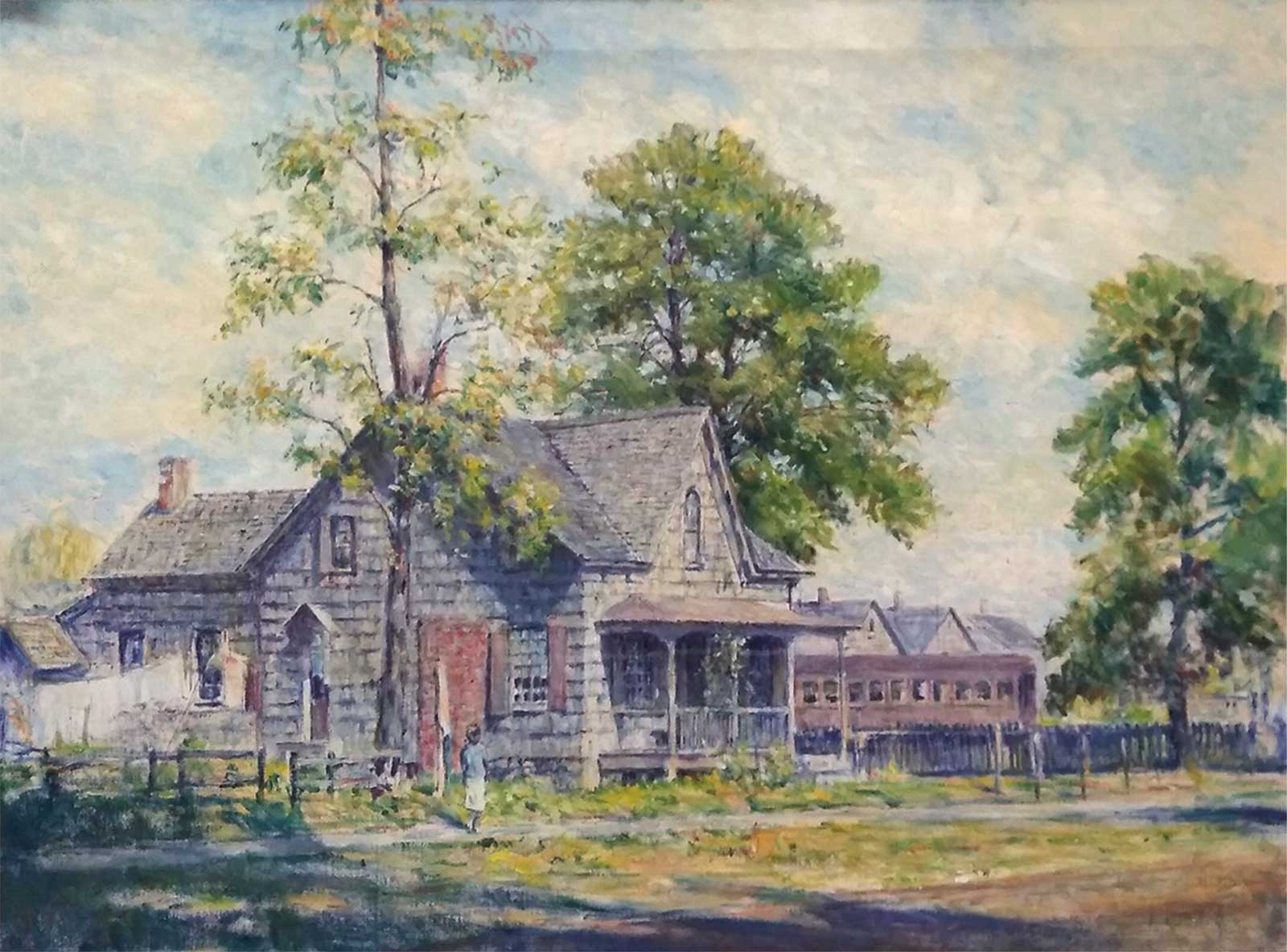
F. Edwin Church (1876-1975), Oyster Bay House, Oyster Bay, New York, 1940. Oil on canvas, 30 x 40 in. Collection of Oyster Bay Historical Society.
While the works are exceptional examples of American impressionism, Church’s story should thrill visitors to the exhibition. The grandson of Austin Church, a medical doctor who pioneered baking soda and the Arm & Hammer brand, Church grew up in a wealthy family on the East Coast. Around 1899, he attended the Art Students League in New York and studied under Frank Vincent Dumond, Kenyon Cox and John Henry Twachtman. He later went to Académie Julian in Paris. Back in the United States, by 1916, Church won the Thomas B. Clarke Prize from the National Academy of Design for his work The Peacock Girl, a sensational painting that traveled all around the country and was later lost in a fire.
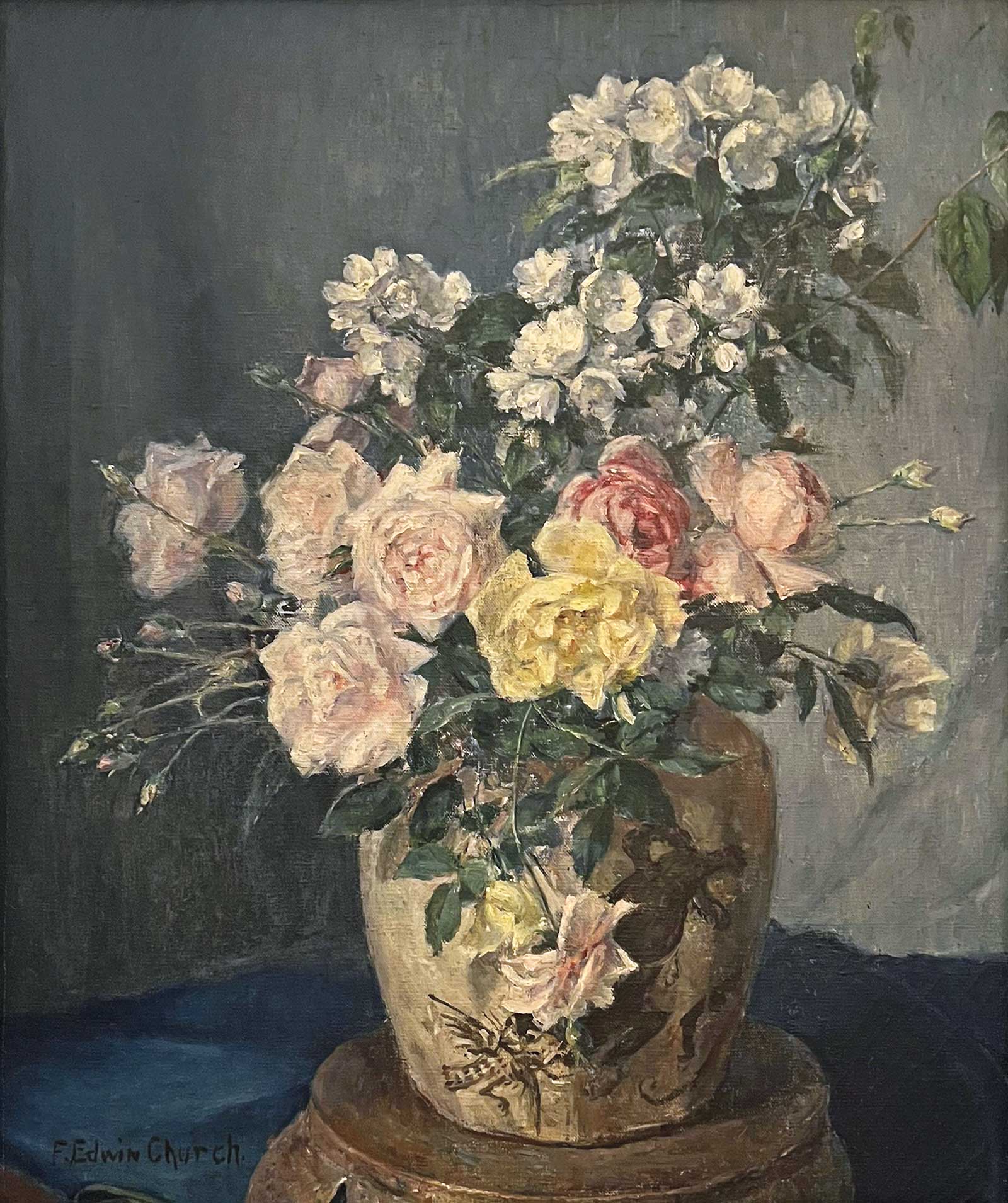
F. Edwin Church (1876-1975) Roses, ca. 1955. Oil on canvas, 24 x 20 in. © 2025 The F. Edwin Church Catalogue Raisonne.
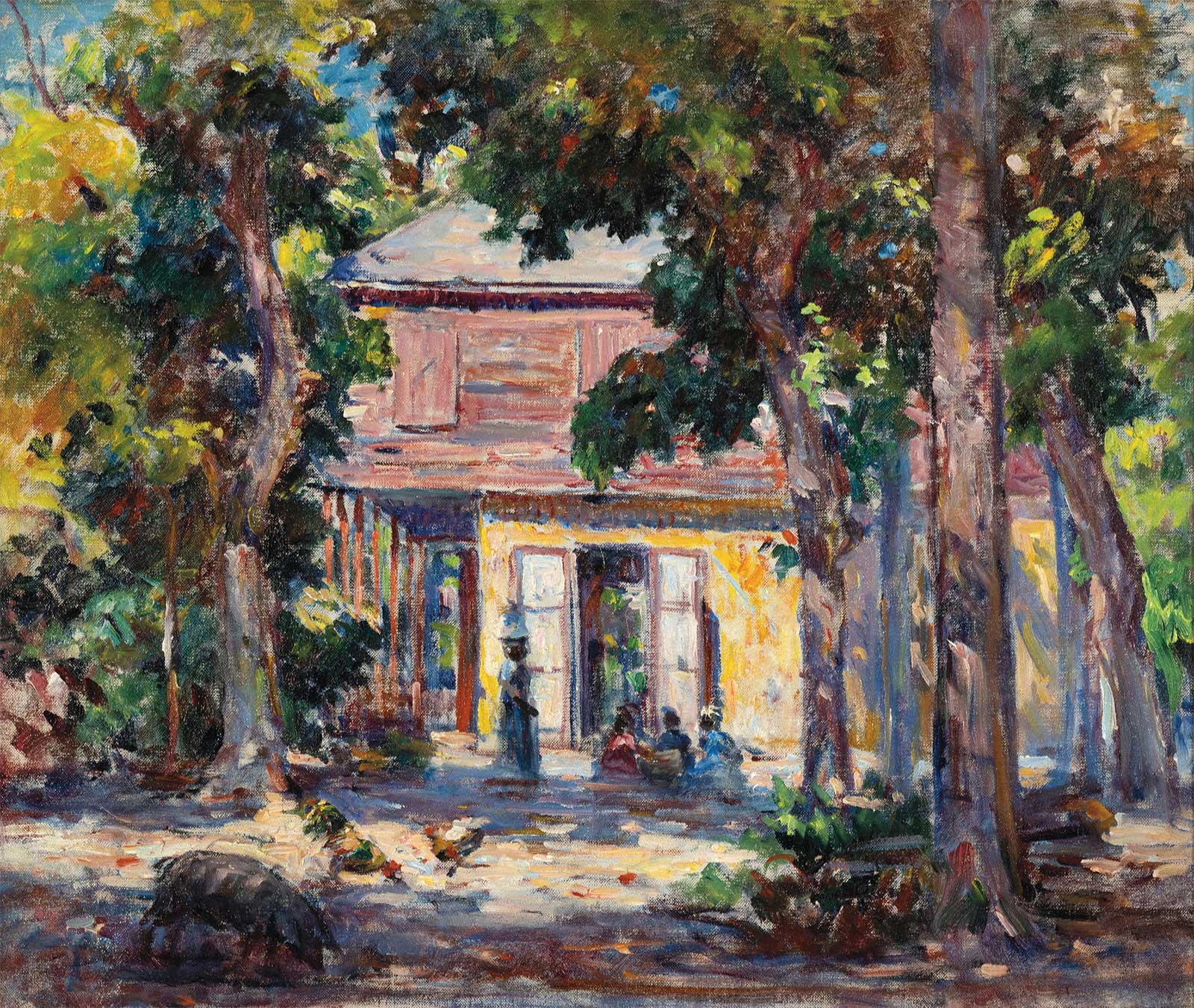
F. Edwin Church (1876-1975) Haitian Yard , ca. 1927. Oil on canvas, 20 x 24 in. © 2024 Jud McCrehin Photography.
Church lived a long life that spanned a great deal of American history: he was born only 11 years after the Civil War, yet saw the nation transition from horses and steam locomotives to automobiles airplanes and even space travel. He was alive for two world wars, including Spanish American War, Korean War and the Vietnam War, and was alive at the same time as Winslow Homer, John Singer Sargent, Frederic Remington and Andy Warhol. His long life allowed him to work in many mediums, including bronze, and he was active throughout his long career. —
Powered by Froala Editor