When you take in the array of prints and paintings in John Sloan and His Students, the new exhibition at the Delaware Art Museum, you realize, with some incredulity, just how many notable American artists studied under him at the Art Students League in New York from 1914, when he first began to teach there, and 1932, his last year at the League. The list reads like a who’s who of American painting, printmaking, illustration and design, including names like Peggy Bacon, Isabel Bishop, Don Freeman, Reginald Marsh, John Graham, Selma Gubin, Alexander Calder and Adolph Gottlieb. Not all of these are household names—at least in households where American art history is a topic of discussion—but their work shows that John Sloan’s influence was outsized, spanning the time of The Eight, the Ashcan School, the Armory Show, art as political activism, the shift to the Southwest and Taos, the rise of the American Scene and the WPA era, and reaching even into abstract expressionism post-World War II. When you realize that Sloan, by his own admission, was not a terribly successful artist, you really have to marvel at the myriad ways in which his drawing style, especially in his figurative work, and his approach to composition, makes subtle—and sometimes not-so-subtle—appearances in the works of his students.
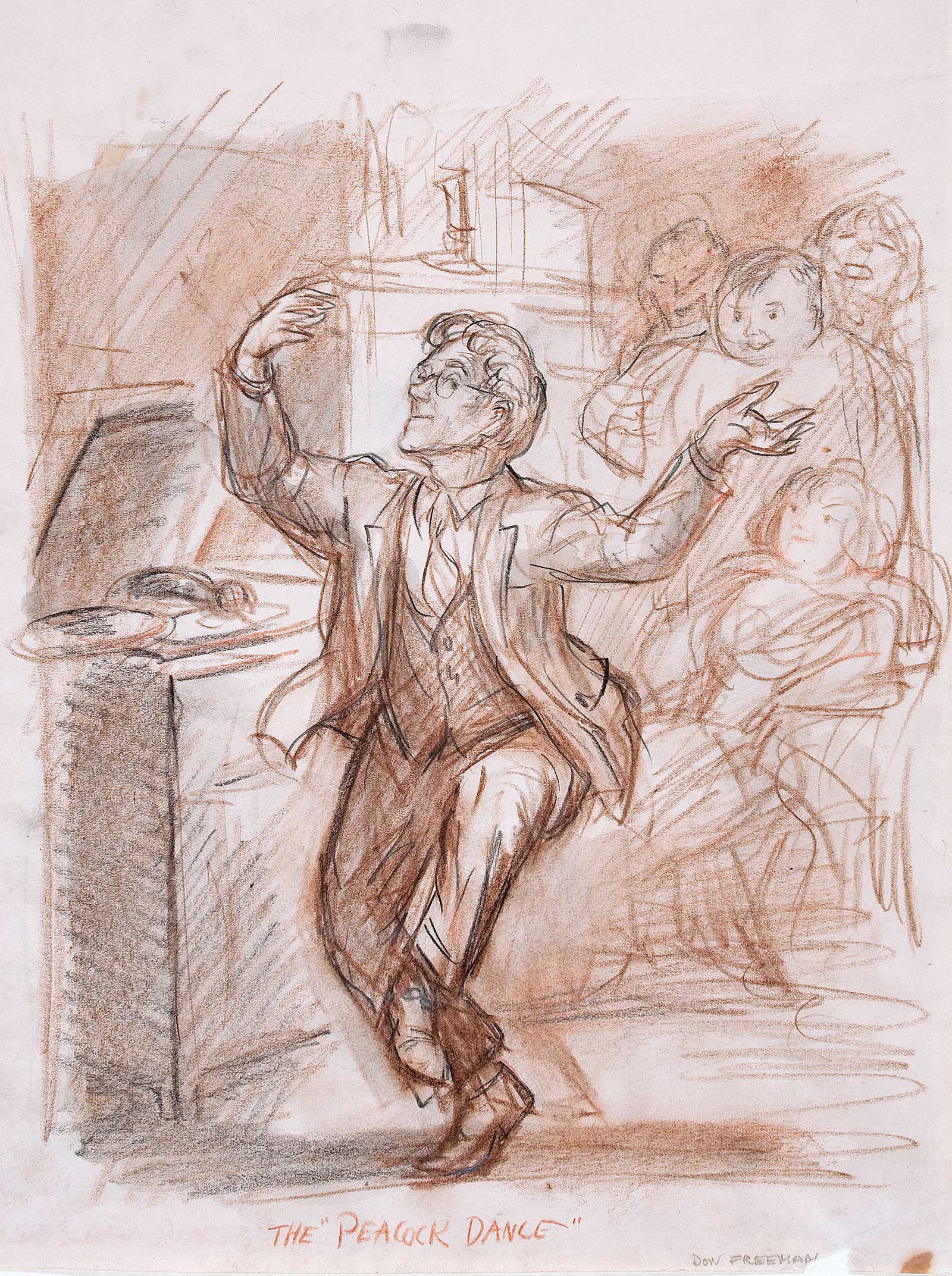
Don Freeman (1908-1978), The Peacock Dance, ca. 1941. Crayon and graphite on paper, sheet: 11 x 87⁄16 in. Delaware Art Museum, Gift of Helen Farr Sloan, 1978 © Roy Freeman.
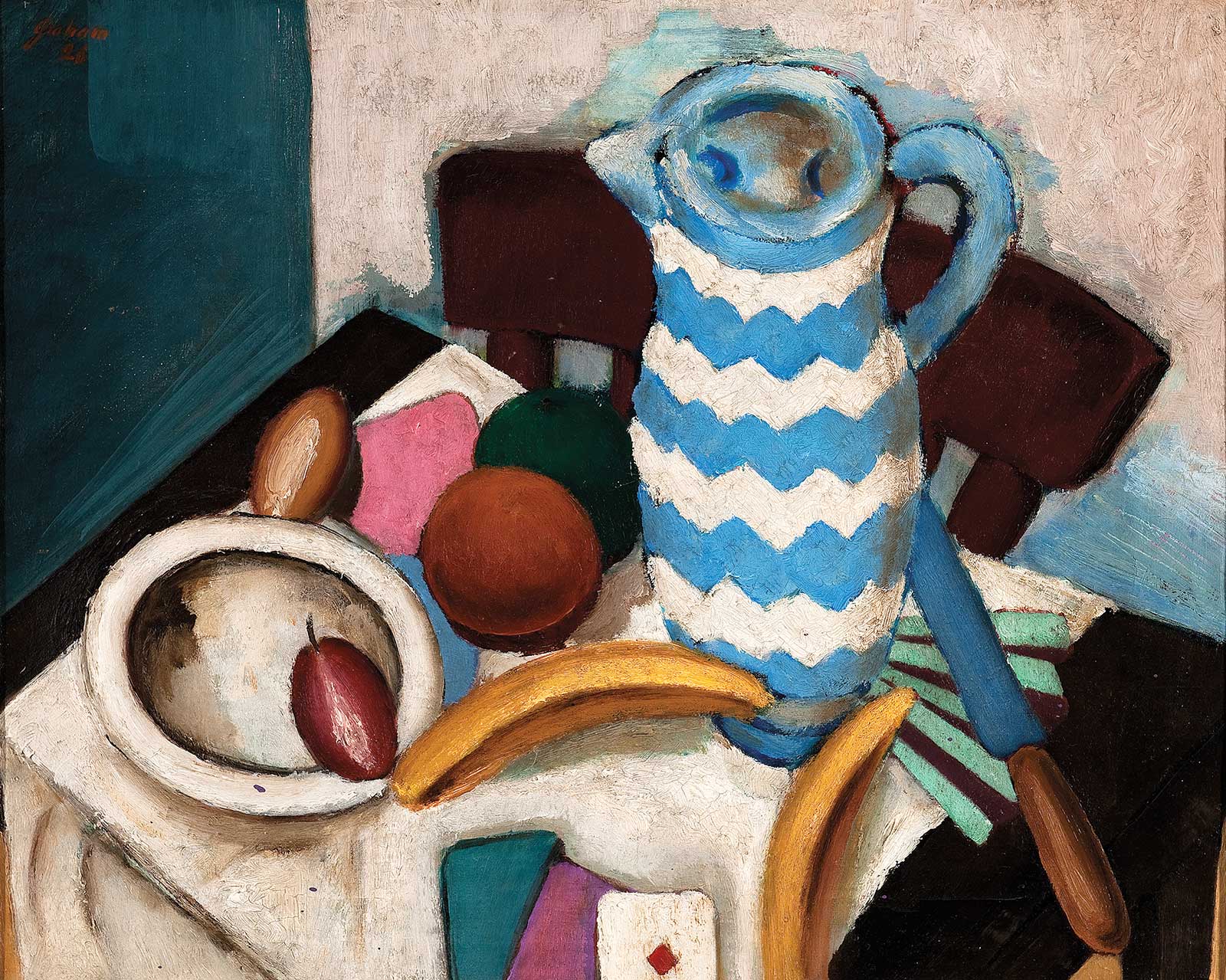
John Graham (1881-1961), Still Life—Pitcher and Fruit, 1926. Oil on canvas, 15¾ x 19½ in. Delaware Art Museum, Gift of Helen Farr Sloan, 1975. © Estate of the Artist.
John Sloan’s early paintings, as part of The Eight, which included luminaries like Robert Henri, George Luks and Everett Shinn, are loose, academic, impressionist works with strong light and deep shadows. The influence on Sloan of artists from Rembrandt to Hals, from Velásquez to Goya evolved into a painting and etching facture combining subjects from everyday life, deep shadows and brightly lit passages, and a drawing style that is one part Renaissance cross-hatching, one part lines, lines like live wires, that barely contain their subjects. As a result, Sloan’s art is simultaneously classical and modern, realistic and expressive. It was a way of presenting the vitality of ordinary people, of representing the unrepresented. From his earliest paintings and etchings, you see the ripples in the spacetime of the bodies and spaces he paints. It is as if Sloan saw the hidden motions of the universe, the rippling, crackling energies beneath the surface of reality and depicted them as if they were apparent to all of us. Maybe it’s no wonder that his students sought to infuse themselves with his way of seeing, his way of making art.
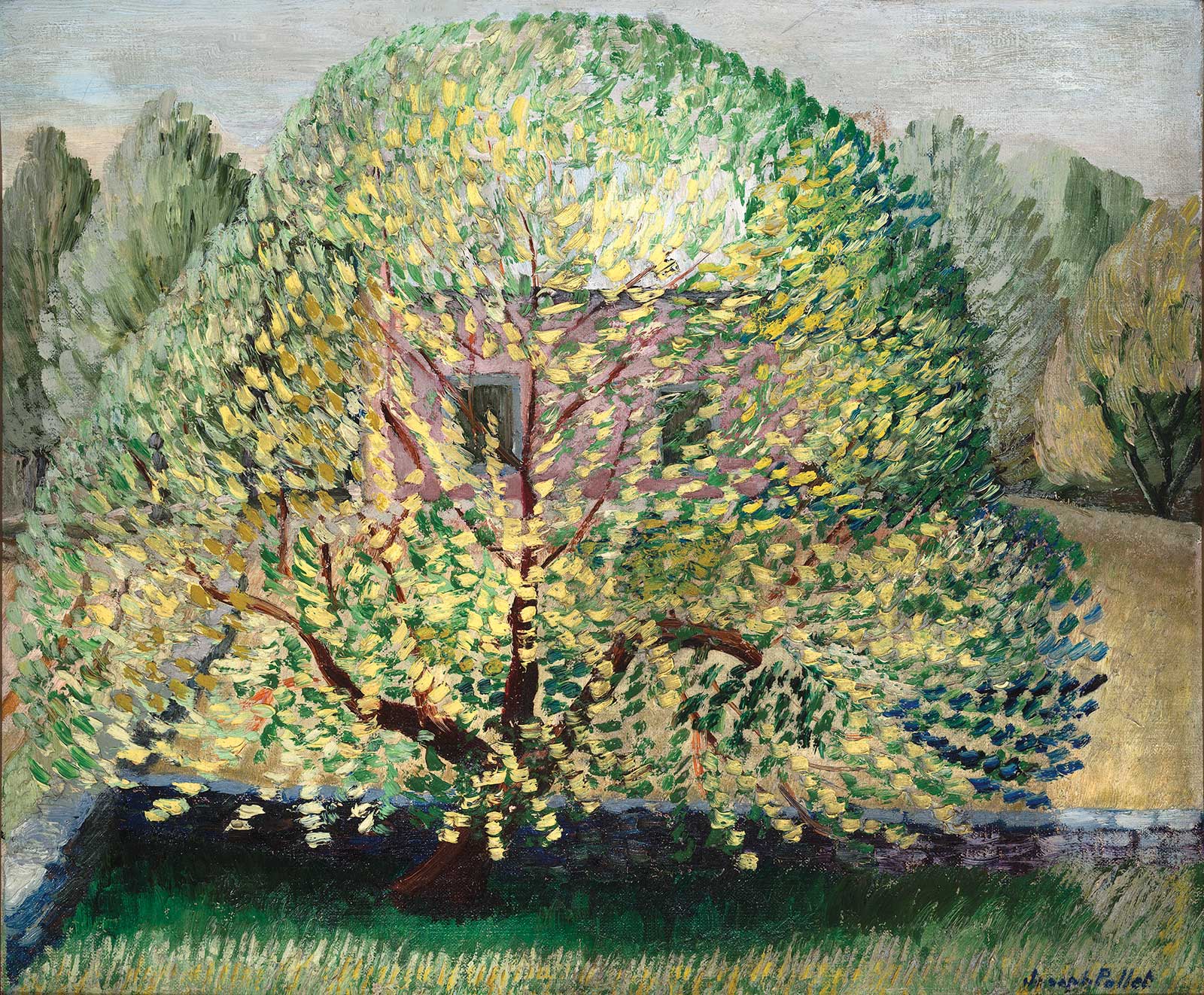
Joseph Pollet (1897-1979), Crabapple Tree, ca. 1930. Oil on canvas, 19¾ x 23¾ in. Delaware Art Museum, Gift of Helen Farr Sloan, 1975. © Estate of the Artist.
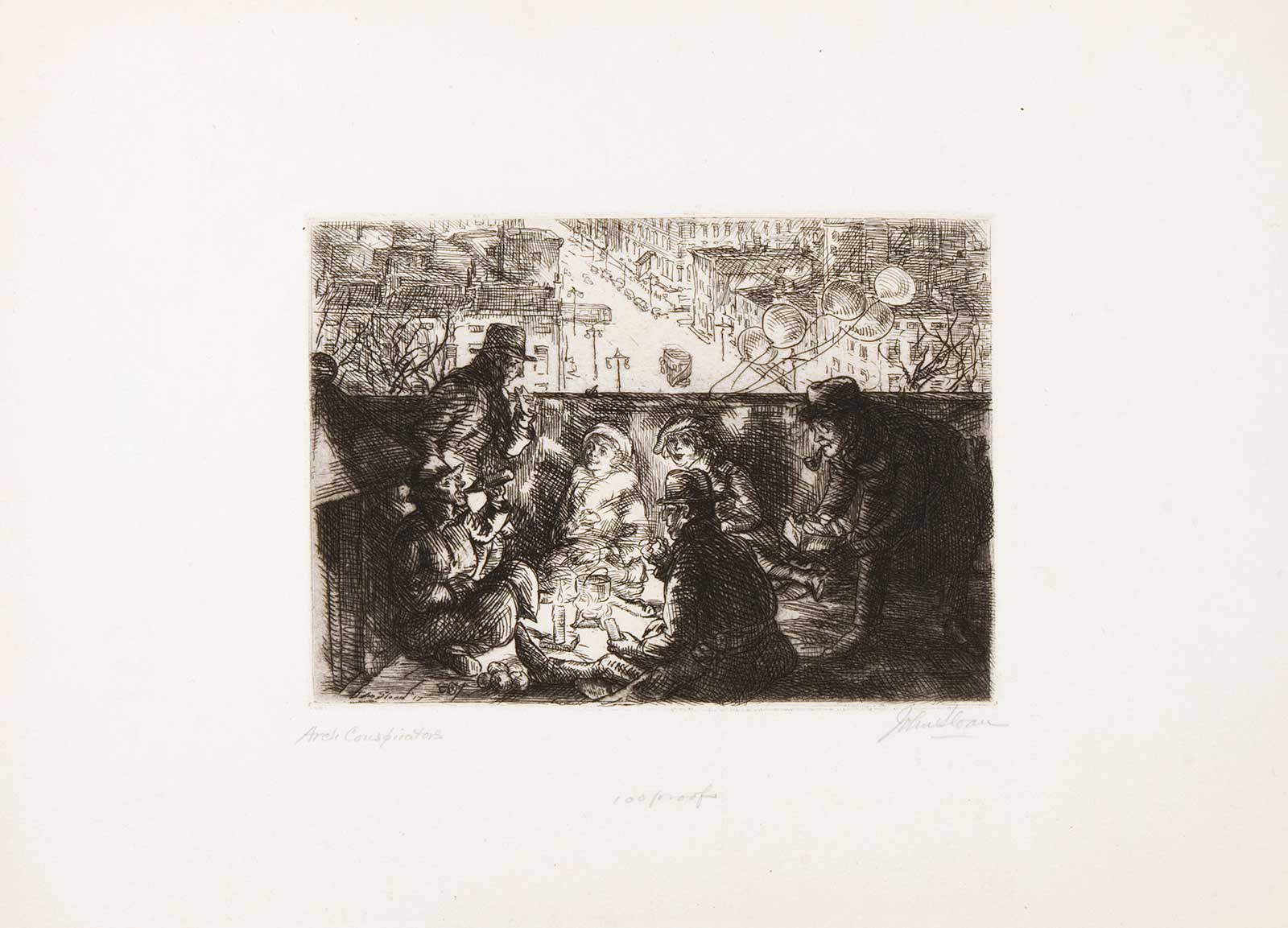
John Sloan (1871-1951), Arch Conspirators, 1917. Etching, plate: 41⁄8 x 513⁄16 in. Delaware Art Museum, Gift of Helen Farr Sloan, 1998. © Delaware Art Museum / Artists Rights Society (ARS), New York.
The Peacock Dance, a drawing by Don Freeman, circa 1941, actually captures Sloan himself in a joyous, silly moment, and in a style much like Sloan’s. Freeman’s depictions of life on and behind the Broadway stage and his celebrated series of children’s books featuring Corduroy, the big-hearted teddy bear who always seems to be in trouble, owe a great debt to Sloan’s joyous line and humble subjects.
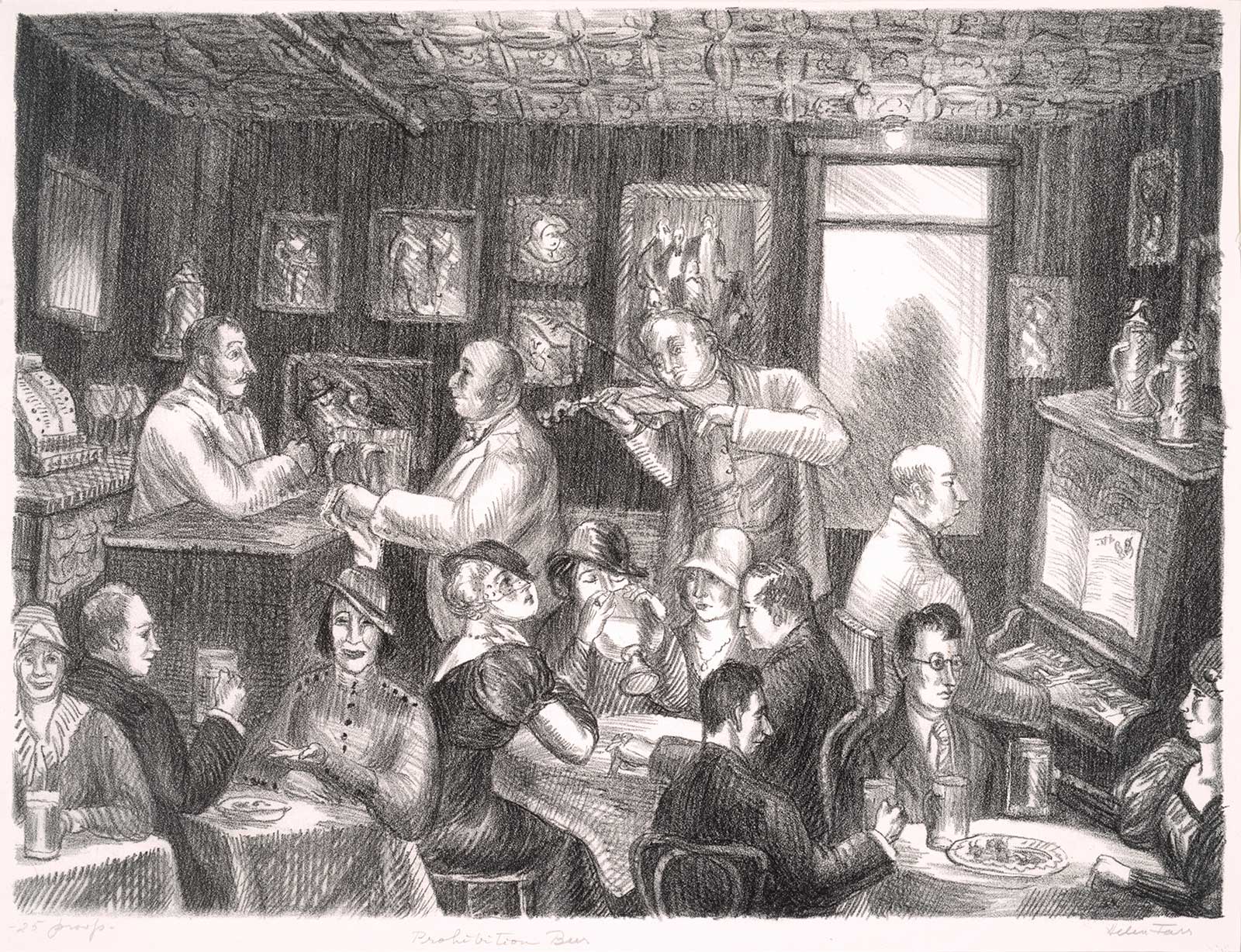
Helen Farr Sloan (1911-2005), Prohibition Beer, ca. 1933. Lithograph, composition: 101/4 × 137⁄8 in. (26 × 35.2 cm) Delaware Art Museum, Bequest of Helen Farr Sloan, 2015 © Delaware Art Museum / Artists Rights Society (ARS), New York.
Helen Farr (who would become Helen Farr Sloan), takes some, but not all, of her husband’s live wire line in her lithograph of another Art Students League instructor, Homer Boss, as he demonstrates the anatomy of the human foot. In a second lithograph, Prohibition Beer, Farr Sloan captures some of the illicit coziness of a speakeasy, echoing John Sloan’s 1917 etching, Arch Conspirators, which commemorates a midnight picnic in which, as the exhibition text states, “Sloan joined some of his students and the artist Marcel Duchamp atop Washington Square Arch. While there, they declared Greenwich Village an independent republic.”
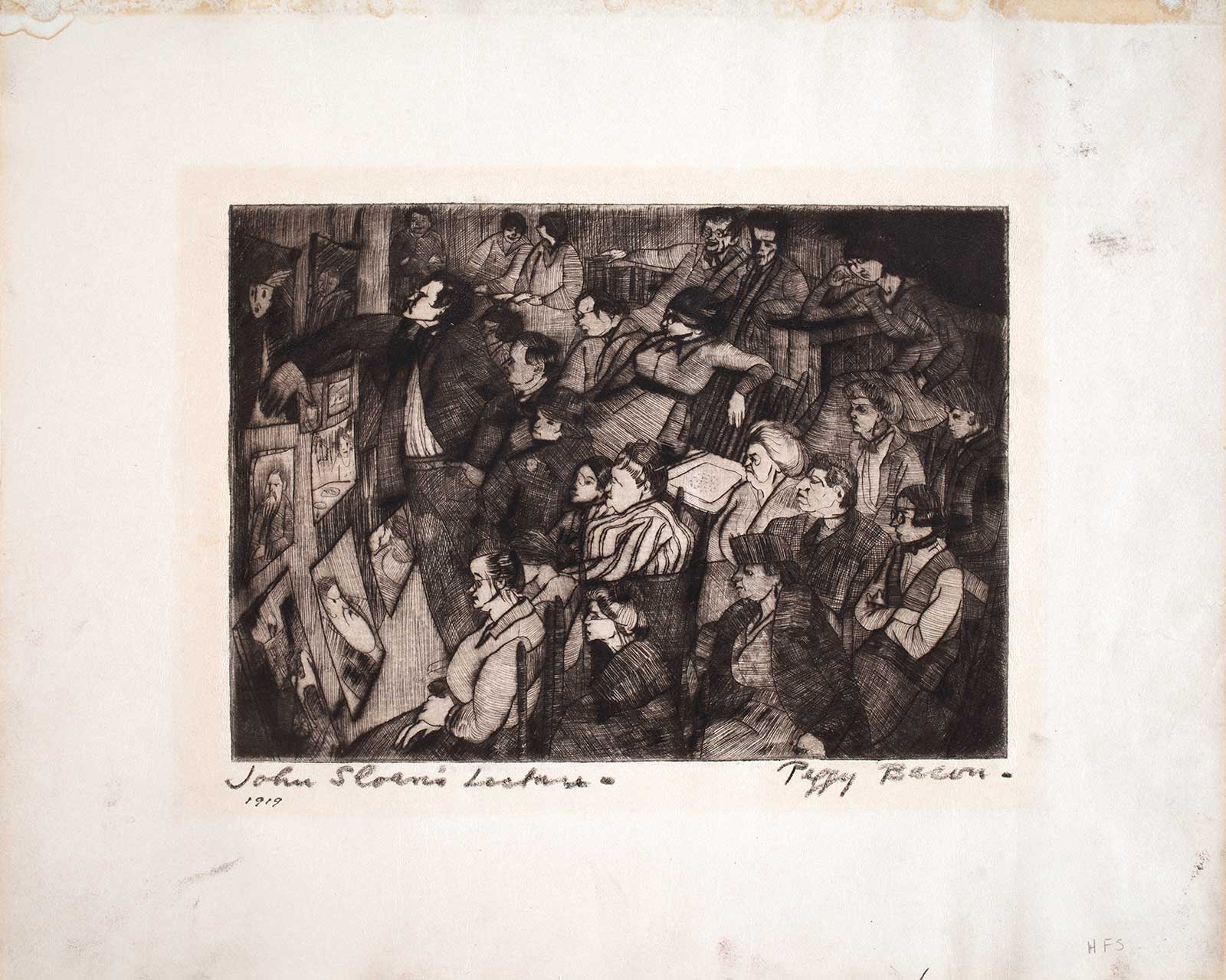
Peggy Bacon (1895-1987), John Sloan’s Lecture, 1919. Drypoint, plate: 415⁄16 x 615⁄16 in. Delaware Art Museum, Gift of Helen Farr Sloan, 1979. © Estate of Peggy Bacon
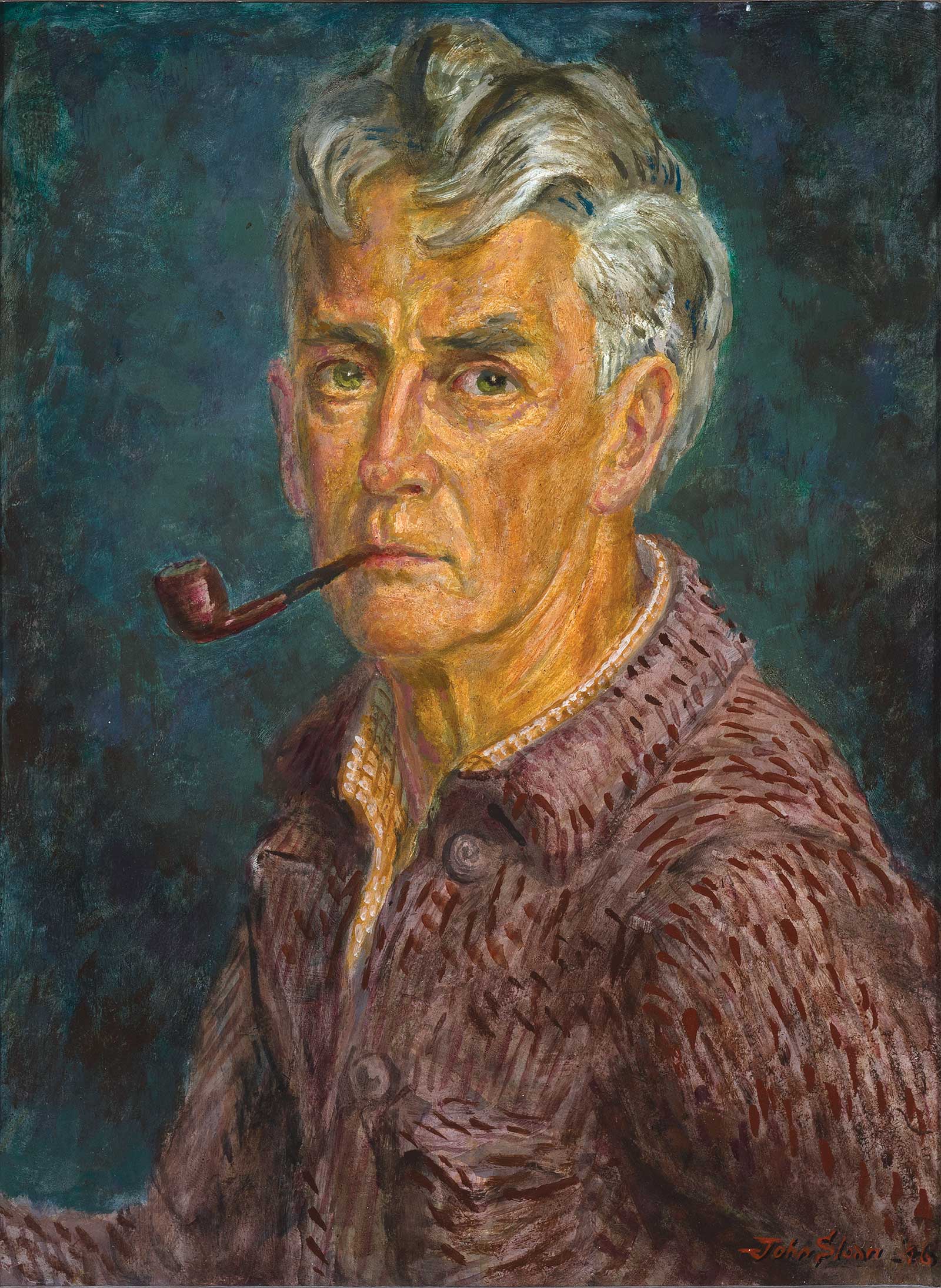
John Sloan (1871-1951), Self-Portrait, Pipe and Brown Jacket, 1946. Casein tempera underpaint with oil-varnish glaze on panel, 16 x 121⁄8 in. Delaware Art Museum, Gift of Helen Farr Sloan, 1986. © Delaware Art Museum / Artists Rights Society (ARS), New York.
Even paintings that seem quite unlike Sloan’s exhibit, on inspection, traces of the teacher. John Graham’s Still Life—Pitcher and Fruit, for example, recalls Braque, Gris and other Cubists. However, Graham—who was born Ivan Dabrowsky in Kiev and was a refugee during the Russian Revolution—backs away from the mathematical abstraction of pure Cubism. This is a real table, in a humble space. Cubist perspective comes across here as a cramped but very real working-class composition, the kind Graham would have known as he fled Russia, the kind Sloan often painted. Similarly, the shimmer of the paint across the surface seems perhaps a subtle nod to Sloan’s nervous energy. Crabapple Tree, painted around 1930 by another Sloan student, Joseph Pollet, seems to find the student far removed from the teacher. Yet, according to the exhibition text, “Pollet likely exhibited this painting at the Society of Independent Artists, where Sloan served as president.” True, Crabapple Tree is more Charles Burchfield than John Sloan, but Sloan may well have appreciated the contrasts between the lights and darks and the tremor in the leaves that gives them life.
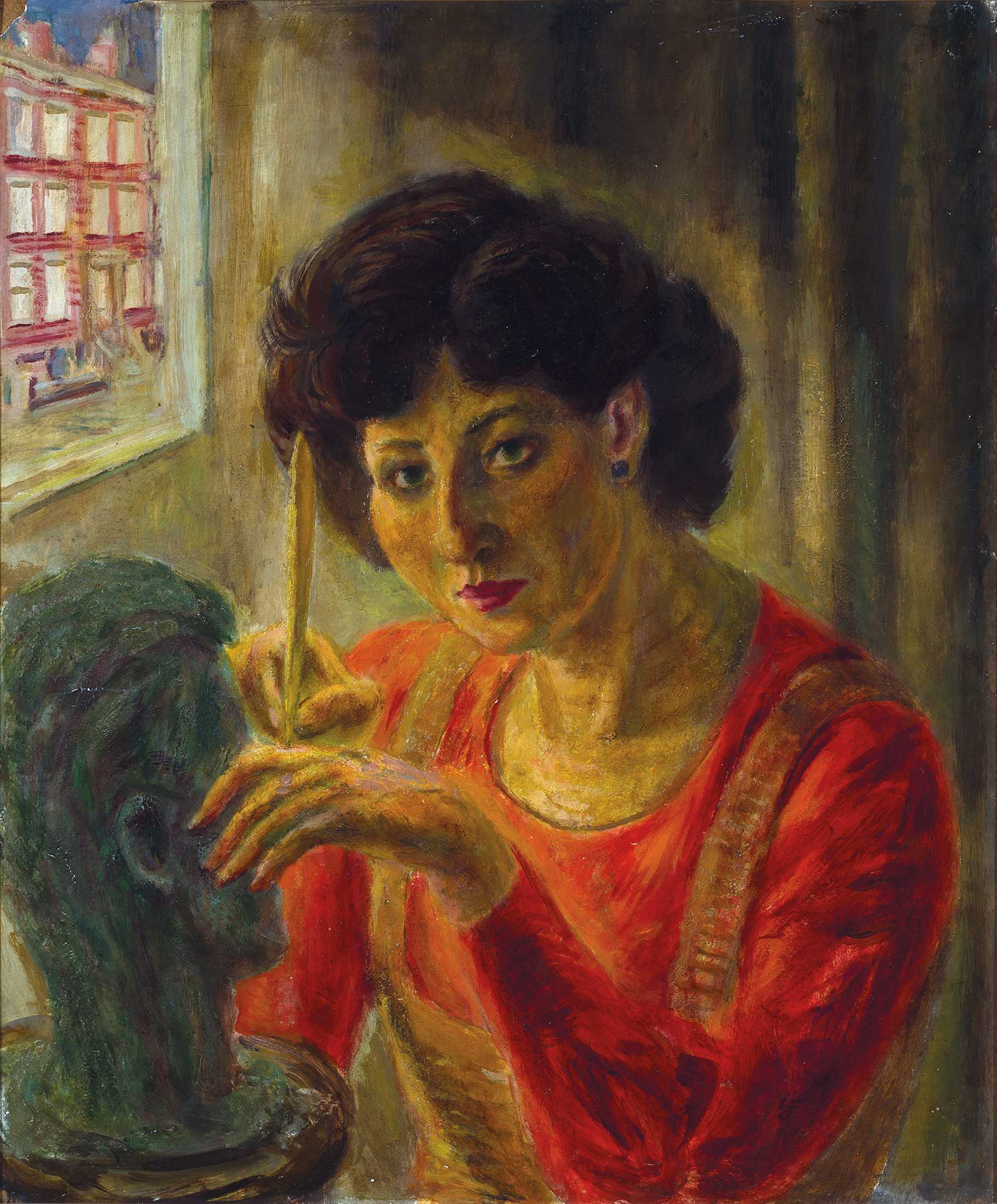
John Sloan (1871-1951), Sculptress in Red, 1932. Flaxseed tempera underpaint; oil-varnish glaze on panel, 24 x 20 in. Delaware Art Museum, Gift of the John Sloan Trust, 2006 © Delaware Art Museum / Artists Rights Society (ARS), New York
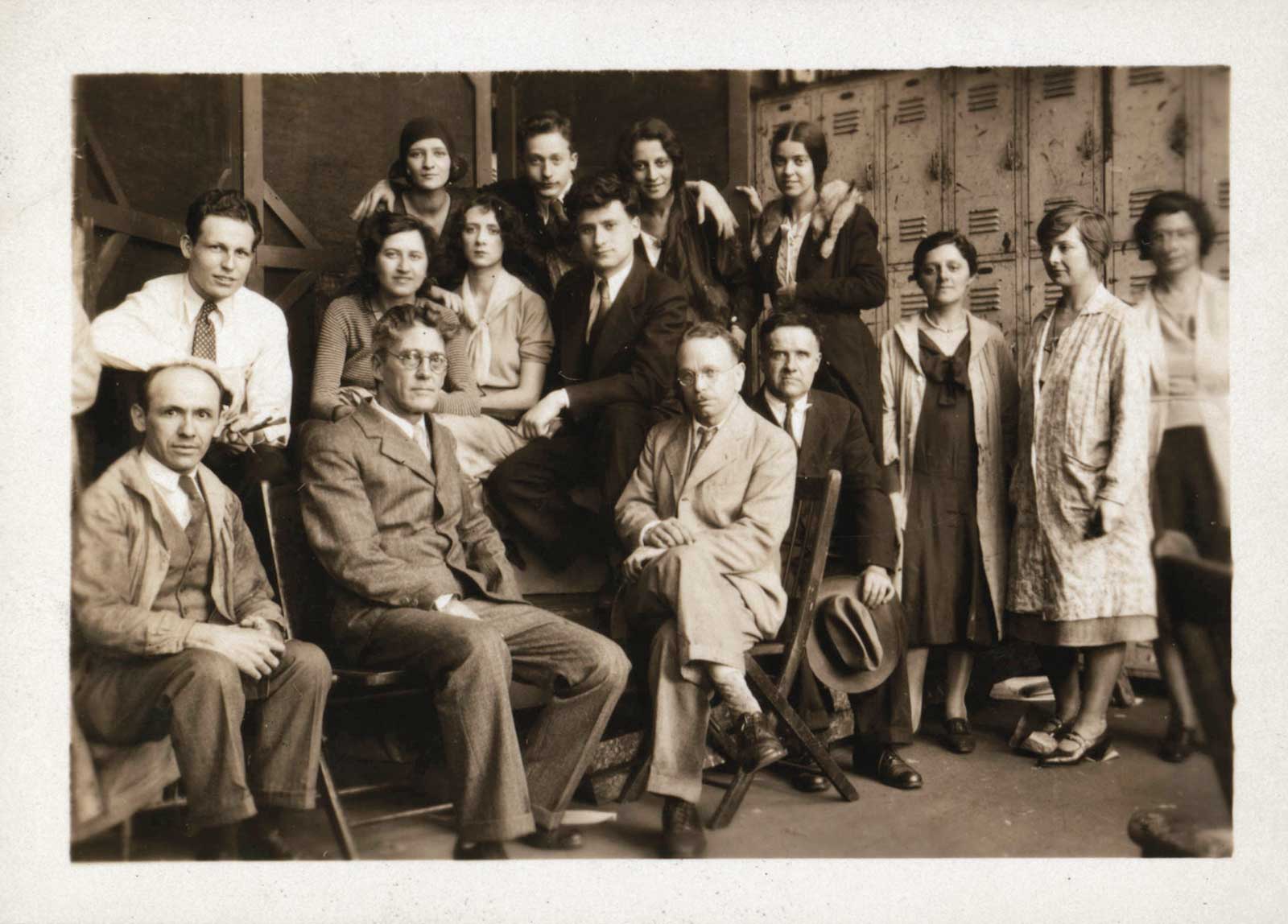
John Sloan and Class, Art Students League, ca.1927, photograph. John Sloan Manuscript Collection, Helen Farr Sloan Library & Archives.
Even as Sloan’s own work found and conveyed the ripples in reality, so his influence on his students moved through them like the ripples of a stone thrown into a pond, spreading, diminishing perhaps, over time, but still felt, still there. —
Powered by Froala Editor