Chesterwood in the Berkshire Hills of western Massachusetts was the summer home and studio of the sculptor Daniel Chester French and his family. In 1897 he commissioned his friend, architect Henry Bacon, to design a studio on the property the family had recently acquired. Bacon chose the foundation of property’s barn for the studio, and the family lived in the white clapboard farmhouse. In 1901, Bacon completed the family’s new residence which, this spring, has reopened to the public after a four-year restoration project.
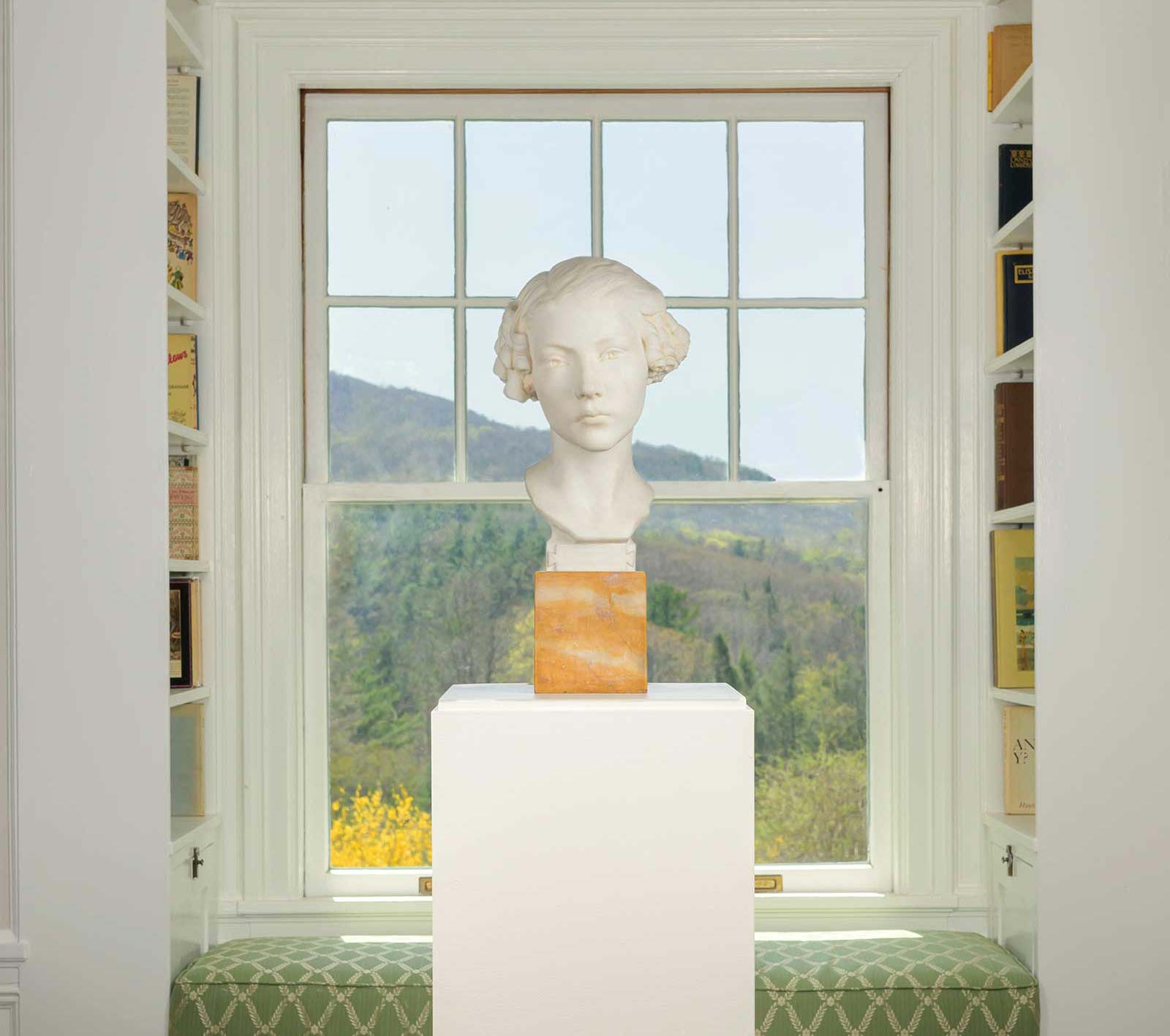
Margaret French Cresson (1889-1973), Girl with the Curls, 1920. Marble, 143/8 x 9¼ x 8¾ in. Bequest of Margaret French Cresson, NT 73.45.1431. Photograph by Gregory Cherin.
Bacon (1866-1924) would later design the Lincoln Memorial in Washington, D.C., and French (1850–1931) designed its monumental sculpture of the seated president.
The summer season at Chesterwood, a national and Massachusetts historic landmark owned and operated by the National Trust for Historic Preservation, is as varied as it was when the Frenches were in residence.
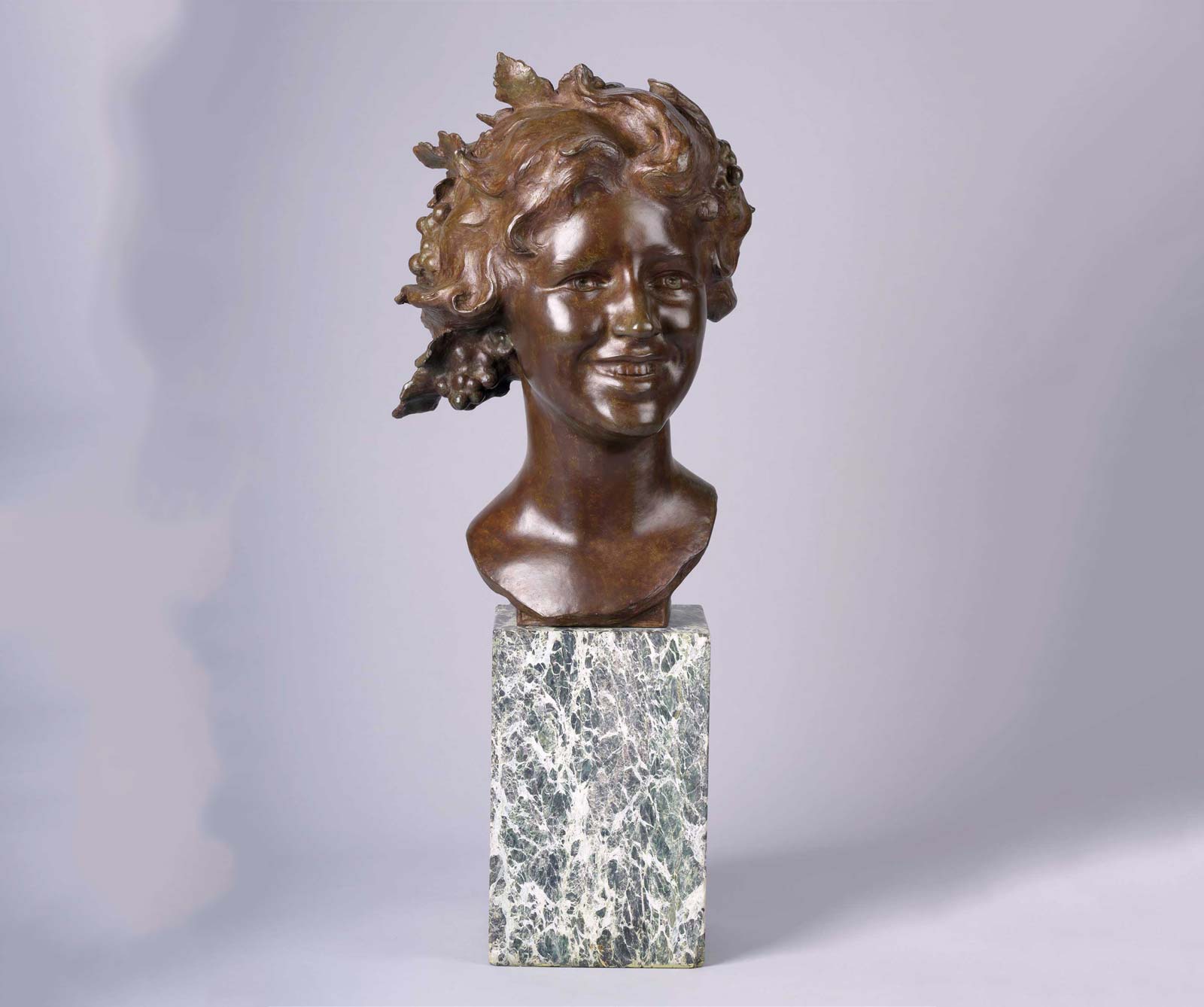
Evelyn Beatrice Longman (1874-1954), Margaret French as a Bacchante, 1907. Bronze, marble base, 24½ x 9 x 11 in. Gift of the Daniel Chester French Foundation, NT 69.38.3758.
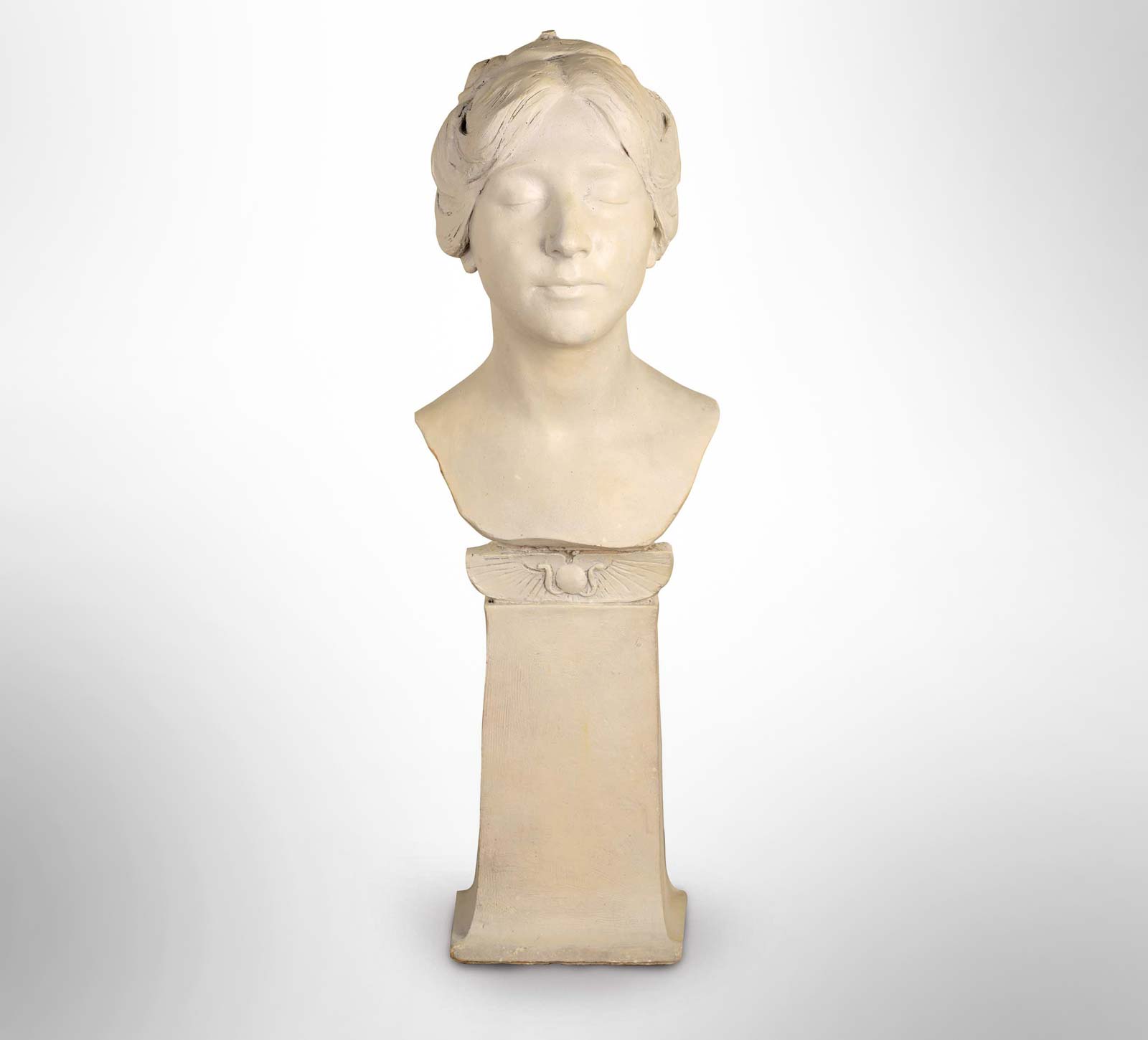
Daniel Chester French (1850-1931), Evelyn Beatrice Longman, 1916. Plaster, 215/8 x 71/6 x 67/8 in. Gift of the Daniel Chester French Foundation, NT 69.38.187.
The 47th annual contemporary outdoor sculpture show titled Global Warming/Global Warning! will be shown in the property’s formal gardens and its 122 acres. The site’s artists in residence program, instituted in the 1970s, will host artists in several disciplines. Its performing arts series ArtsAlive! and speakers’ series WordsAlive! will showcase artists in music, dance, theater and the literary arts. “This program is also about honoring the deep tradition of creative history at Chesterwood where Daniel Chester French often invited artists, dancers, musicians, and writers to share their work and draw inspiration,” notes the museum.
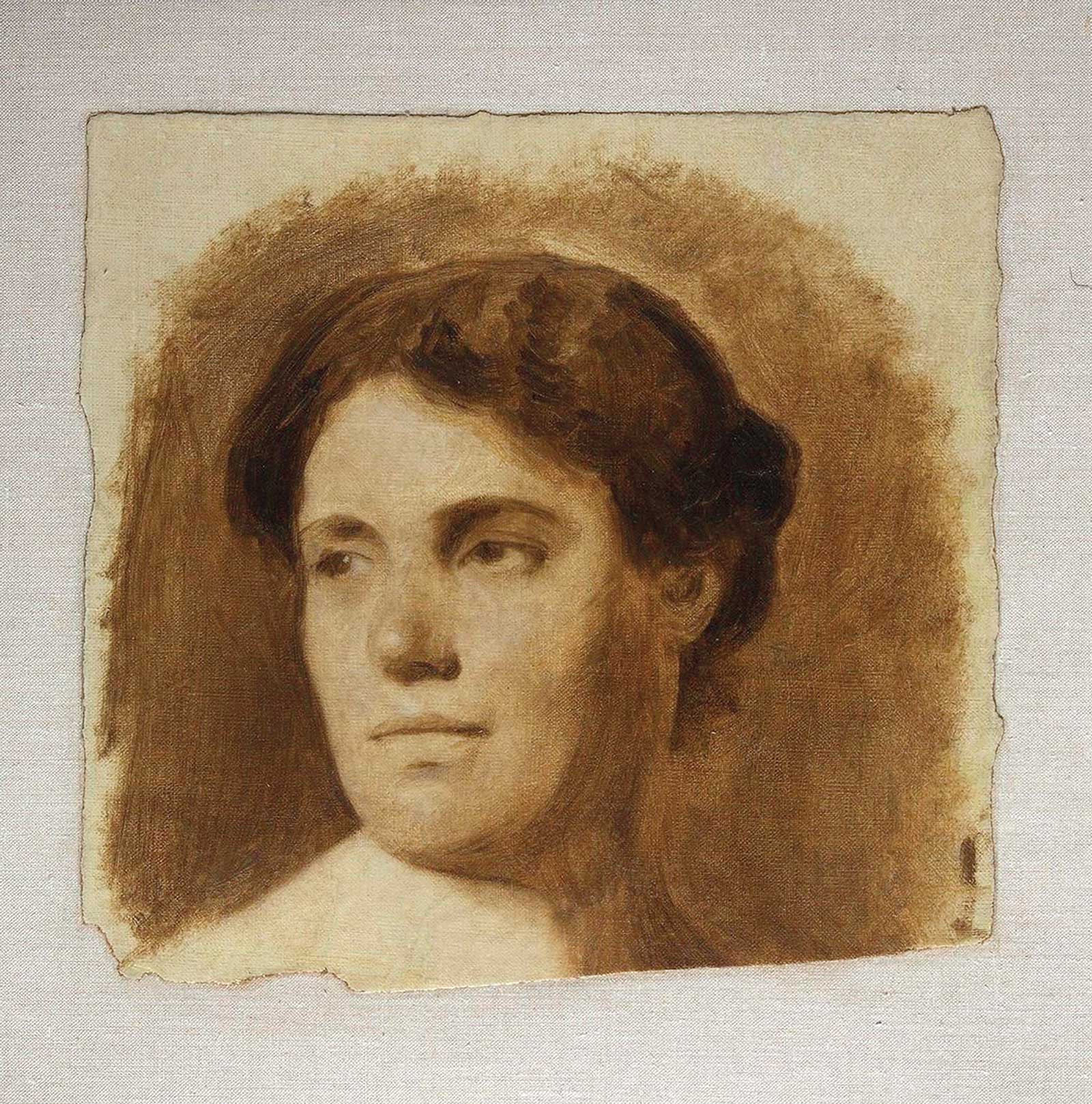
Daniel Chester French (1850-1931), Hettie Anderson, 1910. Oil on canvas, canvas: 10½ x 11¼ in. Gift of the Daniel Chester French Foundation, NT 69.38.789. Photo by Bruce Schwarz.
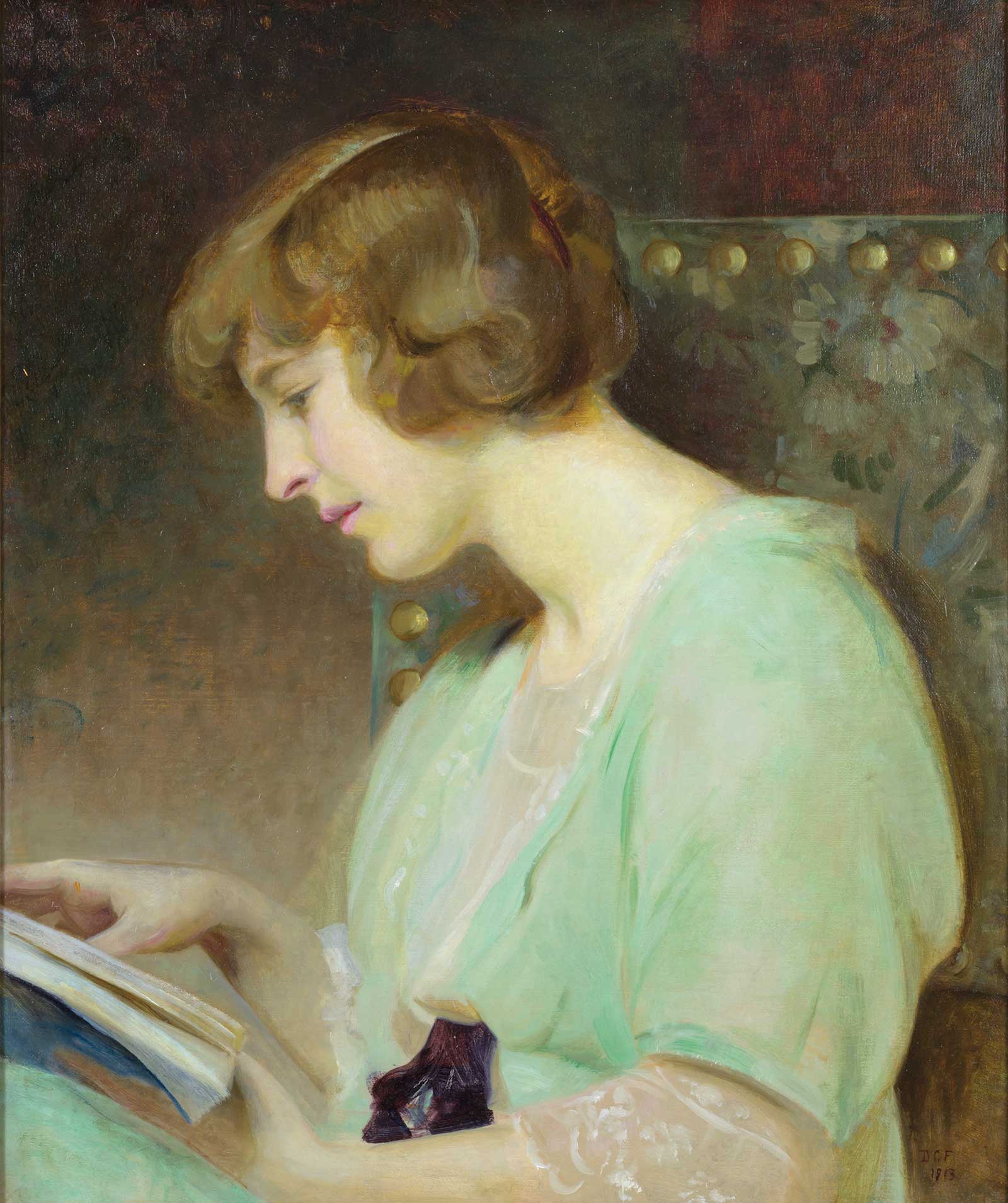
Daniel Chester French (1850-1931), Portrait of Marjorie Lamond, 1913. Oil on canvas, sight: 23¼ x 19¼ in. Gift of the Daniel Chester French Foundation, NT 69.38.733.
Three exhibition spaces have been created in bedrooms on the second floor of the residence. This summer, they will contain the exhibition Modeling Women: Female Models and Artists at Chesterwood. Chesterwood’s curatorial researcher and collections coordinator and the curator of the exhibition, Dana Pilson, explains that the exhibition celebrates “the important role of French’s female models spotlighting the works of two female artists active at Chesterwood: French’s protégée Evelyn Beatrice Longman (1874-1954) and his daughter, Margaret French Cresson (1889-1973).”
She adds that the exhibition “brings together over 25 sculptures and paintings, almost all never or rarely exhibited before, to explore the themes of collaboration and mentorship. This exhibition highlights the women models that posed for some of French’s most celebrated monuments, and also takes a look at two of the women sculptors he taught and championed. Daniel Chester French depended on many colleagues to realize his artistic vision. An often-overlooked part of a sculptor’s process is the selection of the model—in French’s case usually a woman—to pose for hours and hours in his studio. As a realistic figurative sculptor, the model played a critical role in French’s process.”
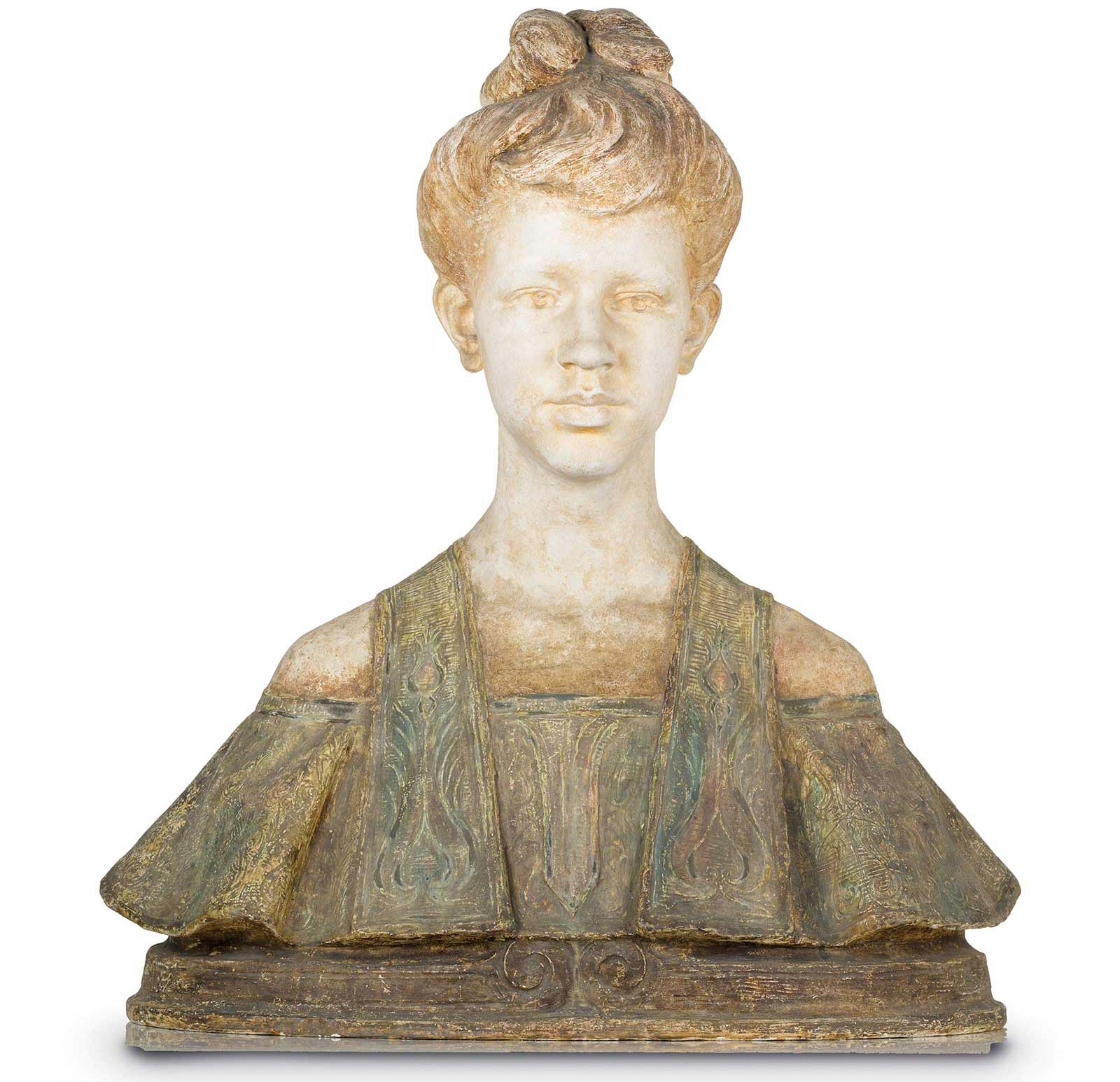
Evelyn Beatrice Longman (1874-1954), Margaret French, 1903. Plaster, tinted, 24¼ in. Gift of the Daniel Chester French Foundation, NT 69.38.1174
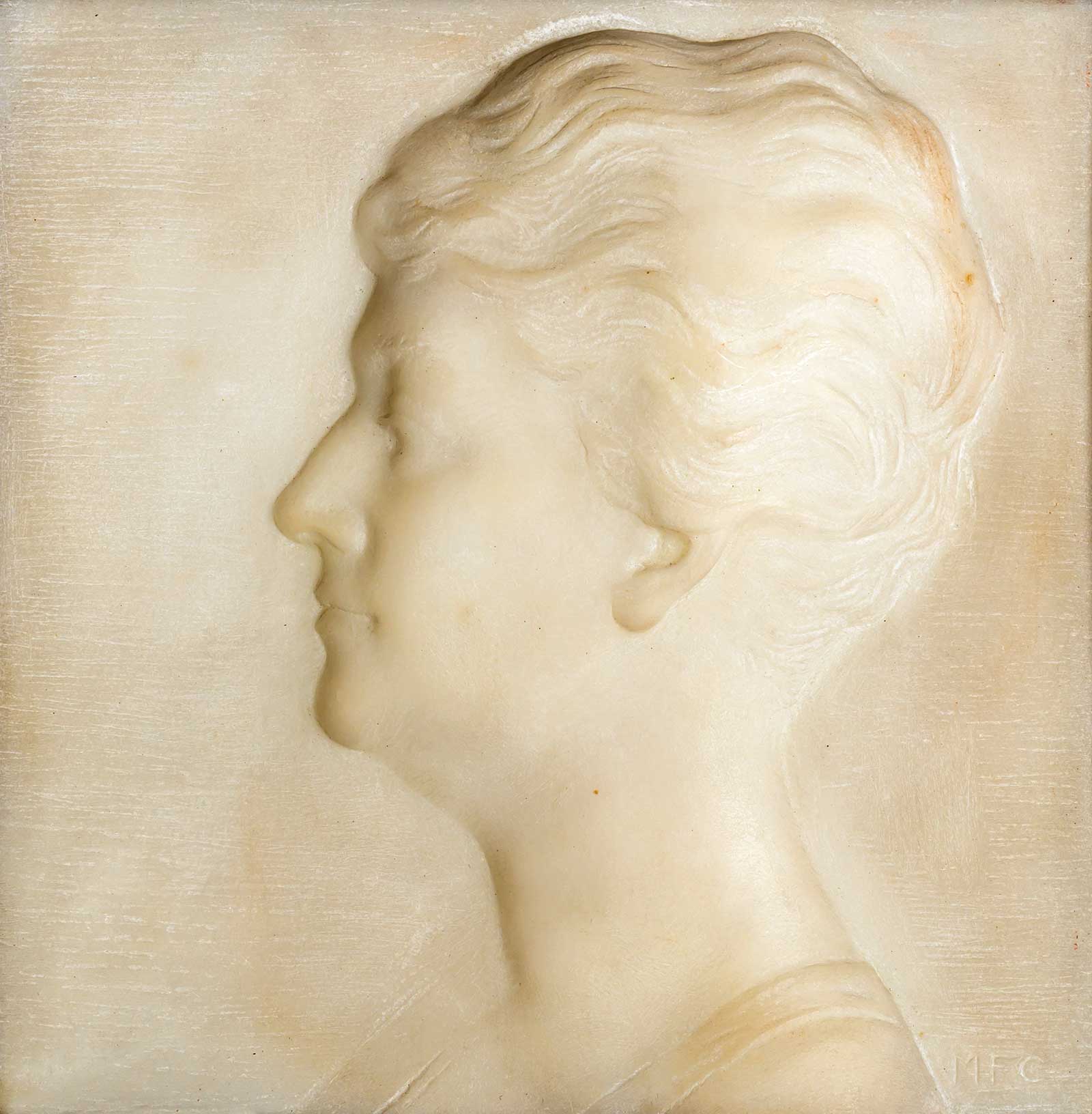
Margaret French Cresson (1889-1973), Mary Adams French, 1925. Marble, 7¼ x 7¼ x ¼ in., framed: 10½ x 10 ½ in. Gift of the Daniel Chester French Foundation, NT 69.38.682.
French was also a portrait painter. His wife, Mary Adams French (1859-1939) wrote in her biography, Memories of a Sculptor’s Wife, that the sculptor’s “greatest amusement was to play at portrait painting…he painted all the girls who came to visit us. He was quite wonderful at catching likeness, which showed of course, his trained hand and eye in another line of work.”
In 1911, French wrote to Evelyn Beatrice Longman, “I have found time to get in quite a little painting and I can see that I am gaining on the thing quite fast. If I were twenty instead of sixty, I think I might make portrait painter of myself. It is great fun.” Among the portraits in the exhibition are Portrait of Marjorie Lamond, 1913, and Hettie Anderson, 1910. Lamond was a close friend of his daughter, Margaret, and took part in Margaret’s annual costume parties in her father’s studio. Anderson was born into an African American family in Columbia, South Carolina, and moved with her mother to New York City where she took classes at the Art Students League. She became a model for Longman, French and Augustus Saint Gaudens who used her likeness for his sculpture Winged Victory for the General William Tecumseh Sherman Monument in New York City.
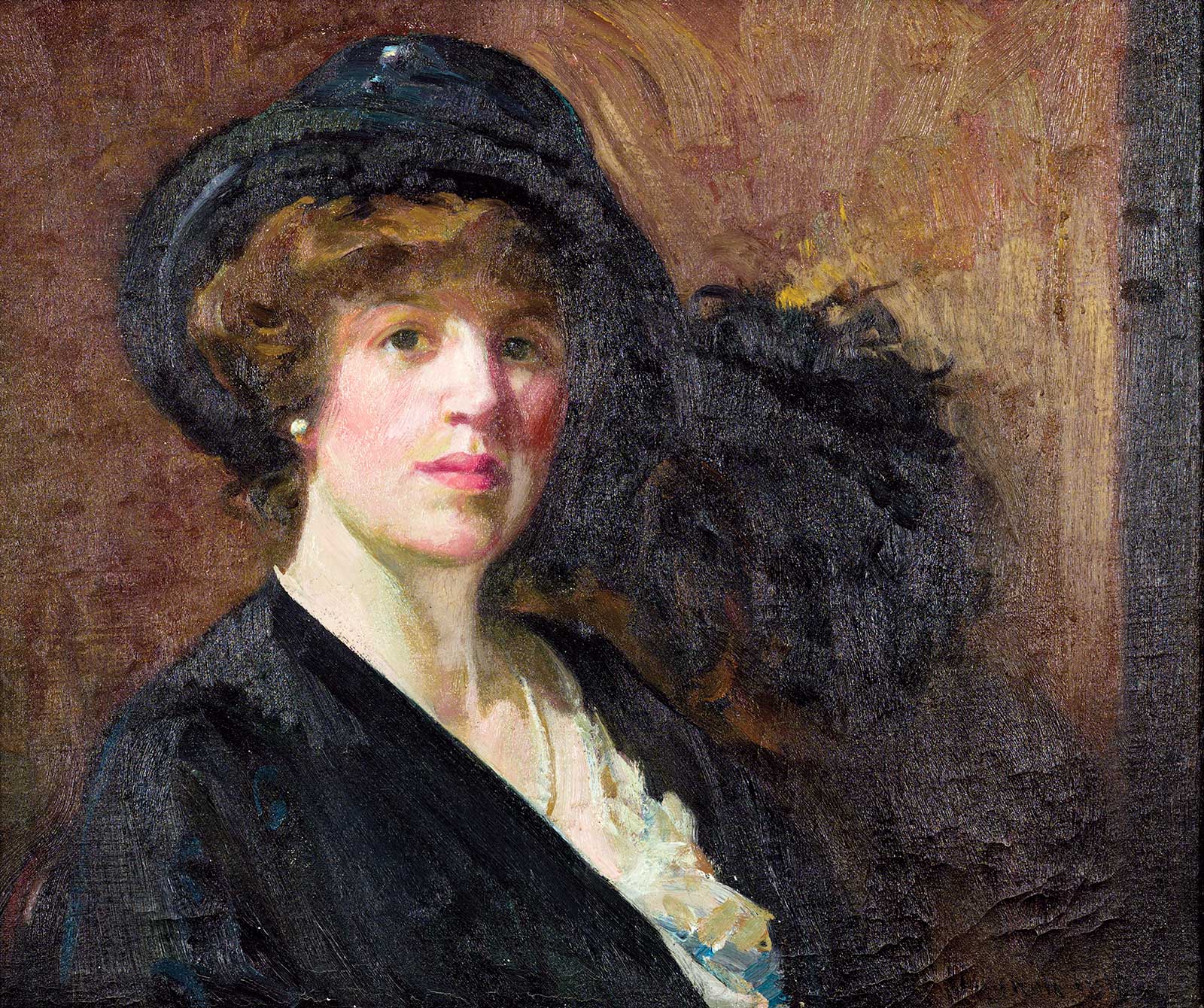
Robert Vonnoh (1858-1933), Margaret French, 1913. Oil on canvas, 17½ x 21¼ in. Bequest of Margaret French Cresson, NT 73.45.648.
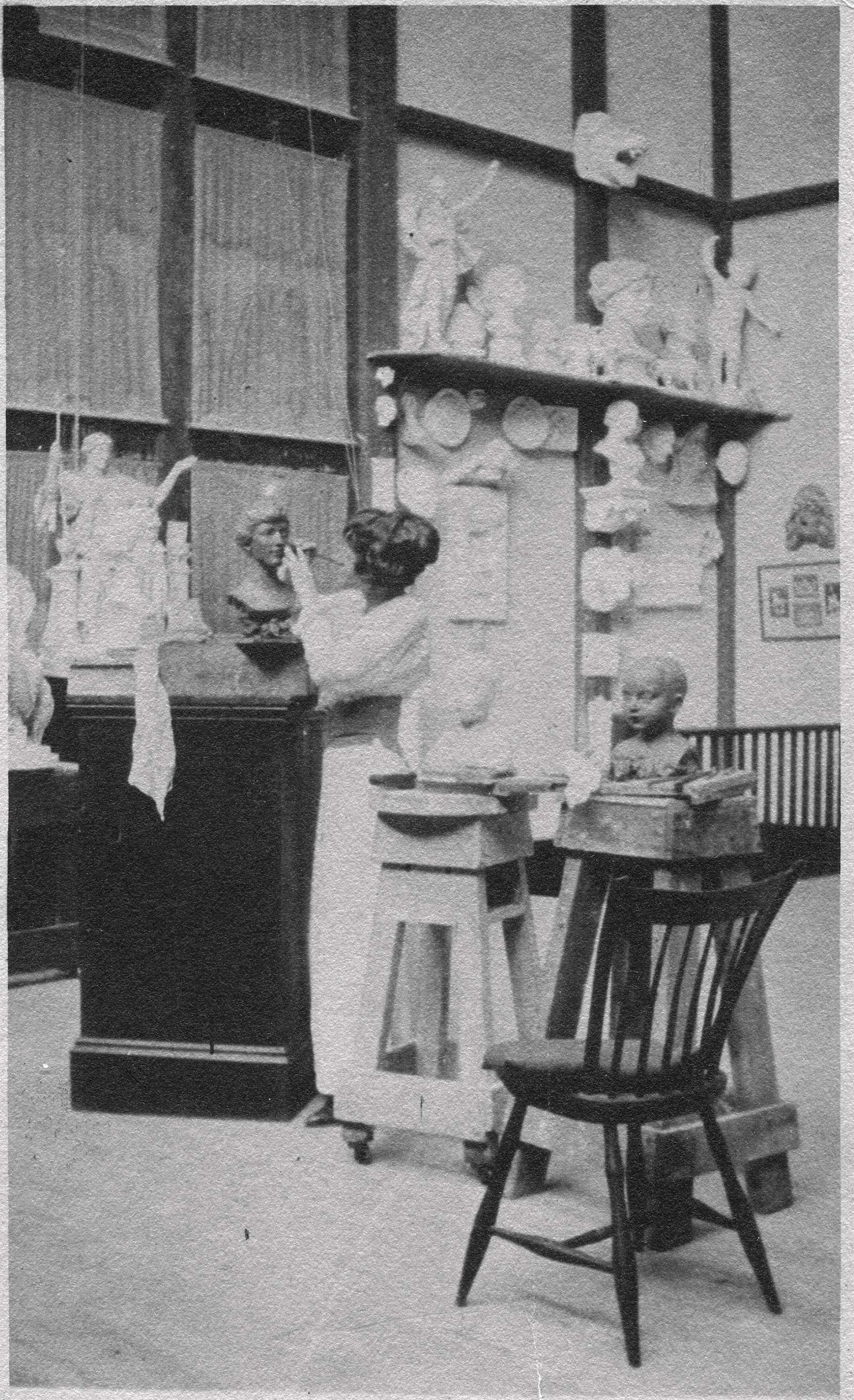
Margaret French Cresson sculpting in the studio at Chesterwood, 1915.
Longman studied sculpture at the Art Institute of Chicago and, in 1919, was the first woman sculptor to be elected a full member of the National Academy of Design. French had invited her to work with him in his New York studio, beginning a long personal and professional relationship. Pilson notes, “Longman was a regular guest at Chesterwood and she was often included in French family celebrations. French’s mentorship of her artistic growth included asking her to handle the lettering on his Boston Public Library bronze doors, and he and architect Henry Bacon charged her with carving the lettering and other decorative elements at the Lincoln Memorial. Even when Longman became a successful sculptor, she continued to offer French crucial commentary on his works...”
In 1907, she sculpted Margaret French as a Bacchante. Pilson elaborates, “By portraying Margaret French as a Bacchante (a female follower of Bacchus, the Roman god of wine), Longman has successfully captured a vibrant and youthful spirit. In 1907, the lively teenager was enjoying summers at Chesterwood filled with swimming parties, picnics and parades, festivities in the studio, and moonlit strolls in the garden. The laughing young woman wears a wreath of grapes, with leaves and vines entwined in her hair, and her lips are parted in a playful smile. On the back side of the base Longman inscribed Margaret French’s nickname: ‘Peggy.’”
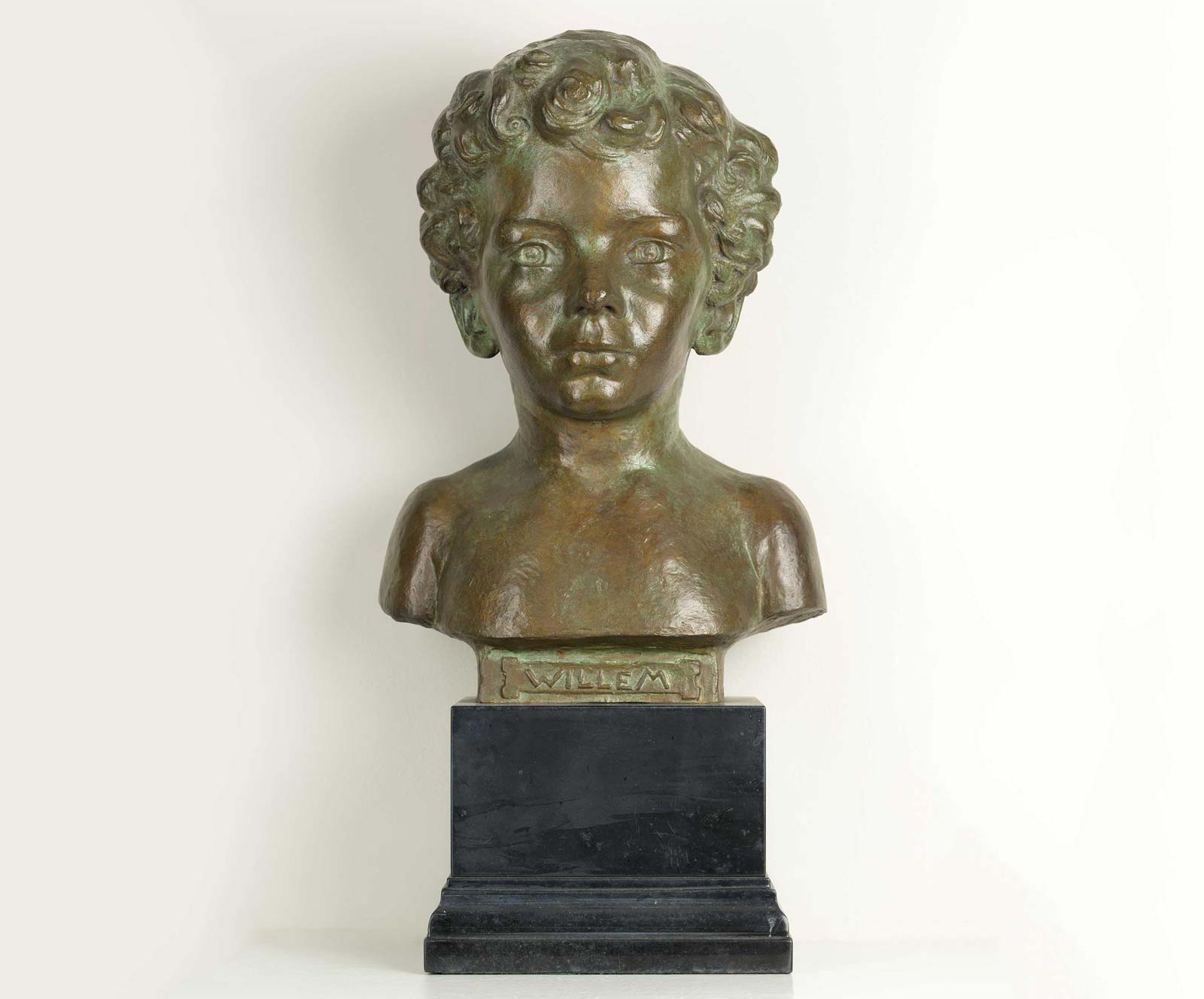
Margaret French Cresson (1889-1973), William Penn Cresson, 1923. Bronze, marble base, 27 x 16 x 12½ in. Gift of the Daniel Chester French Foundation, NT 69.38.663.
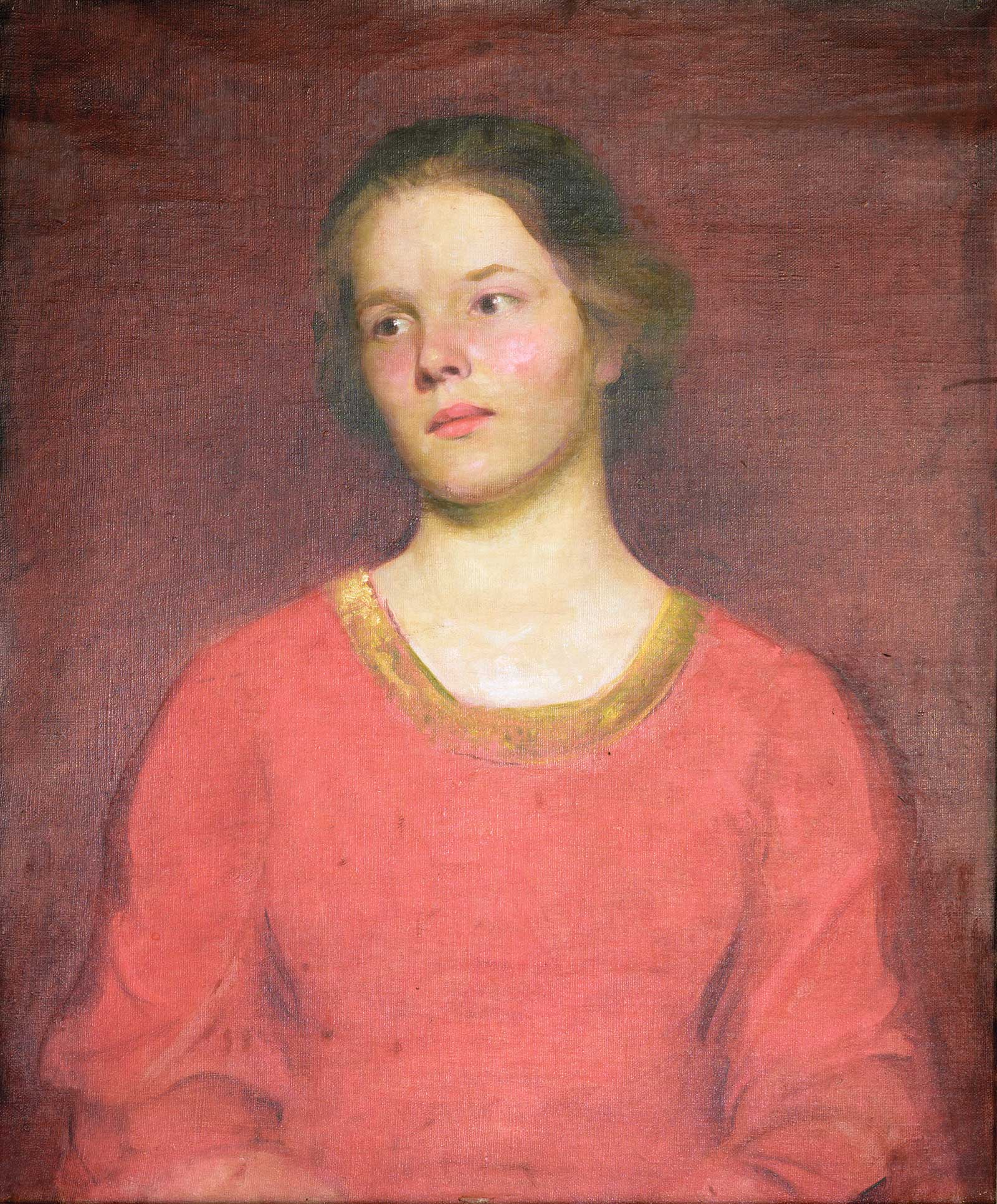
Daniel Chester French (1850-1931), A Girl in Red, ca. 1915. Oil on canvas; sight: 24½ x 20 in, framed: 27½ x 23¾ in. Gift of the Daniel Chester French Foundation, NT 69.38.783.
Also in the exhibition is French’s plaster portrait bust, Evelyn Beatrice Longman, 1916.
Margaret French Cresson was the only child of Mary Adams French and Daniel Chester French. Pilson explains, “From an early age she enjoyed playing with spare bits of clay she found in her father’s studio. As a young adult, she fearlessly followed in her father’s footsteps and studied sculpture alongside him in the Chesterwood studio and with Abastenia St. Leger Eberle in New York. Cresson was a talented sculptor in her own right and excelled in portraiture.
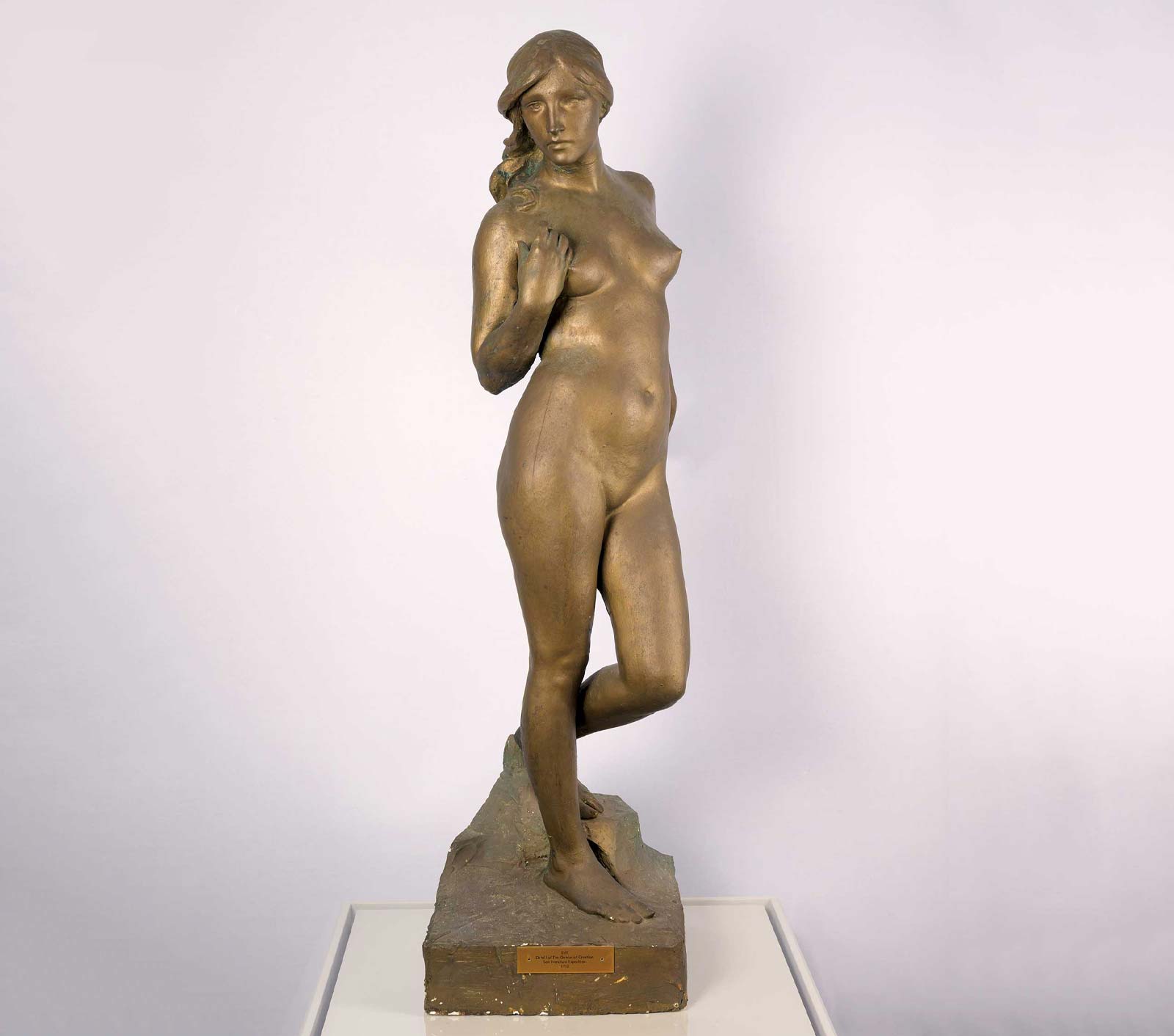
Daniel Chester French (1850-1931), Working model of Eve, 1914, for Genius of Creation group, Panama-Pacific International Exposition, San Francisco, 1915. Plaster, painted; 40¼ x 11 x 17 in. Gift of the Daniel Chester French Foundation, NT 69.38.270.
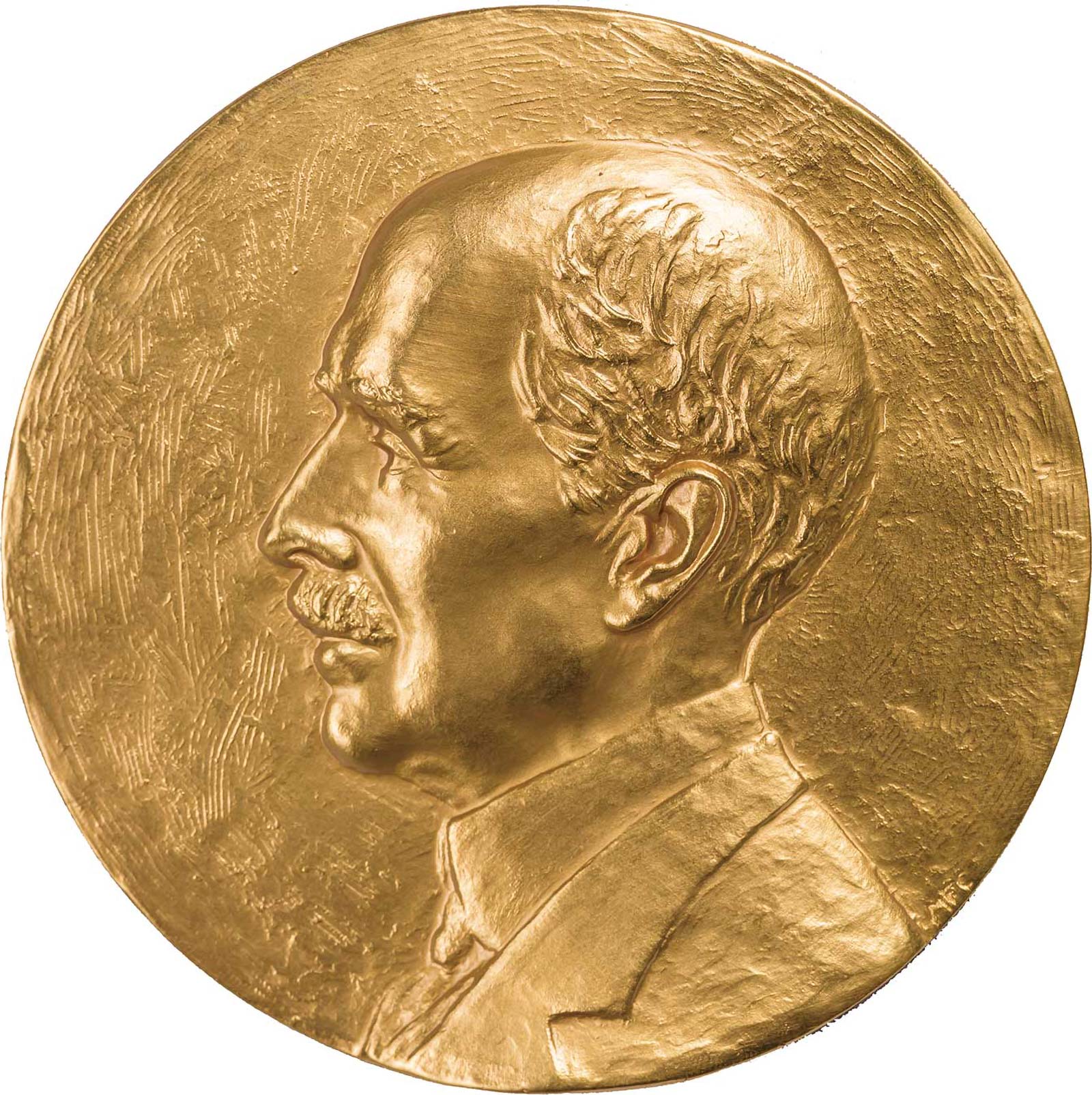
Margaret French Cresson (1889-1973), Daniel Chester French, 1960. Gilded bronze, diameter: 3 in. Gift of the Daniel Chester French Foundation, NT 69.38.3400.
In a 1973 article, Cresson recalled, “I began my own study of sculpture with my father in his studio…I cared only about doing portraits. People’s faces always fascinated me. So while my father was working on his Lincoln, for instance, I would be struggling in a corner with some long-suffering model gracing the stand in front of me.”
In the newly opened Margaret French Cresson room, portraits and character studies by the younger French accompany her most celebrated work, Girl with the Curls. Cresson’s plaster was carved in marble by the studio of the Piccirilli Brothers, who had transferred into marble many of her father’s most important works. The sculpture is displayed in front of a window in what was Cresson’s bedroom. Visible through the window is Monument Mountain, the view that convinced her parents to buy the property and to orient the studio and residence toward the vista.
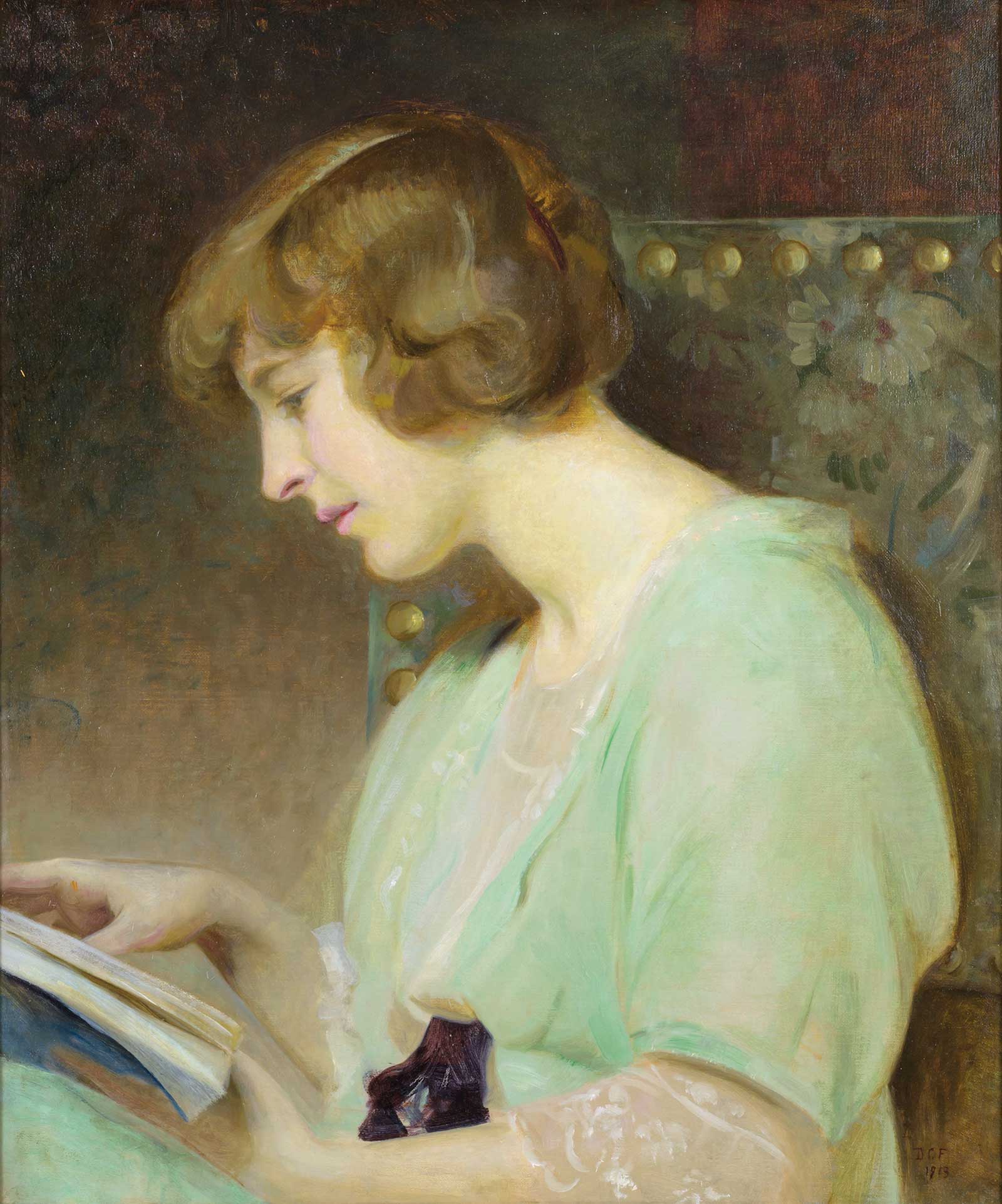
Daniel Chester French (1850-1931), Portrait of Marjorie Lamond, 1913. Oil on canvas, sight: 23¼ x 19¼ in. Gift of the Daniel Chester French Foundation, NT 69.38.733.
Pilson began research work for Chesterwood in 2012 with its director Donna Gassler who retired in 2022. She researched the Chesterwood Archives of French family ephemera housed at the nearby Williams College to determine what French’s studio looked like during his lifetime. Now on the staff of Chesterwood, she revealed that as part of the four-year restoration of the French residence, a state of the art storage and study space has been created in the basement. It houses a 500-volume library and the site’s collection of art.
Chesterwood’s executive director, Miguel Rodriguez, comments, “This is an exciting time for Chesterwood. The recent renovations enrich the visitor experience, and the new exhibition rooms allow us to activate the collection in a way it has never been before, showcasing works and spaces rarely shown to the public.” —
Powered by Froala Editor