Currently on view at the Museum of Fine Arts, St. Petersburg is a quite profound exhibition highlighting humanity’s relationship to nature—or the human attempt to understand it. Titled The Nature of Art, the exhibition features 32 paintings, prints, photographs and works of decorative art across both a contemporary and historic time frame. Pieces communicate through themed sections displayed throughout the museum’s campus.
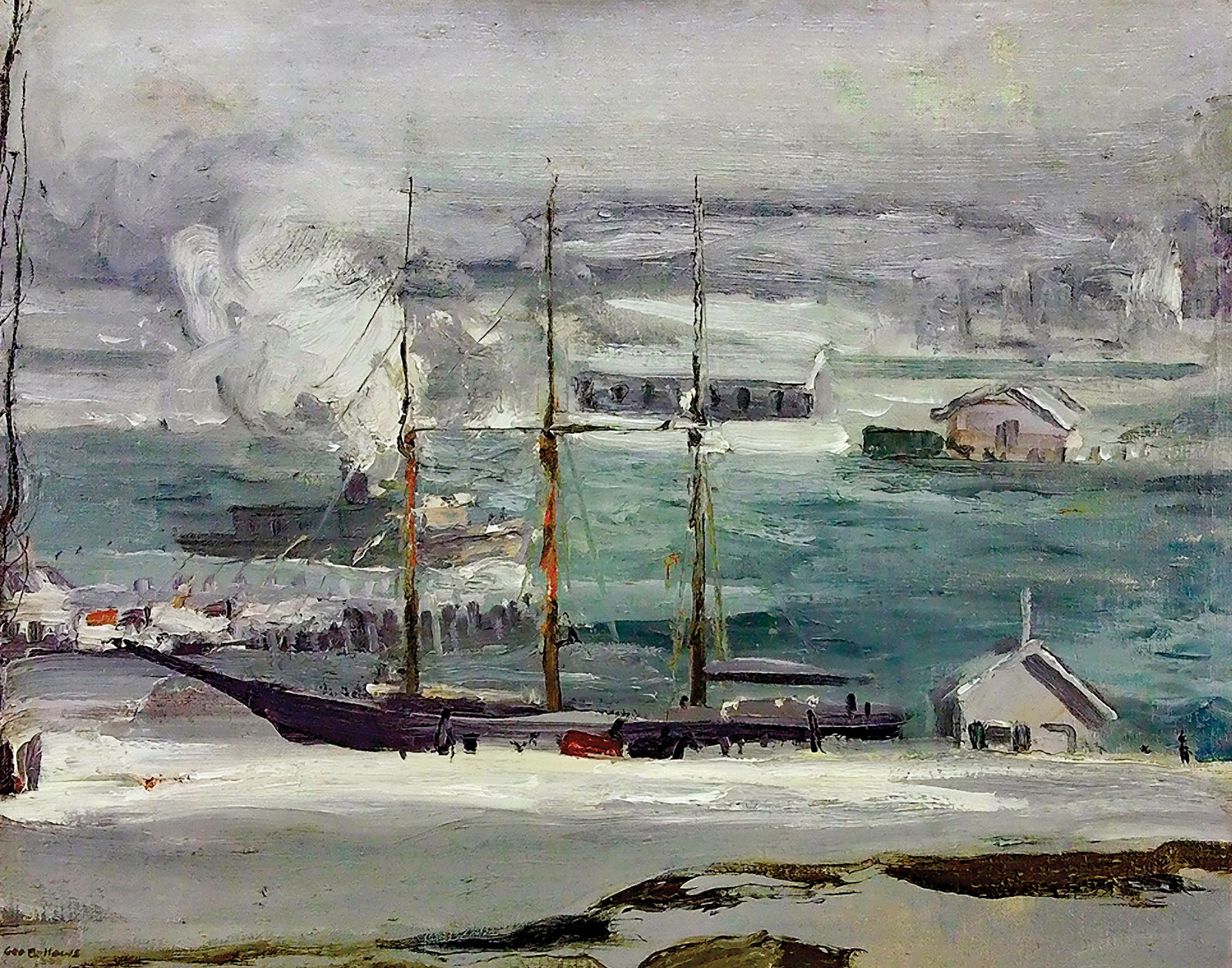 George Bellows (1882–1925), Silver Day, 1912. Oil On Canvas. Museum Purchase. Museum of Fine Arts, St. Petersburg, Florida.
The museum’s chief curator, Stanton Thomas, explains that the “exhibition evolved from looking at the MFA’s encyclopedic collection with an eye for works of art that reflect humankind’s interactions with, perceptions of and communication with nature. This overarching theme gave that larger project its title, The Nature of Art. Within that grand, museum-wide project, there are several component exhibitions, including Without Water, Nothing. Because I could draw from the entire collection, I was able to pull objects from a number of genres and time periods, all of which were related to water—whether as vessels to hold it, as evocations of its spiritual power or depictions of it. As I looked at all these water-related images, I was struck by the crucial importance of water to human existence, and the extraordinary range of associated artistic expressions. I also loved the project as it gave me a chance to show off works such as cabinet pictures which are often lost in larger galleries.”
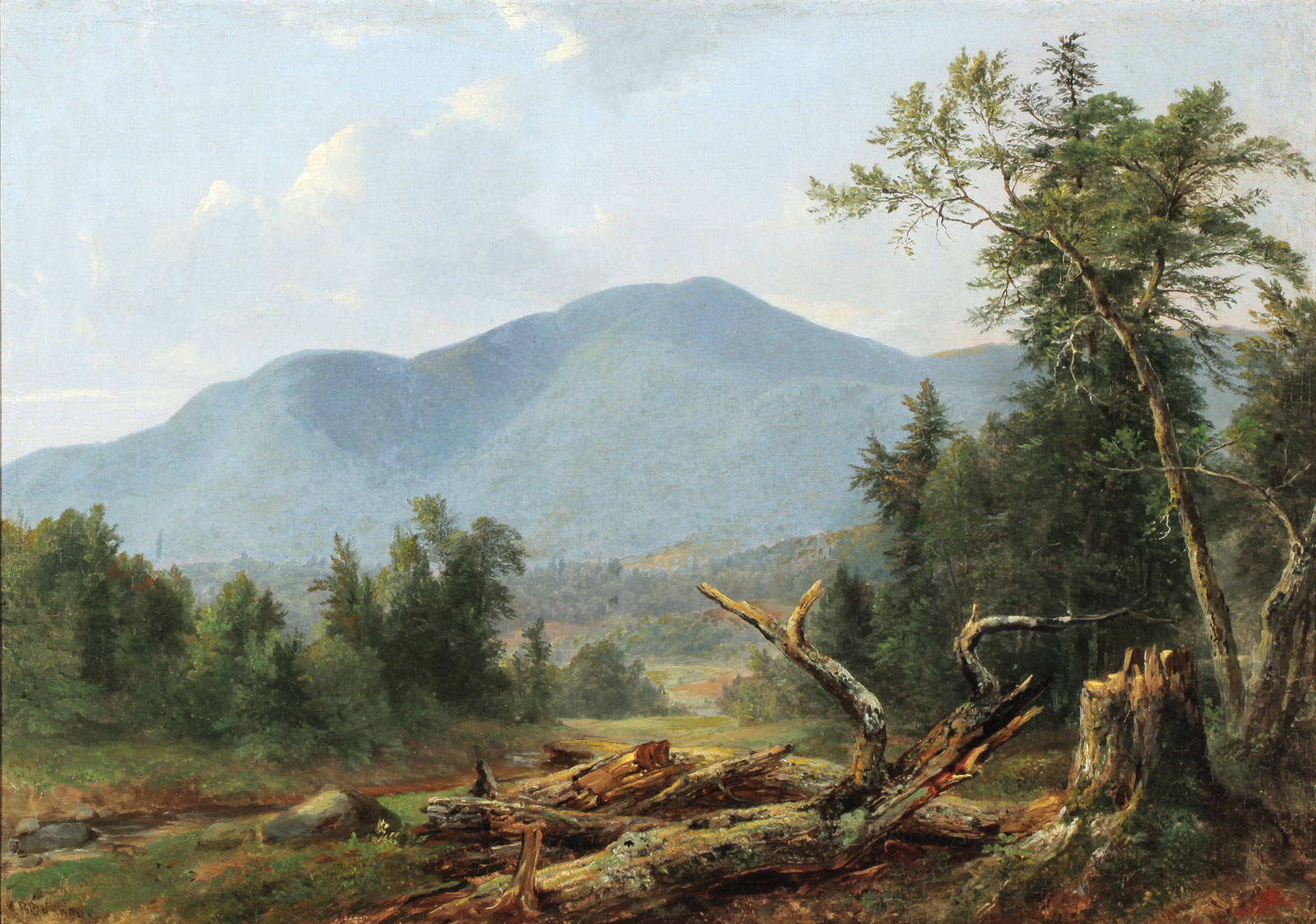 Asher B. Durand (1796-1886), View of the Catskills Near Shandaken, 1853. Oil on canvas. Gift of Charles and Ann Sahlman. Museum of Fine Arts, St. Petersburg, Florida.
Because he was looking very widely at the museum collection, and pulling works from a number of different cultures, Thomas organized the exhibition in a few very broad themes, with water at the forefront of the discussion. “… Water as powerful, natural force; water as related to spirituality; and water as an essential element for human existence, that is not only something for consumption, but also as related to farming, industry and transit,” says Thomas. “When I installed the works, I tried to keep these thematic groupings together.”
Significant historic works greatly contribute to these topical themes involving nature, climate and human interaction, like George Bellows’ (1882-1925) Silver Day, 1912. “Ostensibly, I chose this painting because it showed a shipping vessel at harbor, suggesting the importance of marine trade,” says Thomas. “However, just as important was its depiction of snow and cold, captured with extraordinary skill by Bellows through loose passages of cool blues and whites. In our era, the Anthropocene—where the world is always warming—the reminder of bitterly cold winters is both poignant and alarming.”
Viewers will also find Asher B. Durand’s (1796-1886) breathtaking landscape View of the Catskills Near Shandaken, 1853. “Although the work’s title includes ‘Shandaken’—a small New York town—Durand doesn’t show any indication of the settlement or even a human figure,” says Thomas. “Instead, the painting focuses upon a fallen tree by a brook. The tree is of course his symbol for the divine presence, suggesting that the United States as an untamed, virginal land which is ripe for exploitation. This attitude of course helped foster the westward movement of Manifest Destiny. I chose the work because the small brook suggests the importance of waterways in westward expansion. Also, the brook, running down from the forested Catskills to join rivers flowing to the sea, suggested to me the crucial importance of healthy watersheds and the great natural cycle of moisture throughout the environment.”
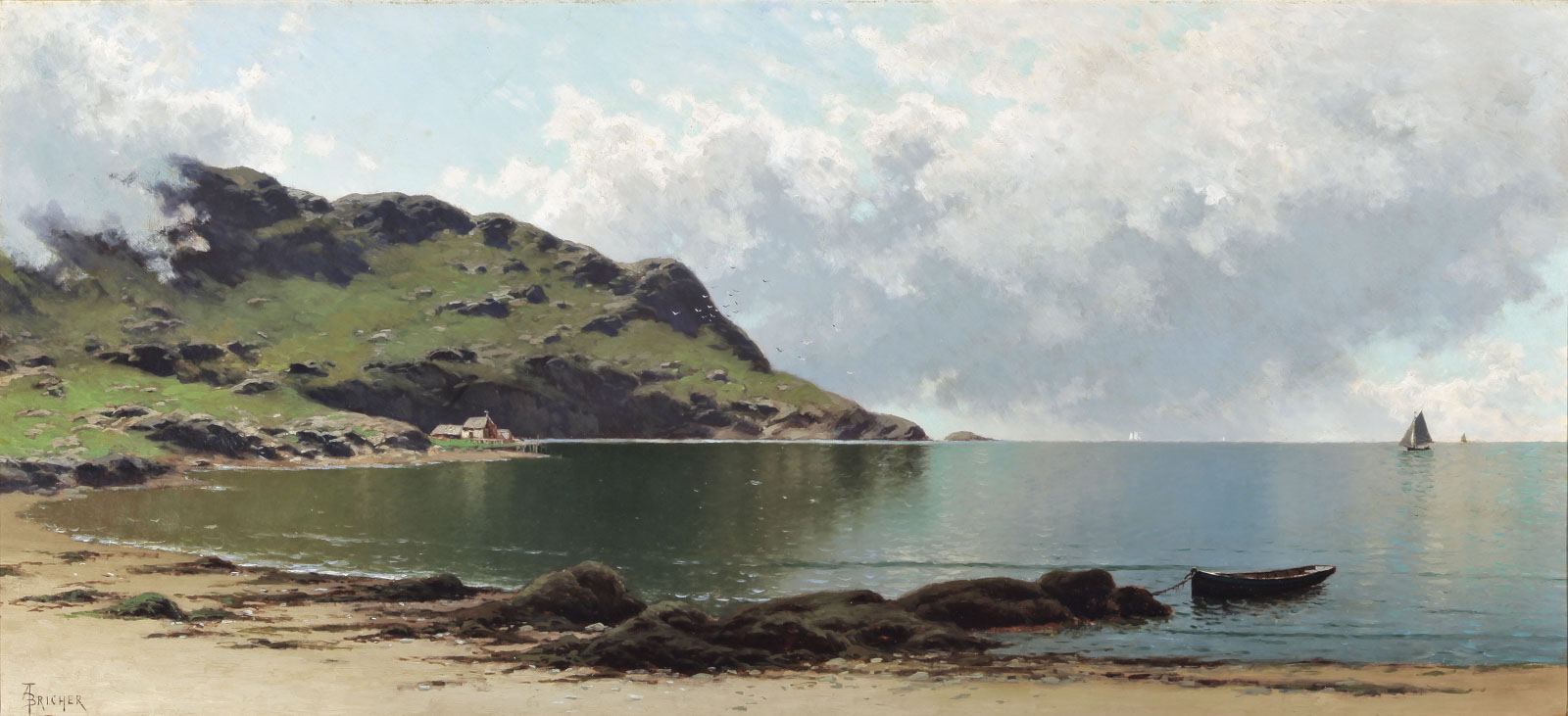 Alfred Thompson Bricher (1837–1908), Along the Coast, c. 1880. Oil On Canvas. Gift of Ann and Charles Sahlman. Museum of Fine Arts, St. Petersburg, Florida.
The exhibition, on view through April 14, also provides an opportunity to appreciate prominent historic works, all the while “[enriching] our understanding of the collection, especially through unexpected juxtapositions,” says Thomas.
Powered by Froala Editor