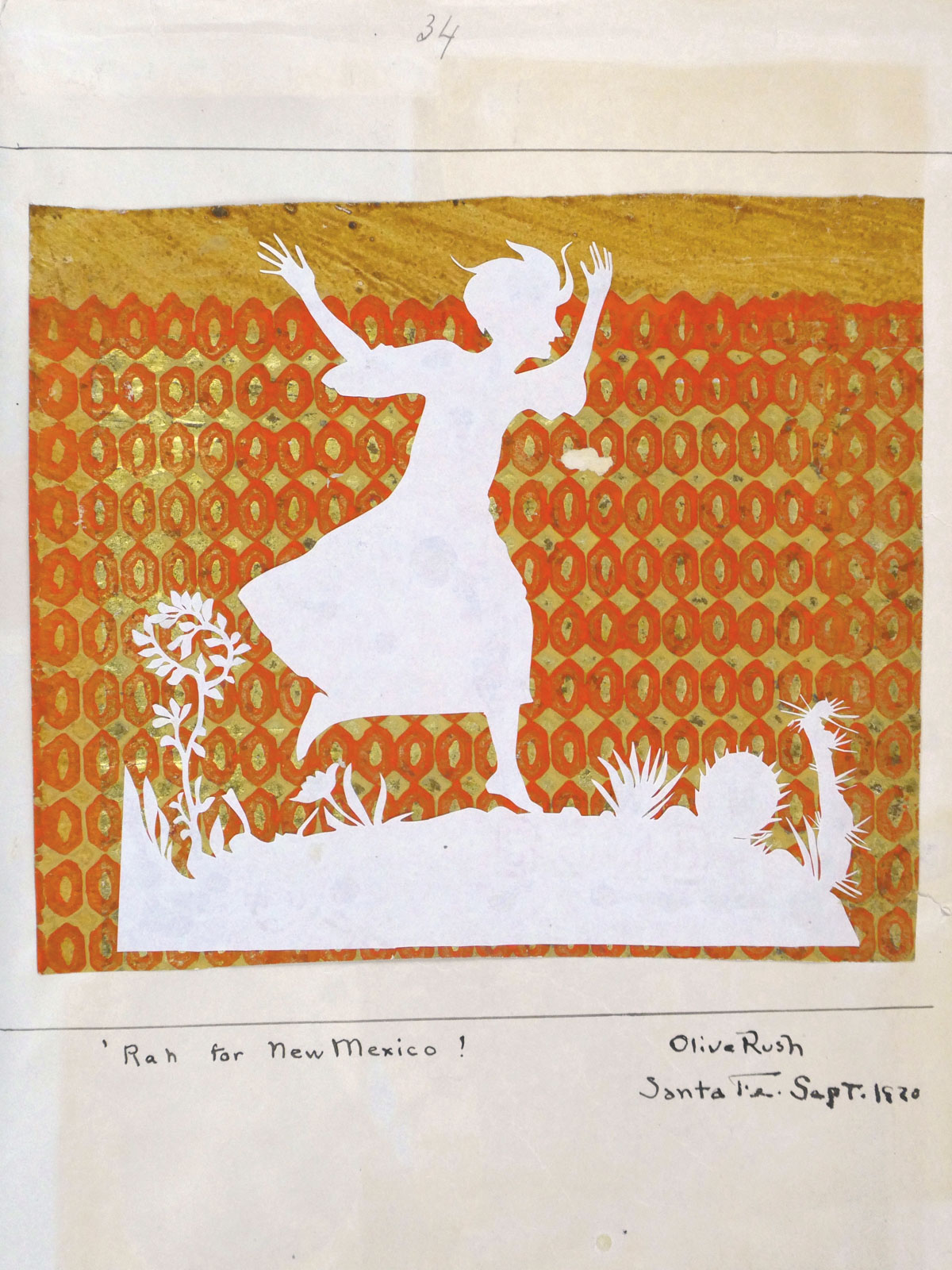
 Olive Rush (1873-1966), muralist
The house is also home to extraordinary collections and archives relating to nearly 150 years of Santa Fe history. The women kept their daily correspondence and copious records of their work in cultural conservation including the ethnobotany of northern New Mexico, Native American languages and songs, Western and Southwestern architecture, and the arts and folk arts of the United States and Finland. They had a remarkable circle of friends many of whom were artists and writers.
A painter, herself, Eva Fényes began portfolios of artists’ self-portraits in 1870, initially featuring her fellow art students in France. Frequently traveling the world, Eva documented the people she met and places she visited. The portrait portfolios also contain clippings about the drawings’ subjects.
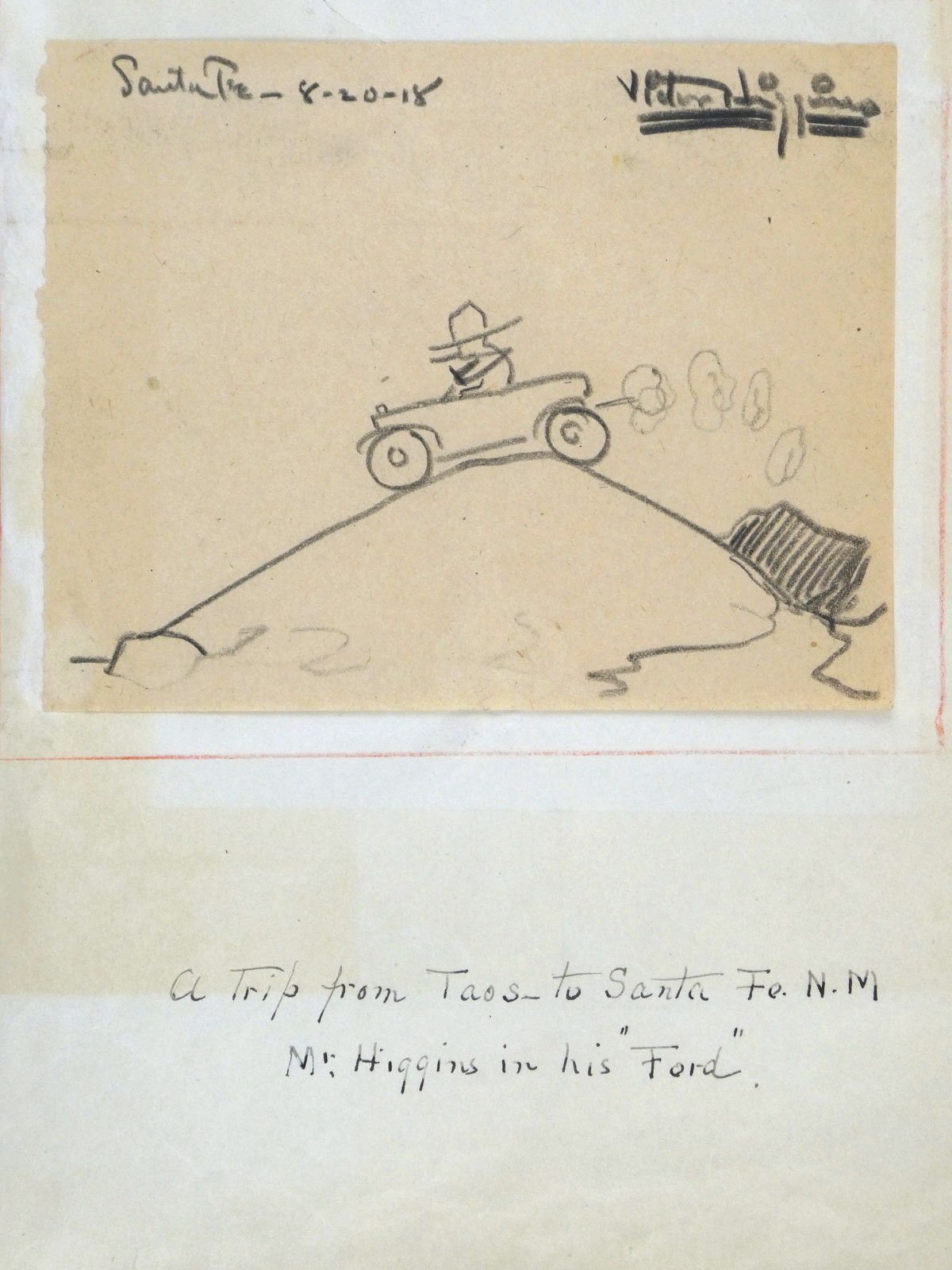 Victor Higgins (1884-1949), painter, Taos Society of Artists
An early drawing in the portfolio is by James D. Smillie (1833-1909) dated 1874. Smillie was the founder the American Watercolor Society and served as its president and treasurer. Eva noted on the mount, “With whom I studied. E.S.F.”
In their essay, “The House of the Three Wise Women: A Family Legacy in the American Southwest,” published in the journal of the California History Society, Virginia Scharff and Carolyn Brucken write, “Eva, who had supported Native artists since the 1870s, was in the vanguard of a generation of late-nineteenth-century Anglo women who were learning to admire and champion Native arts, and who collected and displayed Indian and Spanish artifacts as both a symbol of taste and an emblem of their progressive sympathies.”
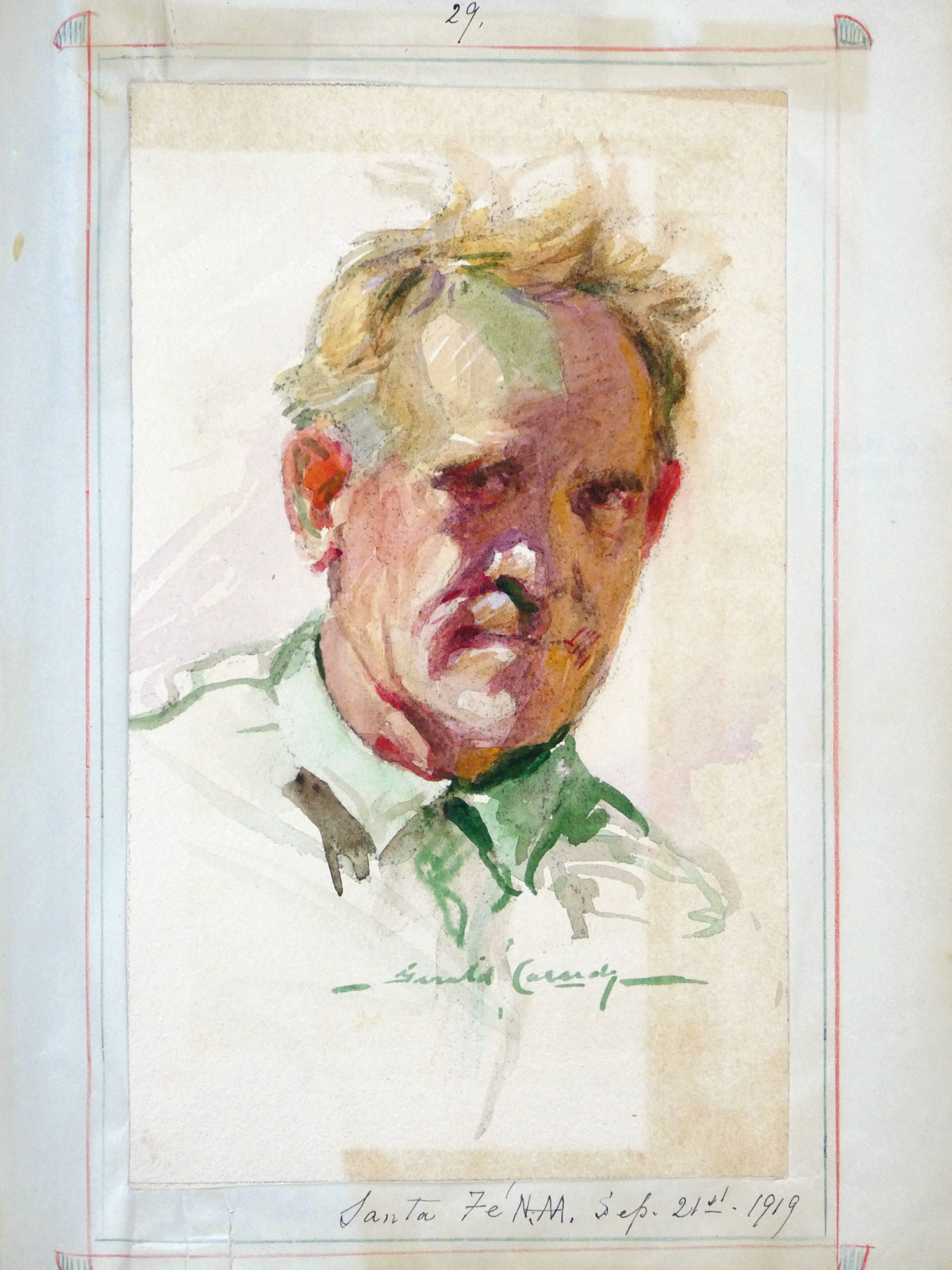 Gerald Cassidy (1869-1934), muralist
Among their friends in the Pueblo communities, whom they often supported financially and with art supplies, were the great pottery artists Maria and Julian Martinez of San Ildefonso Pueblo.
Fred Kabotie (Hopi, 1900-1986) had been sent to the Santa Fe Indian School where his teacher, Elizabeth DeHuff, encouraged him to paint images from his Hopi heritage in direct opposition to federal guidelines. He wrote, “…I was supposed to discard all my Hopi belief, all my Hopi way of life, and become a white man and become a Christian. And the government at that time looked on the Indian religion, the Hopi religion, as being the word of the devil.” He became an accomplished artist and, in 1945, was awarded a Guggenheim Fellowship.
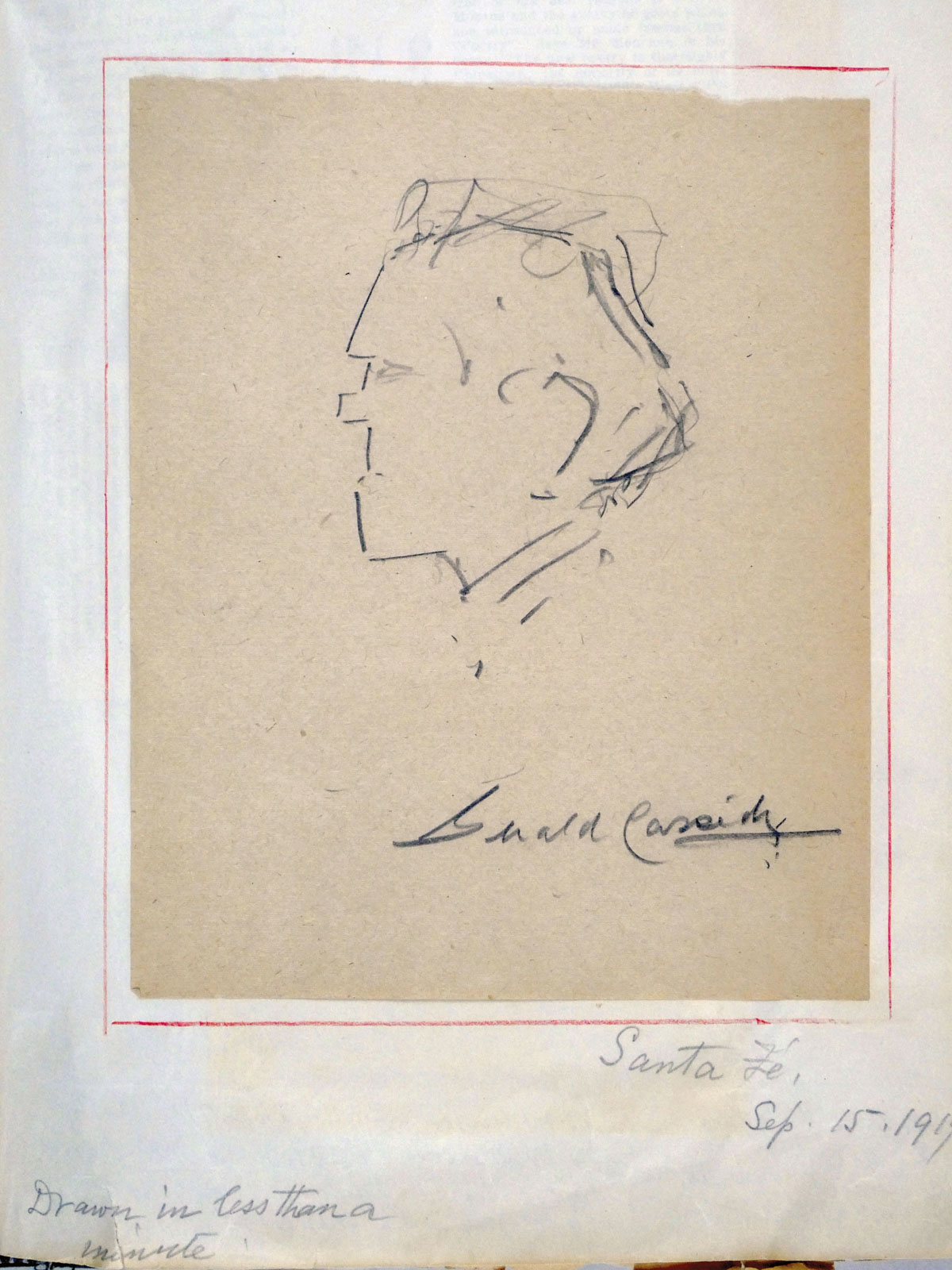 Gerald Cassidy (1869-1934), muralist
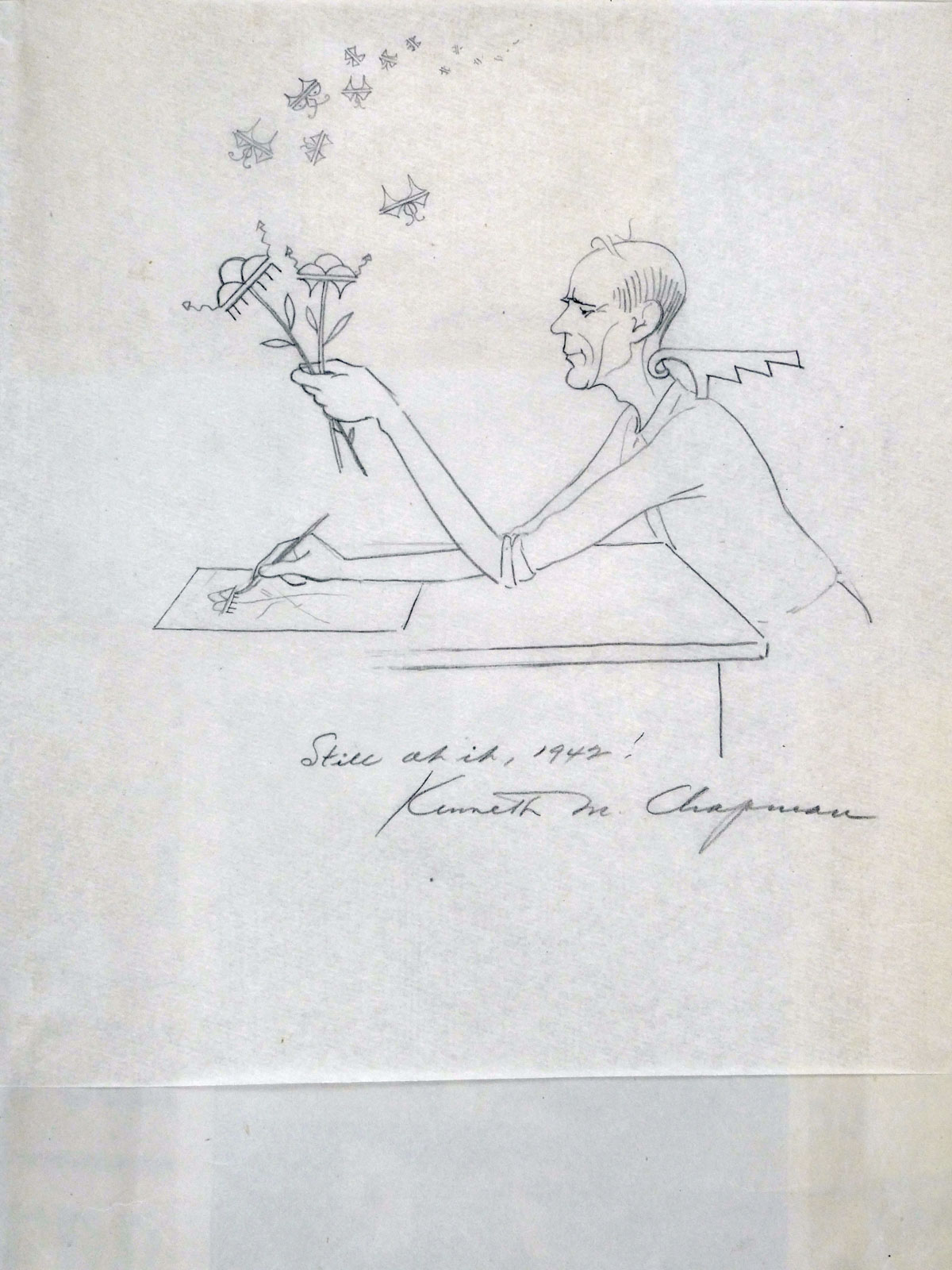 Kenneth M. Chapman (1875-1968), art historian, anthropologist
In 1920, he painted a self-portrait “for Mrs. Fényes.” Martin Schultz, who was a curator at Acequia Madre House, writes, “Interest in their environment led to the development of a substantial collection of Native American pottery and drawings and paintings. Some of these works were given to the three ladies by their friends, like Olive Rush and Sheldon Parsons.”
Olive Rush (1873-1966) first visited Santa Fe in 1914 and was given a solo exhibition at the Palace of the Governors—the first woman to have a one-person show in New Mexico. She created murals for the original restaurant of La Fonda on the Plaza as well as for the Santa Fe Public Library and the Post Office.
Her 1920 contribution to the portfolio is titled Rah for New Mexico! and features her dancing silhouette pasted on golden paper the ladies had bought in Japan.
Sheldon Parsons (1866-1943) was a portrait painter in New York City. Among his subjects were President William McKinley and Susan B. Anthony. He moved to Santa Fe in 1913. Eva lent him money to build his home there. His traditional watercolor portrait from 1919 is inscribed “To my friend, Mrs. Adelbert Fényes.”
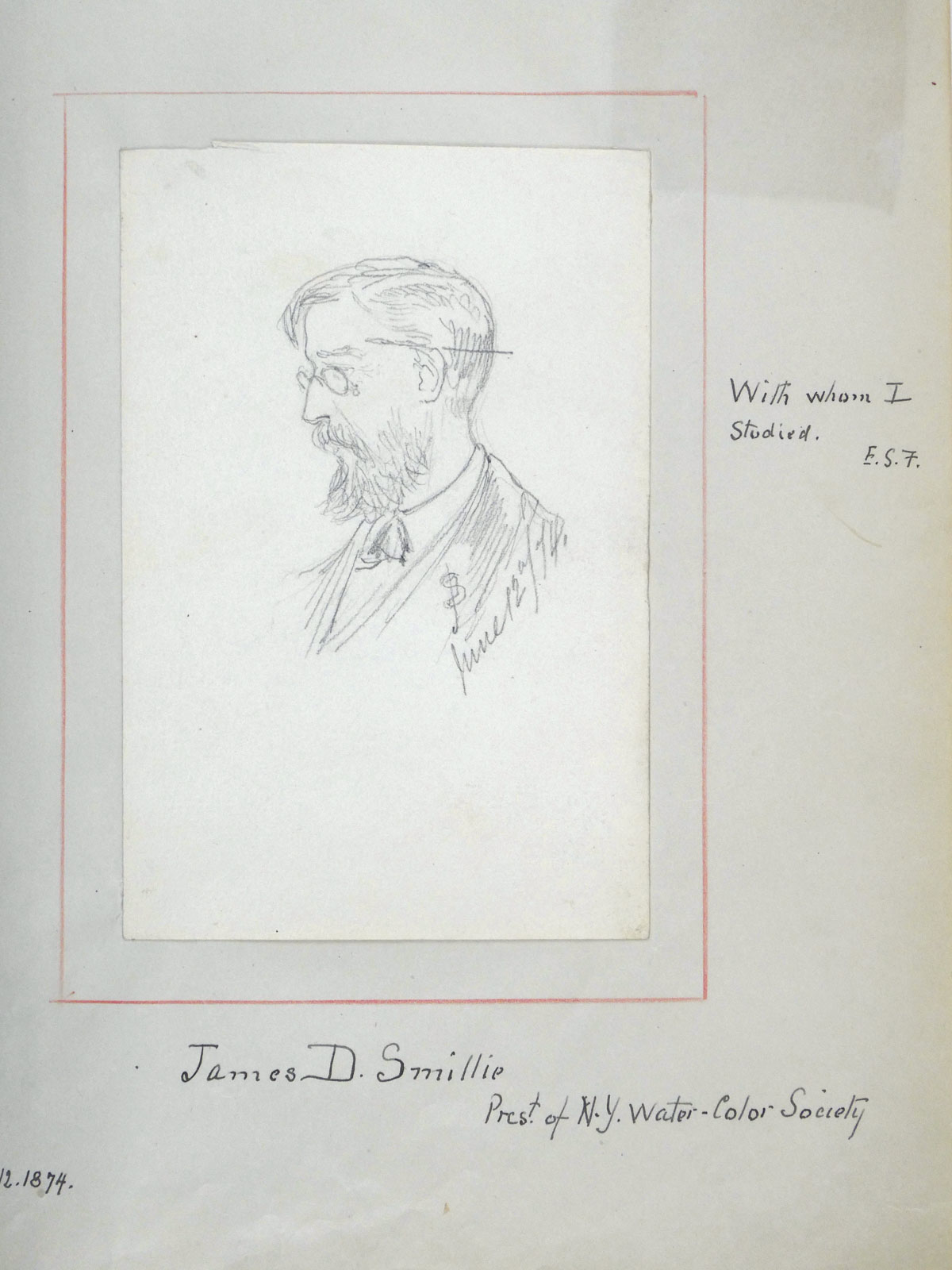 James D. Smillie (1833-1909), founder and president, American Watercolor Society
Another traditional watercolor from 1919 is by Gerald Cassidy (1869-1934) who moved to Santa Fe in 1912. He was commissioned by the Atchison Topeka & Santa Fe Railway to produce paintings to be reproduced as posters to promote the region. The original paintings now grace the lobby and hallways of La Fonda. Cassidy is also represented by a charcoal caricature which is described on the mount “Drawn in less than a minute.”
Victor Higgins (1884-1949) joined the Taos Society of Artists in 1917 and divided his time between Taos and Chicago. His approach to painting was more modern than that of his fellow Taos painters and in his 1918 self-portrait for Eva’s portfolio, he drew a humorous caricature of himself navigating the treacherous route from Taos to Santa Fe, described on the mount as “Mr. Higgins in his ‘Ford.’”
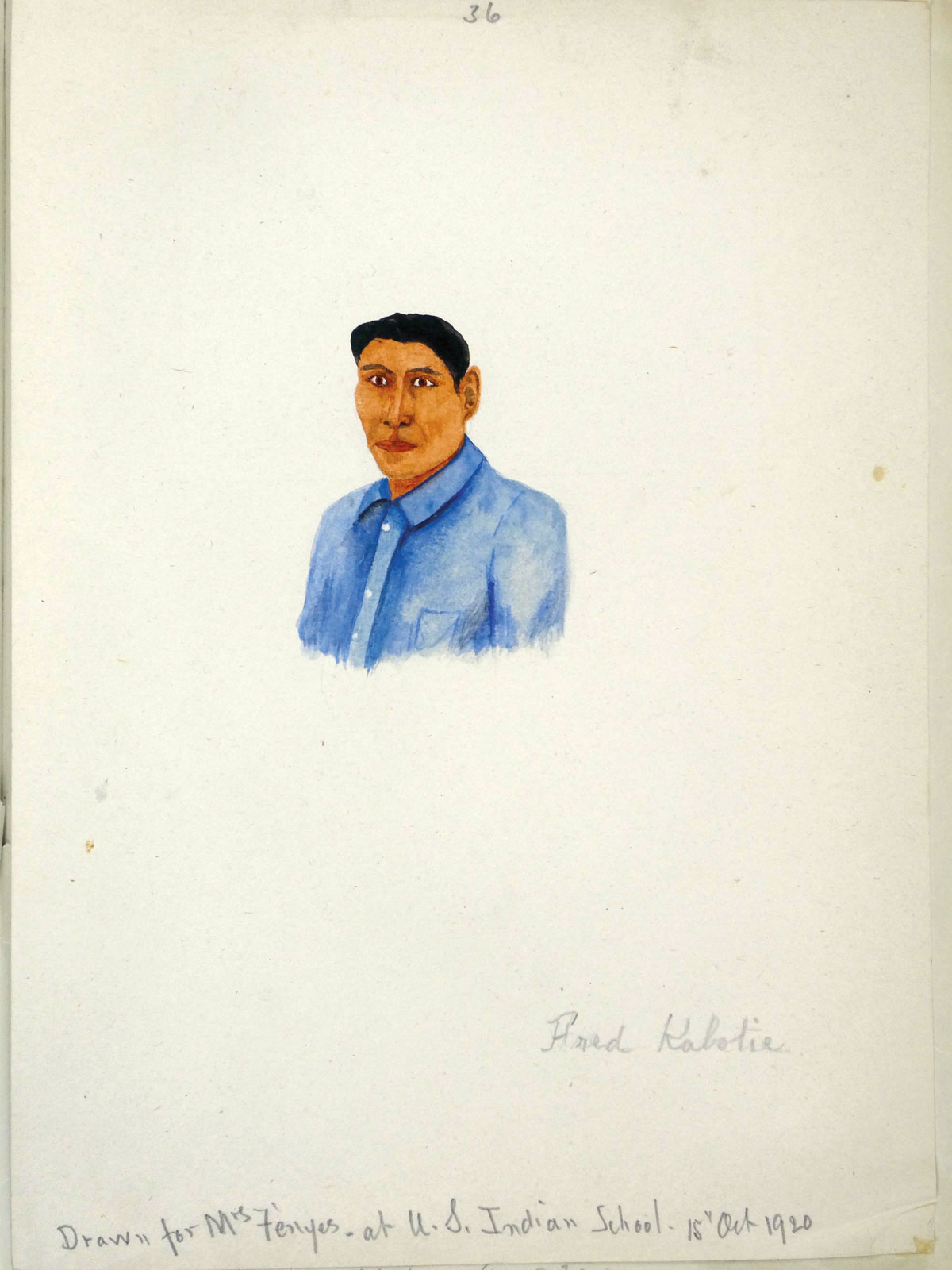 Fred Kabotie (Hopi, 1900-1986), painter, silversmith, teacher
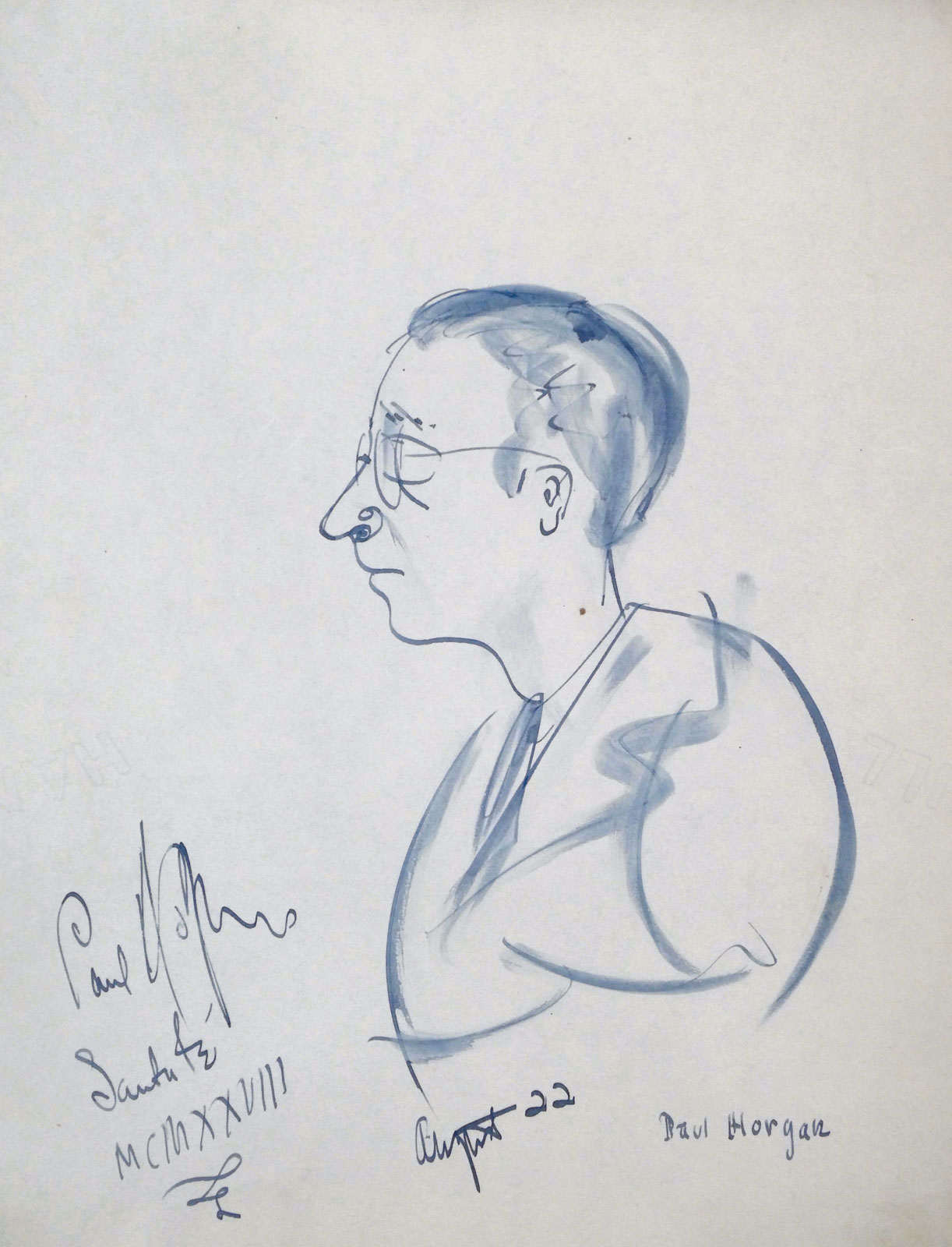 Paul Horgan (1903-1995), two-time Pulitzer Prize winning author
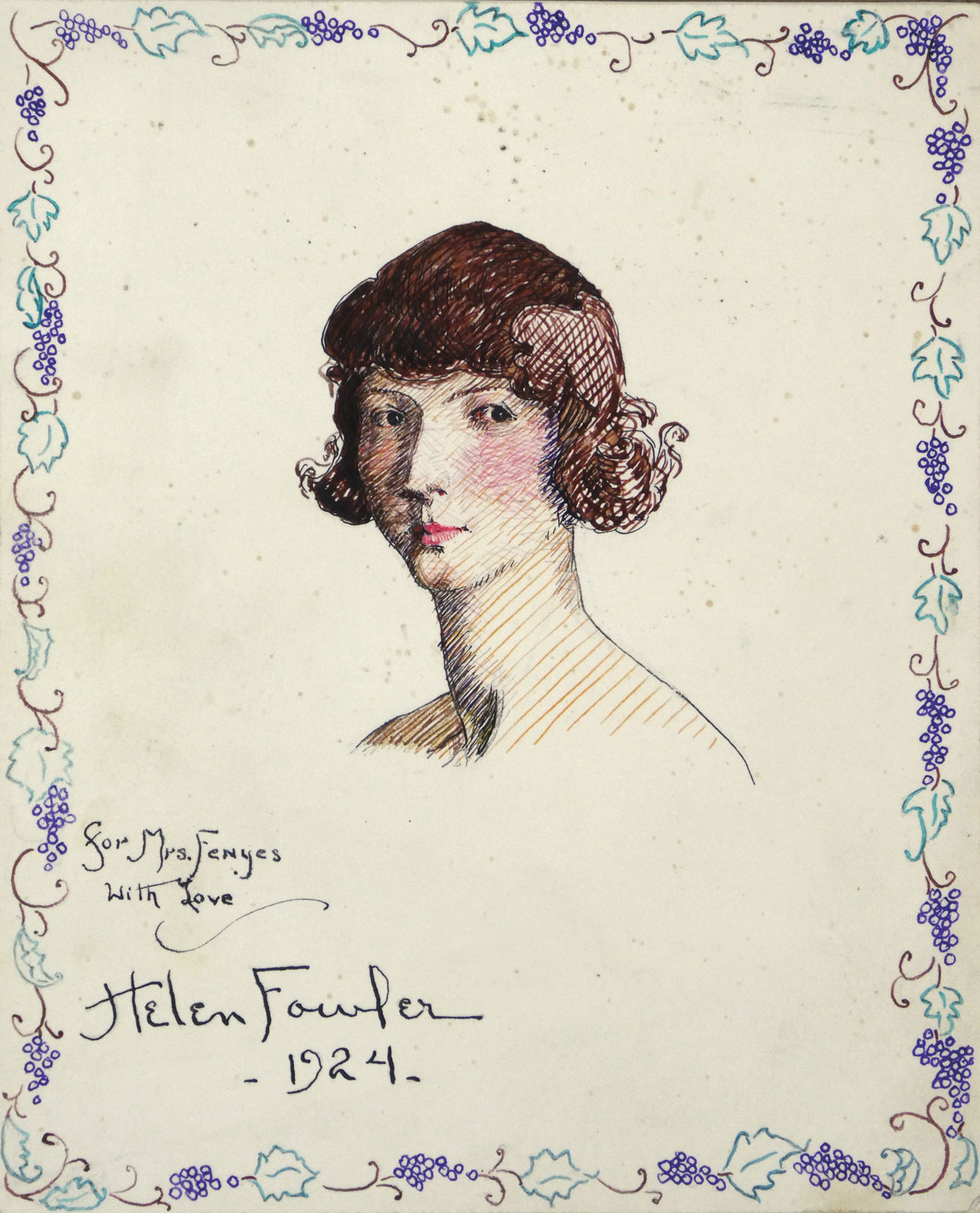 Helen Fowler (1902-1975), painter, family friend
Kenneth Chapman (1875-1968) moved to Santa Fe in 1909. An expert in Native American art and design, he drew himself holding stems of flowers whose blossoms are Native symbols for clouds and rain. He inscribed the drawing, “Still at it, 1942!”
Paul Horgan’s ink and watercolor profile is dated 1928. Horgan (1903-1995) received the Pulitzer Prize for history twice for his books Great River: The Rio Grande in North American History and Lamy of Santa Fe.
Also among the contributions to the portfolio is a 1924 painting by Helen Fowler (1902-1975), a contemporary and friend of Leonora Paloheimo inscribed, “For Mrs. Fényes With Love.” Fowler was a friend from Pasadena, California, where the ladies also had a home.
Wise women abounded in northern New Mexico in the early years of the 20th century. Mabel Dodge Lujan brought her New York, Provincetown and Florence soirées to Taos, inviting luminaries in the arts to her home. The sisters Amelia and Martha White were real estate developers in Santa Fe and opened the first gallery of Native American art in New York City. Their Santa Fe estate was bequeathed to what is now the School for Advanced Research which houses one of the world’s finest collections of Southwest Native American art.
Powered by Froala Editor