
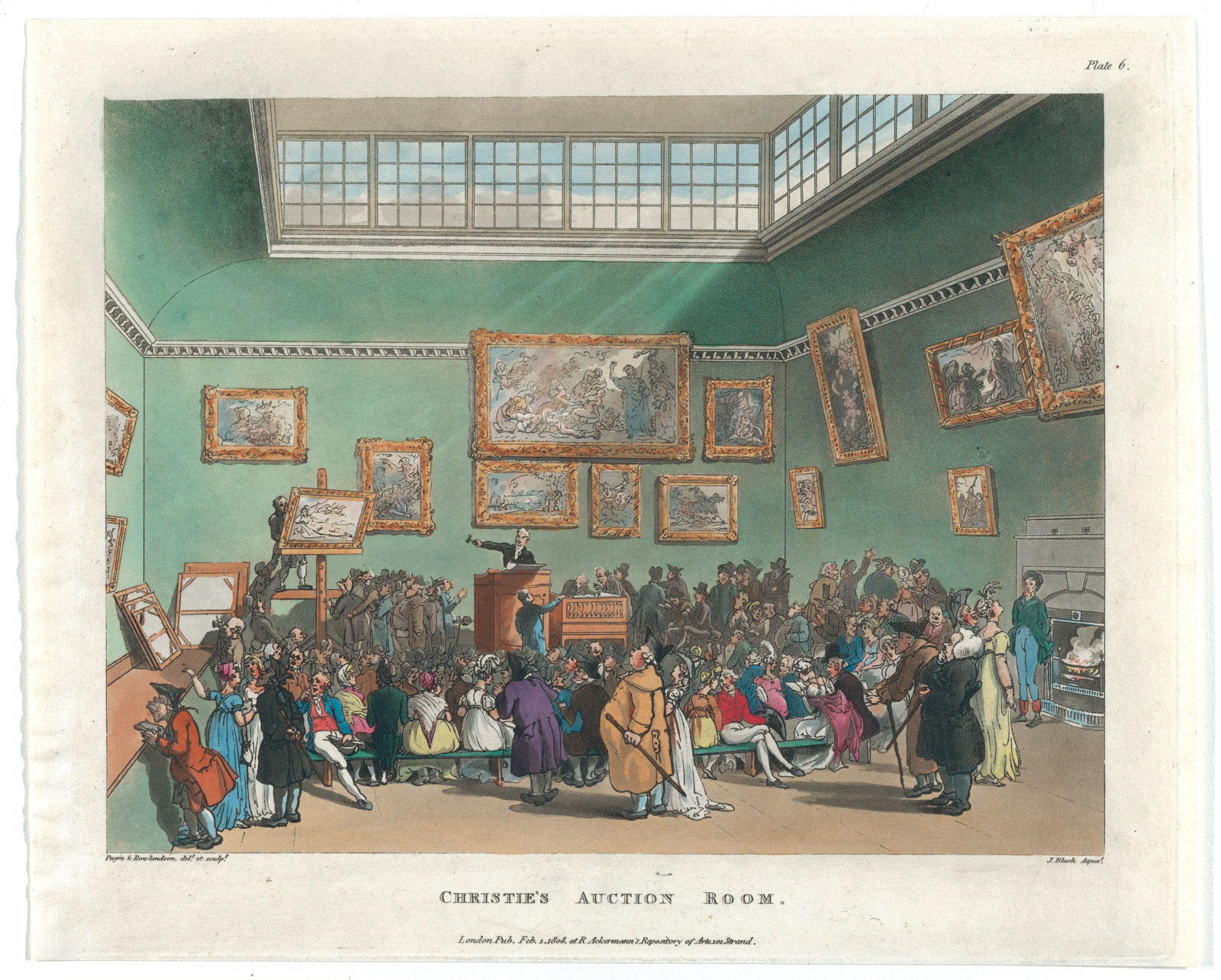
 Thomas Rowlandson (1757-1827), Auguste Charles Pugin (1768/69-1832), John Bluck (1791-1832), Christie’s Auction Rooms, 1808. Hand-colored etching and aquatint; sheet: 9 ¾ x 12 in., plate: 9½ x 111⁄16 in. Series/Portfolio: Microcosm of London, pl. 6. Published by Rudolph Ackermann (active 1794–1832). Harris Brisbane Dick Fund, 1917. Accession Number: 17.3.1167-146. Courtesy the Metropolitan Museum of Art.
According to Lacy Scott & Knight Auction Centre, the first recorded auction occurred around 500 B.C. “Ancient Greek historian Herodotus reported that marriage auctions of women in Babylon took place annually,” they note. “While Roman soldiers would drive a spear into the ground around which the spoils of war were left to be auctioned off.” Later, Roman soldiers would auction off spoils of war—including slaves—to support the war effort.
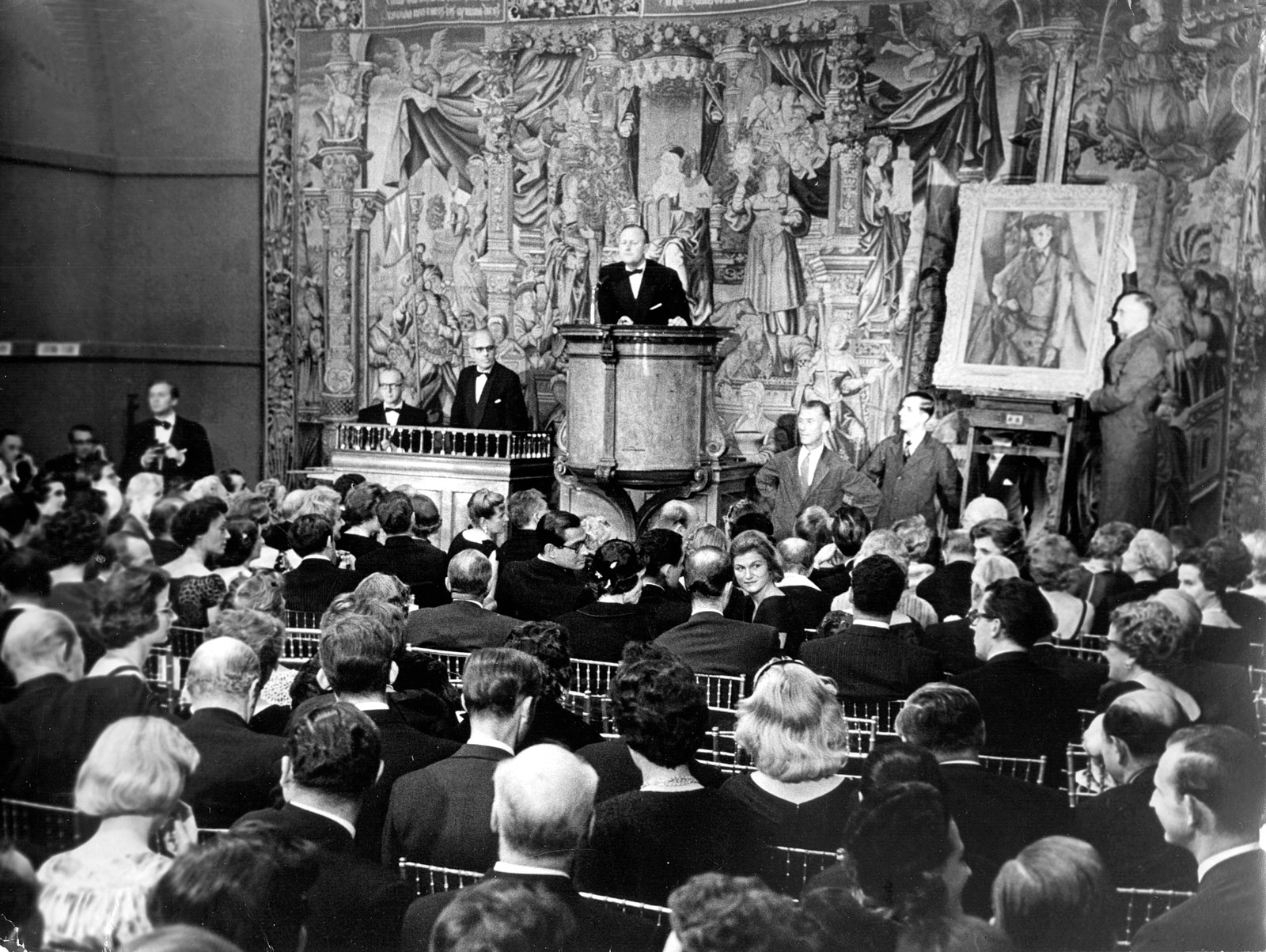 Peter Wilson, Sotheby’s chairman from 1958 to 1980, selling Cézanne’s Le Garçon au Gilet Rouge at the landmark Jakob Goldschmidt sale in London, the first evening auction of Impressionist and Modern art, 1958. Image courtesy Sotheby’s.
They postulate that the auction’s unsavory history may have played a part in the system falling out of favor after the fall of the Roman Empire until it began to show signs of recovery in the mid-16th century.
In his exhaustive book A History of the Auction, author Brian Learmount writes, “The second half of the eighteenth century saw the rapid growth of the auction business continuing, particularly in London and Paris,” where the events took place primarily in coffee houses. “Even so, the long and steady climb towards the monolithic auction enterprises of the present day had already begun in more ways than one, for as early as 1744 Samuel Baker, the London bookseller destined to be the founder of the great auction house which would become known as Sotheby’s, had his first auction sale of books.”
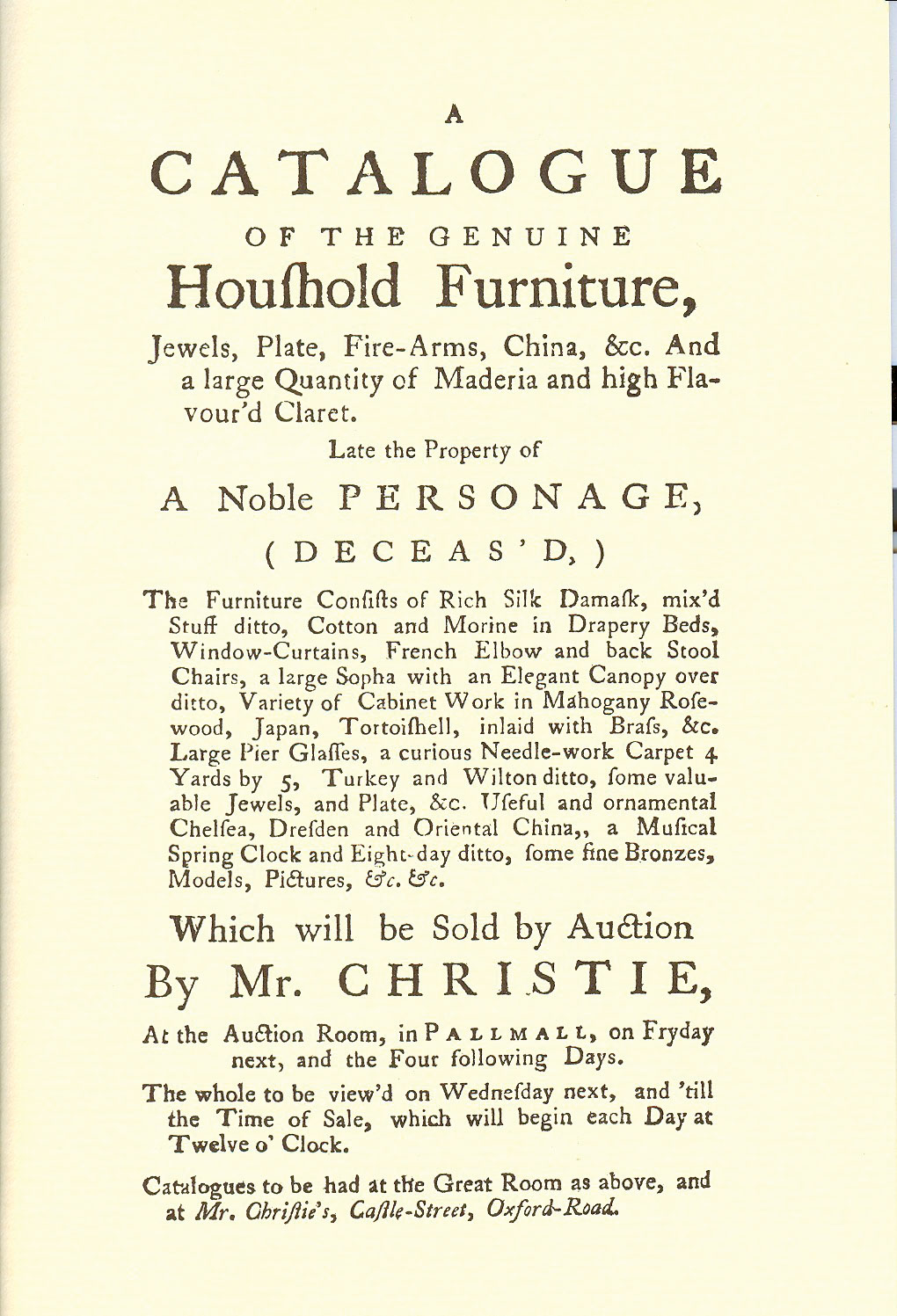 The announcement of Christie’s first sale, December 5, 1766.
Baker kick-started his small book-selling business with the presentation of the library of a British nobleman, Sir John Stanley, in London at Exeter Exchange on the Strand—an auction, according to Sotheby’s of “several hundred scarce and valuable Books in all branches of Polite Literature” that fetched a grand total of £826.
“Just five years later,” Learmount continues, “James Christie began the apprenticeship which would lead him to the establishment of his own business in 1766, the beginning of a line leading directly to the other great auctioneering institution. It is reported that by 1766, when James Christie set up on his own, there were about 60 auctioneers operating in London, selling everything it is said from art to hay.”
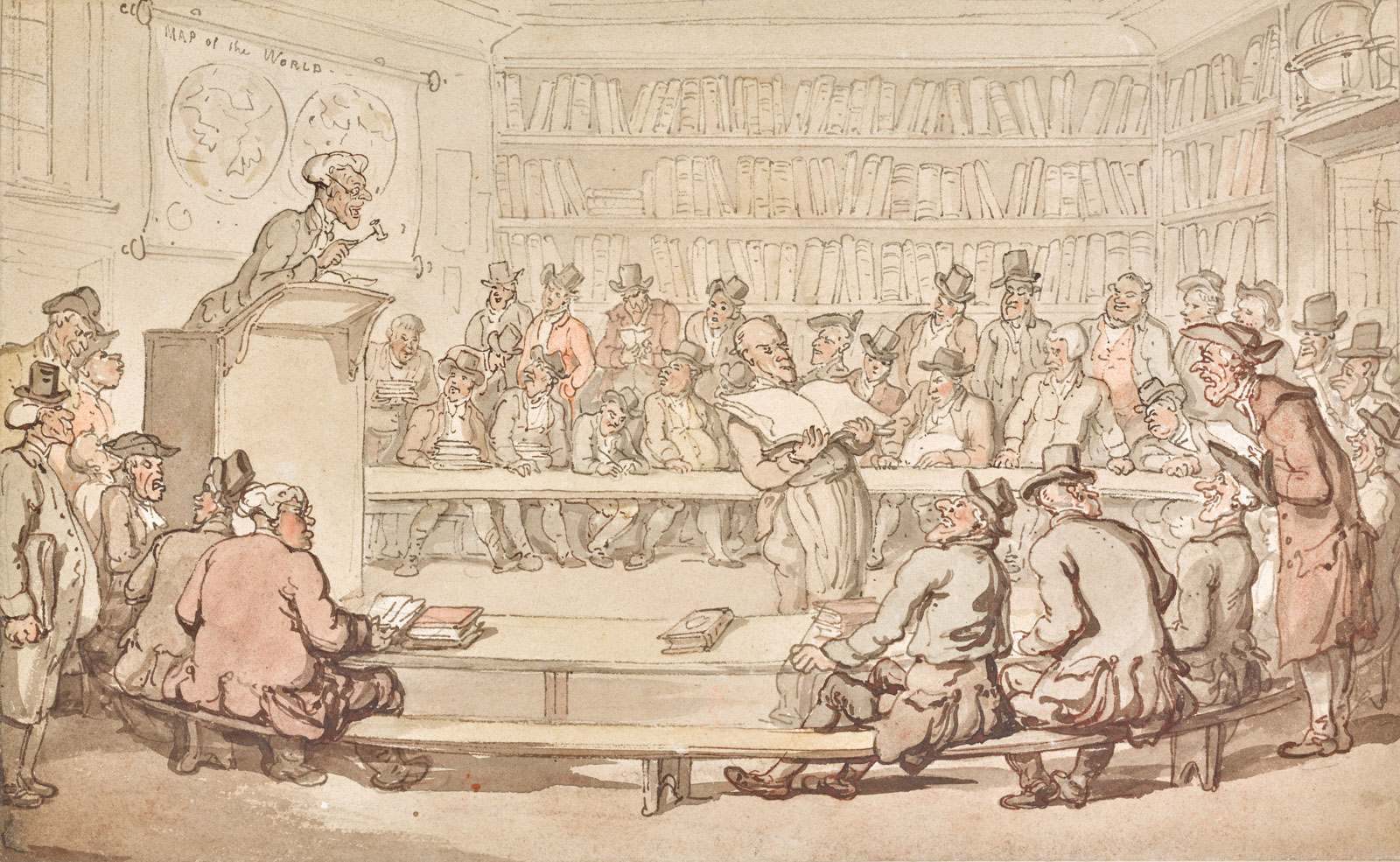 Impression of a book sale by British caricaturist and printmaker Thomas Rowlandson (1756-1827). Image courtesy Sotheby’s.
According to a history provided by Christie’s, “On Friday, 20 March, 1767, in the ‘Great Rooms’ of 83-84 Pall Mall Street in London’s St James’s, Mr. James Christie (1730-1803) rapped his gavel on the rostrum signaling the sale of a Titian for two guineas. Donning a grey wig, spectacles, and his famous wit, Mr. Christie was conducting his very first auction made up entirely of pictures. Works by Rembrandt, del Sarto, Poussin, and Cuyp—among others—comprised the collection of Italian, French and Flemish old master pictures about to come under the hammer.”
It wasn’t until 1883, after 140 years of selling only books, Sotheby’s would broaden its focus to include art. The account provided by Sotheby’s notes that “the doorman had been informed…that he should no longer send clients who arrived with paintings or works of art down the road to Christie’s.”
 Sotheby’s 2008 Beautiful Inside my Head Forever auction, which brought directly to market 200 new works by Damien Hirst that totaled $200.8 million.Since then, the two juggernauts in the industry have survived centuries of ups and downs in an unpredictable market, while managing to successfully co-exist despite the competitive nature of the companies themselves and the business they are in.
In 1955, Sotheby’s became the world’s first international auction house with the opening of a New York office. Christie’s, on the other hand, focused on expanding in Europe, first opening an office in Rome in 1958, and during a boom in the early 70s to Asia, India and the Middle East. Christie’s held its first sale in the United States in 1970 in Houston and went on to open a saleroom in New York City in 1977.
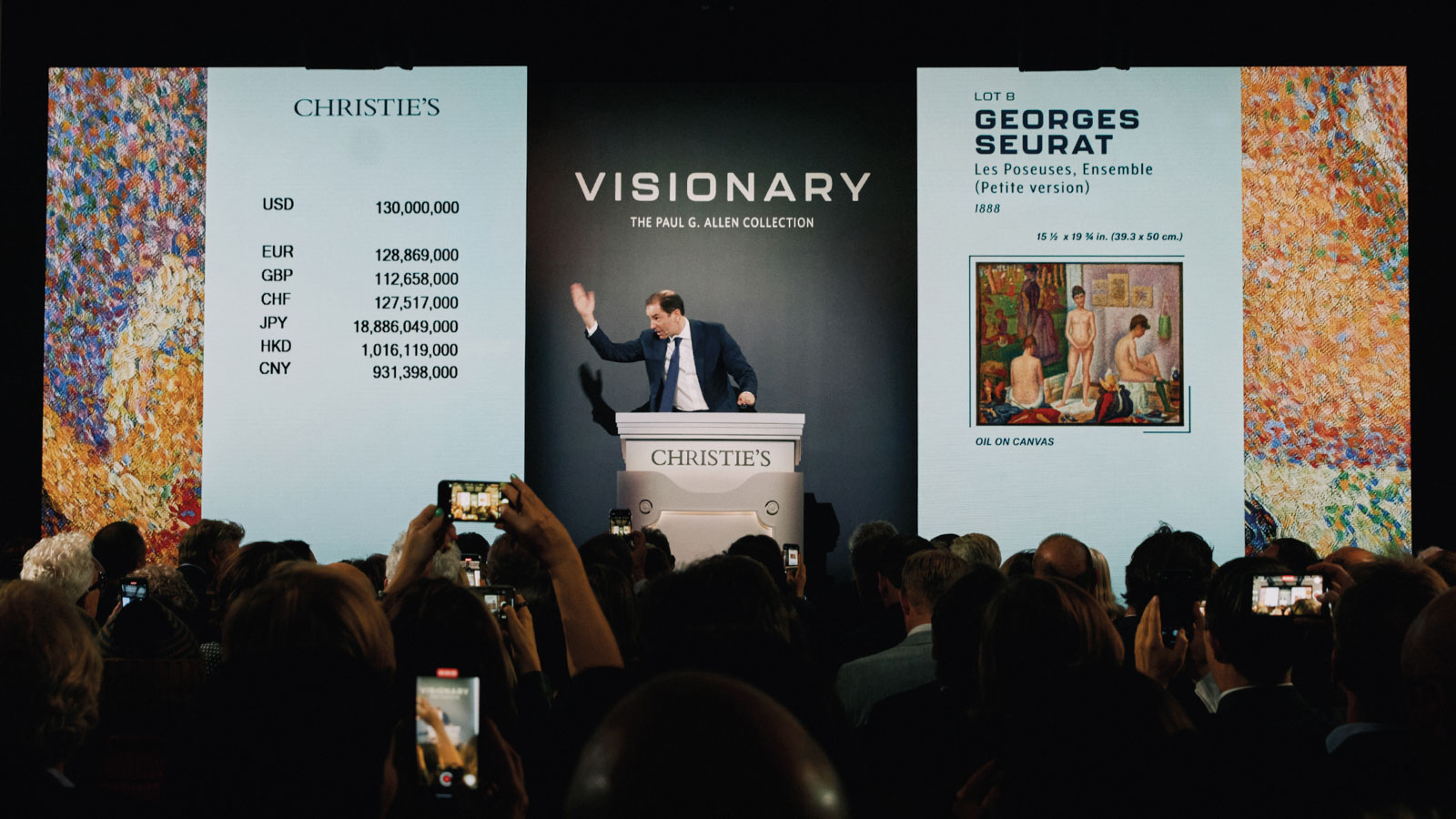 In November 2022, Christie’s sale Visionary: The Paul G. Allen Collection became the most valuable auction in history when it achieved $1.5 billion.
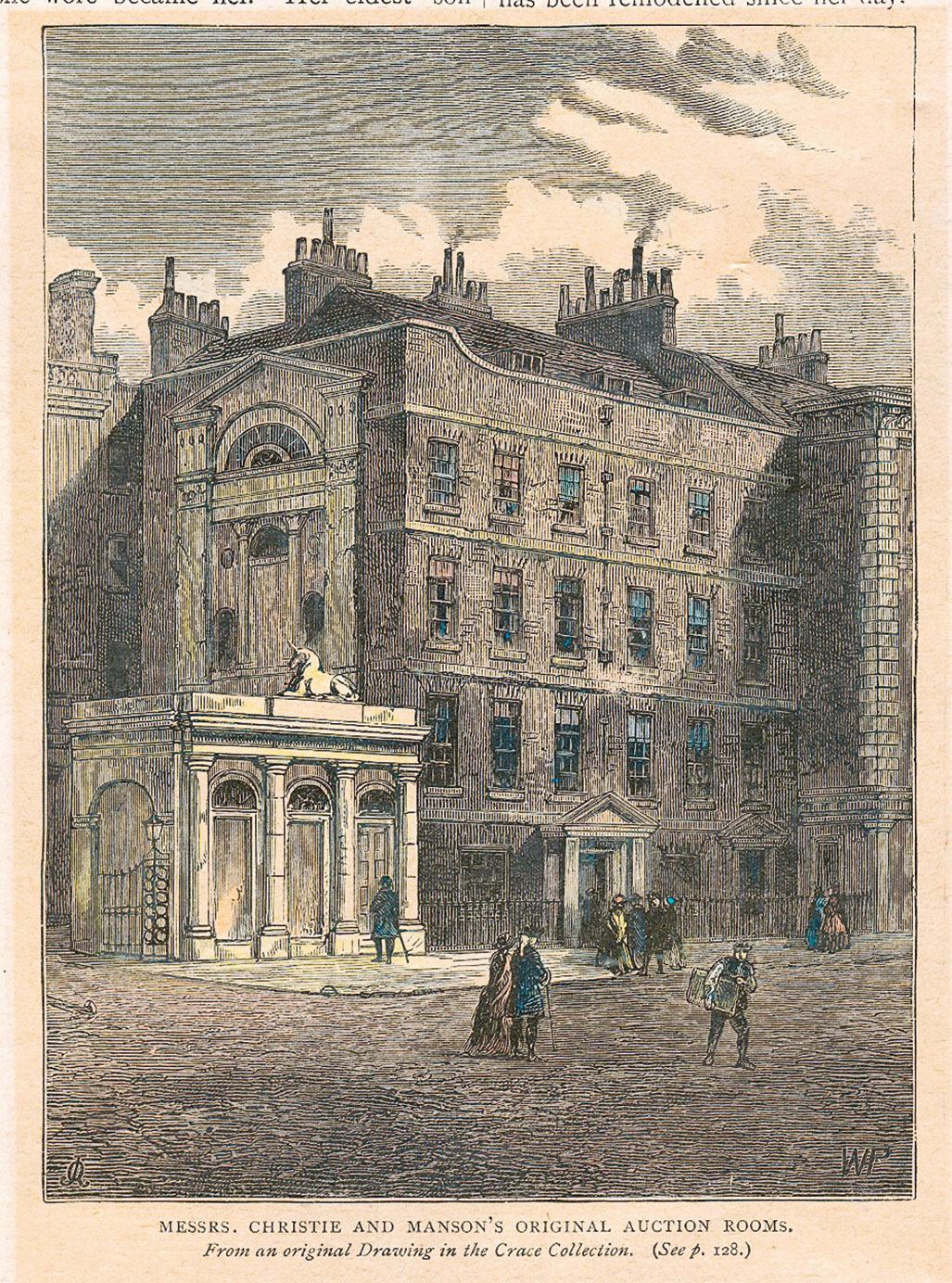 In 1766, James Christie held his first sale in his permanent saleroom in Pall Mall, London. Image courtesy Christie’s.
Since then, neck and neck, the two houses have continued to make auction history but if we were to keep score, Christie’s is up one after presenting Visionary: The Paul G. Allen Collection in November 2022, which achieved $1.5 billion, making it the biggest sale in auction history.
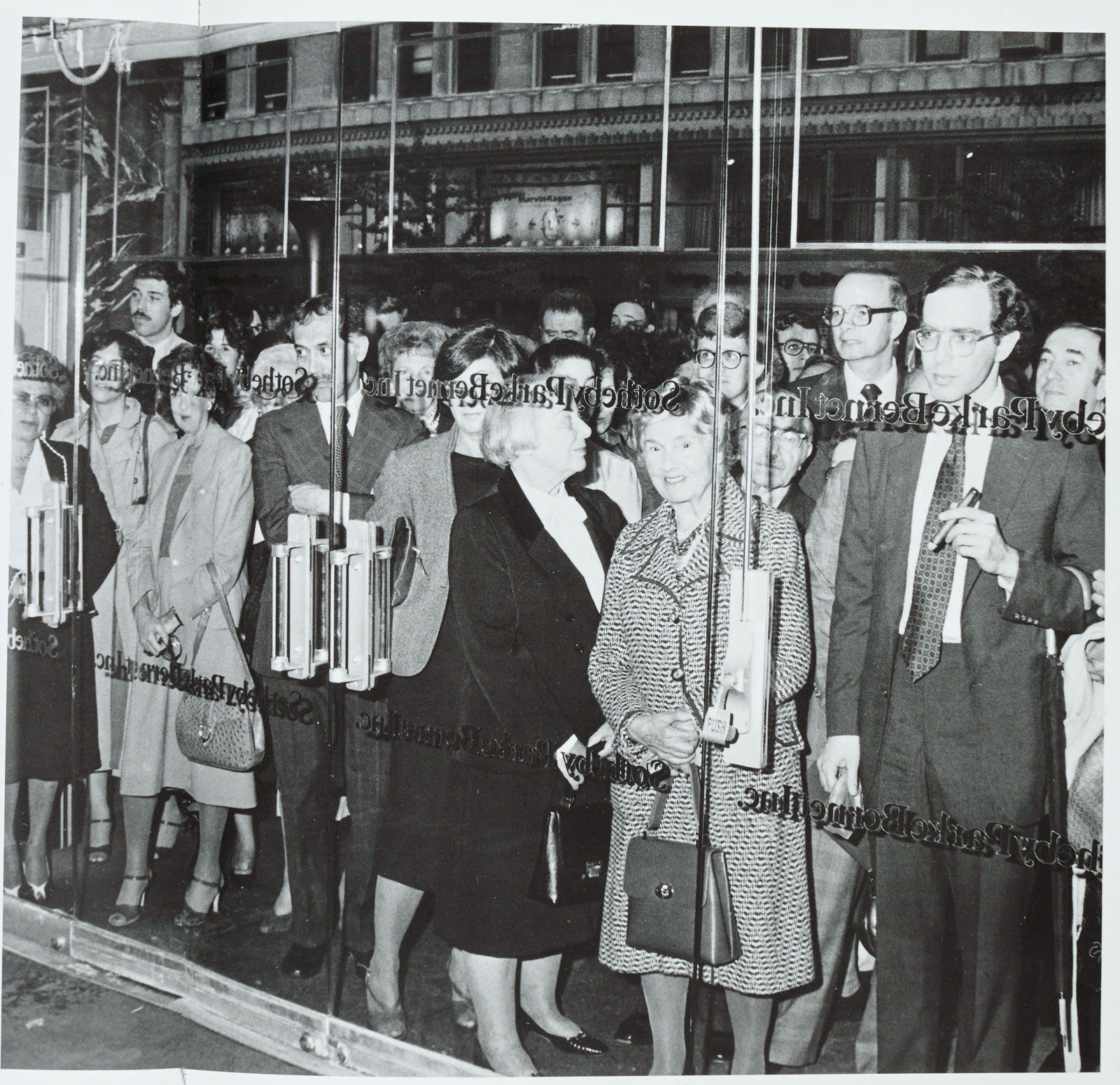 In 1964 Sotheby’s bought Parke-Bernet, America’s largest auction house becoming the first international auction house. Sotheby’s Parke Bernet, New York, 1980. Photo courtesy Sotheby’s.
While the history of art auctions is inextricable from the history of these two powerhouses, the market has broadened to include other major players like Freeman’s, Bonhams and Hindman as well as smaller boutique operations that can provide the kind of highly personalized experience and unparalleled expertise in niche markets that some larger house might not.. In the following pages we celebrate the whole spectrum of auction houses, certain that, whether you are looking to buy or sell, or seeking the services of a specialist, you will find the company that can best cater to your needs and provide the kind of experience you desire. In addition to the auction house guide, which begins on Page 52, this special section includes in-depth market insights from industry experts, previews of the most significant upcoming auctions, a breakdown of the top-selling historic American artists and the 2024 auctions to mark on your calendars. We hope this is a resource you will reference all year long.
Powered by Froala Editor