An important exhibition at the Smithsonian American Art Museum examines the collaborative relationship between photographer James Presley (J.P.) Ball and landscape painter Robert Seldon Duncanson, two free, Black artists living in Cincinnati during the antebellum period. Titled J.P. Ball and Robert S. Duncanson: An African American Artistic Collaboration, the exhibition features three paintings by Duncanson from the museum’s collection alongside nine works by Ball roughly between 1845 and 1855. The Smithsonian notes that eight of the photographic works are on view for the first time.
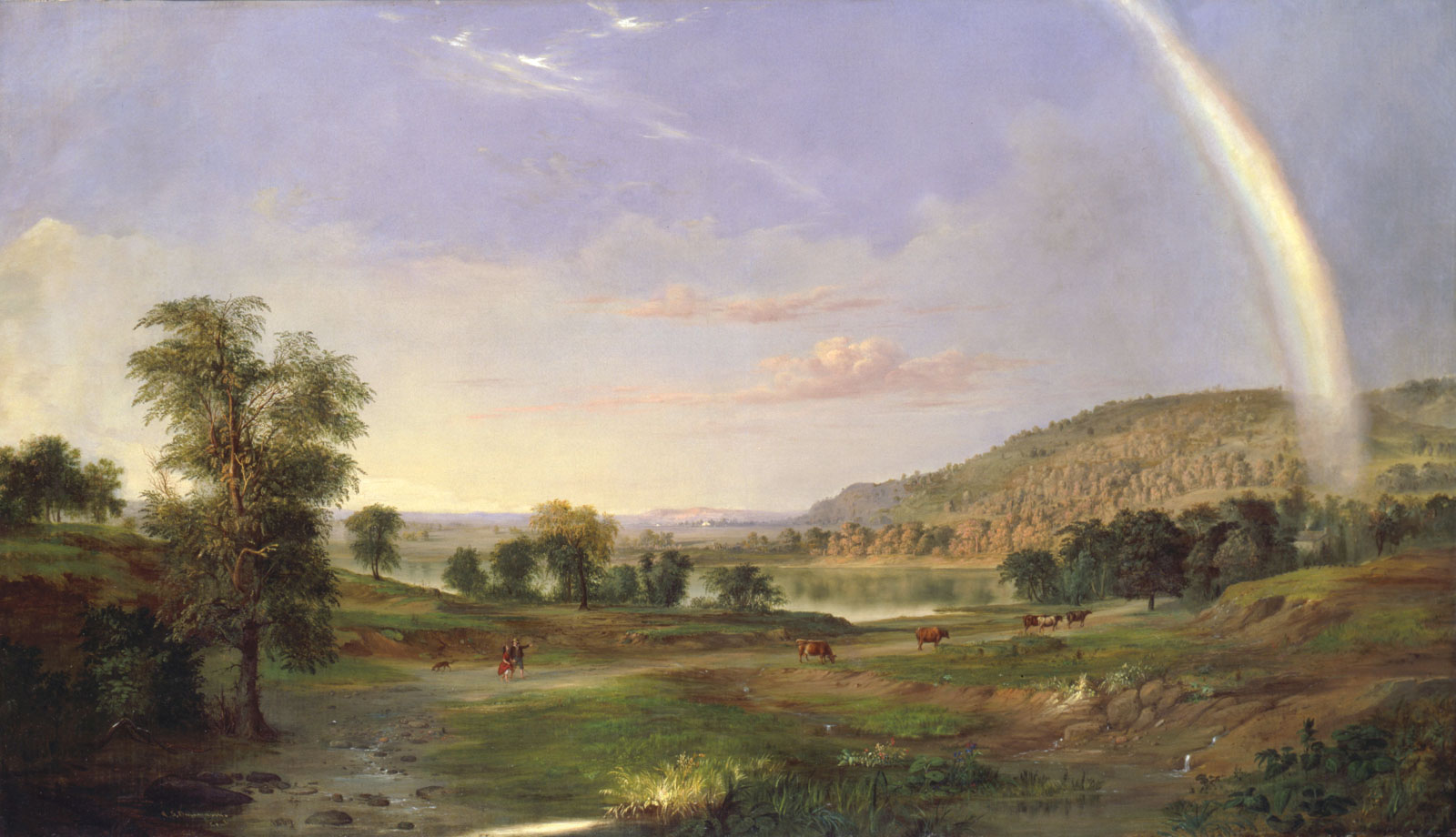 Robert S. Duncanson (1821/22-1872), Landscape with Rainbow, 1859. Oil on canvas. Smithsonian American Art Museum, Gift of Leonard and Paula Granoff, 1983.95.160.
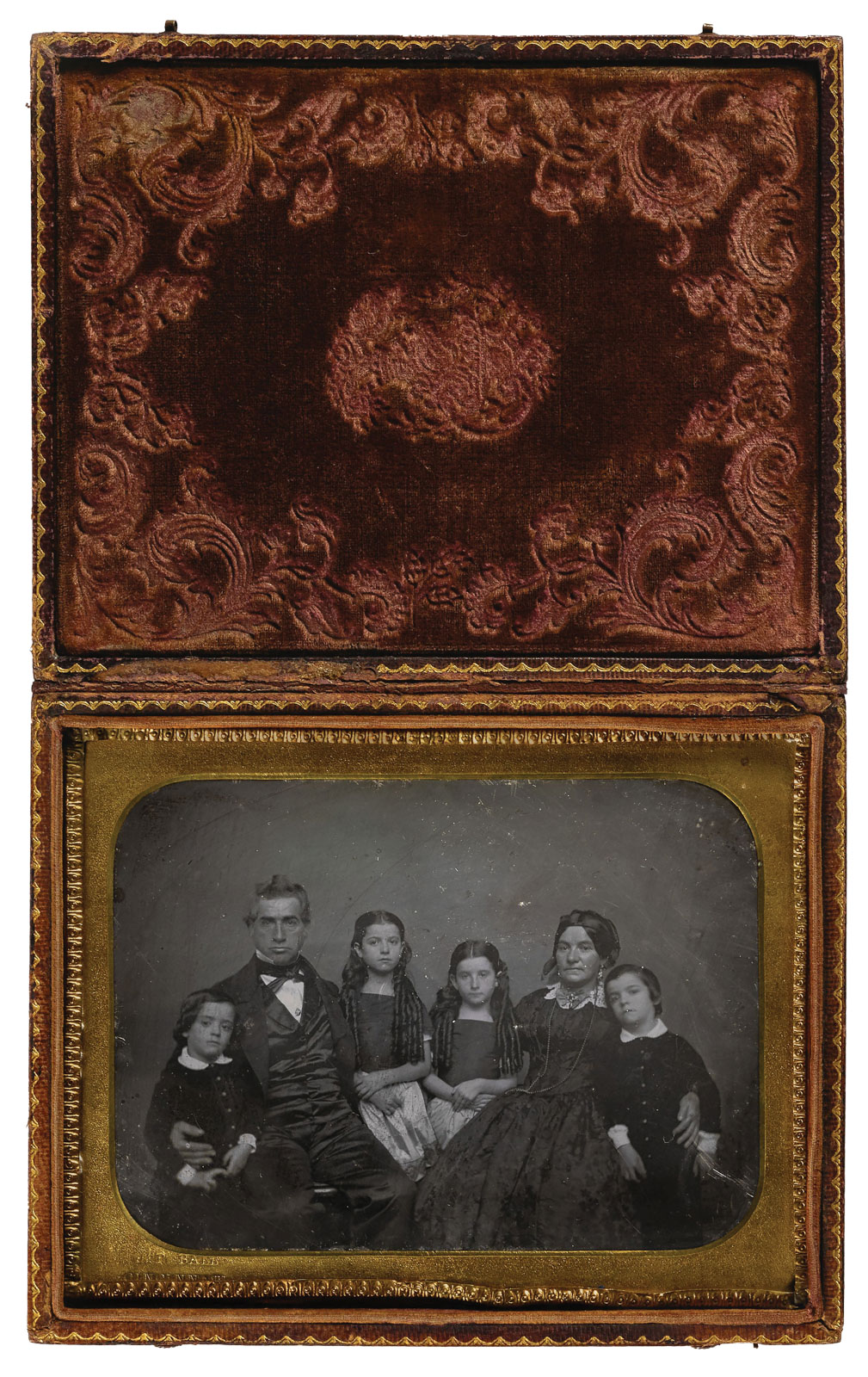 James Presley (J. P.) Ball (1825-1904), Unidentified sitters, 1853-58. Half plate daguerreotype, cased. Smithsonian American Art Museum, The L. J. West Collection of Early African American Photography, Museum purchase through the Luisita L. and Franz H. Denghausen Endowment.
“During that time, Ball employed Duncanson as a colorist to hand-tint photographs, and Ball’s ‘Great Daguerrean Gallery of the West’ included an exhibition space that displayed Ball’s portraits and Duncanson’s landscape paintings to the public,” says John Jacob, McEvoy Family Curator of Photography at SAAM. “Ball and Duncanson did not so much influence one another as much as they supported each other. Both were ambitious and entrepreneurial, and each supported the other’s ambitions and entrepreneurship. Duncanson also likely participated in painting a 600-yard-long panorama (now lost) that illustrated the episodes described in Ball’s 1855 abolitionist pamphlet, Splendid Mammoth Pictorial Tour of the United States...In addition to their own antislavery efforts, Ball and Duncanson received significant support from abolitionist patrons.” Among the exhibition highlights is Ball’s Unidentified sitters, a half plate daguerreotype, the earliest form of photography. “The refined nature of this family’s self-presentation, especially the silk dress and the jewelry worn by the mother, shows the wealth of James Presley Ball’s early clientele.,” note the curatorial team. “Although Ball photographed Black clients, including the famous abolitionist Frederick Douglass, the photographs in this installation reflect how often white families and individuals in Cincinnati patronized Ball.”
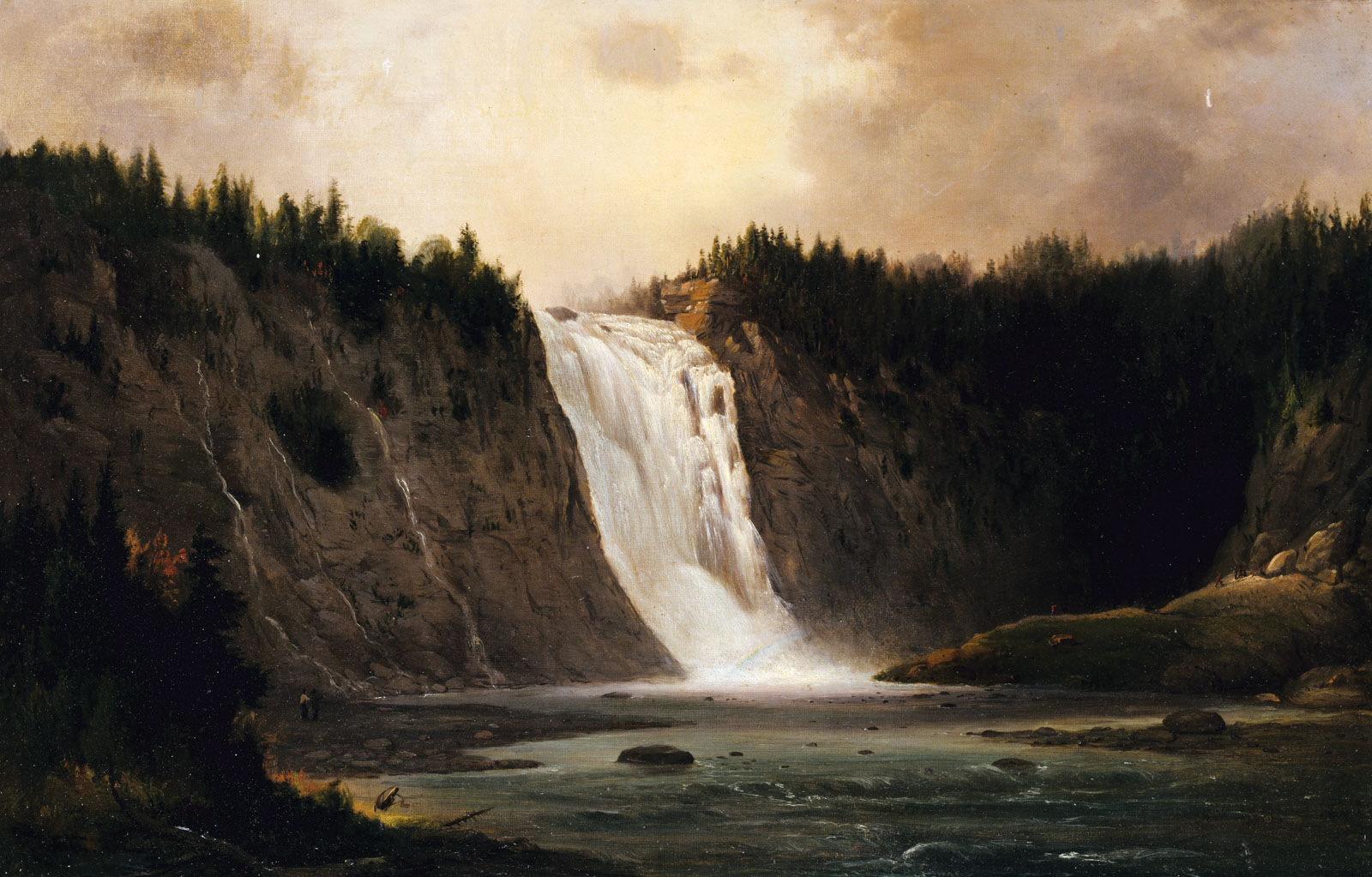 Robert S. Duncanson (1821/22-1872), Waterfall on Mont-Morency, 1864. Oil on canvas. Smithsonian American Art Museum, Gift of Dr. Norbert Fleisig, 1983.95.161.
Duncanson’s 1859 oil on canvas Landscape with Rainbow is also of note according to the curators. “Duncanson included several abolitionist references in this pastoral landscape painted on the eve of the Civil War…The rainbow overhead falls directly onto the roof, possibly a reference to safe houses to which enslaved people fled while seeking freedom. The stream reminds us of the division between free states and slave states, but waterways also helped escapees on their path to freedom, as water erased footprints and masked human scent…This scene is filled with hope. Landscape with Rainbow is an example of the power of landscape painting to convey America’s aspirations. It is a vision of future peace and prosperity.”
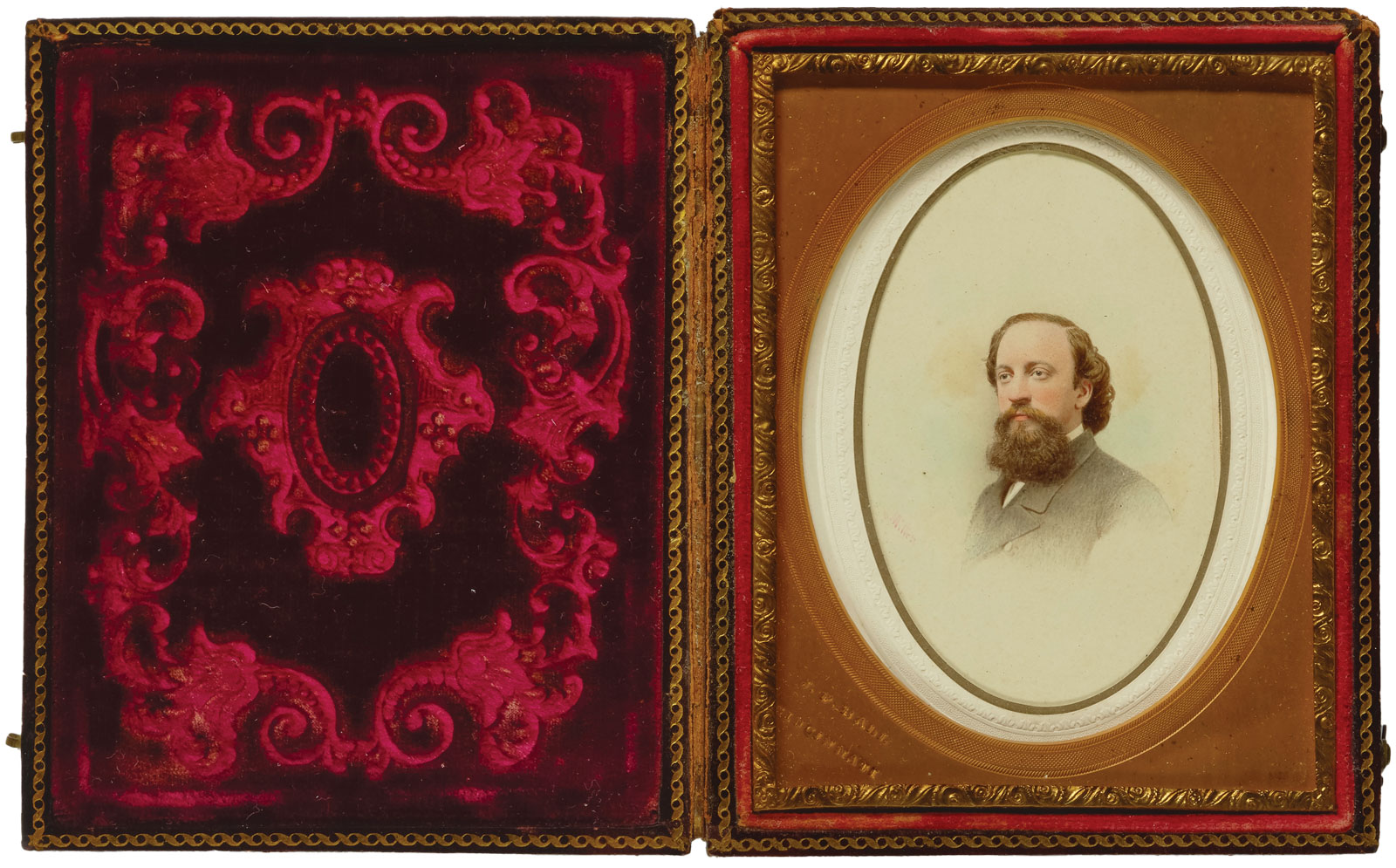 James Presley (J. P.) Ball (1825-1904), Unidentified sitter, ca. 1858. Albumen silver print with applied color, cased. Smithsonian American Art Museum, Museum purchase through the Smithsonian Institution Collections Acquisition Program.
The painting was on display at the U.S. Capitol as part of the inaugural events of January 2021 to reflect the ceremony’s theme, “Our Determined Democracy: Forging a More Perfect Union.”
J.P. Ball and Robert S. Duncanson: An African American Artistic Collaboration will be on view through March 2024.
Powered by Froala Editor