
There has been a major cultural shift and a growing interest concerning artists who have been historically marginalized within the canon of American art. A great number of artists continue to be ignored by collectors, brokers, gallerists and institutions alike. In the 20th century alone, many talented and well-educated artists remain conveniently tucked away in the shadowy back-pages of art history. In their time, many of these lesser-known artists were a part of significant art movements, exhibited in influential galleries and well-connected to more famous artists.
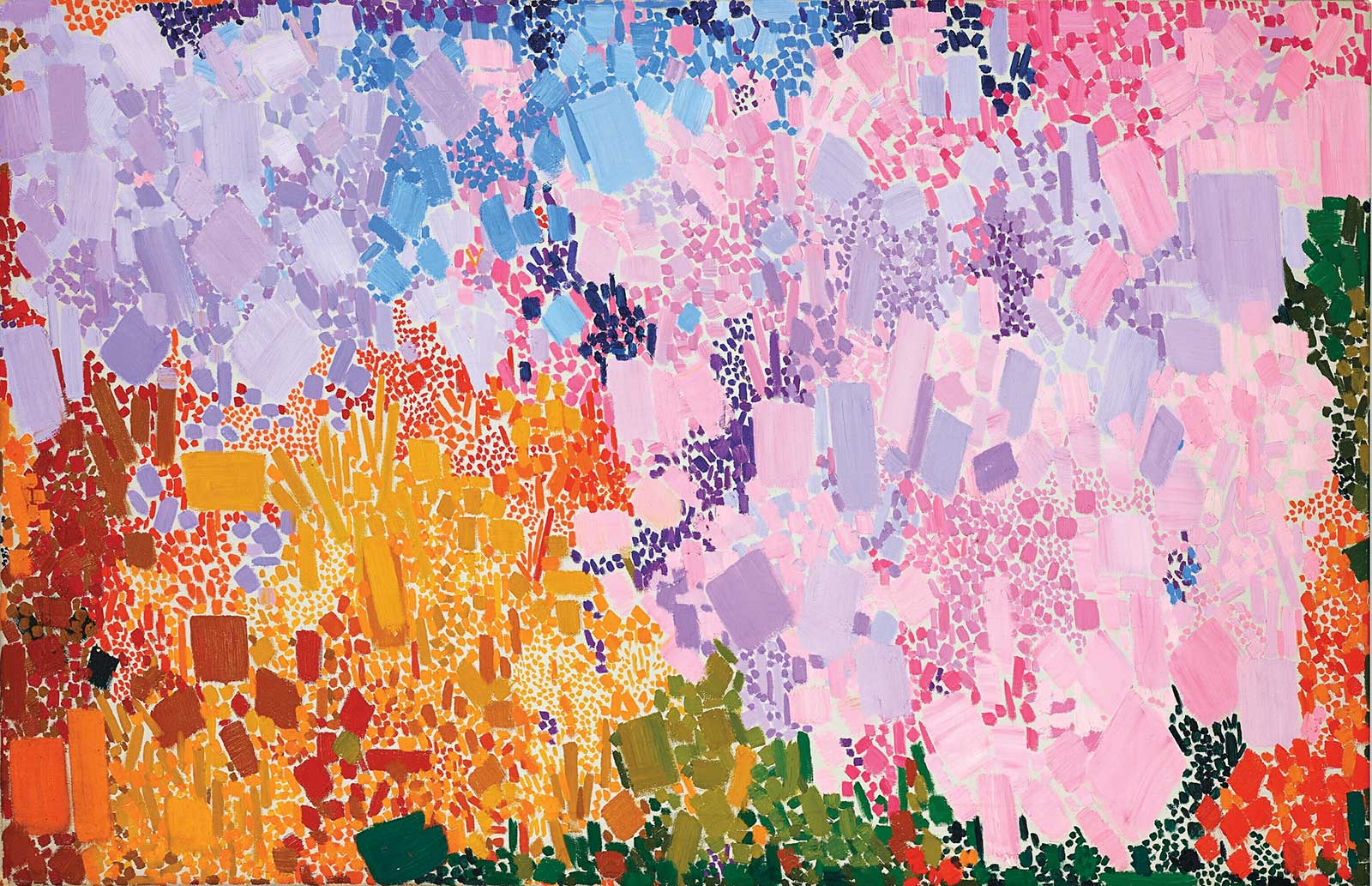 Lynne Mapp Drexler (1928-1999), Violet Sunlight, 1962. Oil on canvas, 32 x 49 3⁄8 in.
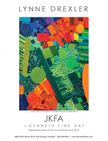
Not too long ago, this was the case for Lynne Mapp Drexler (1928-1999). Drexler’s legacy as a painter languished in obscurity, not only in her lifetime, but also, tragically, for years after her death. While the reasons for Drexler’s name having been omitted from the annals of art history are complicated, one overriding factor has remained constant for her and other women of the abstract expressionist era.
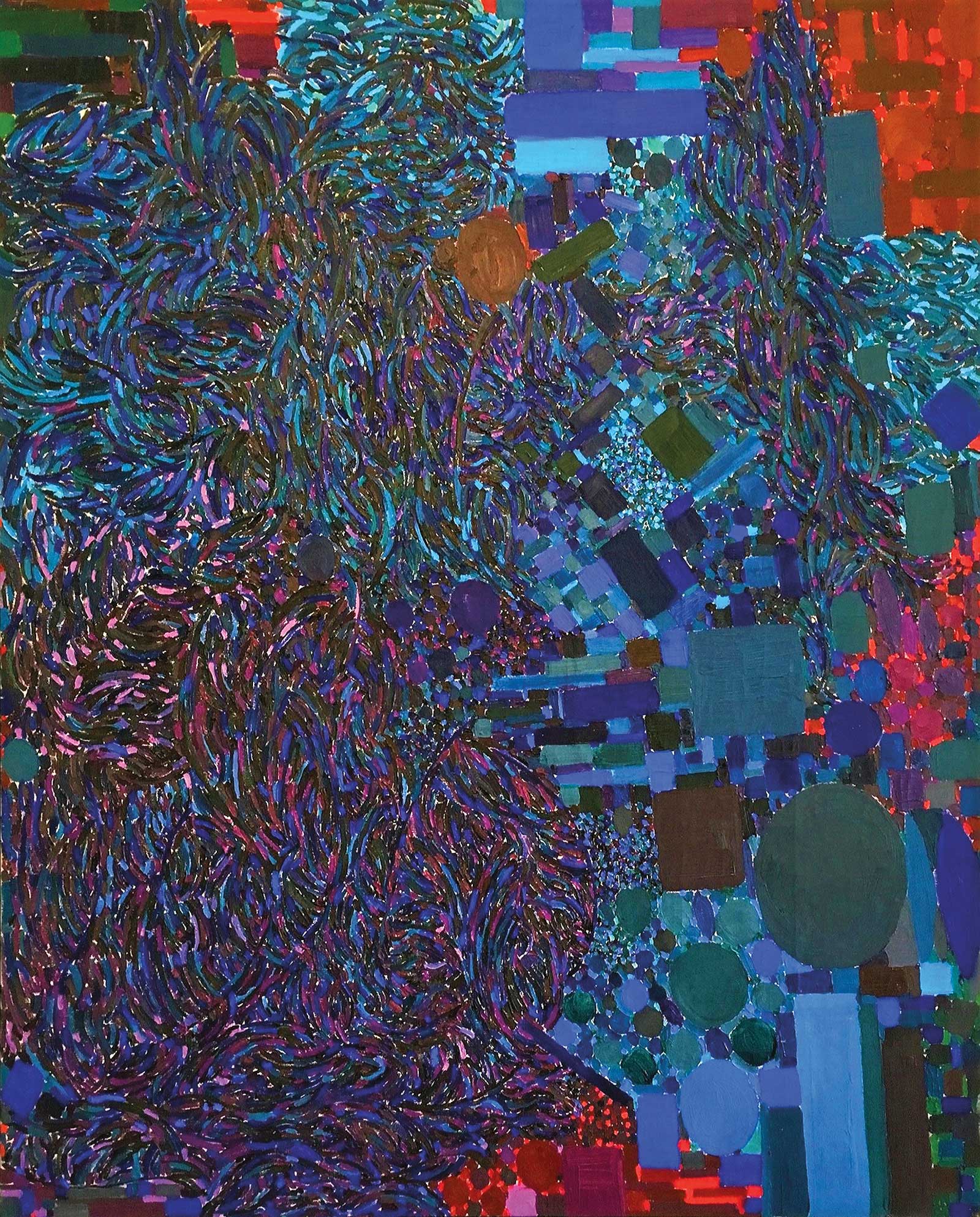 Lynne Mapp Drexler (1928-1999), Feather Blue, 1967. Oil on canvas, 49½ x 44 in.
Like other talented artists who were trained by the era’s finest teachers, Drexler was a member of the New York School and a participant in America’s first major art movement. Abstract Expressionism had become renowned for the mythos and machismo of artists such as Jackson Pollock, a figure who had come to dominate the image of the movement and reinforce its aggressive “masculine” characterization. Drexler was among the many women of the ‘50s and ‘60s who were often eclipsed by her male counterparts. Even though their work was executed with as much competence and training, women artists tended to be disregarded in the male-dominated gallery scene of New York.
The recent resurgence of interest in Drexler—which ignited when a piece soared past its $60,000 estimated value to reach $1.2 million in a spring 2022 auction at Christie’s—and other women like her has brought many of these artists out of the shadows with a new sense of discovery and appreciation.
“I’ve always felt deeply within myself that I was a damn good artist, though the world didn’t recognize me as such. I wasn’t about to play their game,” the artist said in “Lynne Drexler: A Life in Color,” a film by Roger Amory.
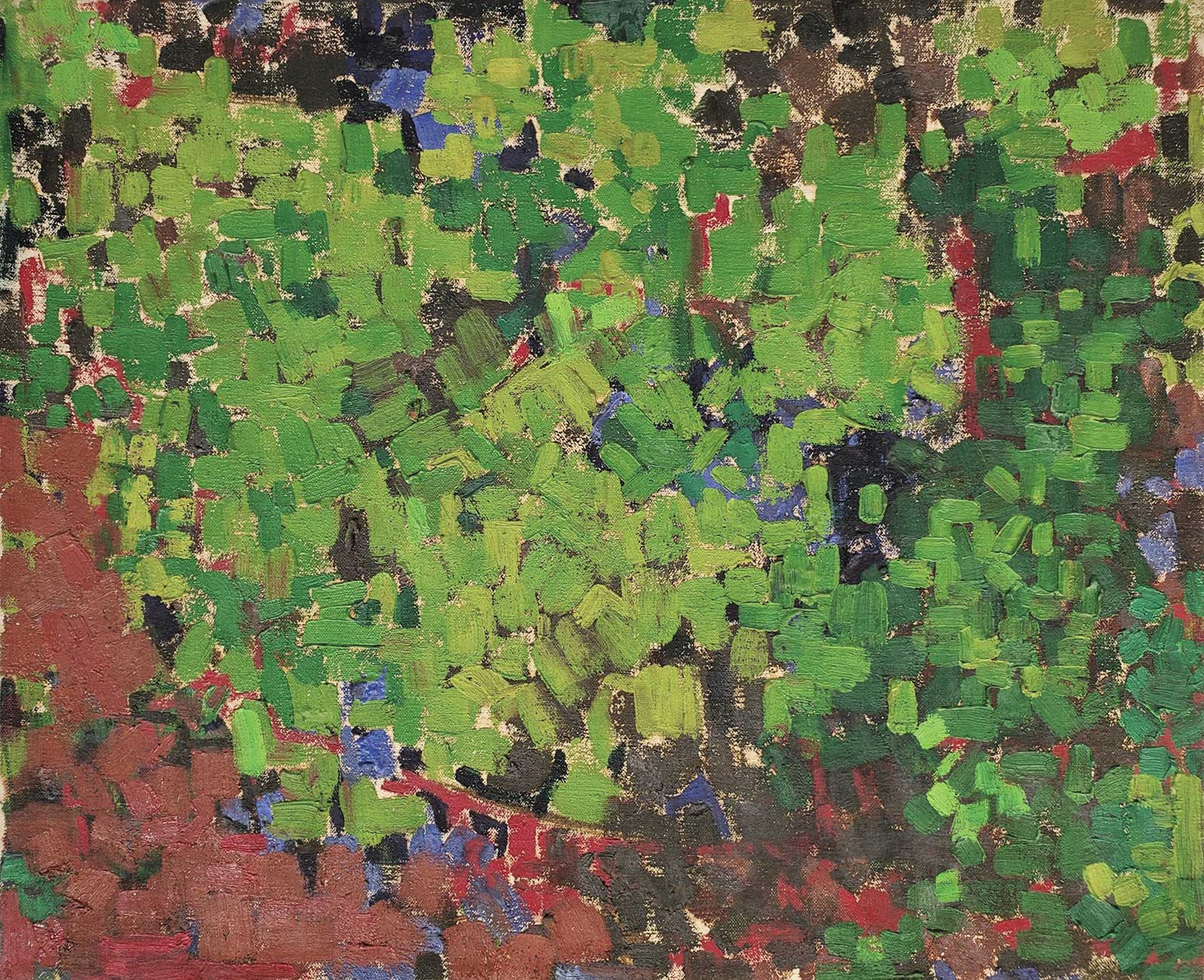 Lynne Mapp Drexler (1928-1999), Green Gage I, 1959. Oil on canvas, 14 x 17½ in.
Born in the Tidewater region of southeast Virginia in 1928, Drexler moved to New York in 1955 to pursue her career as an artist. Like many artists of her day, she studied under Hans Hofmann in both his New York and Provincetown schools. Drexler’s other renowned teacher was Robert Motherwell at Hunter College. Her training from Motherwell, along with Hofmann’s lessons on color theory, would set the foundation for Drexler’s approach to painting. Her swatch-like patterns and vivid array of colors are quite distinctive when compared to her contemporaries of the abstract expressionist genre.
Many of Drexler’s early collectors became enthralled with her work long before the frenzied atmosphere of the current art market that surrounds it. The fact that she was completely unknown to them was irrelevant once they became captivated by the brilliant colors of her palette, and the thoughtful intent by which her brushwork, shapes and patterns were placed within her picture plane. Drexler’s story also resonated with many would-be collectors. Devoted fans of Drexler’s work have marveled at her long-overdue recognition and admiration from the fine art establishment.
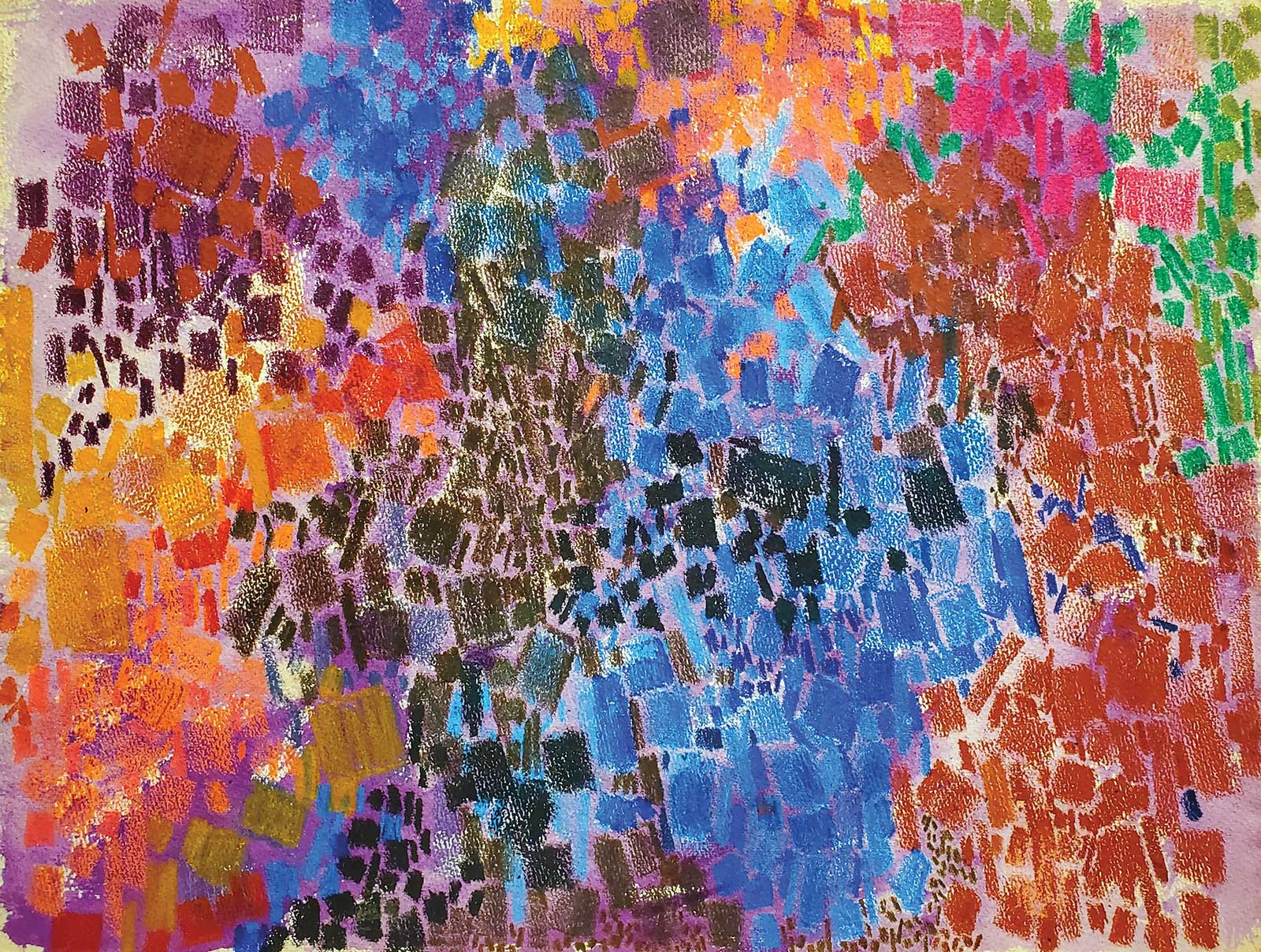 Lynne Mapp Drexler (1928-1999), Untitled, 1961. Crayon and watercolor on paper, 19 x 25 in.
Collectors Rick and Sue Miller attended Drexler’s first solo exhibition held in California in 2015, 16 years after her death. “The manager of the Drexler estate was going to be at the exhibition to talk about Drexler’s work and answer questions,” Sue recalls. “I became intrigued by her story and wanted to know more about her—I wanted to know more about her upbringing, her education, under whom she studied, how she progressed from her early work to her later work.”
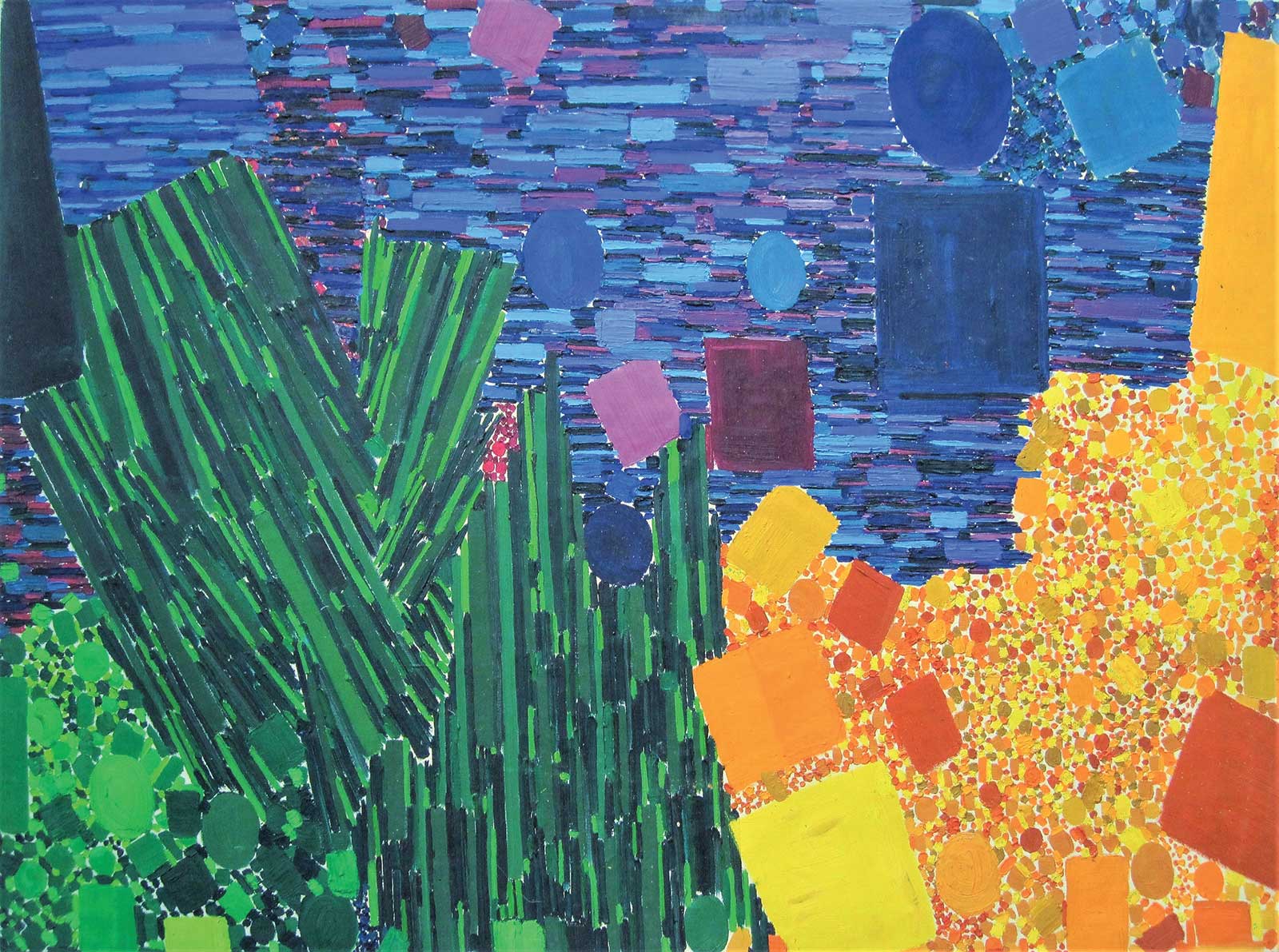 Lynne Mapp Drexler (1928-1999), San Pablo Bay, 1964. Oil on canvas, 30 x 40 in.
The fact that Drexler had been overlooked as an artist based on her gender was not lost on Sue. “As an artist myself in the early ‘60s, I understood the frustration of not being accepted as a legitimate artist simply because of my gender,” she shares. “I’m very excited to see her work now being appreciated and her name being recognized.”
The Millers continue to be important collectors and champions of Drexler’s work.
Like many other women, Drexler encountered multiple obstacles in her search for gallery representation in gender-biased atmosphere of the New York gallery world. While galleries were courting her husband, painter John Hultberg, Drexler would face the insult and indignity of being completely ignored or belittled.
As the mid-1960s approached, the movement of Abstract Expressionism entered its decline, eventually being replaced by Pop Art and, shortly thereafter, Op Art. Drexler was already making her own transition away from the movement by applying her signature style to a new series of visionary abstract paintings. Many of her abstract paintings created just after 1962 are clearly inspired by the landscape with the concepts of musical elements helping to guide the pictorial arrangements. Music, especially opera, had come to help define Drexler’s creative expression.
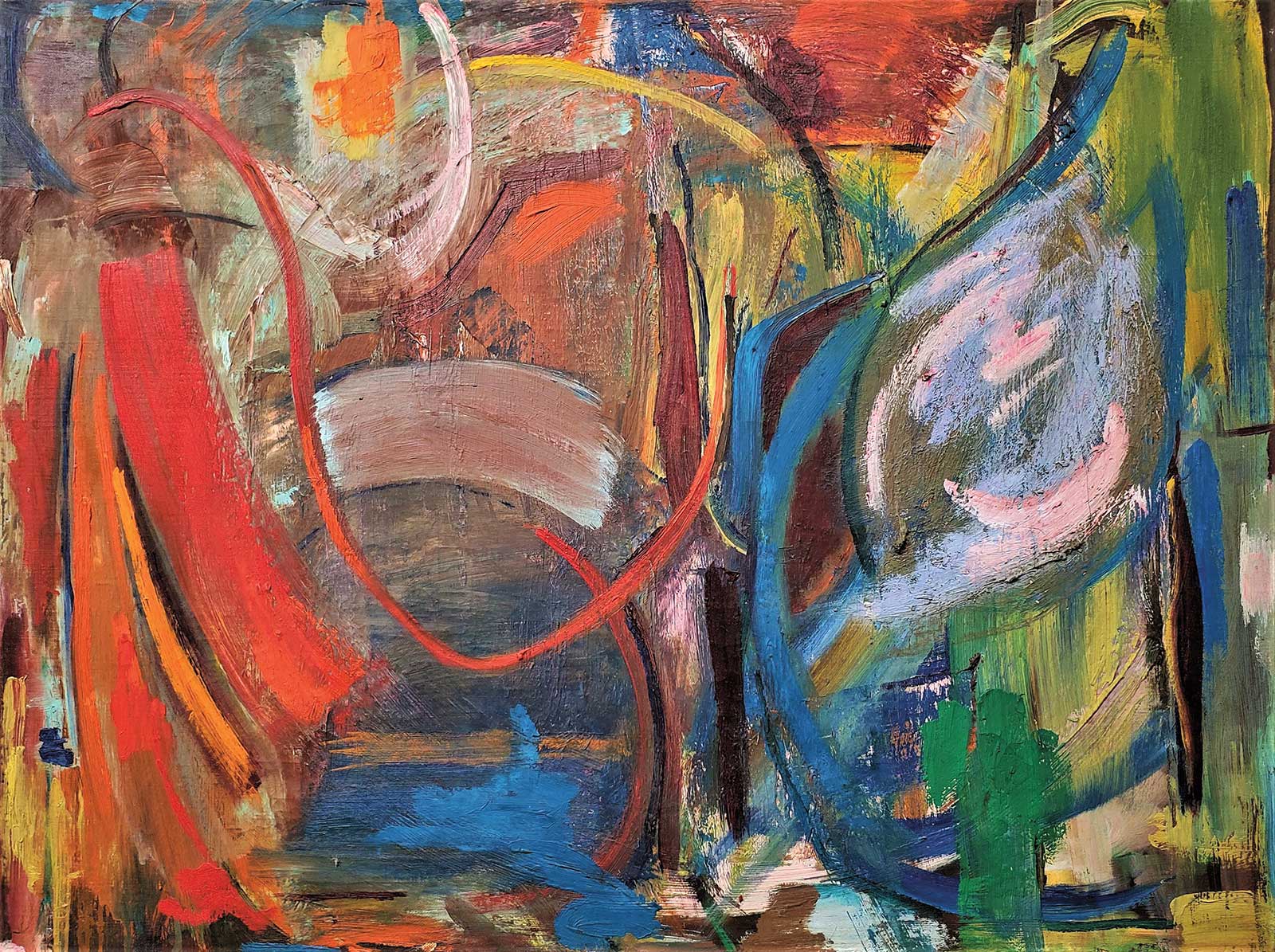 Lynne Mapp Drexler (1928-1999), Purple Nude, ca. 1957. Oil on canvas, 18 x 24 in.
“I was not on the political fast track,” said Drexler about her experience in New York in the Roger Amory documentary. “I cannot make friends for gain.”
Eventually, unsatisfied with the male-dominated art system and art politics of New York—Drexler finally moved permanently to Monhegan Island, Maine, in 1983. Well known for its summer art colony, Monhegan Island has a unique history and eccentric character. In sharp contrast to New York, the winter population of Monhegan Island is roughly 65 people—practically cut off from civilization. The ferry makes the trek to the island only twice a week in the dead of winter. The Drexler house is situated beneath Lighthouse Hill, with the cemetery and her gravestone not too far away. The lone house seems like an island unto itself, staring out across the field to the other houses in the distance and to the sea, beyond that. It is amid this solitude where Lynne Drexler chose to call home.
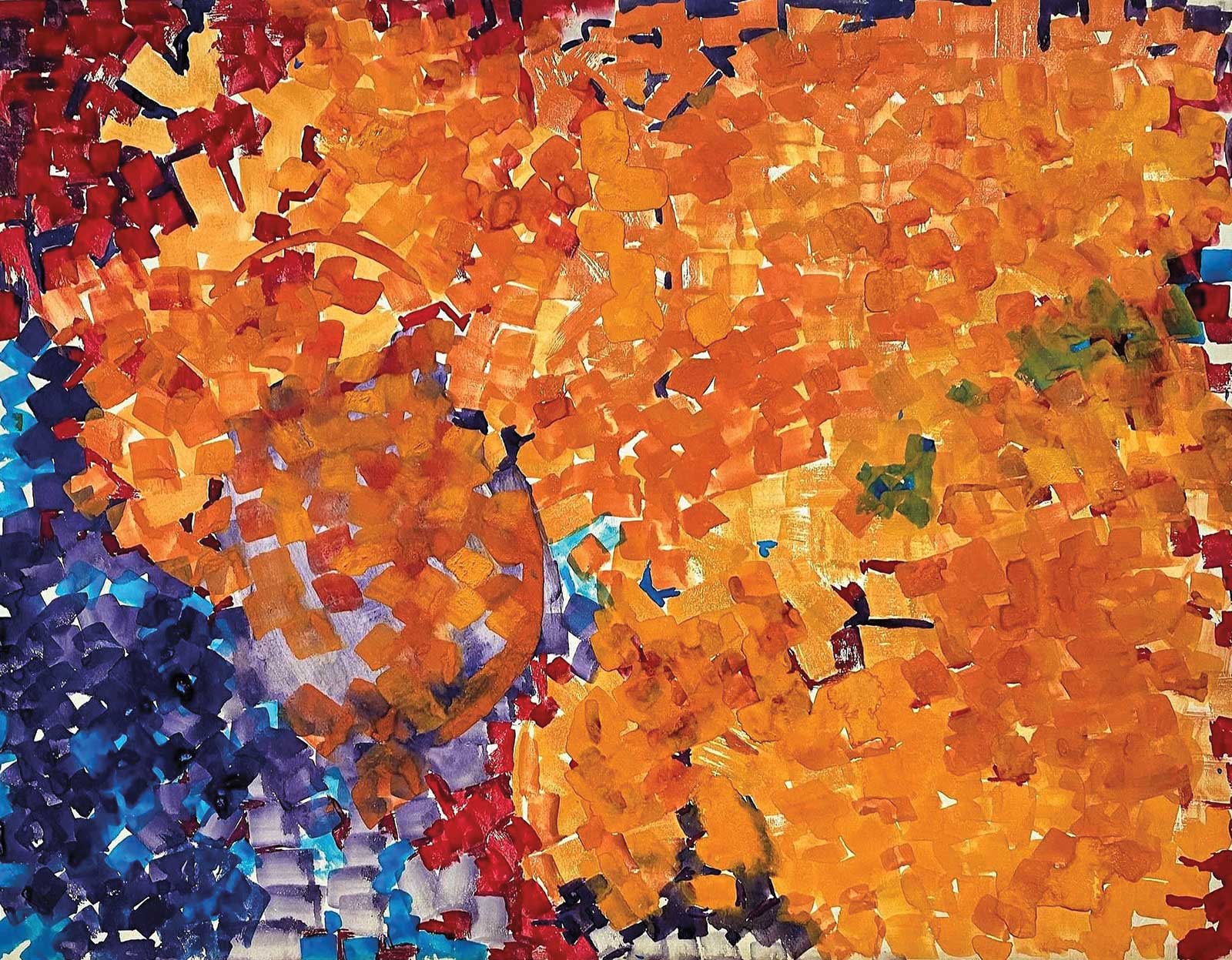 Lynne Mapp Drexler (1928-1999), Untitled, 1959. Gouache on paper, 19½ x 24 in.
Drexler became an integral member of the year-round island community. Of the island, the Monhegan Museum notes, she said, “There is no isolation in a place like this—impossible to find, but solitude is respected.”
The remoteness and solitude of the island would impact her work. Her paintings of those times often reflect everyday life such as views from her windows, interior views of her house and even chores such as hanging laundry. The still life also became an important subject in Drexler’s repertoire, often floral arrangements peppered with dolls from her collection.
“I sell enough here to make a living off of. I am not rich—but
I have what I want,” the Monhegan Museum has documented. “As long as I have food, heat, roof over my head, food for the cat, and paint I am happy. Oh, and Jack Daniel’s.”
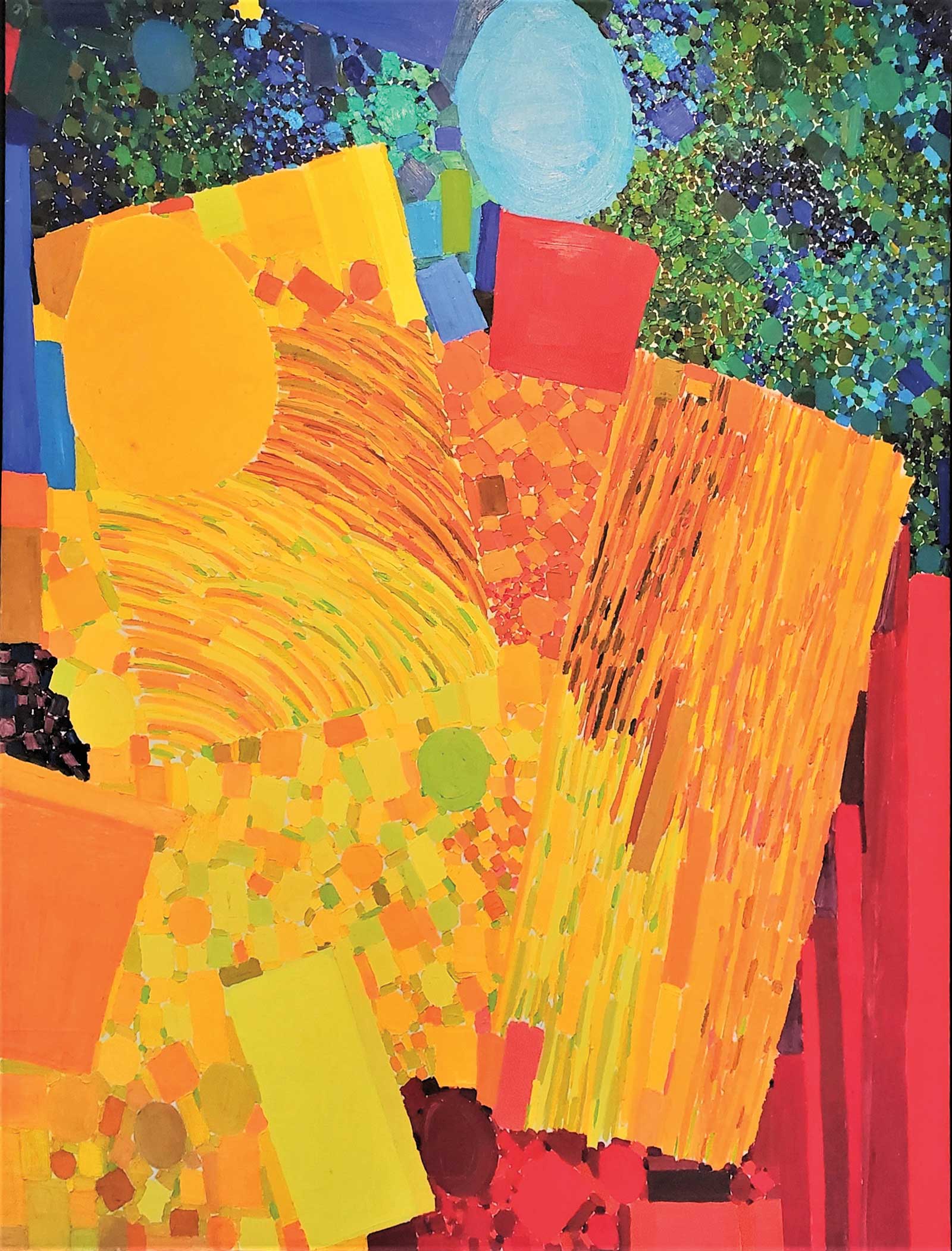 Lynne Mapp Drexler (1928-1999), Stumps, 1968. Oil on canvas, 47¾ x 35½ in.
“Many artists seem to be inexplicably linked to a locale where their creativity came into its fulfillment, such as Monet in Giverny; Van Gogh in Southern France; Gauguin in the South Pacific,” state Rick and Sue Miller. “As a collector of Lynne’s work, we felt it altogether fitting and proper to make a pilgrimage to Monhegan Island to better understand what drove her inspiration and creativity. We were immediately immersed in the natural beauty of the island. Walking the paths and trails, stepping into what she might have seen and observed from an artist’s perspective, it truly became a pilgrimage to understand and appreciate her portfolio of art created over a span of so many years.”
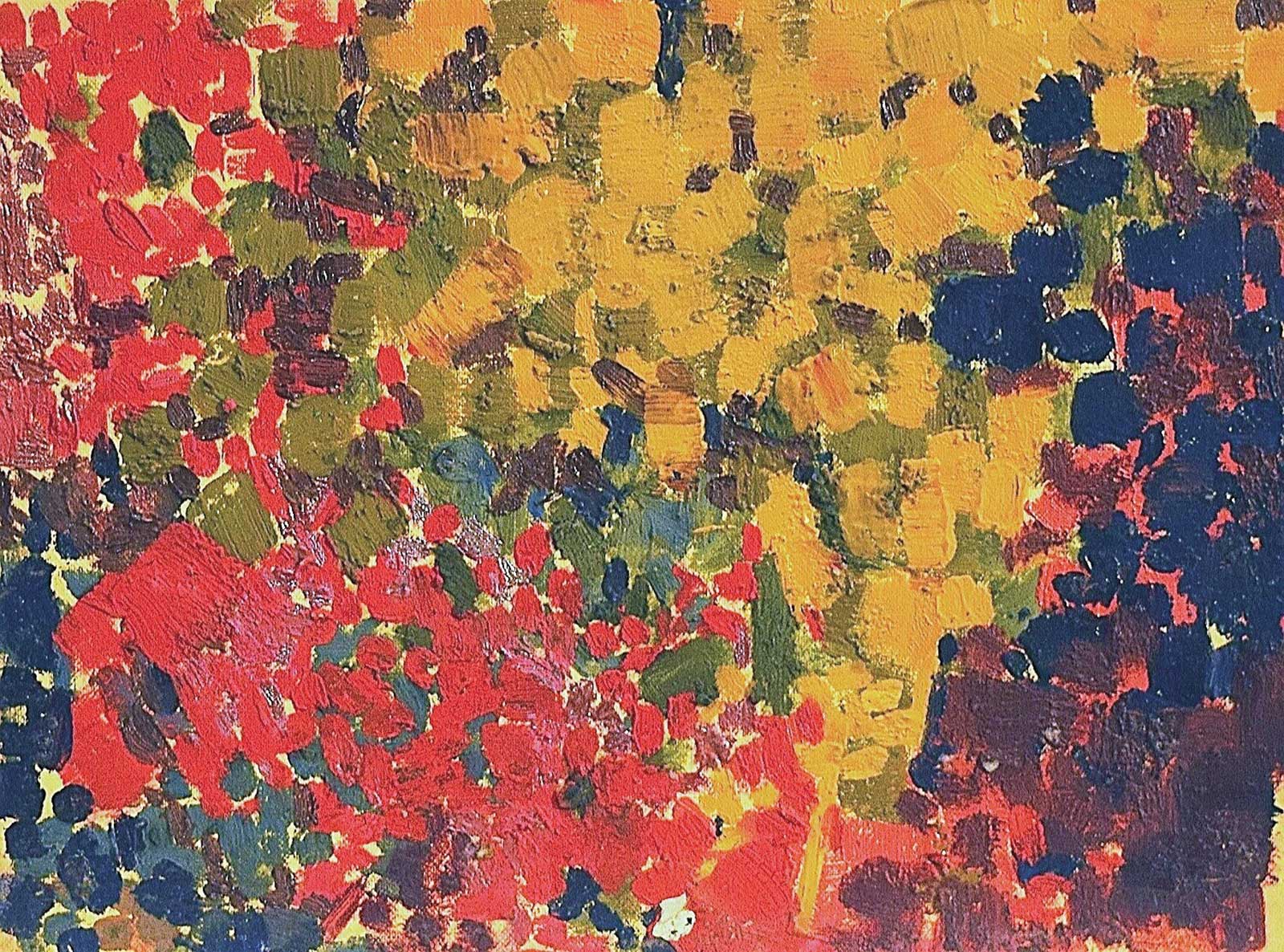 Lynne Mapp Drexler (1928-1999), Untitled, 1959. Oil on paper, 9 x 12 in.
Drexler’s connection to the island also had a profound impact upon her spiritual life. Perhaps this is one of the most important aspects of Drexler’s amazing story, career and legacy. In an essay published in John Fowles and Nature: Fourteen Perspectives on Landscape, Drexler wrote, “I came to believe in myself and my own inner resourcefulness. Living here revealed a strength and depth in me I didn’t know I had. When you live here you learn to see who you really are. You are very close to nature, and nature clarifies you to yourself. At night I feel a sense of awe in the way the black ocean stretches out to meet the black sky, and I’m aware of what it means to live in a universe. Everything here is reduced to essentials. I’ve forgotten how to act on shore. On shore is the false reality. Here, is the true reality.”
John Kenneth Alexander has represented Lynne Drexler since 2015 and is the director of J. Kenneth Fine Art.
Powered by Froala Editor
Powered by Froala Editor
Powered by Froala Editor
Powered by Froala Editor
Powered by Froala Editor
Powered by Froala Editor
Powered by Froala Editor
Powered by Froala Editor
Powered by Froala Editor
Powered by Froala Editor
Powered by Froala Editor
Powered by Froala Editor
Powered by Froala Editor
Powered by Froala Editor
Powered by Froala Editor
Powered by Froala Editor
Powered by Froala Editor
Powered by Froala Editor
Powered by Froala Editor
Powered by Froala Editor
Powered by Froala Editor
Powered by Froala Editor
Powered by Froala Editor
Powered by Froala Editor
Powered by Froala Editor
Powered by Froala Editor
Powered by Froala Editor
Powered by Froala Editor
Powered by Froala Editor