Held in November, 2022, Cut, Cast, Carved and Coupled, Initiatives in Art and Culture’s 27th Annual American Art Conference continued IAC’s exploration of women in American Art—as artists, teachers, patrons, gallerists, scholars, curators and subjects. Three avenues of approach emerged as central to the conference’s discovering, or rediscovering, those who by virtue of sex are often overlooked and underrepresented in art history or, having achieved significant recognition during their day, fell into obscurity, whether relative or absolute. The first was media, including techniques traditionally viewed as “feminine.” The second was strategies women employed to be able to pursue their work in a male-dominated space and society. The third was the role of institutional and individual collectors in helping these artists achieve recognition.
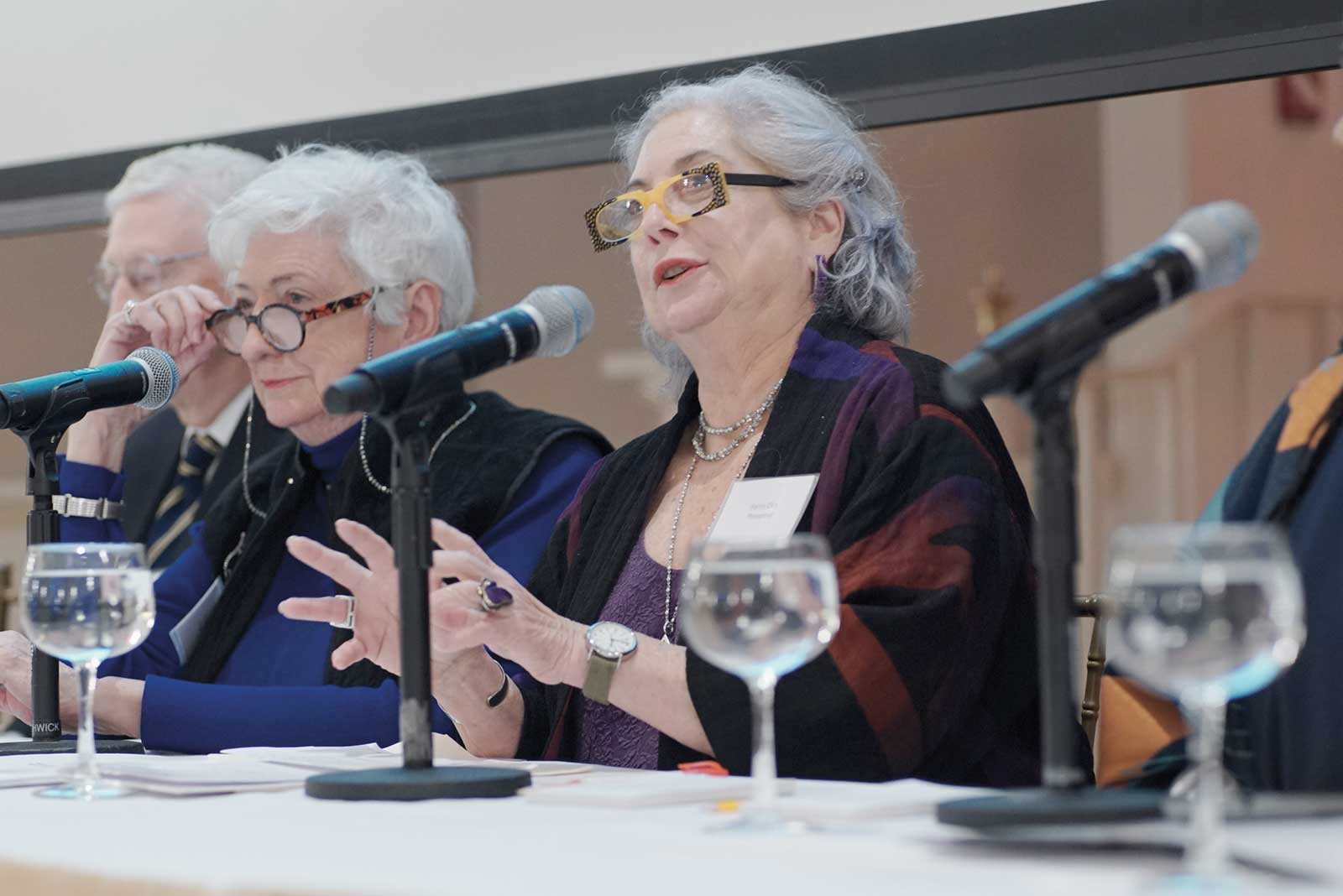 Collectors, Kenneth Woodcock, Ofelia García and Ferris Olin in conversation during the panel called “Collectors on Collecting the Work of Women Artists” at IAC’s 27th annual American Art Conference.
In terms of media (and by way of “cut”), Shannon Vittoria, assistant curator of American painting and drawing at The Metropolitan Museum of Art discussed the engravings of Mary Nimmo Moran and the Craze for “Little Media.” Contemporary Native artist Carla Hemlock referenced the cloth, bead and woodwork and Indigenous lens she uses to craft artwork from cradleboards to quilts, forms addressing historical events, contemporary issues and the Haudenosaunee worldview.
By way of “cast” and “carved,” Kirsten Pai Buick, professor of art history at the University of New Mexico, explored the marble neoclassical work of expatriate sculptor Edmonia Lewis. Karen Bearor considered I. Rice Pereira’s exploration of light and space in her 1940s-1950s trailblazing glass constructions, works embodying techniques she would draw on in her 1960s Lapis oil paintings which were of such large scale they could not be realized in glass. Joyce Pomeroy Schwartz (Founder/President of Works Of Art For Public Spaces, Ltd.), documentary photographer and author Lynn Gilbert, and Maria Nevelson (Founder, Louise Nevelson Foundation, Inc.) spoke about the sculptor’s interior assemblages, architectural public artworks and iconic appearance, which was as crafted as was that of Georgia O’Keeffe and underscored the bold aesthetic of her work. With respect to metal and wood, frame historian Suzanne Smeaton addressed O’Keeffe’s involvement in the design of both wood and metal frames and in finishes of silver, black, and white, and in a form radically divergent from her unadorned “clamshell” frames.
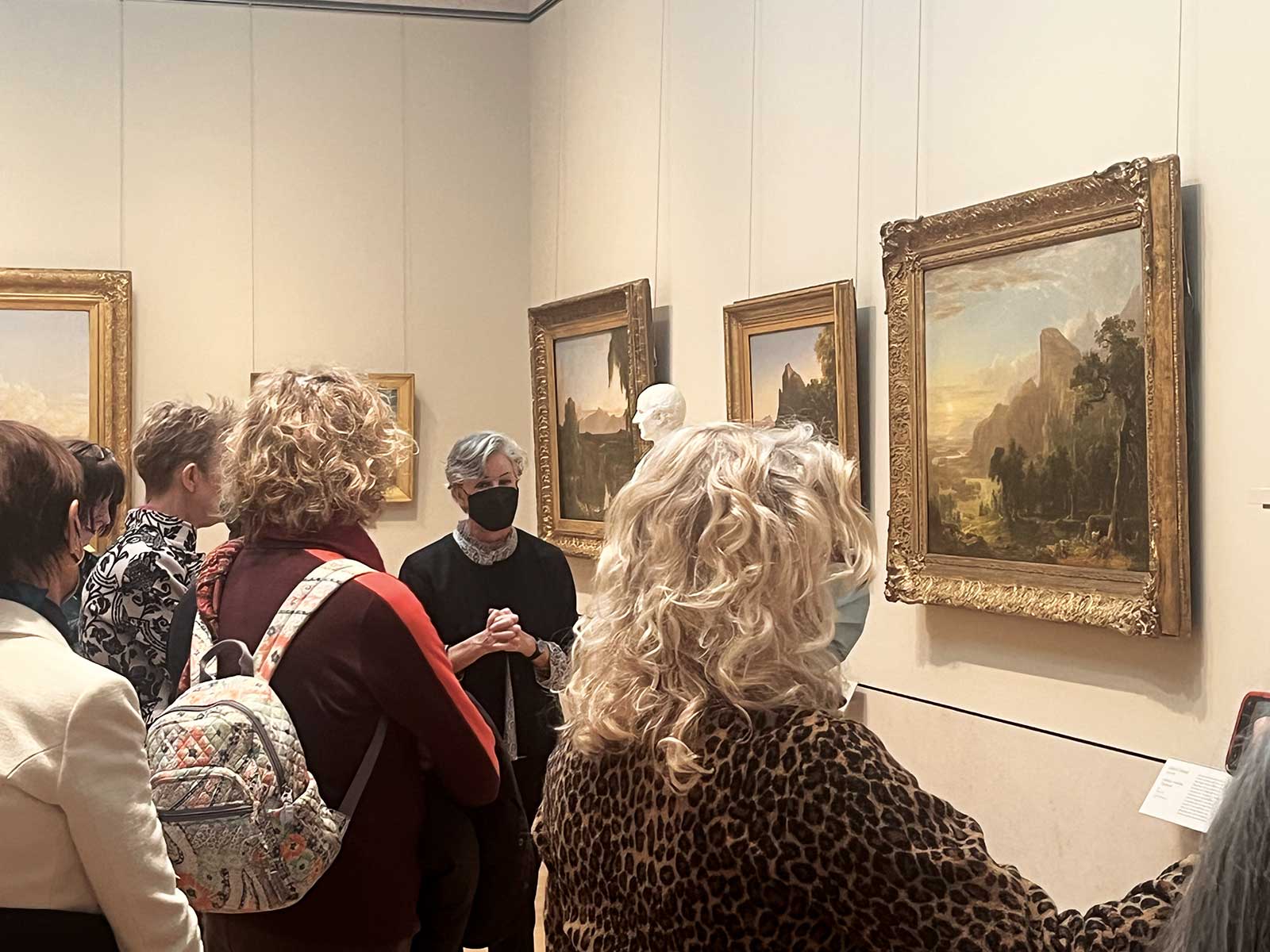 Sylvia Yount, curator of the American Wing at The Metropolitan Museum of Art leading a private curatorial tour for attendees of IAC’s annual American Art Conference at the museum.
In terms of strategy, Lisa Peters and Angela Fraleigh explored women’s use and adaptation of traditional visual vocabularies to create subversive alternate narratives. Lisa N. Peters discussed independent allegorical works, maintaining that Edith Mitchill Prellwitz, Ella Condie Lamb, Louise King Cox, Mary Lizzie Macomber and Ella Ferris Pell either knew one another or knew of one another, and achieved acceptance in a male-dominated art world in part thanks to the covert nature of allegory. Artist Angela Fraleigh discussed her rearrangement and repurposing of the visual language of Western art history in her subversive and layered figurative paintings which through alternative narratives reveal contemporary attitudes.
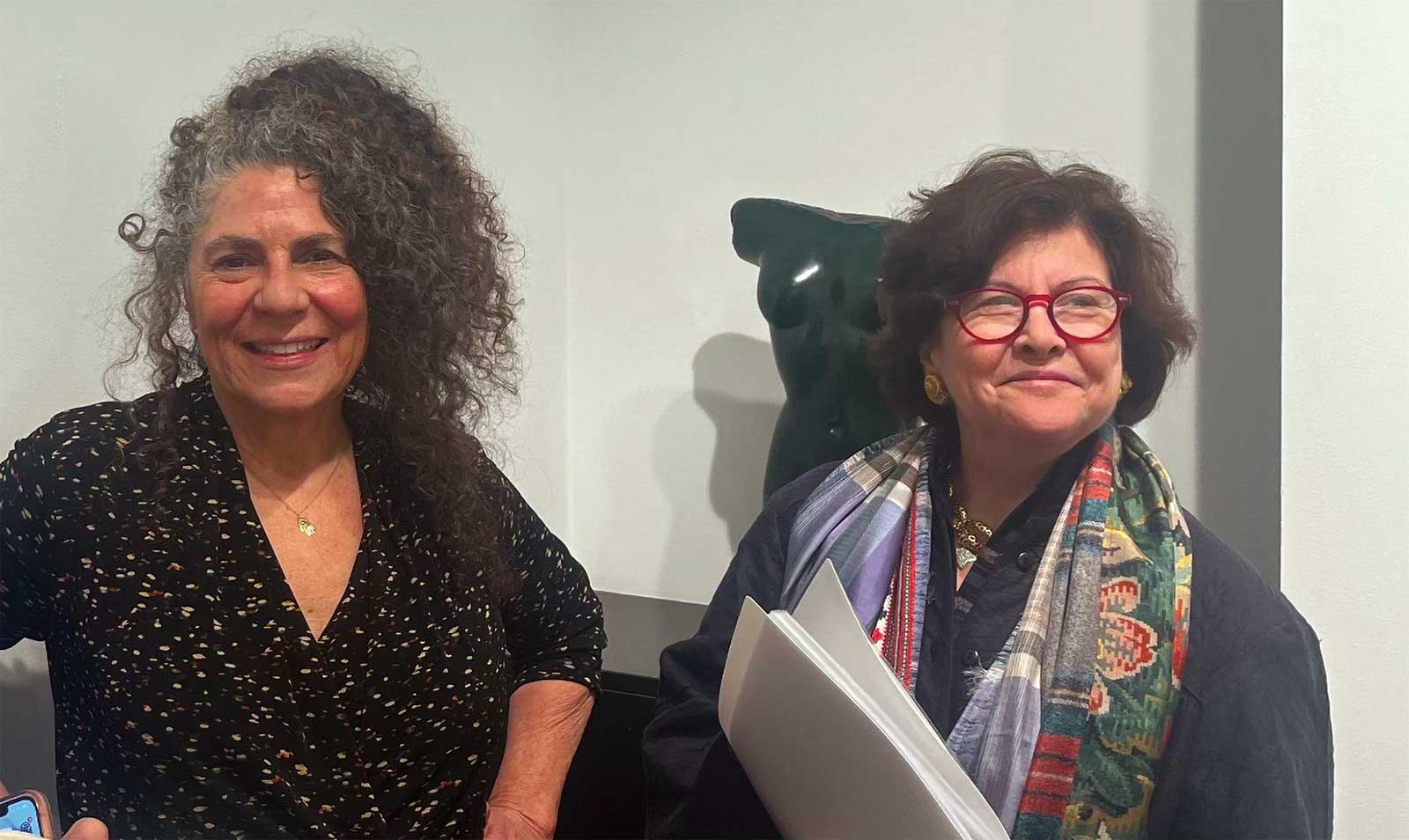 Dorian Bergen, president of ACA Galleries and Lisa Koenigsberg, president and founder of Initiatives in Art and Culture at a luncheon and program sponsored by ACA at the Gallery.
Other strategies employed by women to pursue their art were explored by Julie Aronson, curator of American painting, sculpture and drawing at Cincinnati Art Museum, who considered the lives of painters Elizabeth Boott Duveneck and Elizabeth Nourse and sculptor Bessie Potter Vonnoh, each of whom navigated challenging circumstances to make successful careers as professional artists. The greater freedom enjoyed by expatriates was further explored by Amanda C. Burdan who observed that there were specific strategies that expatriate women developed, including forming artistic households, establishing networks of friendship, and opting against marriage and children.
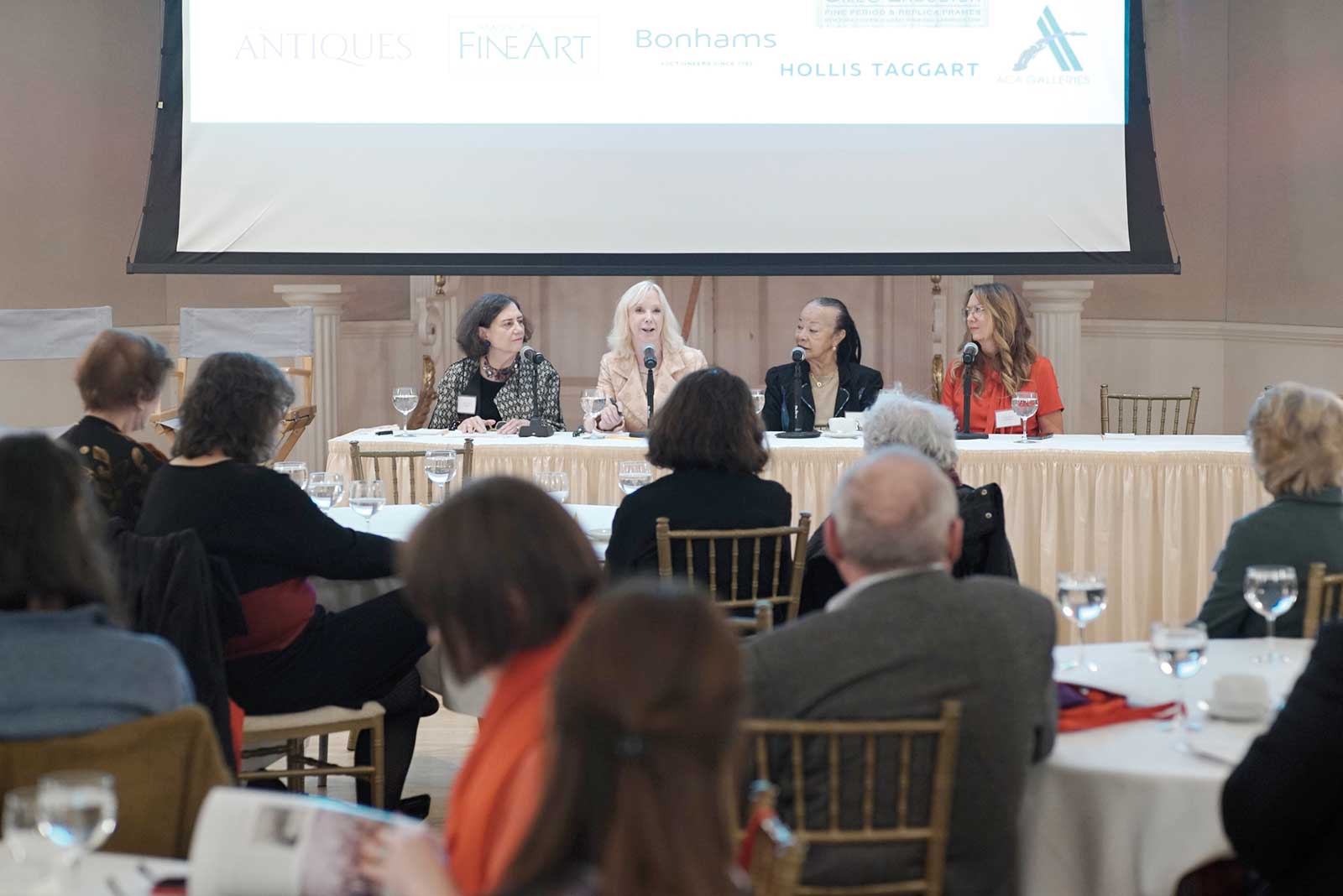 Gallerist Debra Force; Whitney Museum curator Barbara Haskell; Peg Alston, whose gallery specializes in works by African American artists; and Christine Berry, co-founder of Berry Campbell Gallery, during their panel called “Women and Movement: Women and the American Art World.”
Education was another strategy available to the more fortunate. Elisabeth (Lisa) Hodermarsky, curator of prints and drawings at Yale University Art Gallery presented a case study of women who were able to pursue art school and higher education in order to further their careers, exploring the achievements of women artists who have graduated from the Yale University School of Art over the past 150 years.
Collectors, both individual and institutional, were and are key to bringing work by women artists to the fore. Anna O. Marley and Brittany Webb, curators from the Pennsylvania Academy of the Fine Arts, moderated a conversation with collectors Ofelia García, Ferris Olin and Kenneth Woodcock about the evolution and focus of their collections, their relationships with institutions and the ways they contribute to a sustainable future for women in the arts. Timothy Peterson and Richard Gerrig, who have collected art together for over 30 years, argued, in referencing their own holdings of art by women, by artists of color, and from the LGBTQ community, that if people judged art based on the fundamental question “Do we want to live with this work?,” essentially every collection would be diverse.
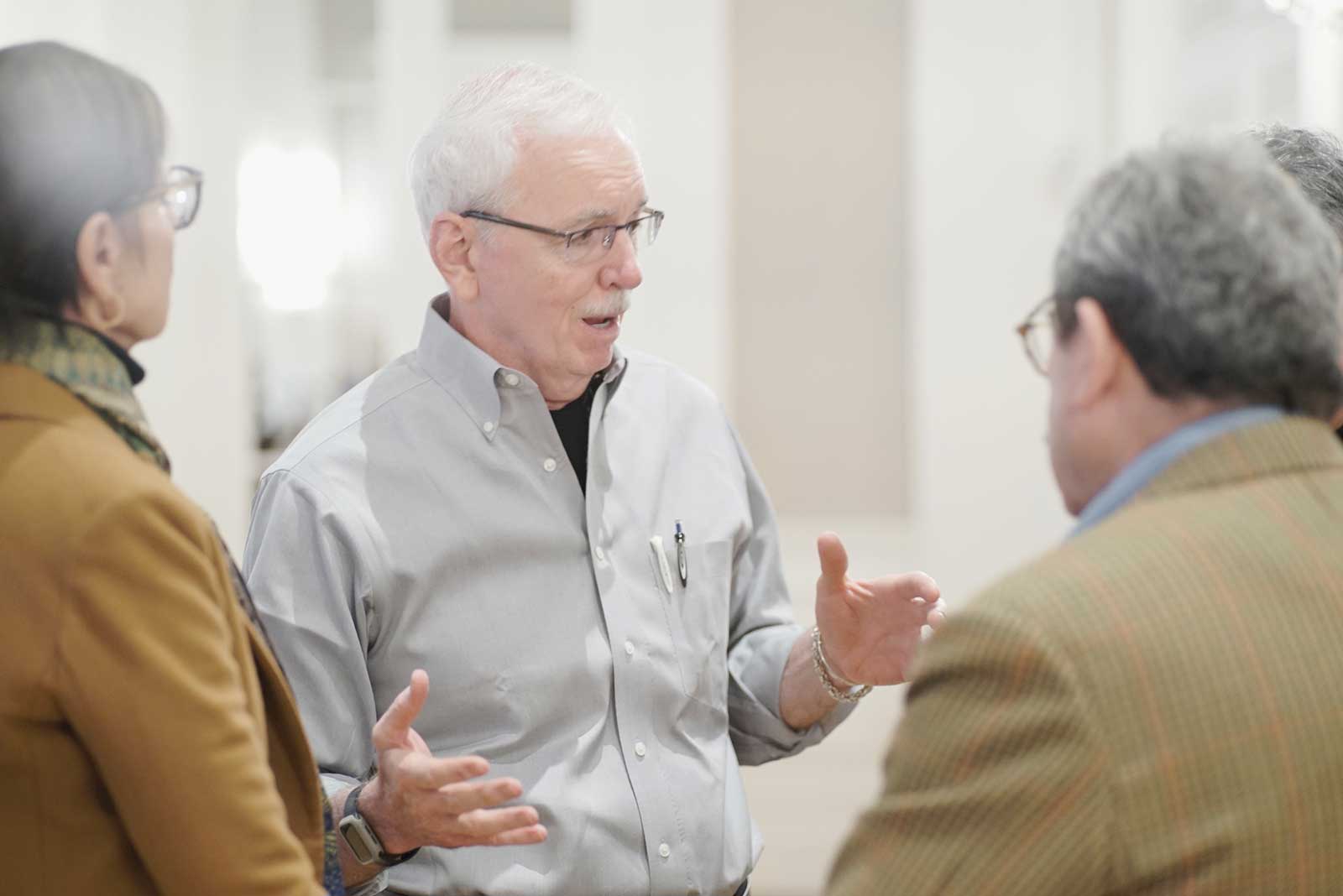 Collectors Elaine Melotti Schmidt and Steven Alan Bennett, who created The Bennett Prize in 2018, in conversation with Fred Hill, co-owner of Collisart, LLC.
Committed to promoting women figurative painters and their work, Steven Alan Bennett and Elaine Melotti Schmidt, themselves collectors of figurative paintings of women by women, recounted their journey to establishing the $50,000 Bennett Prize for Women Figurative Realist Painters.
Gallerist Debra Force of Debra Force Fine Art moderated “Women and Movement: Women and the American Art World” in which panelists Peg Alston (Peg Alston Fine arts), Christine Berry (Berry Campbell Gallery), and Whitney Museum of American Art curator Barbara Haskell discussed changes in the perception of and market for women artists and explored the causes. The panel also explored the role of women collectors in the resurrection of women artists and in the rise of contemporary women artists. Most important, they sought to address the question: “Will the work of women artists eventually be absorbed in the overall realm of American Art, with gender no longer being a differentiator or will the exploration of women’s endeavors in American Art always have ‘A Room of One’s Own’.”
Powered by Froala Editor