It’s always exciting when an underappreciated artist gets her due. Such is the case with Adaline Kent (1900-1957), the subject of an extensive retrospective, Adaline Kent: The Click of Authenticity, at the Nevada Museum of Art. Like too many women artists, Kent’s name has been overshadowed by male peers such as Mark Rothko and Clyfford Still. The exhibition seeks to redress the past and position Kent as a key figure in modernist art.
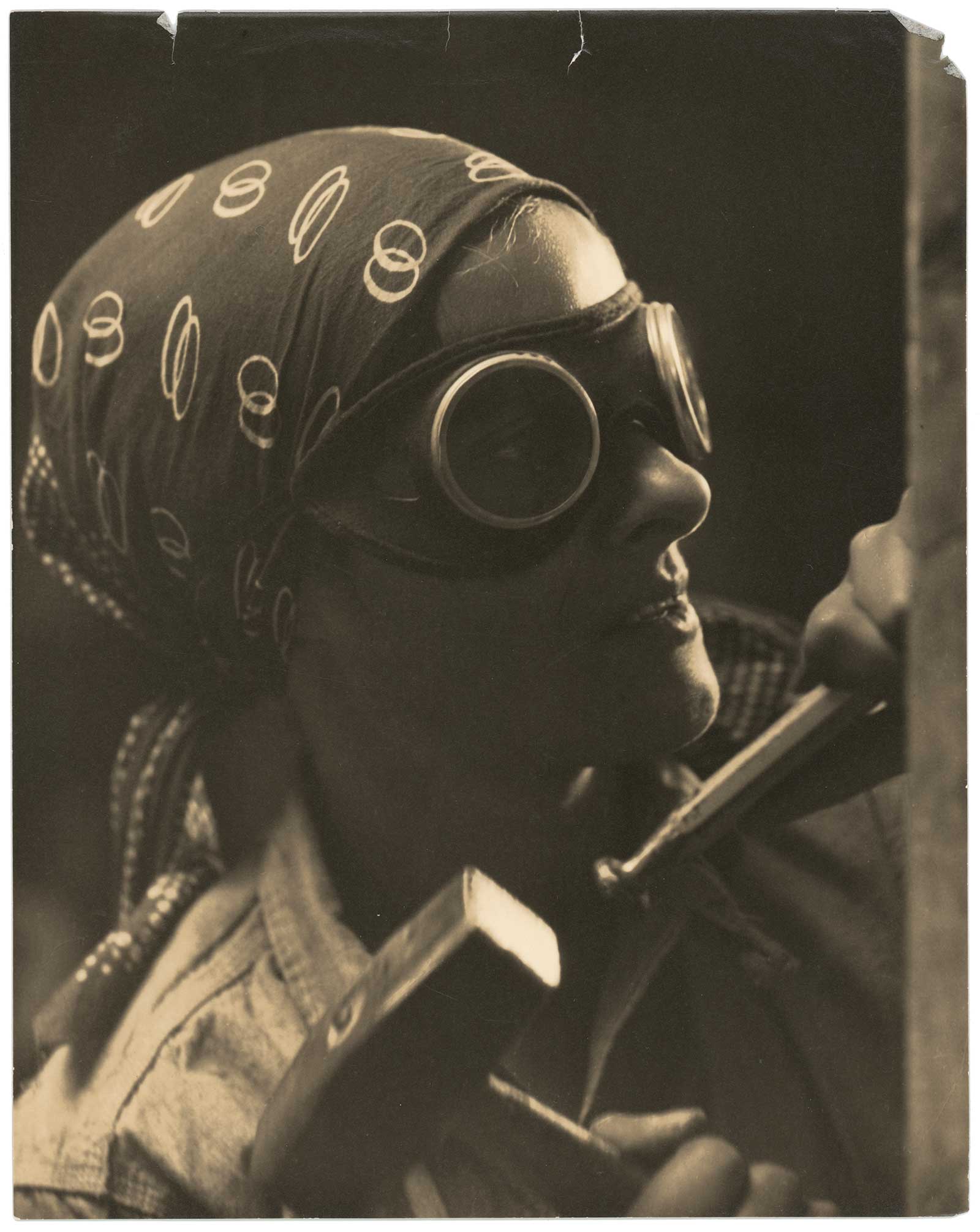 Adaline Kent in studio, working on Night Club, 1930. Courtesy of Adaline Kent Family.
The museum has devoted an entire floor to Kent’s creations. Featuring approximately 90 pieces, Kent’s entire oeuvre is explored. She worked in a range of media, including drawings, original pictures incised on Hydrocal (a plaster mixture), sculptures and a collection of terracotta.
Nevada Museum of Art CEO David Walker notes that this is the first retrospective of Kent’s work that demonstrates her unique contribution to figuration, abstraction and surrealism on the West Coast in the United States. “Her work is a vital part of our regional history and has been overlooked for far too long,” Walker says. “The exhibition and the catalog it inspired will be a remarkable contribution to the scholarship and recognition of this exceptional, mid-century artist.”
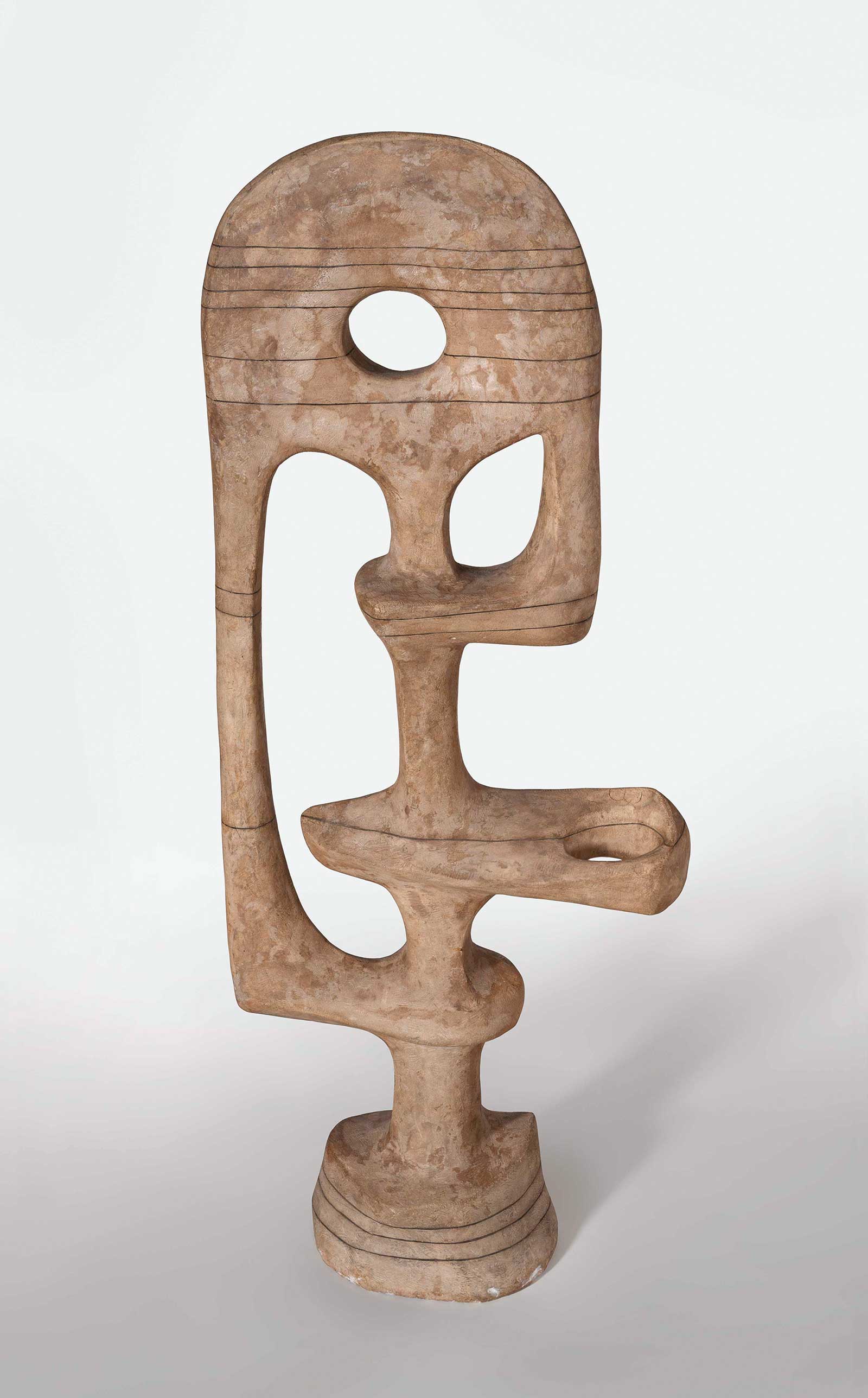 Adaline Kent (1900-1957), Presence, 1947. Magnesite, 42¾ x 17¾ x 7¼ in. Collection of San Francisco Museum of Modern Art; gift of the Women’s Board and the Membership Activities Board. Image courtesy of San Francisco Museum of Modern Art.
The exhibition is accompanied by a fully illustrated catalog edited by Apsara DiQuinzio, the museum’s senior curator of contemporary art and organizer of the exhibition.
DiQuinzio highlights Kent’s philosophical approach to artmaking. According to DiQuinzio, Kent’s use of the infinity symbol, “can be understood as a fusion of her interests in time, space and nature.”
The infinity symbol hovers above peaks in the Hydrocal painting Song; it echoes through the abstract sculpture Dark Mountain and it weaves through the delicate assemblage in Finder.
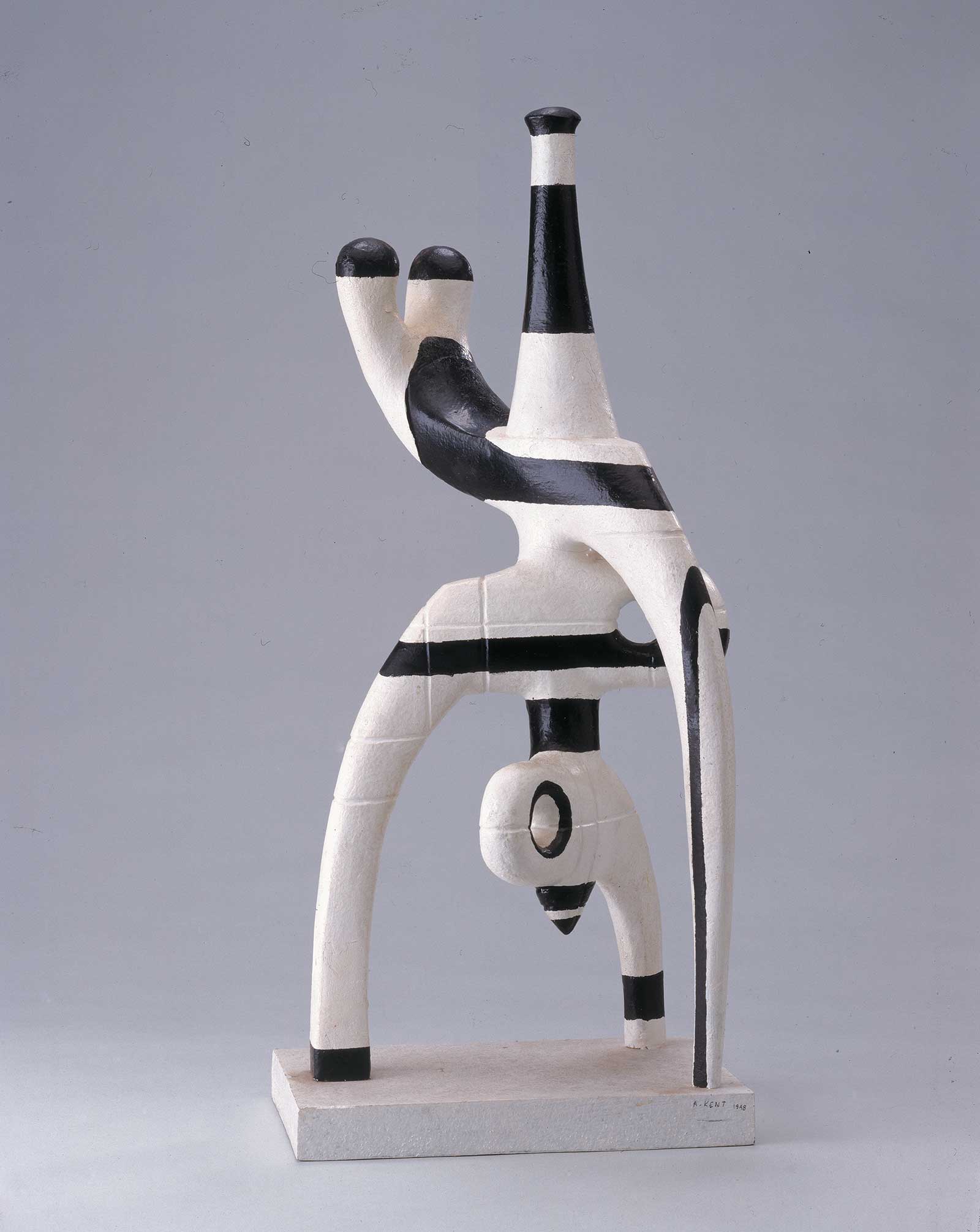 Adaline Kent (1900-1957), Never Fear, 1948. Incised Hydrocal with pigment, 22½ x 9 x 8 in. Private collection. Photo credit: M. Lee Fatherree.
“For Kent, the infinite was the wellspring of the growth and knowledge that led her to the discovery of her truth,” DiQuinzio says. Born in Northern California in 1900, Kent was the daughter of a noted conservationist and a suffragette. As a young Vassar graduate, Kent studied with Ralph Stackpole in San Francisco and with Emile-Antoine Bourdelle in Paris, where she lived for several years before finally returning to the Bay Area in 1929. She was part of San Francisco Bay Area’s celebrated mid-century art cohort, along with Charles H. Howard, Madge Knight, John Langley Howard, Robert Boardman Howard, Henry Temple Howard and Jane Berlandina. Her work was exhibited at the Museum of Modern Art, the Whitney Museum of American Art and the Bienal de São Paulo, among other notable venues.
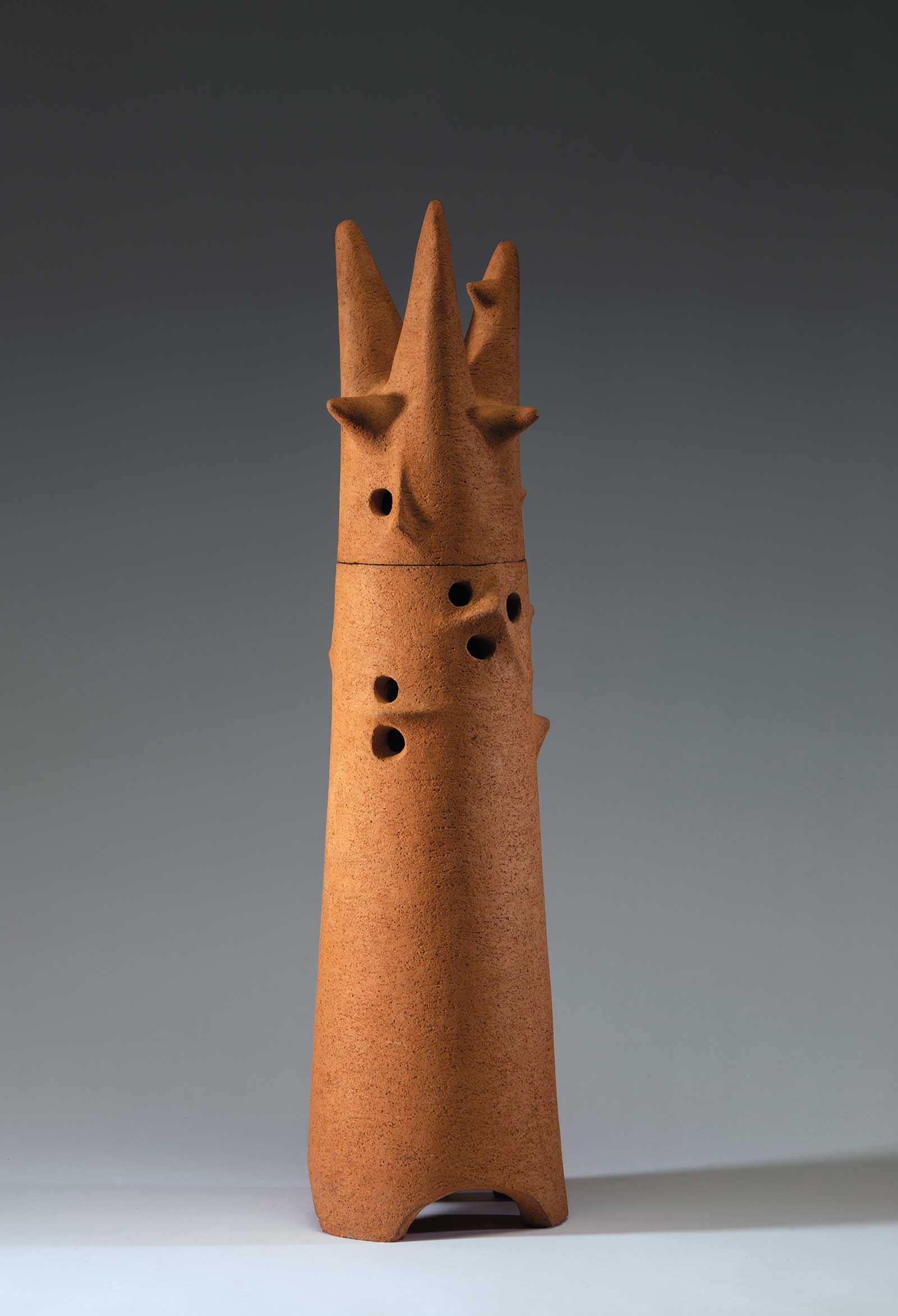 Adaline Kent (1900-1957), Lighthouse for Birds, 1956. Terracotta (two pieces), 31¼ x 8 x 7½ in. Collection of Adaline J. Hilgard. Photo credit: Ron Jones.
Inspired by her upbringing, Kent reveled in being outdoors. She and her husband skied and hiked in the Lake Tahoe region, which was a source of artistic inspiration for Kent. DiQuinzio observes that Kent’s Hydrocal painting, Wellspring, “reads like an abstract mental map of a High Sierra lake.”
Kent was particularly inspired by movement and often infused motion into her work. “To me, skiers, dancers, trapeze artists provide pleasure comparable to that of sculpture—an idea of form in space, space in form,” Kent wrote in a passage in her extensive art journals. “The feeling of space and movement seem to be the essence of our time.”
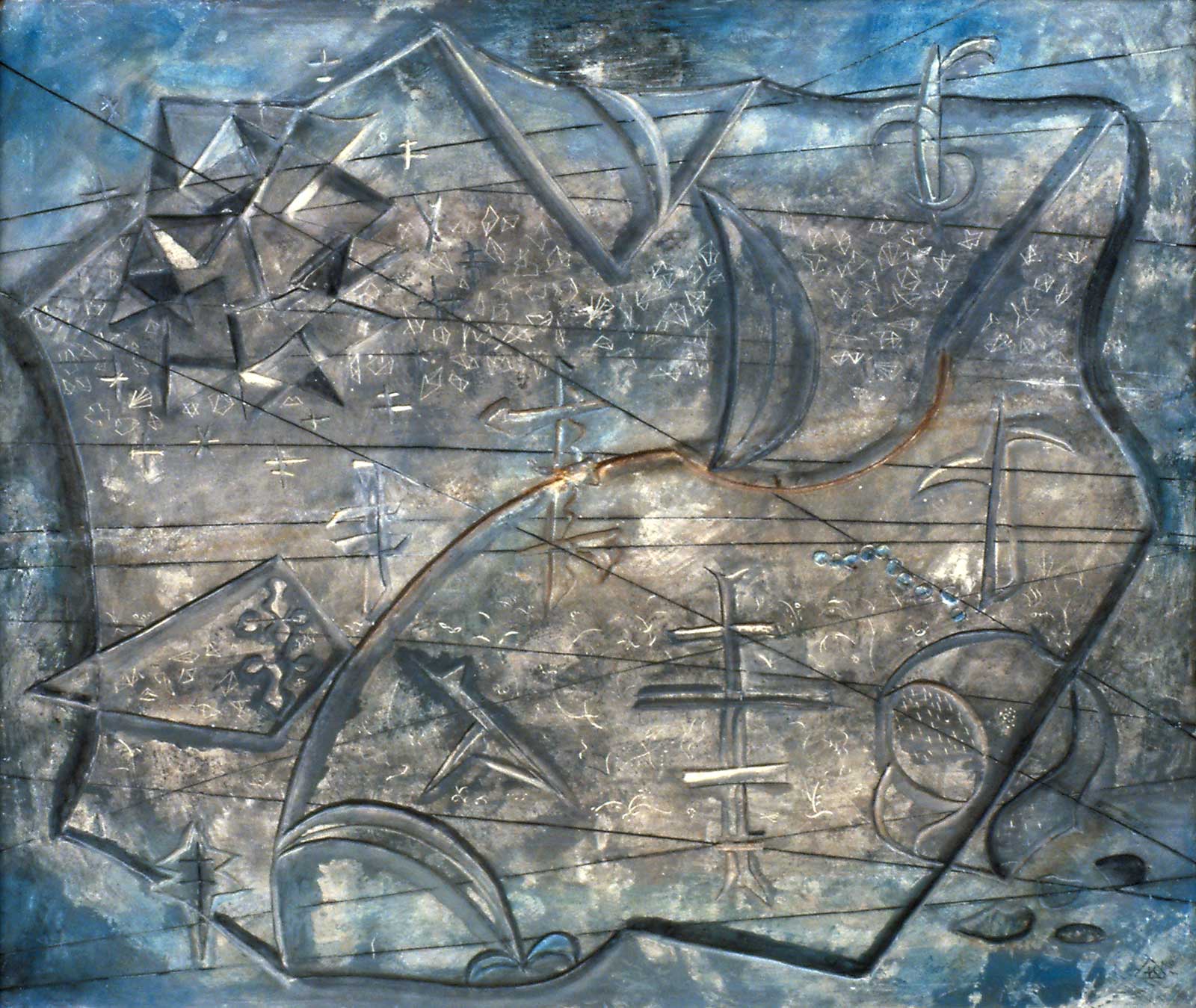 Adaline Kent (1900-1957), Wellspring, 1945. Tempera on incised Hydrocal, 14 x 16 ½ in. Museum of Art and Archaeology, University of Missouri; gift of the Betty Parsons Foundation. Photo courtesy of Museum of Art and Archaeology, University of Missouri.
In Lighthouse for Birds Kent imagines a respite for birds in motion. Art historian Alexander Nemerov writes poetically about Lighthouse in the catalog. “[The sculpture] offers no beacon, only a promise, a sign of light without the light itself, manifest in clay: a roosting spot, a haven, a gathering place among the restless migrations. It reveals to us our mortality and the place of that mortality in the universe, our fate to be swung round with the rocks and trees, pebbles orbiting in the fantastic scheme.”
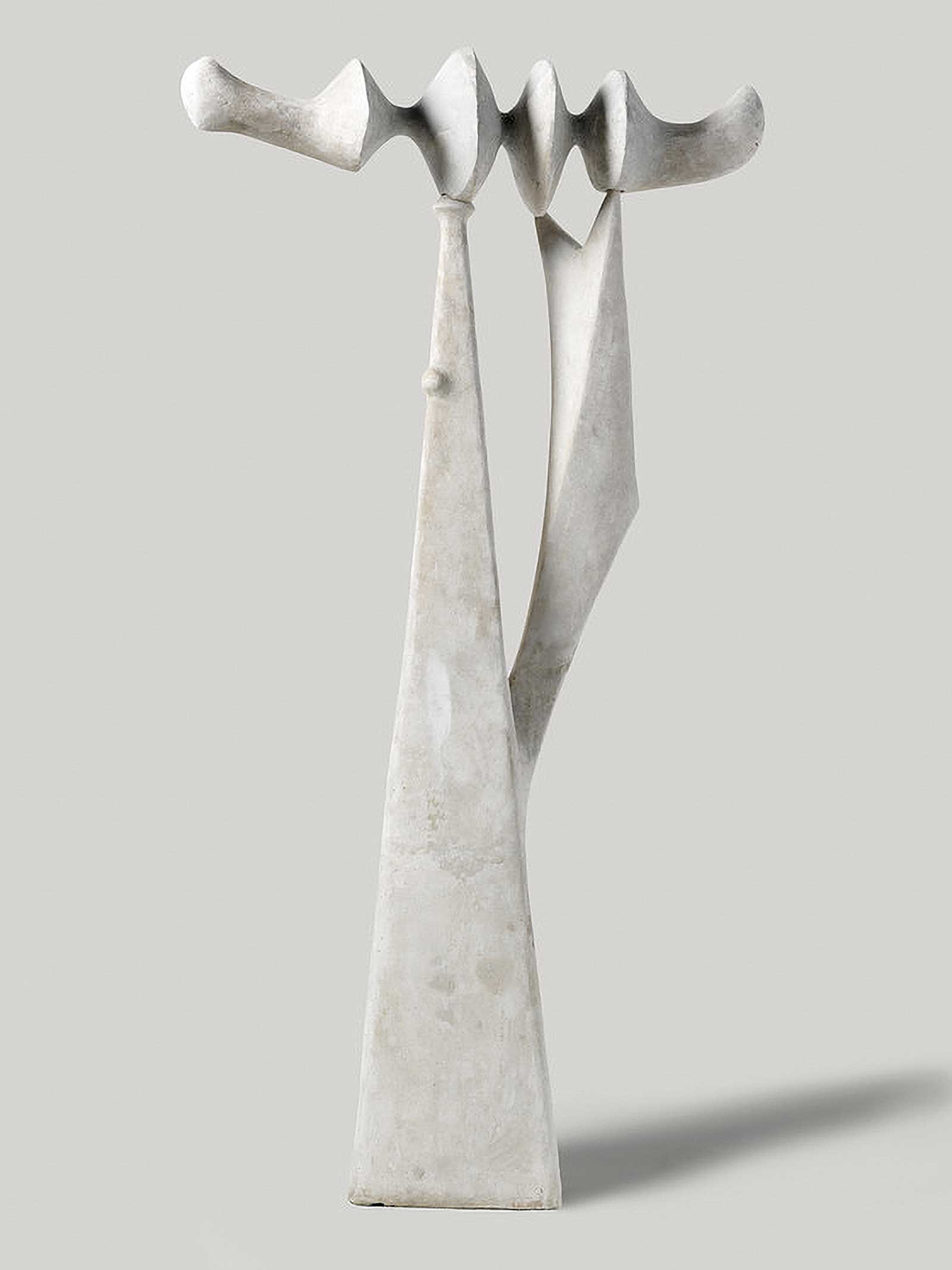 Adaline Kent (1900-1957), Finder, 1953. Magnesite (two pieces), 70 x 40 x 12 in. Los Angeles County Museum of Art; gift of Galen Kent Howard Hilgard in memory of her sister. Ellen Kent Howard. Photo: Digital Image © [2022] Museum Associates / LACMA. Licensed by Art Resource, NY.
Kent championed the advent of modern art. She celebrated the departure from art norms that she and her peers were undertaking. “Modern art is the expression of our time,” she wrote in her journal. “It differs from earlier art because of new knowledge. It brings out new horizons. Artists themselves, from the beginning, carry a constant—the need to create a personal truth. As a person lives in his time, he [sic] must share the ideas that make up that time.”
Kent was not only interested in producing fine art. She enjoyed creating decorative pieces such as lamps for Yosemite National Park’s iconic lodge, the Ahwahnee Hotel. In 1948 she was commissioned to make a sculpture for Thomas Dolliver Church’s Donnell Ranch garden. The garden came to be known as a masterpiece of modern landscape design that famously featured the first kidney shaped pool. Kent’s sculpture, Island, resembles a reclining figure and includes passageways underwater for swimmers.
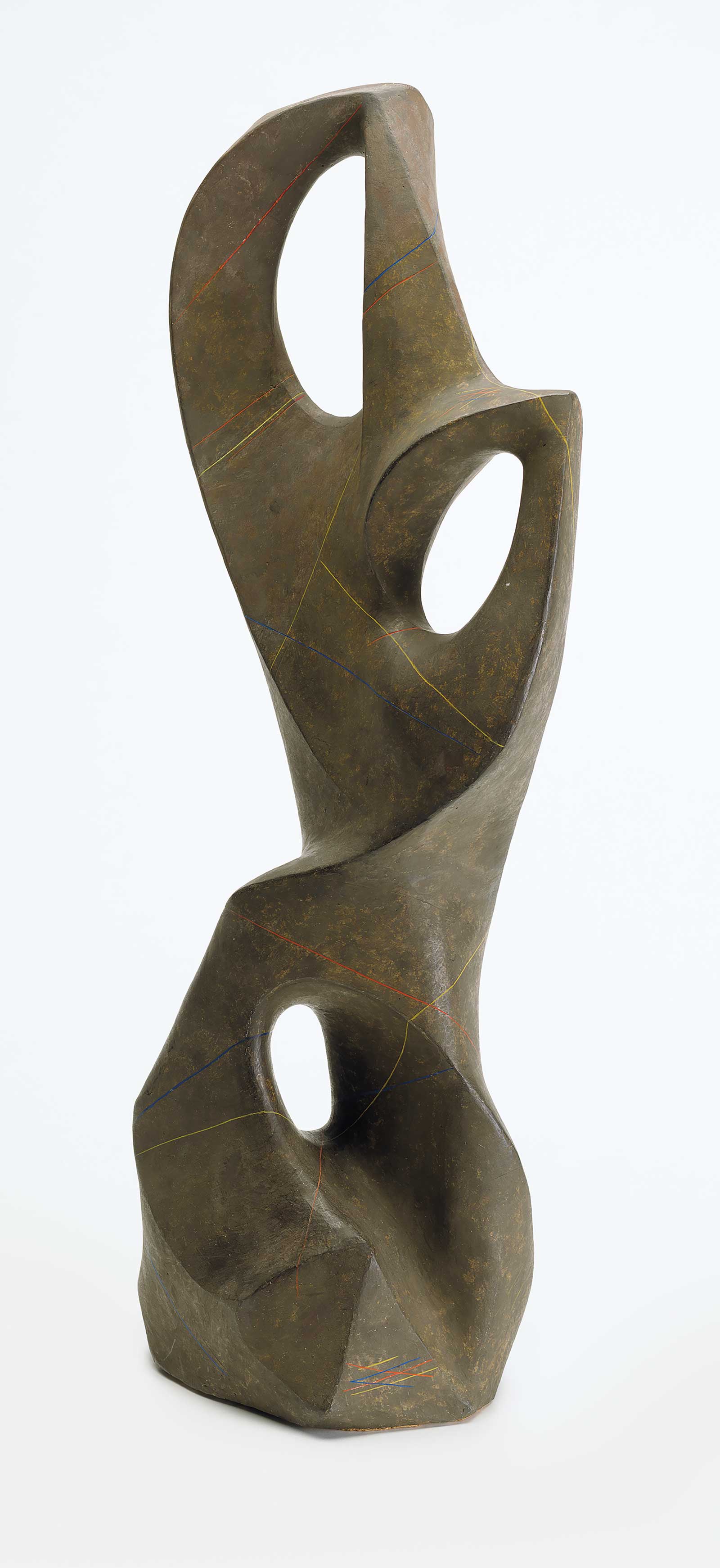 Adaline Kent (1900-1957), Dark Mountain, 1945. Hydrocal with incised lines and egg tempera, 33¾ x 12½ x 8 in. San Francisco Museum of Modern Art; purchase. Photo courtesy of San Francisco Museum of Modern Art.
Sadly, Kent was killed in a car crash in 1957. But her joie de vivre can still be felt. The Nevada Museum of Art retrospective gets its title from a poem in Kent’s journals entitled, “Classic Romantic Mystic.” The poem invokes “beings independent of their deceptive ordinary appearance.”
“Freed from the trappings of convention,” Kent wrote, “I want to hear the click of authenticity.”
Powered by Froala Editor