Over the course of four days and seven sales, Sotheby’s will bring 1,000-plus lots to auction that include American art, sculpture, furniture, decorative arts and 20th century design with highlights that include pieces by William Merritt Chase, Winslow Homer, Marsden Hartley, Louis Comfort Tiffany and Frank Lloyd Wright, among many others.
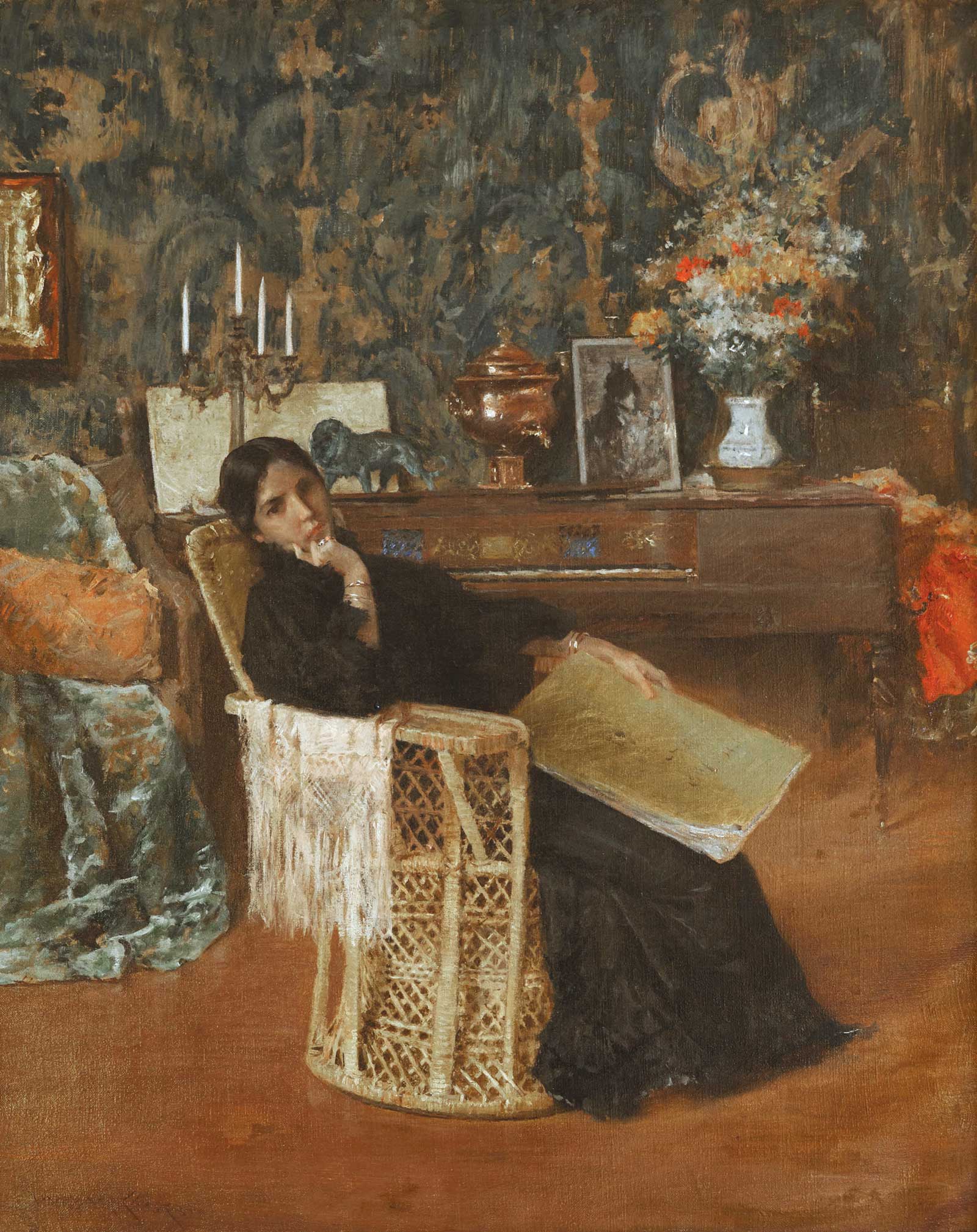 William Merritt Chase (1849-1916), In the Studio, 1892. Oil on canvas, 29 x 23½, signed lower left: ‘Wm. M. Chase’.
“The Wolf Family Collection is comprised of a remarkable breadth of exceptional works of fine and decorative arts, with extraordinary examples of paintings and watercolors, sculpture, early American furniture, silver, Chinese export porcelain, design, and jewelry,” notes the auction house. “In its impressive totality the collection embodies the spirit of American artistry, design, and craftsmanship, spanning the 18th through 20th centuries.”
Estimated to realize in excess of $50 million, The Wolf Family Collection will be offered at Sotheby’s New York beginning this April constituting one of the largest and most significant private collections of American art to ever come to auction.
The sale series will launch with a season-defining Evening Sale, The Spirit of America, showcasing a selection of the collection’s top masterworks in fine art, sculpture, furniture, Chinese export porcelain, silver and 20th-century design.
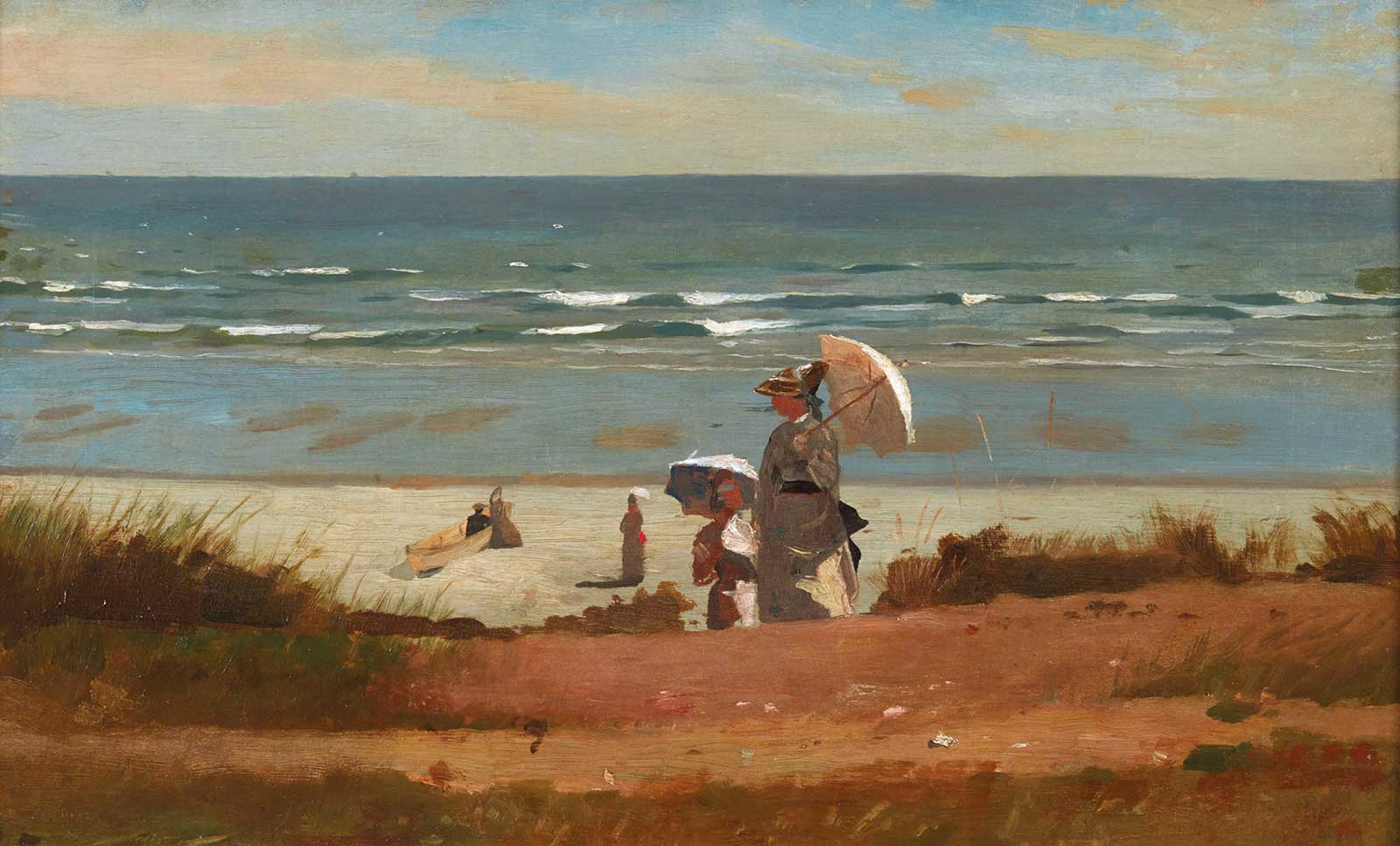 Winslow Homer (1836-1910), On the Beach at Marshfield, 1872. Oil on panel, 13¼ x 21½ in.
“Few collections so seamlessly bridge the currents of American art across centuries as does the Wolf collection, which, through this carefully selected group of paintings and sculptures, articulates a unique story of American history from Colonial America through the 20th century,” says Kayla Carlsen, Sotheby’s head of American Art.
The American paintings from The Wolf Family Collection represent quintessential works from a range of periods, subjects and styles spanning the history of American art, from 18th-century portraits to 19th-century landscapes to 20th-century modernism. The centerpiece of the collection is Chase’s masterpiece of American painting, with portrait highlights by John Singleton Copley and Gilbert Stuart—founding members of the American art scene in the 18th and 19th centuries—as well as depictions of the American landscape, including Hudson River School paintings by Sanford Robinson Gifford and Worthington Whittredge. European influences representing the cultural interchange that took place in that era are embodied in works by Homer and John La Farge, with work by American modernists Maurice B. Prendergast and Charles Demuth highlighting the technical, cultural, and artistic achievements of the 20th century.
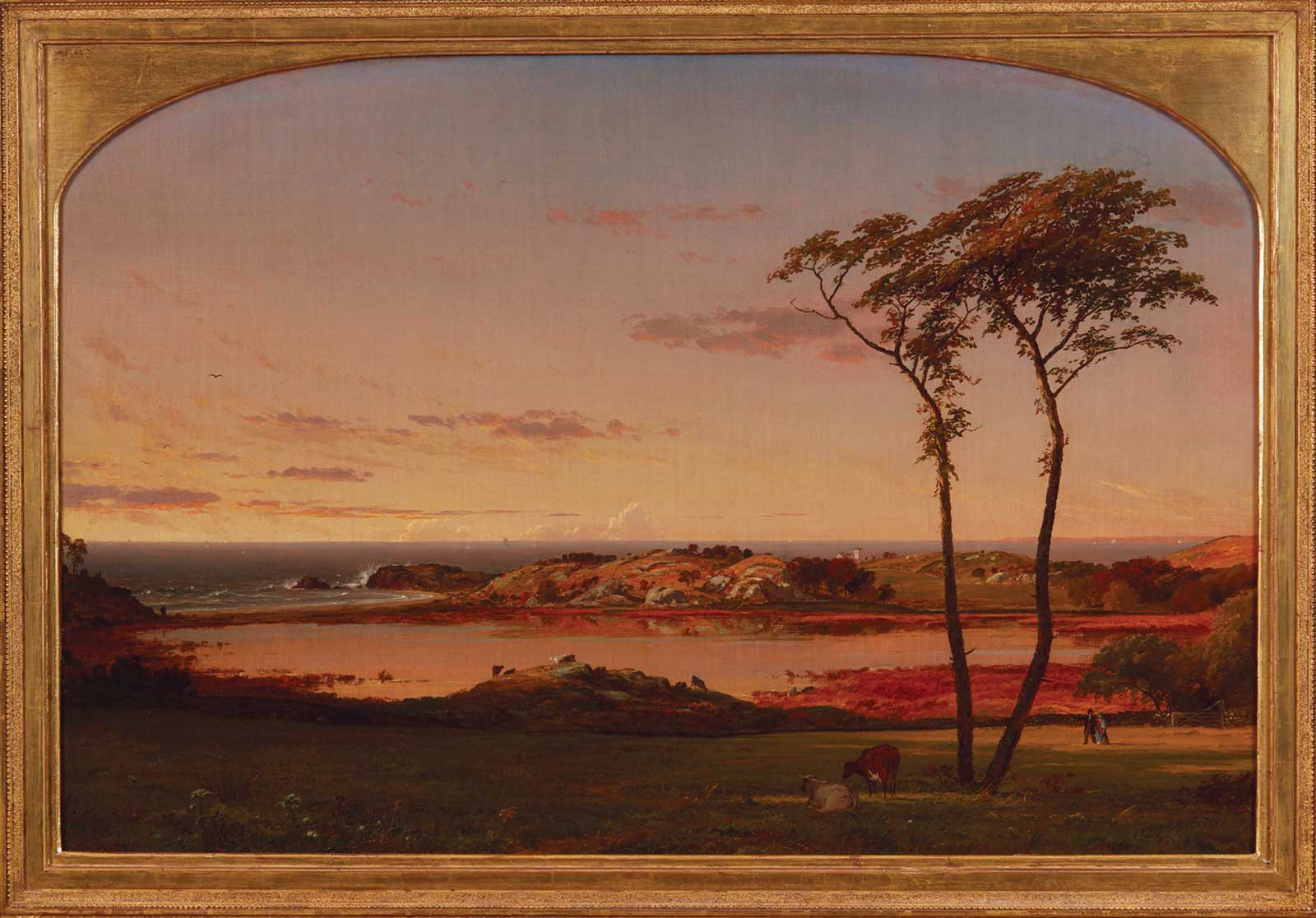 Jasper Francis Cropsey (1823-1900), Spouting Rock, Newport, Rhode Island, 1856. Oil on canvas laid down on panel, 25 x 37 in., signed lower right: ‘Cropsey’; dated lower right: ‘1856’.
Painted in 1892, In the Studio depicts Alice Gerson, Chase’s wife and favorite subject, in the artist’s summer studio during their first summer living in Shinnecock Hills—an eclectically decorated space that inspired him creatively while also serving as a vibrant social space for Chase. This portrayal of Chase’s wife holding prints effectively pairs his artistic and personal lives in a single dynamic image. The success of In the Studio lies in Chase’s ability to combine his affinity for detailed, beautiful interior subjects with his talent for illustrating tender portraits of loved ones.
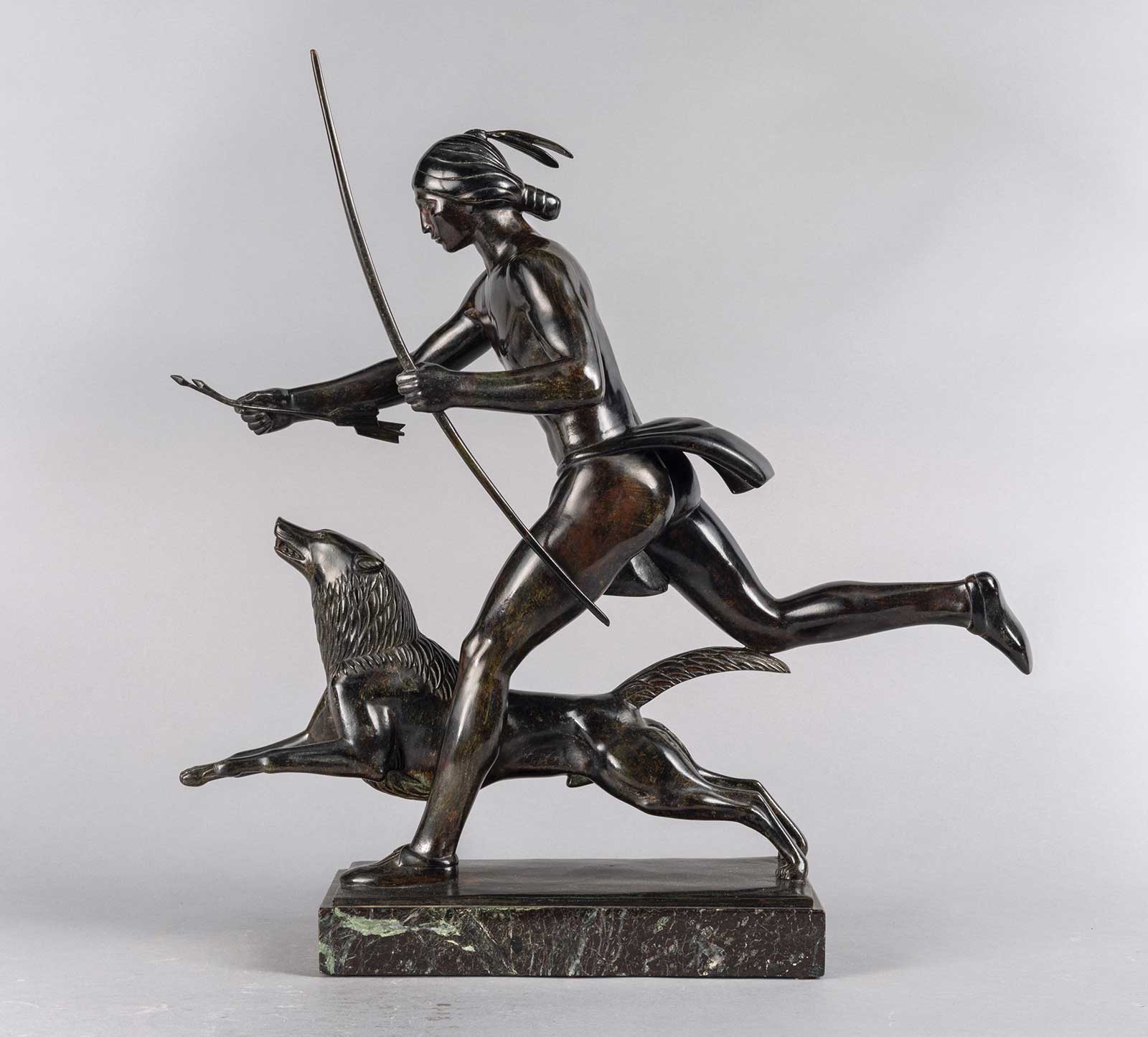 Paul Manship (1885-1966), Indian Hunter and His Dog, 1926. Bronze, 23¼ in.
On the Beach at Marshfield was among a group of paintings which hung in Homer’s “Kettle Cove” cottage in Prout’s Neck, Maine. Homer moved from New York City to Prout’s Neck in 1884, inspired by the raw beauty of the Maine coastline and produced many of his notable seascapes from the cottage where this painting once hung. Following the artist’s death in 1910, On the Beach at Marshfield (and The Sand Dune, the related sketch) descended into the collection of his brothers, Charles S. Homer, Jr. and Arthur B. Homer, who identified the scene as Marshfield, Massachusetts. This painting relates to an illustration that Homer produced for the August 17, 1872, issue of Harper’s Weekly entitled On the Beach—Two Are Company, Three Are None. Both the Harper’s Weekly publication and this painting are emblematic of Homer’s preoccupation with summer beach subjects and his affinity for capturing the serenity of the sea.
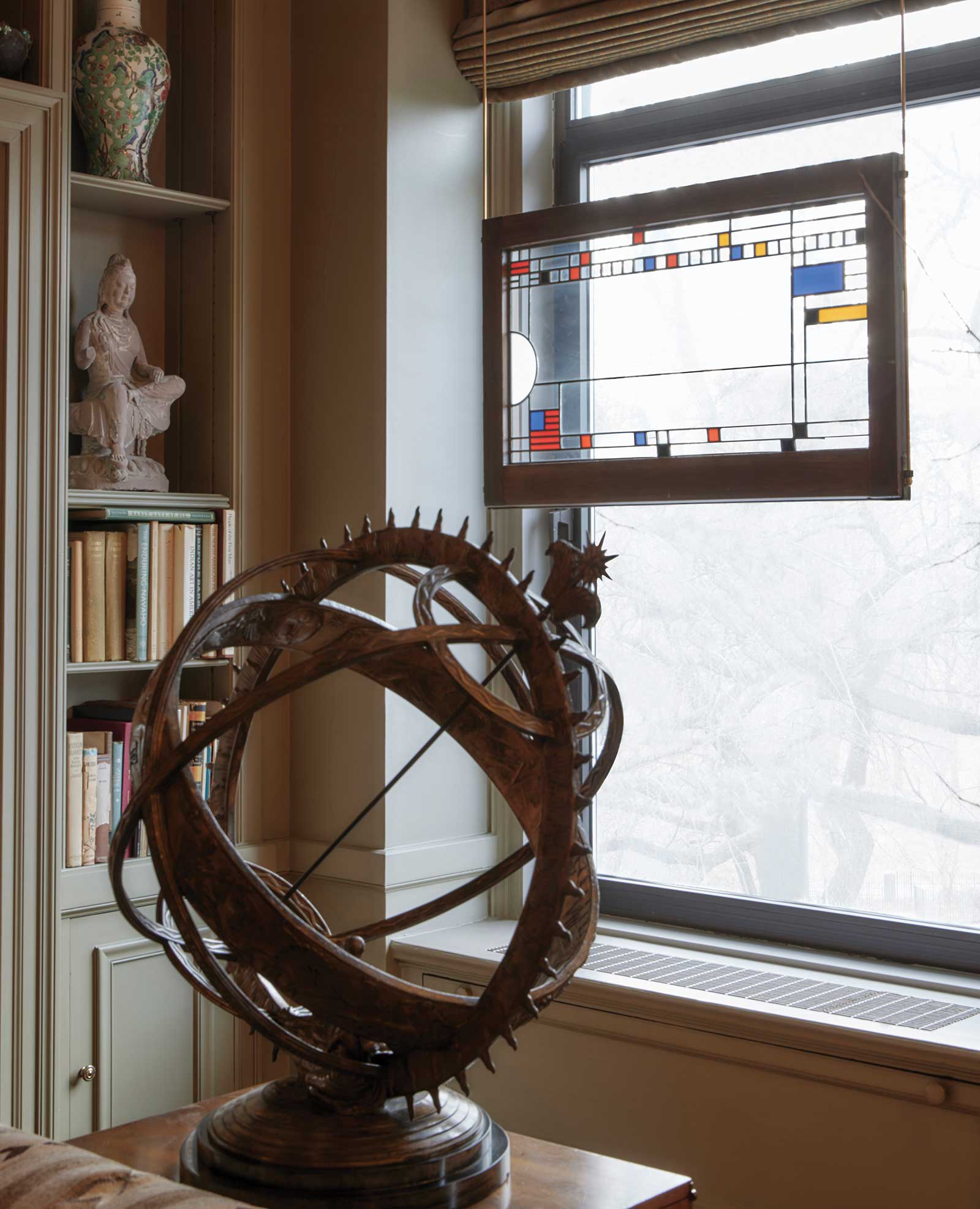 Frank Lloyd Wright (1867-1959), Window from the Avery Coonley Playhouse, Riverside, Illinois, ca. 1912. Opaque and clear glass, copper-plated zinc cames, original oak frame, 24 x 38 3/8 in.
Additionally, a carefully curated selection of important bronzes in The Wolf Family Collection surveys the finest offerings of American sculpture by the most renowned artists of the late 19th and early 20th centuries and is among the most impressive private holdings of American sculpture ever assembled. As with the broader collection, the American bronzes span various geographic regions and historical periods in a manner that presents a comprehensive study of American history through sculpture. The range of the collection includes multiple works by Paul Manship and Augustus Saint-Gaudens, offering a unique perspective into their practices.
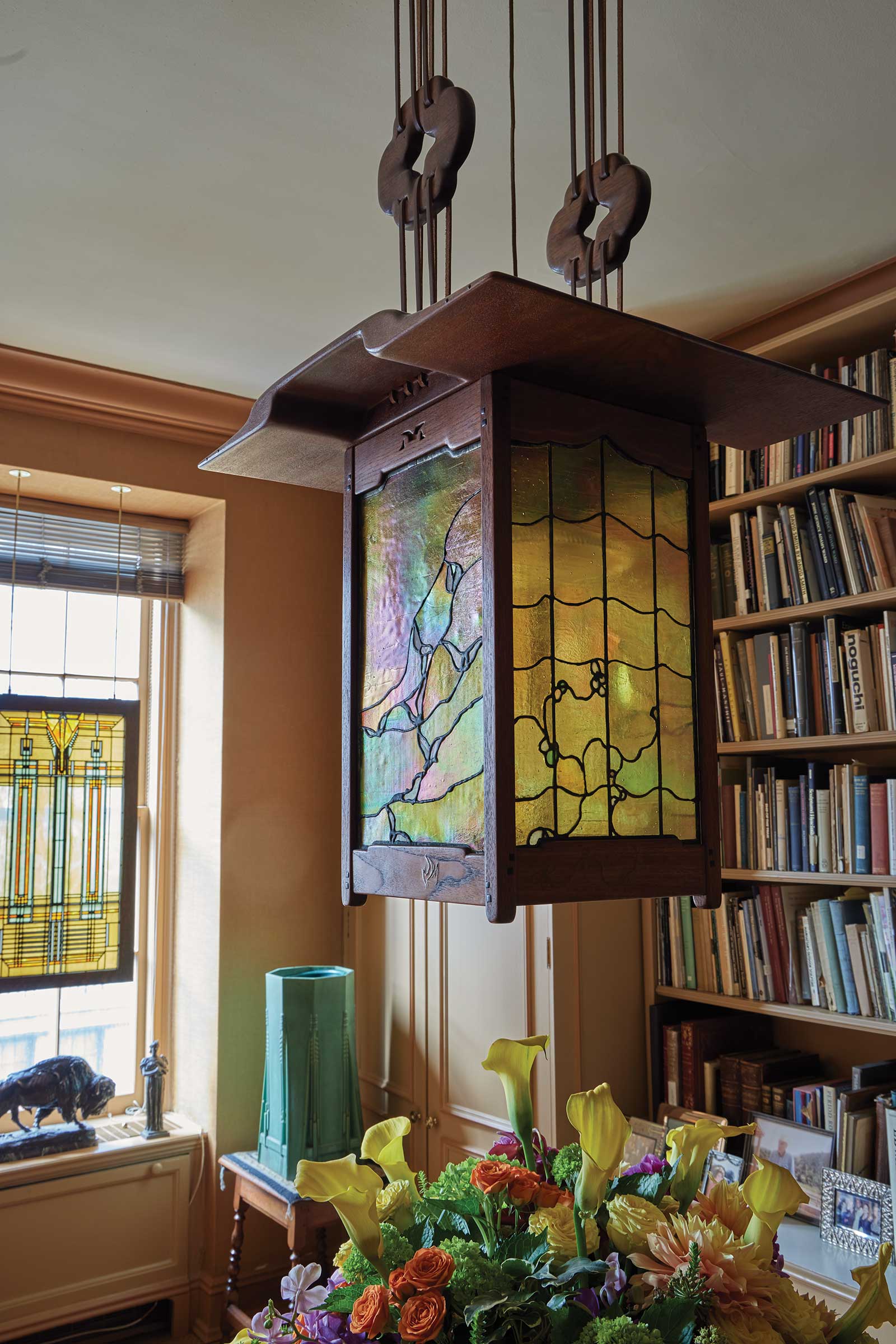 Greene & Greene, monumental lantern from the entry of the Robert R. Blacker House, Pasadena, California, ca. 1908. Iridized and opalescent glass, mahogany, ebony, abalone, copper, fruitwood and silver inlays, drop: 23 in.
In June of 1925, prominent Minnesota-based banker and patron Thomas Cochran commissioned a fountain in the artist’s hometown St. Paul, with Manship collaborating with the architect to install Indian Hunter and His Dog as the focal point of the Cochran Memorial Park fountain. This subject recalls John Quincy Adams Ward’s earlier execution of this theme in The Indian Hunter (which is also part of the Wolf collection). The reunion of Ward and Manship’s respective renditions of the Indian Hunter subject shows how closely Manship studied his sculptural predecessors. Manship’s Indian Hunter and His Dog applies Native American subject matter in an art deco style, bringing a classical hunting figure into the 20th century. Manship was so pleased with his rendition of Indian Hunter and His Dog that he issued a reduction and cast several smaller versions of the original work, of which this work is a part of that group.
Powered by Froala Editor