
The pioneering modernist painter Joseph Stella (1877-1946), was born in Italy and immigrated to New York in 1896 when he was 18. He is perhaps best known for his paintings of the Brooklyn Bridge. In 1912 he wrote, “I was thrilled to find America so rich with so many new motives to be translated into a new art. Steel and electricity had created a new world. A new drama had surged from the unmerciful violation of darkness at night, by the violent blaze of electricity and a new polyphony was ringing all around with the scintillating, highly colored lights. The steel had leaped to hyperbolic altitudes and expanded to vast latitudes with the skyscrapers and with bridges made for the conjunction of worlds. A new architecture was created, a new perspective.”
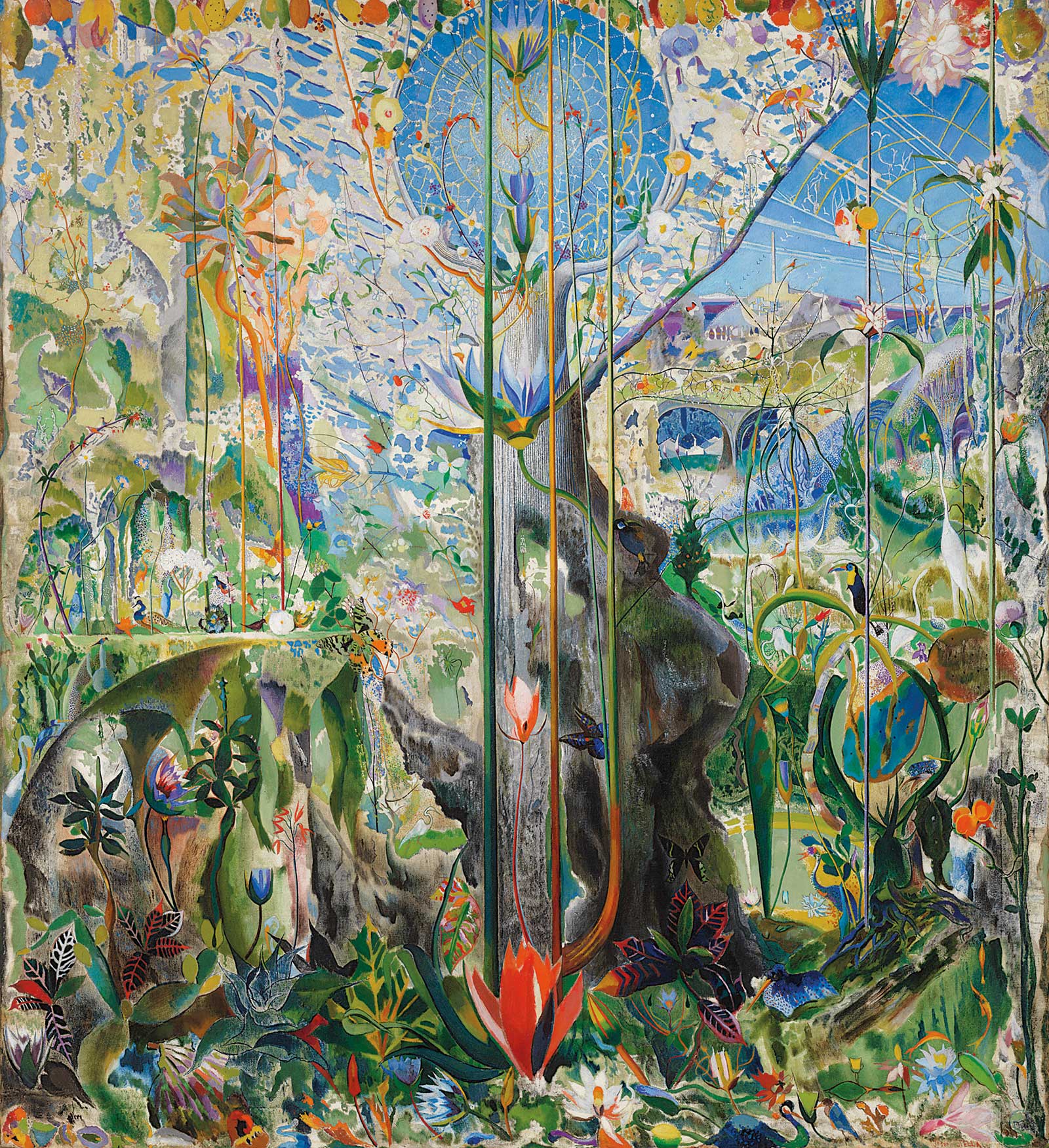 Joseph Stella (1877-1946), Tree of My Life, 1919. Oil on canvas, 84 x 76 in. Art Bridges, Bentonville, Arkansas, purchase. Photo © 2018 Christie’s Images Limited.
At about the same time as his iconic Brooklyn Bridge, 1919-20, he painted the extraordinary Tree of my Life, an exuberant paean to nature. The painting is included in the exhibition Joseph Stella: Visionary Nature at the High Museum of Art in Atlanta through May 21.
Stephanie Heydt, the museum’s curator of American art and head curator for the exhibition, writes, “Much of his emotional and spiritual life centered on his relationship with nature, and the exhibition offers the unique opportunity to revisit Stella through this lens. He was an incredible draughtsman, and his drawings rival those of the old masters, but he also delighted in experimentation. His style ranged from abstraction to realism to the archaic with such unexpected results.”
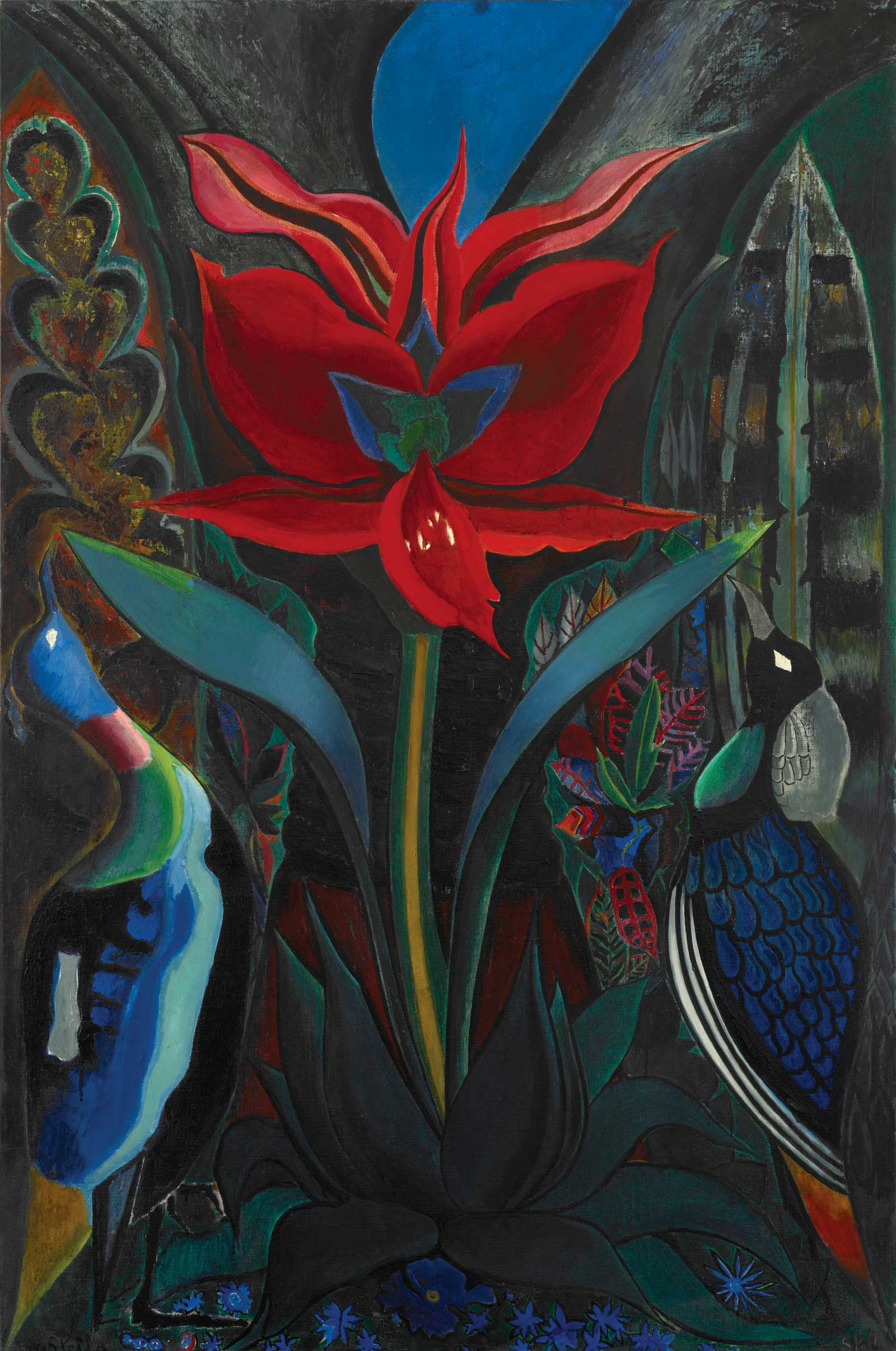 Joseph Stella (1877-1946), Red Flower, 1929. Oil on canvas, 57½ x 38¼ in. Crystal Bridges Museum of American Art, Bentonville, Arkansas, 2006.102. Photo by Dwight Primiano.
Reminiscing about the inspiration for the painting, Stella wrote, “A new light broke over me. One clear morning in April, I found myself in the midst of joyous singing and delicious scent…of birds and flowers ready to celebrate the baptism of my new art, the birds and the flowers already enjewelling the tender foliage of the newborn tree of my hopes, Tree of My Life.”
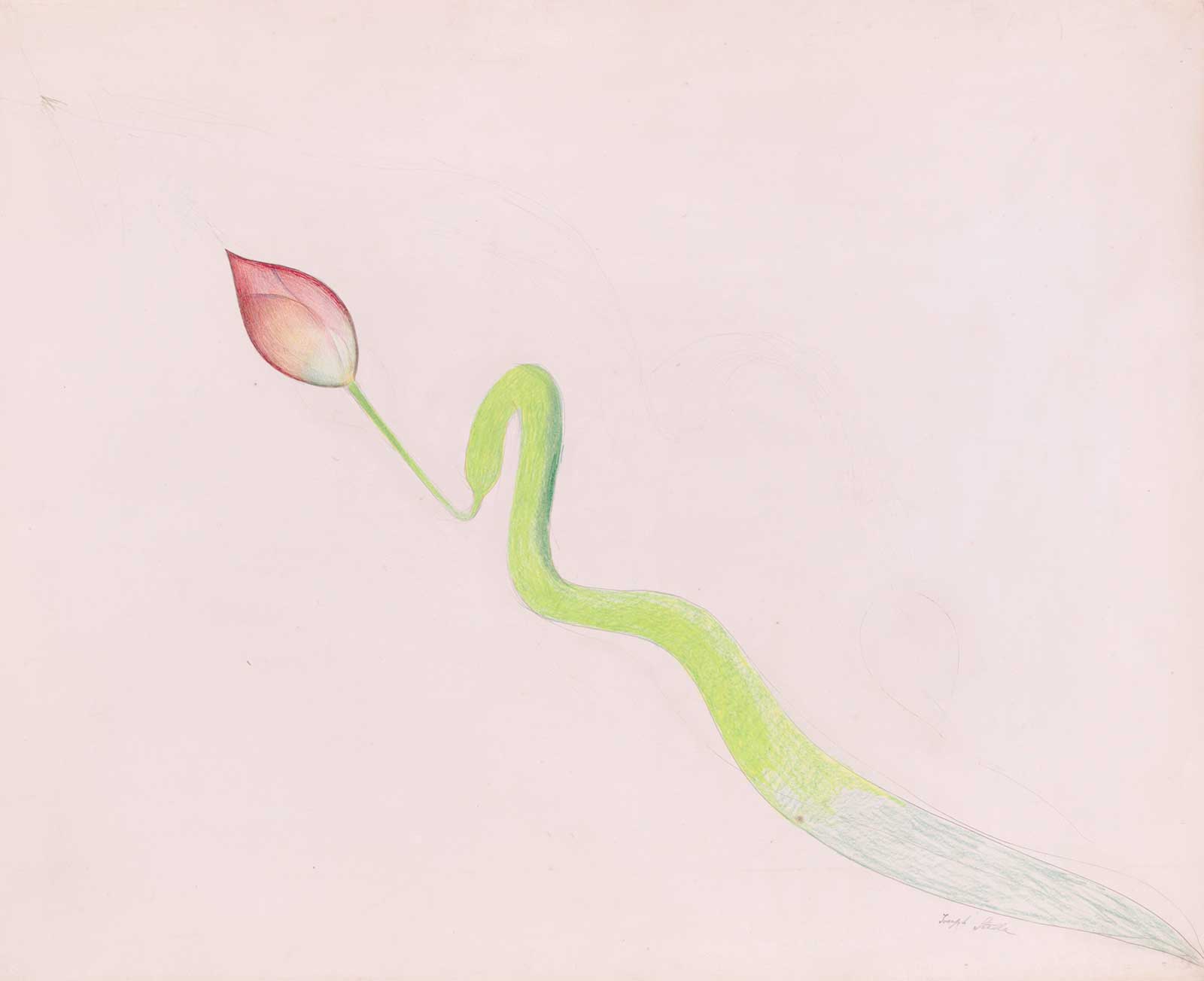 Joseph Stella (1877-1946), Flower Bud, undated. Colored pencil and metalpoint with incised lines on white wove paper, 223/8 x 27¾ in. Harvard Art Museums / Fogg Museum, gift of an Anonymous donor, 2008.271. Photo © President and Fellows of Harvard College.
Tylee Abbott, head of the American art department at Christie’s and a former contributing editor to this magazine, comments, “There comes a moment in any great artist’s career when they shake off their influences and their past to come up with something truly groundbreakingly original. And that’s precisely what we have with Joseph Stella’s Tree of My Life.”
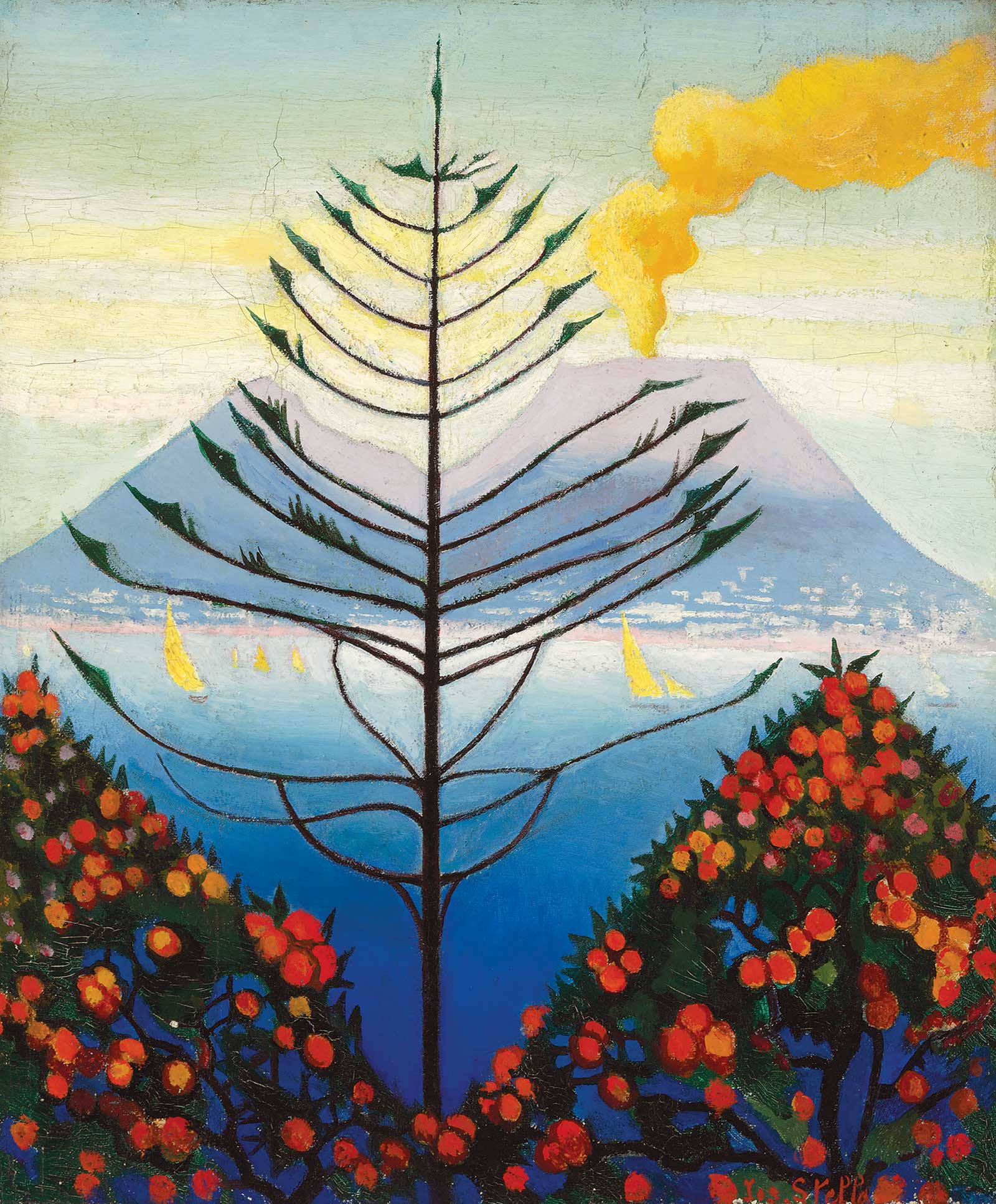 Joseph Stella (1877-1946), Capri, ca. 1926–1929. Oil on canvas, 17¼ x 14¼ in., private collection. Photo © Christie’s Images / Bridgeman Images.
The complex centrality of Tree of My Life echoes his Brooklyn Bridge paintings. It’s vibrant palette and that of his Red Flower, 1929, contrast with his intimate flower studies done in metalpoint, colored pencil and crayon such as Flower Bud. He commented on his profound spiritual connection to nature, writing that his wish was “that my every working day might begin and end, as a good omen, with the light, gay painting of a flower.”
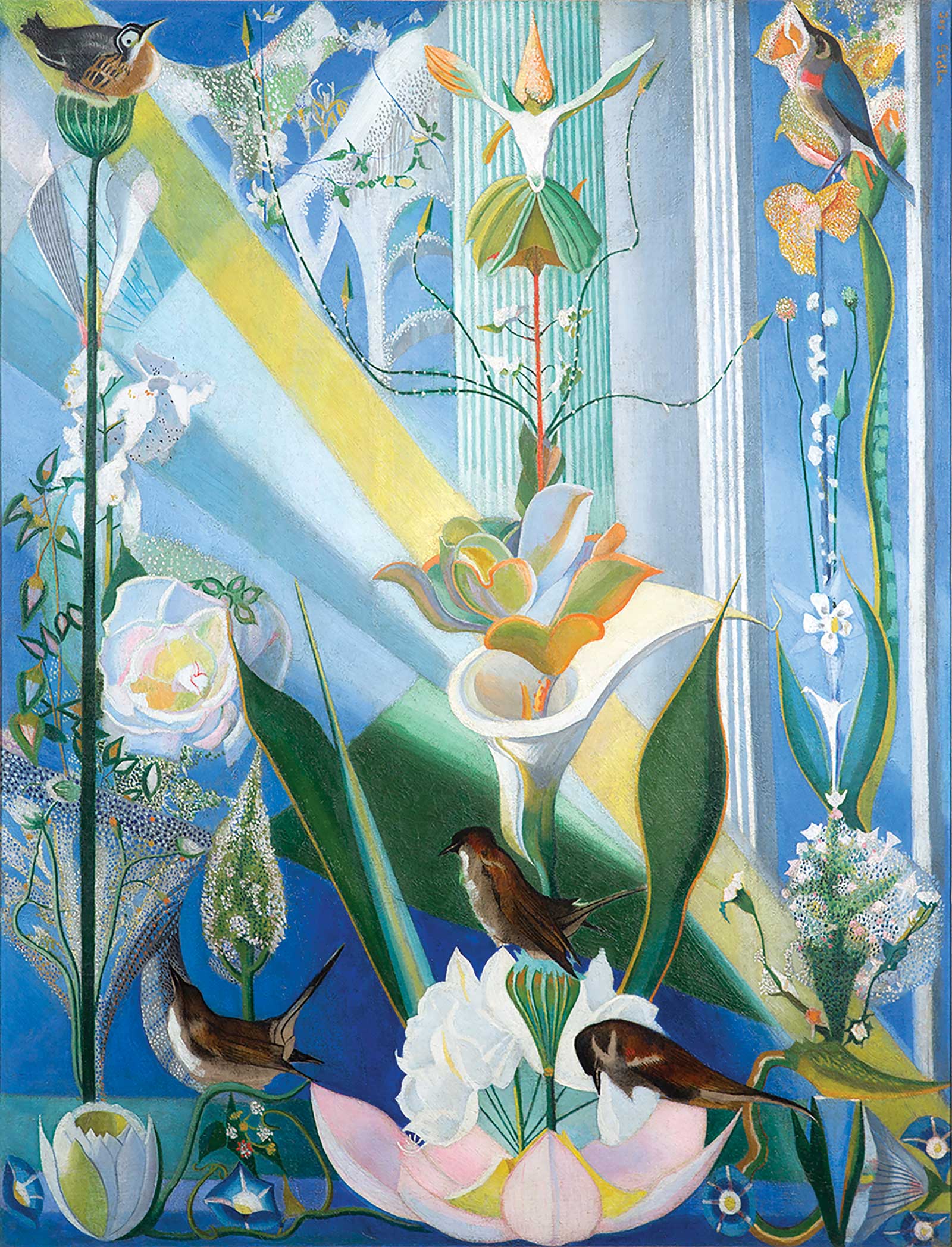 Joseph Stella (1877-1946), Dance of Spring (Song of the Birds), 1924. Oil on canvas, 433/8 x 223/8 in. Kemper Museum of Contemporary Art, Kansas City, Missouri, Bebe and Crosby Kemper Collection, gift of the Enid and Crosby Kemper Foundation, 2003.03.01. Photo by James Allison Photography, 2013.
Stella had read the poems of Walt Whitman in Italian before he arrived in New York. The critic Irma Jaffe wrote, “The immigrant community’s freedom from Victorian patterns of respectable behavior and middle-class refinement coincided with those Whitmanesque concepts of democracy that conditioned the thought of progressives of that period.”
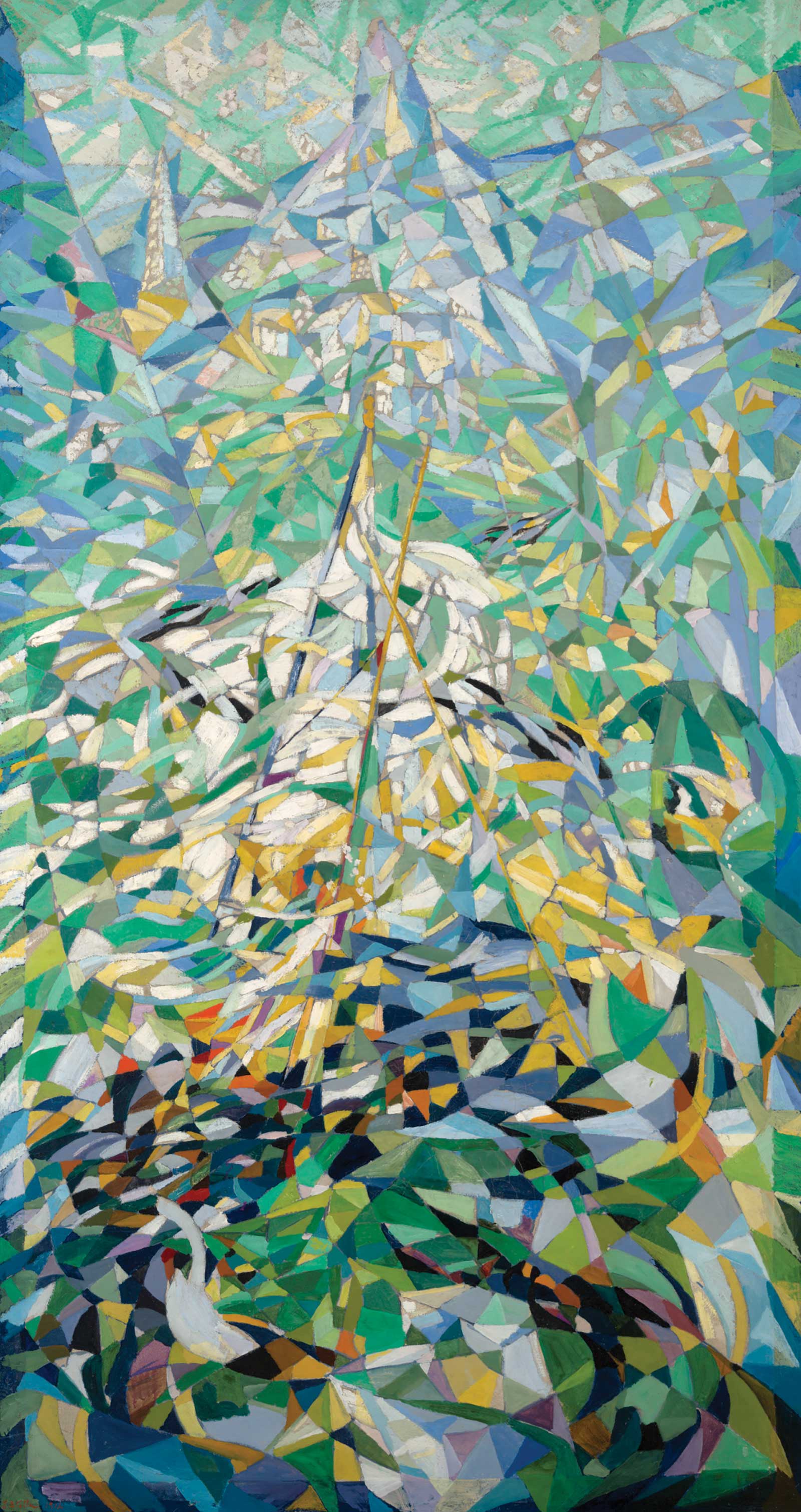 Joseph Stella (1877-1946), Spring (The Procession), ca. 1914-1916. Oil on canvas, 755/16 × 403/16 in. Yale University Art Gallery, gift of Collection Société Anonyme, 1941.692.
The city became overwhelming for Stella and he often returned to Italy for rejuvenation. In 1917 he moved to Brooklyn and trod the streets where Whitman had walked. He wrote, “Brooklyn gave me a sense of liberation. The vast view of her sky in opposition to the narrow one of NEW YORK, was a relief—and at night, in her solitude, I used to find, intact, the green freedom of my own self.”
Like Whitman, Stella found the ineffable and the spiritual in the vitality of the city but sought it out more simply and joyfully in nature.
The exhibition was organized by the High Museum and the Brandywine River Museum in Chadds Ford, PA, where it will travel in June.
Powered by Froala Editor