“The towers were jammed together so tightly, [you] could feel the mass and stupendous weight,” Tom Wolfe wrote of Manhattan. “Just think of the millions, from all over the globe, who yearned to be on that island, in those towers, in those narrow streets! There it was, the Rome, the Paris, the London of the twentieth century, the city of ambition, the dense magnetic rock, the irresistible destination of all those who insist on being where things are happening…” F. Scott Fitzgerald called the city the “first wild promise of all the mystery and the beauty in the world.” Truman Capote could not claim ownership over any part of New York City “because I belong to it.”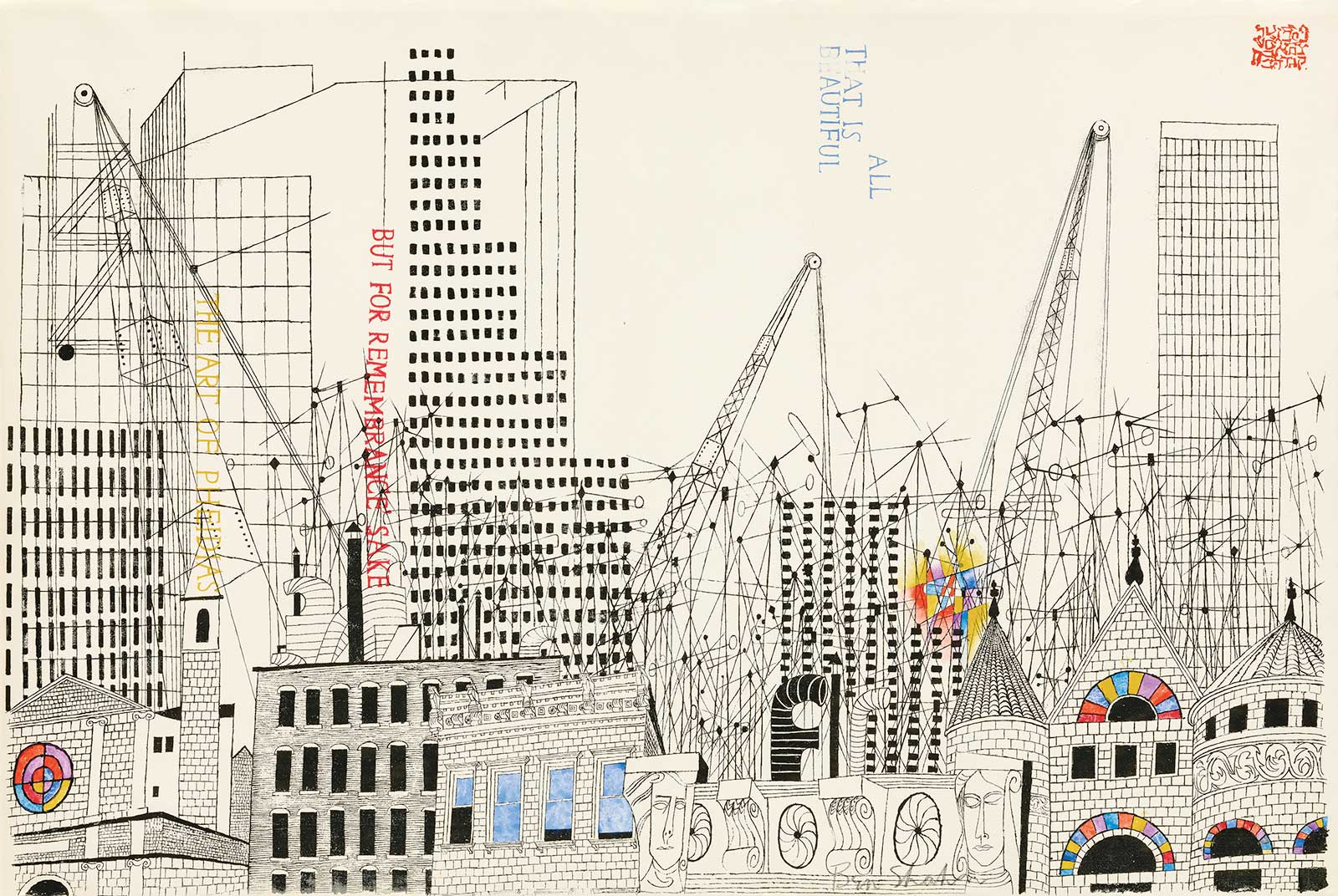 Ben Shahn (1898-1969), All That is Beautiful, 1966. Screenprint and watercolor, 25¼ x 38¾ in. Smithsonian American Art Museum. Museum purchase, 1971.84.75.
Authors, poets, musicians and thinkers—most of the great minds of the 20th century—have written about New York City in one way or another over the last century. And no two perspectives are the same, which has created a luscious tapestry of ideas about the great East Coast metropolis. Opening later this year, the Smithsonian American Art Museum will present a new combination of ideas about New York, all works on paper from the institution’s permanent collection. Steel and Sky: Views of New York City. Taken as a whole, the exhibition’s 50-plus works will show the diversity of mediums, subjects matters, styles and the artists themselves, says the show’s curator, Alex Mann, the museum’s curator of prints and drawings.
“Works on paper exhibitions always offer so many surprises for museums, and that’s certainly the case here. As I was going through the collection I was finding some very unfamiliar treasures. You think you know what you’re going to see with a New York theme, but with a collection as deep as the Smithsonian’s it’s easy to have your mind changed,” Mann says. “I looked at more than 1,000 pictures that had something to do with New York City. We could easily do this show six, eight, 10 times over and it would be fresh and exciting every time. The city has inspired so many different artists, and each one has had a different reaction and response.”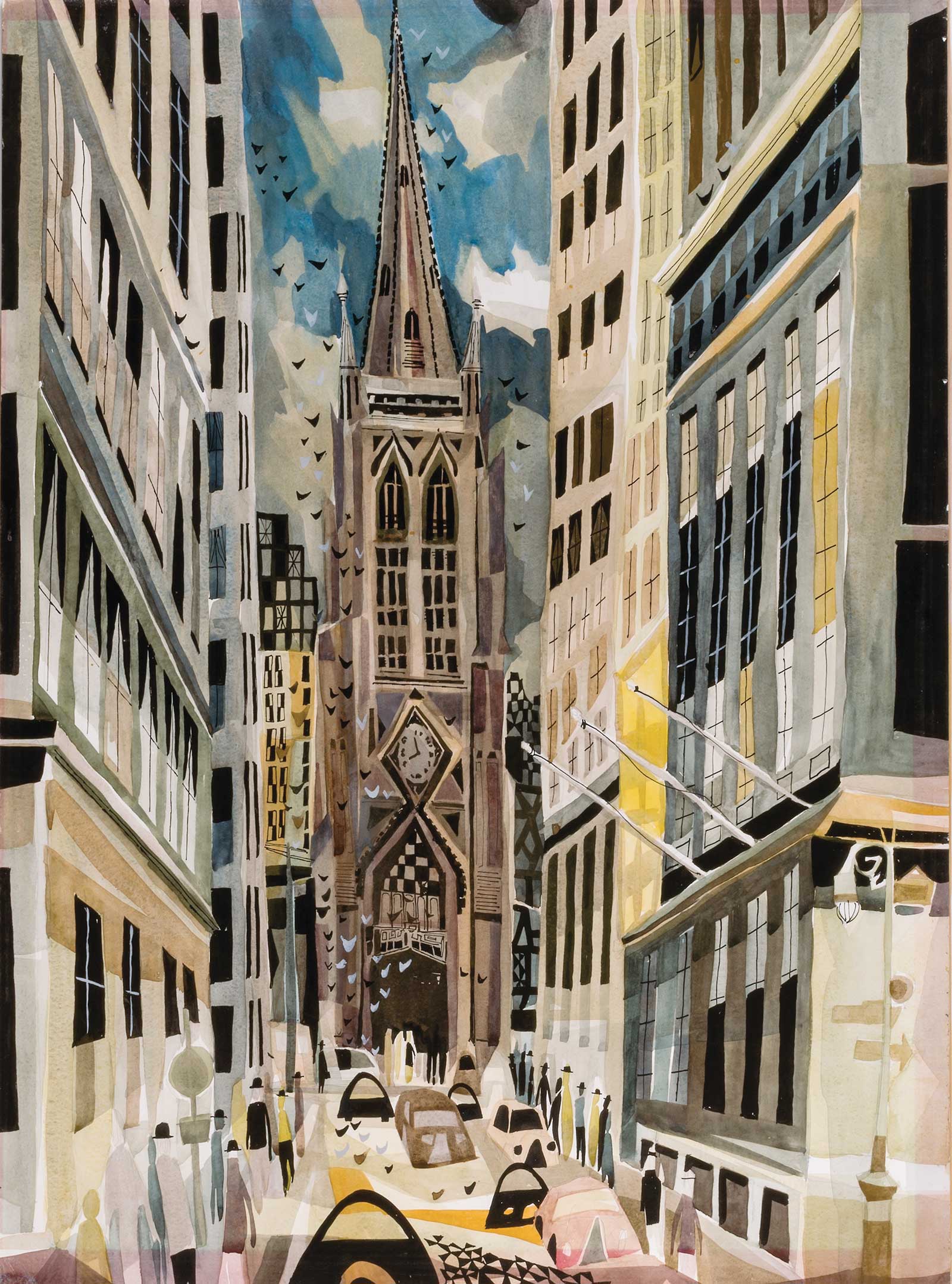 Robert Wilvers (1932-1997), Trinity Church, New York. Watercolor and pencil on paperboard, 30 x 22 in. Smithsonian American Art Museum. Gift of the Ford Motor Company, 1966.36.201.
Works in the show include pieces from some of New York City’s most famous artists, such as Paul Cadmus, John Sloan and John Marin, but also prominent works from many lesser-known artists such as Isabel Bishop, Peggy Bacon, Kyra Markham and Elizabeth Olds. In addition to a number of works by women artists, the exhibition will also feature work by black artists, including Harlem modernist William H. Johnson, whose work Boy’s Sunday Trip will be on view. The work shows four young boys seated on what could be the edge of either the Hudson or East rivers, with a cityscape behind them. “Johnson made these rich, beautiful drawings. When I saw this one I just thought it was magical,” Mann says. “You can see how he was really reflecting on his experiences of city life.”
Other images show the iconic aspects of New York City’s subways, streets and architecture, including Arnold Ronnebeck’s lithograph Brooklyn Bridge, August Mosca’s lithograph Subway Tunnel, Olds’ screenprint Harlem River Bridges and two spectacular Martin Lewis drypoint works, Subway Steps and Glow of the City.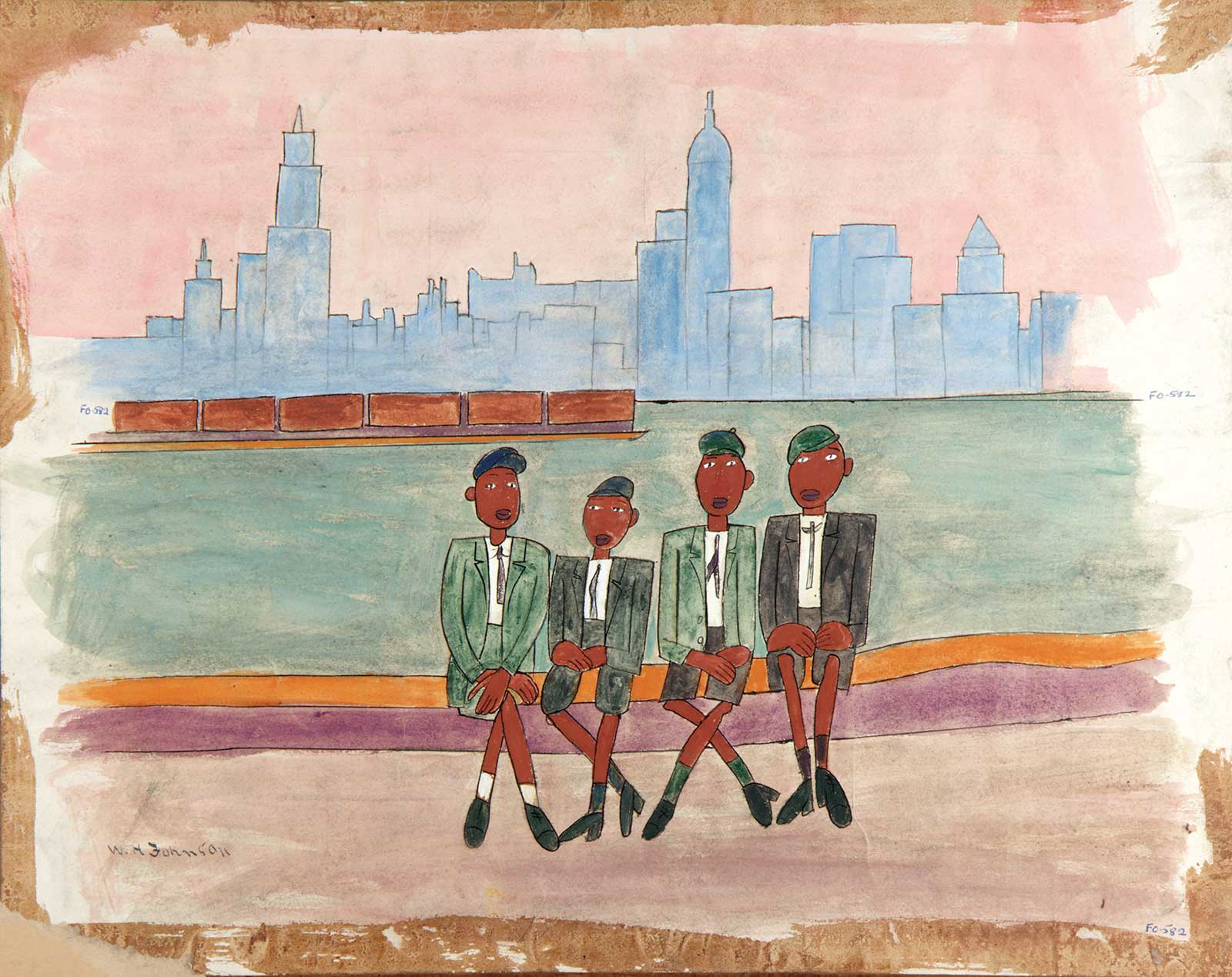 William H. Johnson (1901-1970), Boy’s Sunday Trip, ca. 1939-1942. Tempera and pen and ink on paper, 14 1/8 x 17 7/8 in. Smithsonian American Art Museum. Gift of the Harmon Foundation, 1967.59.1094.
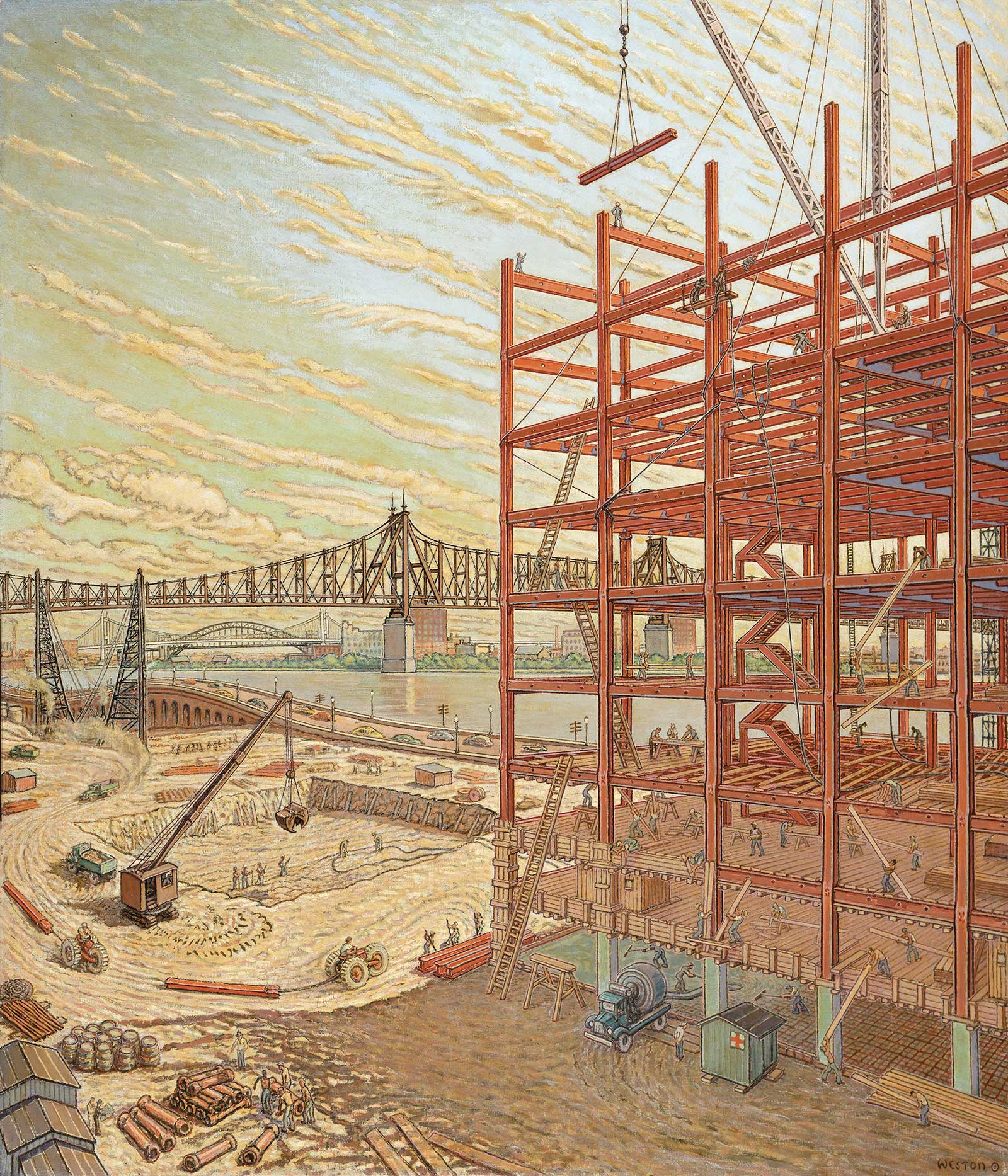 Harold Weston (1894-1972), Building the United Nations--#1--Steelwork of Secretariat, 1949. Oil on canvas, 42 1⁄8 x 36 1⁄8 in. Smithsonian American Art Museum. Gift of the Committee of the Weston United Nations Paintings, 1955.11.3.
Mann hopes the exhibition will bring more attention to some of the artists’ methods, including lithography, etchings and engravings. Woodcuts, for example, will be featured with several works, including Grace Albee’s 1946 wood engraving on paper, The Storm--Old Chelsea District, N.Y. “Woodcuts are distinguished from other forms of printmaking because it allows more of a gestural quality. We have several in the show, and I think visitors will be surprised at what they’re seeing,” he adds.
Steel and Sky will be broken up into three sections: the first section includes those iconic features, such as the bridges and skyscrapers; the second section will look more closely at the human elements of the city; and the third and final section will feature the abstraction and experimentation of the city. “After the 1913 Armory Show—which featured cubism, modernism and a number of young experimental artists of the era—New York City really came to symbolize the cutting edge,” Mann says. “It’s that experimentation that allowed artists to examine the landscape in unique ways, and gave them license to break the rules.”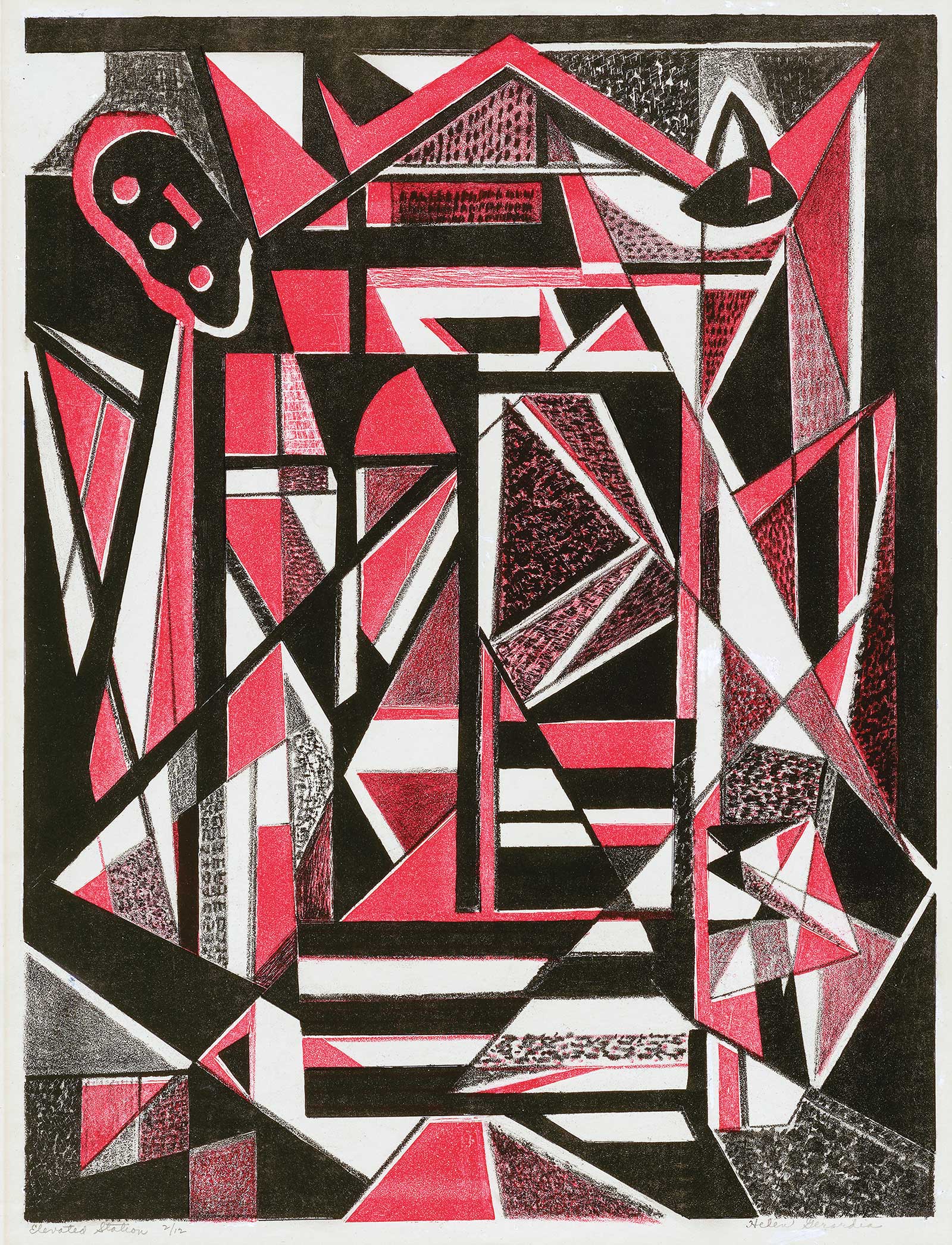 Helen Gerardia (1903-1988), Elevated Station, ca. 1952. Lithograph, 10¾ x 15¾ in. Smithsonian American Art Museum. Gift of Samuel Sumner Goldberg, 1977.81.5.
More abstract pieces include Abraham Walkowitz’s 1913 pencil and graphite work Cityscape, which shows swirling lines that intersect in a jumble that stretches upward; Helen Gerardia’s 1950s lithograph Elevated Station, showing a geometric assemblage of red and black shapes; and James Lesesne Wells’ 1928 woodcut on paper Looking Upward, which shows a single figure rising up through the fractured cityscape.
Mann adds that New York City is such a prominent subject that many viewers will come to the show very familiar with the city as a source of inspiration—but the show will challenge them, too. “They will recognize some of the subjects, but then they’ll also see works that stop them and make them smile, works that push them into interesting places,” he says. “Even the people who know everything about New York City will be surprised.” —
Powered by Froala Editor