Howard Godel is a collector. Working as a towerman for the Erie-Lackawanna Railroad from 1972 to 1978, he began to collect and sell antique cast iron toys and trains. In 1976 he published the authoritative Antique Toy Trains: The Hobby Of Collecting Old Toy Trains.
“I worked for the railroad when I was 18 to 25,” he says. “I only went to college for one year and I knew I wasn’t going to be hired for a great job, so I had to create one. I was introduced to Hudson River School paintings by my friend, the dealer, Alexander Acevedo. When I looked at a little gem of a Hudson River painting that celebrated America as an unspoiled landscape with a sense of optimism and its romantic and religious nature, it really appealed to me. You either have an understanding of beauty, quality and design or live in a world where that doesn’t matter. Art, architecture and design are all part of the same equation. You study it and you want your world to be inhabited by it.”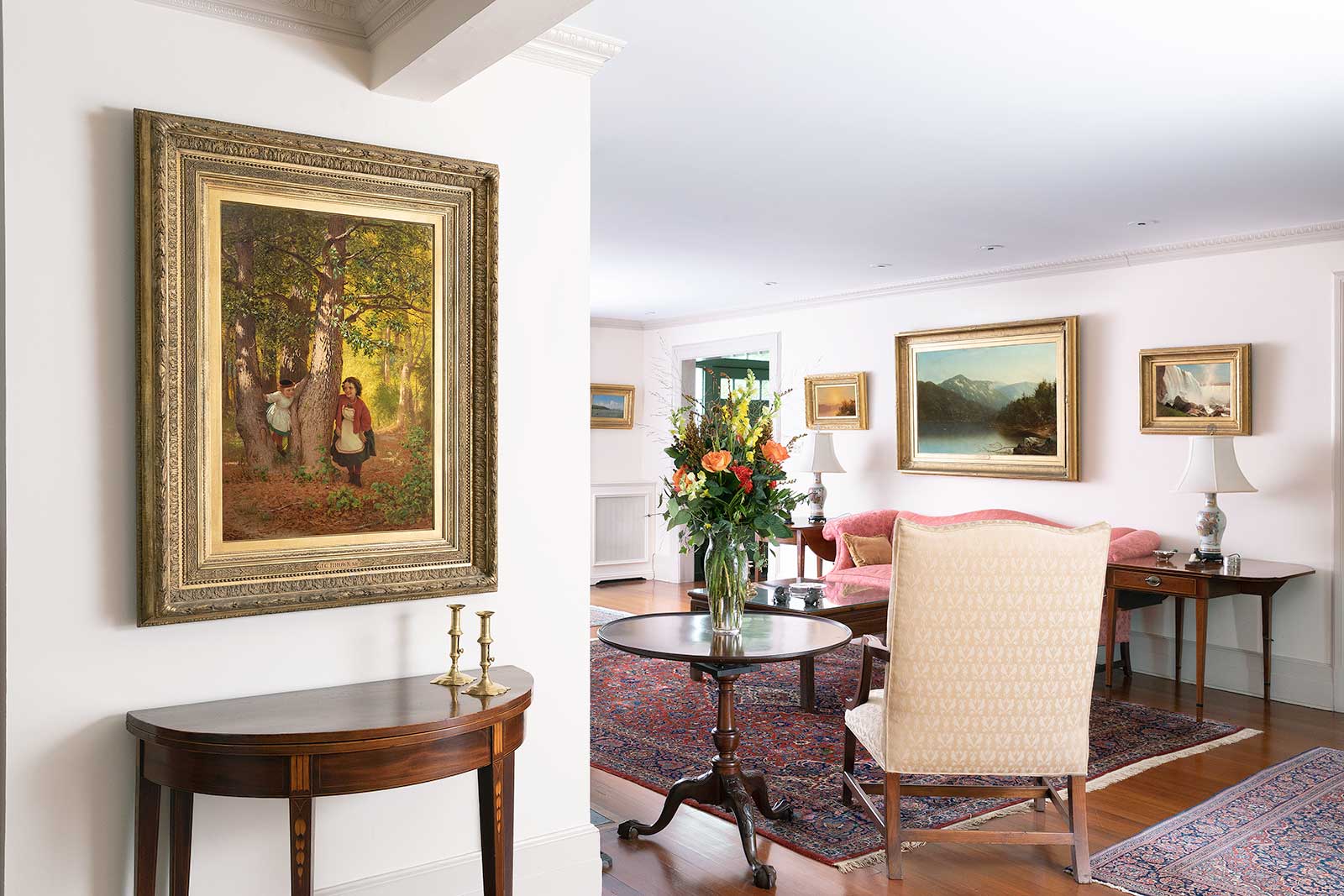 Hide and Seek, 1867, by John George Brown (1831-1913), is on the left. Echo Lake, 1867, by David Johnson (1827-1908), hangs above the sofa. It is flanked by, left to right, Twilight, by Jervis McEntee (1828-1891), and Niagara, by Arthur Parton (1842-1914).
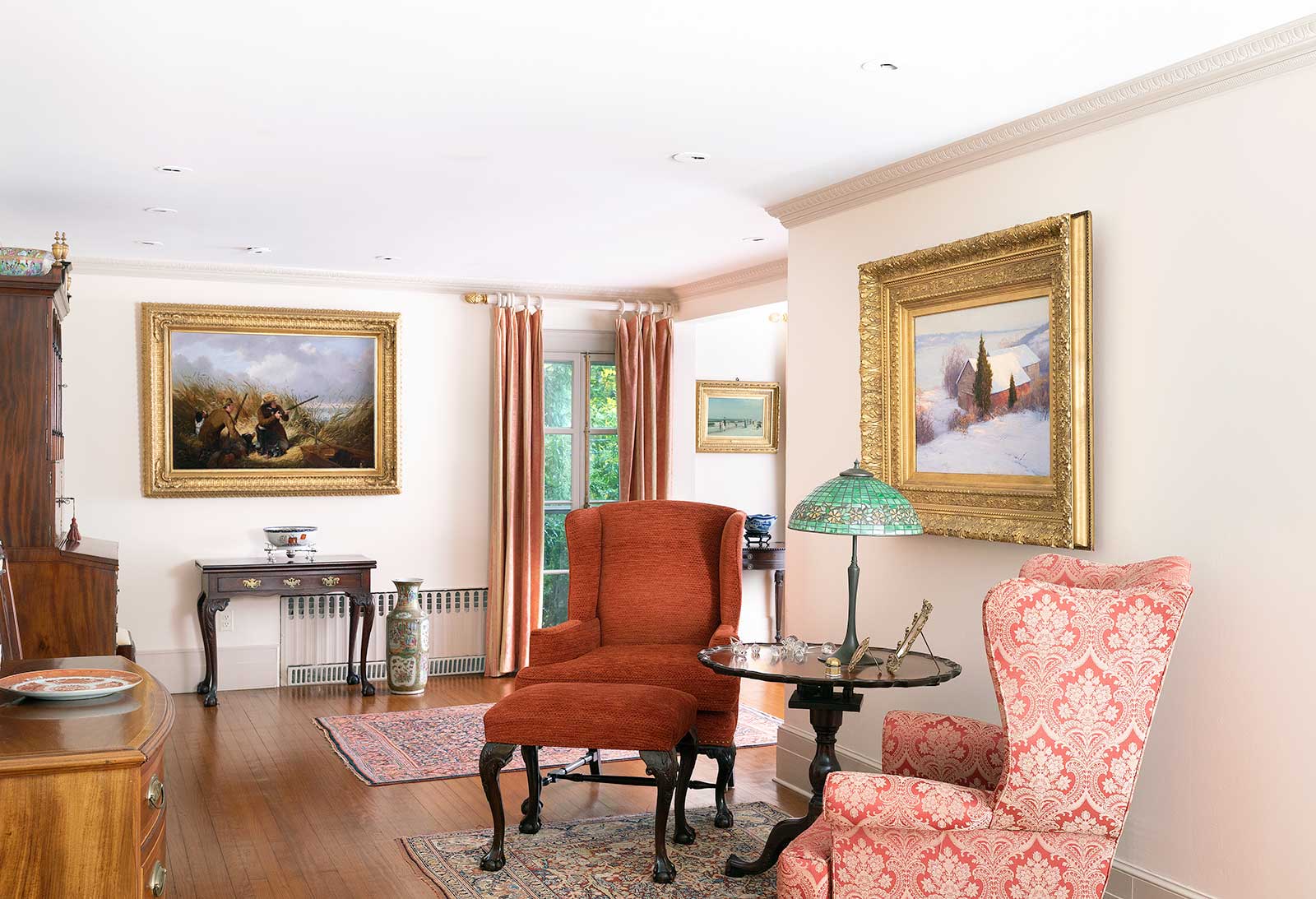 Duck Shooting over Decoys, 1854, by A. F. Tait (1819-1905), hangs at the end of the room. On the right is a rare painting by Walter Palmer (1854-1932), The Red Barn, which shows the Hudson River in the background.
He began to buy and sell paintings by major American artists and high-quality works by those who were lesser known. He sold out of his home and eventually opened Godel & Co. Fine Art, Inc. in New York City in an Upper East Side townhouse. Godel & Co. is now located in Bedford, New York. The renowned gallery concentrates in the Hudson River School, but also in other 19th- and early 20th-century American art.
Godel notes, “The key to forming a strong collection is to stay focused. When I studied furniture and painting, I chose to specialize in American art from 1790 to 1840, which tells a history of integrity. When I was looking for a house in my 20s, I told the realtor, ‘Don’t show me anything built after World War II—unless it’s a great modern house.’”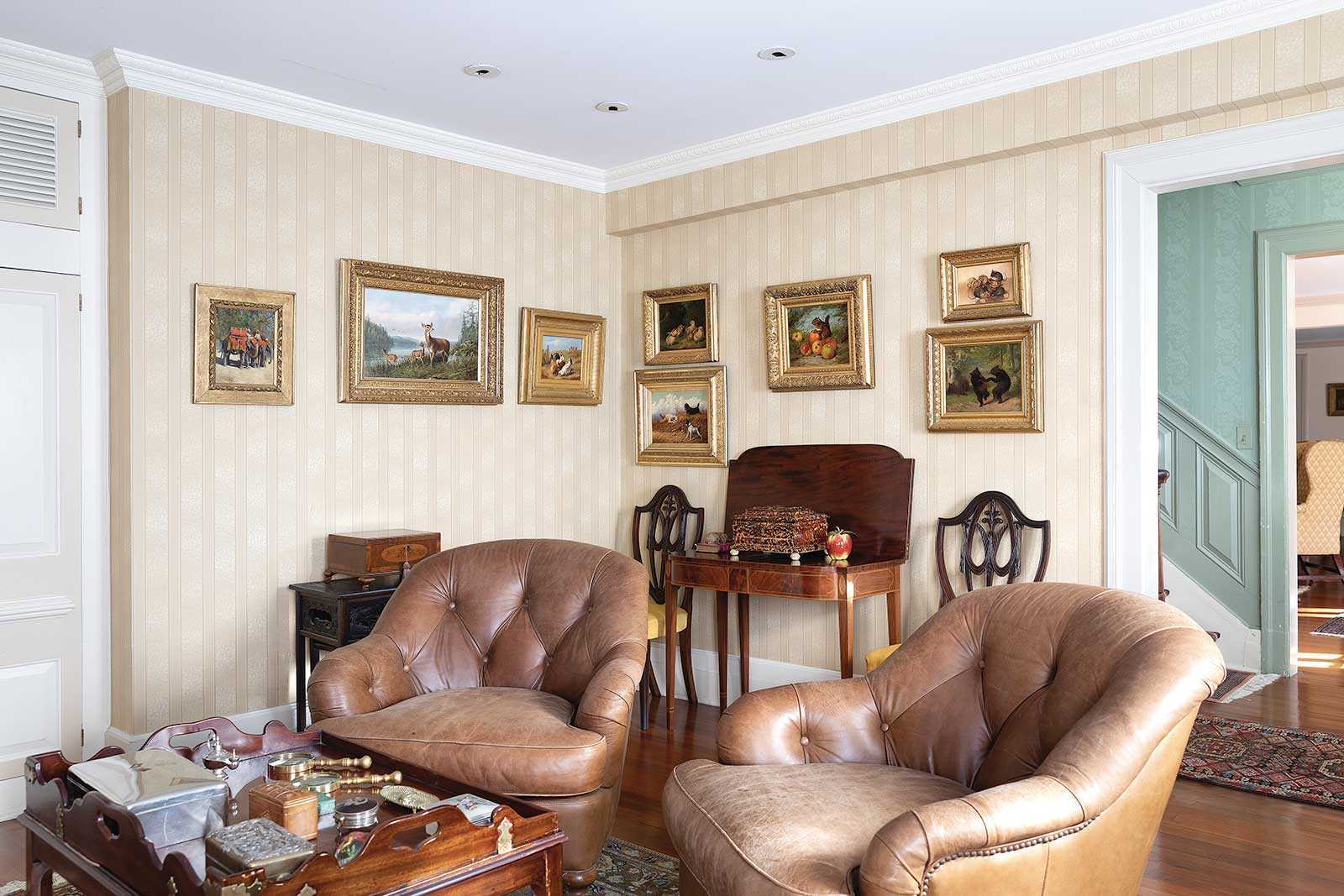 In the parlor is a collection of paintings by A.F. Tait (1819-1905). On the far left is a painting by E. L. Weeks (1849-1903). On the far right is Dancing Bears by William H. Beard (1824-1900).
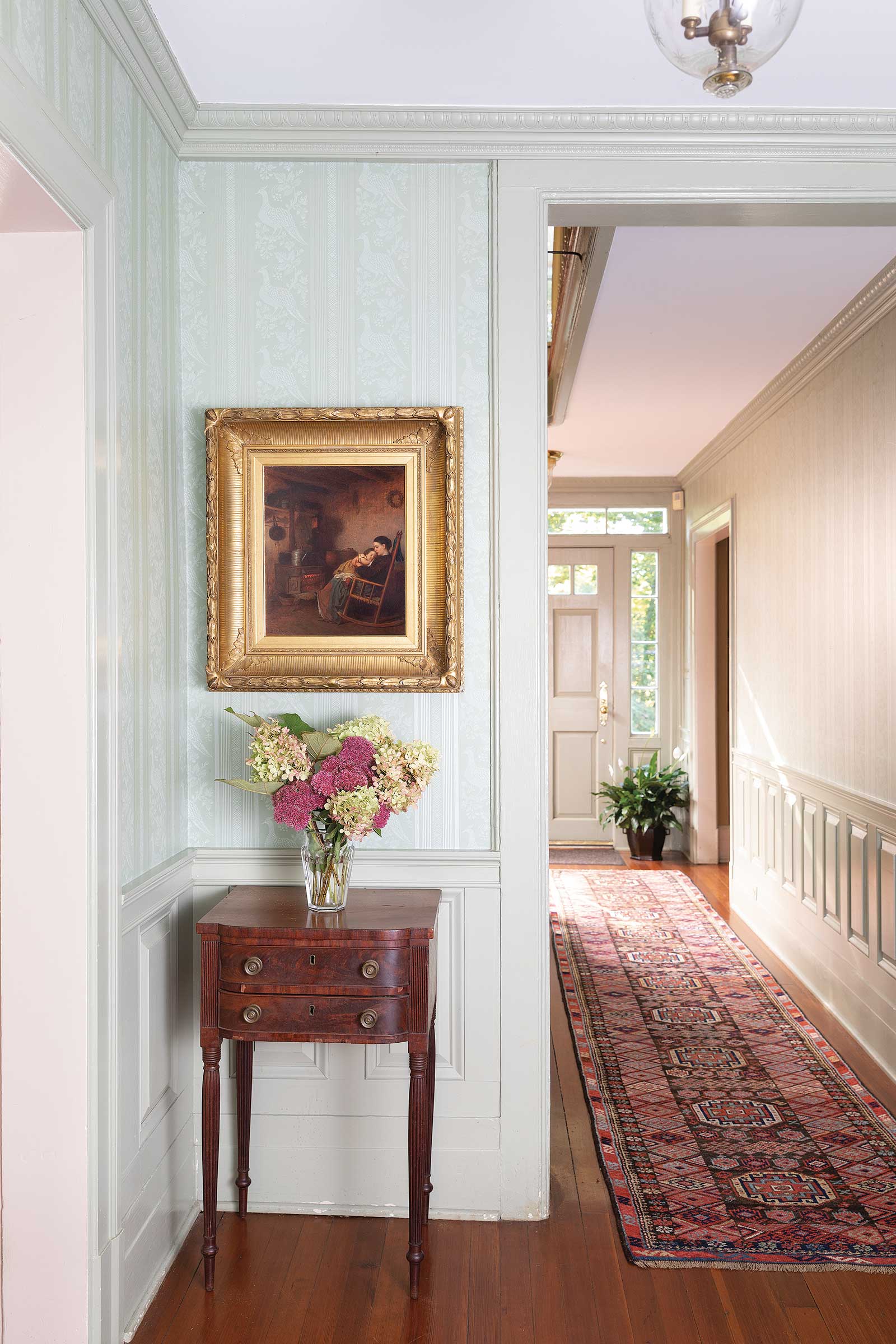 In the hall is Mother and Child by Eastman Johnson (1824-1906).
Godel met his wife, Melinda, at an antique show. “It was love at first sight,” he admits. “Her grandmother dealt in Chinese export porcelain and some furniture. Melinda has an innate natural eye, which is something you can’t buy. People who have a great eye are usually born with it. Sometimes they have an eye for a particular period, but not many have it for all periods. Her eye is good for everything, including furniture. She also enjoys immensely going to museums, large and small, to look at great art. We almost always agree on everything that’s great.”
Twenty-eight years ago, the couple bought a home in the Hudson River Valley. “People thought we were crazy,” he says. The derelict 1860 house with later additions has since undergone a major restoration and now houses their important collection of paintings, American Federal furniture with some Chippendale and Queen Anne, a collection of Chinese export porcelain, and Godel’s toy trains. He says, “When we get older, we’re not going to downsize and sell like normal people. We’re not normal. We’re crazy collectors.”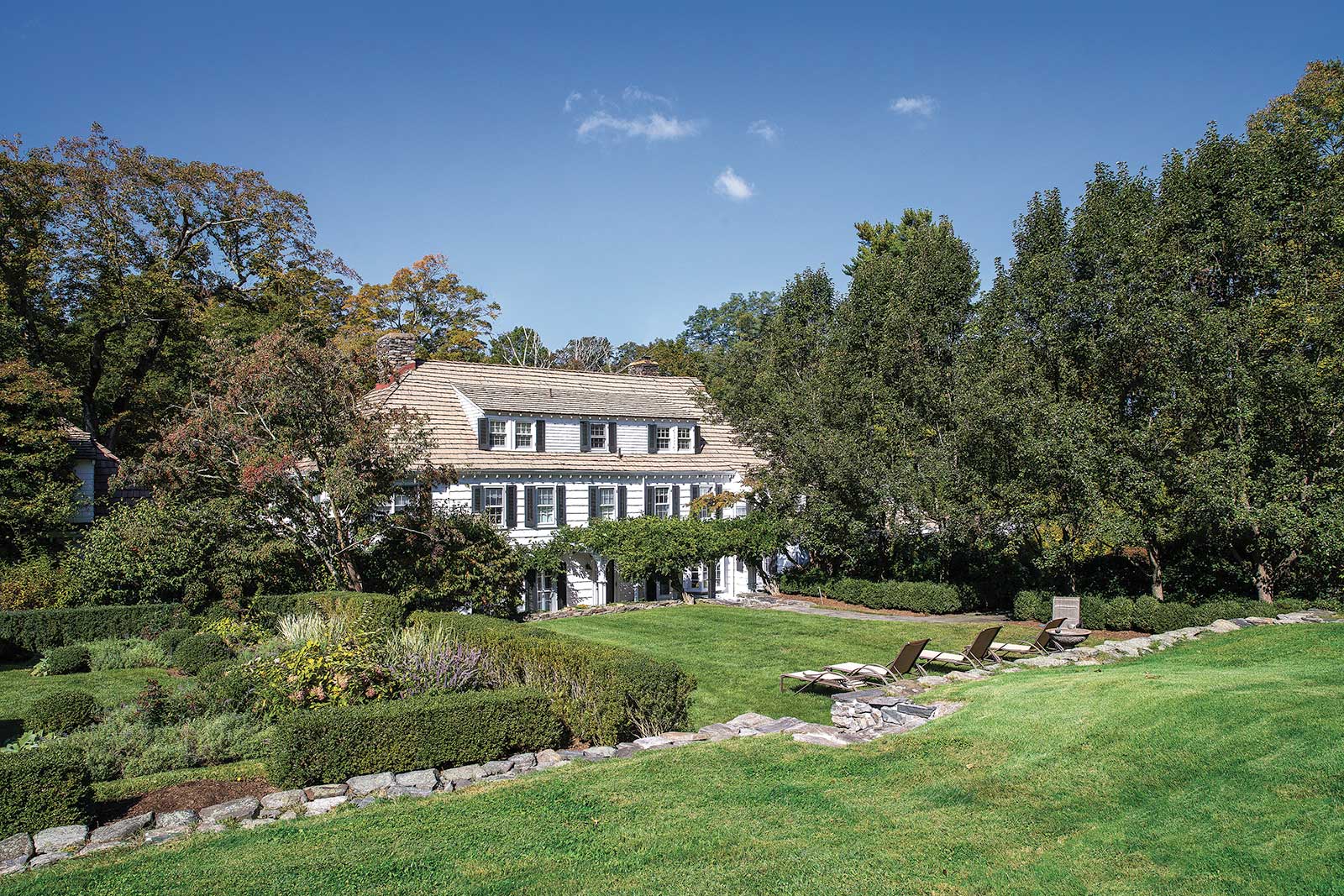 The Godels’ home of 28 years in the Hudson River Valley.
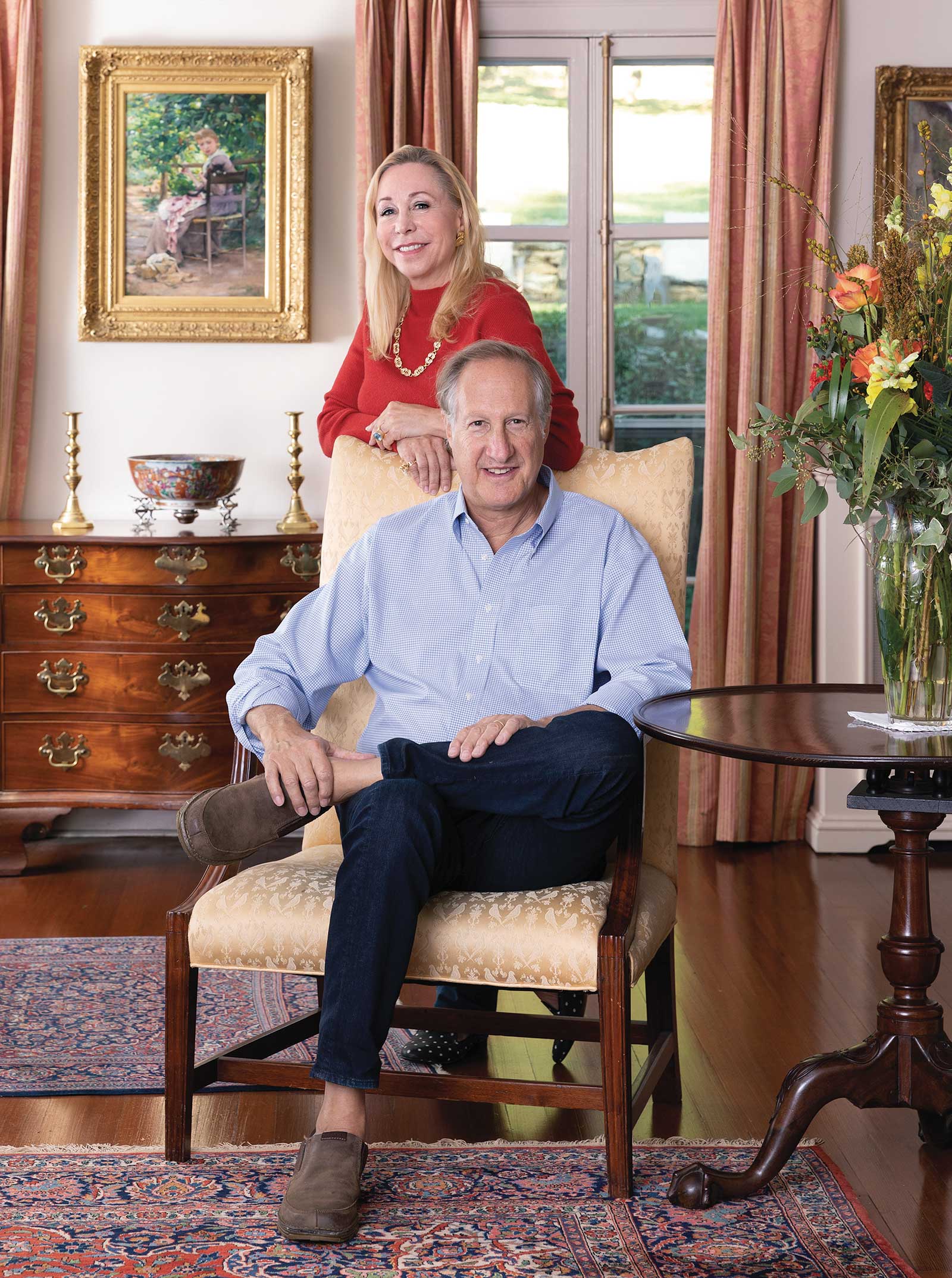 Melinda and Howard Godel sit in front of Woman with her Cat by Francis Coates Jones (1857-1932).
Prominent in their home is the dining room, which houses a collection of 19th-century still life paintings on unusual, salmon-colored walls. “I had read about the restoration of colonial homes and the original use of brighter colors,” Godel explains. “I found this to be one of the best.”
The first painting he bought was in the late ’70s. It cost $700. “It was all I could afford at the time,” he explains. “It was beautifully painted. A painting has to have great quality and great light. If you really look at art and study it, some of the greatest paintings have a superb handling of light.”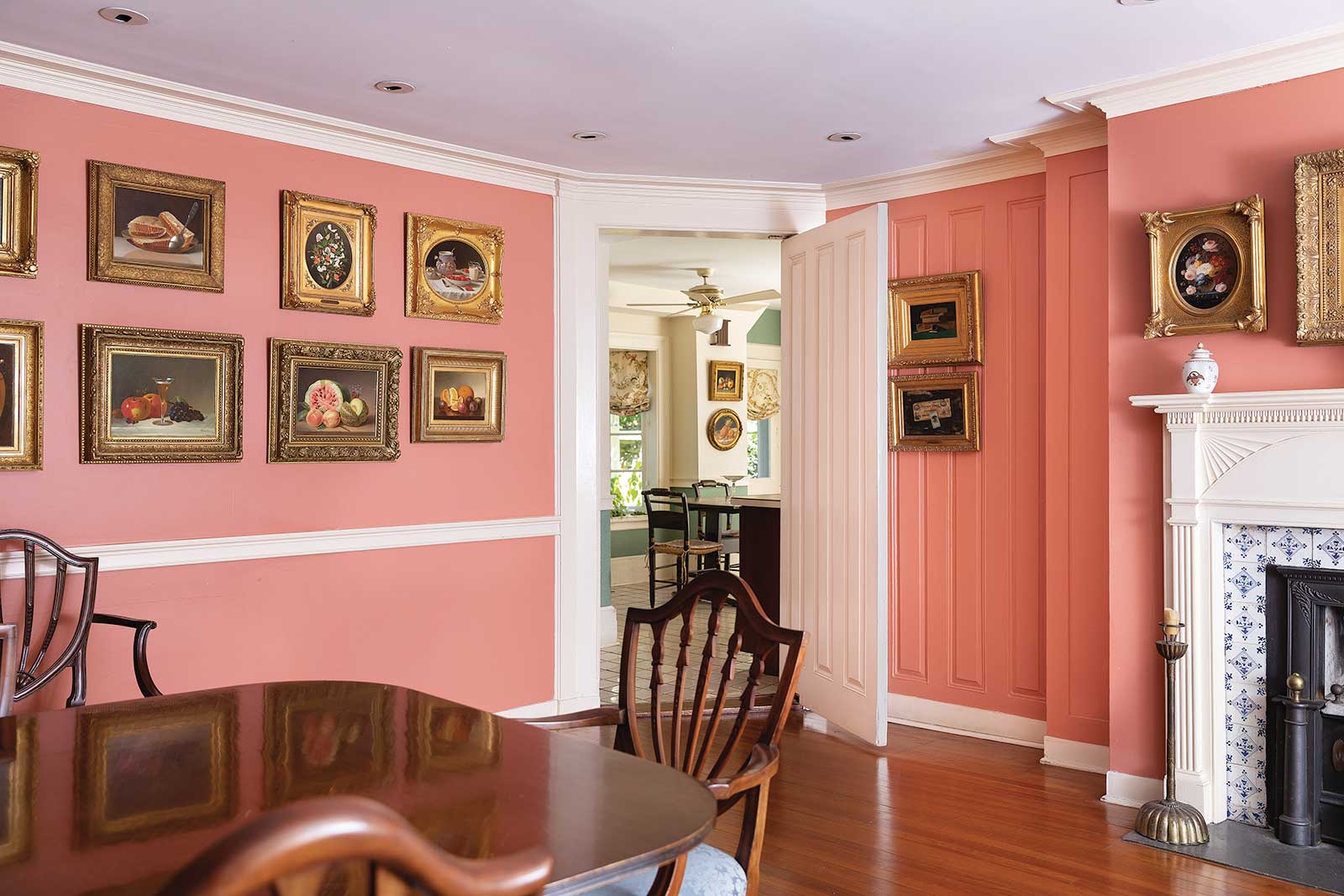 “The dining room represents our still life paintings collected diligently over 35 years,” Howard explains. The works are by Severin Roesen (1816-1872), John F. Peto (1854-1907) and James Peale (1749-1831), among many others.
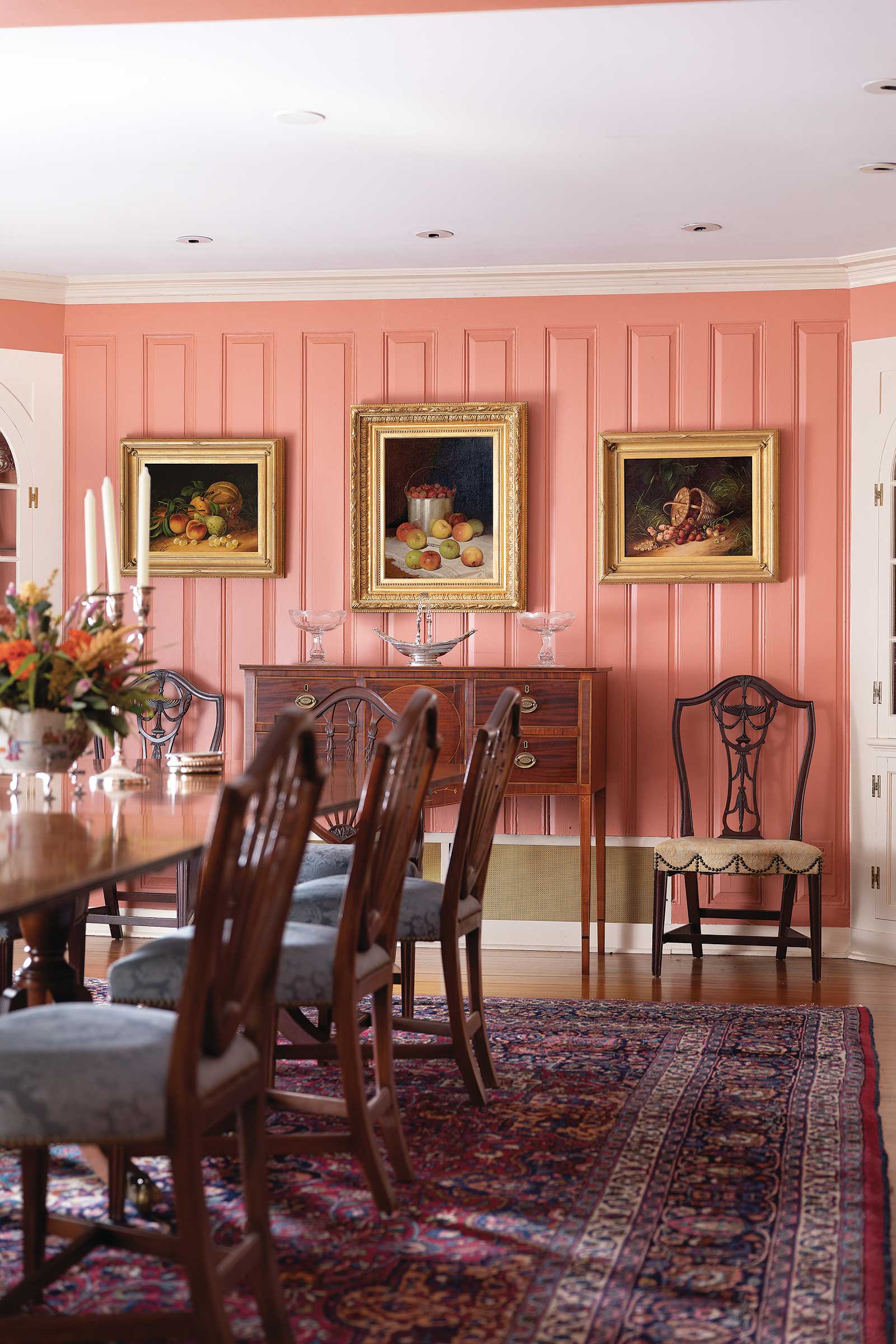 In the center of the dining room wall is William Mason Brown’s (1828–1878) Apples with a Tin Pail.
Godel has bought and sold many paintings over the years by A.F. Tait (1819-1905), many of them his familiar small still lifes with animals. A museum-quality prize by Tait is his Duck Shooting over Decoys, 1854, in its original frame. A Godel & Co. catalog description of the painting notes, “Here Tait adopted a low-angle perspective, which gives the viewer a sense of participating in the action, and he also used a burst of light to spotlight the hunters amidst the dark marsh grass.”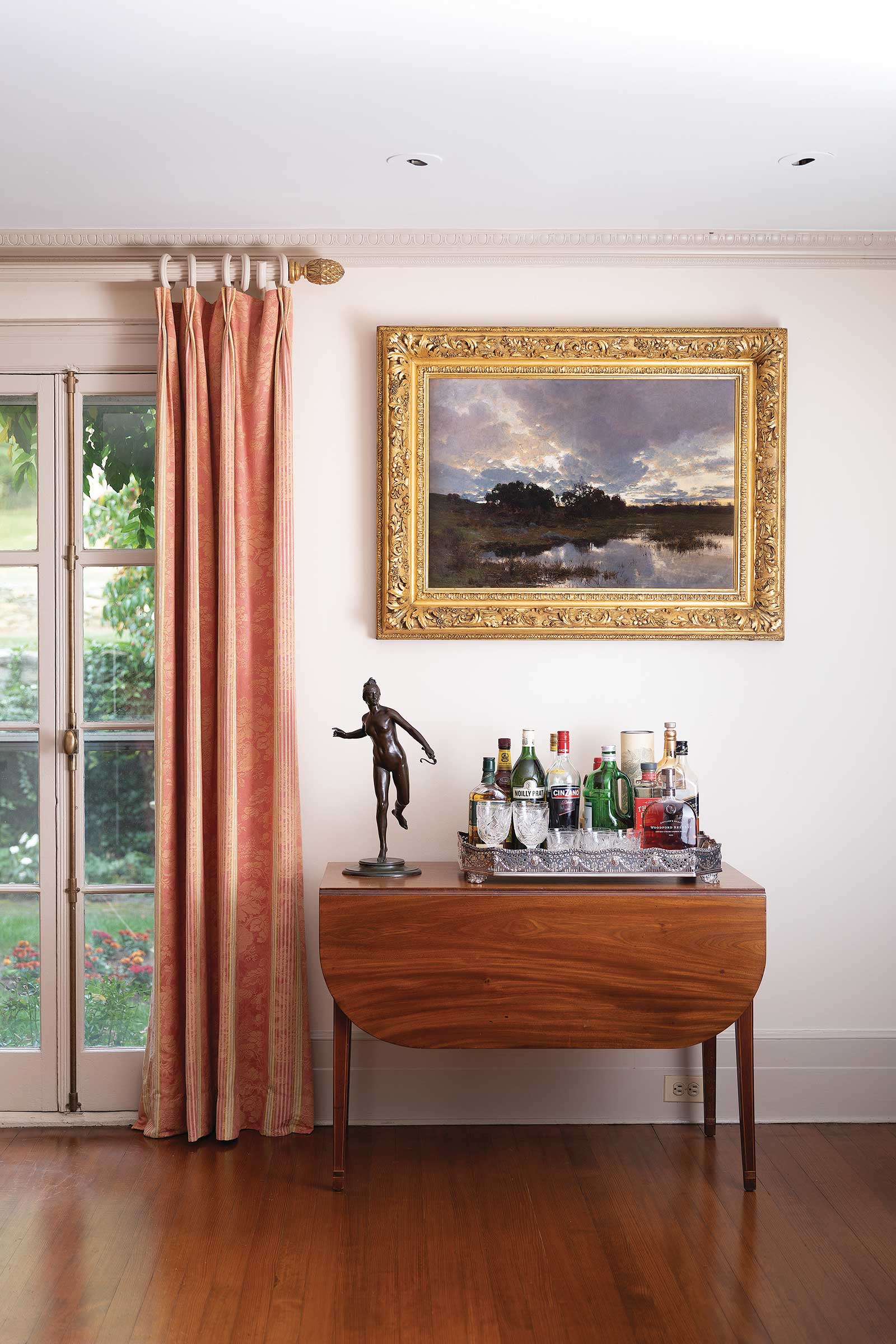 Twilight, by Hugh Bolton Jones (1848-1927), hangs above Diana, a bronze by Frederick William MacMonnies (1863-1937).
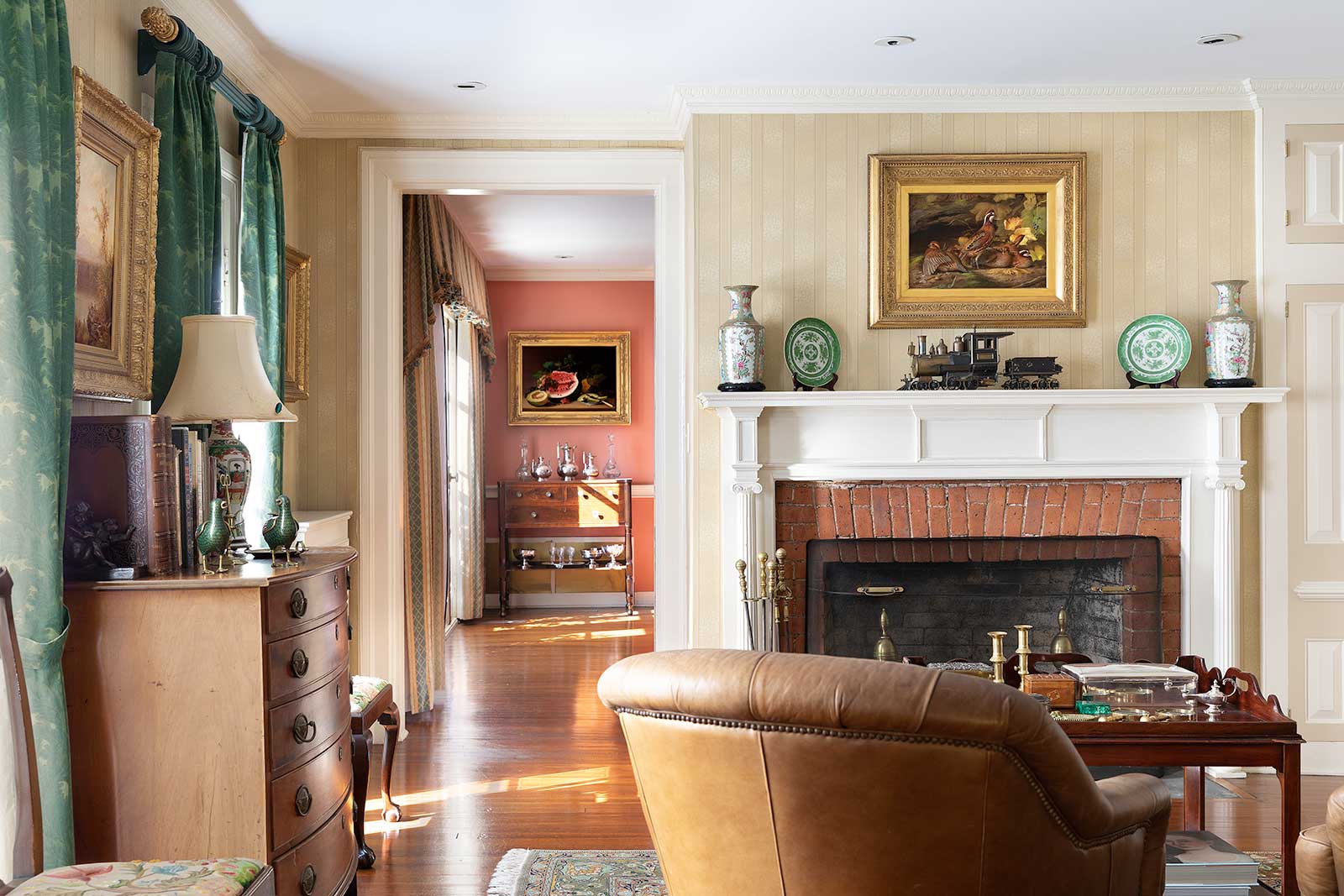 Above the mantle is Quail Family, by James Long Scudder (1836-1881). On the far wall in the dining room is Watermelon by James Peale (1749-1831).
Godel sees himself not only as a collector and dealer but as an educator. He explains, “If an artist hasn’t been promoted by a museum show or a gallery, people in the field might know the artist but normal collectors only respond to seeing what the artist is bringing at auction. My role, if people have the interest, is to educate them, to explain where it fits, who were comparable people painting in the same era. I love to guide people when they collect. Many people don’t ask enough. This is art. It’s not going to the hardware store.
“We’ve always bought what we love,” he continues. “Buying things that you love enhances your home, and they’re things that you might want to live with forever. Collecting is a lifelong passion that has not died. The fire still burns.
I still love looking at great objects and want to get up every day and find a great new object from the past that’s an extraordinary find, that’s way above average and buy it. My advice begins and ends with ‘Don’t buy what you like. Only buy what you love.’” —
Powered by Froala Editor