
The idea of interior spaces—of contemplative quarters and windows into private lives—is explored at length during an exhibition at Reynolda House Museum of American Art in Winston-Salem, North Carolina. Private Life: Domestic and Interior Spaces in Twentieth-Century Art guides viewers through the works of nine artists, the earliest a 1906 John Sloan piece and the latest a 1996 Julie Heffernan, with other artists in the show including Milton Avery, Richard Artschwager, Charles Demuth, Betye Saar, Yasuo Kuniyoshi, Alice Neel and Robert Burkert. The exhibition invites viewers to imagine themselves in these spaces, some utterly mundane, others fantastical, and consider the historic periods in which they were created, from world wars to race and gender conflicts of the 20th century.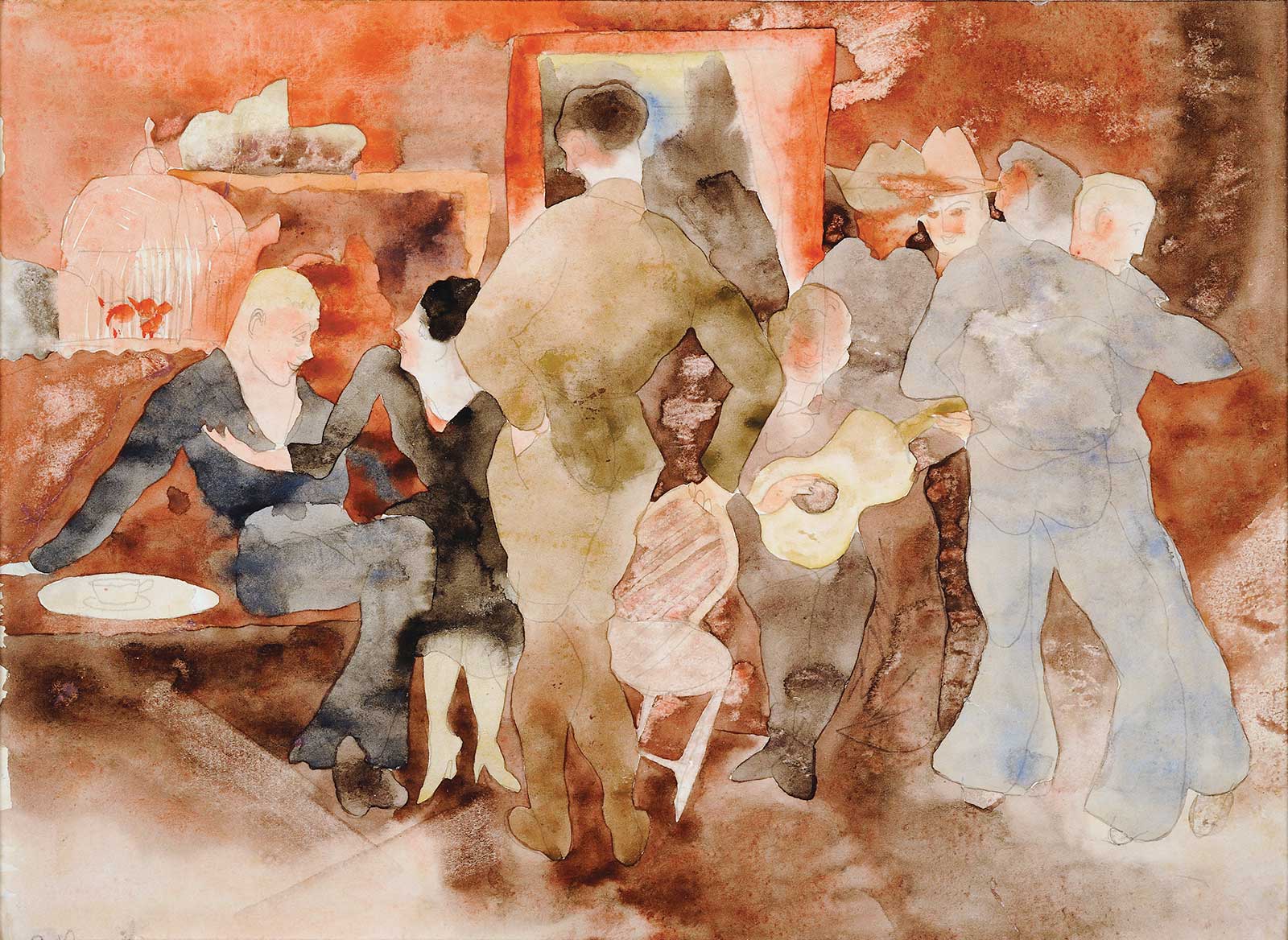 Charles Demuth (1883-1935), Cabaret Interior with Carl van Vechten, 1917. Watercolor, pen and pencil on paper. Courtesy Barbara B. Millhouse.
While the paintings themselves are all evocative of some aspect of interior life, the physical location for the show contributes to the experience as well, held in the Reynolda House’s Northwest Bedroom Gallery. “As I was thinking of the concept of the show, I really wanted to think about Reynolda House’s history and where it would be located,” says exhibition curator Julianne Miao, curatorial fellow at the museum. “Reynolda House is a historic home turned museum. Thinking about it as this domestic and interior space that was once the home of a family...but now serves as a place of personal [and historical] contemplation, I was really interested in this idea of domestic, interior spaces.” Miao explains that she began thinking about modernity turning toward interiors in the 20th century, in the wake of the Hudson River School landscapes of the 19th century.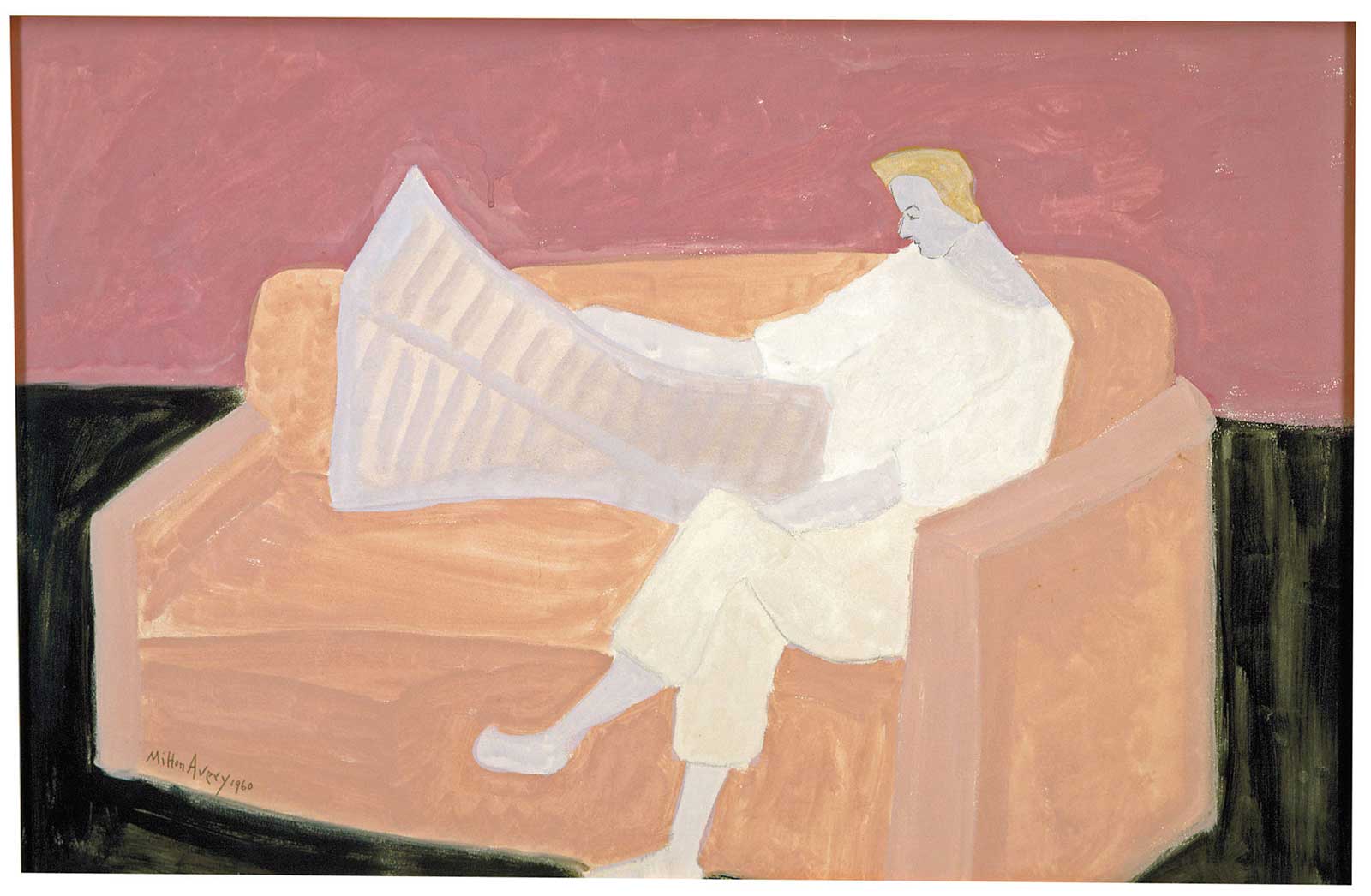 Milton Avery (1885-1965), Morning News, 1960. Oil wash on paper. Wake Forest University Student Union Collection of Contemporary Art. © 2020 The Milton Avery Trust / Artists Rights Society (ARS), New York.
“Artists were turning to interiors as a metaphor for their internal feelings,” Miao says. Memory and nostalgia, themes which she specifically attributes to the Sloan and Avery pieces, are two of the primary topics that guided her through the creation of the exhibition. In Sloan’s etching Memory, it feels as though we’ve stepped into a private moment among friends. Sloan himself is seen smoking a pipe across from fellow Ashcan School painter Robert Henri. Sloan’s wife Dolly is seemingly lost in thought, while Henri’s wife Linda occupies the foreground. Avery’s oil wash on paper, Morning News, features a figure seated on a couch reading the morning paper in muted tones. “They’re both reflecting on life and mundane pastimes,” says Miao.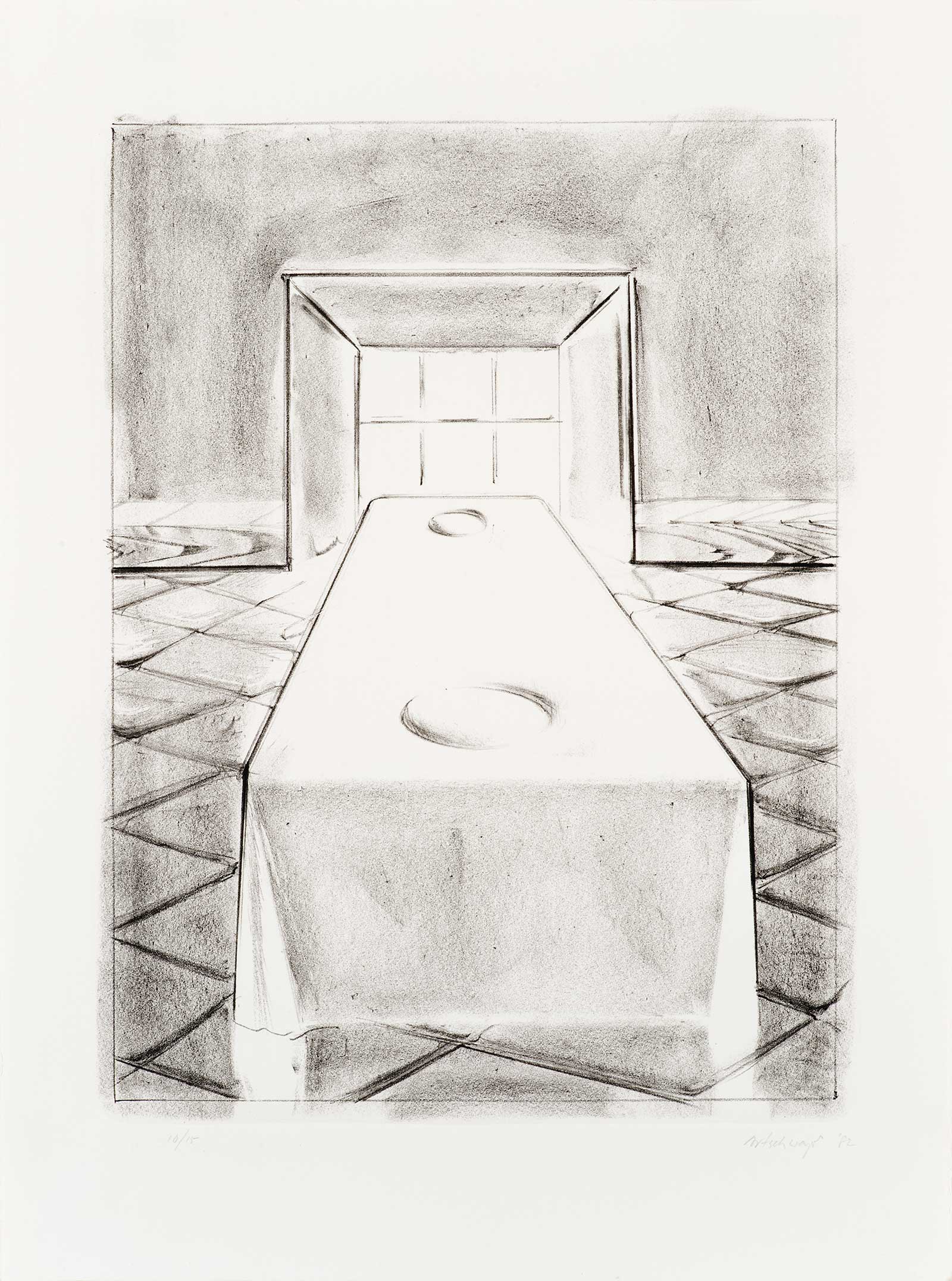 Richard Artschwager (1923-2013), Table (Two) and Window, 1982. Lithograph printed in black on rag paper. Gift of Jean Crutchfield and Robert Hobbs. Courtesy Reynolda House Museum of American Art, © 2020 The Estate of Richard Artschwager / Artists Rights Society (ARS), New York.
While at first glance Kuniyoshi’s oil is simply a floral still life, the piece is charged with tension and struggle. Painted in 1928 during the interim of World Wars I and II, Japanese immigrant Kuniyoshi attempted to create paintings that reflected Western aesthetics and sensibilities, but ultimately faced discrimination. Still Life received mixed reviews when it was exhibited in the Paintings by Nineteen Living Americans show at the Museum of Modern Art in 1929. “He was criticized as ‘non-American,’ when he was trying so hard to capture this Western style of art,” says Miao. In the painting, a suit hanging in the closet looms over a vase of dying flowers, suggesting the absence of a person, imagery Miao explains could be reflecting the sense of loneliness and isolation Kuniyoshi felt.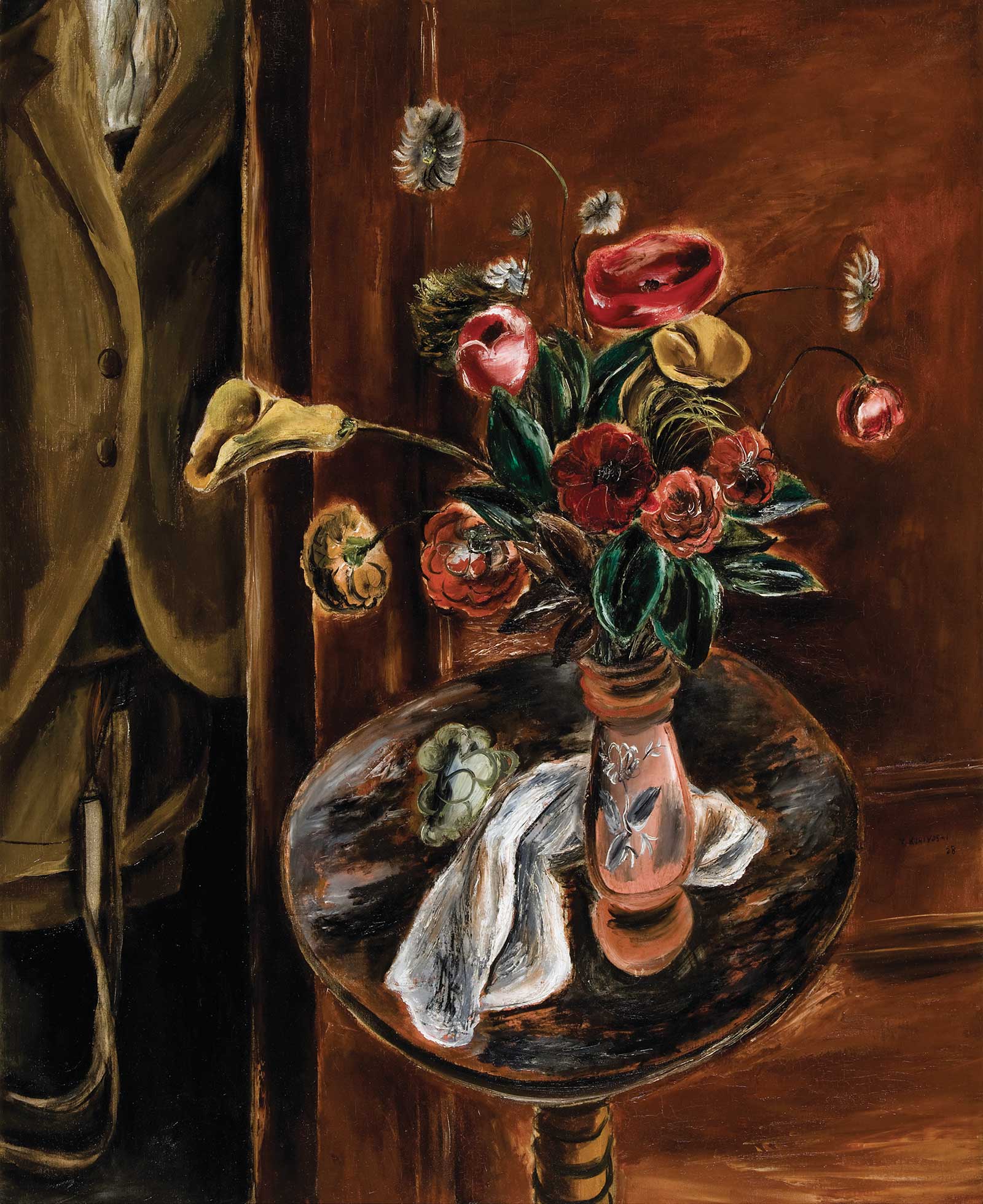 Yasuo Kuniyoshi (1889-1953), Still Life, 1928. Oil on canvas. Courtesy Barbara B. Millhouse, © 2020 Estate of Yasuo Kuniyoshi / Licensed by VAGA at Artists Rights Society (ARS), New York.
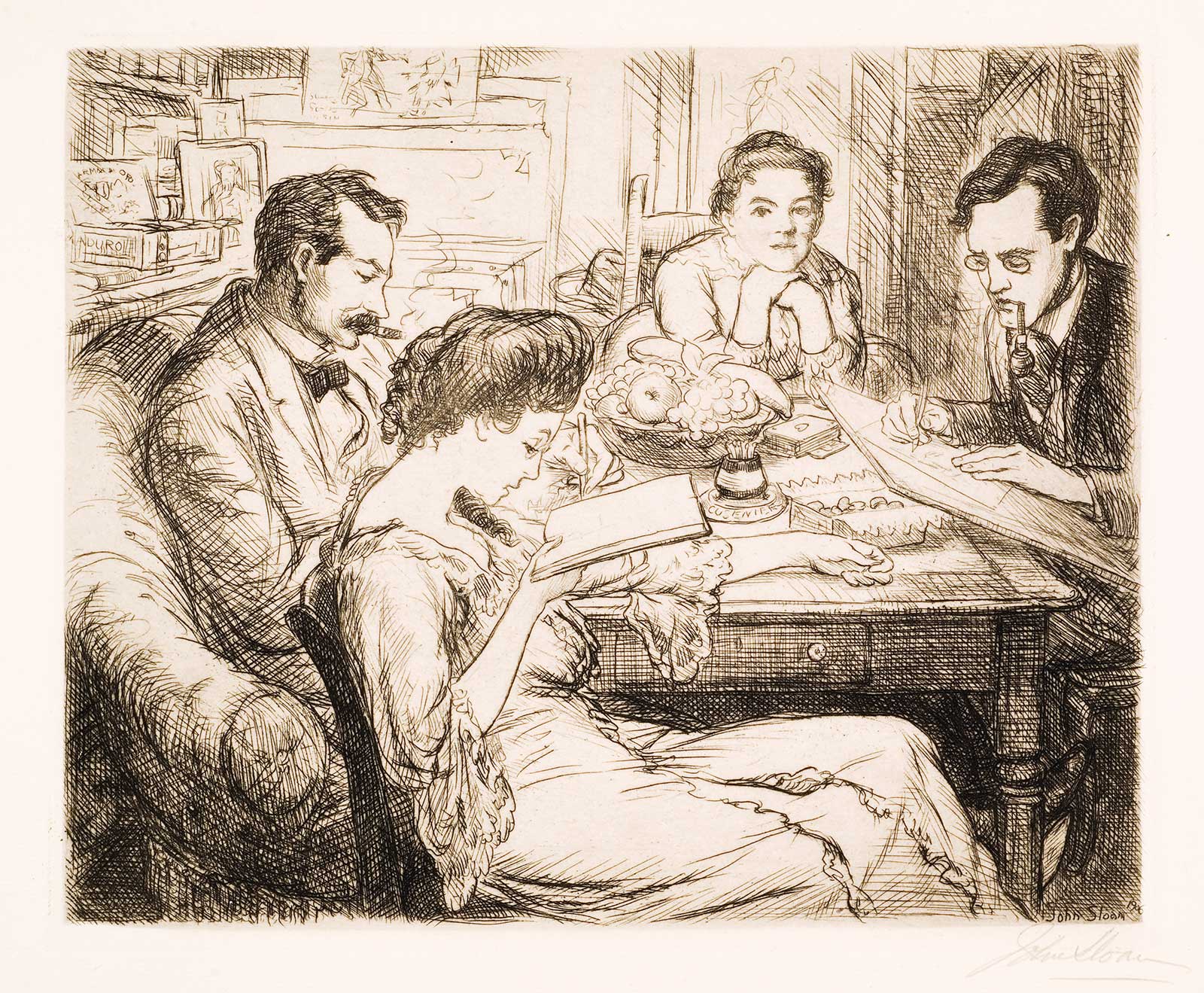 John Sloan (1871-1951), Memory, 1906. Etching. Gift of the Estate of Helen Farr Sloan, Courtesy the Delaware Art Museum. Courtesy Reynolda House Museum of American Art, © 2020 Delaware Art Museum / Artists Rights Society (ARS), New York.
Miao adds that the Saar piece, a handkerchief collage made of batik fabric, paper, paint, plastic, glitter and ink, is another standout in the exhibition. “Saar is known for taking these ordinary objects and turning them into incredible works of art. I’m thinking of the handkerchief as this domestic object—the idea of women and domesticity—and I think she subverts that by adding this eclectic and esoteric imagery. There’s a tarot card with Arabic writing, a dilapidated structure with an iris sprouting out of it,” Miao says.
These works will be up for contemplation and interpretation through September 26. —
Powered by Froala Editor