Electra Havemeyer Webb (1888-1960) grew up in New York surround by her parents’ collection of French Impressionism in their Park Avenue apartment. She however, took a different turn and, in a modest farmhouse on her in-laws’ sprawling estate in Vermont, installed her collection of New England furniture and crafts. In 1947, she established the Shelburne Museum to house her collection of folk art in historic buildings moved from other locations in New England and New York. She had been a pioneer, collecting folk art decades before “Americana” became fashionable. Shortly before the museum’s opening she wrote, “It will be an educational project, varied and alive.”
With its buildings closed to the public, the museum’s staff have put together online exhibitions highlighting aspects of Mrs. Webb’s collecting and a narrative of American life. American Stories is an exhibition in four parts, all of which will be online by June 25. The parts are People, Travel, Home and Community.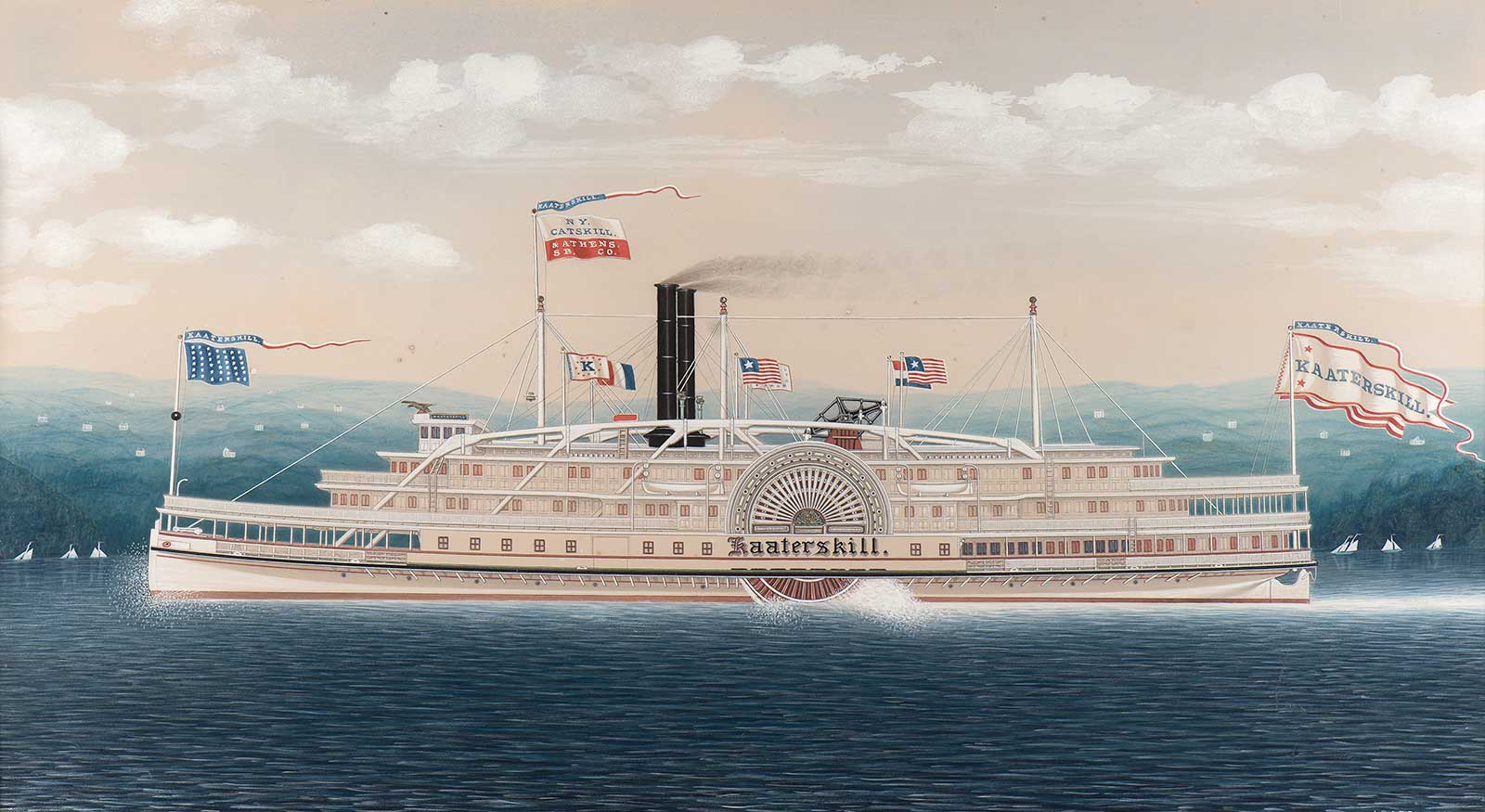 James Bard (1815-1897), Paddle Steamboat Kaaterskill, 1882. Gouache, graphite and watercolor on paper (board). Wove paper Museum purchase, 1951, acquired from Harry Shaw Newman, The Old Print Shop, 1951-391.35.
The museum’s director, Thomas Denenberg, explains, “American Stories offers a window into periods in the nation’s history as interpreted through some of Shelburne’s most familiar and beloved objects ranging from 19th-century portraits of William and Nancy Lawson by William Matthew Prior, hooked rugs by contemporary artist Patty Yoder and even the 1906 steamboat Ticonderoga. This exhibition highlights the breadth of the museum’s collections and the artists and makers who contributed to a uniquely American narrative story through their art.” 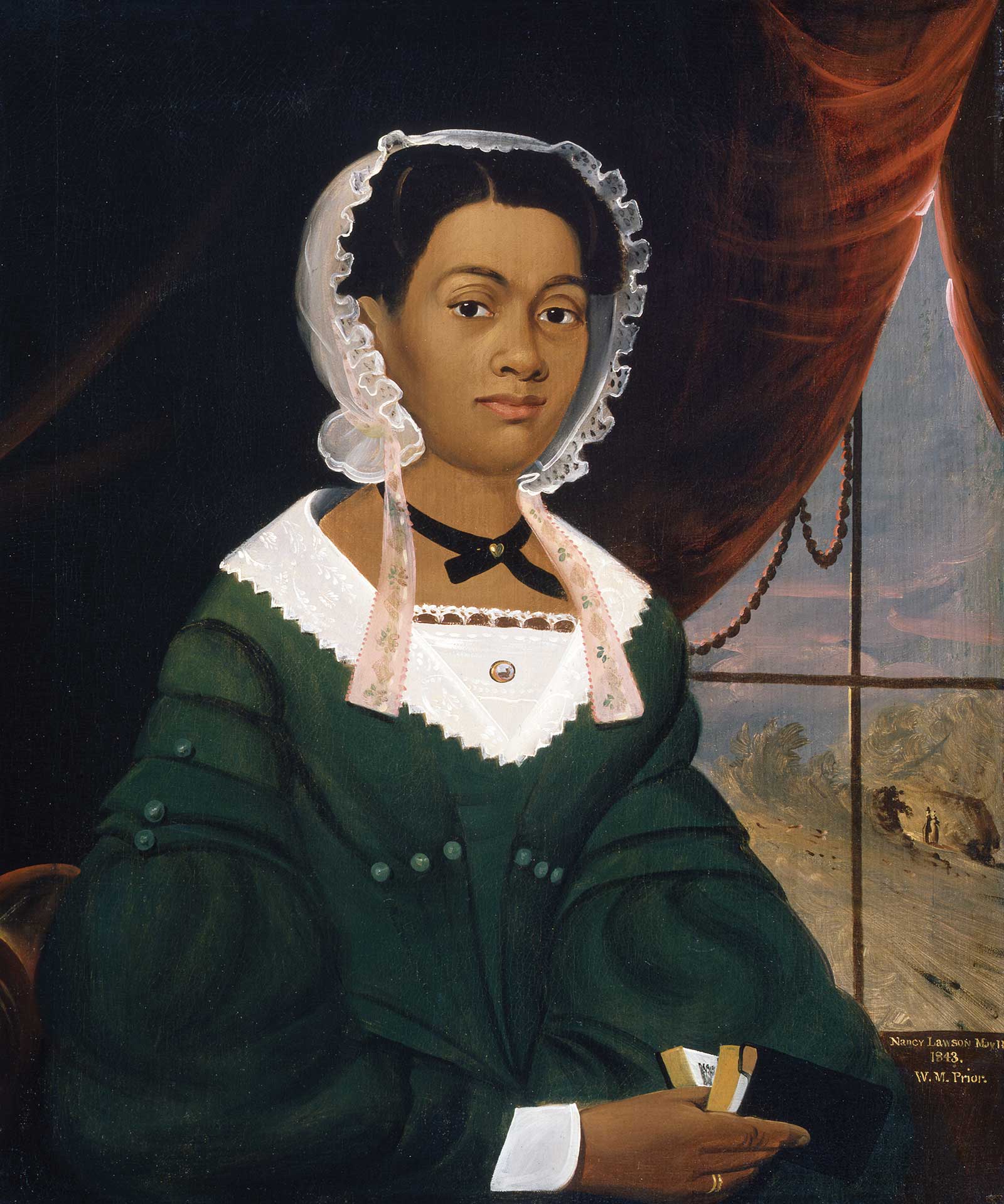 William Matthew Prior (1806-1873), Mrs. Nancy Lawson, 1843. Oil on canvas. Museum purchase, acquired from Maxim Karolik, 1959-265.34.
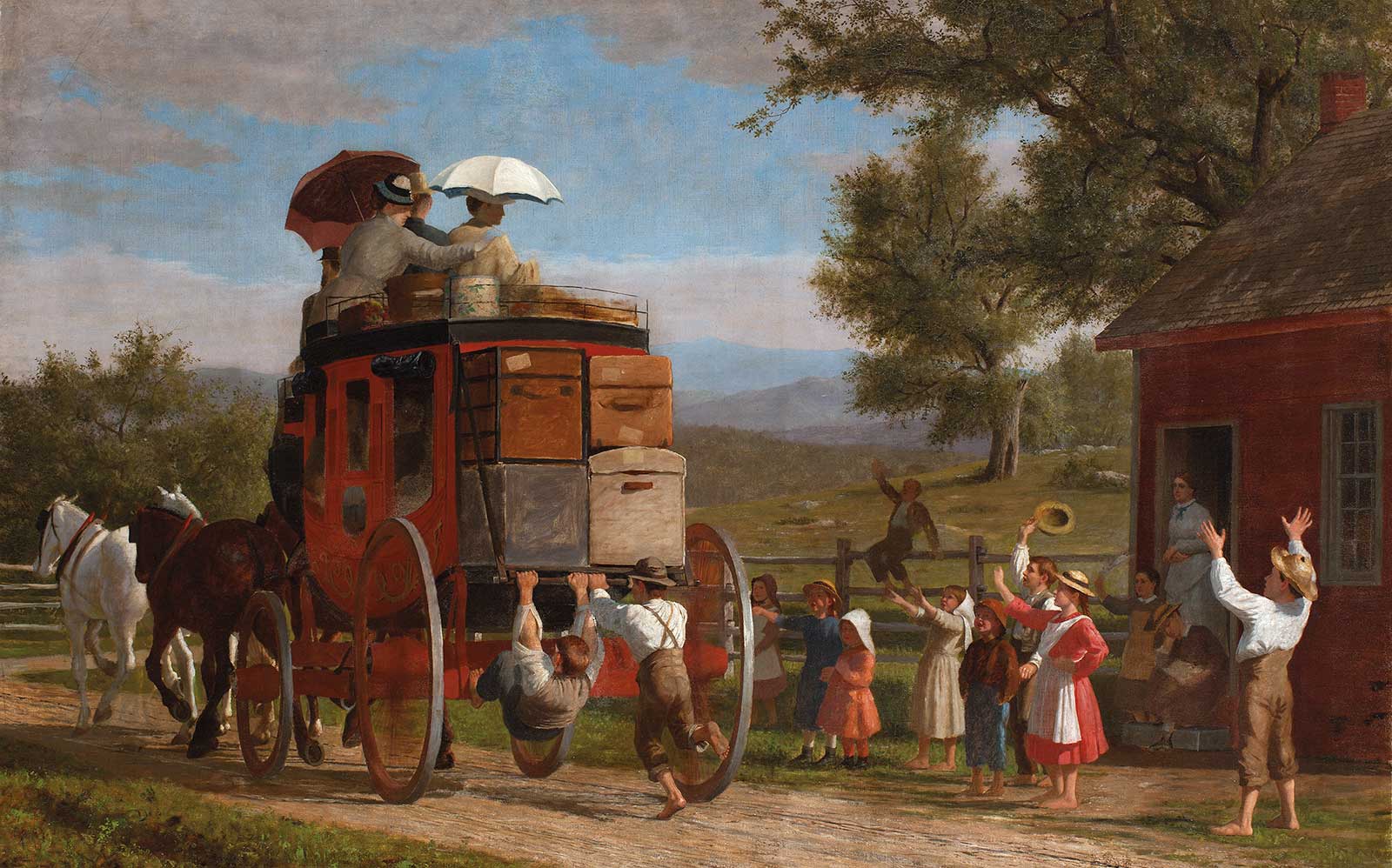 Enoch Wood Perry (1831-1915), The Pemigewasset Coach, 1899. Oil on canvas. Museum purchase, acquired from Harry Shaw Newman, The Old Print Shop, 1961-1.62.After Ticonderoga finished its operation as the last steamboat on nearby Lake Champlain in 1953, it was moved overland two miles from the lake on a special rail line. Now restored, it depicts life on board in 1923.
Also in American Stories is a watercolor, Paddle Steamboat Kaaterskill, 1882, by James Bard (1815-1897). The Kaaterskill was a large, luxurious steamer that plied the Hudson River. It was dismantled in 1914. Although Bard is considered a naïve painter, it was said at the time, “they could lay down plans for a boat from one of his pictures, so correct were their proportions.”
The Shelburne’s associate curator Katie Wood Kirchhoff, who organized the exhibition, points out a portrait by William Matthew Prior (1806-1873). Mrs. Nancy Lawson, 1843, is a companion to the portrait of her husband, Boston clothing dealer William Lawson. Prior painted more than 2,000 portraits over a period of 50 years, 19 of which are in the museum’s collection. 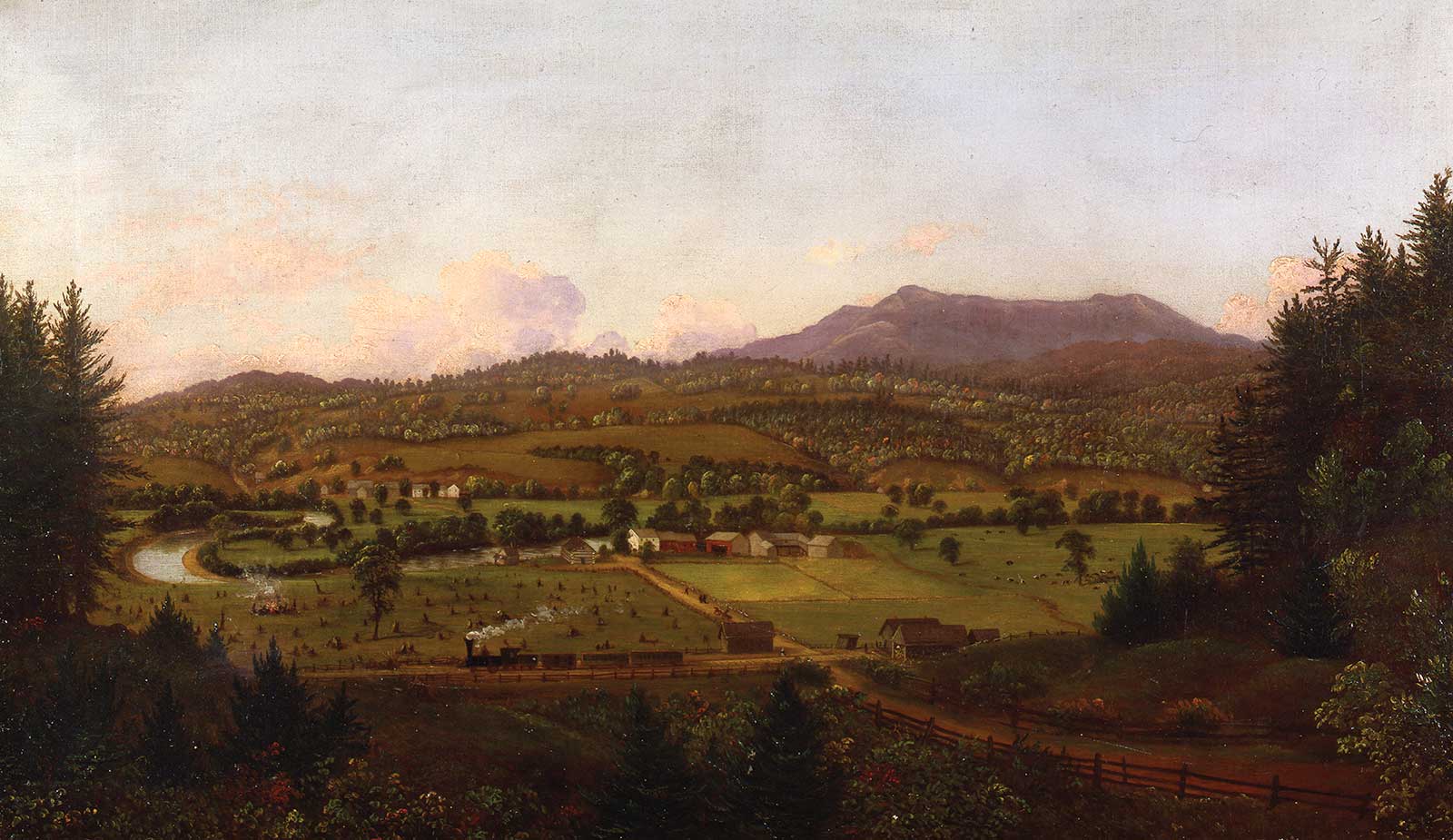 Charles Louis Heyde (1822-1892), North Williston, Vermont, 1850. Oil on canvas. Gift of Edith Hopkins Walker, 1959-49.1.
“Prior signed the portrait with his name and the name of the sitter on the front of the canvas—a courageous, and potentially dangerous, action for both artist and subject. Although Boston was the epicenter of abolitionism in New England, racism still existed at all levels of society; the signature is both an artistic statement and an expression of the painter’s moral values.”
Prior was active in abolitionist circles and had a number of African Americans among his clients. In the 1860s he wrote, “Skin may differ; but affection dwells in white and black just the same. There is [no] justice in…slavery…being inconsistent with God’s government and inconsistent with our declaration and constitution as a nation.” He portrays Mrs. Nancy Lawson with her fashionable laces in a setting with a drapery and a view beyond, typical of formal portraits of the period. —
Powered by Froala Editor