From 1935 to 1943, Franklin D. Roosevelt’s Works Progress Administration put more than 8.5 million people to work during the Great Depression. Some of those workers were artists in the Federal Art Project, which asked creative people of all stripes to create during a volatile period of American history. Some focused on everyday life. Others turned their attention to urgent social commentary.
It’s that second group of artists that are the subjects of a traveling exhibition now open at the Chazen Museum of Art in Madison, Wisconsin. The exhibition is titled Pressing Issues: Printmaking as Social Justice in 1930s United States. “The artists in Pressing Issues: Printmaking as Social Justice in 1930s United States used printmaking as a forceful tool to call out injustices shaping their world,” says Amy Gilman, director of the museum. “Their work reminds us of the enduring role artists play in confronting oppression and the power of creativity in times of crisis. The Chazen Museum of Art invites visitors to consider how today’s artists continue to challenge systems of inequality and how art can help us envision a more just and equitable future.
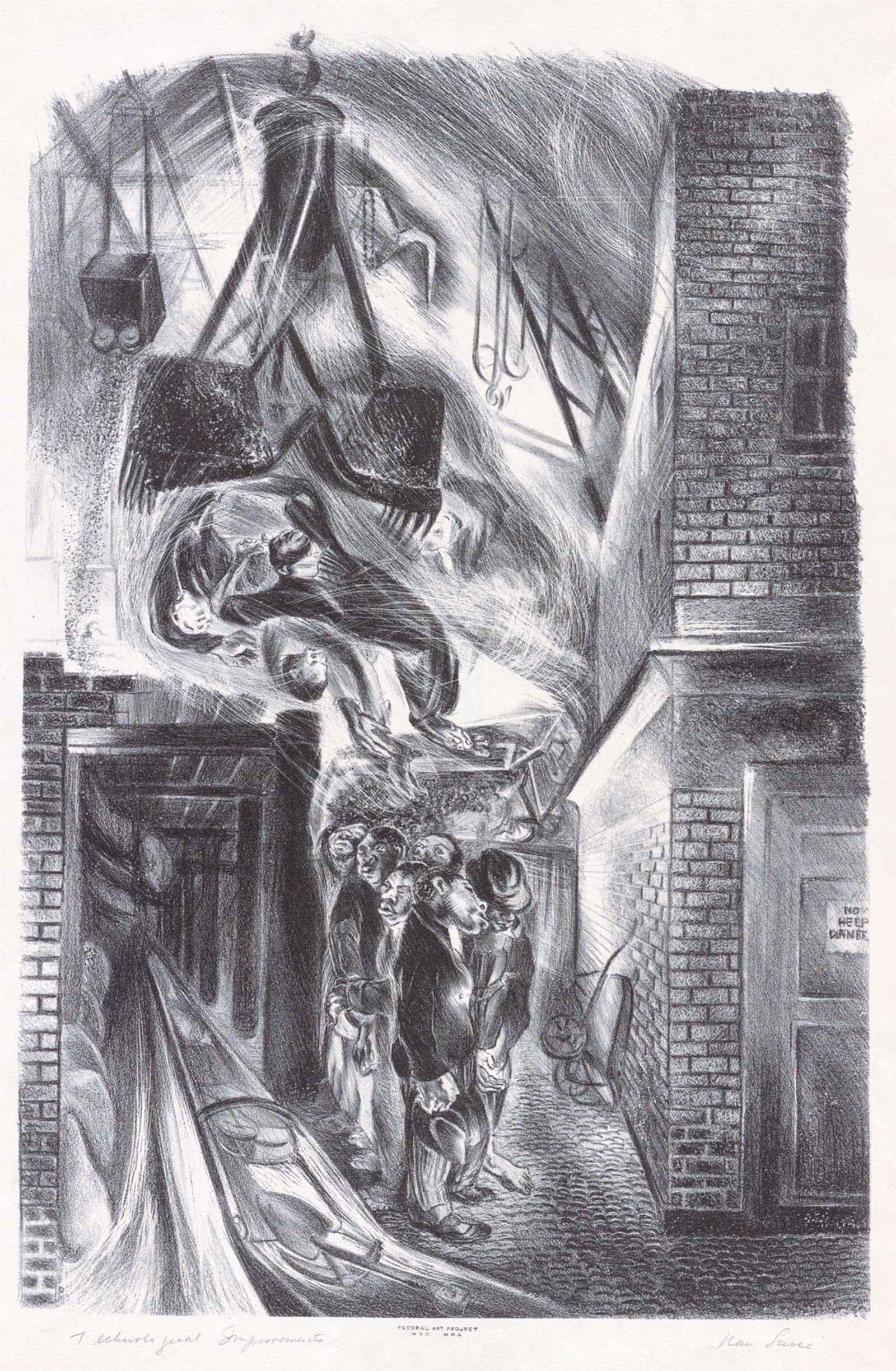
Nan Lurie (1910-1985), Technological Improvements, 1936-1939. Lithograph. Allocated by the U.S. Government, Commissioned through the New Deal art projects, 1943-4-210. Courtesy of Krannert Art Museum.
This is the third destination for the popular exhibition, which was organized by Illinois’ Krannert Art Museum. It opened September 8, and audiences have already latched onto key components on view. “Visitors are definitely looking closely at the prints, absorbing what they’re seeing and engaging with the social issues that artists were concerned about,” says James Wehn, the Chazen’s Van Vleck Curator of Works on Paper. “The social concerns during the Great Depressions were related to labor, women in the workplace, the rise of fascism in the 1930s and other issues concerning race and racial violence. This was all in the 1930s, during different political and economical situations, and yet these are issues that remain a concern and continue to echo for viewers today.”
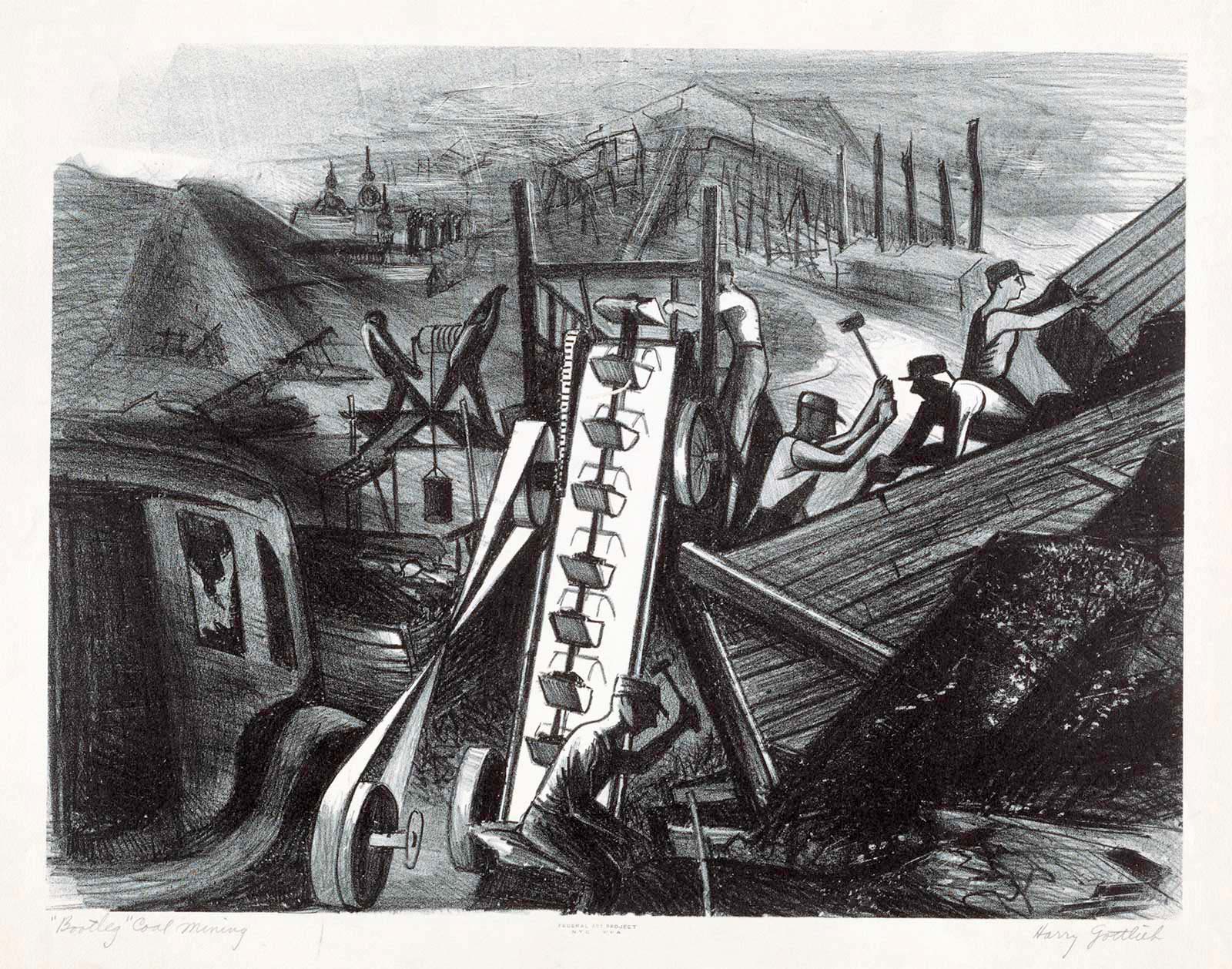
Harry Gottlieb (1895-1992), Bootleg Coal Mining, 1937. Lithograph. Allocated by the U.S. Government, Commissioned through the New Deal art projects, 1943-4-142. Courtesy of Krannert Art Museum.
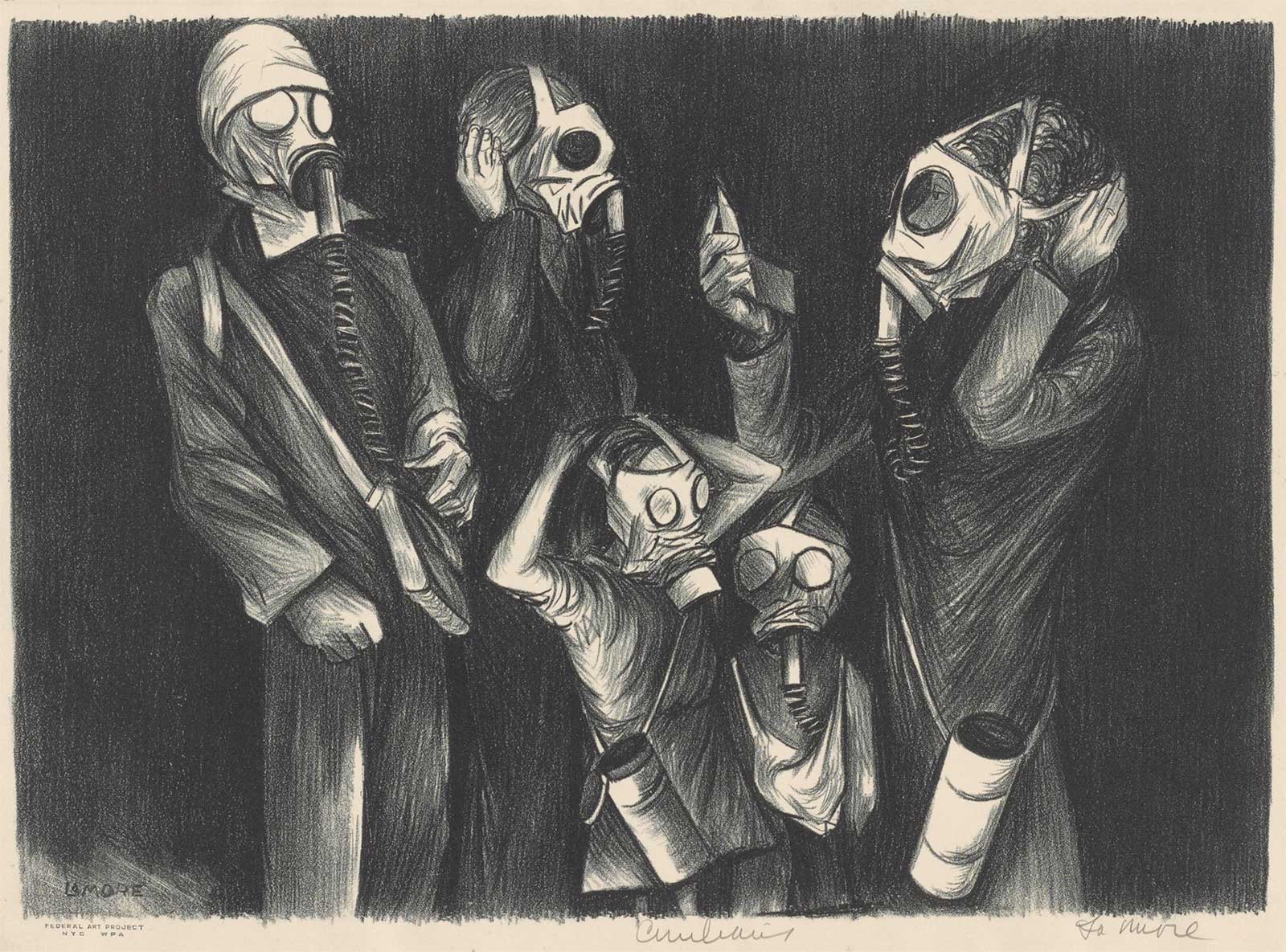
Chet La More (1908-1980), Civilians, ca. 1937. Lithograph. Allocated by the U.S. Government, Commissioned through the New Deal art projects, 1943-4-231.
Wehn points to Nan Lurie’s lithograph Technological Improvements, which shows Black workers lining up for jobs while a mechanical claw arm on a crane plucks people out of the line. “This is a work that is questioning the effects of new machinery. Technology was transforming the workforce and taking jobs from working-class people,” he says, adding that many of the pieces in the show explore this imagery through allegory, surrealism and modernism. “A number of artistic movements were in play at that time. A lot of the work was leveraging social realism with fairly realistic representations of people and environments, while some take a more surrealist approach with terrifying dream-like schemes. Many of the artists were working in a more modern and graphic mode.”
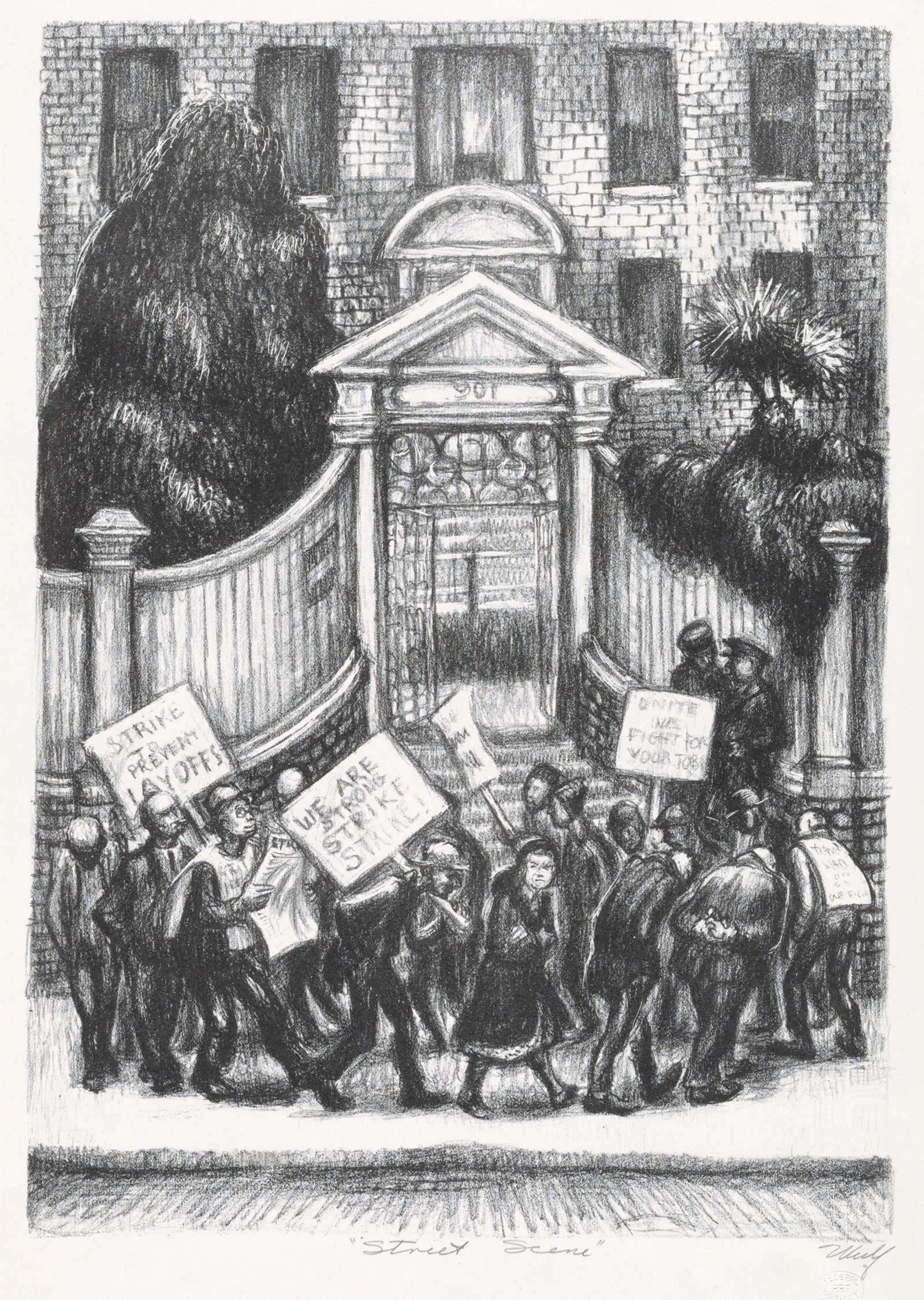
Lloyd Wulf (1913-1965), Street Scene, 1935-1943. Lithograph. Allocated by the U.S. Government, Commissioned through the New Deal art projects, 1943-4-484. Courtesy of Krannert Art Museum.
The exhibition, which will include about 40 pieces, primarily features lithography, with all but one piece in black and white. Wehn notes that printmaking flourished during the WPA period. “Printmaking happened as part of the Federal Arts Project, which invigorated the use of lithography, woodcuts and screenprinting,” he says. “These were not necessarily new, but it was during this time that they were popularized. Because they were also shown at schools and municipal spaces, the public was introduced to these printmaking methods, and it put into place a nice foundation to help establish printmaking as an art market and a fine art.”
The exhibition will continue through December 13 at the Chazen Museum of Art, located on the campus of the University of Wisconsin. —
Powered by Froala Editor
Powered by Froala Editor