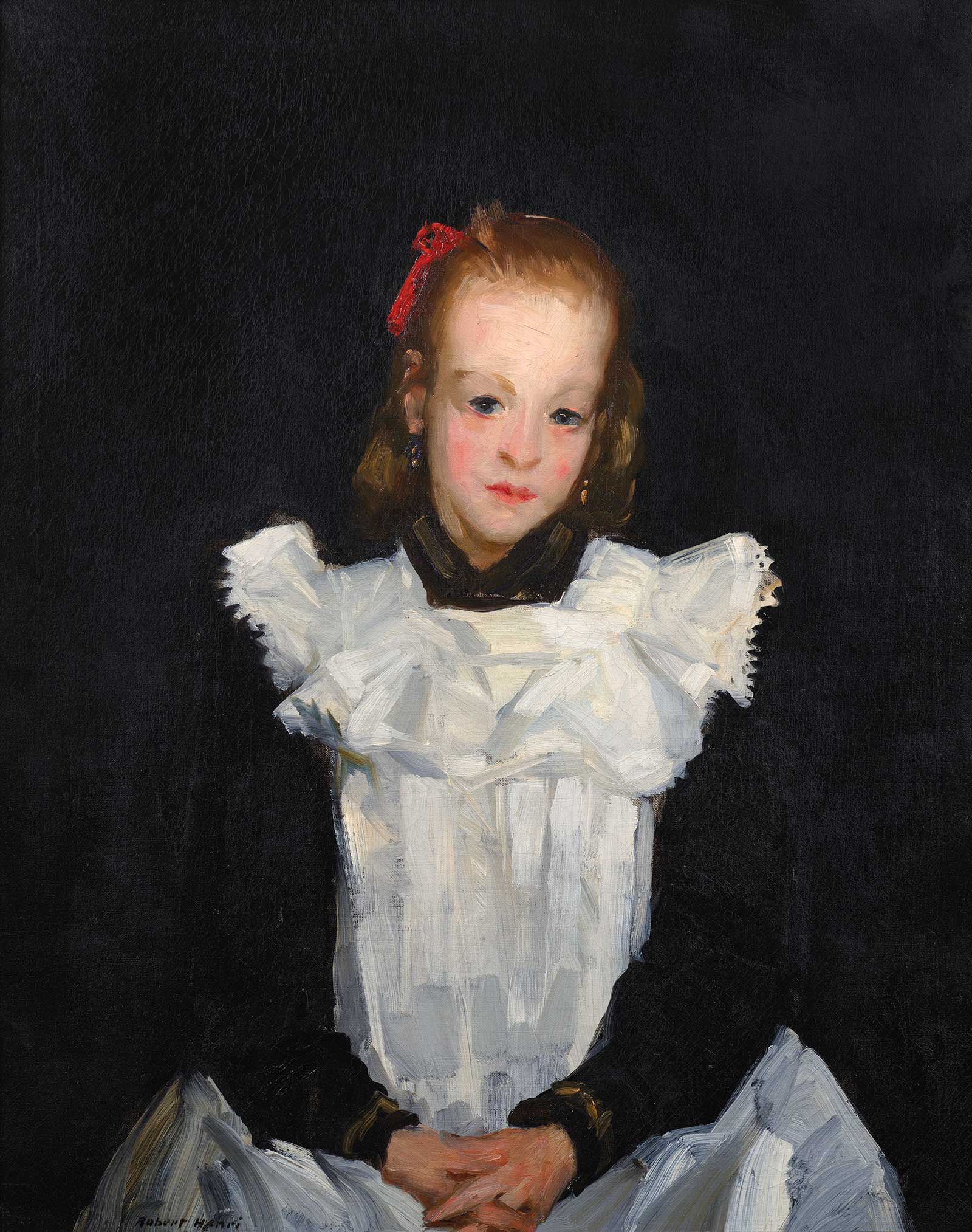
 Martche in White Apron
Robert Henri (1865-1929)
During the summer of 1907, Robert Henri and his students from the New York School of Art embarked on a trip to Holland. While there, Henri immersed himself in the work of Frans Hals and painted several portraits of Dutch children, including Martche in White Apron. The following year, he exhibited this painting at MacBeth Galleries in the landmark exhibition The Eight. The show, which also included paintings by Arthur B. Davies, William Glackens, Ernest Lawson, George Luks, Everett Shinn, John Sloan, and Maurice Prendergast, birthed a new age of Modernism in American art.
Debra Force Fine Art, 3 E. 69th Street, Suite 4F • New York, NY 10021 (212) 734-3636 • info@debraforce.com • www.debraforce.com
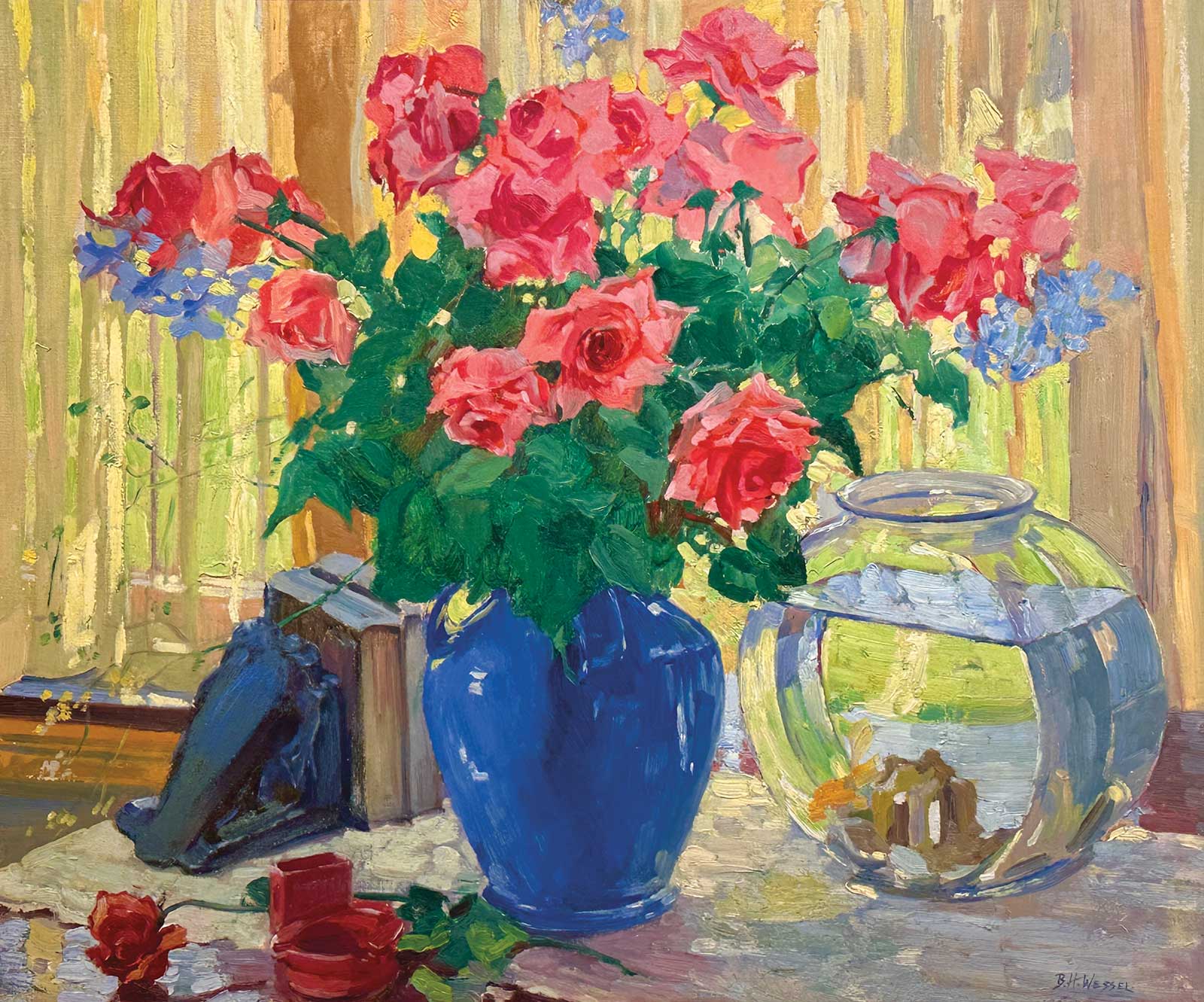 Still Life with Fishbowl
Bessie Hoover Wessel (1889-1973)
Born in Brookville, Indiana, in 1889, Bessie Hoover Wessel began painting at an early age and enrolled at the Cincinnati Art Academy in 1906. In 1909, at the personal invitation of Frank Duveneck, she joined his class, studying with the celebrated American painter until 1915. That same year, Wessel joined the faculty of the Academy, where she became acquainted with fellow artist and instructor Herman Wessel. The two married in 1917 at Duveneck’s cottage in Gloucester, Massachusetts.
During the 1920s, Wessel spent many summers painting in and around Rockport and Gloucester, working alongside artists including Jane Peterson, Anne Carleton, A.T. Hibbard and Frederick Mulhaupt. The vibrant still life presented here by Gallery Montanaro dates from this especially compelling period of her career. Luminous in color and confident in handling, it is a striking example of Wessel’s work at its best.
Gallery Montanaro, 65 Main Street • Rockport, MA 01966 • (508) 397-9015 info@gallerymontanaro.com • www.gallerymontanaro.com
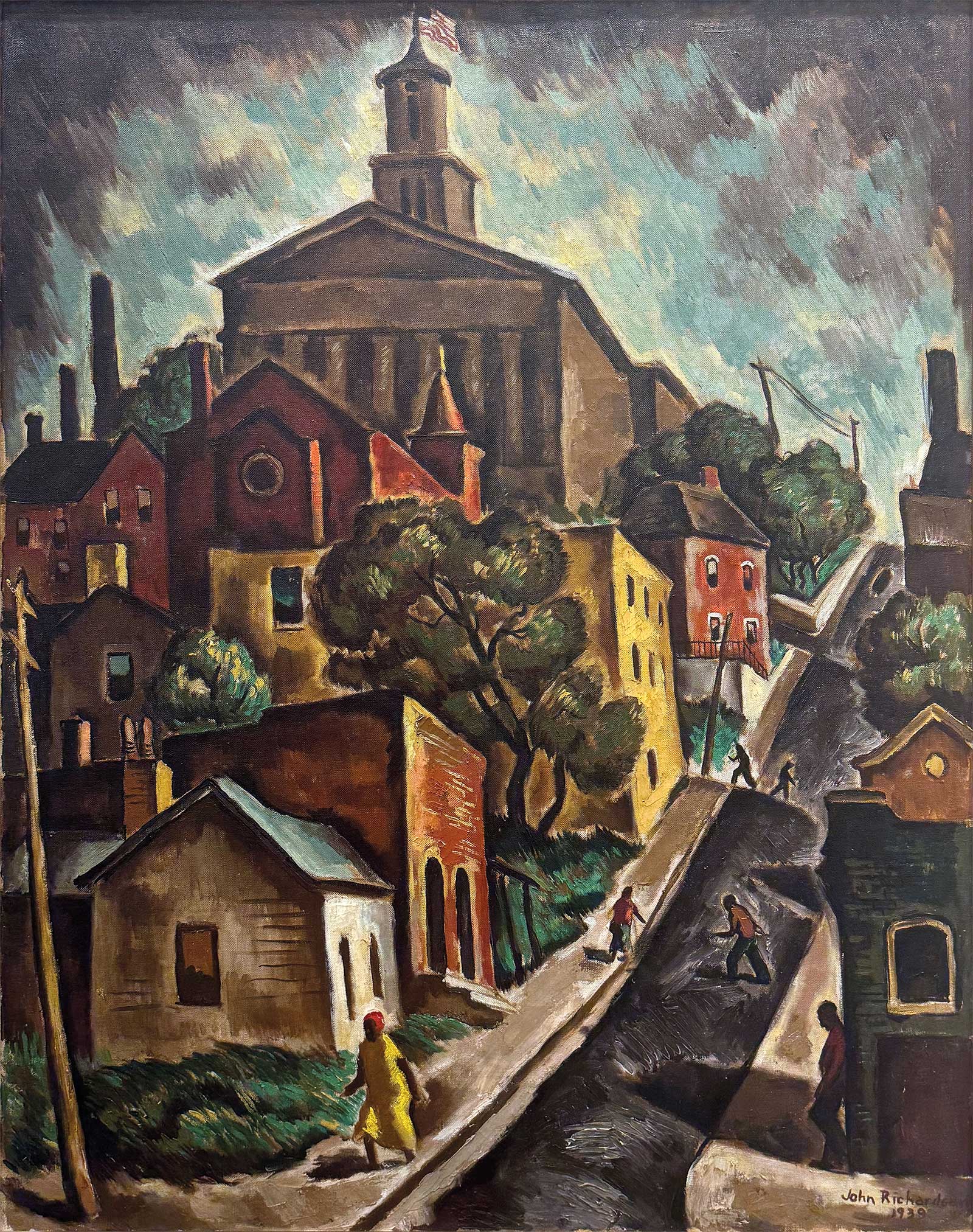 Capitol Hill, Nashville, Tennessee
John Fredericks Richardson (1906–1998)
John Frederick Richardson was born in Nashville, Tennessee. He studied at Vanderbilt University, the Pennsylvania Academy of the Fine Arts, and the University of Chicago before beginning his teaching career, first at the Watkins Institute in Nashville and later at the University of Illinois at Chicago. United States. Richardson’s style is characterized by solid, rapid brushstrokes and richly textured patterns that lend dimension and movement to the picture plane.
Capitol Hill, Nashville, Tennessee presents a dynamic view of a neighborhood where small, older houses climb a winding, hilly road toward the foot of the Capitol’s classical façade. Following its completion, Capitol Hill was exhibited nationally and internationally, receiving recognition as an important example of American art emerging from the South. In 1940, the painting was exhibited and won awards at the Golden Gate International Exposition for Contemporary Art. It was subsequently acquired by Thomas J. Watson’s corporate fine arts program and became part of IBM’s traveling permanent collection. That same year, Capitol Hill was exhibited at the Corcoran Gallery of Art and the New York World’s Fair. In 1941, it traveled internationally, with exhibitions in Arequipa, Peru, and Rio de Janeiro, Brazil among others.
Lincoln Glenn, 17 East 67th Street, Suite 1A • New York, NY 10065, 542 West 24th Street • New York, NY 10011
(646) 764-9065 • gallery@lincolnglenn.com • www.lincolnglenn.com
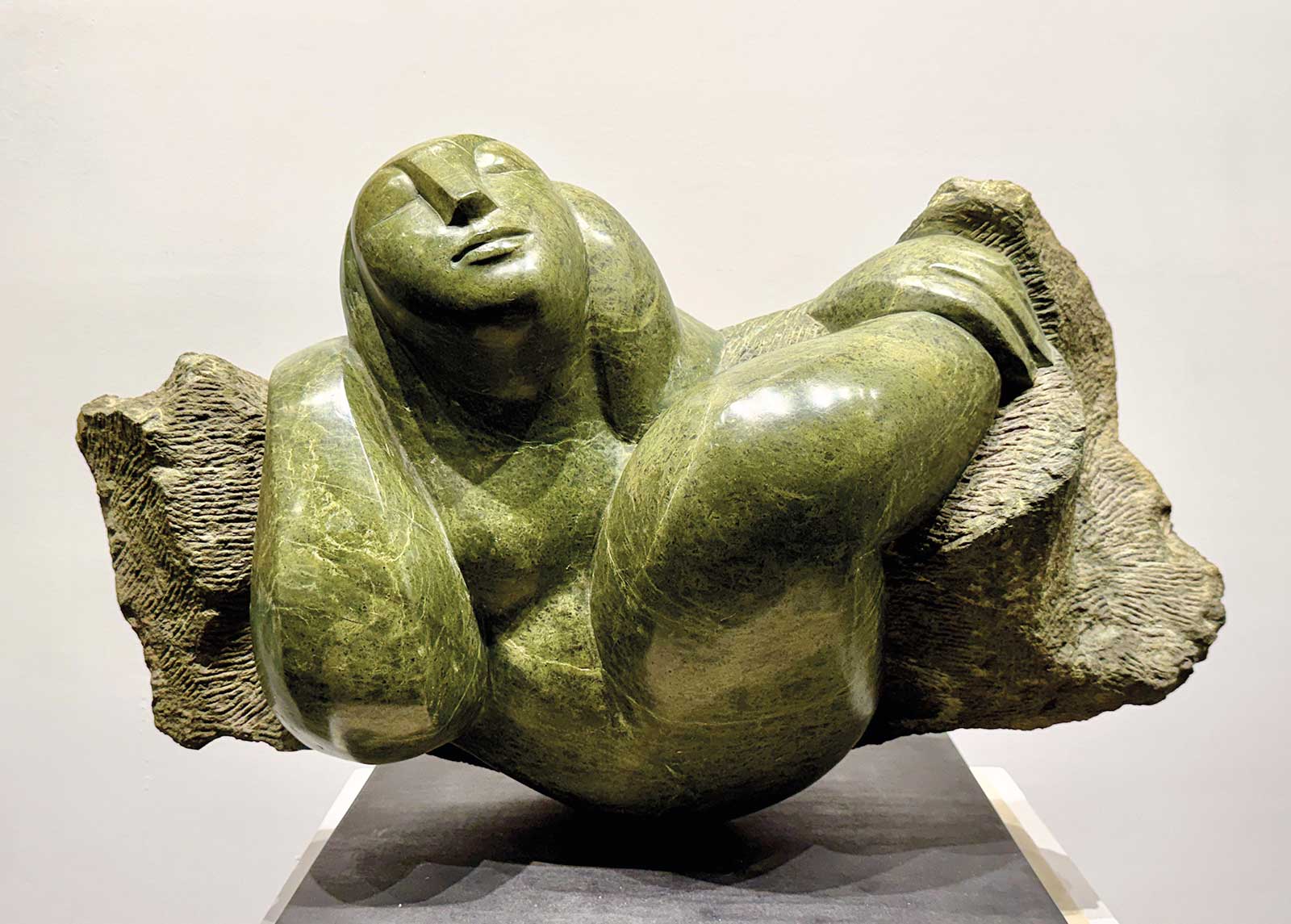 Reclining Nude
Lorrie Goulet (1925-2021)
For her whole life Lorrie Goulet was an artist, from the time she was introduced to clay as a child at Inwood Pottery Studio, to her early adult years at Black Mountain College studying painting, drawing, and weaving with Josef and Anni Albers. At Black Mountain College, she was introduced to sculptor Jose de Creeft, who soon became her husband. The couple kept studios across the street from each other, their careers neighboring each other while remaining independent.
Alongside her art practice, Goulet was a teacher for over 40 years, instructing students at the Museum of Modern Art’s People’s Center, the New School, and the Art Students League. She also hosted an instructional television series called “Around the Corner” in the mid-1960s, which aimed to introduce young audiences to sculpture.
Goulet’s practice was rooted in direct carving. She believed in the artist’s objective to free the subject from the confines of the raw material with hammer and chisel. Her works often retain elements of the untouched wood or stone alongside the polished forms she carved, allowing the composition to emerge while honoring the medium it belongs to.
Graham Shay 1857, 17 E 67th Street, Ground Floor • New York, NY 10065 (212) 535-5767 • info@grahamshay.com www.grahamshay.com
Powered by Froala Editor