The Shelburne Museum adds a new Revolutionary War-era portrait of William Seton by celebrated American artist Gilbert Stuart (1755-1828) to its walls, growing the museum’s reputable collection of American art.
William Seton (1746-1798), a Scottish-born merchant and financier, was a Loyalist during the American Revolution, serving as the last Royal Public Notary for the City and Province of New York. However, when the war ended and the Colonies won, he played a key role in strengthening political and financial ties between North America and France during the nation’s formative years. The portrait, painted between 1793 and 1798, was gifted to the Shelburne Museum this year from the estate of Mary Seton Abele (1938-2025), the great-great-great-granddaughter of William Seton.
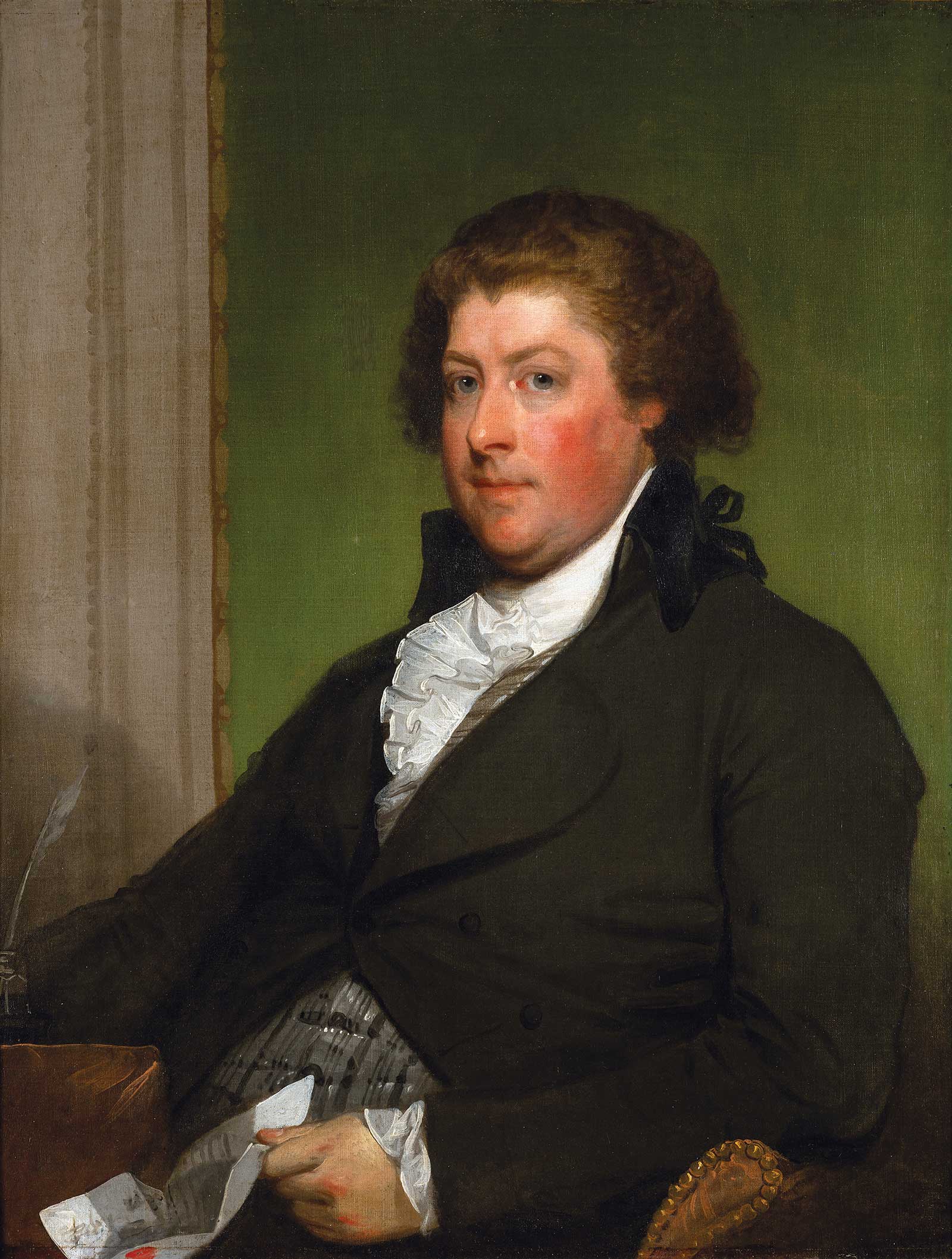
Gilbert Stuart, William Seton, ca. 1793–98. Oil on canvas, 36 x 28 1/4 in. Collection of Shelburne Museum, gift of Mary Seton Abele. 2026-9. Photography by Andy Duback.
Gilbert Stuart, who shared Seton’s Scottish heritage, likely became acquainted with Seton after returning to the United States in 1793, with the portrait probably painted during Stuart’s brief residence in New York.
“[Shelburne founder] Electra Havemeyer Webb would have been thrilled about this acquisition. Gilbert Stuart is an iconic figure in the history of American painting, and this likeness of William Seton serves as a meaningful foil for paintings in our collection like John Singleton Copley’s portrait of John Scollay, one of the Sons of Liberty in Revolutionary-era Boston,” says Katie Wood Kirchhoff, Shelburne Museum’s Alice Cooney Frelinghuysen Curator of American Decorative Arts.
Gilbert Stuart is widely regarded as one of America’s greatest portrait painters. Trained under Benjamin West in London, he built a successful career in England and Ireland, before returning to the United States in 1793. Back home, he developed a distinctly American style of portraiture and captured nearly 1,000 portraits over his lifetime. Stuart is best known for his unfinished 1796 Athenaeum portrait of George Washington, the image that appears on the U.S. one dollar bill. Renowned for his expressive brushwork, luminous color and psychological depth, Stuart’s work profoundly influenced generations of American artists.
The portrait is on view in Shelburne Museum’s Webb Gallery, which features objects that illuminate the people, ideas and events that have shaped the United States over the past 250 years. —
Powered by Froala Editor