
There’s something about the majesty of a tree. It is protective, connective, awe-inspiring; yet, everyone has their own story about an important tree in their life. This wonderous feeling is the basis of a unique exhibition entitled Paper Trees, currently on view at the High Museum of Art in Atlanta.
“Artists have taken the tree study upon themselves for centuries,” says Anni Pullagura, Margaret and Terry Stent Associate Curator of American Art at the High Museum. “It explores what we can find in landscapes that help us understand ideas of spiritualism, nature, and how those relationships have evolved over time.”
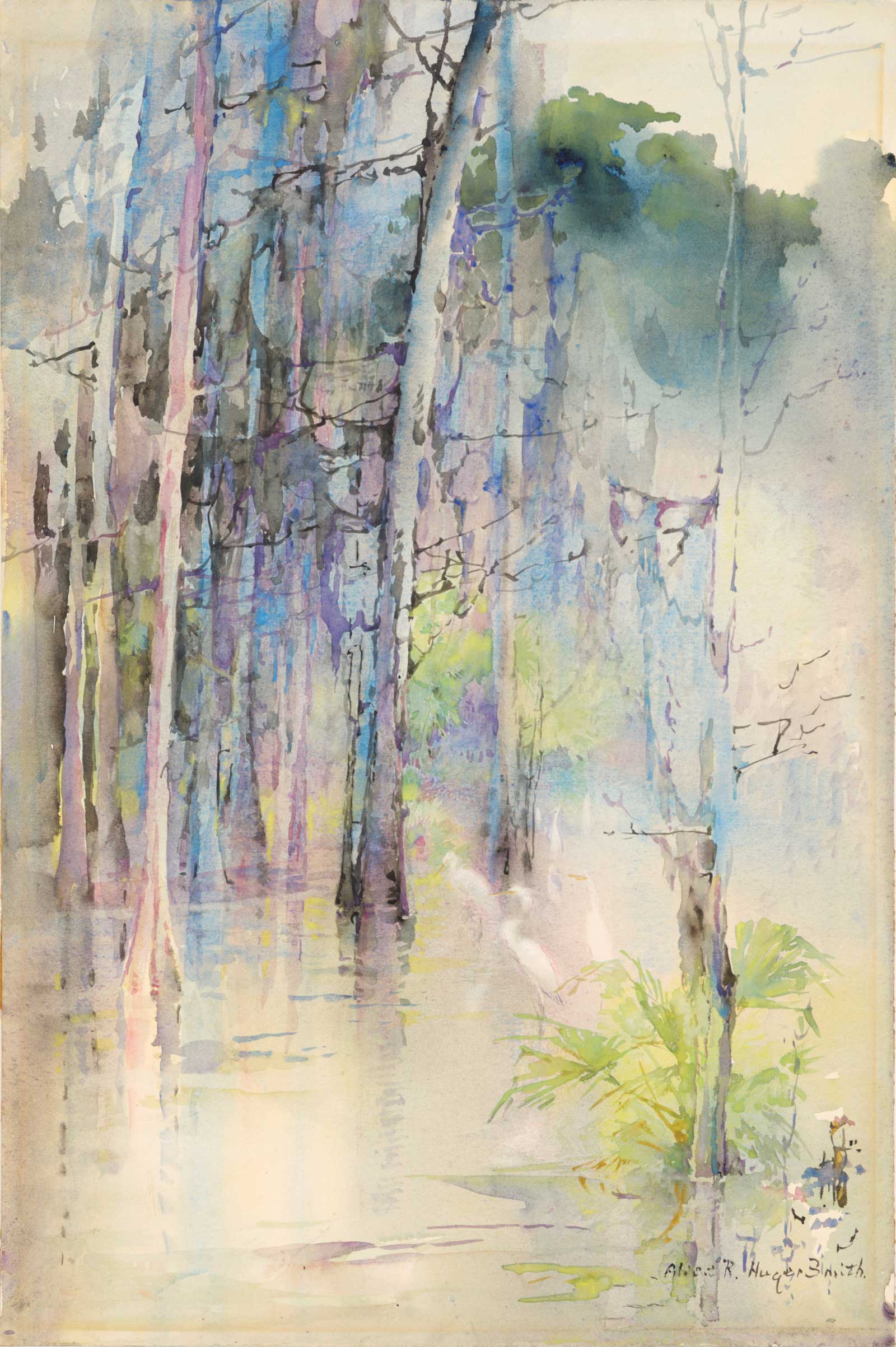
Alice Ravenel Huger Smith (1876-1958), The Ashepoo Swamp, early 20th century. Watercolor on paper. High Museum of Art, Atlanta, J. J. Haverty Collection, 25.2.
The exhibition features nearly 50 works including drawings, etchings, paintings and sculpture. The survey includes pieces from the mid-19th century and on to modern works, tracking the changing approaches alongside technological advancements such as photography.
“In the late-19th century, the pre-Raphaelites insisted on portraying the truthfulness of nature in art,” Pullagura says. “But when photography became popular, you see this shift into hyper-realistic treatment. There was no allegory, although some things did become more stylized.”
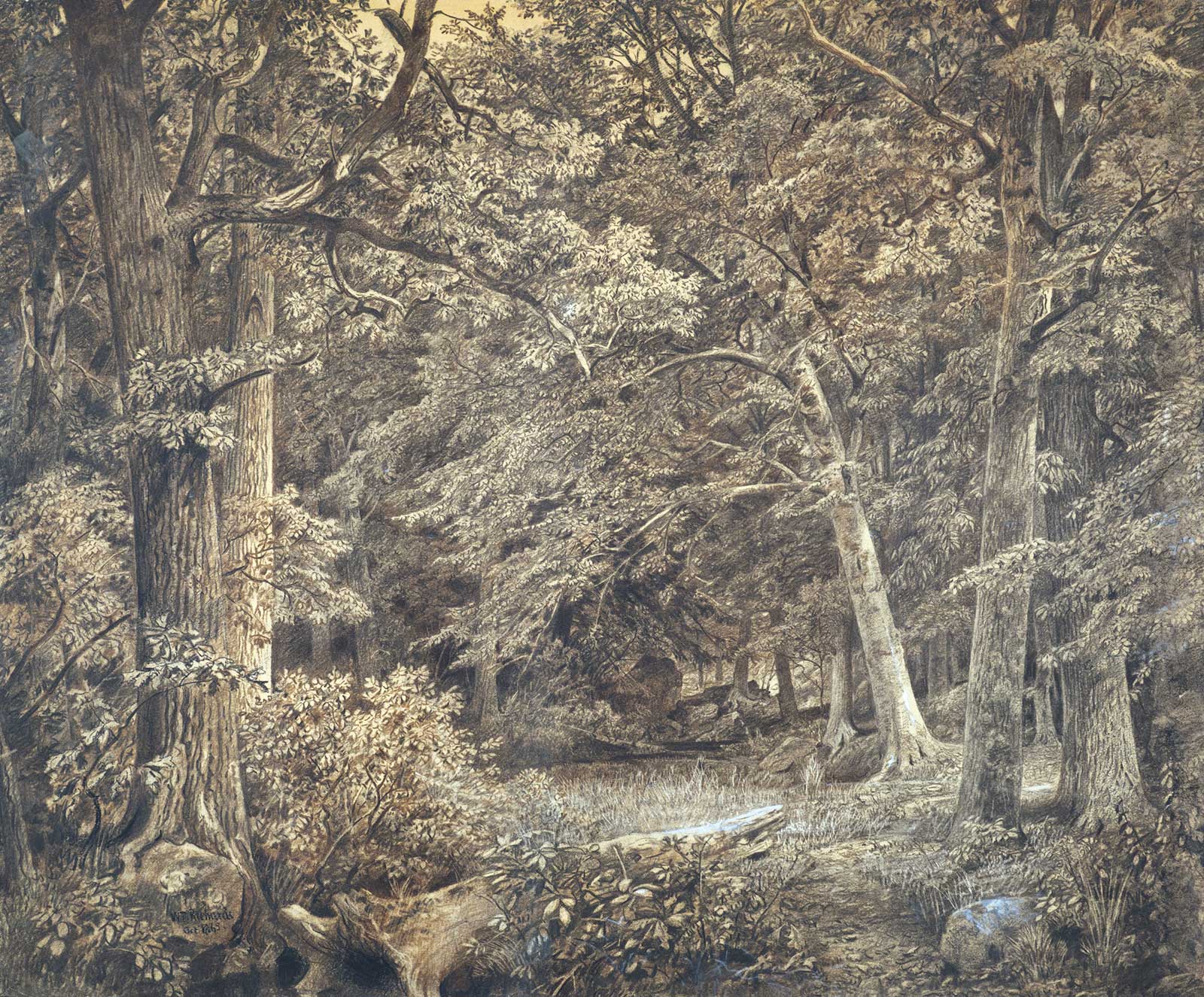
William Trost Richards (1833-1905), Woods, 1865. Charcoal and white chalk on paper. High Museum of Art, Atlanta, purchase with Charles E. Merrill Trust Fund given in memory of Brigadier General William L. Plummer, 72.16.
While many works are on loan from surrounding museums, several pieces were pulled from the museum’s own collection. Pullagura says the exhibition granted a unique opportunity to showcase pieces that have never been displayed, even since they were acquired before the museum was founded. One such piece is The Ashepoo Swamp by Alice Ravenel Huger Smith. The watercolor rendering of spindly trees standing proudly alongside ghostly birds has never been on display from the museum’s collection.
“The birds are so subtle, and she was so skillful that it’s a nice surprise once you see them emerging,” Pullagura says. “It’s a watery, murky atmospheric picture, and it really evokes the experience of being in swampland.”
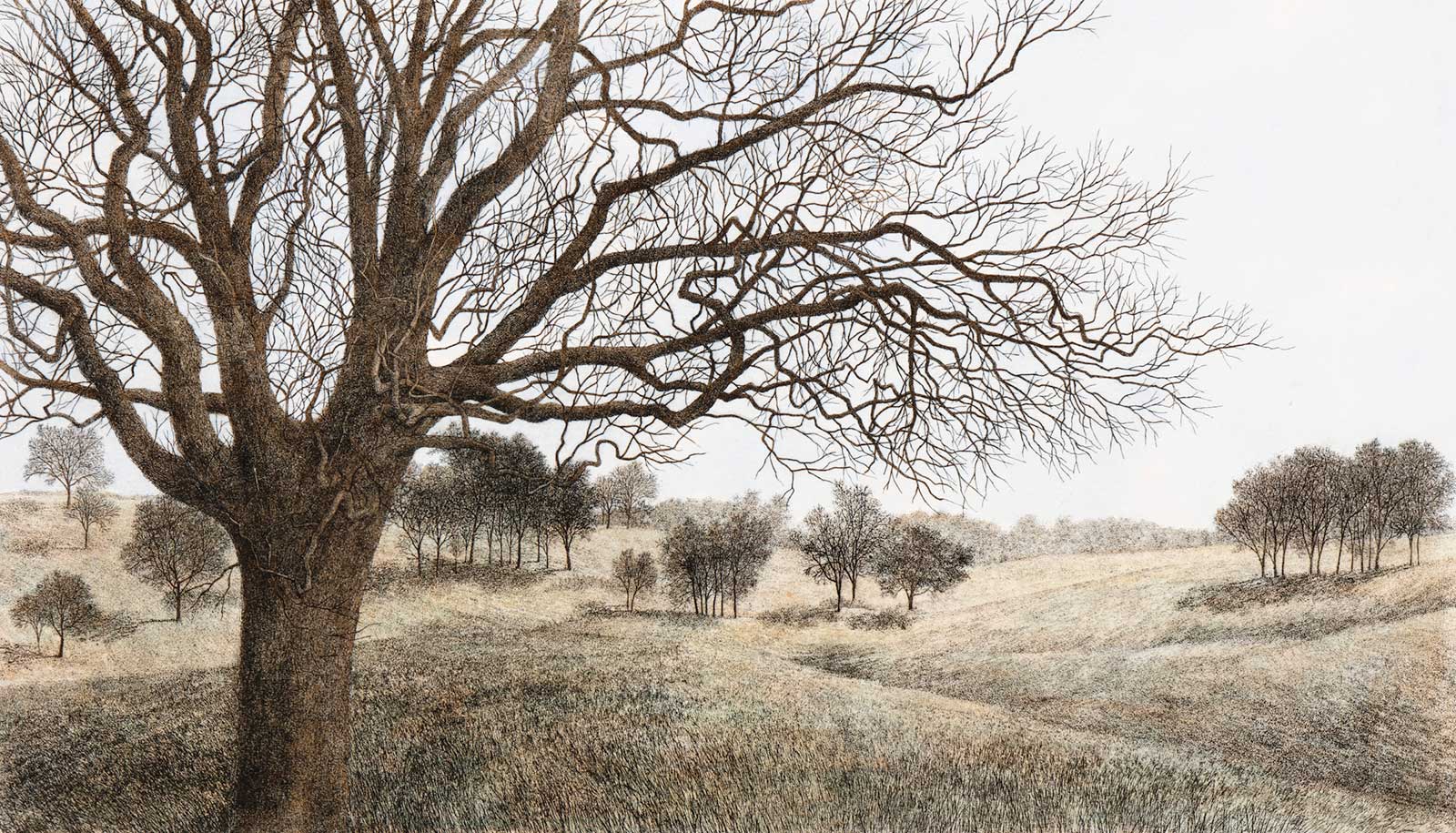
William Thomas Livesay, Large Oak Tree, 1985. Etching, engraving and watercolor on paper. High Museum of Art, Atlanta. Gift of Katherine and Richard B. Jones, 1986.69.
Pullagura also notes that many included artists were self-taught through correspondence classes. Because trees are such a simple yet complex subject, it was often the starting point of many classes operated by mail, and where many artists start their journey. These instruction manuals are on display to honor their important role in the history of both the subject and the practice. Classes hosted by the museum have used them as focal points in honor of the exhibition.
“By bringing these works together, we invite audiences to consider how artists have helped inspire reverence for nature, using the tree as a beautiful symbol of life,” says Rand Suffolk, director of the museum, in a statement.
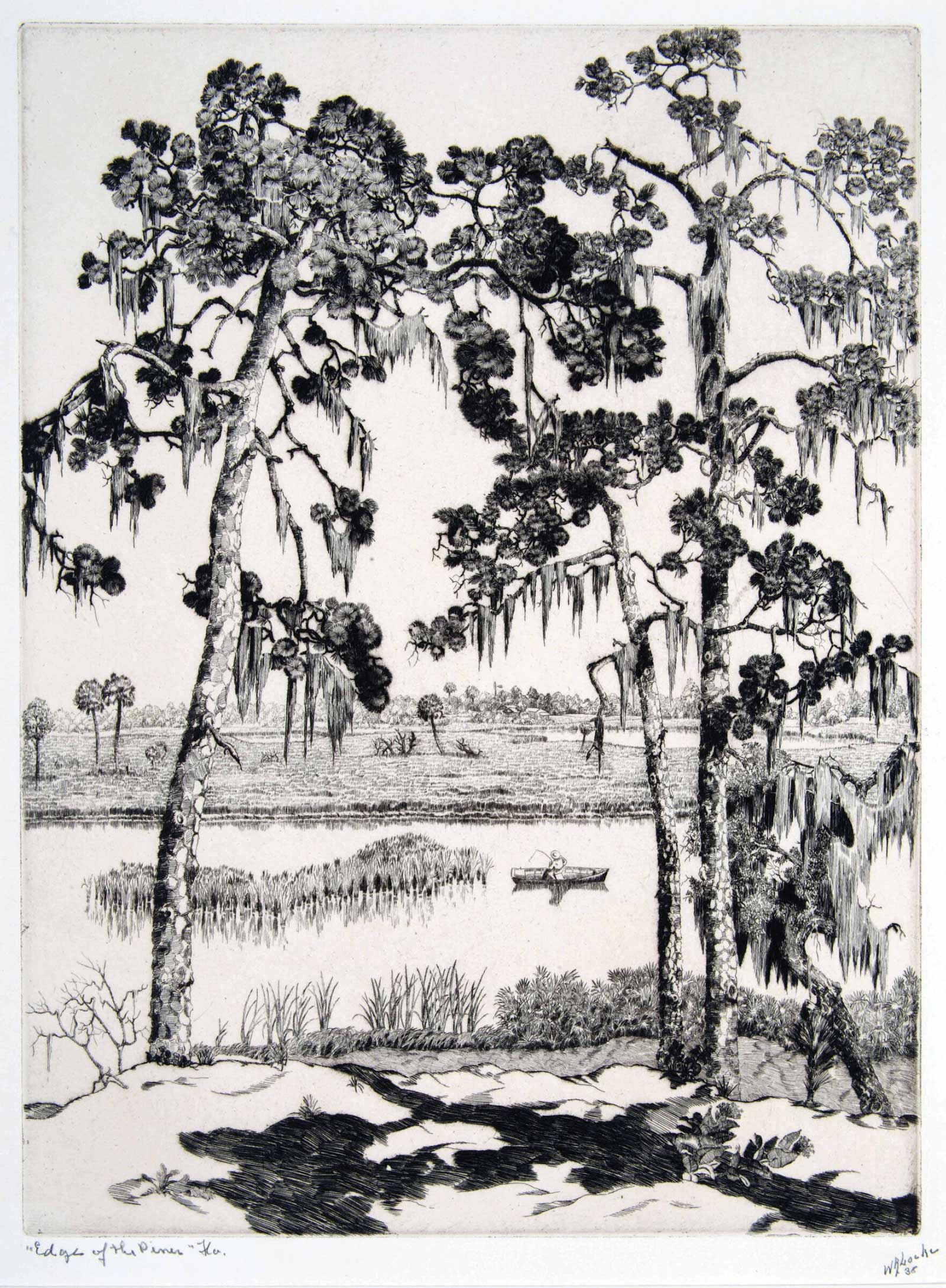
Walter Ronald Locke (1883-1983), Edge of the Pines” Fla., 1938. Etching on paper. High Museum of Art, Atlanta, purchase with funds from the Lawrence and Alfred Fox Foundation for the Ralph K. Uhry Collection, 1991.183.
The exhibition hangs through February 21, 2027. There are many quotes included throughout the exhibition. One by renown gardening guru Walter Reeves says, “Go plant a tree and see what happens.” Pullagura, who knew Reeves for many years, says she hopes his philosophies alongside the artwork will help inspire viewers to reconnect with the natural world. “
He believed in our landscape and obligation to protect it in Georgia,” she says. “He always encouraged people to give back as much as they receive. With our classes as well, it’s lovely to see people inspired to take up a pencil and draw their trees.” —
Powered by Froala Editor