For almost two centuries, Thomas Cole—the founder of the first American school of painting, as he is often labeled—has come to personify the Hudson River School. However, recent scholarship has provided us with an increased awareness of the breadth and depth of numerous artists who, like Cole, explored and painted the American landscape from the 1820s to the end of the 19th century. In fact, by the middle decades of the century, increasing numbers of women not only aspired to paint professionally but also achieved personal and financial success as artists, resulting in part from broader educational curricula, the instruction they acquired at home and abroad, and passionate determination to experience nature’s wonderland directly.
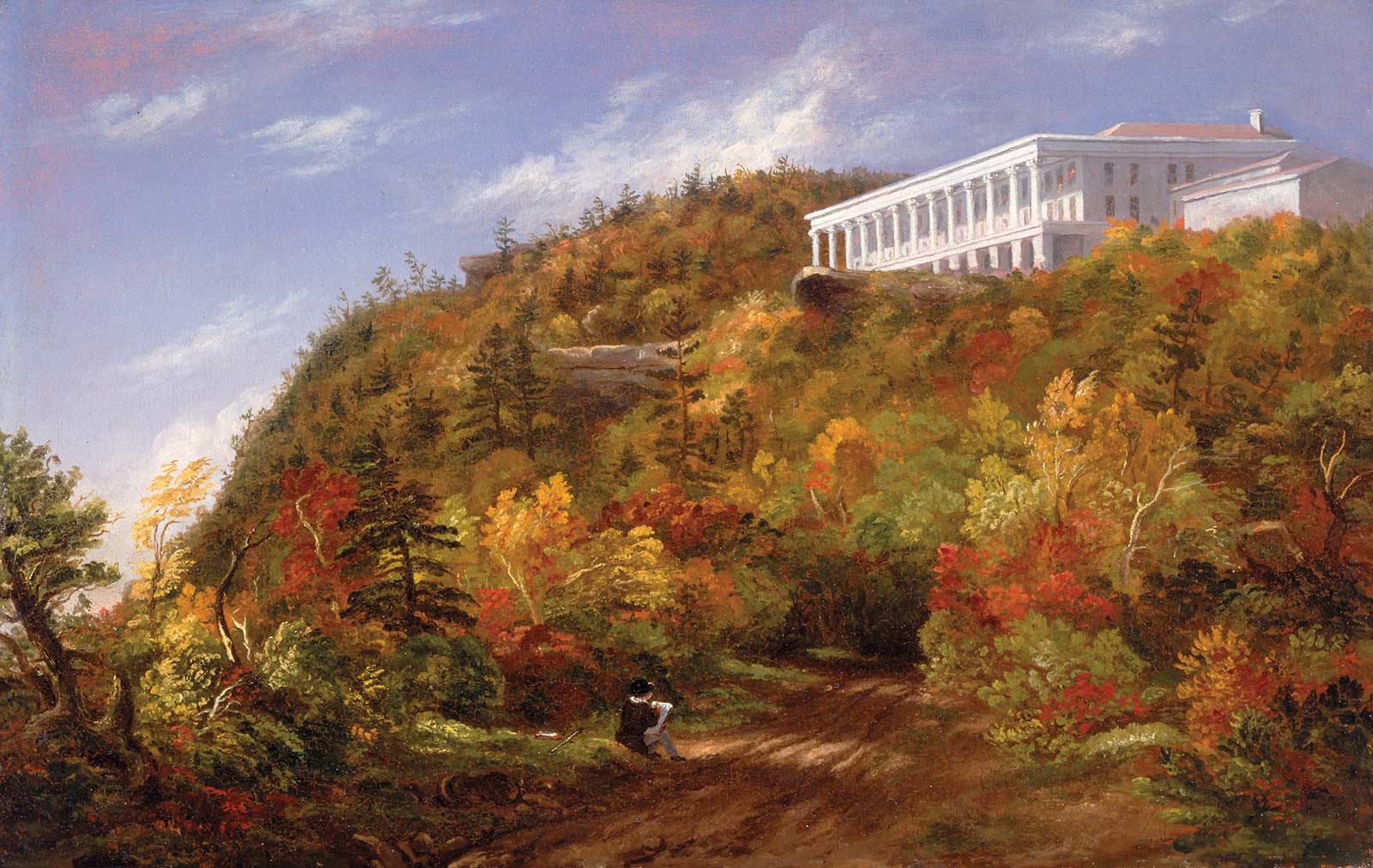
Sarah Cole (1805-1857) after Thomas Cole, A View of the Catskill Mountain House, 1848. Oil on canvas. Albany Institute of History and Art Purchase.
Among the professional landscape painters at mid-century who hiked, sketched and exhibited their work were the artists Susie M. Barstow, Julie Hart Beers, Fidelia Bridges, Sarah Cole, Charlotte Buell Coman, Eliza Greatorex, Louisa Davis Minot, Harriet Cany Peale, Mary Josephine Walters and Laura Woodward, to name but a few of the women artists whose compositions showcased picturesque qualities, a romantic sensibility and well-balanced compositions, earning them fame and prominence in their day.
Painting in the style of the Hudson River School and evolving to incorporate the more avant garde styles of the times, these women routinely traveled to immerse themselves in American scenery; they wrote poetically of their adventures and captured on canvas the beauty and awe they encountered out of doors, inspired by the landscape just as were Thomas Cole, Asher Durand and Frederic Church—the male canon of the Hudson River School. They shared not only a deep engagement with the themes of American land and the natural world but also an assertion of their place within an art world that too often failed to offer the same opportunities and visibility to female artists as their male counterparts. Working en plein air or from the comfort of their studios, the women of the Hudson River School consistently exhibited and sold their paintings competitively in the most prestigious academies and galleries along the Eastern Seaboard. The professionalization of their work situates these women among the many whose lives, careers and creative practice necessitate a redefinition of who and what the Hudson River School was and is.
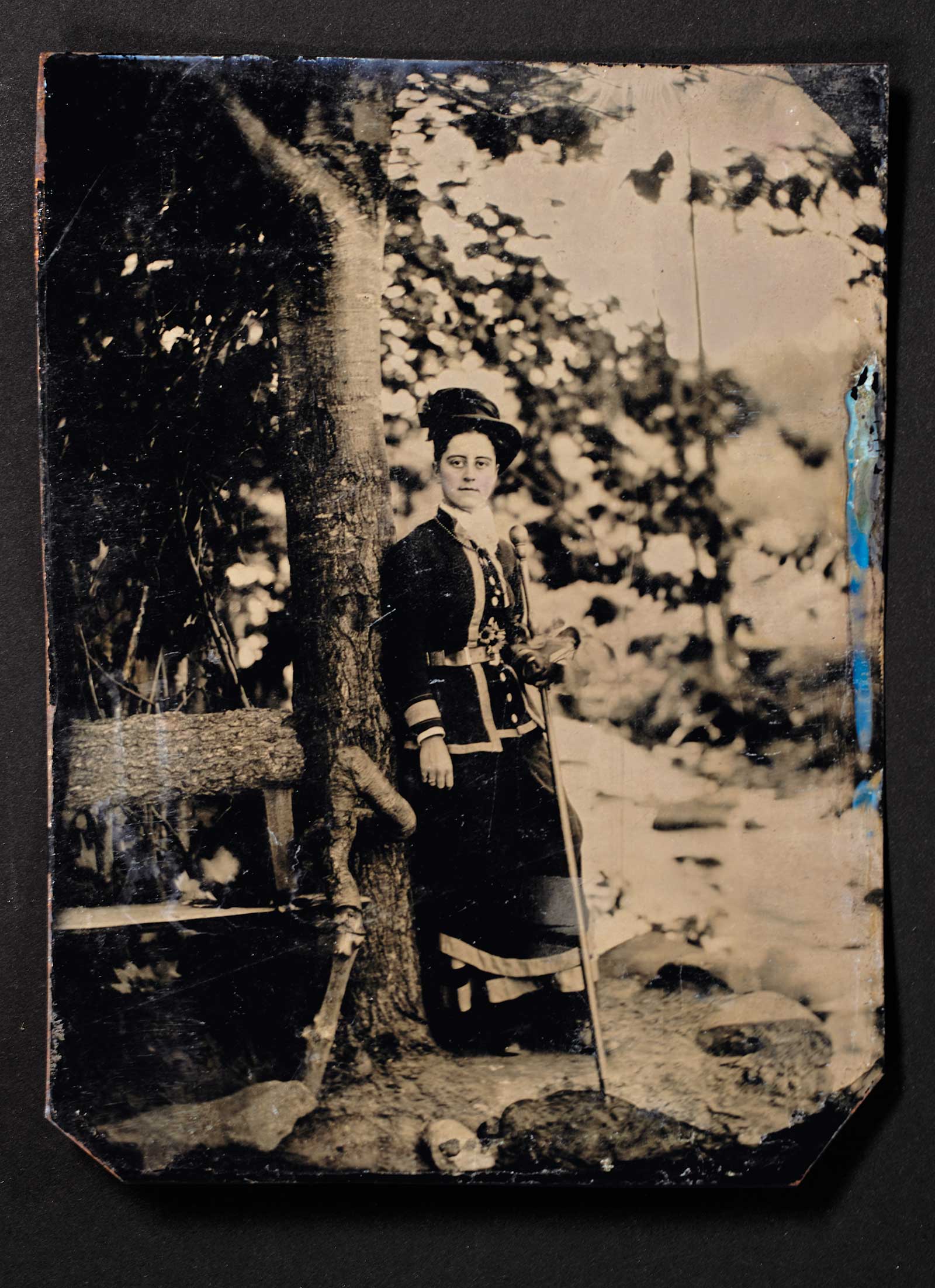
Susie Barstow in her hiking suit, ca. 1870. Tintype. Private collection.
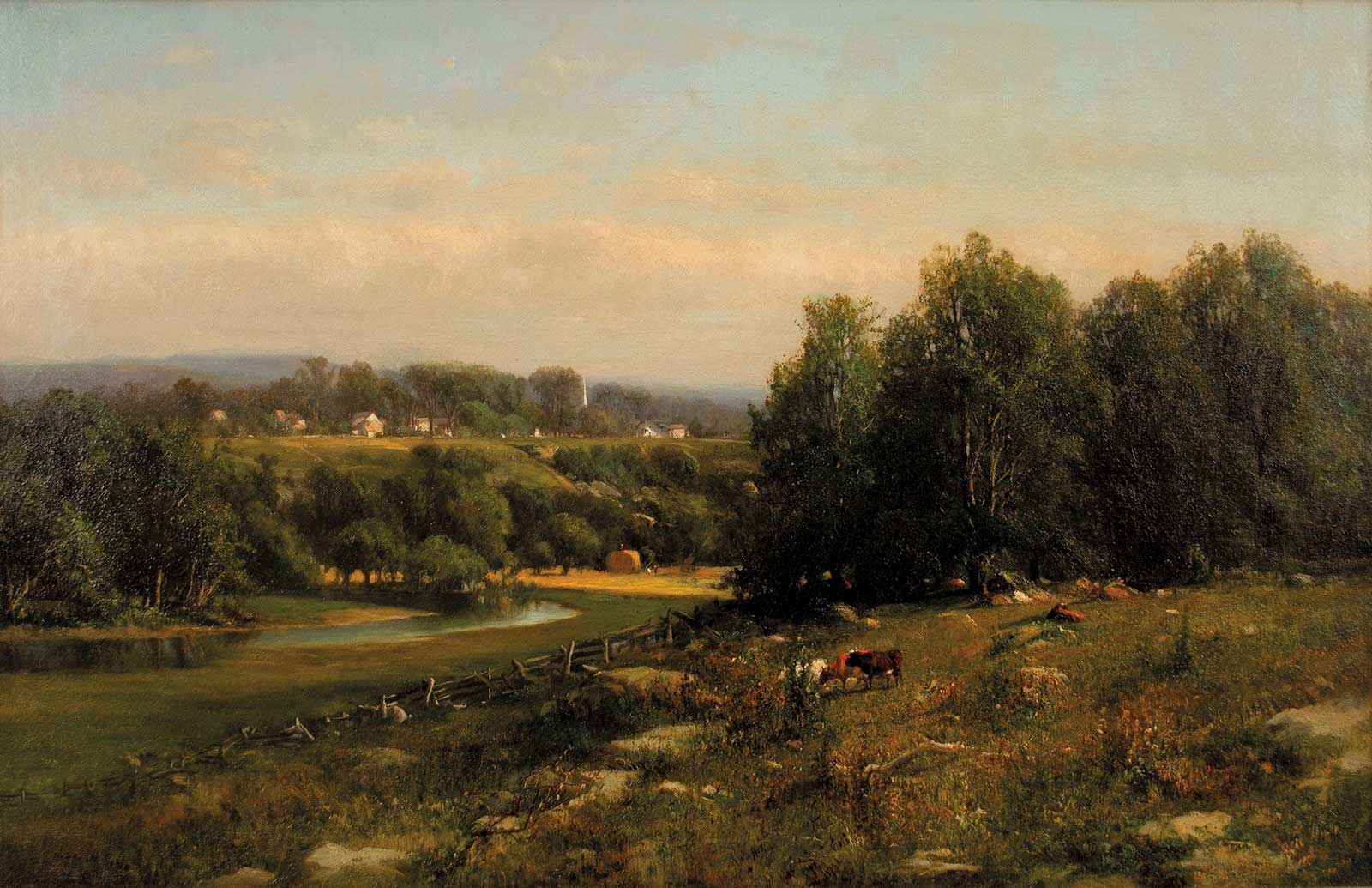
Julie Hart Beers (1834-1913), Pastoral Landscape with Hay Wagon, ca. 1860s. Oil on canvas. Albany Institute of History and Art Purchase, Sargent Fund.
Across the 19th century and beyond, multitudes of women were climbing, hiking, riding bicycles and exercising more than just their minds. With regard to the clothing associated with hiking and climbing, the women of the Hudson River School would have to contend with petticoats, bustles, trains, corsets, and crinolines. Over the course of their lengthy careers, they witnessed astounding changes in women’s bustlines, waistlines and hemlines. From the 1850s to the early 20th century, health reformers, progressives and women’s rights advocates would have much to say about femininity, idealized forms, and freedom from costumed restraints. In her book Reforming Women’s Fashion, 1850-1920, Politics, Health, and Art, Patricia Ann Cunningham explains that variations and modifications to undergarments were continuously explored to the end of the 19th century and beyond, with many women making perhaps slight modifications such as shortening one’s skirt or applying rings to lift one’s hemline when needed.
Having lived lifetimes spanning two centuries, these women witnessed a vast array of political upheaval, scientific advances, cultural events, celebrations and American progress defined broadly as part of a changing world. As young women, they lived through the Civil War (1861-1865) and later, World War I (1914-1918). They benefited from the development of pasteurization, the washing machine, and the sewing machine, and watched as New York streets converted from the horse and carriage to trolleys and then to the automobile. They experienced the shift from the telegraph to the telephone and Edison’s invention of the phonograph and the electric lightbulb. Many attended the Centennial Exhibition of 1876 in Philadelphia, and Chicago’s Columbian Exposition in 1893.
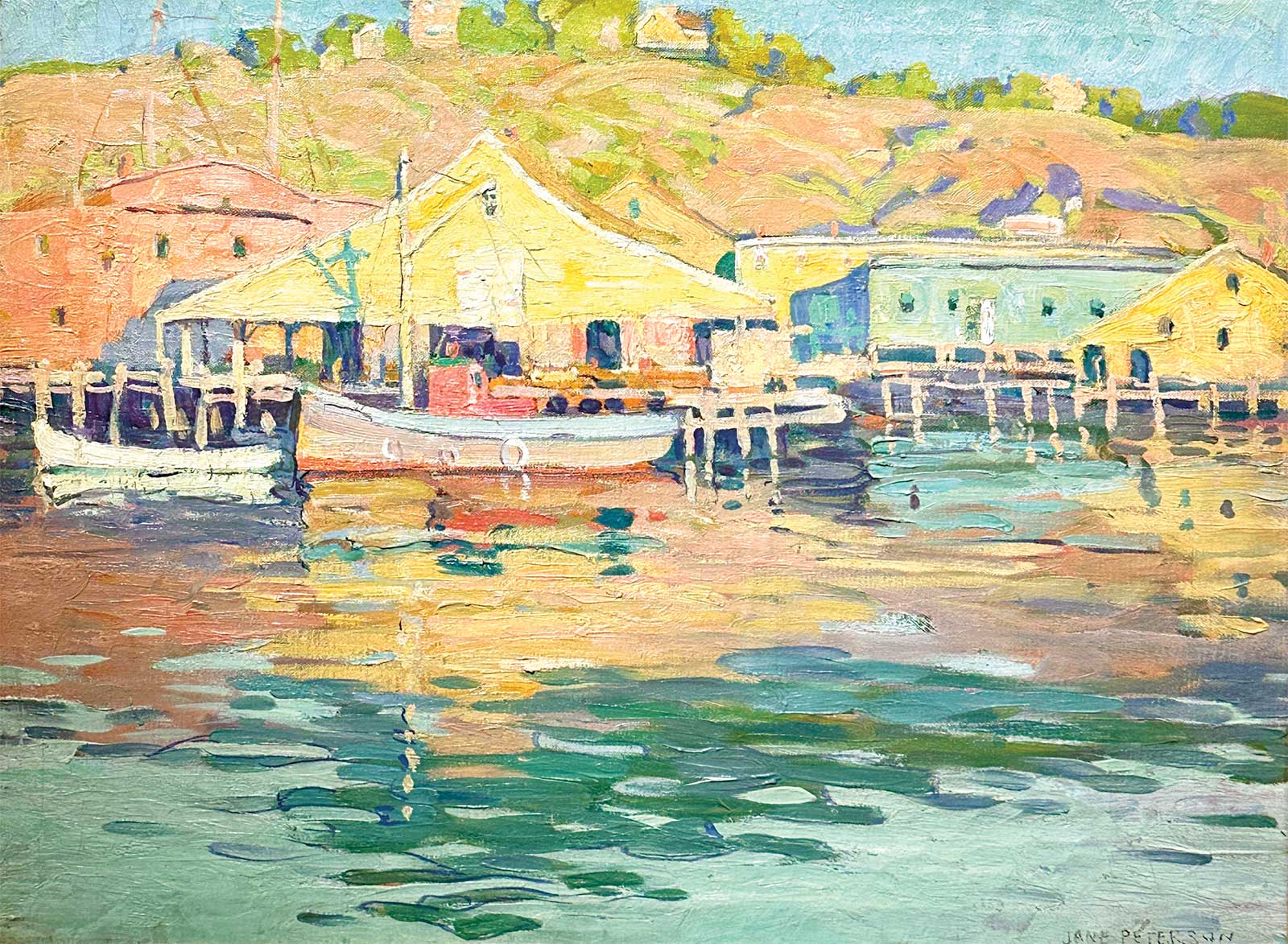
Gallery Montanaro, Gloucester Harbor. Oil on canvas, 20 x 24 in. by Jane Peterson (1876-1965).
Debra Force Fine Art, Sailors Eating, ca. 1944. Oil on canvas, 47 x 44 in., by Pegi Nicol MacLeod (1904-1949).
They observed the myriad means by which motion and sound advanced in exciting ways: the roller coaster at Coney Island, the Wright Brothers’ first flight at Kitty Hawk, the escalator, and talking motion pictures. The Museum of Natural History (1869), the Metropolitan Museum of Art (1870), the New York Public Library (1895), and the Brooklyn Museum of Art (1897) were all created during their lifetimes. And, of great importance, some of these women lived long enough to celebrate the ratification of the 19th Amendment on August 18, 1920, which gave women the constitutional right to vote. What an incredible time in which to live and paint!
Nancy Siegel is Professor of Art History and Assistant Dean in the College of Fine Arts and Communication at Towson University where she specializes in American landscape studies, underrepresented women artists of the 19th century, print culture, and culinary history of the 18th and 19th centuries. She is the author of Susie M. Barstow: Redefining the Hudson River School and Political Appetites: The Power of Food in Revolutionary America which provided the basis for the documentary, Feeding the American Revolution, for WMHT/PBS.
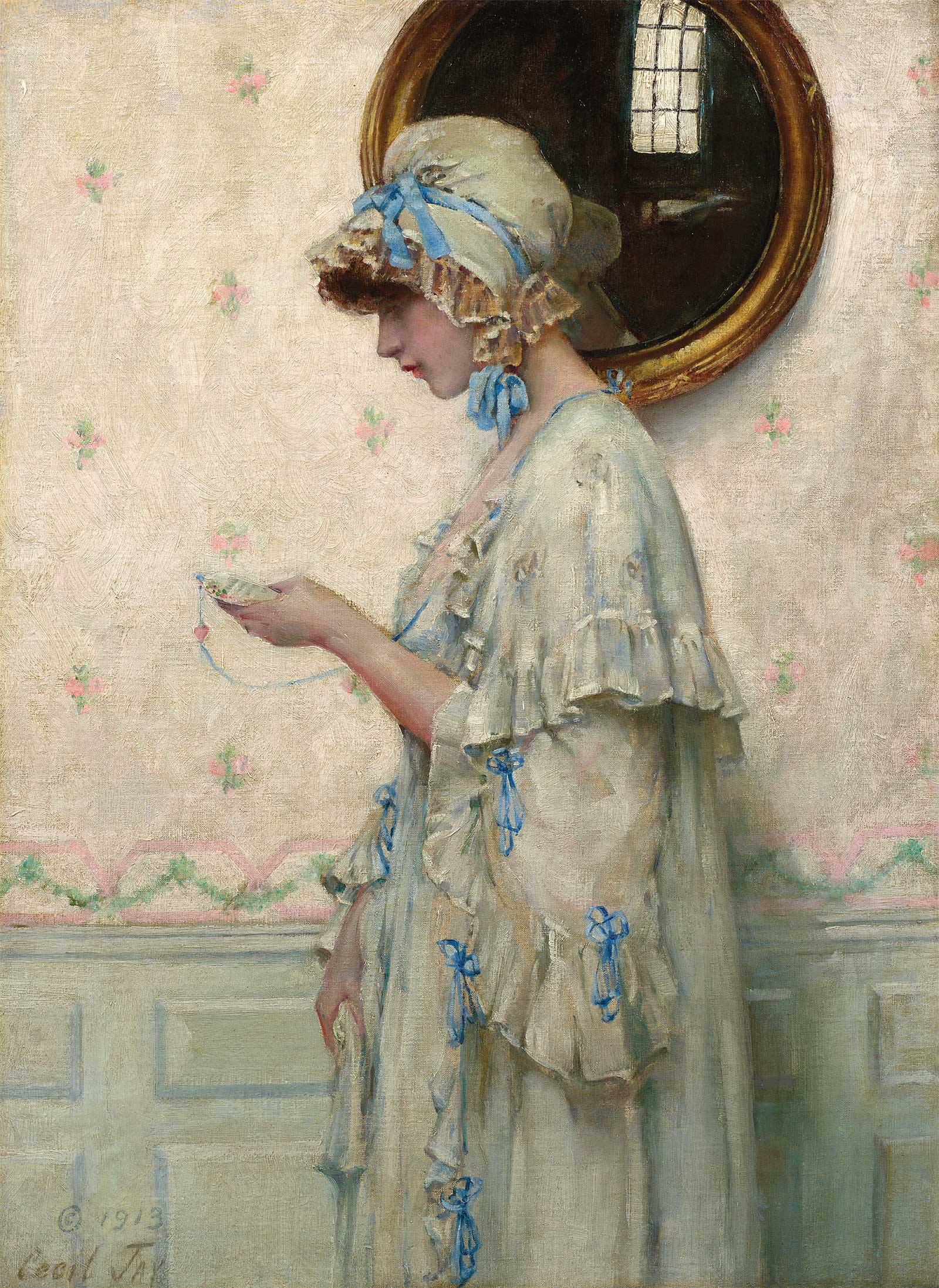
Debra Force Fine Art, The Miniature, 1913. Oil on canvas, 23¾ x 17½ in., by Cecil Jay (1884-1954).
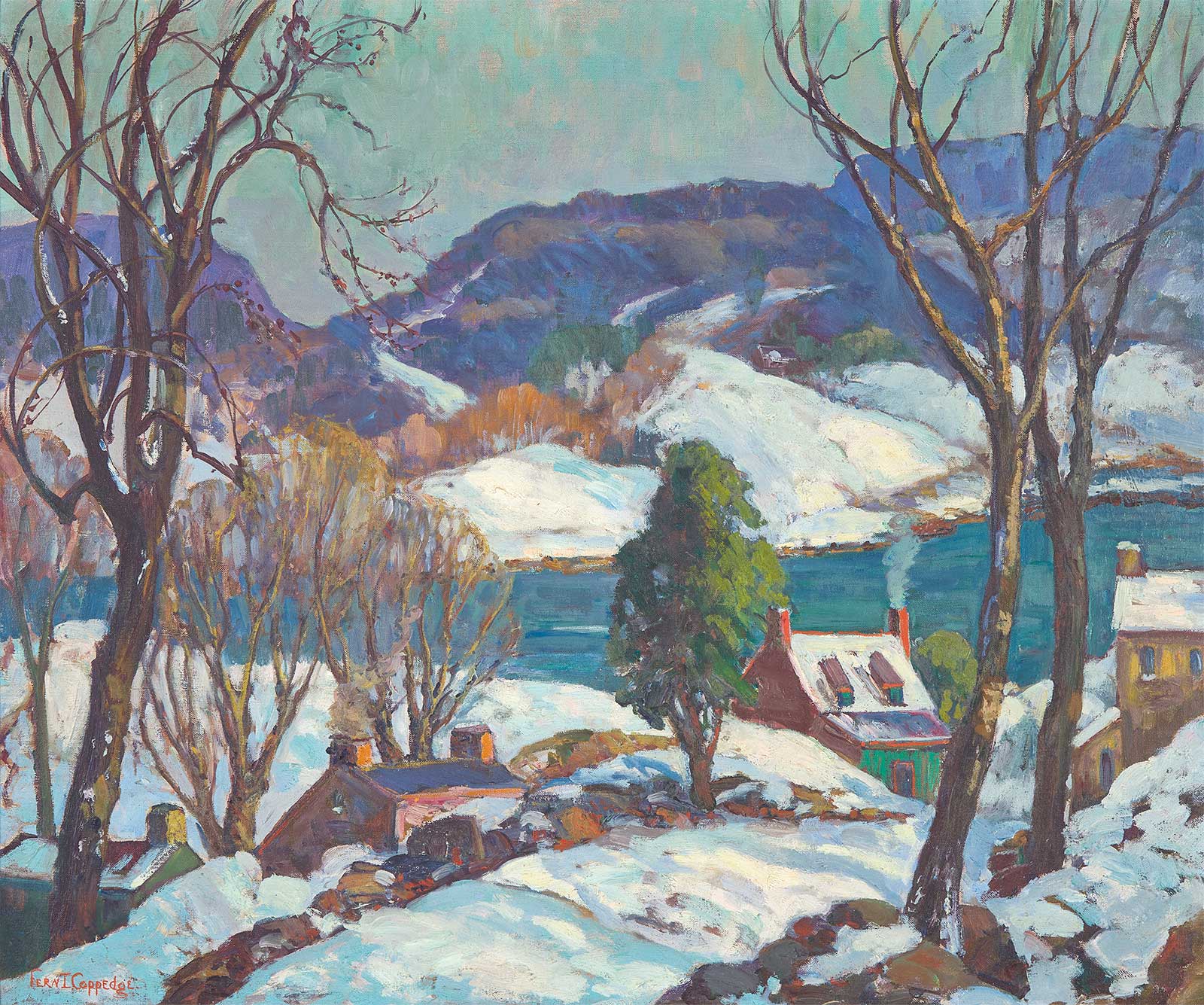
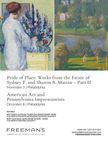
Freeman’s, Winter, Bucks County. Oil on canvas, 25 x 30 in., by Fern Isabel Coppedge (1883-1951). Available in Freeman’s American Art and Pennsylvania Impressionists sale on December 8. Estimate: $50/80,000
The remainder of this special section is a showcase and celebration of historic women artists—their lives, their artwork and the galleries, museums and auction houses that are the stewards of their legacy.
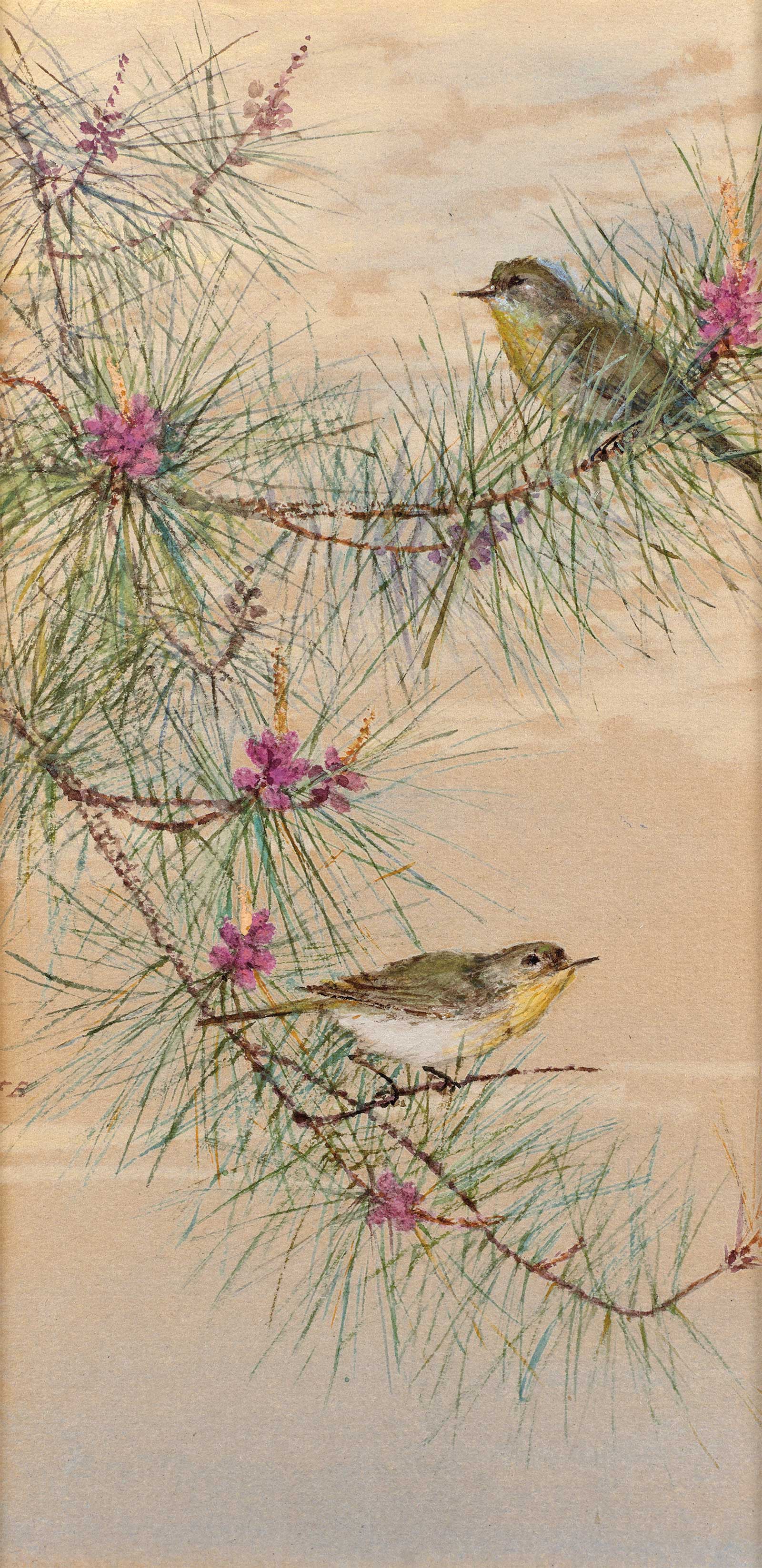
Among the artworks by women artists currently available at Debra Force Fine Art, Inc., in New York City are a watercolor by Fidelia Bridges and a portrait in profile by Cecil Jay. A painter and illustrator best known for intimate views of birds, flowers, and grasses, Bridges achieved a level of success rare for an American woman artist of the 19th century. “Watercolor became her primary medium in the 1870s, and her compositions featuring small breeds of birds on tree branches were made popular through reproductions as cards and calendars by the chromolithographer Louis Prang,” notes the gallery, adding that the present piece, Philadelphia Viero was likely made for Prang. Jay was most well-known and respected for her vibrant watercolor miniatures, although she was also recognized for her genre scenes and portraits in oil. Like Bridges, several of her paintings were reproduced as postcards.
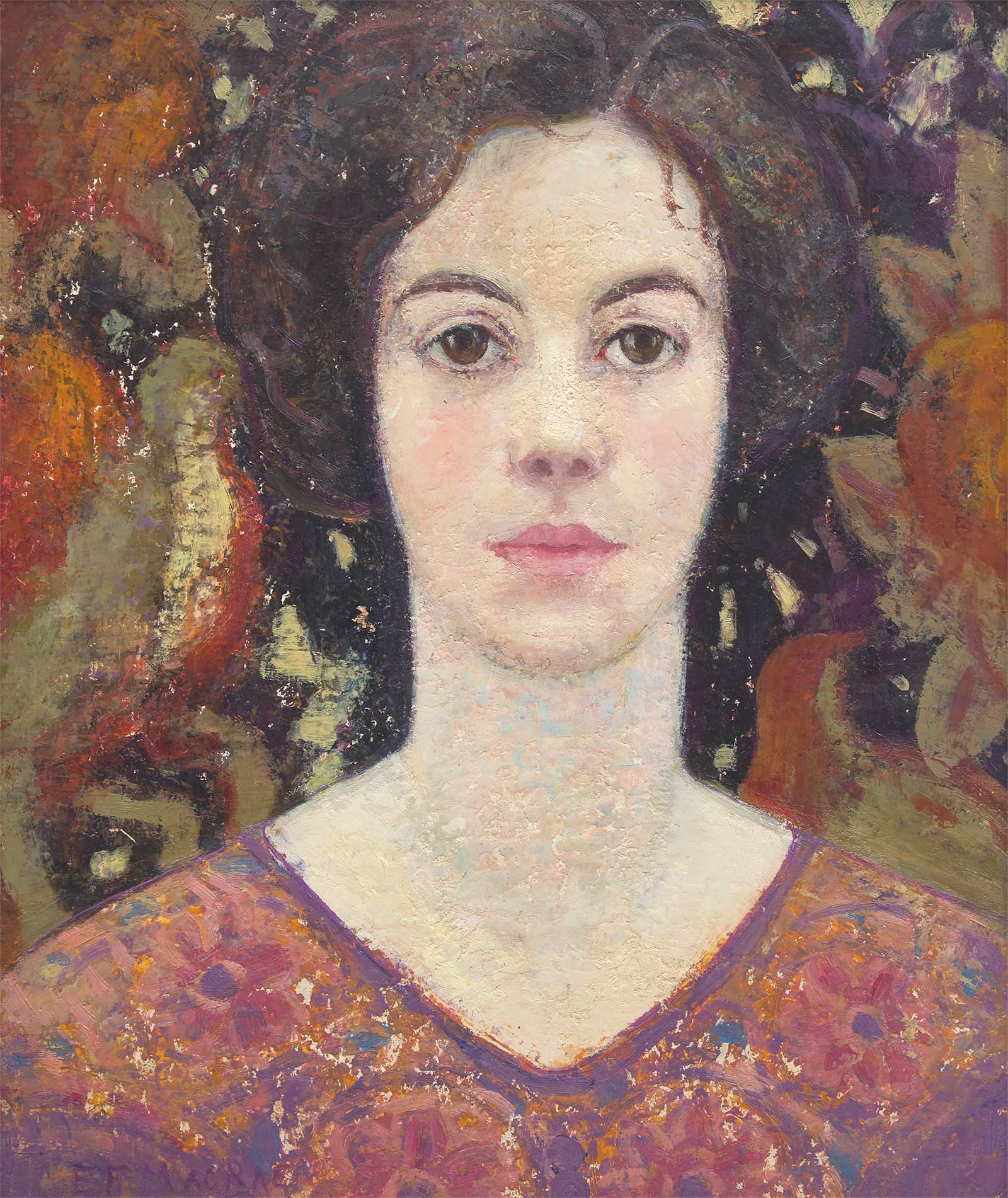
Freeman’s, Self-Portrait, 1919. Oil on board, 17 x 14 in. by Emma Fordyce MacRae (1887-1974). Available in Freeman’s American Art and Pennsylvania Impressionists sale on December 8. Estimate: $15/25,000
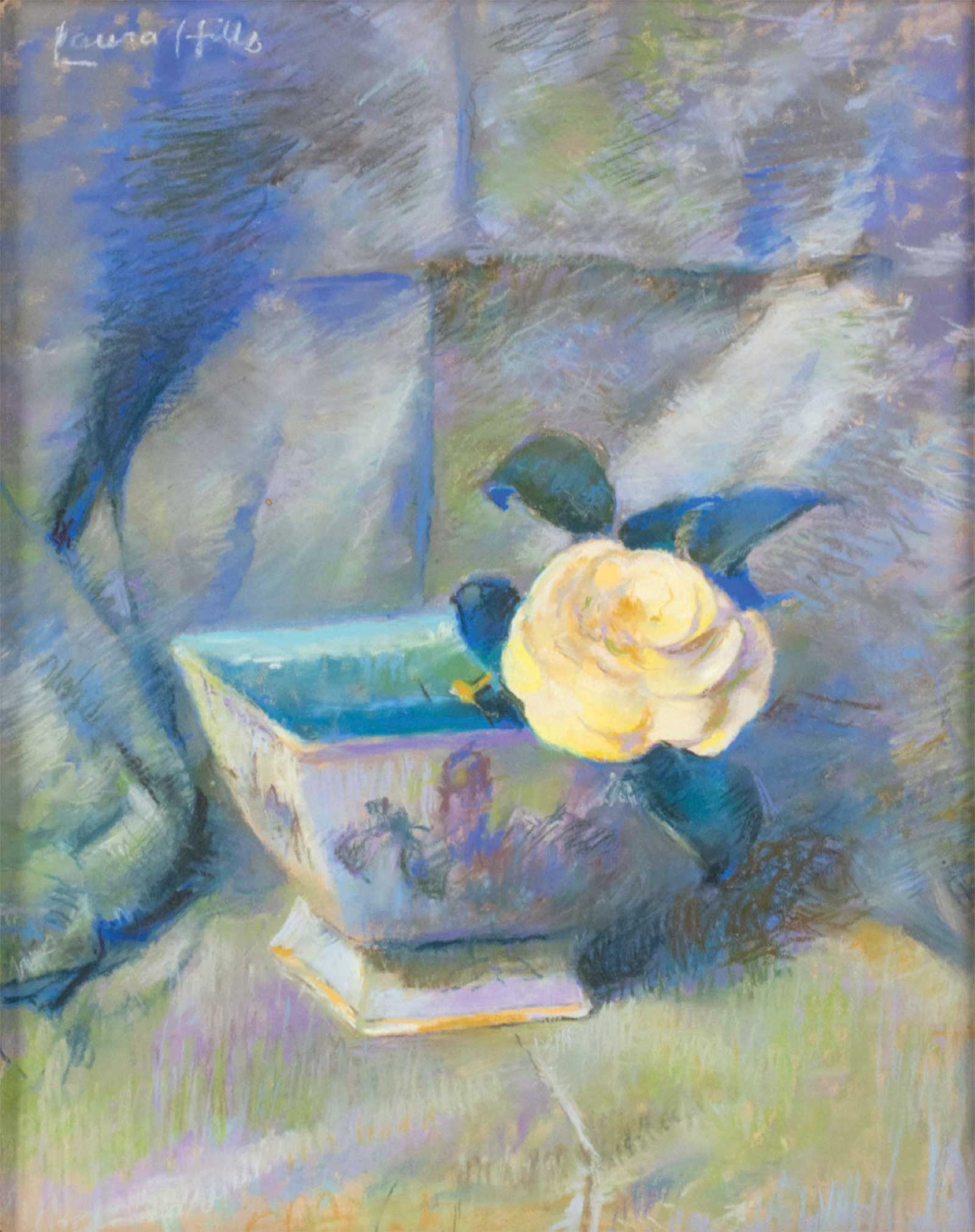
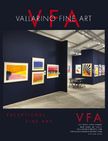
Vallarino Fine Art, White Camellia, ca. 1920. Pastel, 14½ x 11½ in., signed upper left, by Laura Coombs Hills (1859-1952).
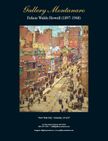
Gallery Montanaro, headquartered in Rockport, Massachusetts, specializes in American art from the late-19th century through the mid-20th century. Drawing from an expansive inventory, here the gallery highlights two paintings by distinguished female artists from the period. “The first example is a beautiful harbor scene by Jane Peterson (1876-1965), an artist celebrated for her bold, sun-drenched impressionistic palette, as seen here in this vibrant coastal scene of Gloucester Harbor, one of her most sought-after subjects,” notes the gallery.The second example is by New England impressionist Harriet Randall Lumis (1870-1953), from a highly-sought after period in her career. “This painting portrays a sweeping pastoral landscape of a winding river valley bordered by autumn-touched hills, rendered with confident, atmospheric color.”
Two highlights by women artists in Freeman’s December 8 American Art and Pennsylvania Impressionists sale are a winter landscape by Fern Isabel Coppedge (est. $50/80,000) and a 1919 self-portrait by Emma Fordyce MacRae (est. $15/25,000). About the latter, Adam Veil, Freeman’s vice president, head of department, American art, says, “The artist presents herself with direct, level eyes and an unadorned expression against a densely patterned, tapestry-like backdrop of warm oranges and olive greens that echoes the floral embroidery of her blouse–a decorative complexity that recalls her Art Students League training and her ties to the Cape Ann art colony.” Veil also notes that the painting is in excellent, unrestored condition and retains its original frame, and its impressive exhibition history. “It was shown at PAFA (1921), the Art Institute of Chicago (1922), the National Academy of Design (1923), and the Roerich Museum’s International Art Center.”
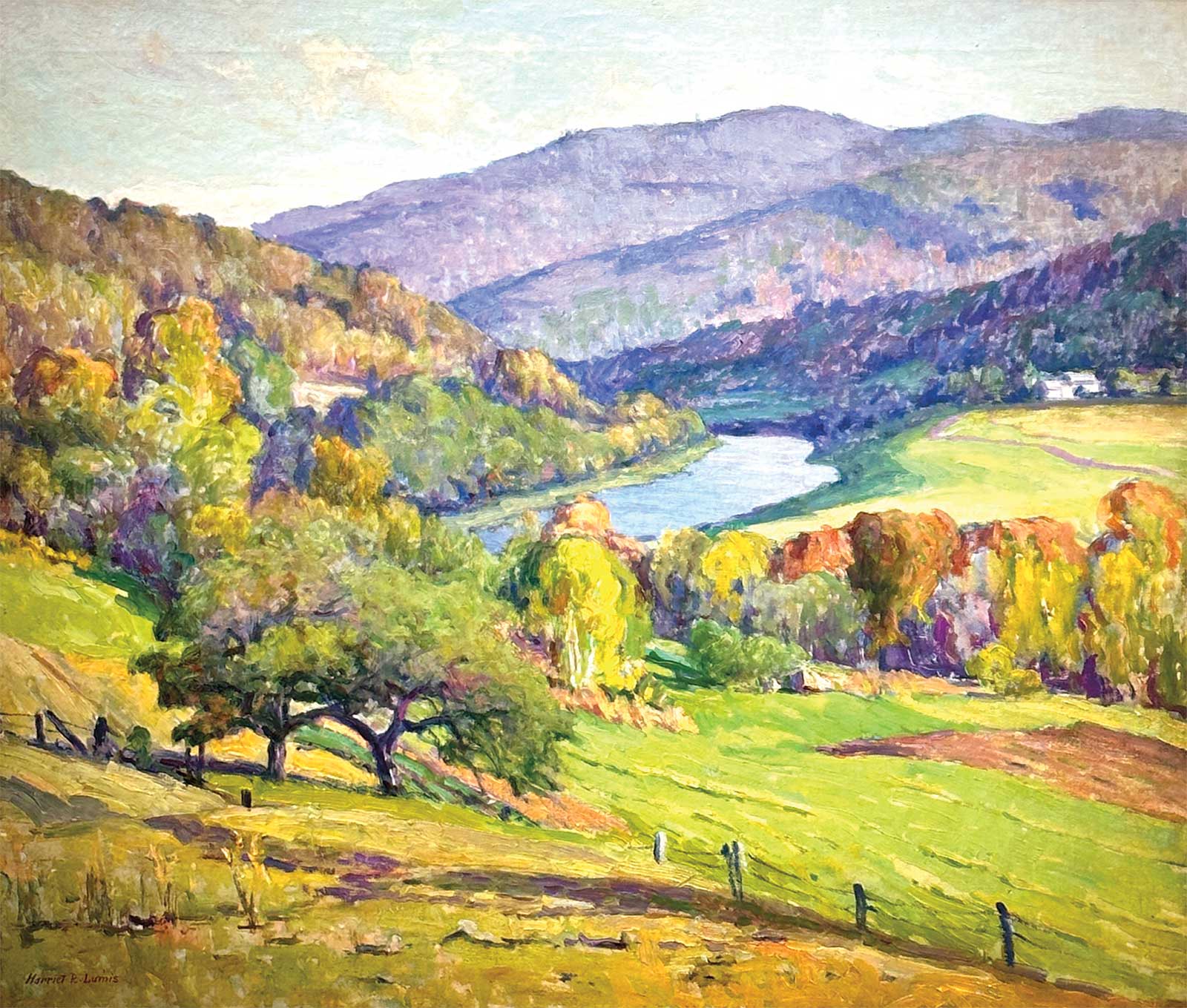
Gallery Montanaro, The Deerfield Valley. Oil on canvas, 24 x 28 in., by Harriett Lumis (1870-1953).
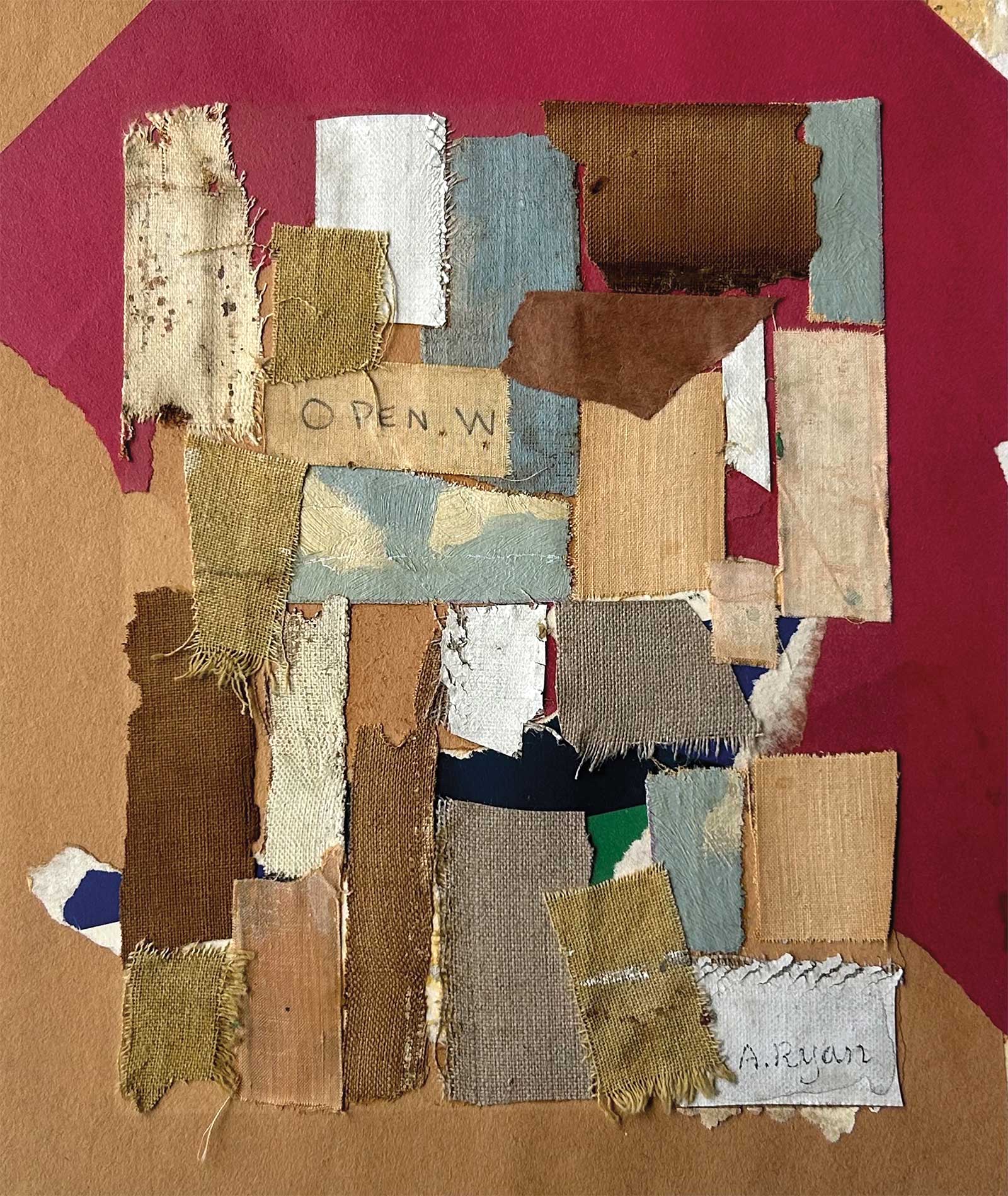
Vallarino Fine Art, Untitled, ca. 1950. Mixed media collage, 11½ x 9½ in., signed lower right, by Anne Ryan (1889-1954).
Vallarino Fine Art, a New York gallery specializing in post-war American abstract painters, is showcasing artworks by Laura Coombs Hills (18591952) and Anne Ryan (1889-1954). “Hills was a pioneering artist celebrated for her exquisite floral pastels and miniature portraits,” explains the gallery. “At a time when women faced considerable barriers in the art world, she established a distinguished career through her technical mastery and distinctive sensitivity to color and form. In White Camellia, Hills captures the quiet elegance of a single blossom, emphasizing its delicate petals and subtle tonal variations through the softness and immediacy of pastel…This painting exemplifies her delicate yet assured approach to floral subjects, offering a glimpse into the artistry of an important woman working at the turn of the 20th century. Ryan was an innovative modernist whose intimate collages helped expand the possibilities of abstraction in the mid-20th century,” continues the gallery. “Her collages are distinguished by their tactile surfaces, subtle harmonies of color, and intricate interplay of texture, shape, and line. In Untitled, dating to around 1950, Ryan’s choice of mixed media reflects her interest in transforming humble materials into carefully considered works of modern art.”
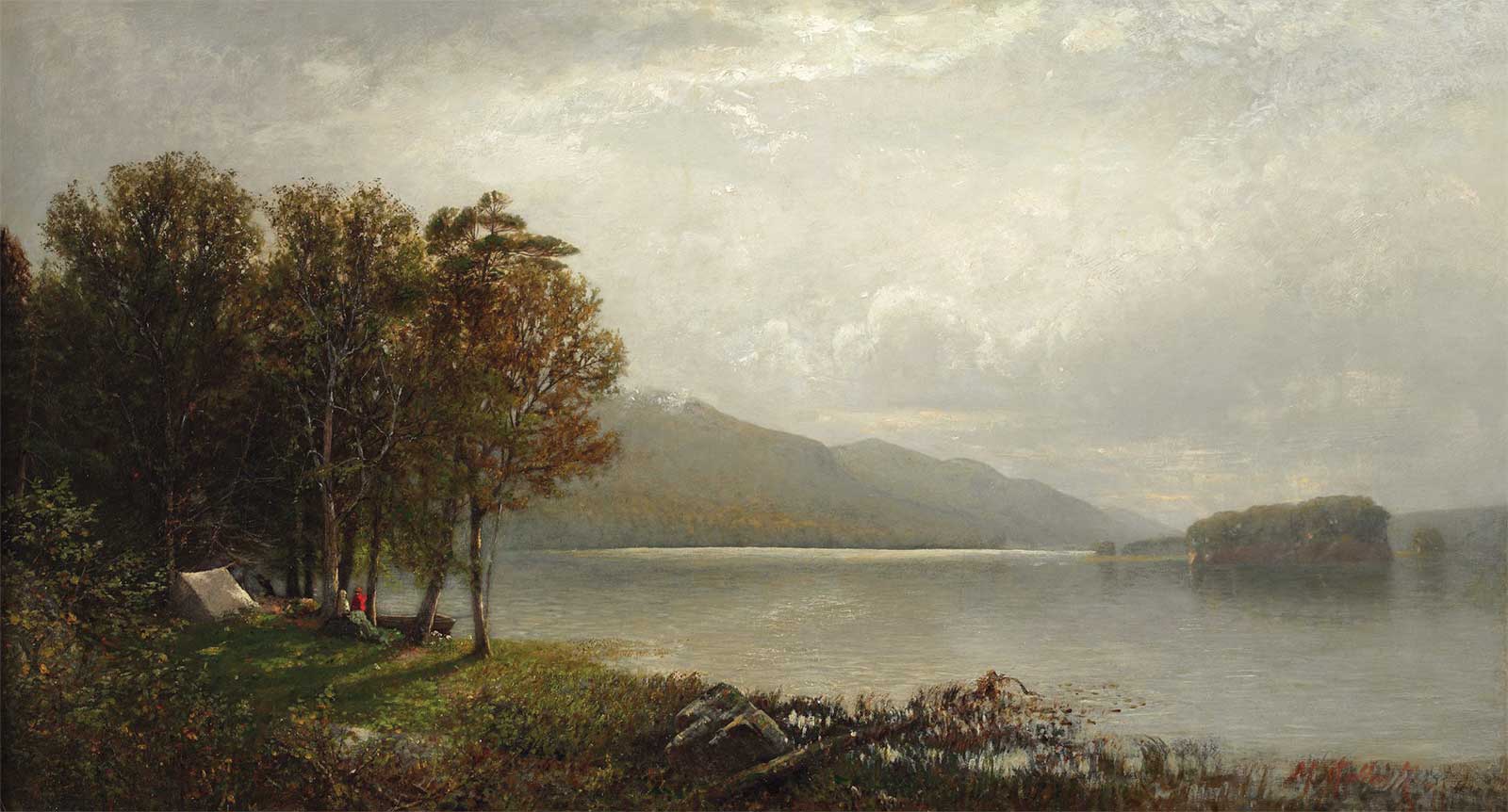
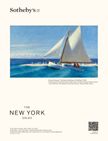
Sotheby’s, Campsite in the Adirondacks. Oil on canvas, 20 x 36 in., signed M. Kollock (lower right), by Mary Kollock (1840–1911).
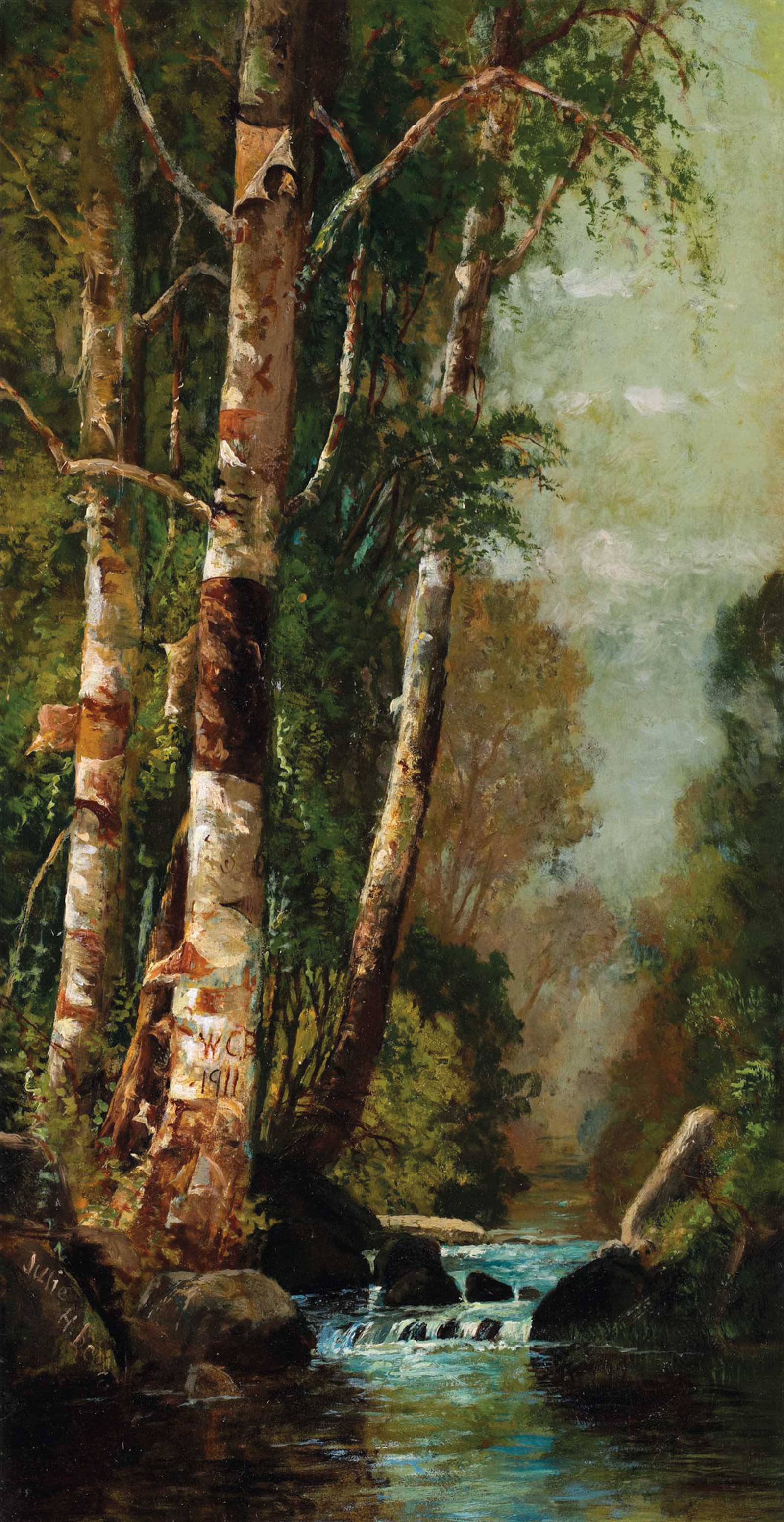
Sotheby’s, Birch Trees beside a Brook, 1911. Oil on board, 20 x 10 in., signed Julie H. Beers (lower left); dated 1911 and inscribed W.C.B. (lower center), by Julie Hart Beers (1834-1913).
Mary Kollock (1840-1911) was among the artists featured in Sotheby’s private selling exhibition Illuminating Nature: Women of the Hudson River School, celebrating a generation of pioneering 19th-century women artists whose work engages directly with the natural grandeur and spiritual resonance of the American landscape. “Kollock was an accomplished and extensively trained painter, studying first at Philadelphia Academy of Fine Art and the National Academy of Design in New York City before continuing her education abroad to study at the Parisian Académie Julian,” says a Sotheby’s representative. “Campsite in the Adirondacks illustrates her exquisite sensitivity to the nuances of light, demonstrating a refined ability to convey atmosphere, depth and the quiet beauty of the natural world.” The exhibition was anchored by five works by Julie Hart Beers, including Birch Trees Beside a Brook. Born into a Scottish family in Massachusetts, Beers moved to New York City from Massachusetts in 1853, where her older brothers, William Hart and James McDougal Hart, were establishing themselves as prominent members of the burgeoning Hudson River School. “There, Beers likewise began cultivating her own artistic practice, exhibiting at leading institutions including the Brooklyn Art Association and the Pennsylvania Academy of the Fine Arts,” notes Sotheby’s. “As her reputation grew, she turned increasingly to teaching, mentoring groups of young women artists, including her own nieces, and leading sketching excursions throughout the Hudson Valley and the mountains of New England. This work brilliantly showcases the artist’s unique exploration of the American wilderness.”
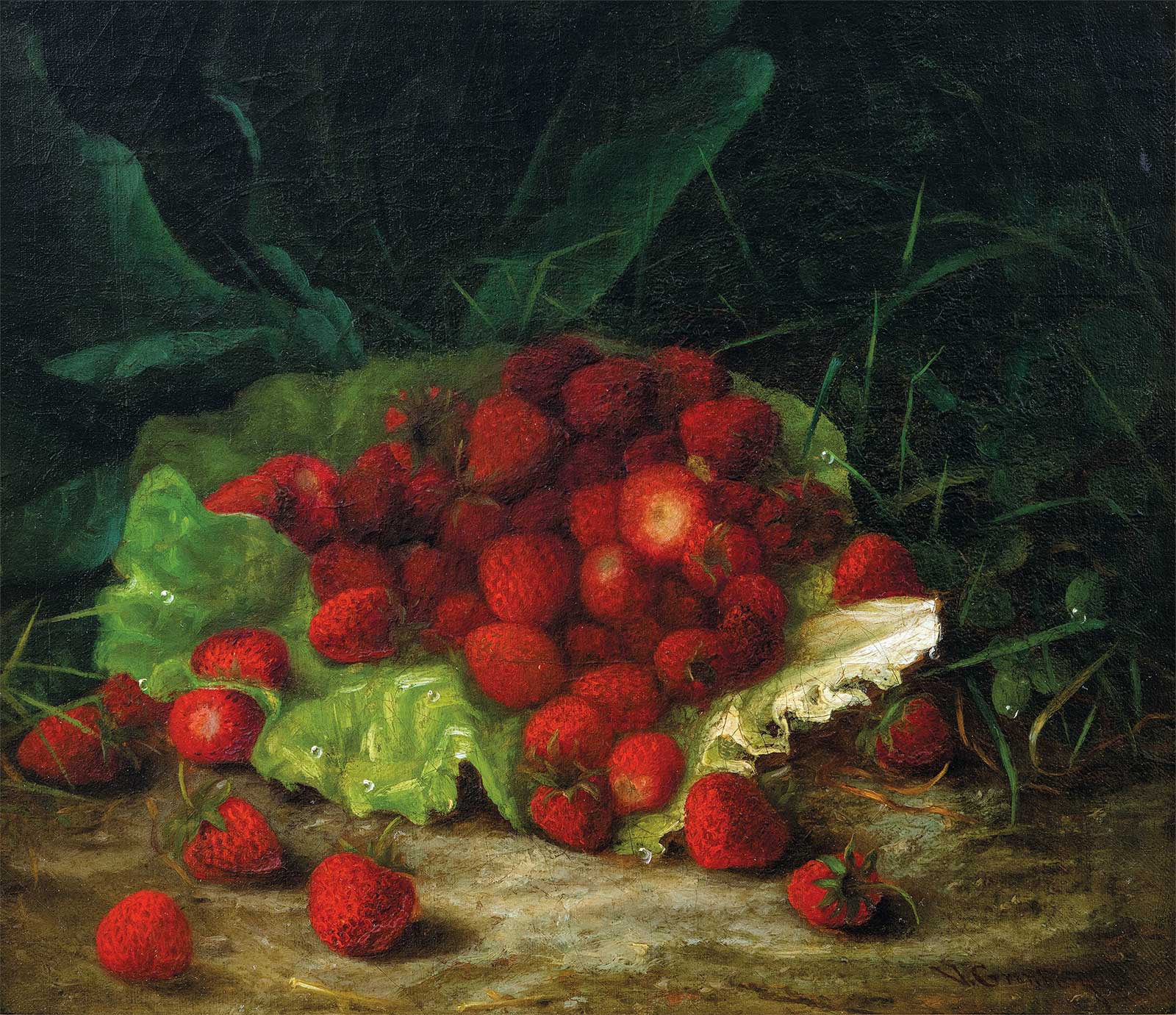
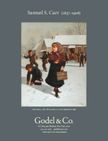
Godel & Co., Strawberries, 1860. Oil on canvas, 11 x 13 in., signed lower right: V. Granbery, by Virginia Granbery (1831-1921).
Two luscious still lifes by Virginia Granbery (1831-1921) are currently available at Godel & Co. Inc., a by-appointment gallery in Bedford, New York. Granberry was born in Norfolk, Virginia, and her family moved to New York while she was still young. She studied at the Cooper Institute and the National Academy of Design. “Although she painted portraits, landscapes, and animal pictures, she was principally known for her bright, crisp still lifes of fruit and flowers, which were widely distributed as chromolithographs by L. Prang & Co.,” explains the gallery. “She taught at the Packer Institute in Brooklyn from 1871 to 1882, and shared a studio with her sister, the still-life and landscape painter Henrietta Augusta Granbery.”
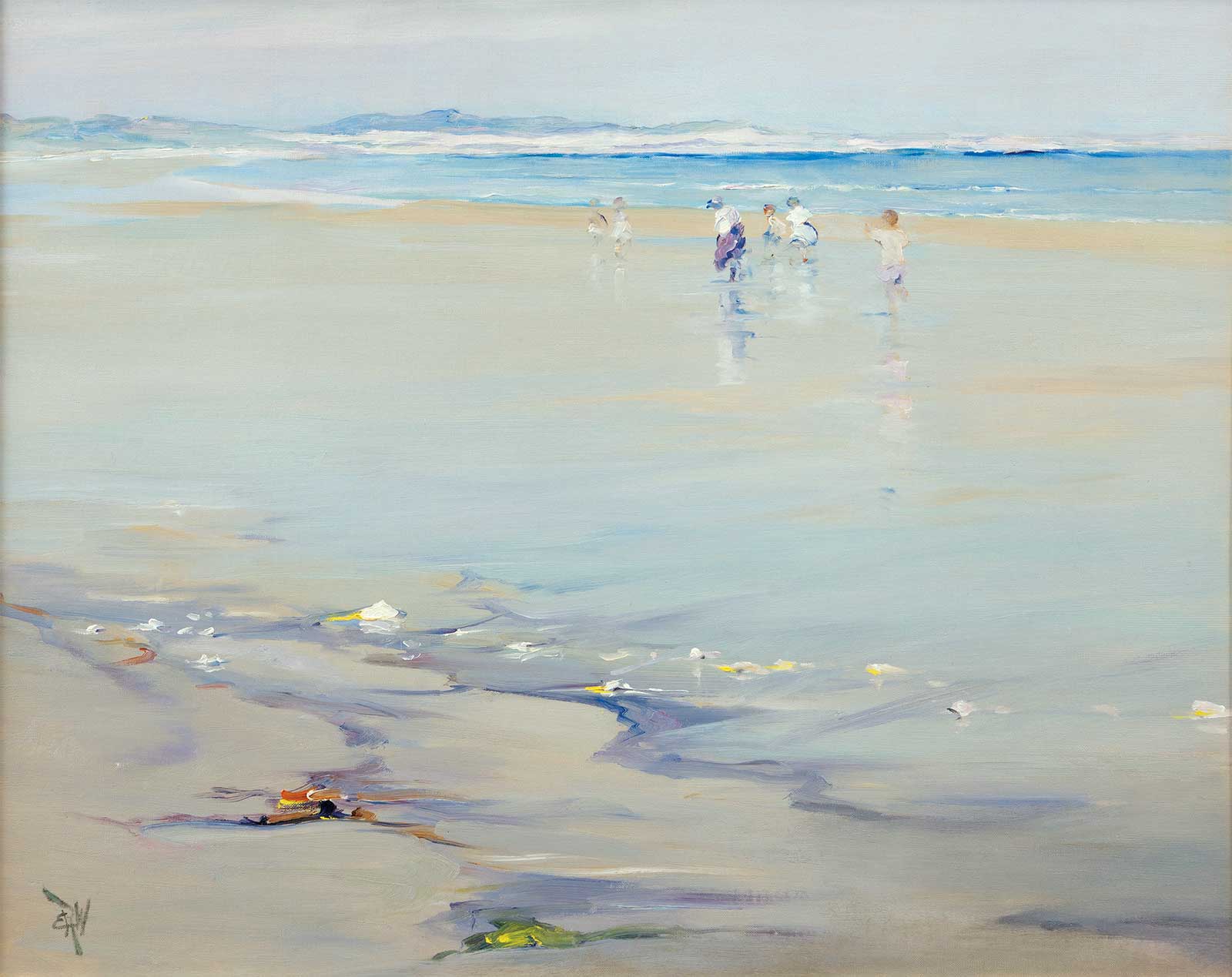
Vose Galleries, On the Beach at Annisquam. Oil on canvas, 24 x 30 in., monogram lower left: EWR, by Elizabeth Wentworth Roberts (1871-1927).
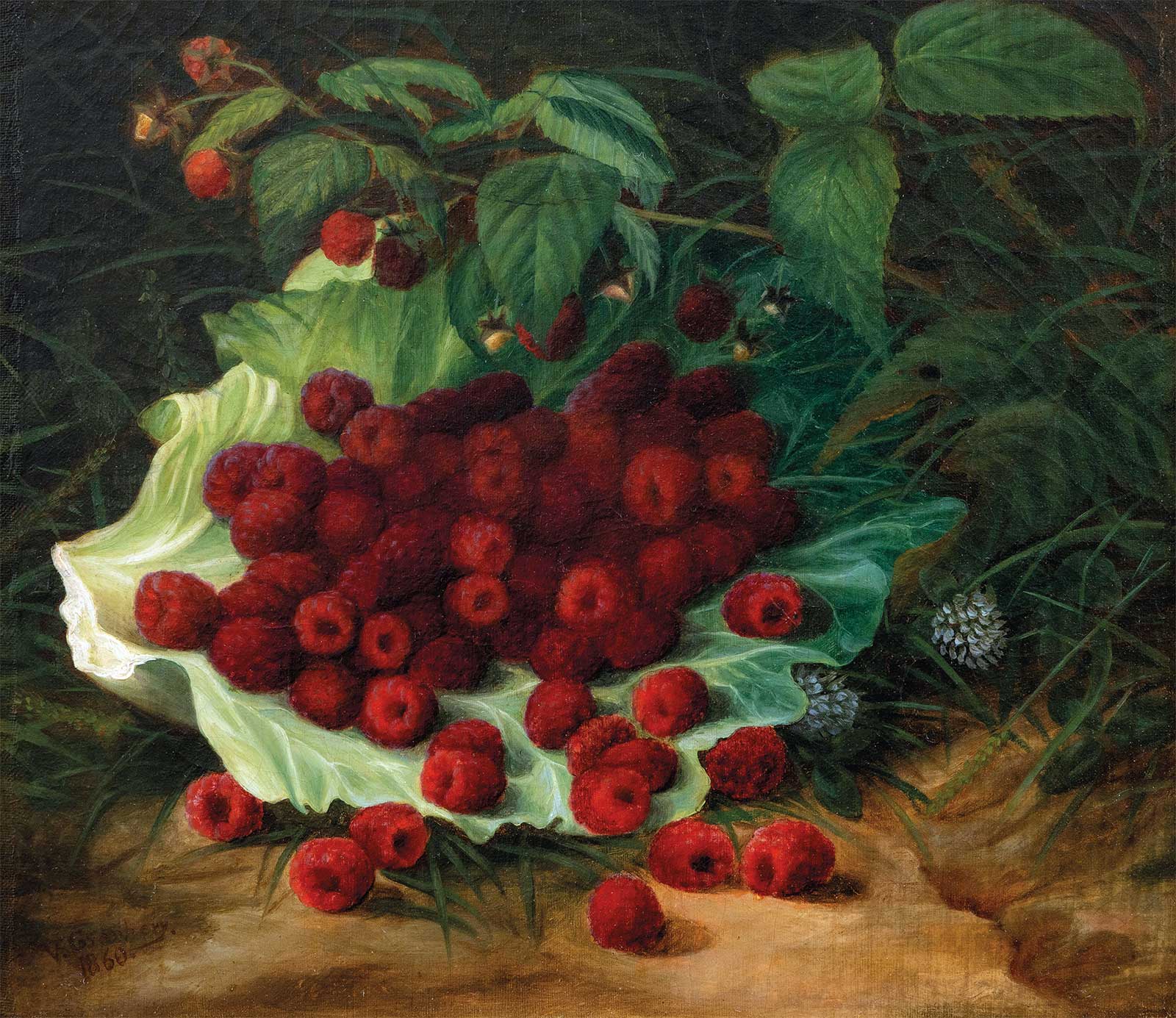
Godel & Co., Raspberries, 1860. Oil on canvas, 11 x 13 in., signed and dated lower left: V. Granbery. / 1860, by Virginia Granbery (1831–1921).
For more than a century, Vose Galleries has played an important role in championing women artists whose achievements were too often overshadowed during their lifetimes. This tradition is reflected in two exceptional works by Elizabeth Wentworth Roberts and Jane Peterson, artists whose reputations continue to grow through ongoing scholarship, museum interest, and collector demand. Roberts’s On the Beach at Annisquam, exhibited in her landmark 1917 Figures on the Sand exhibition and retained within the same family for generations, exemplifies the luminous coastal scenes that established her as one of New England’s most accomplished painters. Likewise, Peterson’s Casina Delle Rose (Red Palace, Venice) was sold through Vose Galleries during the gallery’s first exhibition of her work in 1925, and has remained in the original owner’s family ever since. Together, these remarkable paintings underscore the lasting contributions of two pioneering American women artists whose work continues to resonate with audiences today.
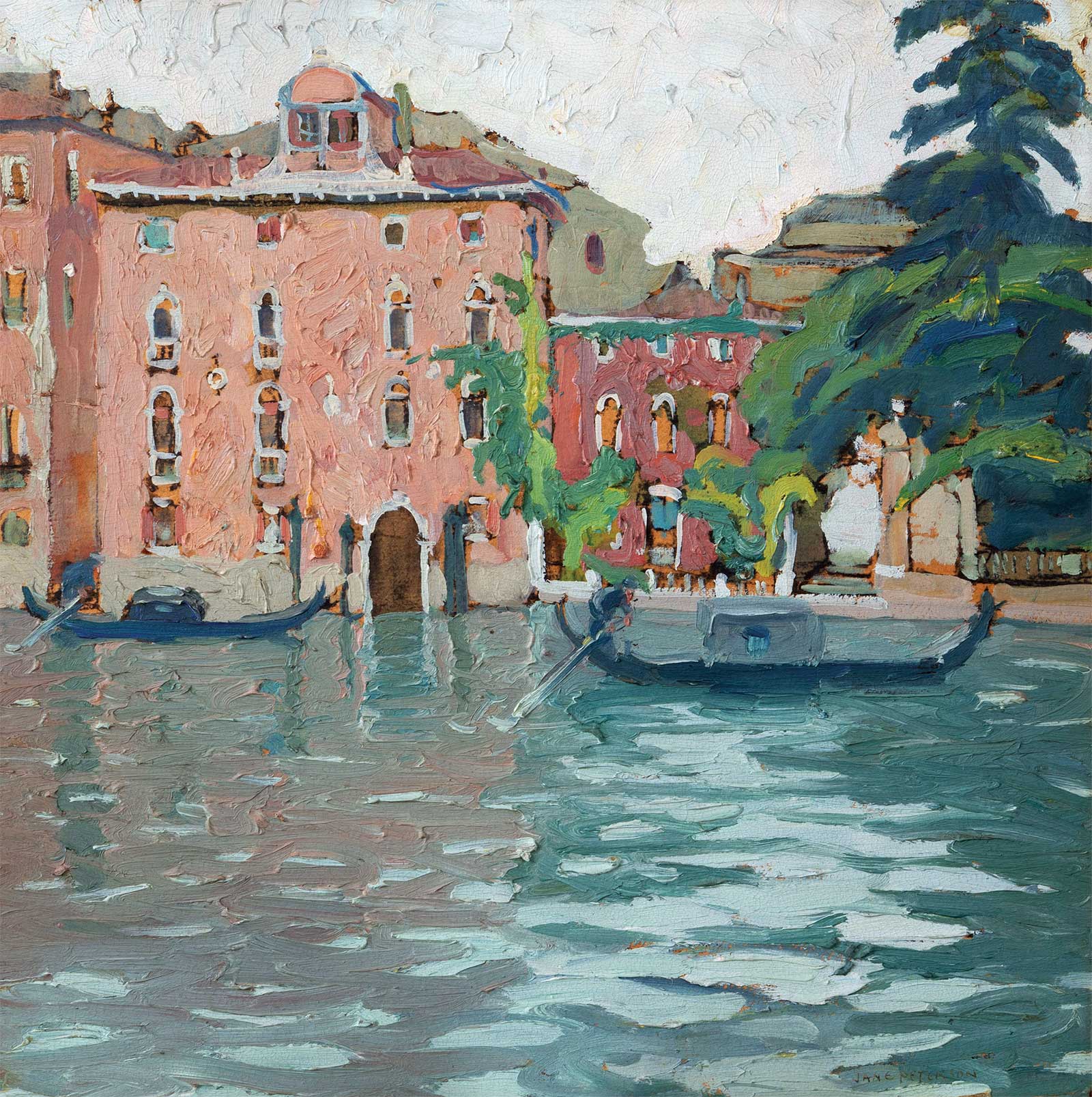
Vose Galleries, Casina Delle Rose (Red Palace, Venice). Oil on board, 18 x 18 in., signed lower right: Jane Peterson, original Italian sgraffito frame, by Jane Peterson (1876-1965).
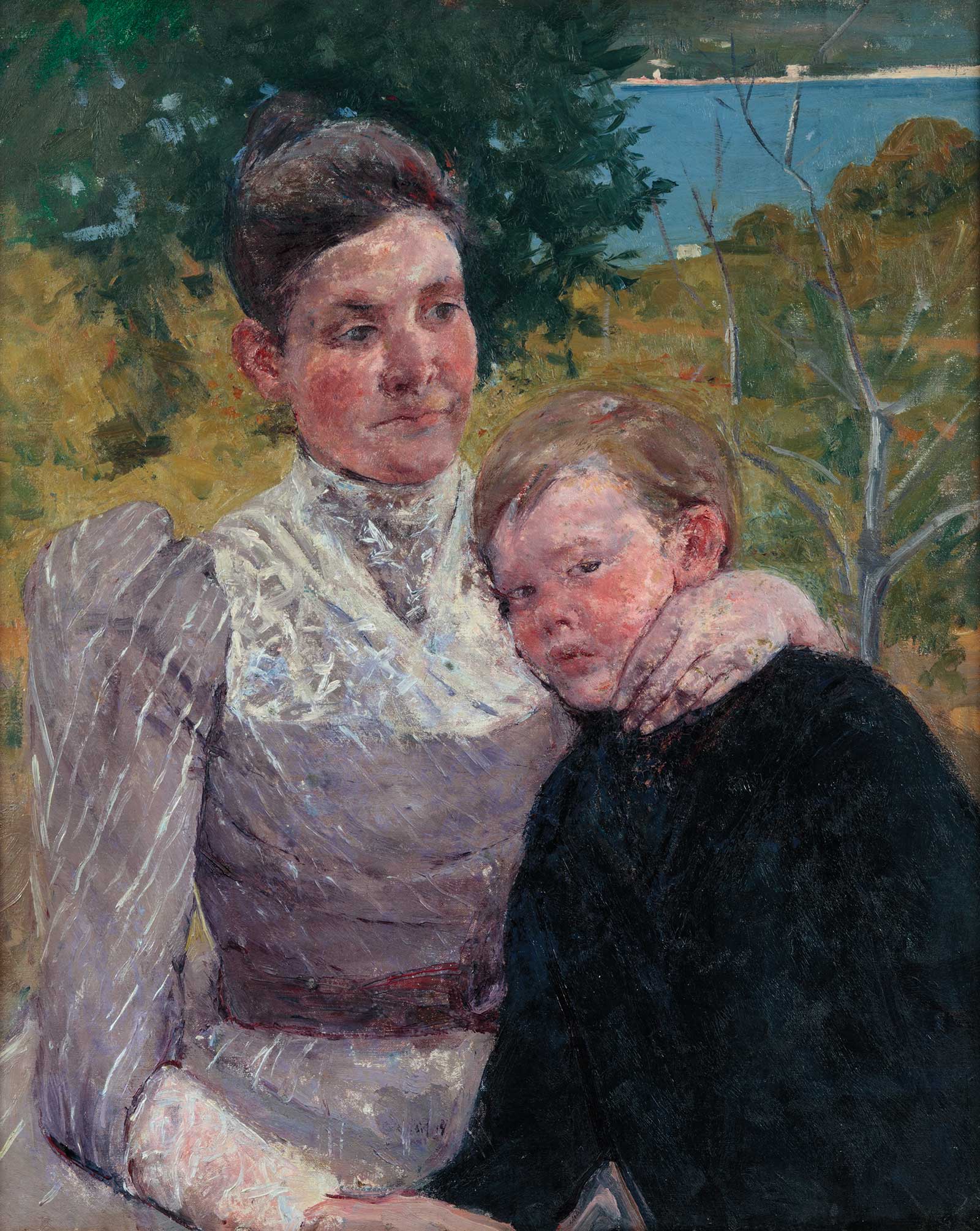
Bruce Museum, Jenny Cassatt and Her Son, Gardner, 1895-96. Oil on canvas, by Mary Cassatt (1844-1926). The Newark Museum of Art, Purchase 1931 Felix Fuld Bequest Fund, 31.221
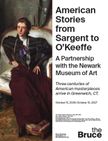
American Stories from Sargent to O’Keeffe, a new exhibition at the Bruce Museum in Greenwich, Connecticut, on view through fall 2027, traces how artists have shaped our understanding of America over more than two centuries. Organized around the themes of identity, belonging, belief and making, historic and contemporary works are placed in unexpected conversation, revealing connections across generations, experiences, and artistic traditions. A still life by Georgia O’Keeffe paired with a landscape by Albert Bierstadt, for example, considers nature not simply as scenery but as a force that shapes memory and self-understanding. Mickalene Thomas’s 2022 portrait of Tracey Norman, shown alongside John Singer Sargent’s Mrs. Charles Thursby (ca. 1897-1898), asks how portraiture shapes perceptions of identity, beauty and belonging across generations. Bringing together a range of media and artists—including artists of color, women, and self-taught artists—the exhibition offers a more nuanced and expansive view of American art and the many experiences that have shaped it.
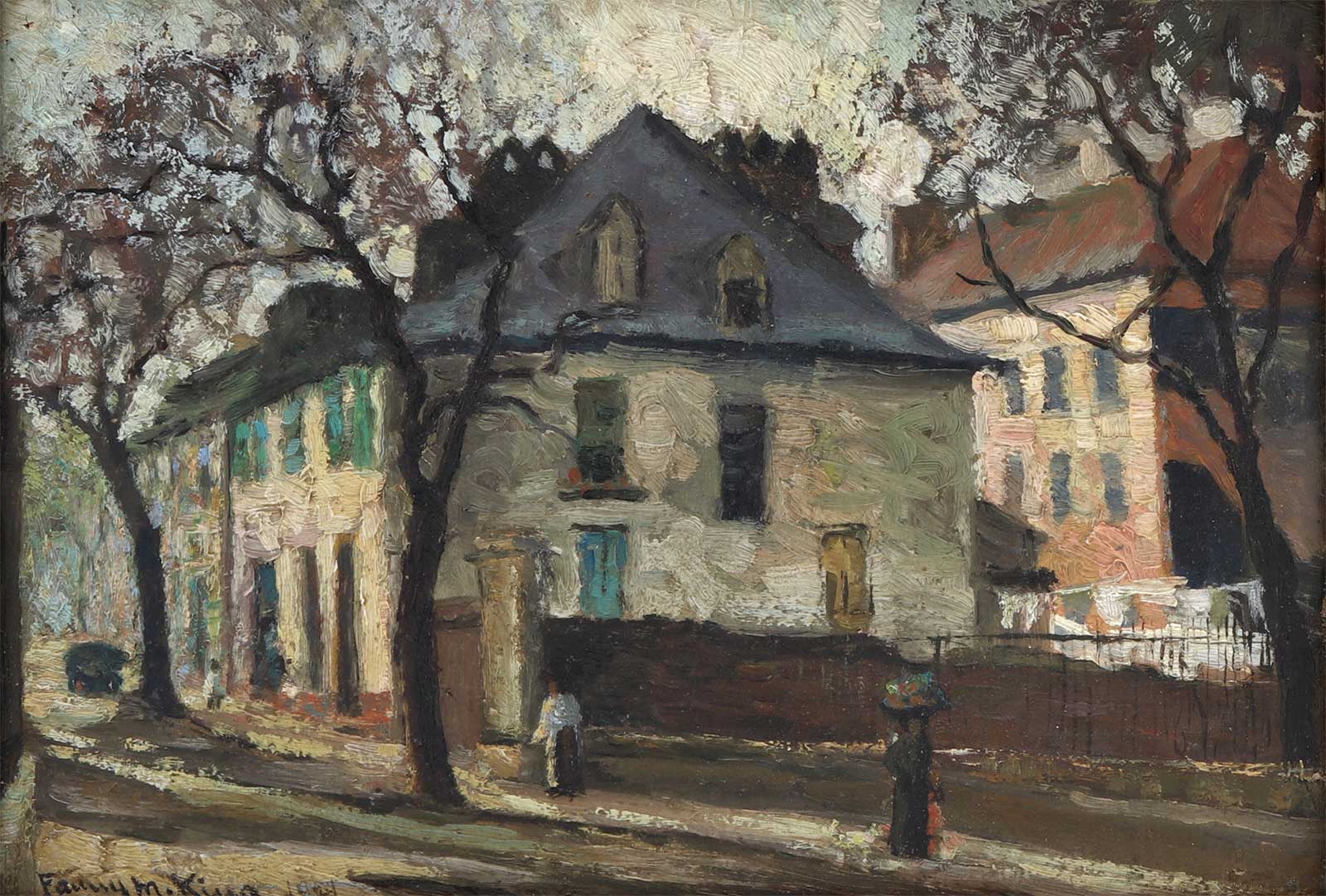
Leland Little Auctions, Southern Street Scene, 1924. Oil on board, 8½ x 12¼ in., signed, by Fanny Mahon King (1865-1952). Available in Leland Little’s Fine Art Auction on December 9.
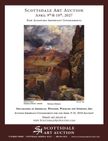
Gene Kloss’s watercolor The Procession was among the lots in Scottsdale Art Auction’s spring sale in April 2026, where it sold for $9,600. “Born Alice Geneva Glasier in Oakland, California, in 1903, Gene Kloss became one of the Southwest’s most accomplished printmakers,” explains the auction house. “Traveling through the Southwest with her husband, writer and poet Phillips Kloss, she brought a small etching press and found lasting inspiration in the region. The couple eventually settled in Taos, New Mexico, building an adobe home and studio. Though Kloss also painted in oil and watercolor, her copperplate etchings became her greatest achievement. Applying acid directly to plates with fine brushes, she created subtle tonal gradations, rich shadows, and luminous whites. Over a career spanning more than 50 years, Kloss earned numerous awards, membership in the National Academy of Design, and entry into major collections, including the Metropolitan Museum of Art and Smithsonian Institution.
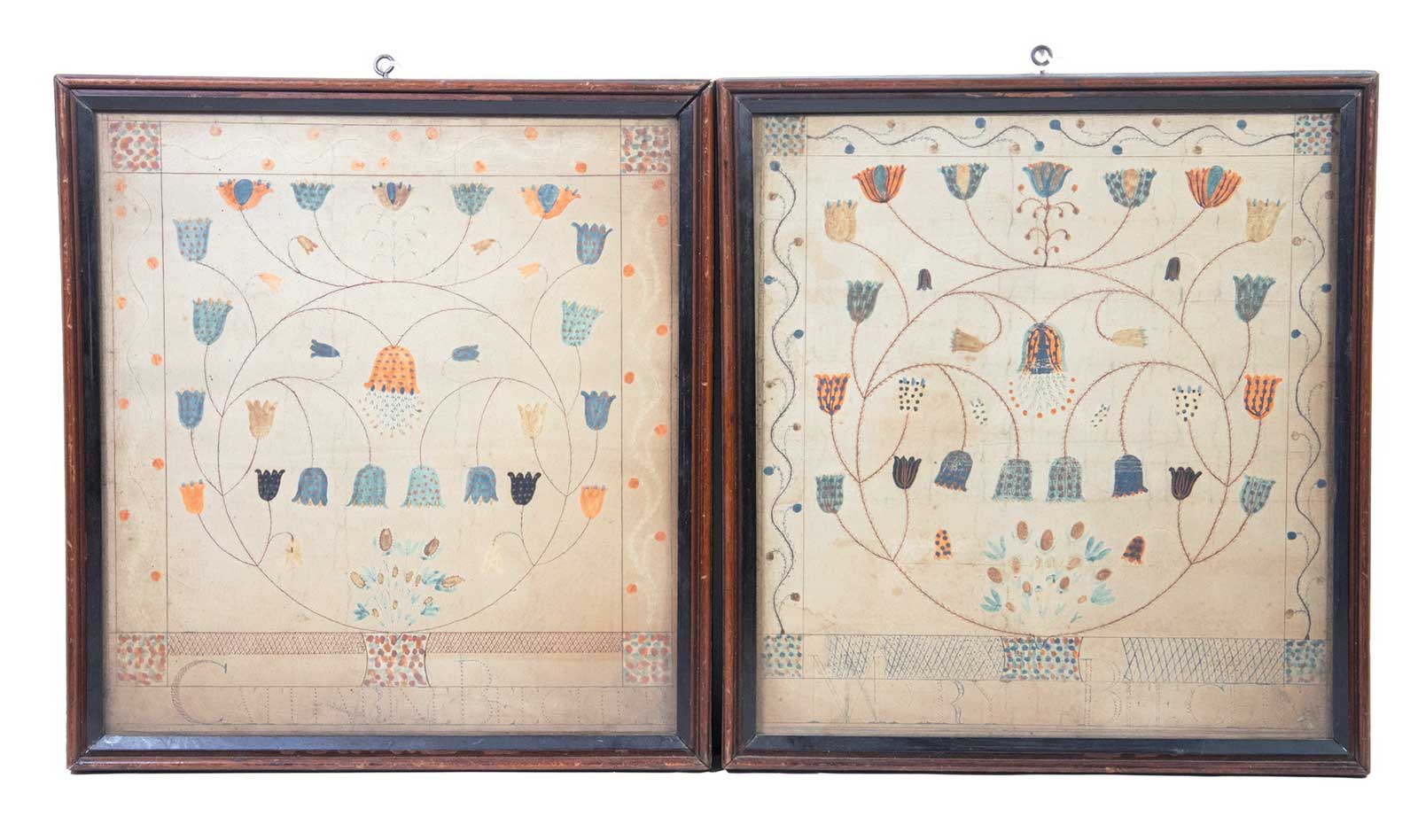
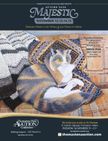
Thomaston Place Auction Galleries, Untitled. Paint on paper, each: 15 x 14 in., by Catharine and Mary Beecher. Available in the Autumnal Majestic Auction November 12 to 15. Estimate: $2/3,000
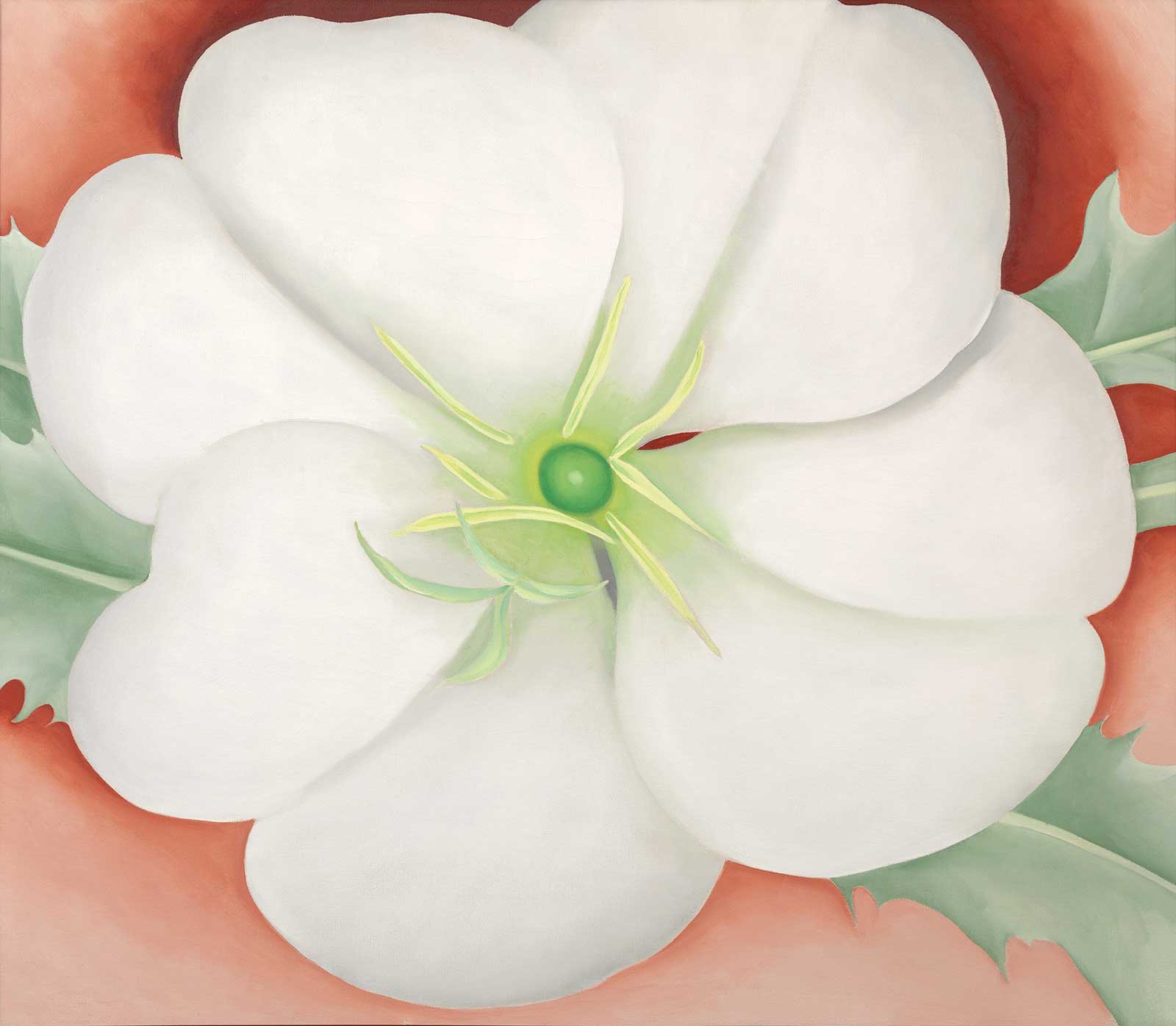
Bruce Museum White Flower on Red Earth, No. 1, 1943. Oil on canvas, 26 x 30 in., by Georgia O’Keeffe (1887-1986). The Newark Museum of Art, Purchase 1946 John J. O’Neil Bequest Fund, 46.157 © 2026 Georgia O’Keeffe Museum / Artists Rights Society (ARS), New York.
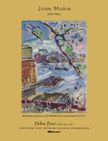
John Moran Auctioneers will present two of Jessie Arms Botke’s (1883-1971) signature peacock paintings in its California & American Fine Art sale on November 17. The present piece Black Peacocks, an oil and gold leaf on Masonite, has a pre-sale estimate of $50,000 to $70,000. While attending the Art Institute of Chicago Botke studied with Albert Herter, eventually leaving her hometown of Chicago for New York to work for him as a designer. During her time there she assisted with murals, traveling to San Francisco where she completed the St. Francis Hotel selection of birds mural. “Botke traveled extensively before settling in Santa Paula, California, where she became a Foundation of Western Art member,” notes the auction house. “Large birds were a favorite subject, with peacocks, swans, geese, and flamingos rendered in exquisite detail. Jessie Botke, painter and lover of nature and its inhabitants, is known for the magical quality she created by using gold leaf in her oils and watercolors.”
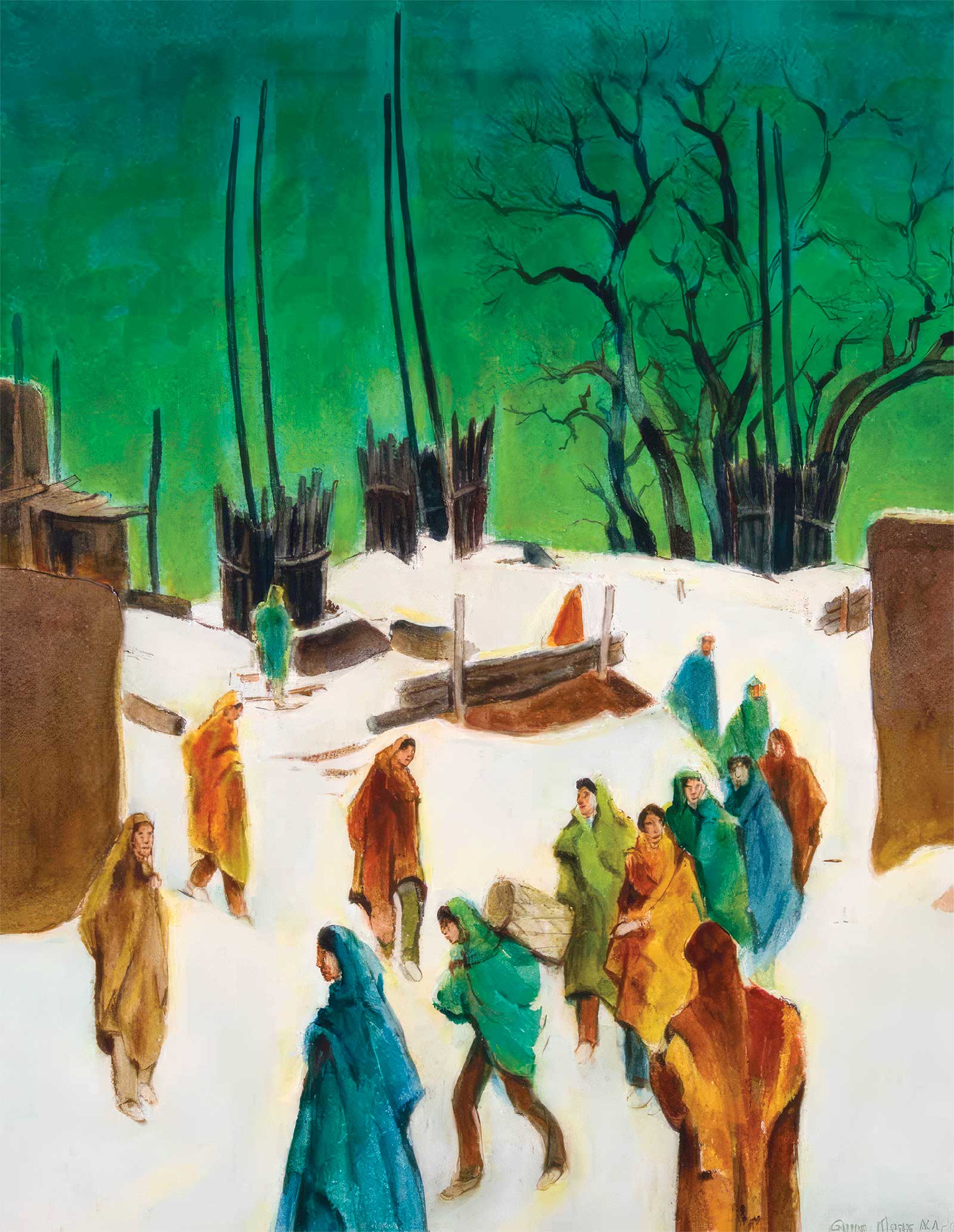
Scottsdale Art Auction, The Procession. Watercolor, 22 x 17½ in. by Gene Kloss (1903-1996). Appeared in Scottsdale Art Auction’s spring sale in April 2026. SOLD: $9,600
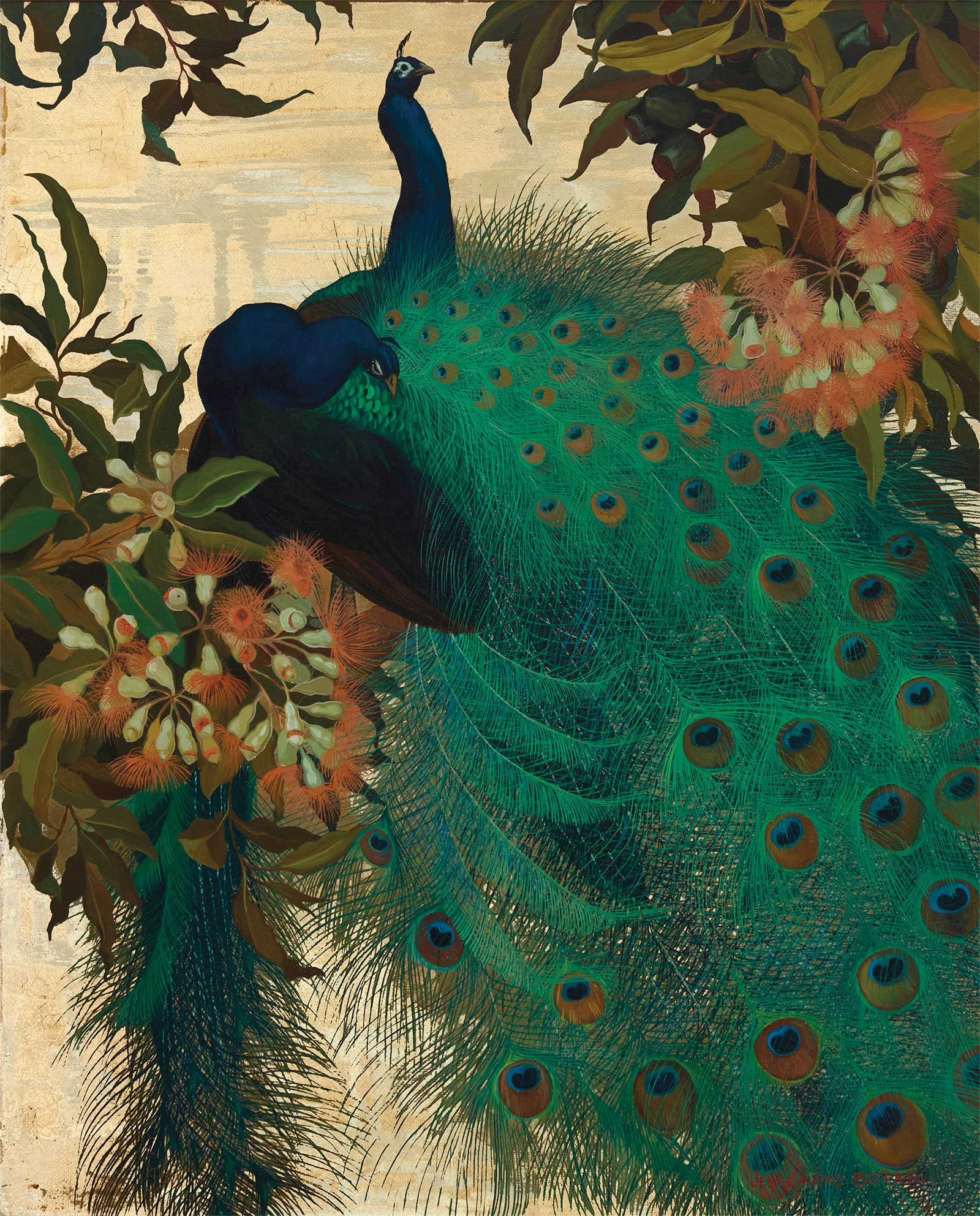
John Moran Auctioneers, Black Peacocks. Oil and gold leaf on Masonite, 34 x 26 in. by Jessie Arms Botke (1883-1971). Available in the California & American Fine Art sale on November 17. Estimate: $50/70,000
“Women artists have long brought distinctive perspectives and remarkable talent to American art, often forging successful careers despite the barriers they encountered,” notes a specialist at Leland Little Auctions. “Our upcoming Fine Art Auction on December 9 continues this celebration of women artists. Among the highlights is Grandma Moses, whose scenes of rural American life made her one of the nation’s most celebrated self-taught artists. Also featured is Fanny Mahon King, who found artistic inspiration in her native South Carolina and was among the influential artists who helped shape the Charleston Renaissance. Together, these artists reflect the varied experiences and achievements of women in American art, offering collectors an opportunity to discover and celebrate their enduring contributions.”
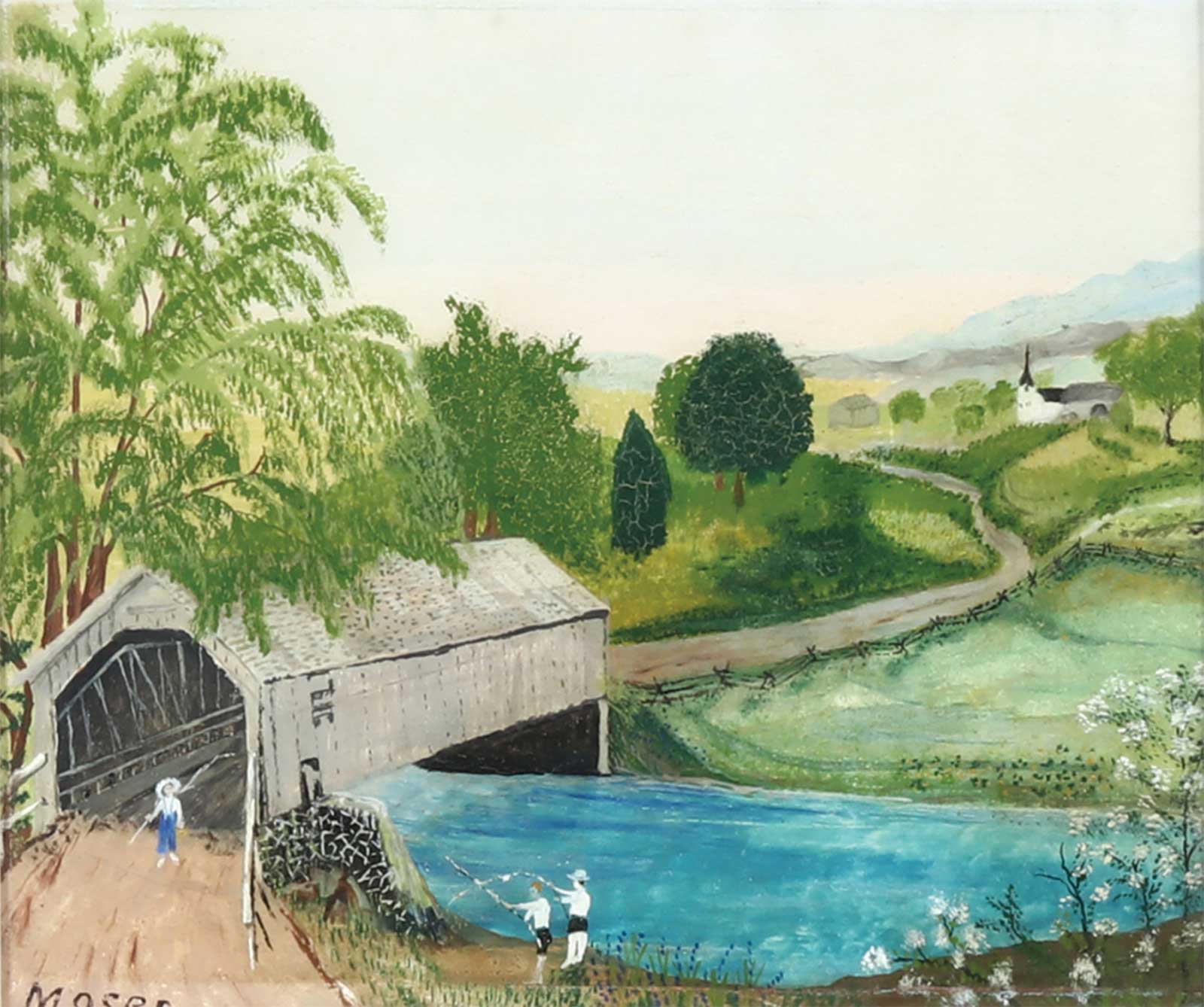
Leland Little Auctions, The Red Bridge, Cambridge, New York, ca. 1940. Oil on cardboard, 10¾ x 12¾ in., signed, by Anna Mary Robertson ‘Grandma’ Moses (1860-1961). Available in Leland Little’s Fine Art Auction on December 9.
Unique pieces from one of 19th-century America’s most influential families appear in November’s multi-day Autumn Majestic Auction at Thomaston Place Auction Galleries. “The Beechers of Massachusetts were leading figures in the cultural life of the era, and two paintings by Catharine and Mary Beecher offer a rare glimpse into the sisters’ artistic lives,” explains a Thomaston Place specialist. “Representing the popular imagery of the Tree of Life the two works share a common outline yet differ in their distinctive selection of color and detail, just as the sisters themselves branched into their own similar but distinctive fields of accomplishment as founders of the Hartford Female Seminary. Offered as a single lot, the two Beecher paintings are expected to realize a price between $2000 and $3000. A third Beecher sister is also represented in the sale, with a rare first edition of Harriet Beecher Stowe’s Uncle Tom’s Cabin also coming to the block, in addition to works by Helen Adelia Loosely Stone, Denny Sonke Winters and many others.
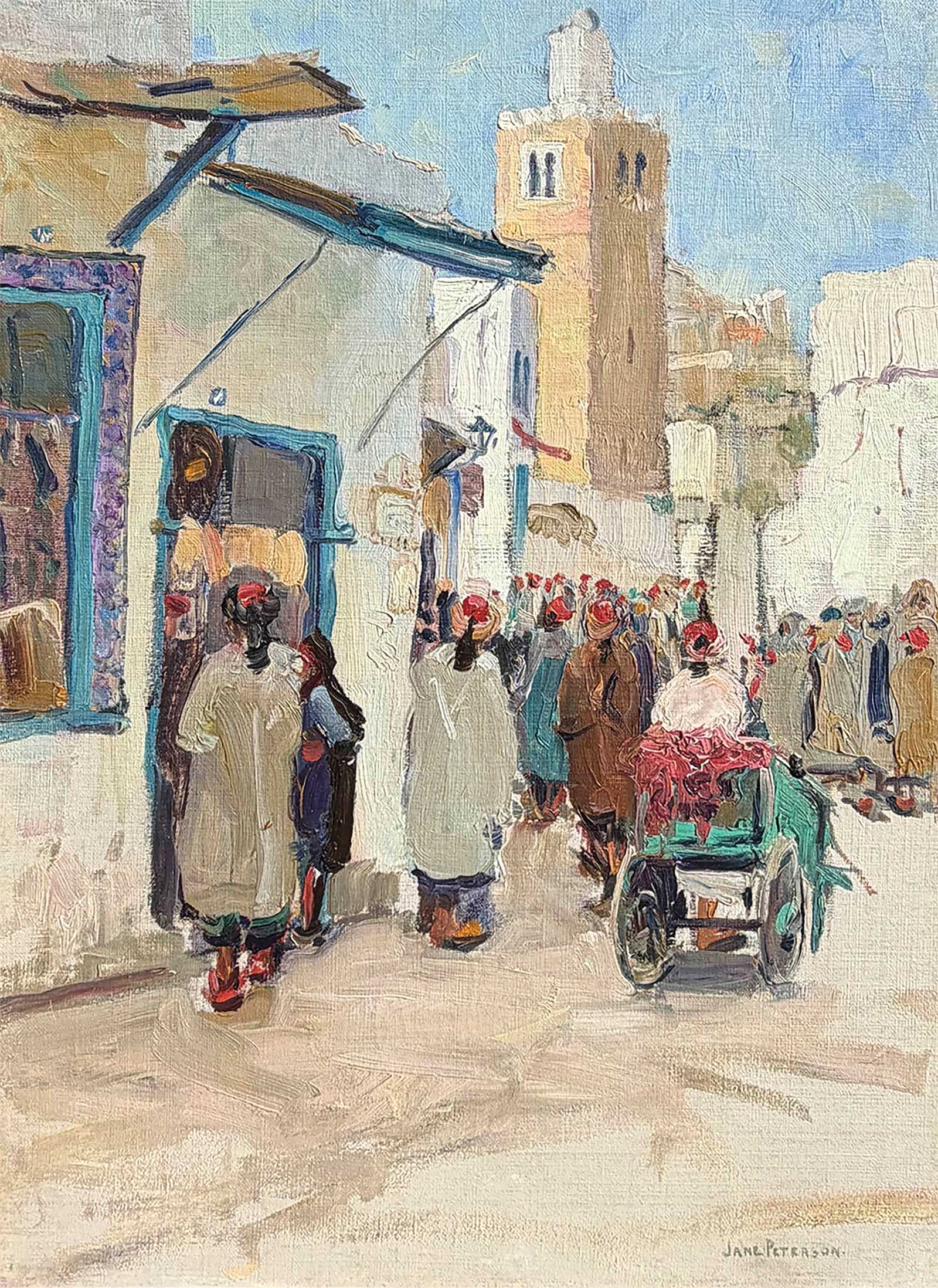
Hawthorne Fine Art, North African Street Scene, ca. 1908. Oil on canvas, 24 x 18 in., signed lower right, by Jane Peterson (1876-1965).
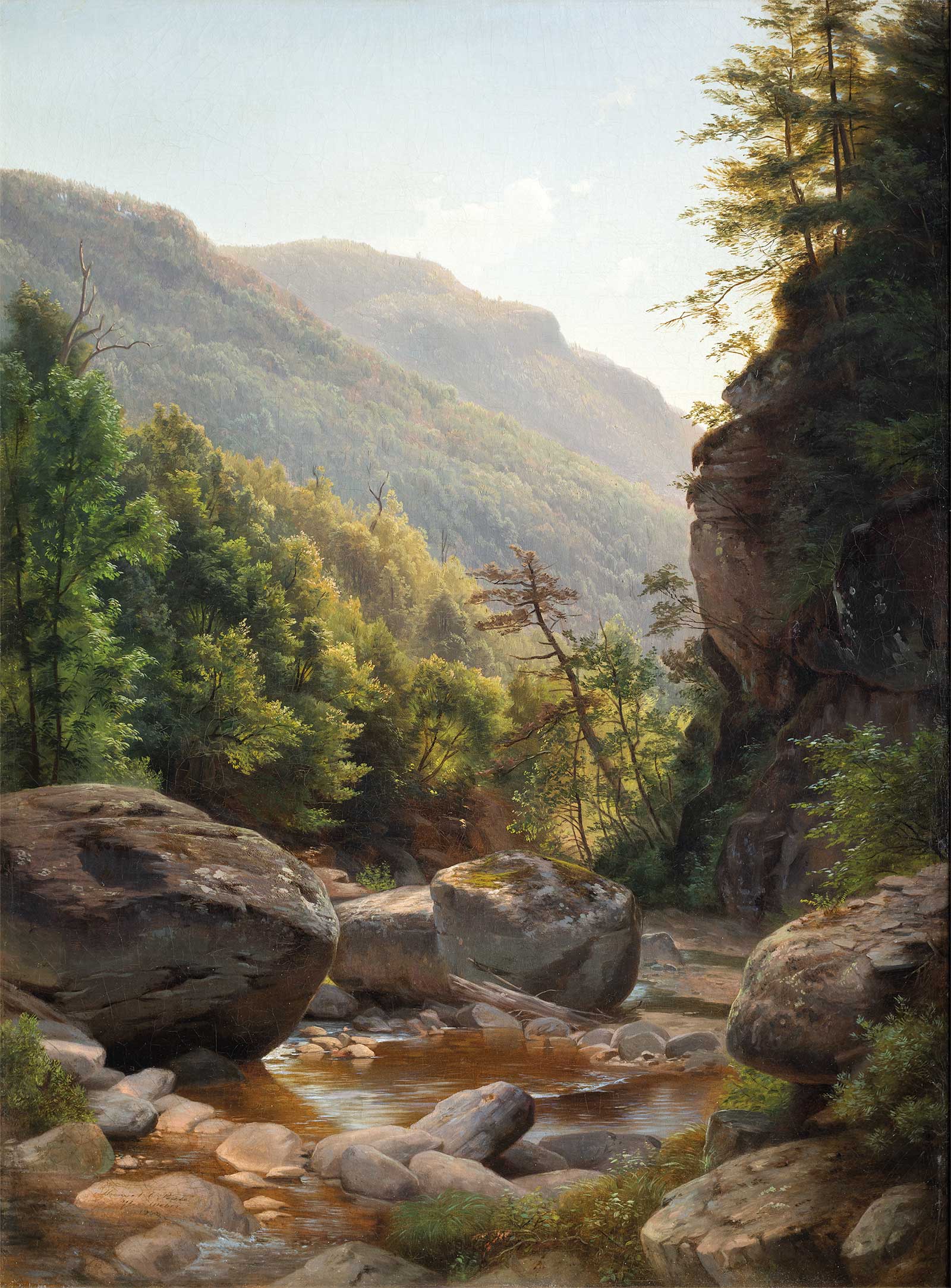
New Britain Museum of American Art, Kaaterskill Clove, 1858, Oil on canvas, 36 x 25 in., by Harriet Cany Peale (1800-1869). Purchase with funds generously provided by the Robert C. Vance Foundation, 2025.3.
Another piece by celebrated artist and teacher Jane Peterson, can be found at Manhattan-based gallery Hawthorne Fine Art. “In 1908, while on an extended tour of Europe, Peterson traveled to Spain and North Africa with fellow Illinois artist, Hallie Hyde (1880-1935),” shares the gallery. “It was during this trip that Peterson captured North African Street Scene, from circa 1908. Painted with Peterson’s characteristic loose brushwork and vivid palette, the lively scene features crowds of people in local dress and white, sun-bleached buildings with blue accents that echo the clear blue sky…A critic for the Grand Rapids Press said that Peterson’s work from Tunis and Algiers, ‘palpitates with sunshine and the gay colors of these picturesque lands.’”
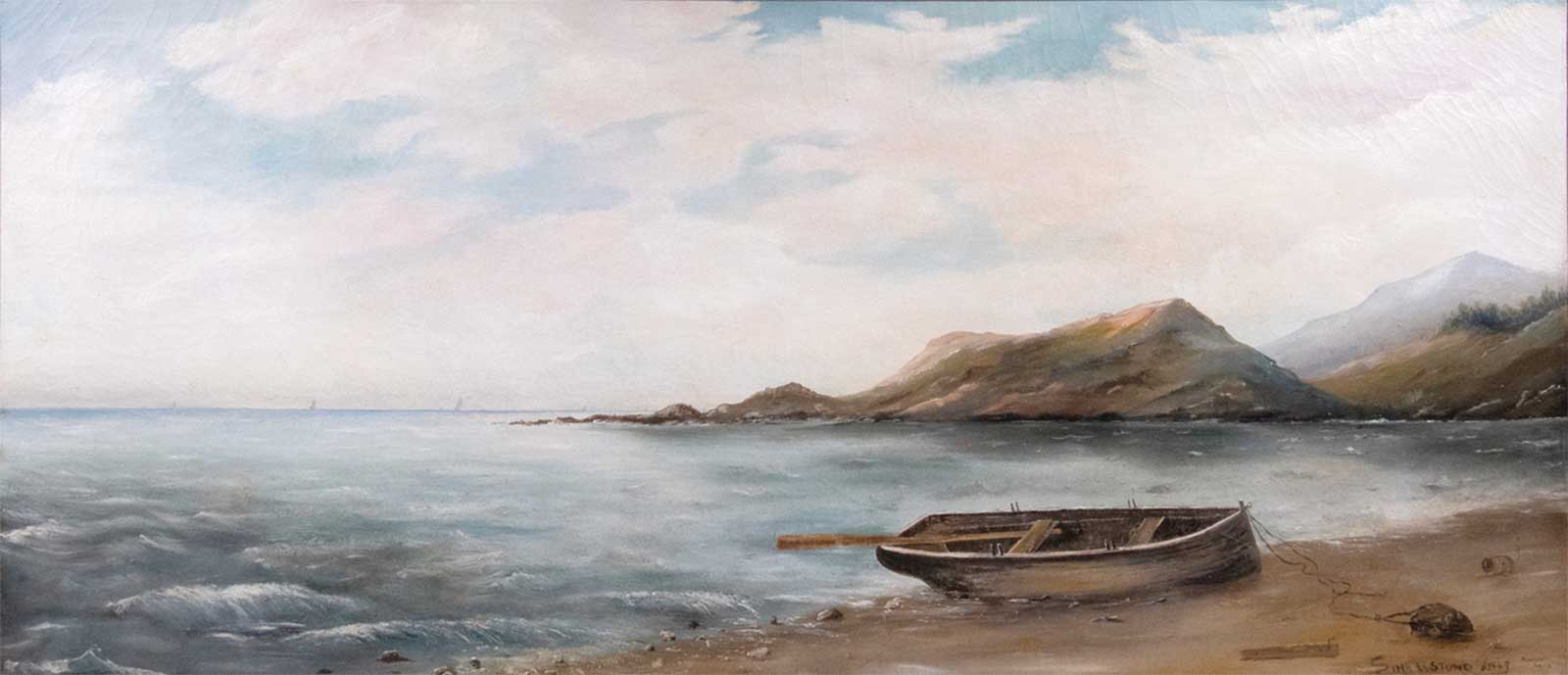
Thomaston Place Auction Galleries, Untitled. Oil on canvas, 26 x 60 in., by Helen Adelia Loosley Stone (1878-1954). Available in the Autumnal Majestic Auction November 12 to 15. Estimate: $2/3,000
A gem in the collection of the New Britain Museum of American Art in New Britain, Connecticut, is the masterful Kaaterskill Clove by Harriet Cany Peale (1800-1869). Born in Philadelphia, Harriet Cany Peale began creating art before studying under Rembrandt Peale (1778-1860), becoming his second wife in 1840. “The work depicts the rocky Kaaterskill creek, which runs through the eastern Catskill Mountains in New York State,” explains the museum. “Throughout the 19th century, the Clove—which describes a valley or gorge—was a favorite spot for American landscape artists following the popularization of the region. Many Americans came to know the Catskills first through the wildly successful Leatherstocking Tales by the writer James Fenimore Cooper. Inspired by Cooper, his friend, the painter Thomas Cole, began to feature the Catskill region in his own work, including The Clove, Catskills, 1827. Peale would have been familiar with Cole’s work, and her own painting of the Clove is almost certainly an homage to it. Although the vantage point differs, the same mountain profile features prominently in each along the left side of the composition.” —
Featured Galleries, Auction Houses & Museums
Bruce Museum
1 Museum DriveGreenwich, CT 06830
t: (203) 869-0376
www.brucemuseum.org
Debra Force Fine Art, Inc.
13 E. 69th Street, Suite 4F New York, NY 10021
t: (212) 734-3636
info@debraforce.com
www.debraforce.com
Freeman’s
2400 Market Street, Philadelphia, PA 19103
t: (215) 563-9275
www.freemansauction.com
Gallery Montanaro
67 Main Street, Rockport, MA 01966
t: (508) 397-9015
todd@gallerymontanaro.com
www.gallerymontanaro.com
Godel & Co., Inc. Bedford, NY
By Appointment Only t: (914) 205-3695
info@godelfineart.com
www.godelfineart.com
Hawthorne Fine Art
155 E. 55th Street, Suite 5K, New York, NY 10022
By Appointment Only
(212) 731-0550
info@hawthornefineart.com
www.hawthornefineart.com
John Moran Auctioneers
145 E. Walnut Avenue Monrovia, CA 91016
t: (626) 793-1833
Leland Little Auctions
620 Cornerstone Court, Hillsborough, NC 27278
t: (919) 644-1243
www.lelandlittle.com
New Britain Museum of American Art
56 Lexington Street, New Britain, CT 06052
t: (860) 229-0257
www.nbmaa.org
Scottsdale Art Auction
7176 E. Main Street, Scottsdale, AZ 85251
t: (480) 945-0225
info@scottsdaleartauction.com
www.scottsdaleartauction.com
Sotheby’s New York
945 Madison Avenue, New York, NY 10021
t: (212) 606-7000
www.sothebys.com
Thomaston Place Auction Galleries
51 Atlantic Highway, Thomaston, ME 04861
t: (207) 354-8141
info@thomastonauction.com
www.thomastonauction.com
Vallarino Fine Art
222 E. 49th Street, New York, NY 10017
t: (212) 628-0722
info@vallarinofineart.com
www.vallarinofineart.com
Vose Galleries
238 Newbury Street, Boston, MA 02116
t: (617) 536-6176
www.vosegalleries.com
Powered by Froala Editor