Mary Cassatt (1844-1926) was born in Allegheny City, Pennsylvania, and moved with her family to Philadelphia where she enrolled in the Pennsylvania Academy of Fine Arts when she was 16 years old. Frustrated by the lack of opportunity for women artists in the United States, she later moved to Paris where she lived most of her life.
She exhibited often in the Paris Salon between 1868 and 1876. Edgar Degas (1834-1917) saw her work there and commented, “There is someone who feels like I do!” When her paintings were rejected by the Salon jury in 1877, she wrote, “I submitted again. They rejected it. That was when Degas made me promise never to submit anything to the Salon again, and to exhibit with his friends in the group of the impressionists. I agreed gladly. At last I could work absolutely independently, without worrying about the possible opinion of a jury! I hated conventional art. I was beginning to live.” She was the only American to paint with the original French impressionists.
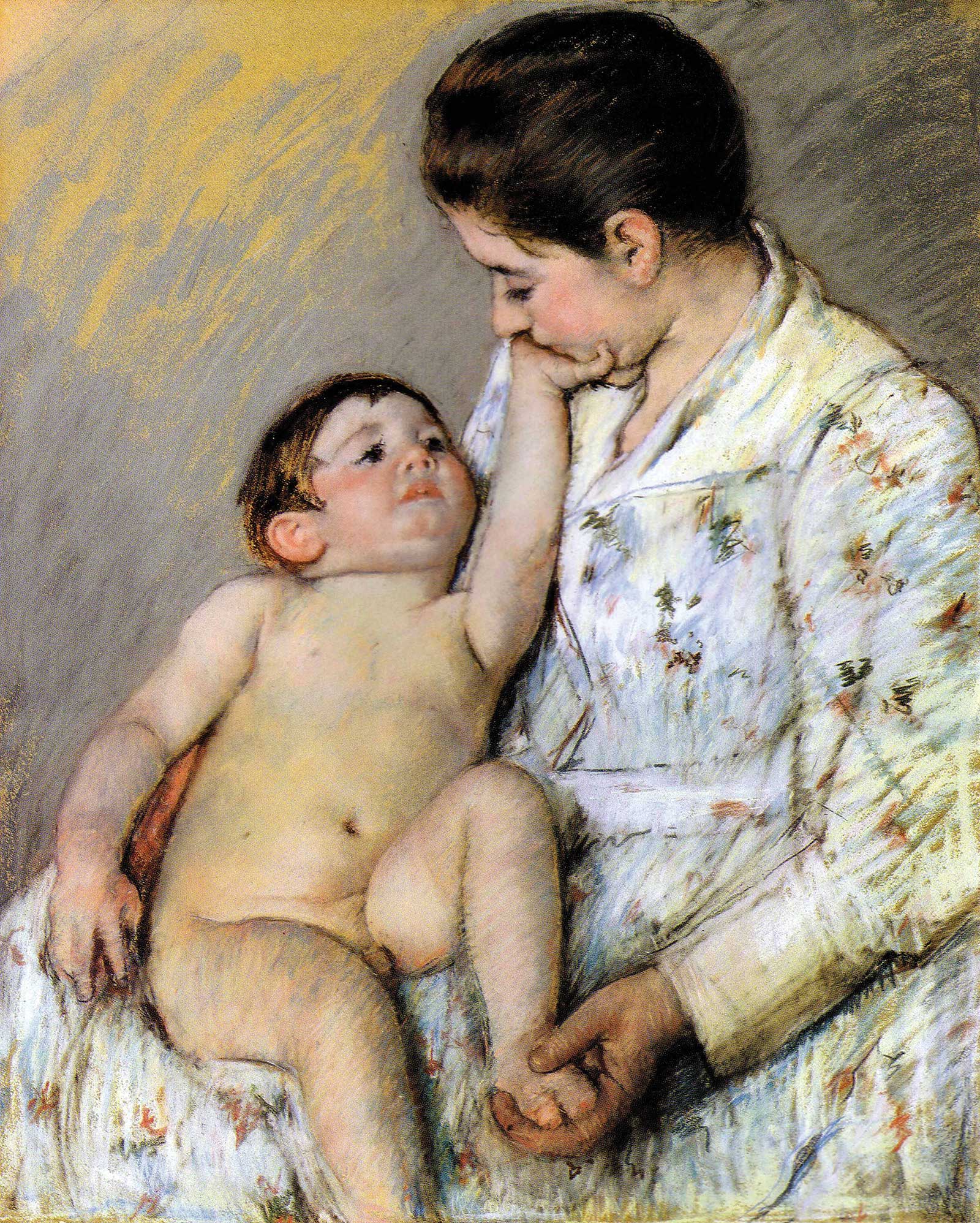
Mary Stevenson Cassatt (1844-1926), A Caress, 1891. Pastel on paper, 29¼ x 23¾ in. New Britain Museum of American Art, Harriet Russell Stanley Fund, 1948.14
Her friendship with Degas lasted until his death in 1917, and the two supported and challenged each other artistically. She commented, “Degas sometimes became angry because he could not find any weaknesses in me, and sometimes we did not see each other for months at a time, until something I had painted brought us back together again.”
She collaborated with other artists and introduced modern French art to audiences in the United States.
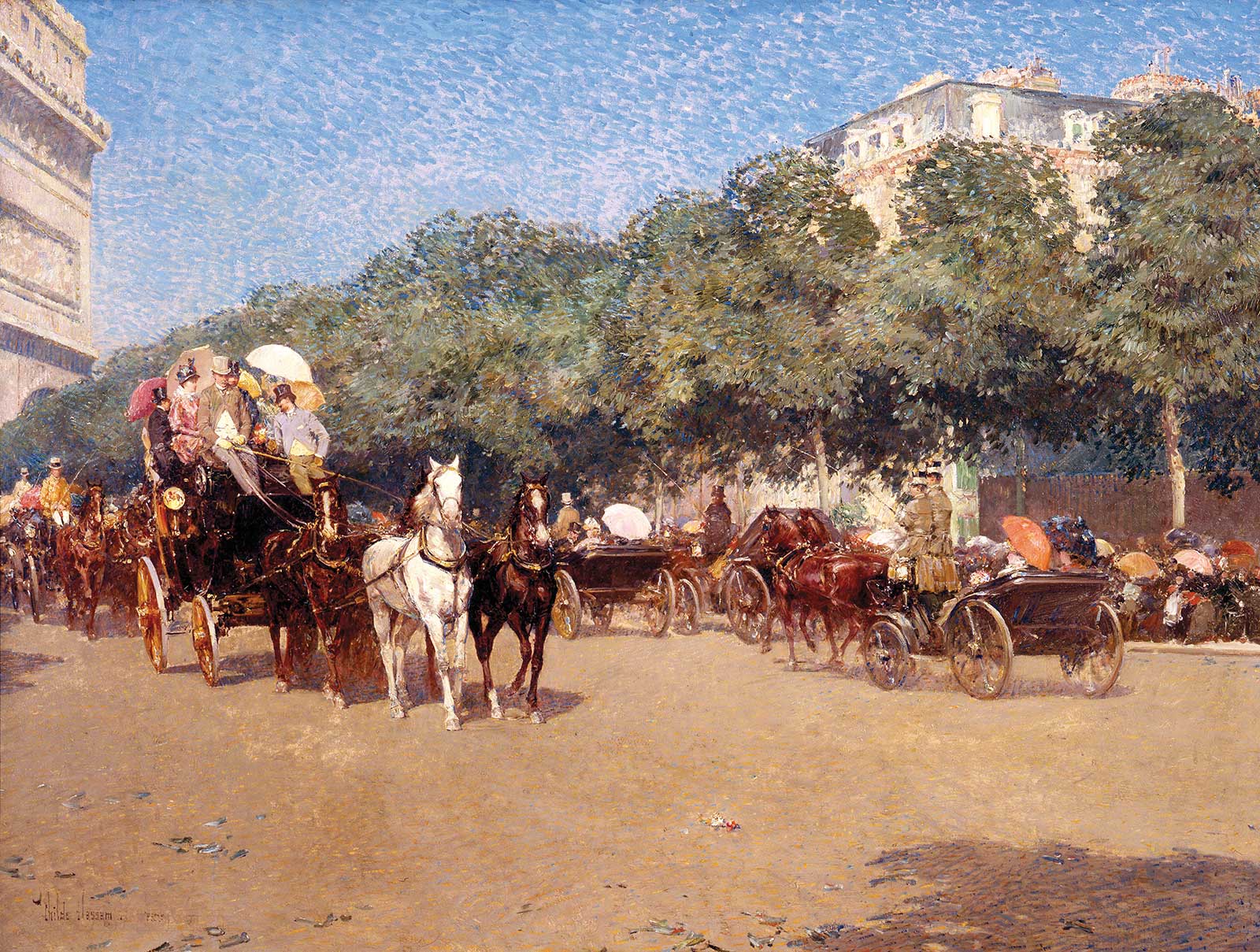
Childe Hassam (1859-1935), Le Jour du Grand Prix, 1887. Oil on canvas, 37 x 49¼ in. New Britain Museum of American Art, Grace Judd Landers Fund, 1943.14
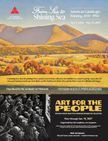
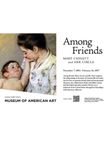
The New Britain Museum of American Art in Connecticut, drawing from its own collection and those of other New England museums, is presenting the exhibition Among Friends: Mary Cassatt and Her Circle through February 14, 2027.
The exhibition is curated by Elizabeth Levie, Polly Thayer Starr Curatorial Fellow, in collaboration with Stephanie Heydt, director of collections and exhibitions, who explain, “Works on paper depicting intimate connection, shown together with prints by her friends Degas and Berthe Morisot, illuminate the centrality of personal relationships to Cassatt’s practice. Adjacent galleries present work by American artists in her broader circle who likewise traveled between the United States and Europe, and who contributed to the flourishing of impressionism on this side of the Atlantic—including here in Connecticut.”
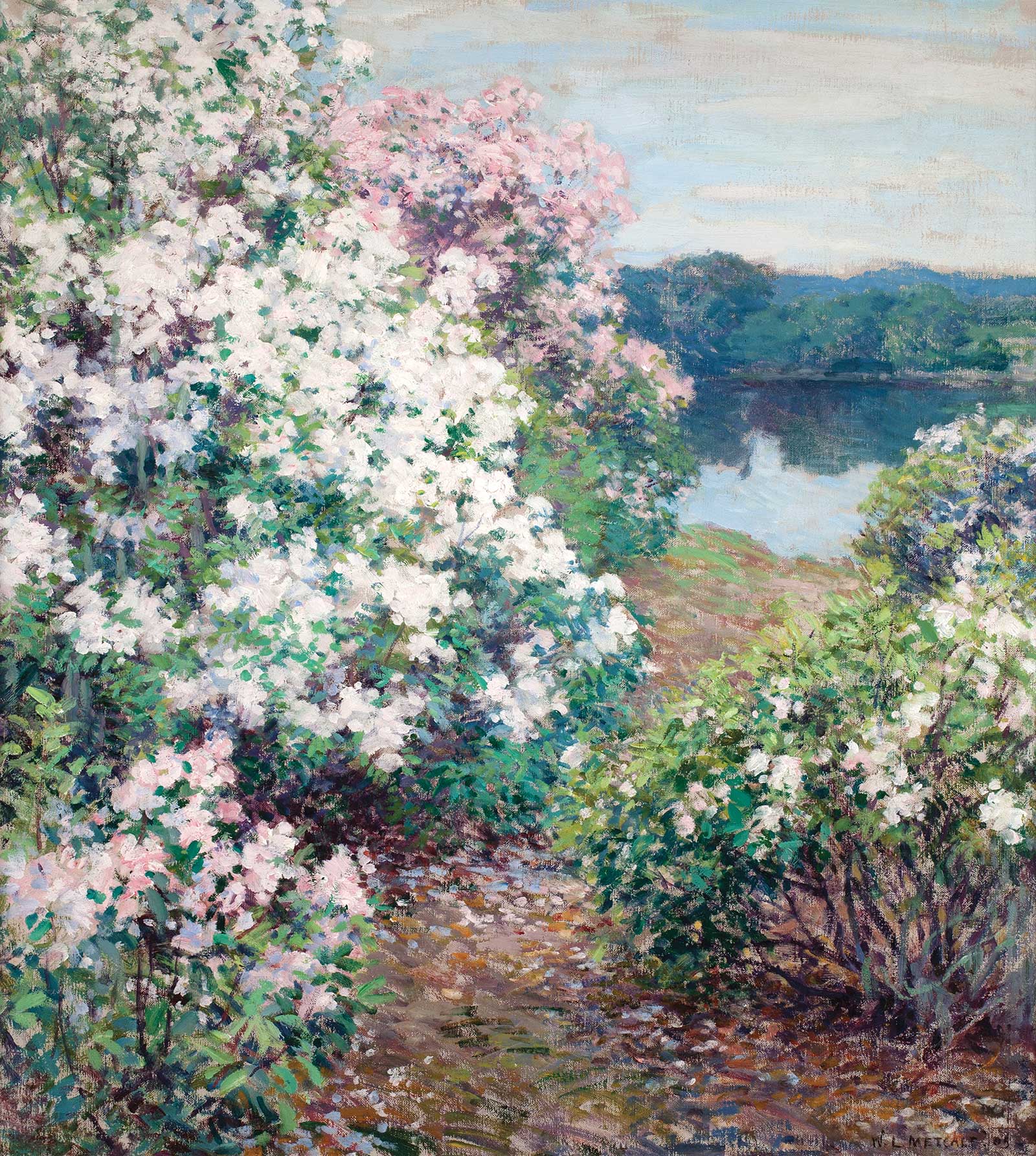
Willard Metcalf (1858-1925), Mountain Laurel, 1905. Oil on canvas, 29 x 26 in. New Britain Museum of American Art, Charles and Elizabeth Buchanan Collection, 1989.36
A Caress, Cassatt’s 1891 pastel on paper, is typical of her depictions of mothers and children. An avid advocate for women, she wrote, “Women should be someone and not something.” She portrayed contemporary women in the intimate ordinariness of motherhood.
In 1881, the art critic, Joris-Karl Huysmans wrote, “Ah! Babies, my God! How their portraits have repeatedly horrified me! A whole sequel of English and French daubers painted them in such stupid and pretentious poses! For the first time, I have, thanks to Miss Cassatt, seen the effigies of ravishing youngsters, peaceful and bourgeois scenes painted with a kind of delicate tenderness, all charming.”
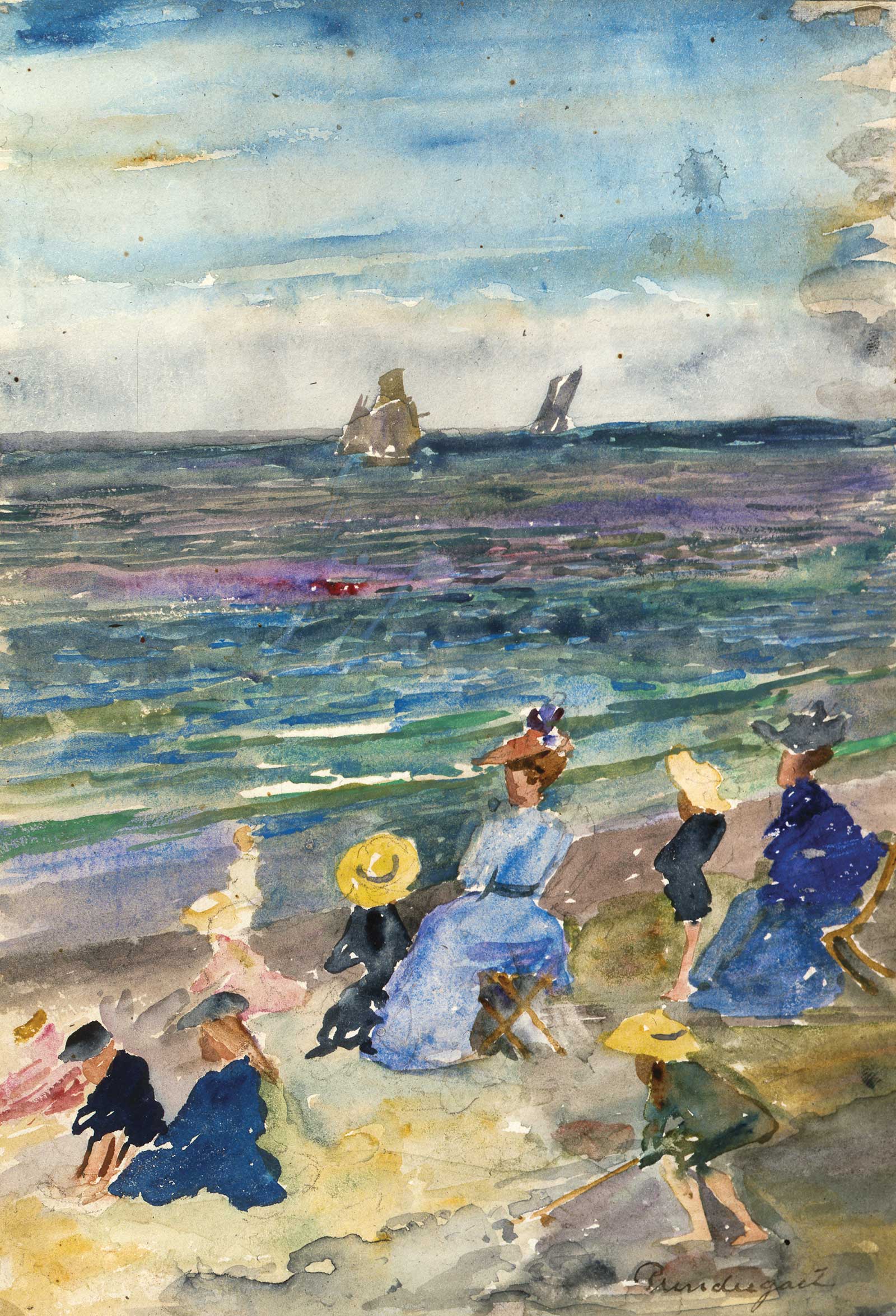
Maurice Brazil Prendergast (1858-1924), Brittany Coast, ca. 1892-94. Watercolor on wove paper, 10 x 67/8 in. New Britain Museum of American Art, Harriet Russell Stanley Fund, 1947.17
Cassatt and Childe Hassam (1859-1935) were influential in bringing the ideals and techniques of French Impressionism to American artists and collectors. Hassam’s painting, Le Jour du Grand Prix (1887), painted before his popular scenes of the coast of New England, is one of his paintings of contemporary urban street life. —
Powered by Froala Editor