Many artists have used their family members as models. Andrew Wyeth was no exception. He featured his wife, Betsy, in numerous paintings—most famously, perhaps, the stunning 1966 portrait Maga’s Daughter. But Betsy James Wyeth did far more than pose for her husband. She designed the very world that appears in one Wyeth painting after another—the buildings, the furnishings, the entire aesthetic. “She made me into a painter that I would not have been otherwise,” Andrew told his biographer. Their younger son, artist Jamie Wyeth, went even further. “She could have co-signed the paintings,” he said.
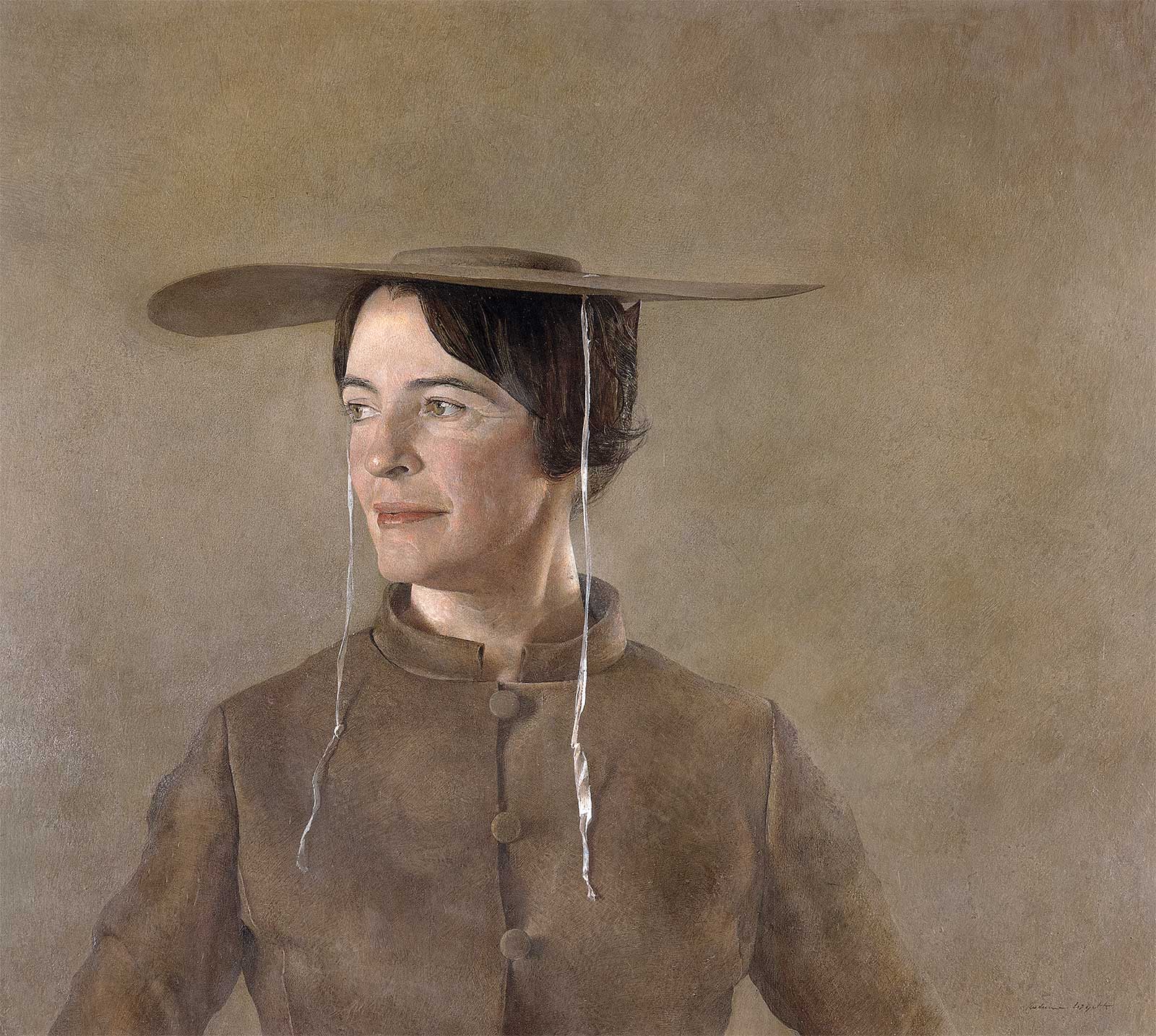
Andrew Wyeth (1917-2009), Maga’s Daughter, 1966. Egg tempera on panel, 26½ x 30¼ in. Wyeth Foundation for American Art Collection, P5008.
Betsy’s influence on her husband’s art was not something that either Wyeth trumpeted. In fact, Betsy deliberately obscured her role, not wanting to detract from her husband’s brand. But her efforts are now on full display in By Design: The Worlds of Betsy James Wyeth at the Brandywine Museum of Art in Chadds Ford, Pennsylvania, and the Farnsworth Art Museum in Rockland, Maine. To be clear, these are different parts of the same show, with each museum featuring works done locally, as the Wyeths summered in Maine and wintered in Pennsylvania. But both demonstrate just how central a role Betsy played. As one art historian puts it in the catalog, “She was the invisible part of the iceberg.”
Take the painting Her Room, which is in the Farnsworth portion of the show. It depicts the front room of the Shore House in Cushing, Maine—the first house that Betsy planned. She chose the site for the house, overlooking the St. George River. She scoured the area for salvaged materials from old buildings—wide planks for floors, weathered doors, old windows with wavy glass—and she crafted a design for the builders to follow. She bought the furnishings shown in the painting, including the 19th-century wooden sea chest, which is also on view in the Farnsworth. She sewed the pink curtains and collected the seashells. “She would create the worlds in which they lived, and Andy would paint them,” says photographer and family friend Peter Ralston in a film on the Farnsworth website.
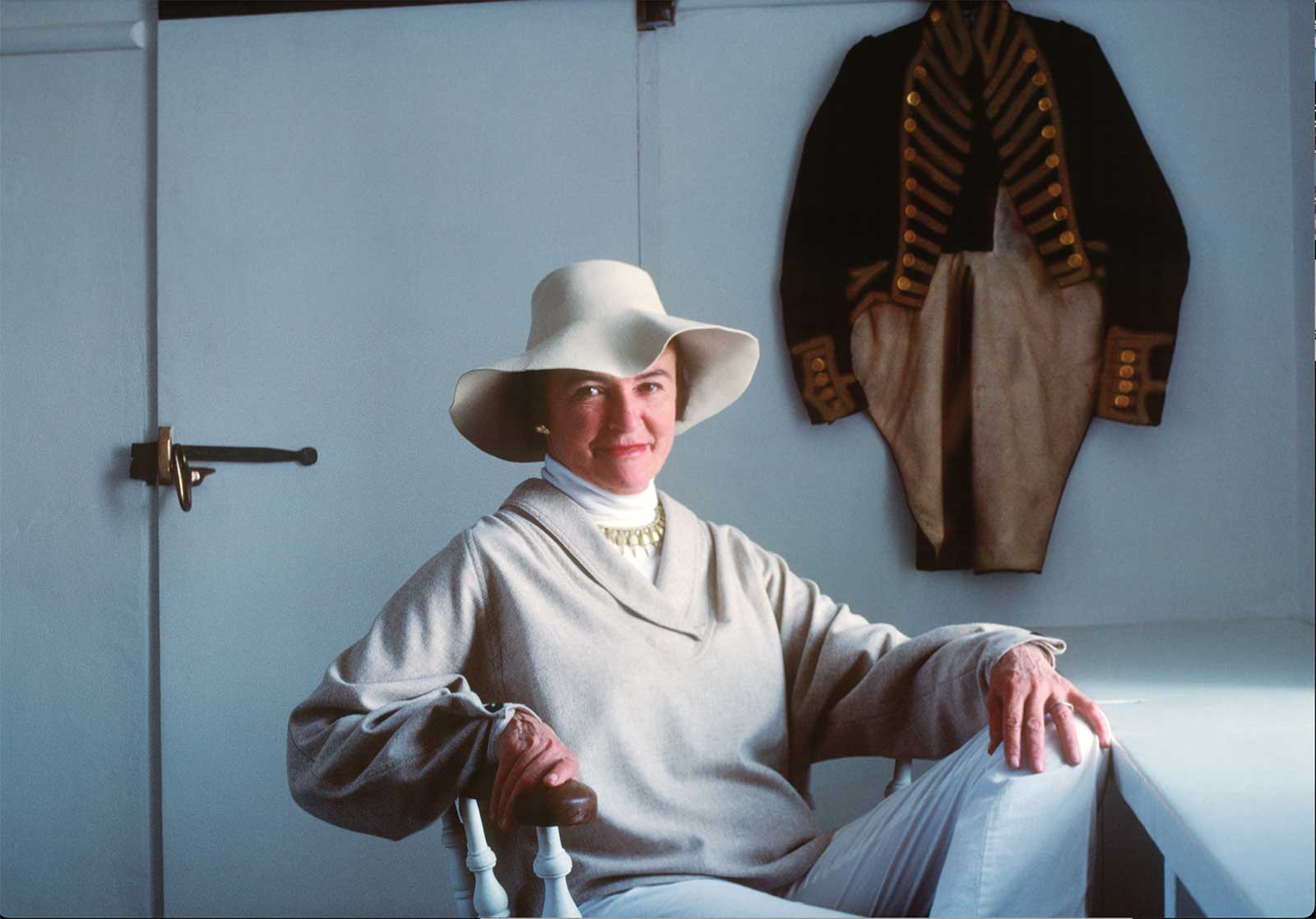
Peter Ralston, Keeper. Photograph of Betsy Wyeth, ca. 1988. © Peter Ralston / Courtesy Ralstongallery.com.
It’s hard to imagine what direction Andrew Wyeth’s art would have taken without Betsy. It was she who urged him not to follow in the footsteps of his father, N.C. Wyeth, the renowned illustrator of adventure books for boys. “She articulated another way forward, representationally recognizable, but setting aside overt narrative,” says William L. Coleman, Wyeth Foundation Curator at the Brandywine and co-curator of the current exhibition, who argues that this is part of Wyeth’s appeal. “It allows us to imagine ourselves into the pictures,” he says.
Betsy’s influence didn’t end there. She also encouraged Andrew’s use of egg tempera, which enabled the precision and every-blade-of-grass detail that characterizes so much of his work. In a century in which art was suffused with exuberant color, she toned his palette down toward the browns and grays of coastal Maine and Quaker Pennsylvania. It was even she who introduced him to Christina Olson—the subject of his best-known painting, Christina’s World.
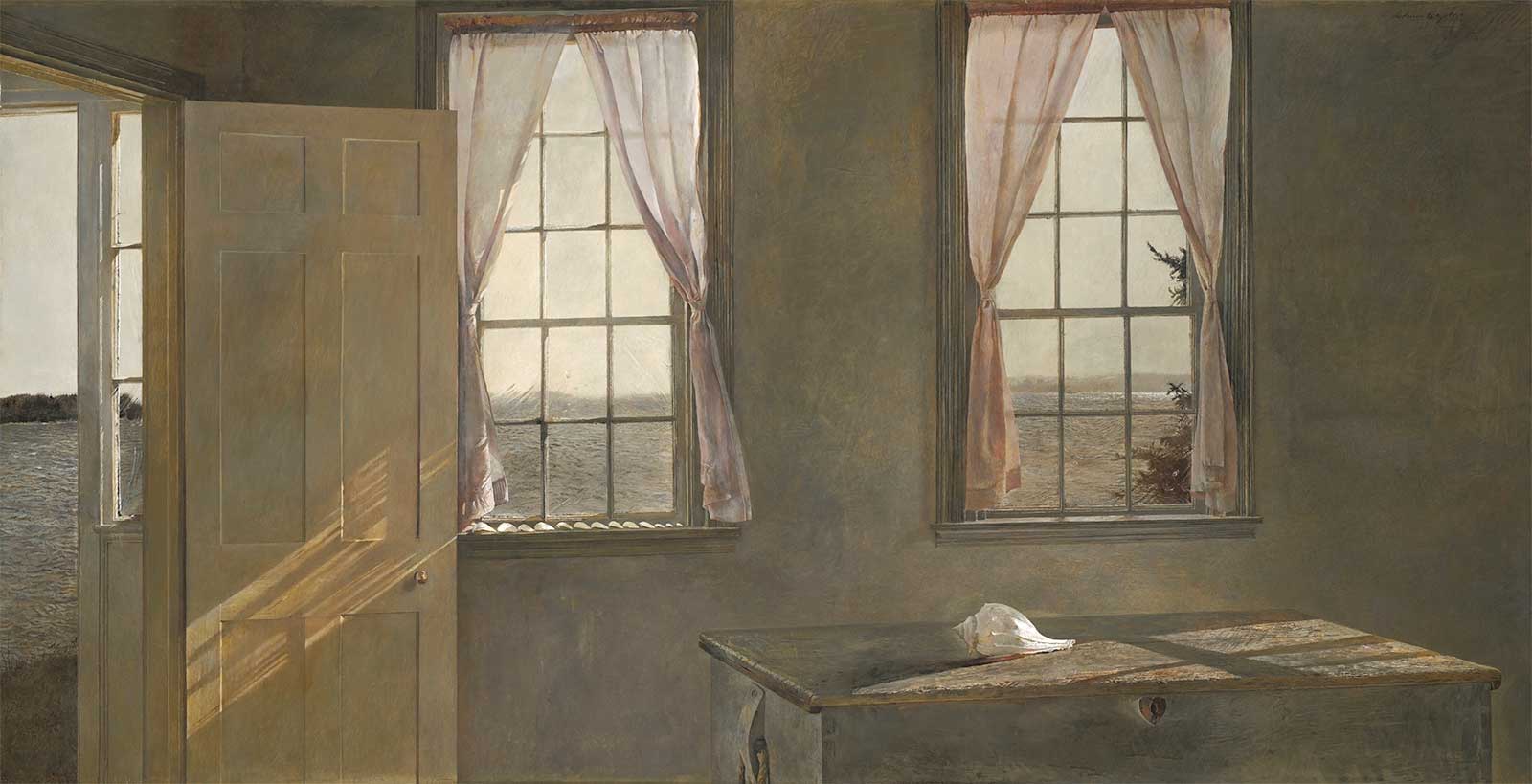
Andrew Wyeth (1917-2009), Her Room, 1963. Egg tempera on panel, 24¾ x 48 in. Farnsworth Art Museum. Museum purchase, 1964.1313.
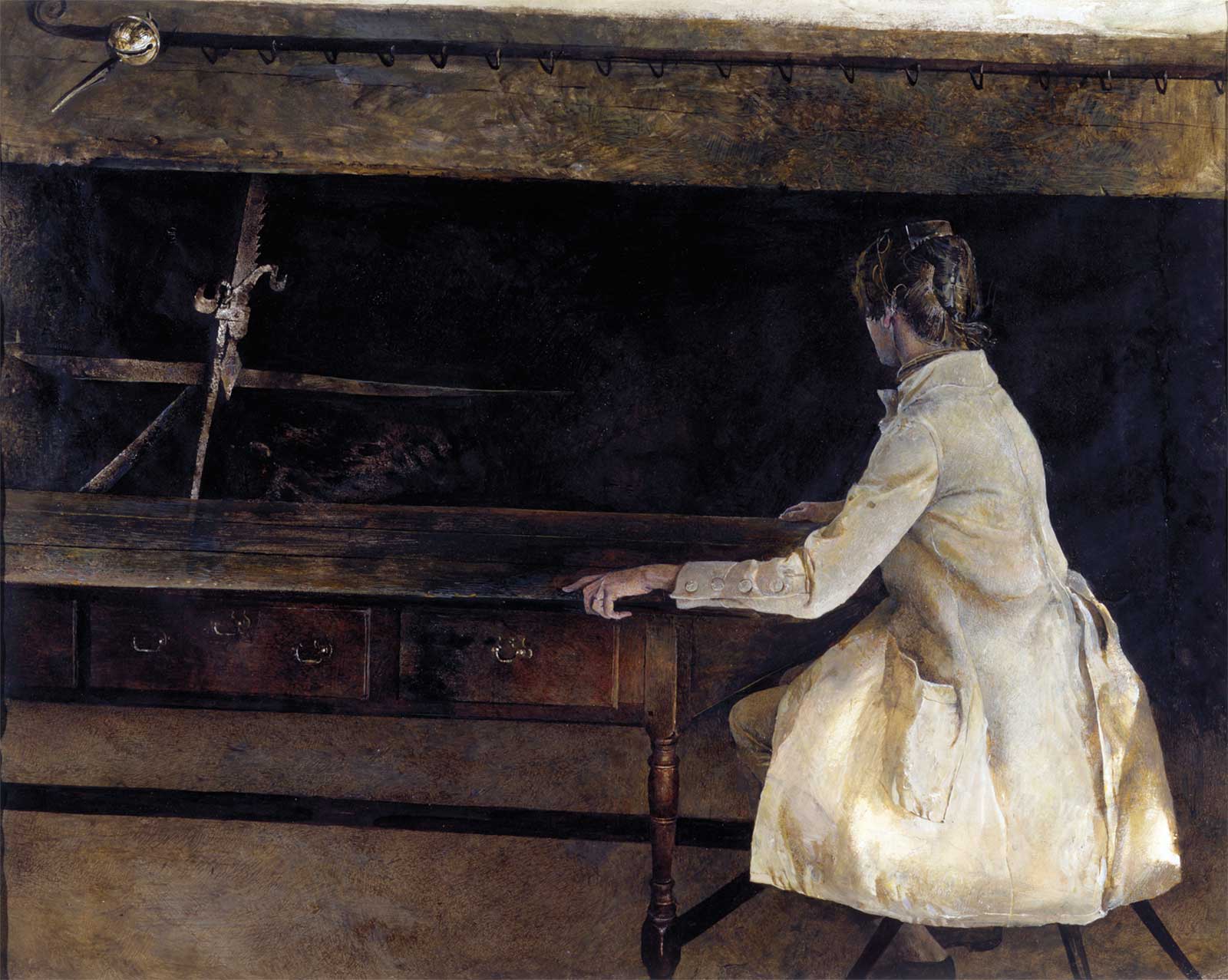
Andrew Wyeth (1917–2009), French Twist, 1967. Drybrush watercolor on paper, 22½ x 28½ in. Wyeth Foundation for American Art Collection, P5009.
That’s not to say that Andrew Wyeth wouldn’t have been a brilliant artist in any case. The dazzling technique is his. The vivid light and the rough-hewn textures, the gauzy fabrics that sway and dance in the breeze, the shimmering windows—these are all the product of his remarkable skill. The implied sensory elements in many of the pictures—the snow falling, sparks flying, feathers swirling in the wind—are Andrew’s and lure a viewer still further into the subtle sensation of being a participant in his scenes.
But if the pictures were Andrew’s creations, the Yankee minimalism came from Betsy. She relentlessly decluttered the family’s living spaces with an eye to what would work in his art. A laundry basket leaning against a stucco wall might be subject enough, as in Monday Morning. Her carefully curated antiques and historic architectural elements—like the former one-room schoolhouse that she turned into a family dining room, seen in The Witching Hour—imbued Andrew’s paintings with a quality that evoked the past without looking dated.
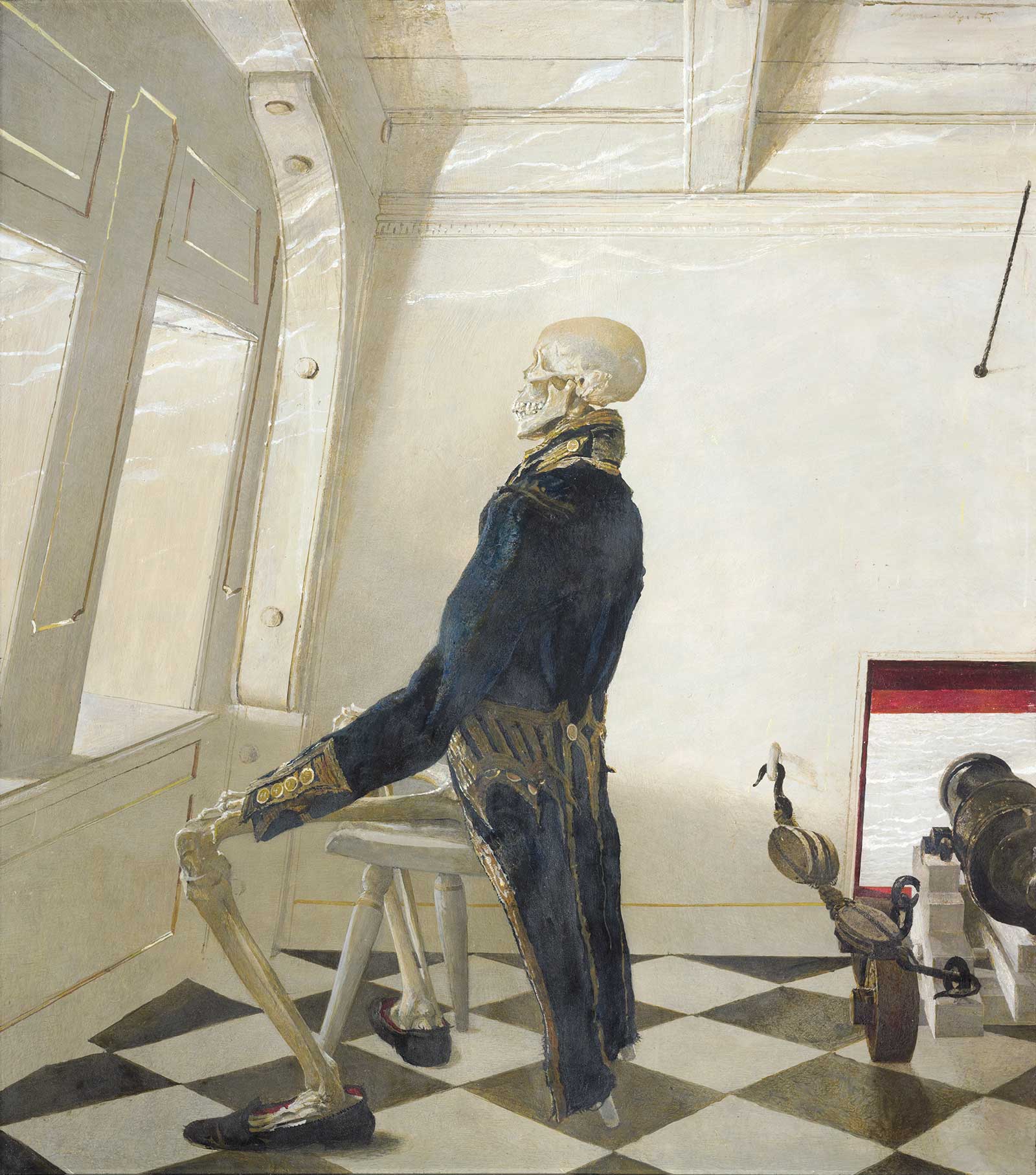
Andrew Wyeth (1917-2009), Dr. Syn, 1981. Egg tempera on panel, 21½ x 19 in. Wyeth Foundation for American Art Collection, M5018.
Over the years, Betsy’s projects became increasingly ambitious. In 1958, she tackled the rehabilitation of Brinton’s Mill, which included three old fieldstone buildings in Chadds Ford—the miller’s house, the grist mill and the granary. The latter was so dilapidated it had a tree growing through the roof, but Betsy was undaunted. She chopped down the tree and replaced the roof (which had collapsed), removed a rusted old silo on the property, reconstructed the interior of the fire-ravaged millhouse, tacked a new wing onto the house, and added an entire story to mill, whose old-fashioned waterwheel she also rebuilt. Most important, she transformed the complex into functional space, where the family could live and Andrew could paint.
Her efforts paid off. Brinton’s Mill figures in hundreds of Wyeth watercolors and tempera paintings. The lovely French Twist, for example, shows Betsy before the fireplace in the dining room of the miller’s house. The painting is on display in the Brandywine exhibition, together with the furnishings that once stood in that dining room. The 19th-century tankards, the redware platters, and the refectory table and benches give a sense of how Betsy designed rooms to feel traditional, yet also contemporary with their clean lines.
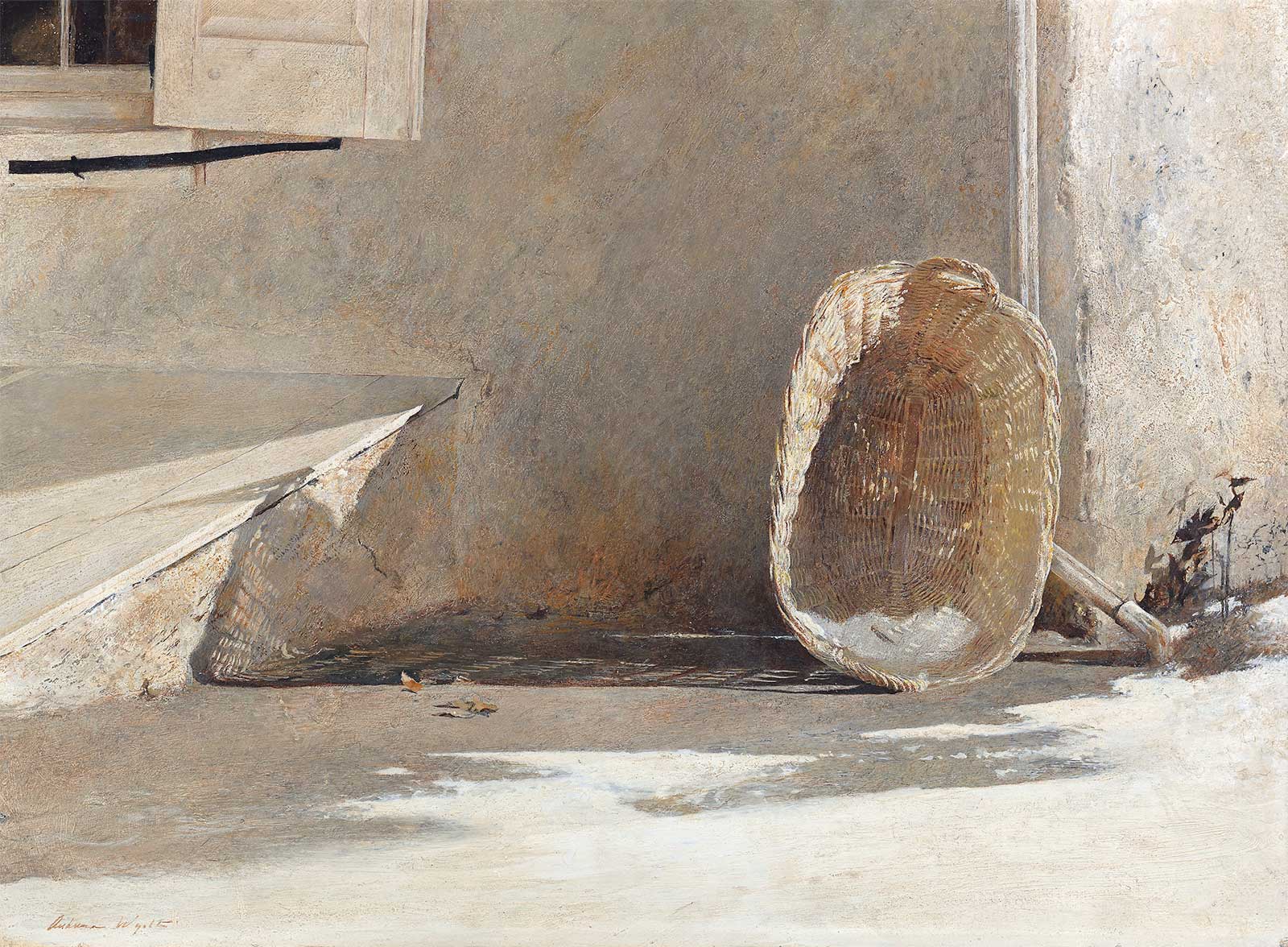
Andrew Wyeth (1917-2009), Monday Morning, 1955. Egg tempera on panel, 12 x 163⁄8 in. Wyeth Foundation for American Art Collection, P5007.
Brinton’s Mill took years to restore, but it was not Betsy’s most ambitious project. That honor goes to three islands in Maine—Southern, Allen and Benner. It was on Southern Island that she helped refashion the interior of the bell tower, as seen in the painting Dr. Syn. Andrew, who had grown up with swashbuckling adventure stories, had always been enthralled with the exploits of the British Vice-Admiral Horatio Nelson, who triumphed over the French at the 1805 Battle of Trafalgar but was mortally wounded in the fight. Betsy and Andrew collaborated to build an almost theatrical space in the bell tower that looked like Lord Nelson’s cabin, complete with naval cannons and gunports. Andrew had recently had surgery, and he used the X-rays from that procedure as inspiration for the skeleton, joking that the painting was a self-portrait.
But that redesign was minor compared with what Betsy did on Allen Island. There she rearranged entire landscapes, treating hundreds of acres like a blank canvas. Trees and thickets of scrub brush had grown up after the year-round fishing community left in the 1920s. Betsy cut down trees, built a wharf to barge the lumber off the island, brought over sheep to keep the vegetation under control, recruited lobster fishermen to reconstitute a working waterfront, and created a village-like collection of buildings.
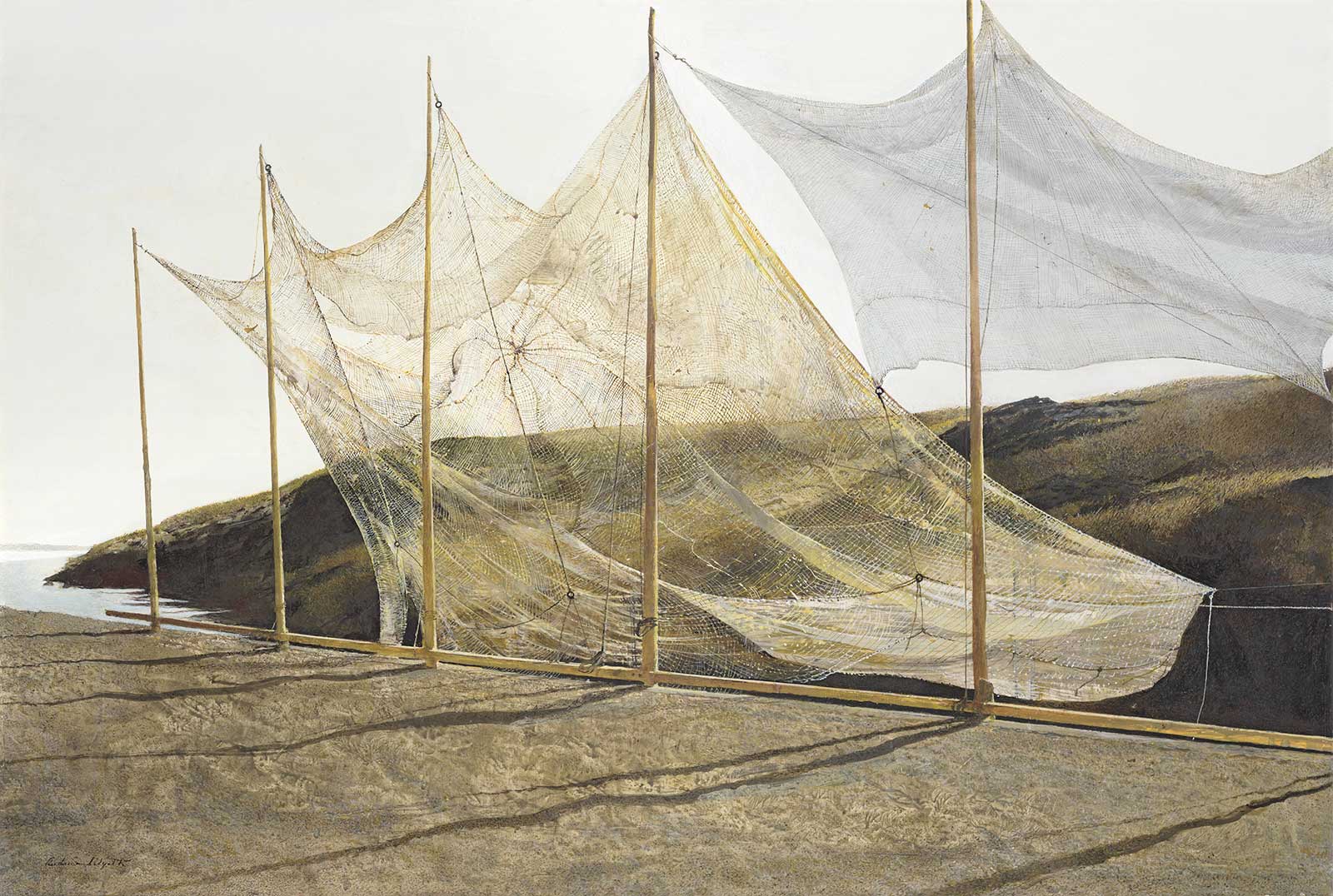
Andrew Wyeth (1917-2009), Pentecost, 1989. Egg tempera and pencil on panel, 20¾ x 305⁄8 in. Wyeth Foundation for American Art Collection, M5027.
Among them was the white wooden structure in Goodbye, Andrew’s last tempera painting. It was a sail loft that had originally stood on the mainland. “Betsy bought it, took it apart, barged the pieces out, and had it reassembled,” says Francesca Soriano, curator of American Art at the Farnsworth and co-curator of the current exhibition. On the ground floor, Betsy created a museum of Maine fishing that honored the historic fishing community. On the top floor, she opened a gallery for Wyeth works. She presented it to Andrew on his 91st birthday.
Betsy not only set the scenes that Andrew painted. She also offered advice on works in progress. Andrew would often hang his latest picture on the dining room wall, then invite a few people over for drinks to serve as a sort of focus group. On one such occasion, the conversation turned to his picture Dryad, which showed a nude woman (the mythological forest sprite of the title) in the hollow trunk of a dead tree at Brinton’s Mill. At some point in the evening, Betsy draped a scarf over the middle of the painting, covering the nude. As Coleman recounts, “It created an evocative void in the tree. Betsy looked at it and said, ‘Huh.’ Andrew looked at it and said, ‘Huh.’” After that, Wyeth painted the figure out. Or at least, he tried to. Tempera is not so easy to change once it has hardened, and visitors to the Brandywine exhibition can still make out the figure if they look closely.
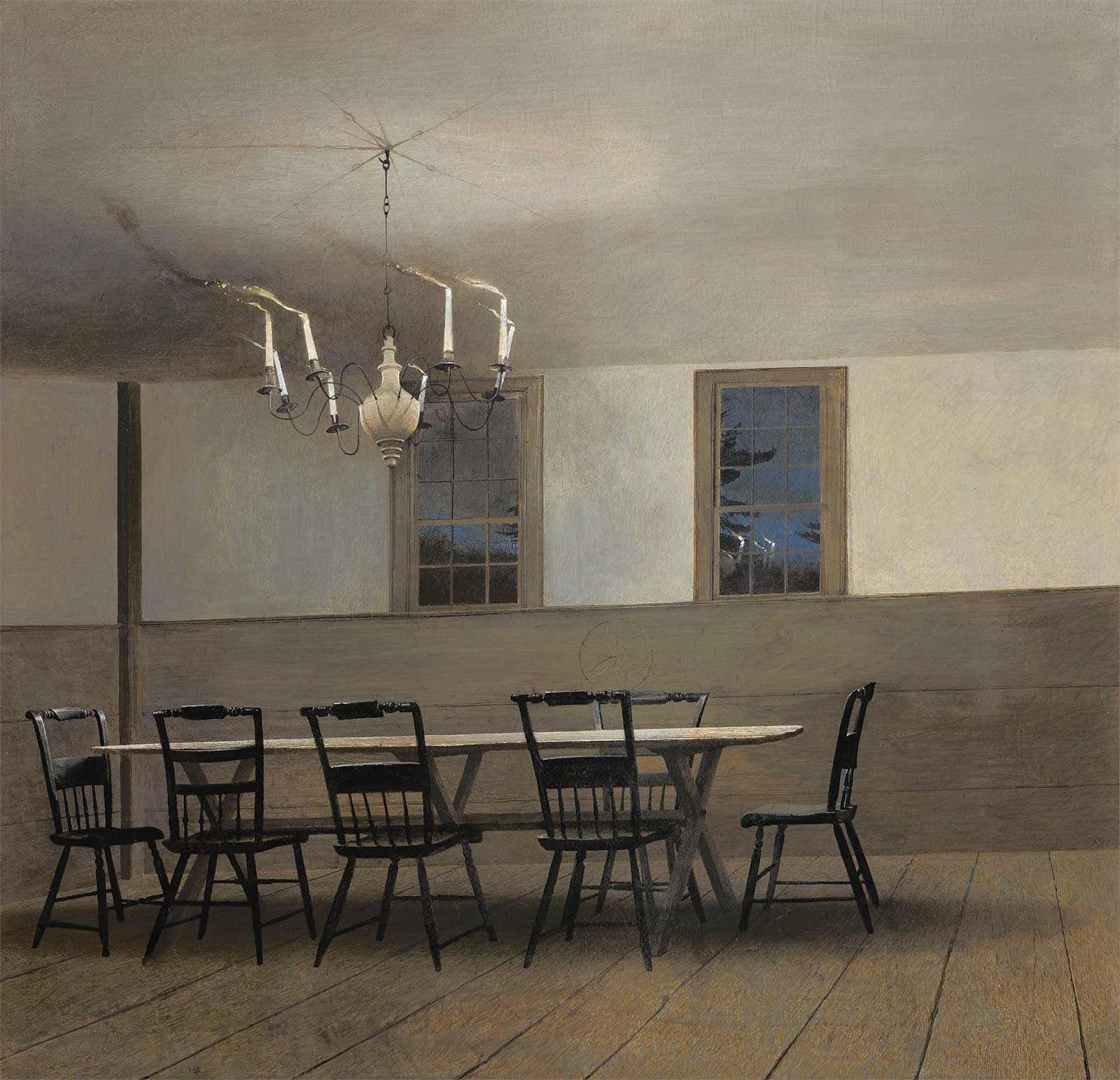
Andrew Wyeth (1917-2009), The Witching Hour, 1977. Egg tempera on panel, 305⁄8 x 31¾ in. Wyeth Foundation for American Art Collection, M5015.
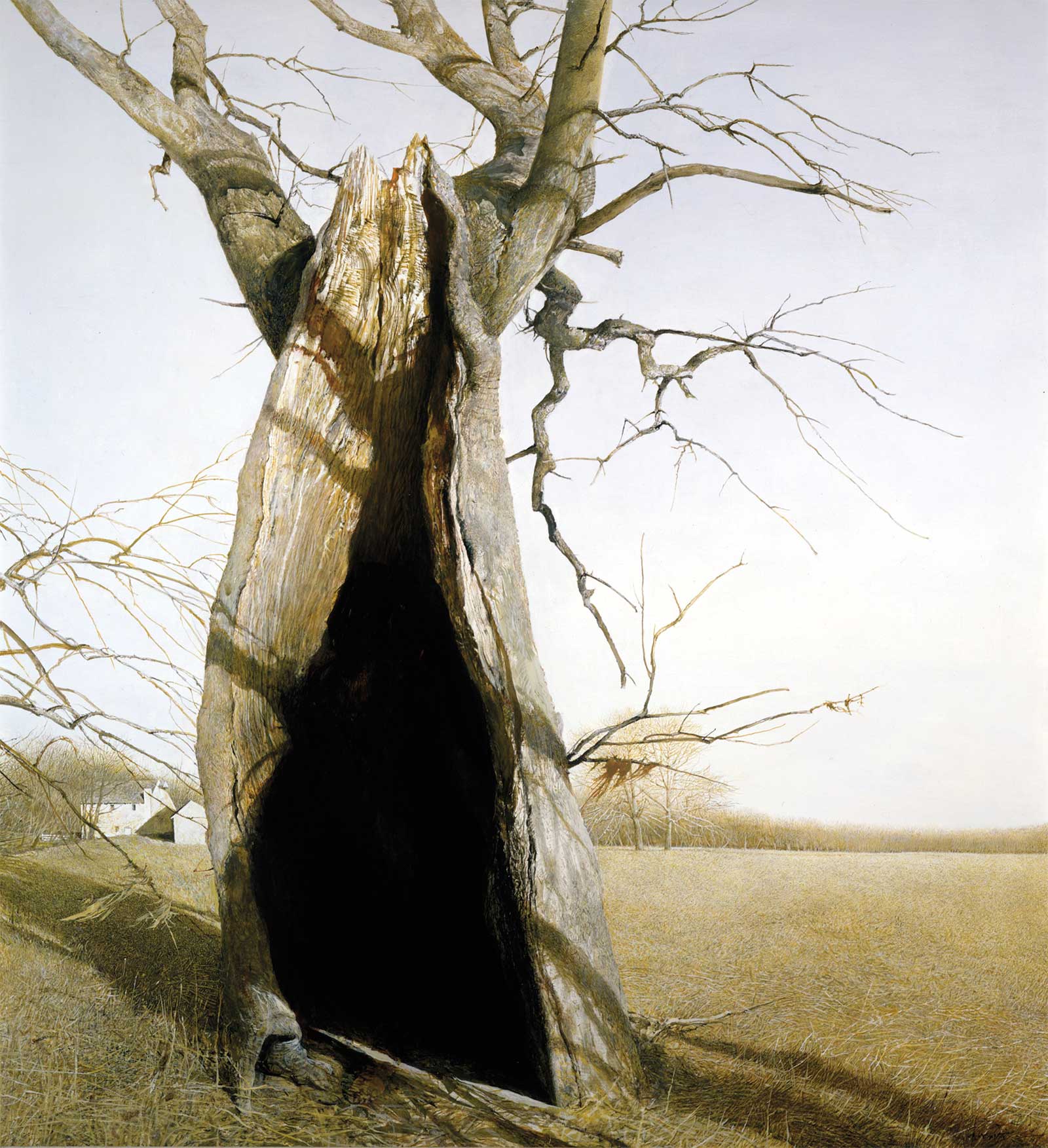
Andrew Wyeth (1917-2009), Dryad, 2000-07. Egg tempera on panel, 47¾ × 44¼ in. Wyeth Foundation for American Art Collection, P5079.
One more aspect of Betsy’s work emerges in both parts of the exhibition, and that is her role in promoting Andrew’s business and managing his legacy. She rescued the many sketches he made for every tempera painting—26 of them for Her Room alone (some of them in the Farnsworth show). She became his business manager, arranged his exhibitions, catalogued his works (complete with small sketches of each one for reference), and titled most of his paintings. She even played a role in establishing the Brandywine River Museum, now the Brandywine Museum of Art. As she told George Weymouth, a friend and supporter, “You build a museum, and we’ll put the pictures in it.”
If By Design has a shortcoming, it is that few people will be able to see both the Brandywine and Farnsworth portions. Happily, the entire show will move late next year to the Telfair Museums in Savannah, Georgia. In the meantime, the catalogue is an indispensable guide, providing what Coleman calls “the first serious print treatment of Betsy’s work.” It is also eminently readable, with personal recollections from a score of Wyeth relatives, friends and colleagues in addition to the scholarly essays.
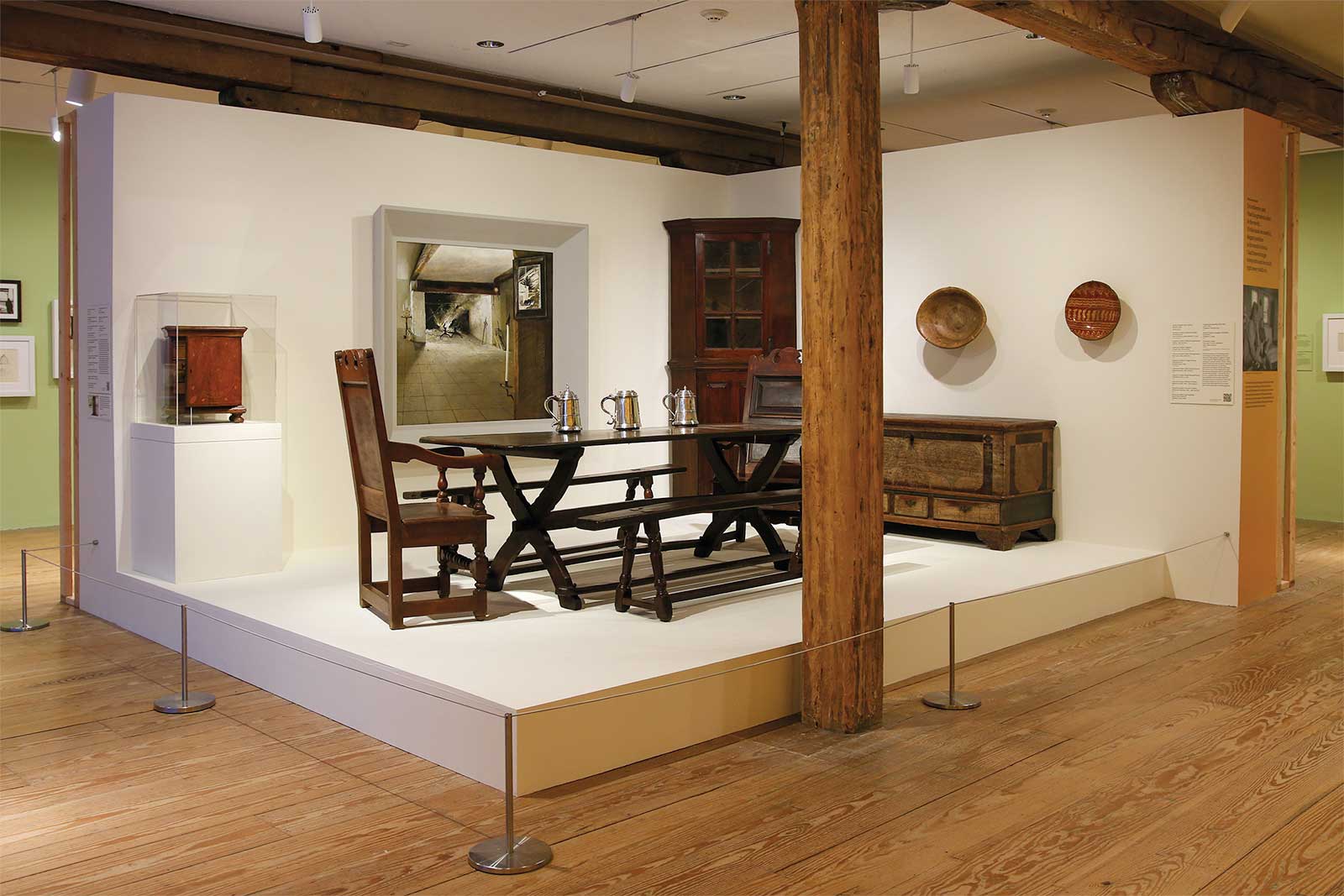
Installation view of By Design: The Worlds of Betsy James Wyeth at the Brandywine Museum of Art, with furnishings from the Wyeths’ dining room at Brinton’s Mill. All paintings by Andrew Wyeth courtesy © 2026 Wyeth Foundation for American Art / Artists Rights Society (ARS), New York.
It may be the first serious treatment of Betsy’s work, but clearly it will not be the last. Ironically, in preserving Andrew’s legacy, Betsy preserved her own. And for that, we can all be grateful.
Anne Underwood is writing a biography of the artist William Sergeant Kendall (1869-1938). —
By Design: The Worlds of Betsy James Wyeth
Through January 10, 2027
Brandywine Museum of Art
1 Hoffman’s Mill Road, Chadds Ford, PA 19317
t: (610) 388-2700
www.brandywine.org
Through December 31, 2026
Farnsworth Art Museum
16 Museum Street, Rockland, ME 04841
t: (207) 596-6457
www.farnsworthmuseum.org
Powered by Froala Editor