Meg Onli, Nancy and Fred Poses Curator at the Whitney Museum of American Art, has assembled the museum’s first retrospective of the work of the Pop Art icon Roy Lichtenstein since 1980. She has been assisted by Alex Da Corte, guest curator, with Nakai Falcón, curatorial assistant, and David Crane, curatorial research associate.
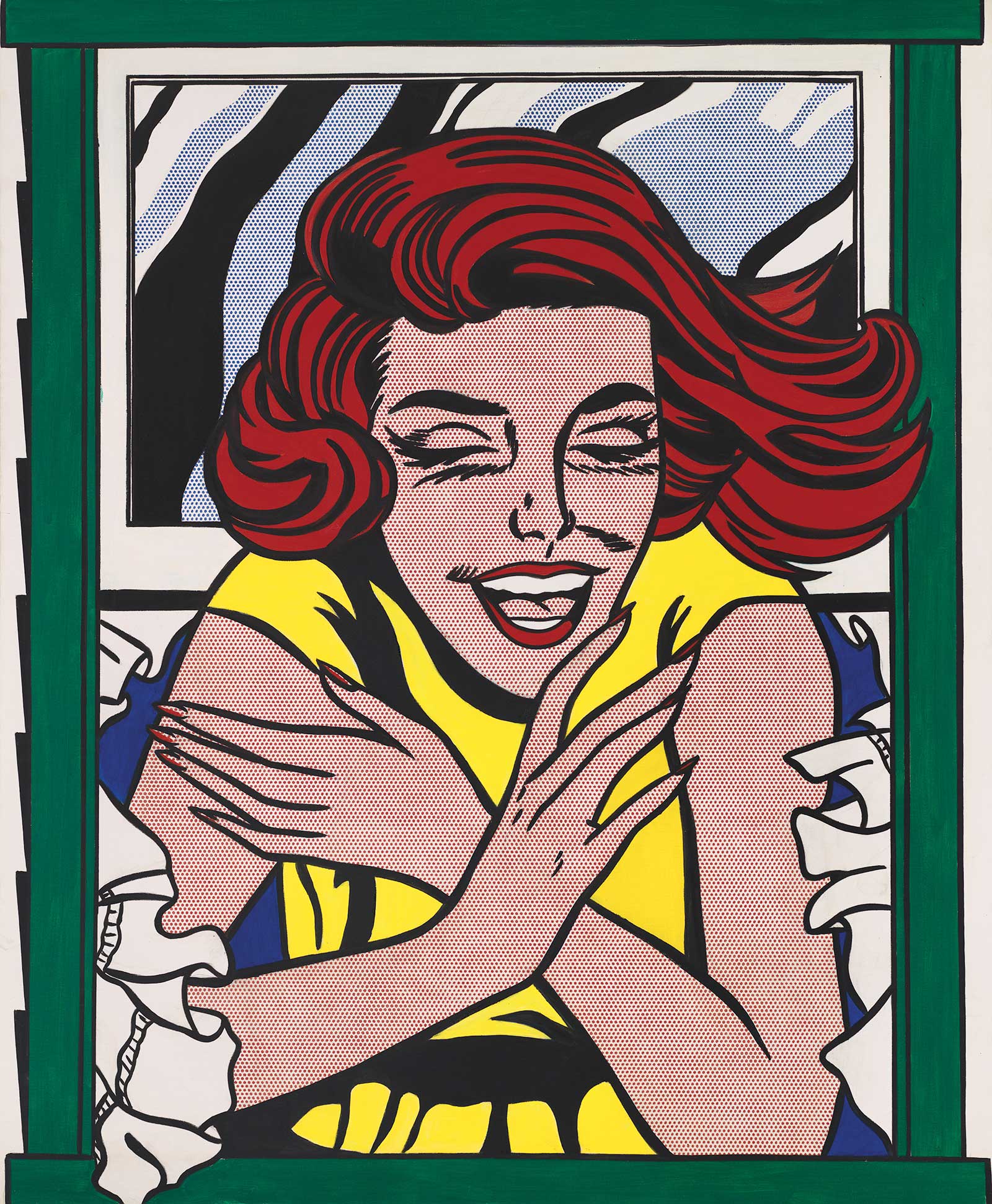
Roy Lichenstein (1923-1997), Girl in Window (study for World’s Fair mural), 1963. Oil and acrylic on canvas, 681⁄8 x 56 in. Whitney Museum of American Art, New York, NY. Gift of The American Contemporary Art Foundation, Inc., Leonard A. Lauder, President. © Estate of Roy Lichtenstein, all rights reserved.
The Whitney explains, “Roy Lichtenstein: Like New offers a bold reconsideration of Lichtenstein for the present. Bringing together roughly 130 works made from the early 1940s through the 1990s, the exhibition traces how his early interest in perception and visual recognition shaped a career-long investigation into duplication, simulation and image culture. Across painting, drawing, collage, prints, sculpture and film, Lichtenstein treated images as unstable forms that could be borrowed, translated, reframed and transformed.” It looks at the methods, influences, motivations and contemporary relevance of Lichtenstein’s oeuvre.
The exhibition opens to the public October 11 and continues through May 10, 2027.
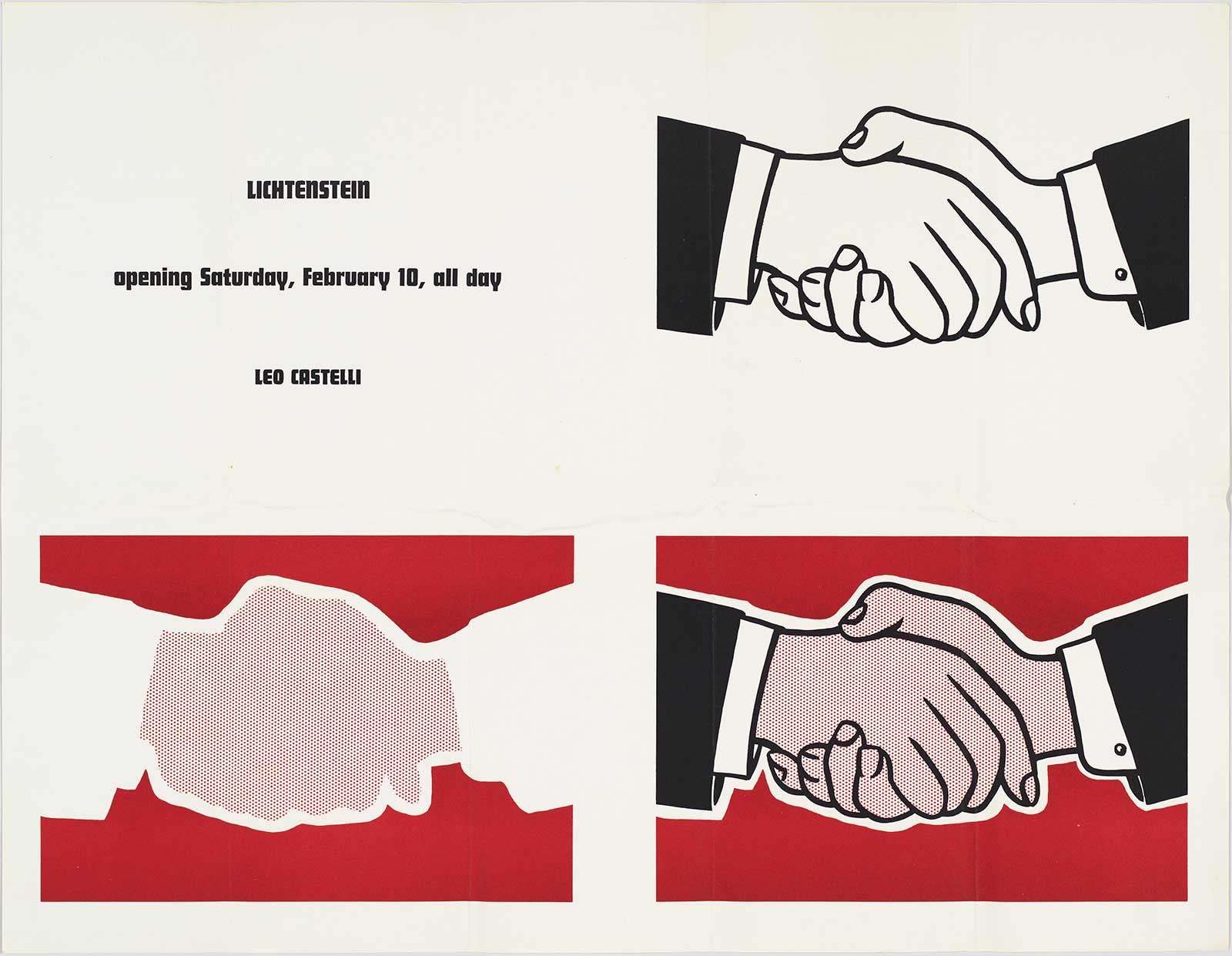
Announcement for Roy Lichtenstein at Leo Castelli Gallery, February 10-March 3, 1962
It includes recreations of three Lichtenstein murals, including a 96-foot iteration of the Greene Street Mural, 1983, and an outdoor presentation of Girl in Window, 1964, realized by Alex Da Corte.
It also includes a gallery that brings together for the first time the eight works from Lichtenstein’s 1962 debut at Leo Castelli Gallery in New York. Ivan Karp, was director of the Leo Castelli Gallery for 10 years before opening O.K. Harris Works of Art in 1969, one of the first galleries in Soho.
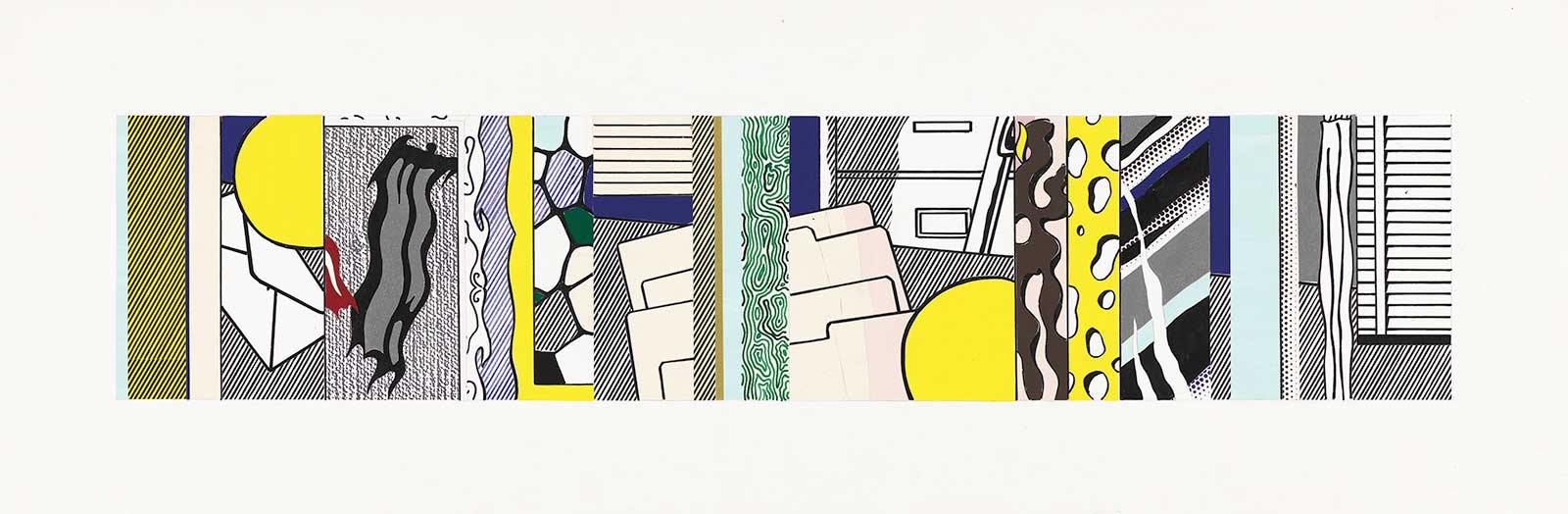
Roy Lichenstein (1923-1997), Greene Street Mural (study), 1983. Collage, fiber-tipped pen, graphite pencil, brush and ink on board, 9 x 42¼ in. Whitney Museum of American Art, New York, NY. The Roy Lichtenstein Study Collection, gift of the Roy Lichtenstein Foundation. © Estate of Roy Lichtenstein, all rights reserved.
In an oral history interview with Karp on March 12, 1969, for the Smithsonian Institution’s Archives of American Art, he relates the saga of discovering and exhibiting Lichtenstein’s early Pop Art.
Lichtenstein was an assistant professor of art at Douglass College of Rutgers University in New Jersey and had had several exhibitions at a gallery in New York. The artist Allan Kaprow told Karp that there was an artist at Douglass College who was doing interesting work. Since the artist didn’t have slides, Karp suggested he bring the paintings to the gallery. “Apparently the artist brought them in on the top of his car from Rutgers one afternoon when he wasn’t teaching,” he recalled. “I remember seeing Roy in the hall with them. They were all facing the wall. I said, ‘What are these?’ He said, ‘Well, Mr. Kaprow called about me. I’m Lichtenstein and I wish you’d look at these paintings.’ There were five of them there. He turned them around in the hall and it was a very jarring experience. I remember the first thing I said to him, ‘You really can’t do this, you know.’ That was the first thing I said to Lichtenstein in a very shocked and startled way, as if saying to myself who would ever have thought of such an idea; it was just too shocking for words that somebody should celebrate the cartoon and the commercial image like that. And they were cold and blank and bold and overwhelming. And I remember saying to myself he can’t do this, he just can’t do this. I said it to him aloud. He said, ‘Well, I seem to be caught up in it. Here they are.’ He was a very shy man at that point…And I said, ‘Well, look, I’d like Castelli to see these. They’re pretty unsettling.’”
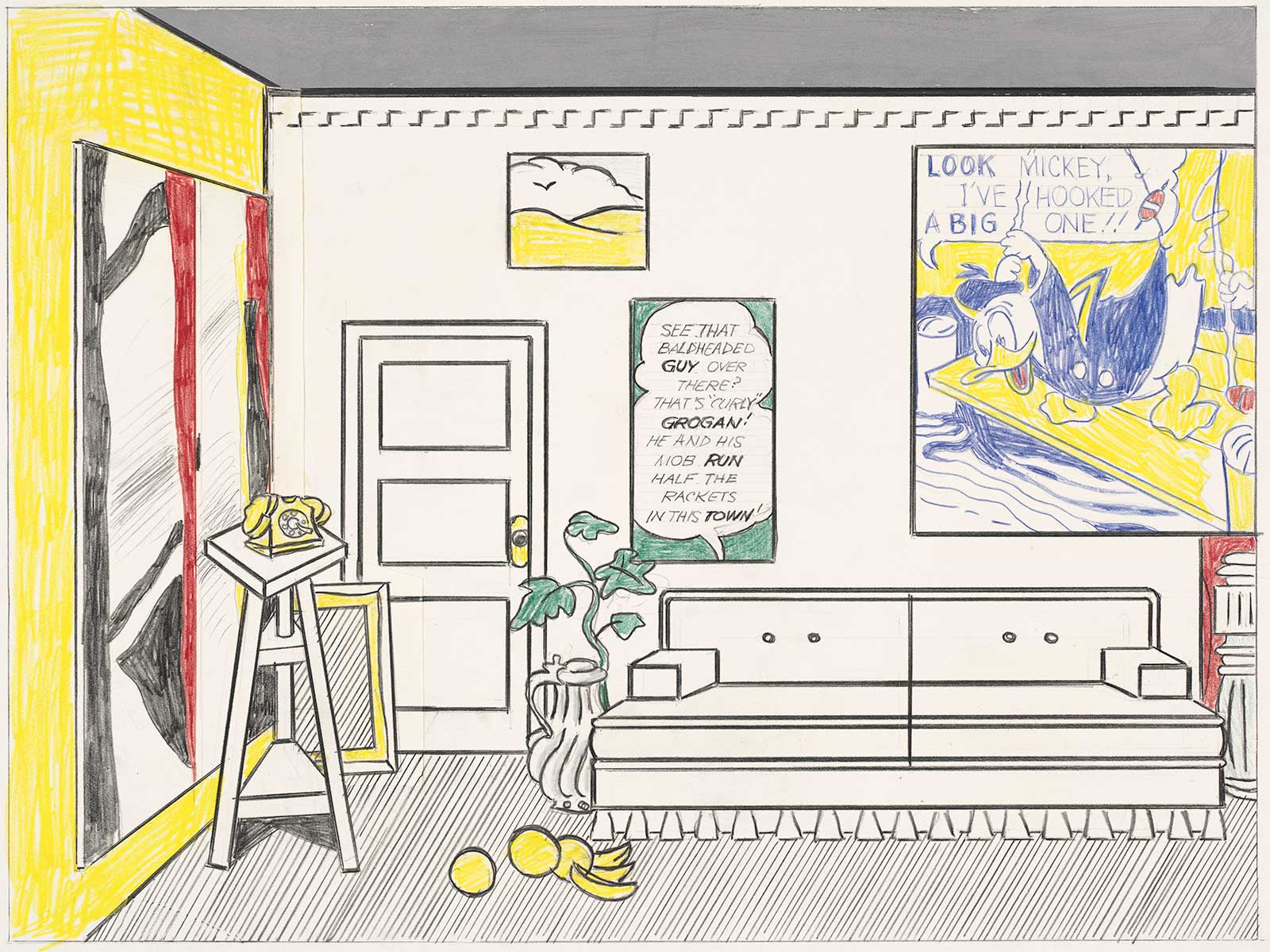
Roy Lichenstein (1923-1997), Artist’s Studio ‘Look Mickey’ (study), 1973. Graphite pencil, colored pencil, Magna, cut paper drawn on with graphite pencil, and colored pencil on paper, 19¾ x 23¾ in. Whitney Museum of American Art, New York, NY. © Estate of Roy Lichtenstein, all rights reserved.
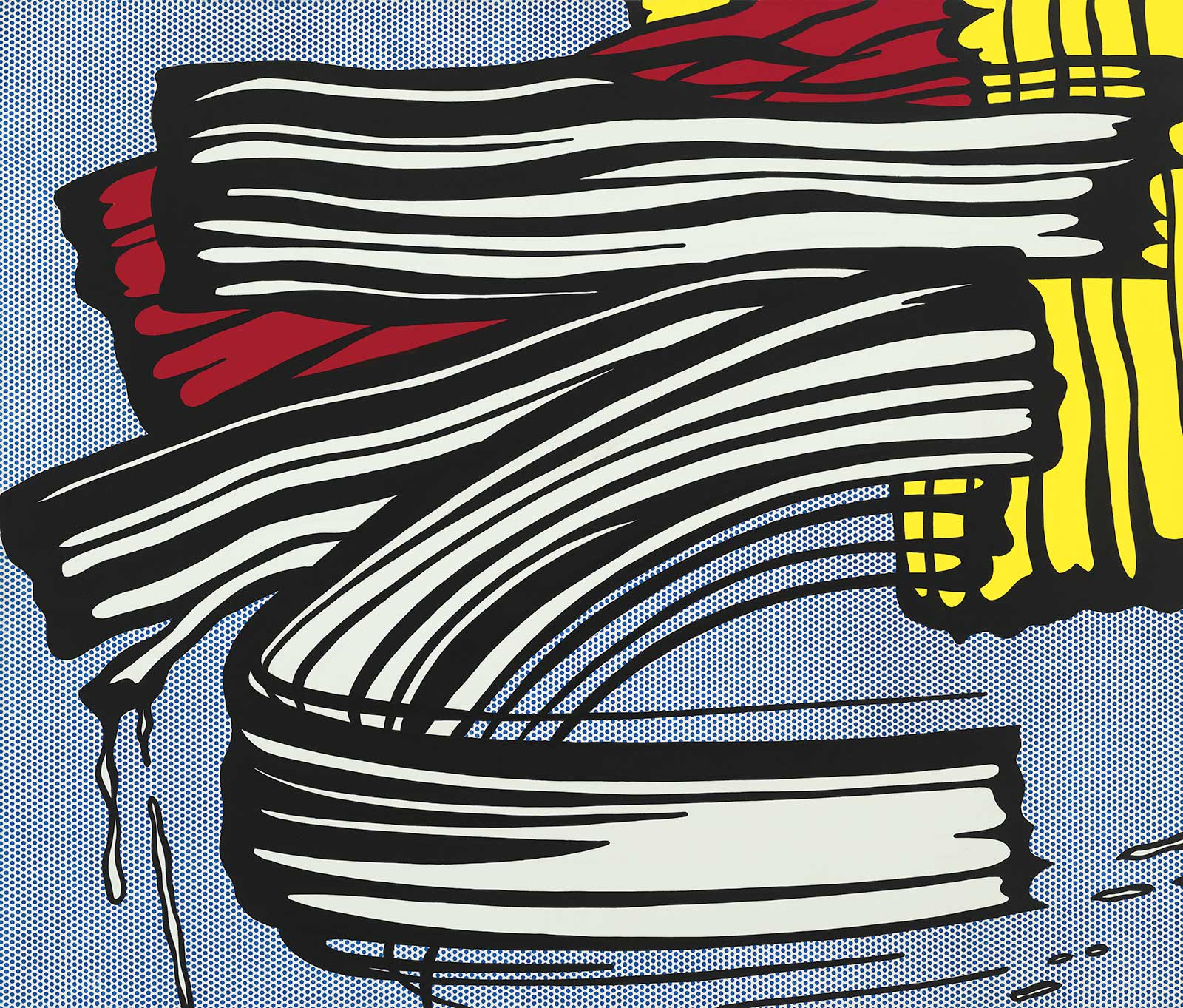
Roy Lichenstein (1923-1997), Little Big Painting, 1965. Oil and acrylic on canvas, 68 x 80 in. Whitney Museum of American Art, New York, NY. Purchase, with funds from the Friends of the Whitney Museum of American Art. © Estate of Roy Lichtenstein, all rights reserved.
Karp relates how Castelli saw the Lichtenstein paintings “and had his own set of reactions to them. Which was pretty startling. And we both were jolted. We thought well let’s look at them again; we’ll put them in the racks and we’ll take them out again and see how they feel as the days go by…We showed them to people who came into the gallery. And it was not good. It was a bad scene. There were really truly unpleasant moments there because people thought that if we’d show art like that it would be the end of our situation, that we were pushing things too hard. And we said, ‘No, no, it’s really an intelligent and original innovation. It’s peculiar and alien and strange and we’re going to look at them some more.’”
Karp and Castelli sold all the paintings in the 1962 exhibition before it opened. Before the Lichtenstein opening, Andy Warhol had bought a Jasper Johns drawing at the gallery. Karp related, “He came back the next week. And I said, ‘Oh, there’s a curious painter downstairs that I’d like you to look at; very strange.’ (I didn’t know who Warhol was or what he did. All I knew was that he was a man with a crop of gray hair who came in and bought a Jasper Johns from me). He issued one of his curious little sounds like an astonished ‘Oh!’ that he says every so often, which he still says in a state of astonishment. He said, ‘Good God’—or whatever he was exclaiming—‘I’m doing something like this myself!!’ He said, ‘What are these paintings doing here! Whose work is this! What is this man! What is he thinking!’ He was really shocked and at the same time he was appalled. And I think he was very troubled that somebody else was doing the same thing.”
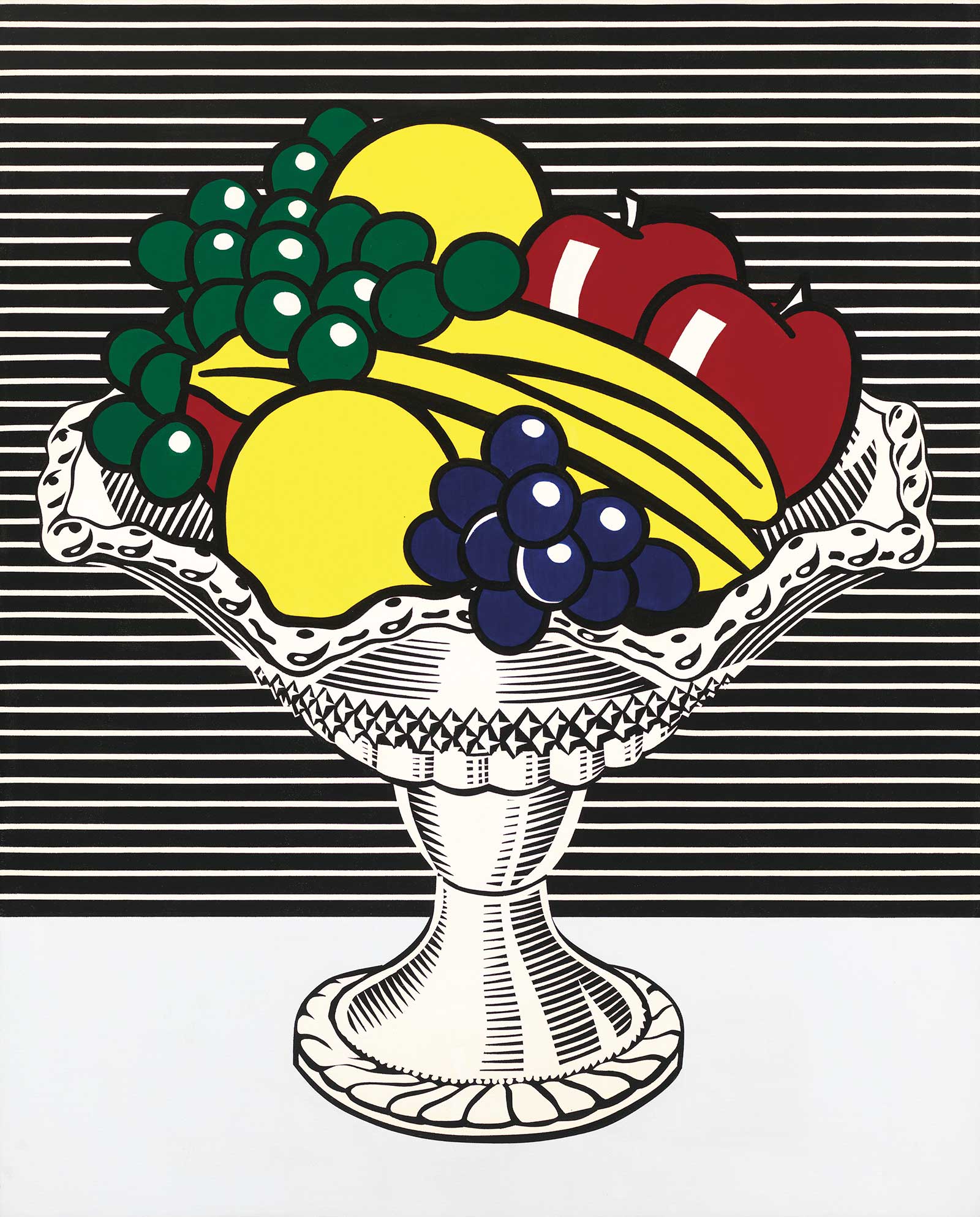
Roy Lichenstein (1923-1997), Still Life with Crystal Bowl, 1972. Oil and acrylic on canvas, 52 x 42 in. Whitney Museum of American Art, New York, NY. Purchase, with funds from Frances and Sydney Lewis. © Estate of Roy Lichtenstein, all rights reserved.
Castelli and Karp learned more about Warhol’s own work, brought him on and showed his Flowers screenprints in 1964.
Clement Greenberg was the most influential American art critic at the time. In 1939, he had written an essay “Avant-Garde and Kitsch,” in which he wrote: “Where there is an avant-garde, generally we also find a rear-guard.” His definition of high and low art. The advent of Pop Art was rear-guard at, as it were, its finest.
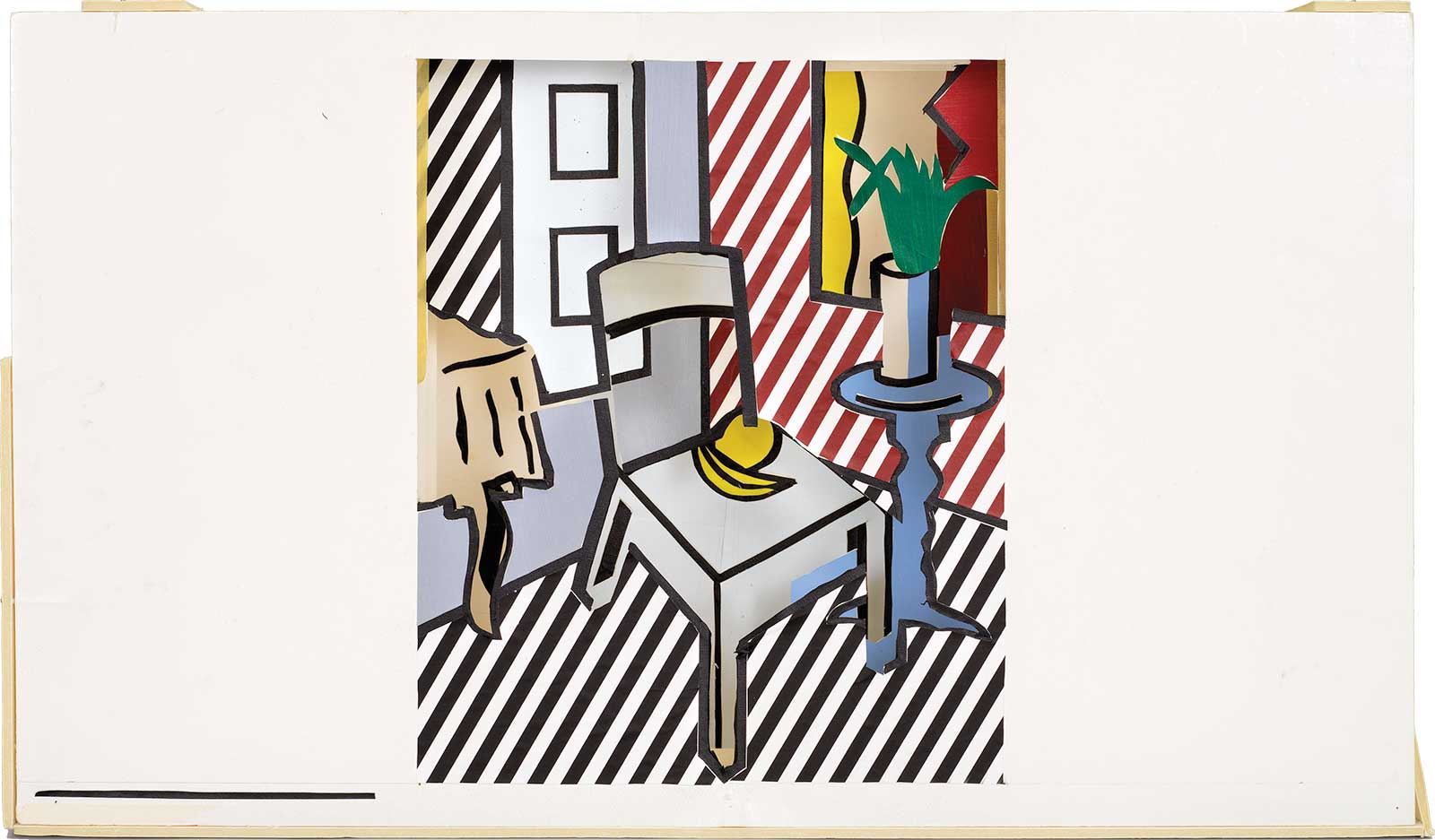
Roy Lichenstein (1923-1997), Hologram Interior (model), ca. 1996. Collaged paper, tape, and pins on board, 141⁄8 x 237⁄8 x 6 in. Whitney Museum of American Art, New York, NY. The Roy Lichtenstein Study Collection, gift of the Roy Lichtenstein Foundation. © Estate of Roy Lichtenstein, all rights reserved.
In a 2021 essay for the Castelli Gallery, Kenneth Silver, then professor of art history at New York University, wrote, “It’s as if almost everything about the works that Roy Lichtenstein exhibited at Castelli in 1962 was calculated to enrage the likes of Greenberg. This meant, significantly, that the values of New York ‘action painting, of abstract expressionism, were turned on their head. In place of that movement’s dedication to abstract, private, hand-made self-expression of existential seriousness, these brand-new works were figurative, public, mechanical-looking, and ironic. The fact that they mirrored contemporary life was, therefore, for Greenberg and many others, a double-headed affront to avant-garde decorum: not only did they embrace commercial America, but they were representational, not abstract.”
In 1965, Lichtenstein created the screenprint Brushtroke, deconstructing and, in effect, mocking the gestural brushstrokes of abstract expressionism.
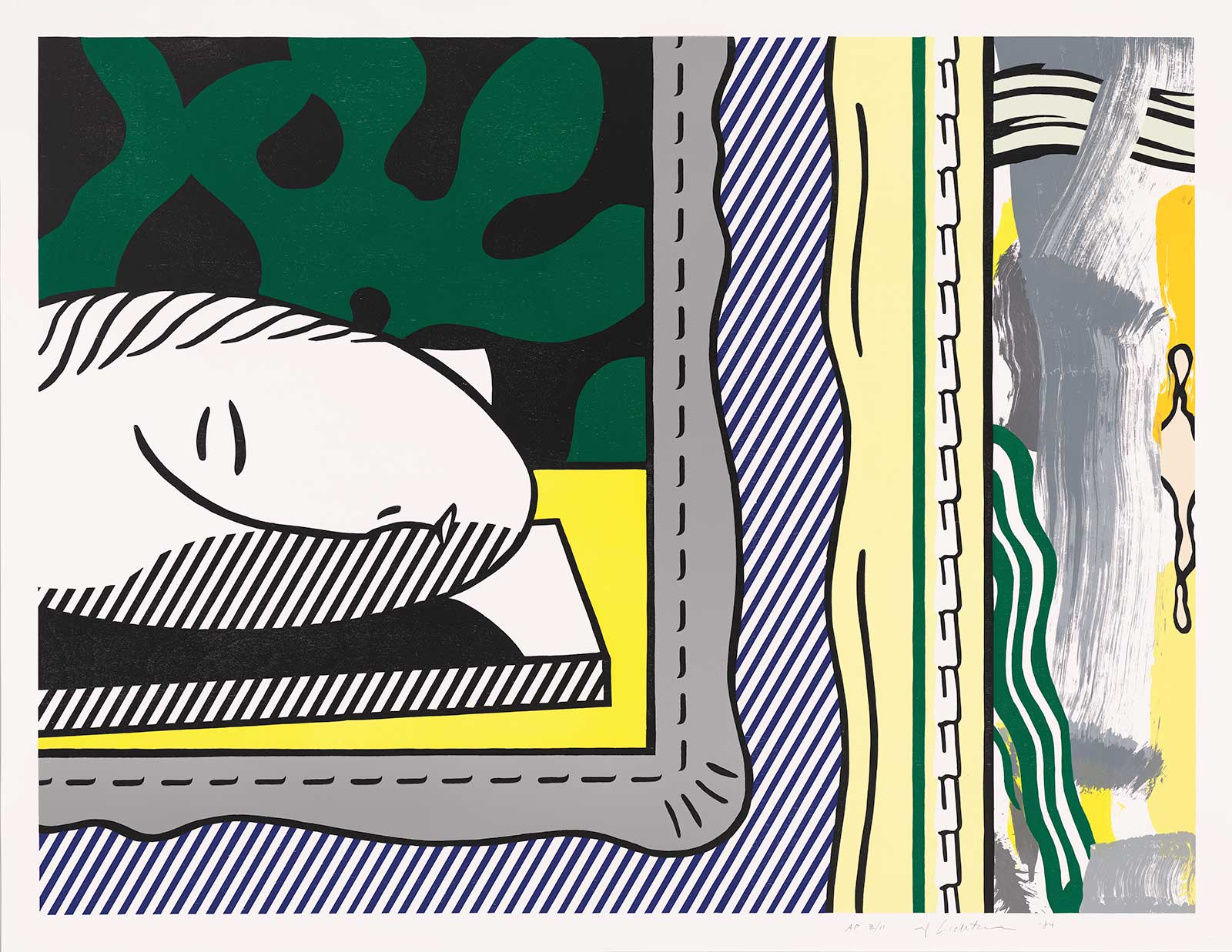
Roy Lichenstein (1923-1997), Two Paintings: Sleeping Muse, 1984. Woodcut, lithograph, screenprint, and collage on paper, 34¾ x 4513⁄16 in., ed. 60. Printed by Gemini G.E.L. Whitney Museum of American Art, New York, NY. The Roy Lichtenstein Study Collection, gift of the Roy Lichtenstein Foundation. © Estate of Roy Lichtenstein, all rights reserved.
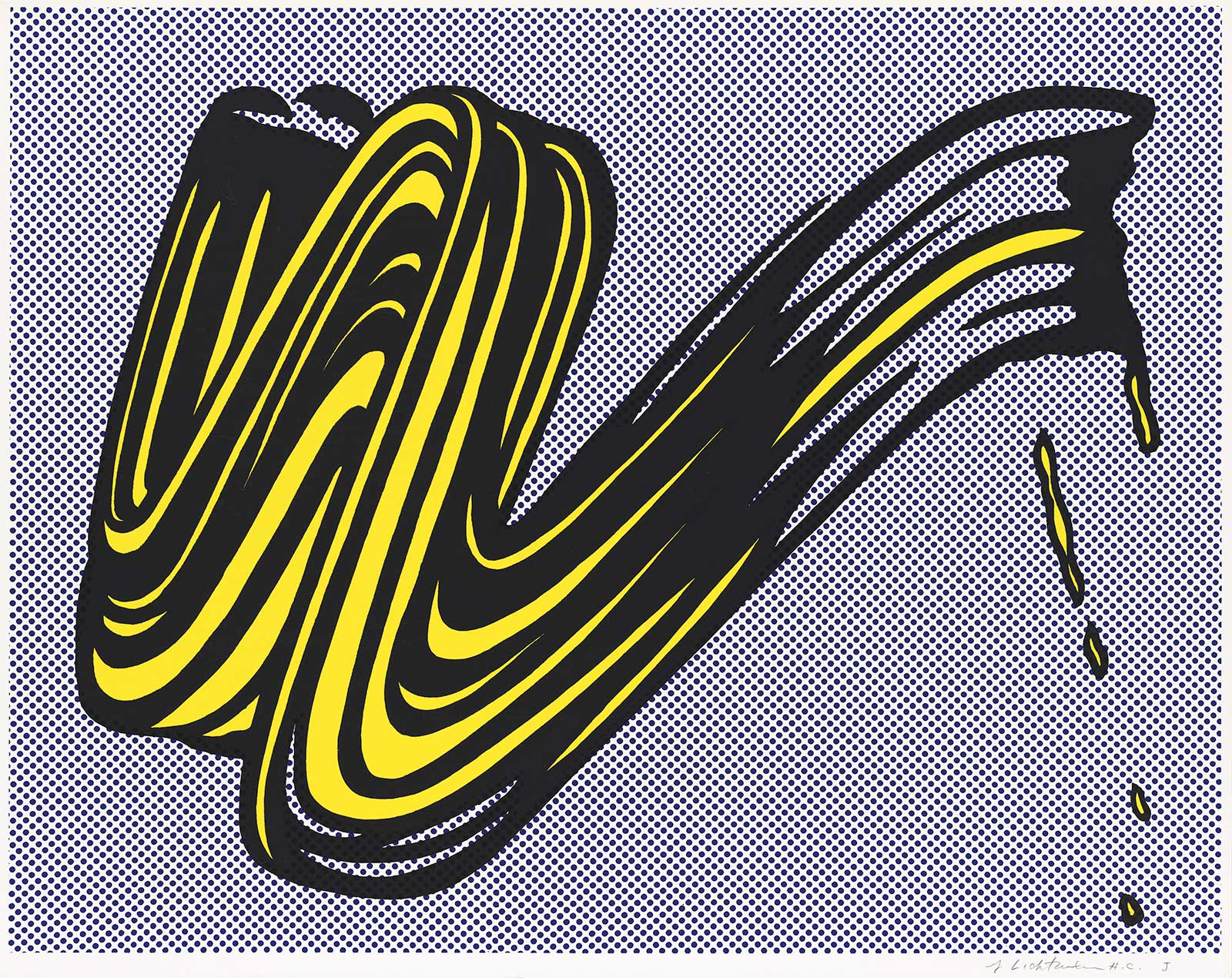
Roy Lichenstein (1923-1997), Brushstroke, 1965. Color screenprint, sheet: 23 x 29 in., image: 221/4 x 28½ in., ed. 280. Published by Leo Castelli Gallery; printed by Chiron Press Inc. Whitney Museum of American Art, New York, NY. The Roy Lichtenstein Study Collection, gift of the Roy Lichtenstein Foundation. © Estate of Roy Lichtenstein, all rights reserved.
Lichtenstein redefined the possibilities of painting and broke the stranglehold Greenberg’s definition of high art had on the art world. Although he adopted the Ben-Day Dots used to inexpensively create tonal variation in commercial printing, his paintings were painstakingly created by hand. His use of repurposed imagery foreshadowed the ubiquitous repurposing of imagery we experience today with the wide range of digital manipulation we have available.
The Whitney concisely explains Lichtenstein’s technique in its collection text for a painting in its collection. “In Girl in Window, a study for a mural commissioned by the architect Philip Johnson for the New York State Pavilion at the 1964 World’s Fair, Lichtenstein represented the half figure of a comely female through a combination of simplified passages of solid color, bold black outlines and areas of gridded dots. Yet his technique is more labor intensive, and manual, than his coolly detached surfaces—and their allusion to industrial reproduction—suggest. His process involved first sketching his selected subject, then projecting the drawing using an opaque projector, tracing the image onto canvas and, finally, filling in the outline with contours and dots, which were applied with a stencil to emulate the Benday dots of halftone printing processes.”
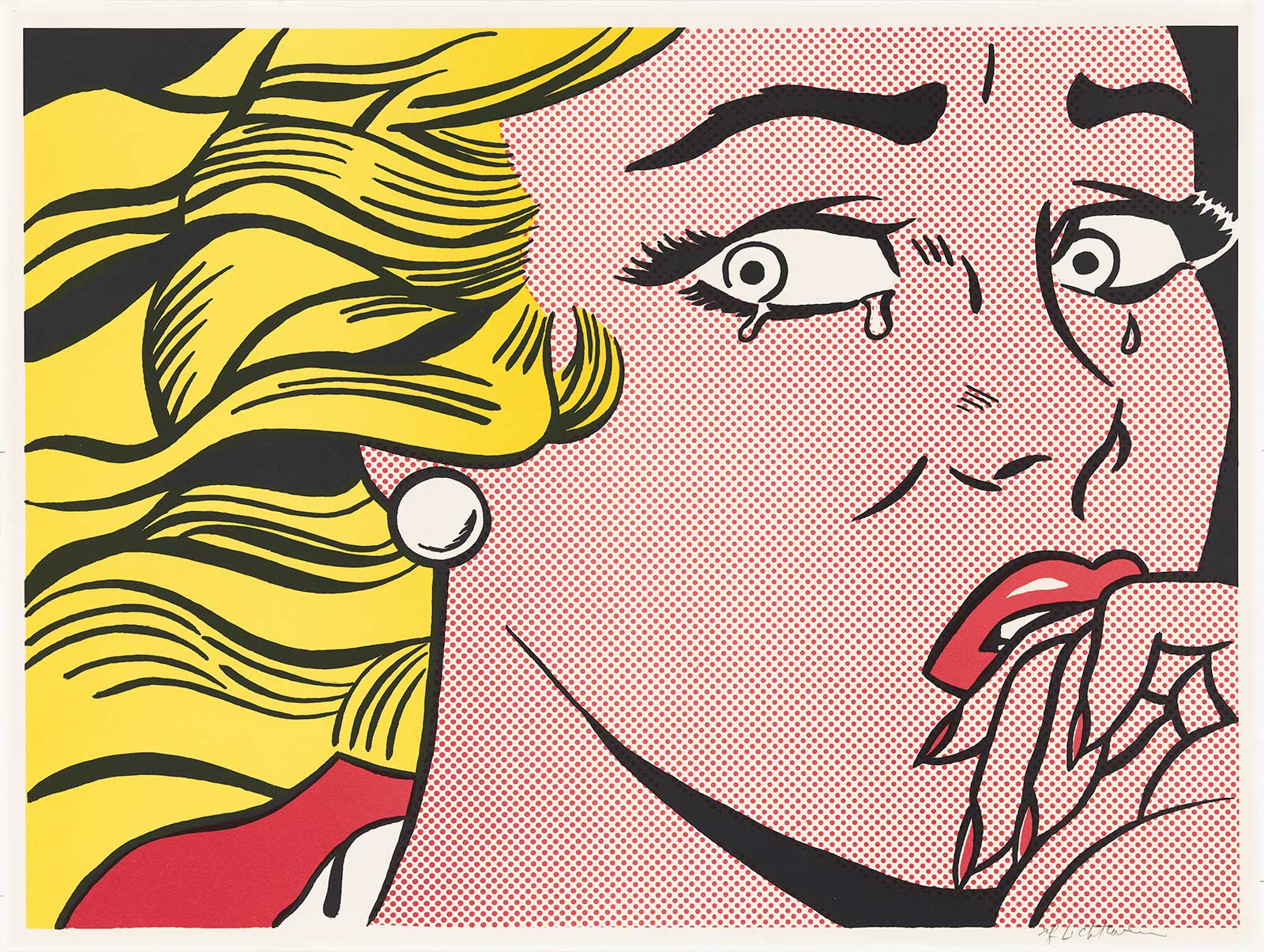
Roy Lichenstein (1923-1997), Crying Girl, 1963. Offset lithograph, 17¾ x 23¾ in. Whitney Museum of American Art, New York, NY. Gift of Scott Newman. © Estate of Roy Lichtenstein, all rights reserved.
Lichtenstein wrote, “I don’t know why you’d want to say your work comes from nature, because art is related to perception, not nature. All abstract artists try to tell you that what they do comes from nature, and I’m always trying to tell you that what I do is completely abstract. We’re both saying something we want to be true.” —
October 14, 2026–May 10, 2027
Roy Lichtenstein: Like New
The Whitney Museum of American Art
99 Gansevoort Street, New York, NY 10014
(212) 570-3600, www.whitney.org
Powered by Froala Editor