
Shortly after Ben Colman started working at the Detroit Institute of Arts, he took an interest in the only O’Keeffe painting in the institute’s permanent collection, Stables. “It’s a 1932 painting of a barn. She made this during a road trip across the Gaspé Peninsula of Quebec…and it’s really an extraordinary painting,” says Colman, who is now curator of American art at the museum.
“It’s so precise, minimal and economical in the way she uses form, color and detail. It’s so abstracted and very specific, but it’s also a painting of a barn, and for so many people who come to the museum, a barn is not what they expect [from] Georgia O’Keeffe.”
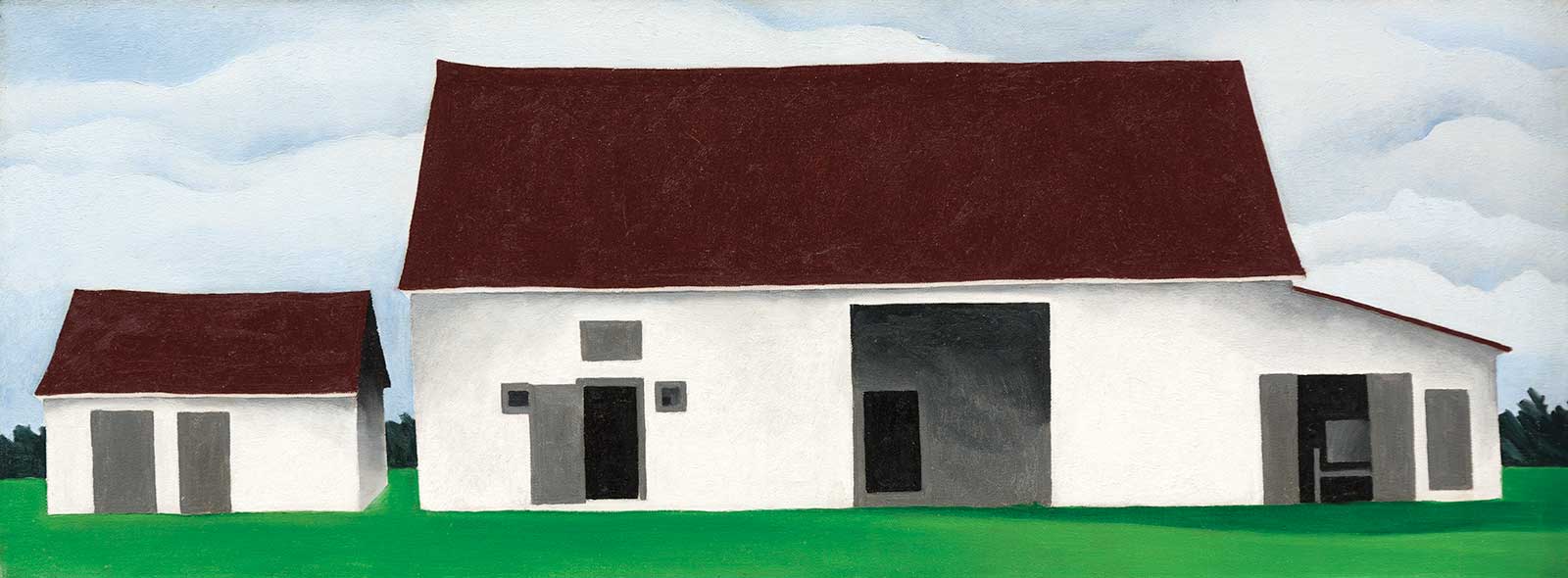
Georgia O’Keeffe (1887-1986), Stables, 1932. Detroit Institute of Arts, Gift of Robert Tannahill, 45.454. © 2026 The Georgia O’Keeffe Foundation/Artists Rights Society (ARS), New York
The painting spurred him to research the broader story of O’Keeffe’s architectural works. That curiosity quickly blossomed into a larger research project that became the Georgia O’Keeffe: Architecture exhibition, opening at Detroit Institue of Arts in September.
The first-of-its-kind exhibition will focus solely on O’Keeffe’s work on architecture and the breadth of her vision for the built environment. Drawing on the artist’s personal letters and writings, the research sheds light on this overlooked dimension of her work and reveals that her interest went beyond painting.
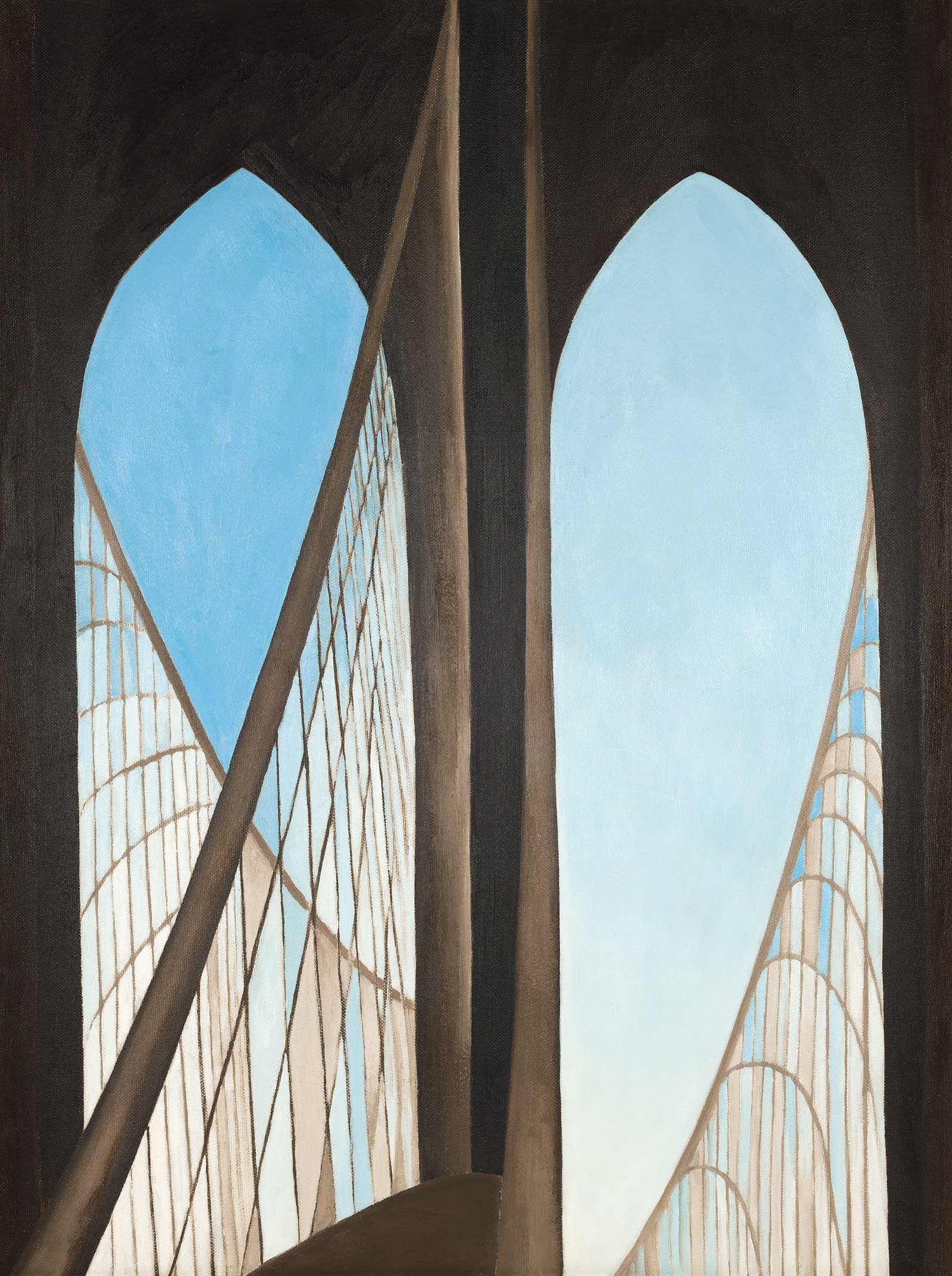
Georgia O’Keeffe (1887-1986), Brooklyn Bridge, 1949. Brooklyn Museum, Bequest of Mary Childs Draper. © 2026 The Georgia O’Keeffe Foundation/Artists Rights Society (ARS), New York
Through roughly 40 works arranged to showcase three distinct viewpoints across several decades of her work—the urban landscapes of New York, rural farm buildings and the adobe structures of her New Mexico home—visitors can trace the changes in the way O’Keeffe is in communication with the landscapes.
“In the different places where she painted architectural works, she was very specific to identify the language of buildings that was most precisely calibrated to an evocation of that place,” Colman explains.
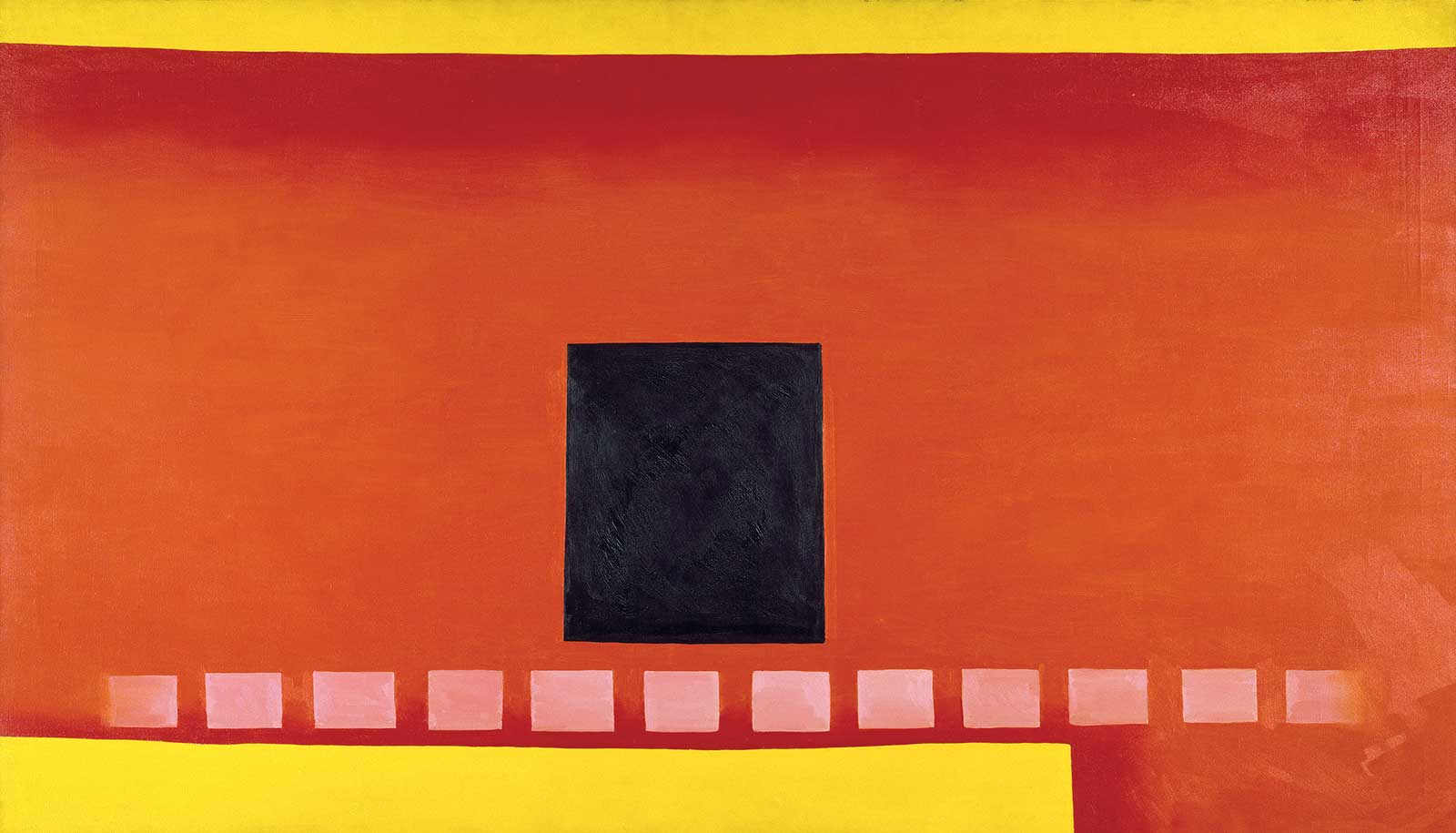
Georgia O’Keeffe (1887-1986), Black Door with Red, 1954.. Chrysler Museum of Art, Norfolk, Bequest of Walter P. Chrysler, Jr. © 2026 The Georgia O’Keeffe Foundation/Artists Rights Society (ARS), New York
“Which means that when she is in Quebec, she doesn’t paint Victorian farmhouses…but the white painted barns, like Stables, that to her eye looked like they came right from the earth,” says Coleman. “When she’s in Manhattan, she’s not going to paint barns. She looks to identify the different language of architecture that is defining that place and that space to her. So, of course, that is the Art Deco skyscrapers, and it’s very precisely calibrated to the neighborhood where she moved on the east side of Midtown Manhattan.”
“Similarly, when she goes to New Mexico, this is a place that has its own very interesting and fascinating architectural history, and it is the qualities that are most specific to New Mexico, and its buildings that draw her in—adobe walls, these single-story hacienda farmhouses and buildings, the biomorphic surfaces of mud brick and adobe brick buildings. Those are things that she could only paint in New Mexico. That becomes the language that anchors are into place,” says Colman.
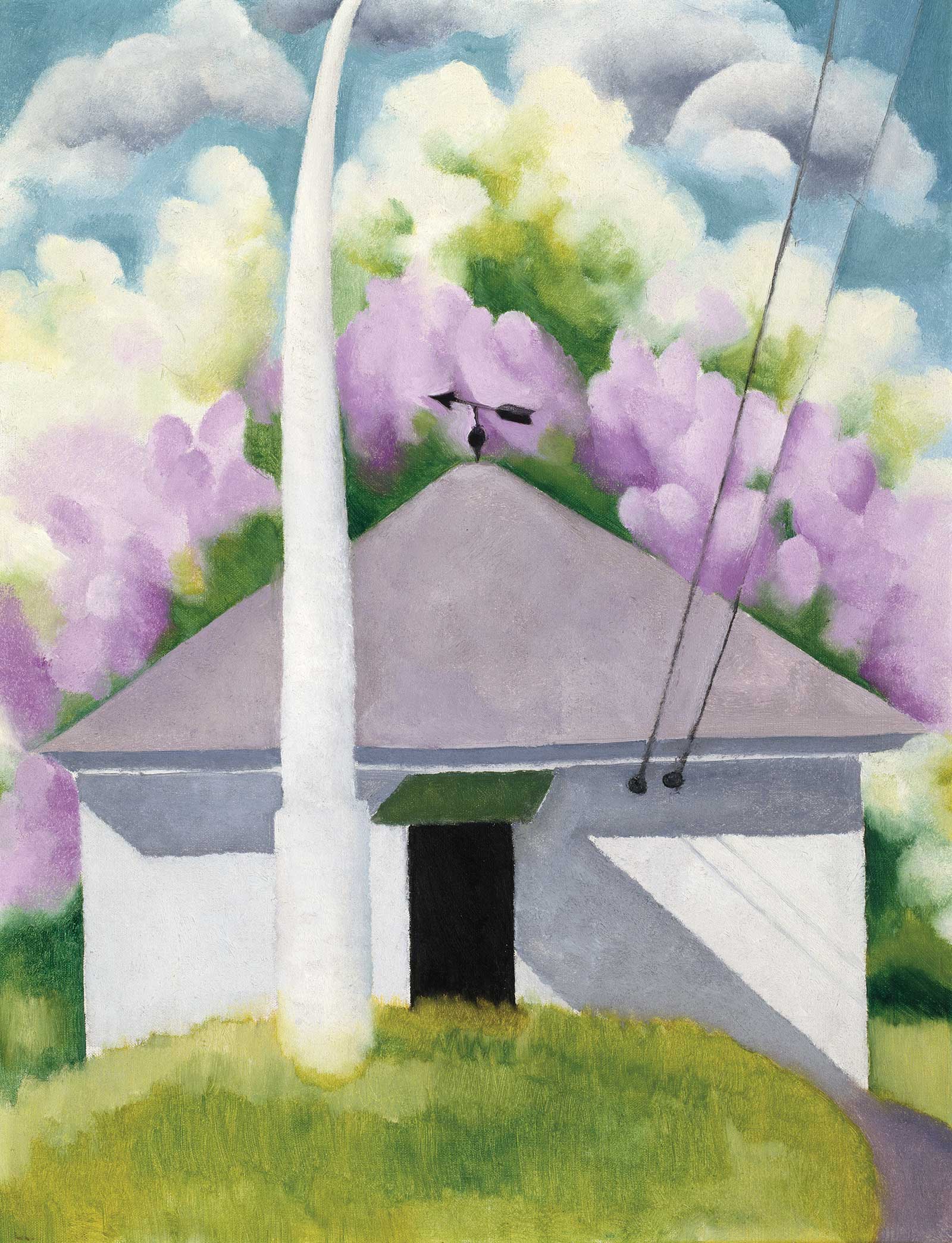
Georgia O’Keeffe (1887-1986), Spring, 1923-24. The Art Institute of Chicago, Bequest of Paul and Gabriella Rosenbaum . © 2026 The Georgia O’Keeffe Foundation/Artists Rights Society (ARS), New York
O’Keeffe was seldom in one place for more than a few months, but through her work on display, including Stables, Brooklyn Bridge, The Patio III and Spring and others, viewers glean the sense that when she enters a new space, she absorbs the views, details and distinct characteristics and brings them into her studio.
Part of Colman’s research was reading O’Keeffe’s letters and getting into the mind of the artist to understand her work. To give visitors that same level of understanding, the museum will also publish a fully illustrated catalogue with a series of essays on O’Keeffe’s architectural works to accompany the exhibit.
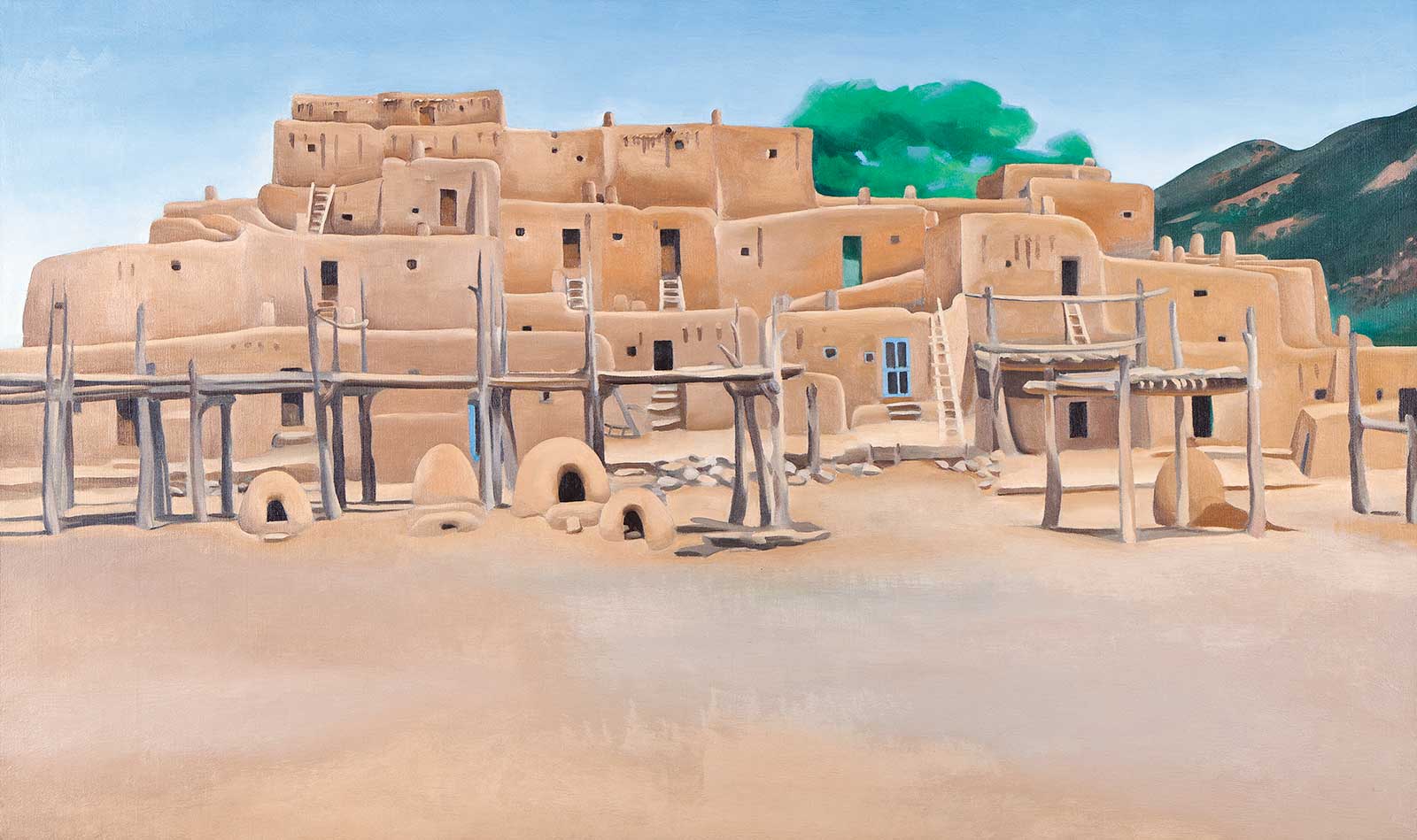
Georgia O’Keeffe (1887-1986), Taos Pueblo, 1929/1934. Collection of the Eiteljorg Museum of American Indians and Western Art, Indianapolis © 2026 The Georgia O’Keeffe Foundation/Artists Rights Society (ARS), New York
Another way the exhibition is immersing visitors is through two digital video experiences. One recreates the view of the East River in New York from O’Keeffe’s apartment window, where she moved at the height of her appeal. The other captures her New Mexico patio, the door of which she painted several times throughout her life, as it appears today across different times of day.
“These spaces and views that O’Keefe returned to again and again, the act of repeated observation, serial painting, repetition and a kind of meditative encounter with her everyday spaces was essential for the way that O’Keefe worked,” says Coleman. “The views that she painted were those that she knew the best, and they were those that she inhabited in very thoughtful and prolonged ways.
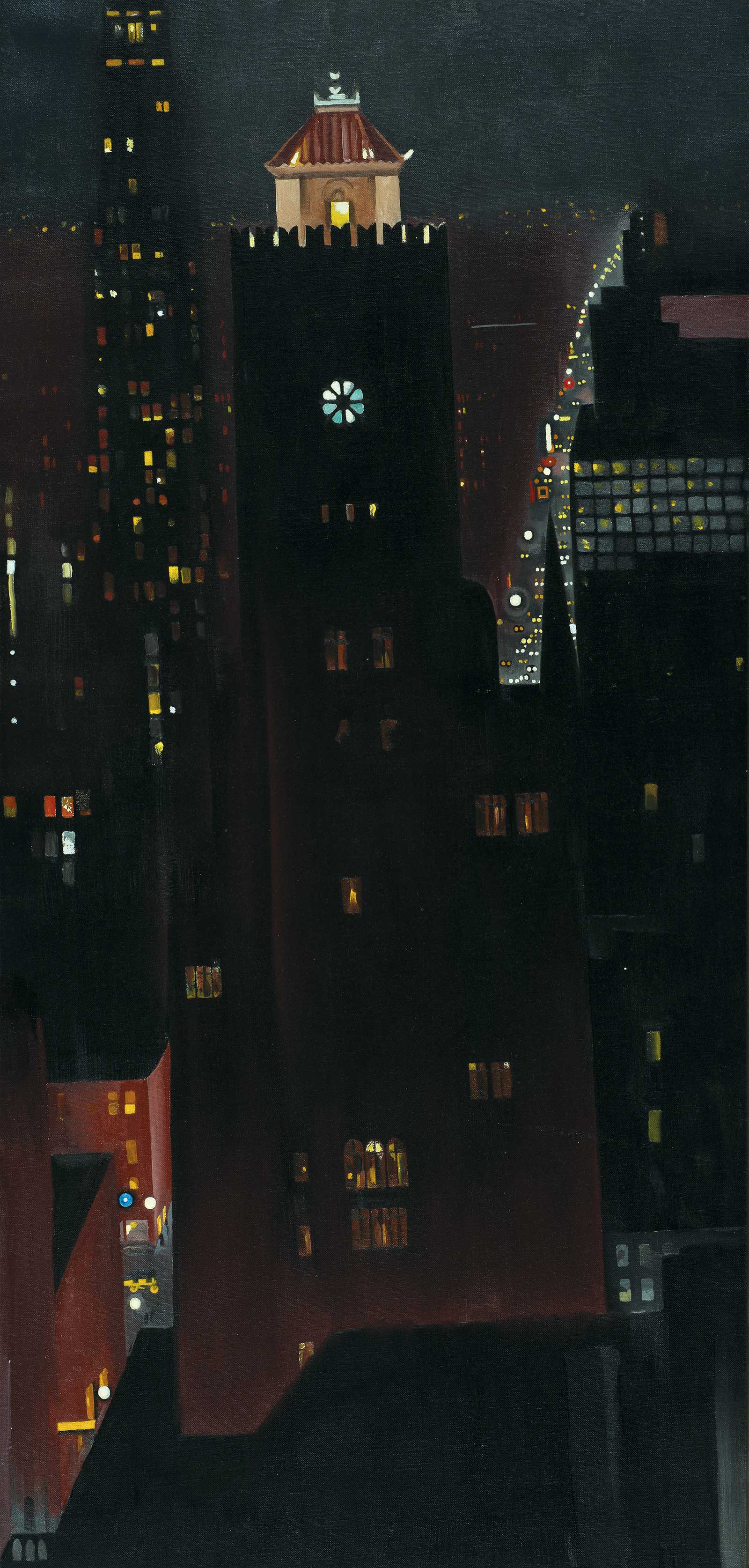
Georgia O’Keeffe (1887-1986), New York Street with Moon, 1925. Carmen Thyssen Collection, Madrid. © 2026 The Georgia O’Keeffe Foundation/Artists Rights Society (ARS), New York
“I find it exciting that she’s someone who was never set in stone. She became incredibly famous in the 1920s for her paintings of flowers and then spent the next 60 years trying new things, and inventing new languages, and moving to different places...continuing to evolve,” says Colman.
Georgia O’Keeffe: Architecture will open September 11, 2026 and run January 3, 2027 at the Detroit Institute of Arts. —
Powered by Froala Editor