A new exhibition at the Rockwell Museum, Art at Work: Reframing Artists of the WPA, examines how artwork commissioned as part of the Federal Art Project of the Works Project Administration reflects the experiences and ideals of America during the Great Depression.
Art at Work features 40 paintings and prints executed in the social realist style by artists across the country, including Thomas Hart Benton, Douglass Crockwell, Philip Evergood, Michael Gallagher, Riva Helfond, Gene Kloss, Yasuo Kuniyoshi, Reginald Marsh, Elizabeth Olds and Dox Thrash.
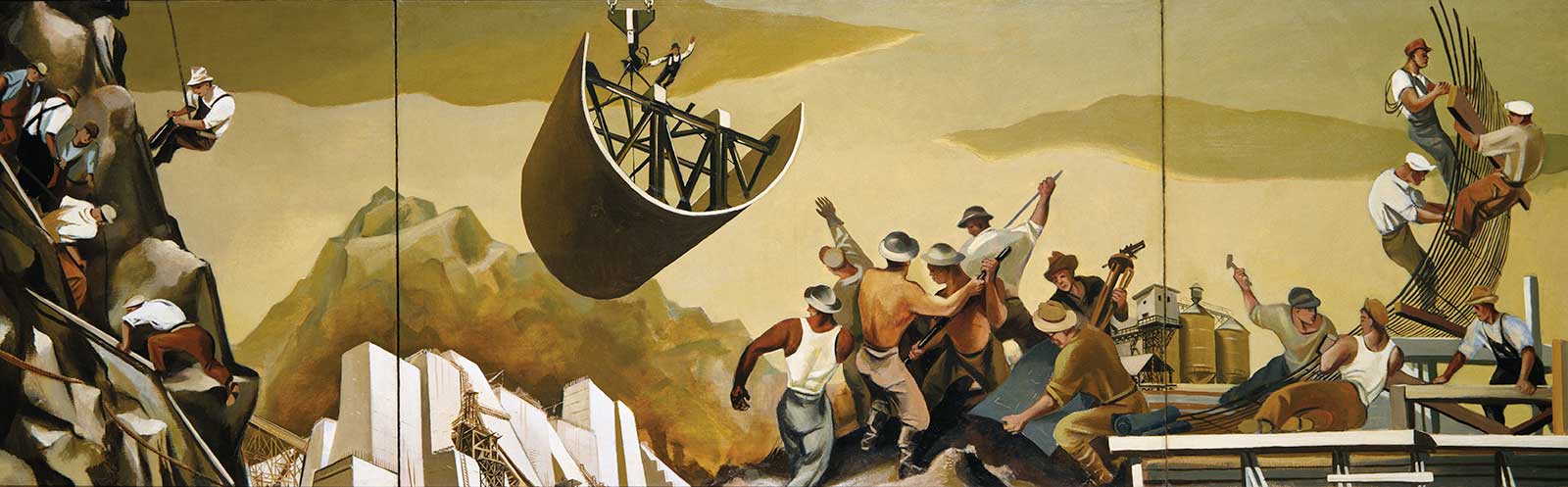
William Gropper (1897-1977), Construction of the Dam (study for mural, the Department of the Interior, Washington, D.C.), 1938. Oil on canvas, overall: 271/4 x 871/4 in. Smithsonian American Art Museum, Transfer from the U.S. Department of the Interior, National Park Service, 1965.18.11A-C.
Amanda Lett, the museum’s curator of collections and exhibitions, and Erin M. Coe, its executive director, explain, “While some of the scenes deal with difficult subject matter, such as poverty and labor unrest, the artists creating for the WPA also infused their prints and paintings with resolute, hopeful figures with an aim to uplift and inspire viewers that through industry driven by everyday people, better times lay ahead. This optimism and collective sense of unity in the face of uncertainty explains the continued fascination with WPA-era artworks.”
Art at Work is organized into two sections, one showcasing works that highlight the dignity of labor, and the other, those that revolve around themes of rest and community life.
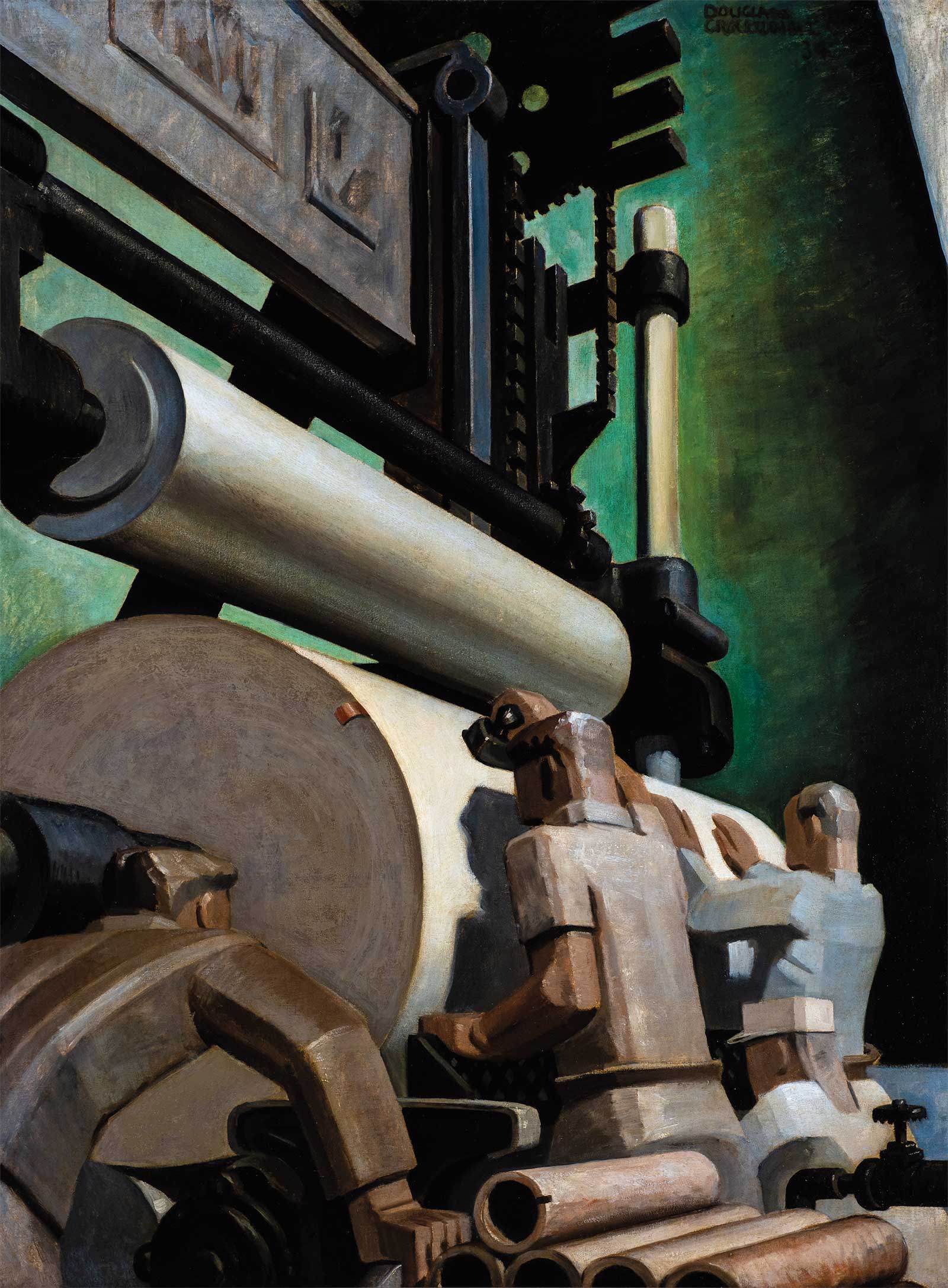
Douglass Crockwell (1904-1968), Paper Workers, Finch Pruyn & Co., Glens Falls, New York, 1934. Oil on canvas, 48 x 36 in. The Hyde Collection, Glens Falls, NY. Gift of Mr. and Mrs. Samuel P. Hoopes Jr., 2009.3. Photograph by mclaughlinphoto.com.
Among the highlights in the exhibition is a study for a larger mural by Gropper (1897-1977), on loan from the Smithsonian American Art Museum, that resides in the Department of the Interior in Washington, D.C. Construction of the Dam, 1938, depicts workers that built hydroelectric dams as part of New Deal programs.
Also of note is Crockwell’s (1904-1968) Paper Workers, Finch Pruyn & Co., Glens Falls, New York, an example of a WPA painting depicting scenes outside of urban centers like New York City. In this case, it captures people working at a paper factory in the Upstate New York community of Glens Falls. “Similarly, the Chicagoan Bernece Berkman’s contribution to The American Block Print Calendar from 1937 highlights the teamwork and communication from artists throughout the nation to produce usable items for distribution,” the curators say.
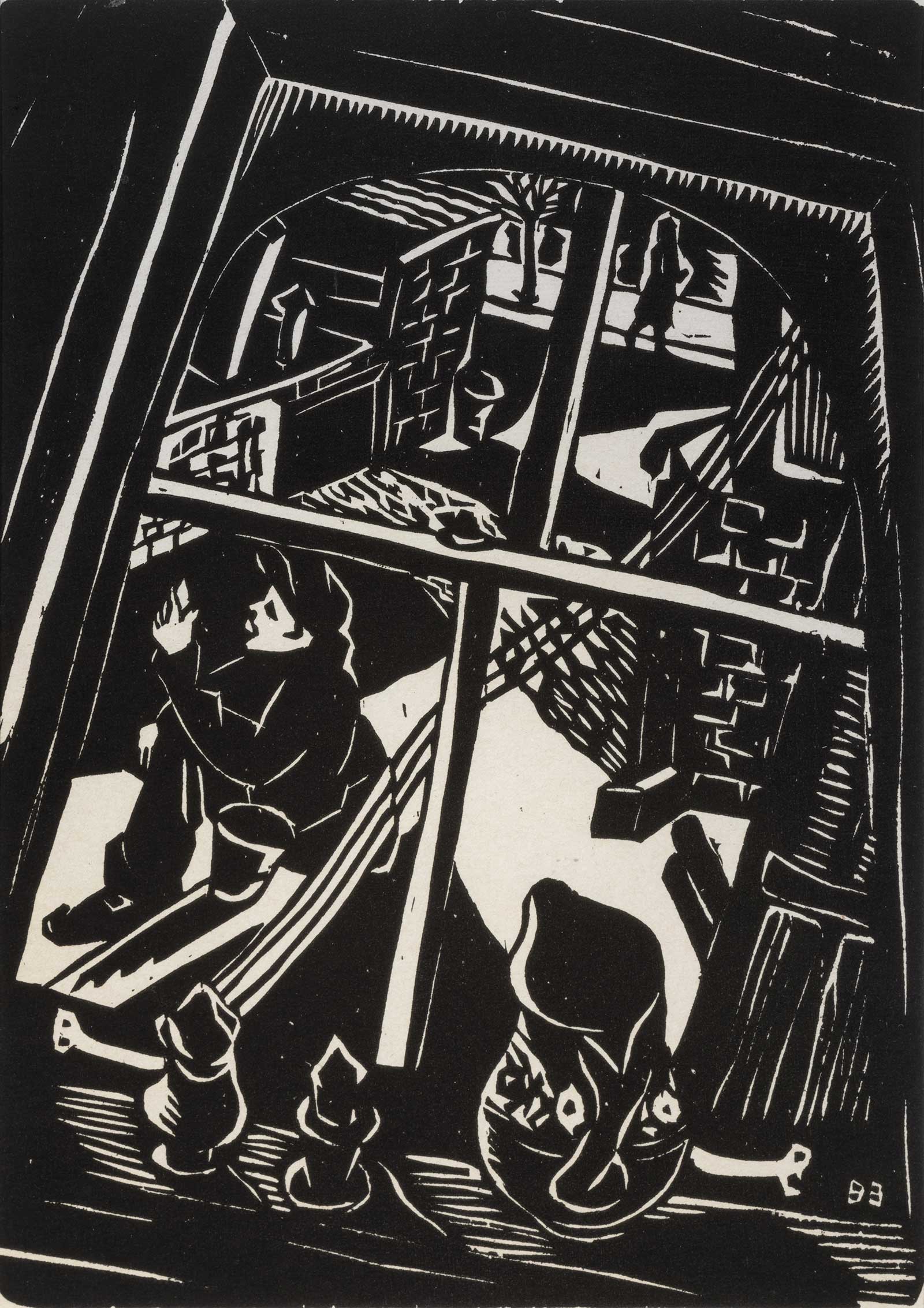
Bernece Berkman (1911-1988), Lunch Time, 1936. Woodcut on paper, 7 x 5 in. Gift of Marianne Woods in memory of Kenneth Cooper. 2021.1.15.
The sweeping WPA work-relief programs supported thousands of visual artists between 1935 to 1943, and Evergood’s painting, The Pink Dismissal Slip, shifts attention to the subject of artist as laborer. “In a similarly precarious job situation as many American workers, the artist in this painting receives a pink slip, firing him from the WPA,” explain Lett and Coe.
Nearly 100 after the WPA initiatives were launched, art of this era continues to captivate patrons and collectors, perhaps now, more so than ever.
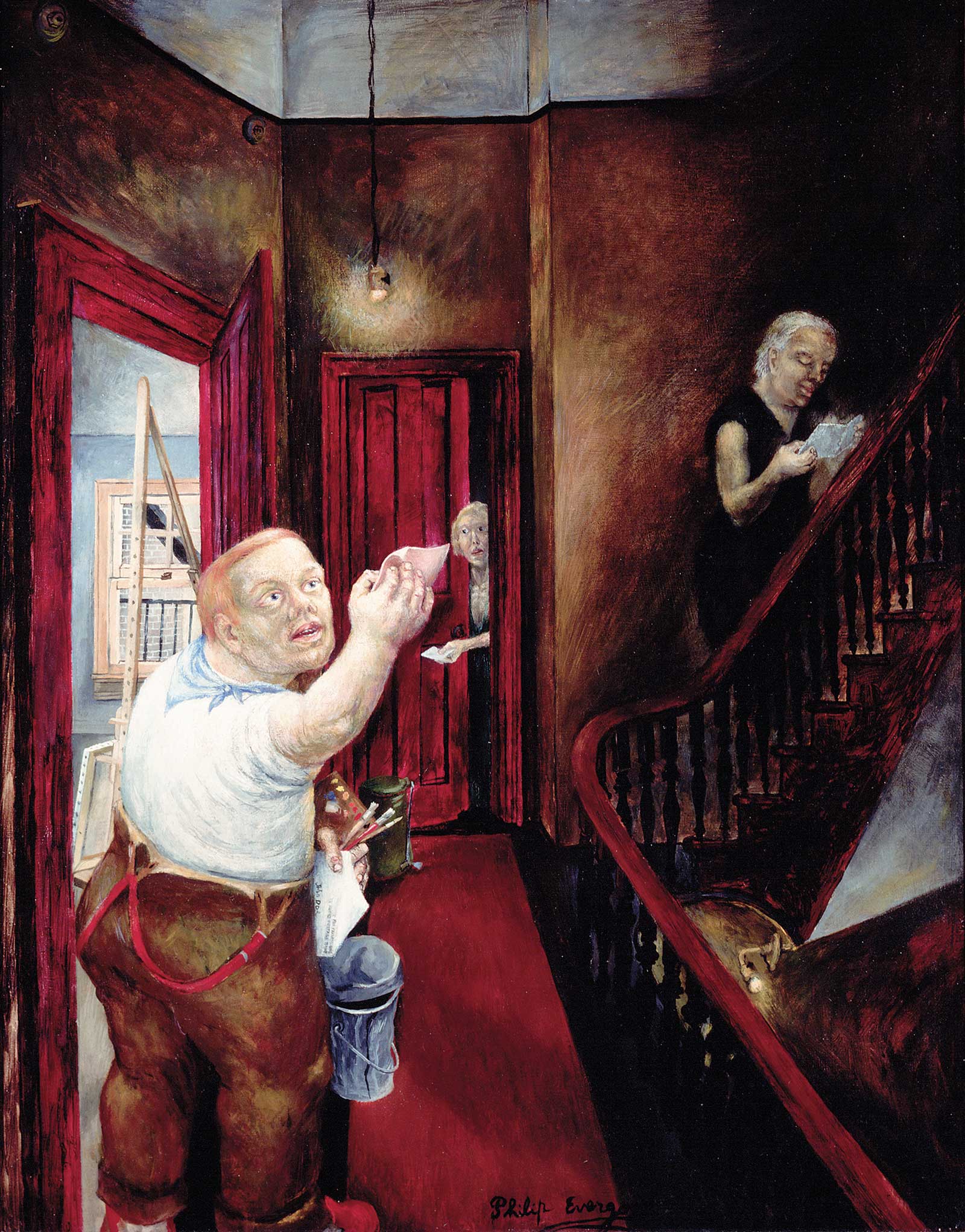
Philip Evergood (1901-1973), The Pink Dismissal Slip, 1937. Oil on hardboard, 281⁄8 x 221⁄16 in. Collection of the Herbert F. Johnson Museum of Art, Cornell University, Gift of Harry N. Abrams, 57.409.
“The artists of the New Deal era captured the dignity of work, the strength of communities, and the struggles and aspirations of everyday Americans at a moment of profound change,” say Lett and Coe. “These works continue to resonate because they speak to these enduring themes. We hope visitors will see these works not simply as records of the past, but as an opportunity to reflect on the experiences that connect us across generations and on the enduring role of art in helping us to better understand one another. At this important moment for our museum and our country, we invite visitors to look closely, to reflect on our own time, and join us in reframing the American story.” —
Powered by Froala Editor