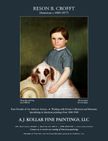
Allan J. Kollar, the founder of A.J. Kollar Fine Paintings in Seattle, began his career in 1976 with a master’s degree in painting from the University of Washington, and worked as an exhibiting artist and art educator before transitioning into consulting and opening a gallery. He was the co-founder of the American Art Council at the Seattle Art Museum and created an endowment for an American art history chair at the University of Washington, where he also sponsors a lecture series of visiting scholars of American art.
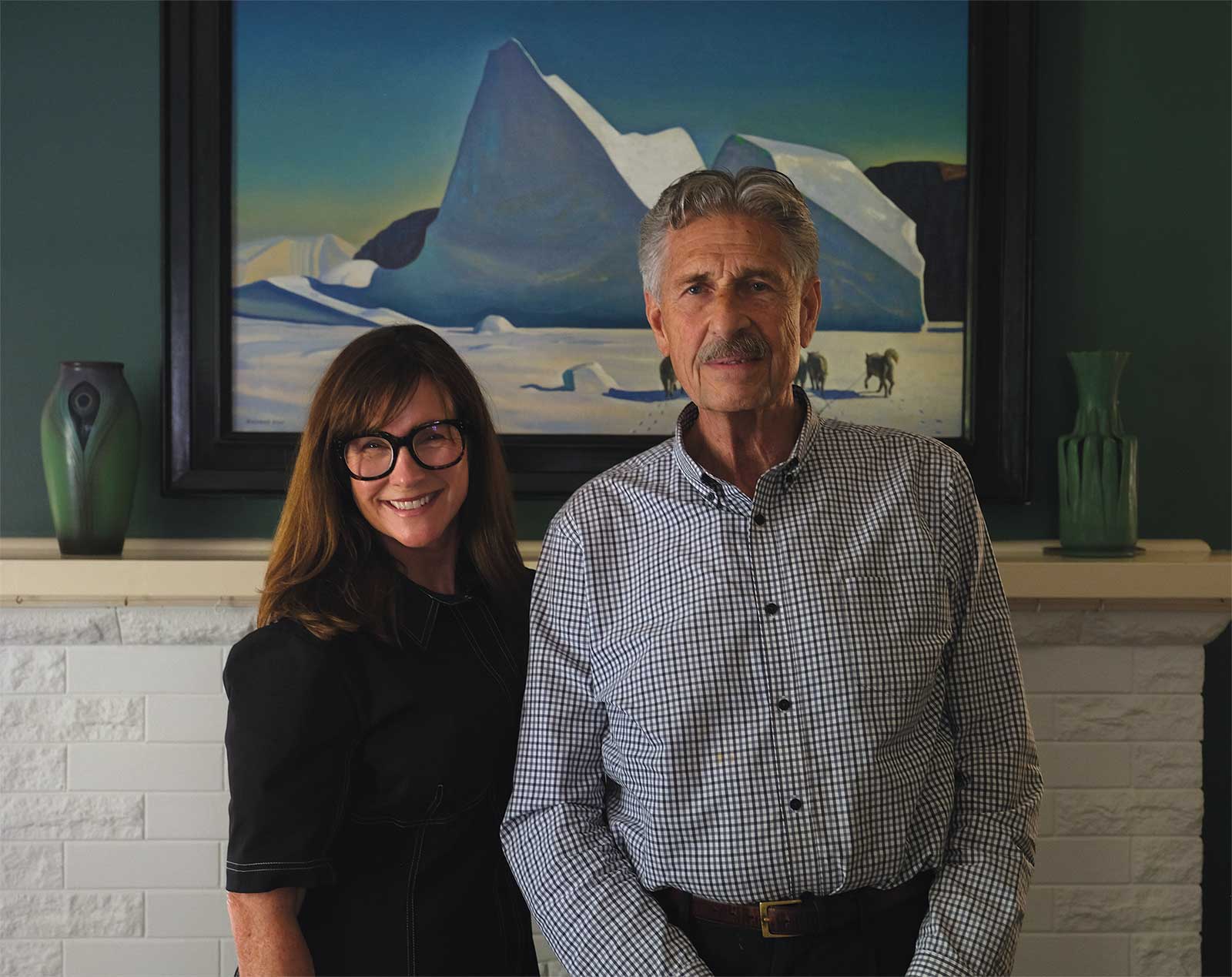
Allan Kollar with his daughter and gallery partner, Colleen Sloan.
Tell me about your journey as an artist and fine art dealer and how you educated yourself along the way.
For 18 years I was an active practicing artist in Seattle. I earned an MFA in painting and printmaking from the University of Washington in the early 1970s and was fortunate to have the artist Jacob Lawrence on my graduate thesis committee. He was an important mentor and influence in my life. At the same time, I was a public high school art teacher teaching drawing, painting, design, printmaking and art history. While I was in graduate school, in addition to teaching, I stepped into the commercial world of art, designing graphics for buildings as well as drawings of newly crafted homes for Seattle newspapers. I also started a business called the Original Print around 1975 which focused on some of my own work in addition to prints by artists such as Rembrandt, Hopper, Dürer and Bellows. In 1977, the local NBC affiliate featured me in a human-interest story titled From the Basketball Court to the Art Studio, which gave my career an unexpected boost.
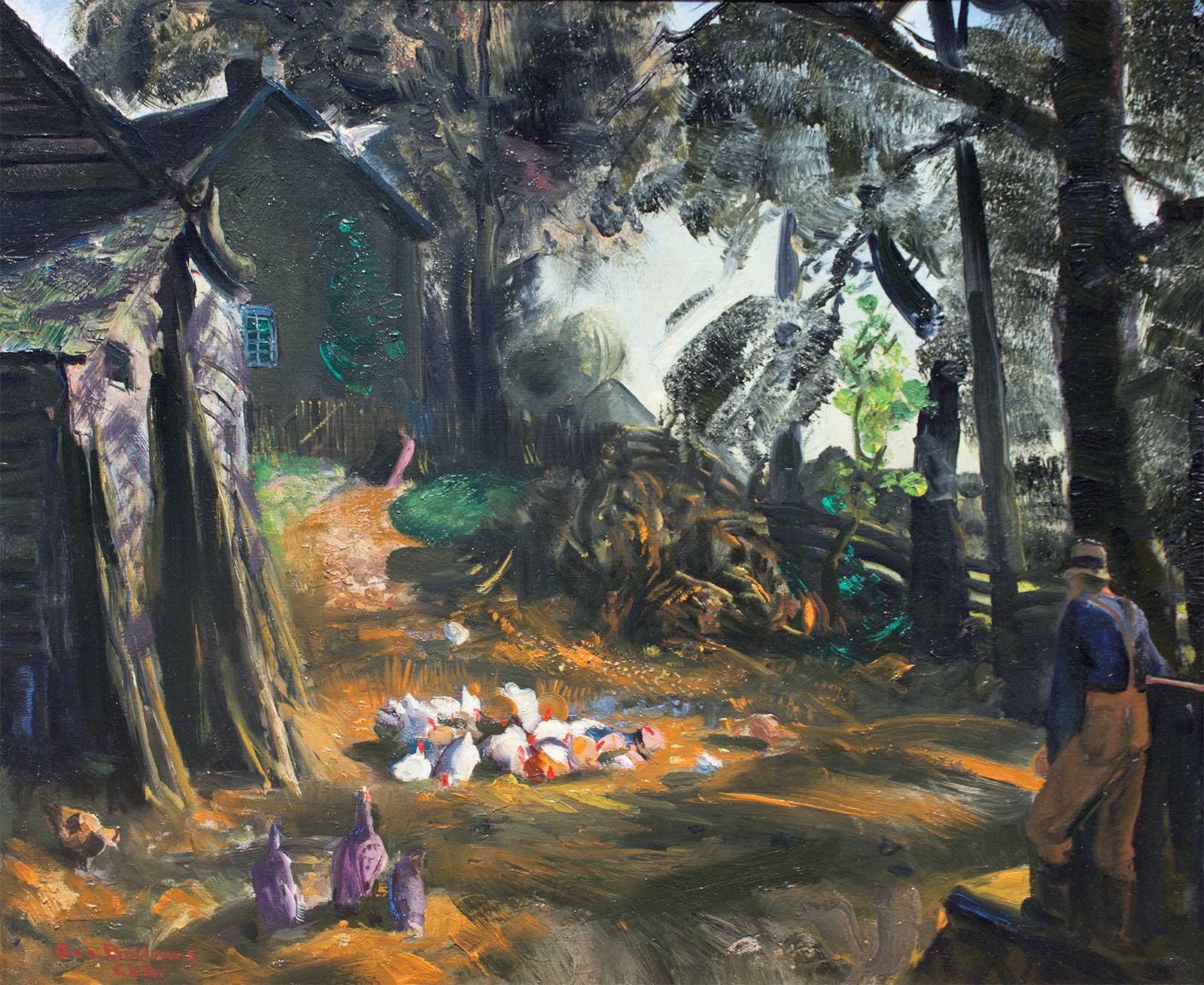
George Bellows (1882-1925), Farmer and Chickens, 1922. Oil on panel, 20 x 24 in., signed by the artist’s wife (Emily S. Bellows) lower left: Geo. Bellows / E.S.B.
How did your background lead to establishing a gallery in Seattle specializing in historic American art?
In the late 1970s, I began turning the early success of selling my own work as an artist into a personal collection of 19th- and early 20th-century American paintings. My wife Mary and I were inspired by an exhibition curated by Patricia Hills that came to Seattle in 1977 from the Whitney Museum titled Turn-of-the-Century America, and from that time we started adding paintings of that era to our personal collection. Soon after, collectors of the art I was producing at the time, became interested in the art I was collecting personally and asked if I would assist with their collections.
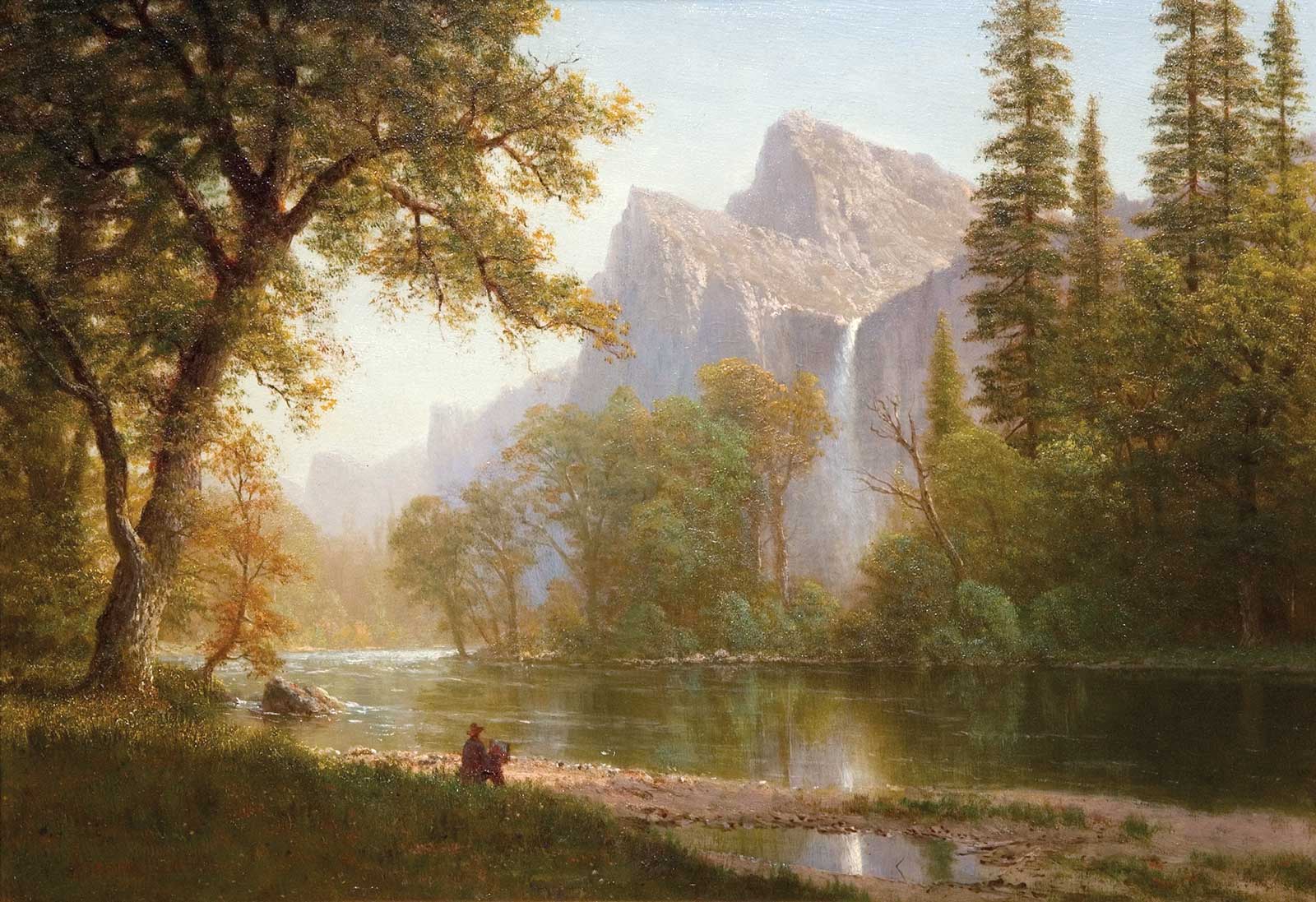
Albert Bierstadt (1830-1902), The Artist Sketching in Yosemite Valley. 1863. Oil on composition board, 13¾ x 19¾ in. signed lower left: ABierstadt.
In 1981, I brought to Seattle the first exhibition of American Hudson River School and American impressionist paintings available for purchase at Davidson Galleries in Pioneer Square. Soon thereafter, Sam Davidson and I started the partnership, Kollar & Davidson Galleries. I was responsible for the 19th- and early 20th-century American paintings in the gallery. My goal was to bring to the Pacific Northwest the finest examples of American art from 1840 to 1940, as there was so little representation from the period at that time.
By the mid-1980s I created a separate private gallery by appointment which I still own: A.J. Kollar Fine Paintings in the Capitol Hill neighborhood of Seattle. My daughter, Colleen Sloan, began attending the New York auctions with me while she was in high school in the 1980s and, following graduation from college, joined the gallery in 1992. She initially focused her work on the art historical research side of our business while also launching our annual catalog of American paintings, until eventually we combined efforts in all areas of the business. We have continued as partners in the gallery for almost 35 years.
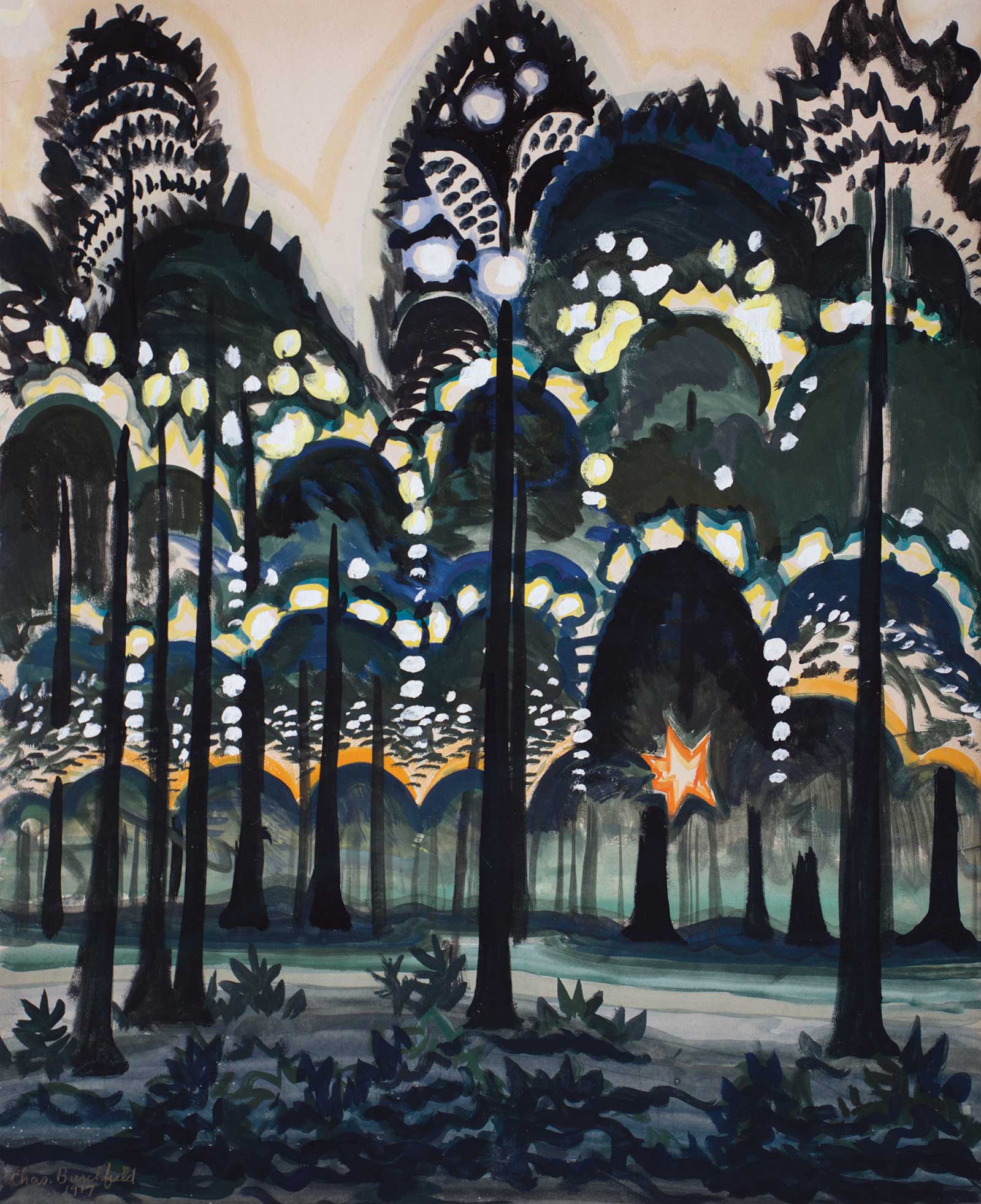
Charles Burchfield (1893-1967), Sunrise in the Forest, 1917. Watercolor and pencil on paper, 22 x 18 in., signed and dated lower left: ‘Chas. Burchfield / 1917’; inscribed, titled and dated on reverse.
What was your first major acquisition?
I might have known I would be a collector when, as an undergraduate with no money in the late 1960s, I wanted to purchase a two-plate color etching for $100 from one of my professors, the artist Keith Achepohl. To purchase that work, I sold the mag wheels that I had put on my father’s car in high school. Our early major American art collection started in the late 1970s with a William McGregor Paxton painting titled A Cup of Tea.
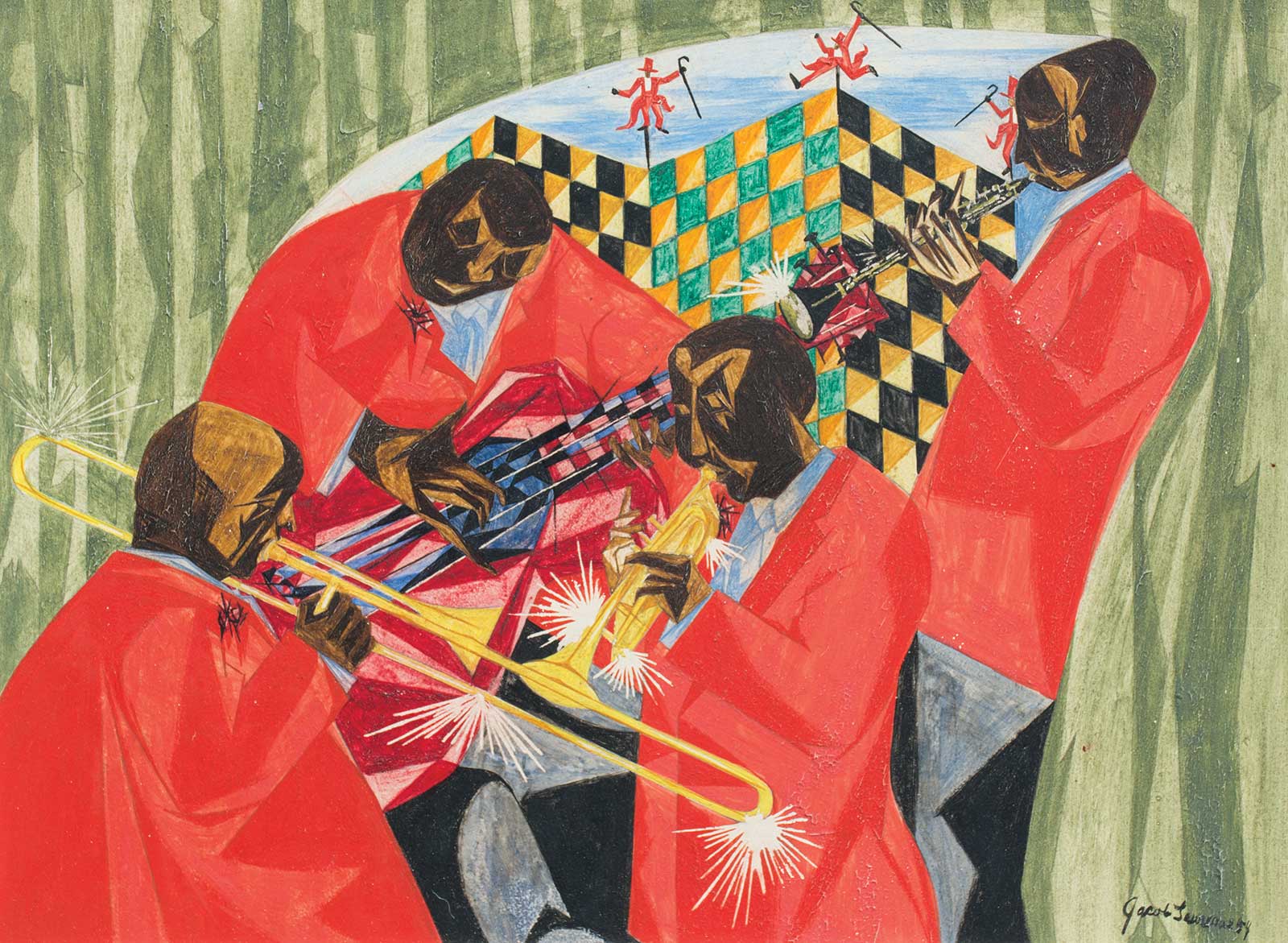 Jacob Lawrence (1917-2000), Village Quartet, 1954. Egg tempera on hardboard, 9 x 12 in. Signed and dated lower right: ‘Jacob Lawrence 54’.
What attracted you to 19th- and early-to-mid 20th-century American paintings in particular?
What drew me to collect in this era was the combination of skill, draftsmanship and beauty in the work. The awareness of nature and people within a social context of an earlier time still captivates me.
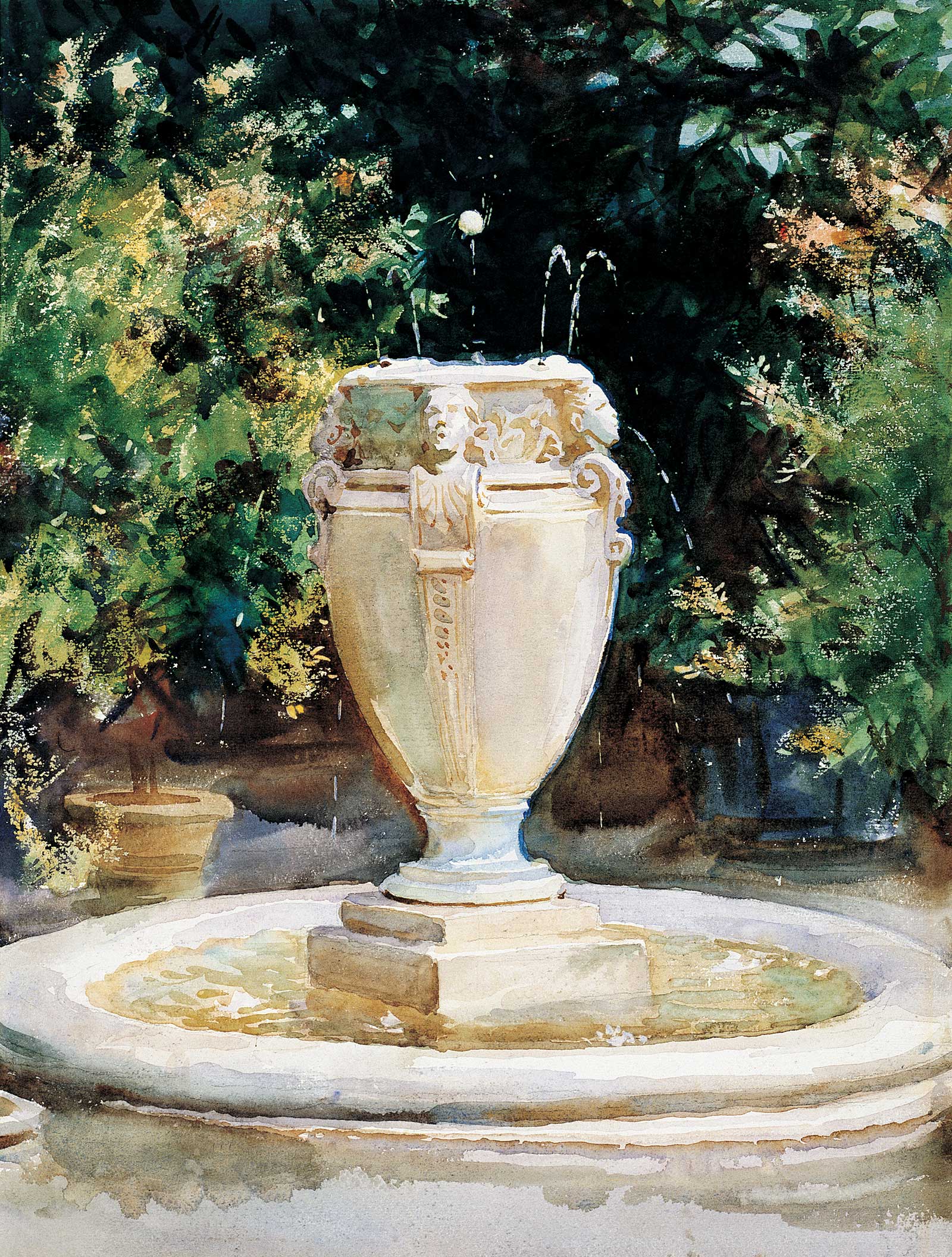
John Singer Sargent (1856-1925), Vase Fountain, Pocantico, 1917. Watercolor and pencil on paper, 21 x 15¾ in.
How has your experience as a practicing artist informed your business dealings?
My experience as a practicing artist is incredibly valuable to our business as a whole. I view art as someone who knows what it is like to move paint around on a canvas and who knows how to create compositional balance and perspective in a painting. I learned the significance of form myself and what kind of skill is required for true draftsmanship. Even when artists depart from more traditional styles, it is essential to have a firm understanding of what one is departing from, since art from the past informs the art of the future.
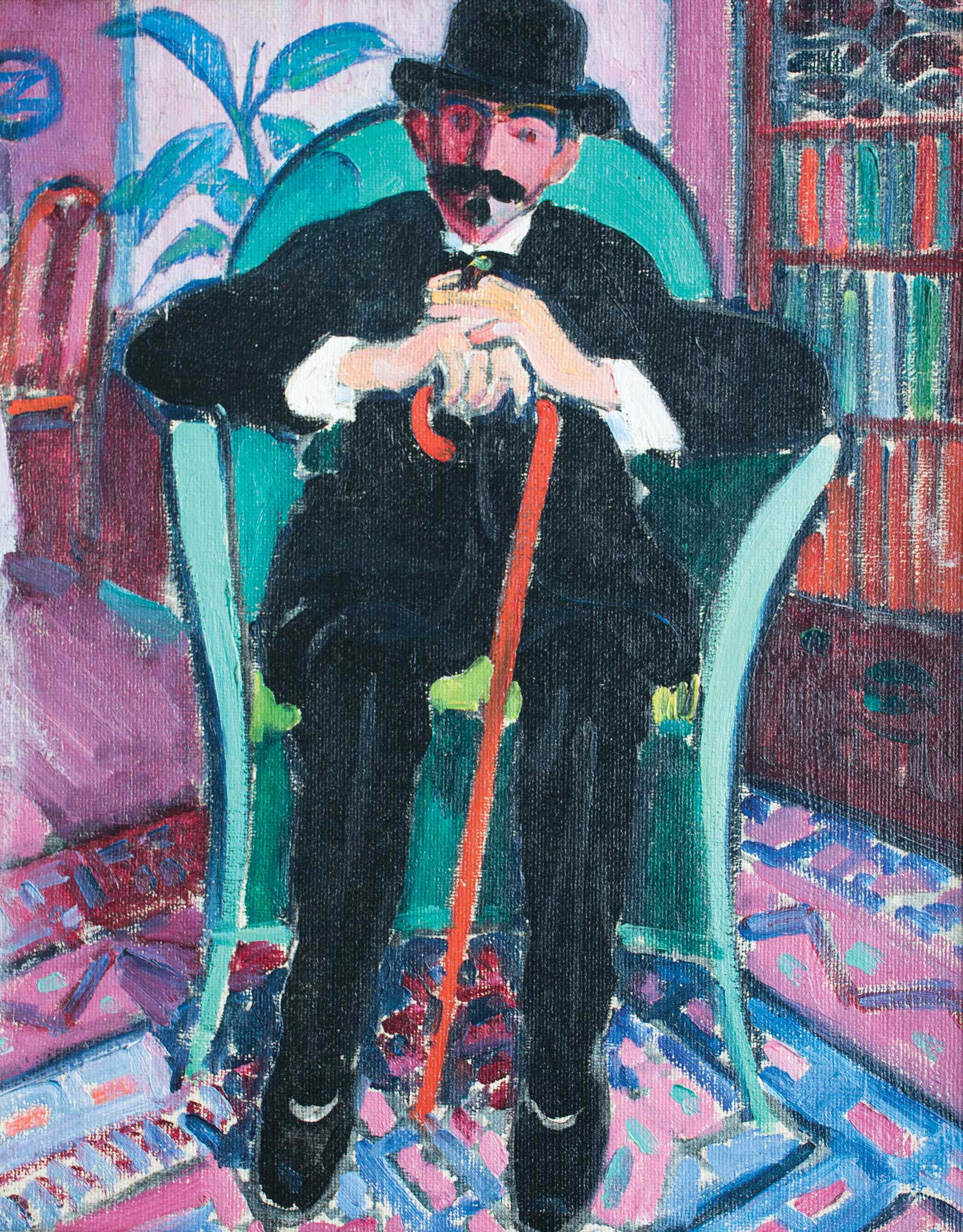
Marguerite Zorach (1887-1968), The Connoisseur, ca. 1909-1910. Oil on canvas 22 x 17½ in., inscribed upper left: ‘Z’.
Many of the galleries that specialize in this particular area of fine art are clustered in New York City. How has being based in Seattle affected your business?
In the early years, I was often questioned why I continued in a young city like Seattle, known more for contemporary works, when my interests were invested in 19th-century art but later, as Seattle gained national attention, these same people often commented on how we were well positioned. We have continued to be a strong resource for both collectors and institutions interested in the period we represent, not only locally but also nationwide. In addition to the Pacific Northwest, many of our collectors live in Texas, California, throughout the Midwest and East Coast.
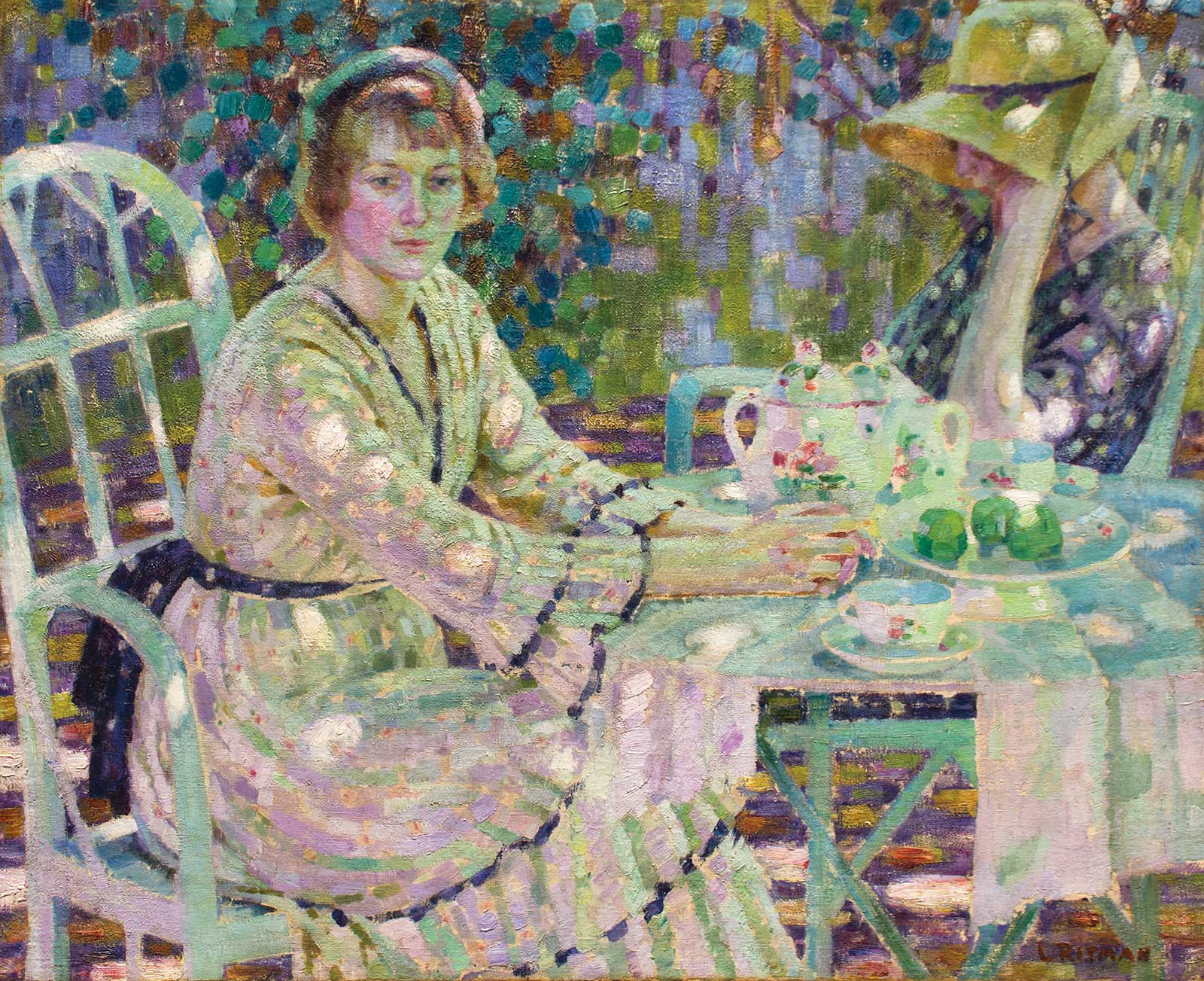
Louis Ritman (1889-1963), Quiet Afternoon, 1915. Oil on canvas, 32 x 39½ in., signed lower right.
How would you describe your role and responsibilities as a gallery owner and fine art dealer?
Our primary focus has always been on the compositional balance, condition and historical significance of each work of art. It is important to us not only to represent the finest historical and aesthetic paintings, but also to educate about the significance of American art and to make art accessible to the public. We want people to know that art can make us think and feel while also bringing comfort or confrontation. Art may reflect our own identity.
As former teachers, education has always been paramount to my wife Mary and me. It will always be a joy and privilege to contribute to the scholarship of American art while continuing to learn myself. Engaging in education is one of the primary reasons we wake up in the morning!

Allan J. Kollar, Crows, 2001. Silkscreen with six hand-printed colors.
Navigating the world of fine art requires not only a keen eye for aesthetic value but also a thorough understanding of market dynamics, client relations and historical context. How do you keep yourself savvy in all of these arenas?
The elements of discernment are all right in front of us. I pay attention to the ebbs and flows economically, socially and politically that change markets. These dynamics are often adjusted in relation to the number of buyers or sellers at any given time. One must be aware that trends change—sometimes because of hype and advertising—and it is important to be patient as compositional quality and condition are far more important than the latest trend. Many of our clients have become dear friends.
How do you determine the value of a piece of art in a changing market? How do you decide if an artwork is the right acquisition for your gallery?
We are not afraid to pay up for quality works. I would rather have one significant work than two or three of lesser quality. We focus on the strongest and most highly developed period of an artist’s career. We do not sell art that we would not want back to resell.
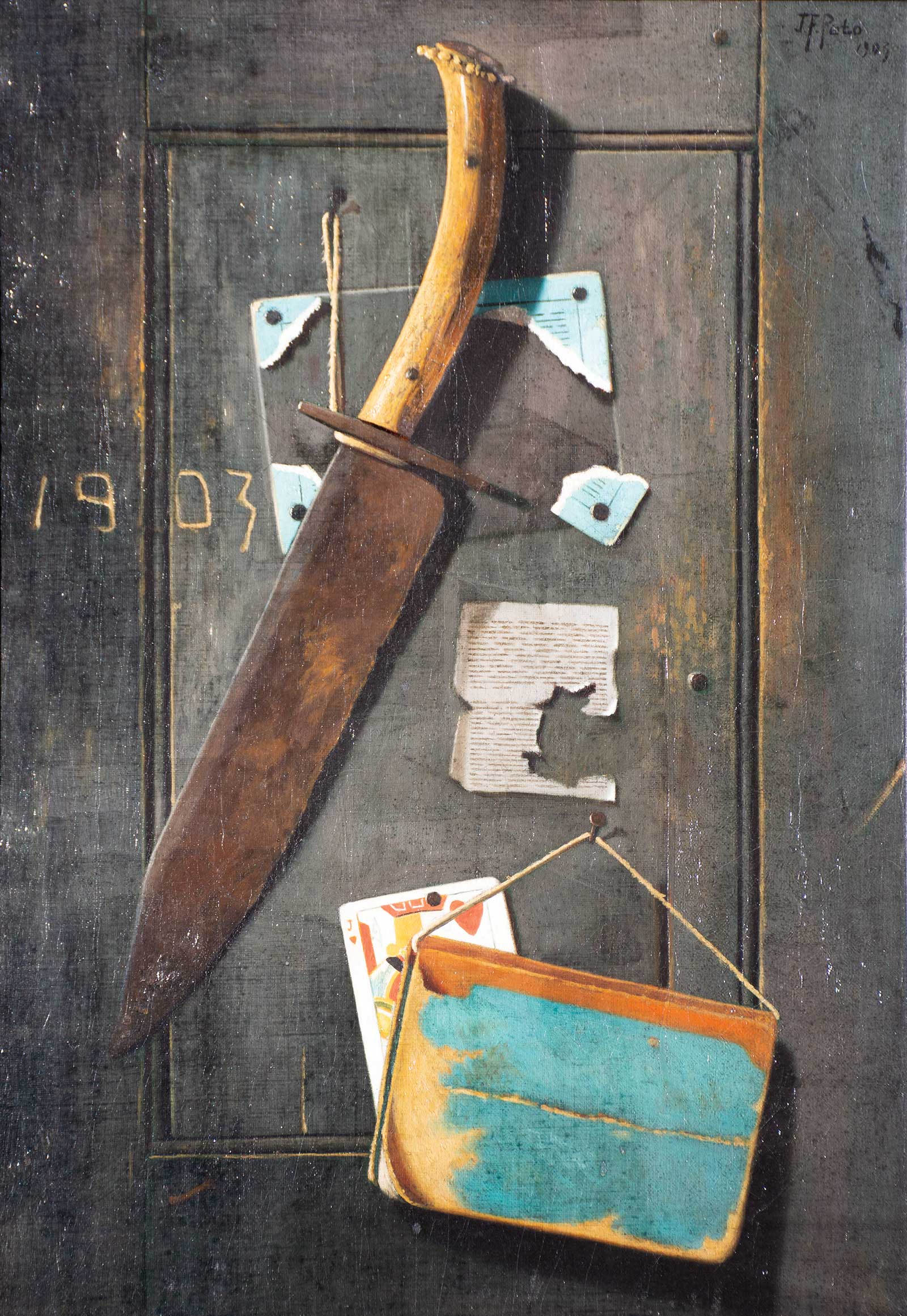
John F. Peto (1854-1907), Hanging Knife and Jack of Hearts, 1903. Oil on canvas 20 x 14 in., signed and dated upper right: ‘J.F. Peto 1903’; dated center left: ‘1903’; signed and inscribed on reverse.
What trends are you seeing in the historic American art market right now?
I think historical significance is often underrated. Still life and figurative works seem to be overlooked in the current market. If a collector is patient, it is a good time to buy these.
What is the most gratifying aspect of what you do? What are the most challenging aspects of your job?
The most gratifying is sharing with others what has brought me so much pleasure in my lifetime. Living with art is a continuing education. The most challenging is locating the finest of works that we have either sold in the past or that surface fresh to the market, as there are fewer each year. Patience is important.
If possible to sum up, what is your major takeaway from 40-plus years in the fine art business?
What a gratifying life to make a living at something you love and communicating that passion to others. —
Powered by Froala Editor