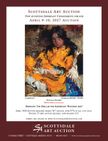
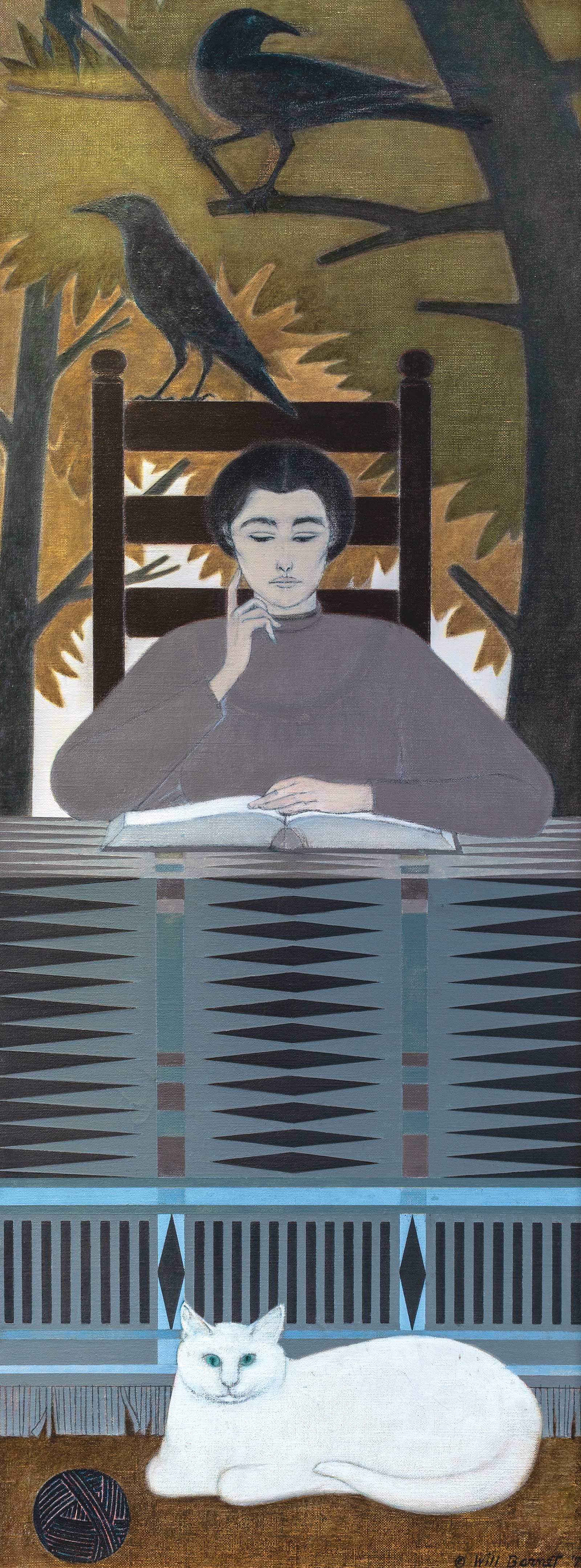
Will Barnet (1911-2012), Totem, 1979. Oil on canvas, 64½ x 24 in., signed and dated lower right. Courtesy Vallarino Fine Art, New York, NY.
Will Barnet (1911-2012)
Totem
Will Barnet (1911-2012) was celebrated for his quiet, contemplative paintings that merge everyday subjects with symbolic imagery, creating scenes that feel both intimate and timeless. In Totem, 1979, Barnet brings together a serene female figure, a white cat, and watchful birds in a carefully balanced composition that evokes themes of introspection, memory, and the enduring connection between humanity and nature. His simplified forms, muted palette, and precise geometry lend the painting a dreamlike stillness, inviting viewers to find meaning in its subtle symbolism rather than overt narrative. Executed in 1979, Totem is a quintessential example of Barnet’s mature style, where calm, elegance and quiet mystery coexist.
Vallarino Fine Art, 222 E. 49th Street, Suite #1 • New York NY 10017 • (212) 628-0722 info@vallarinofineart.com • www.vallarinofineart.com
——————————
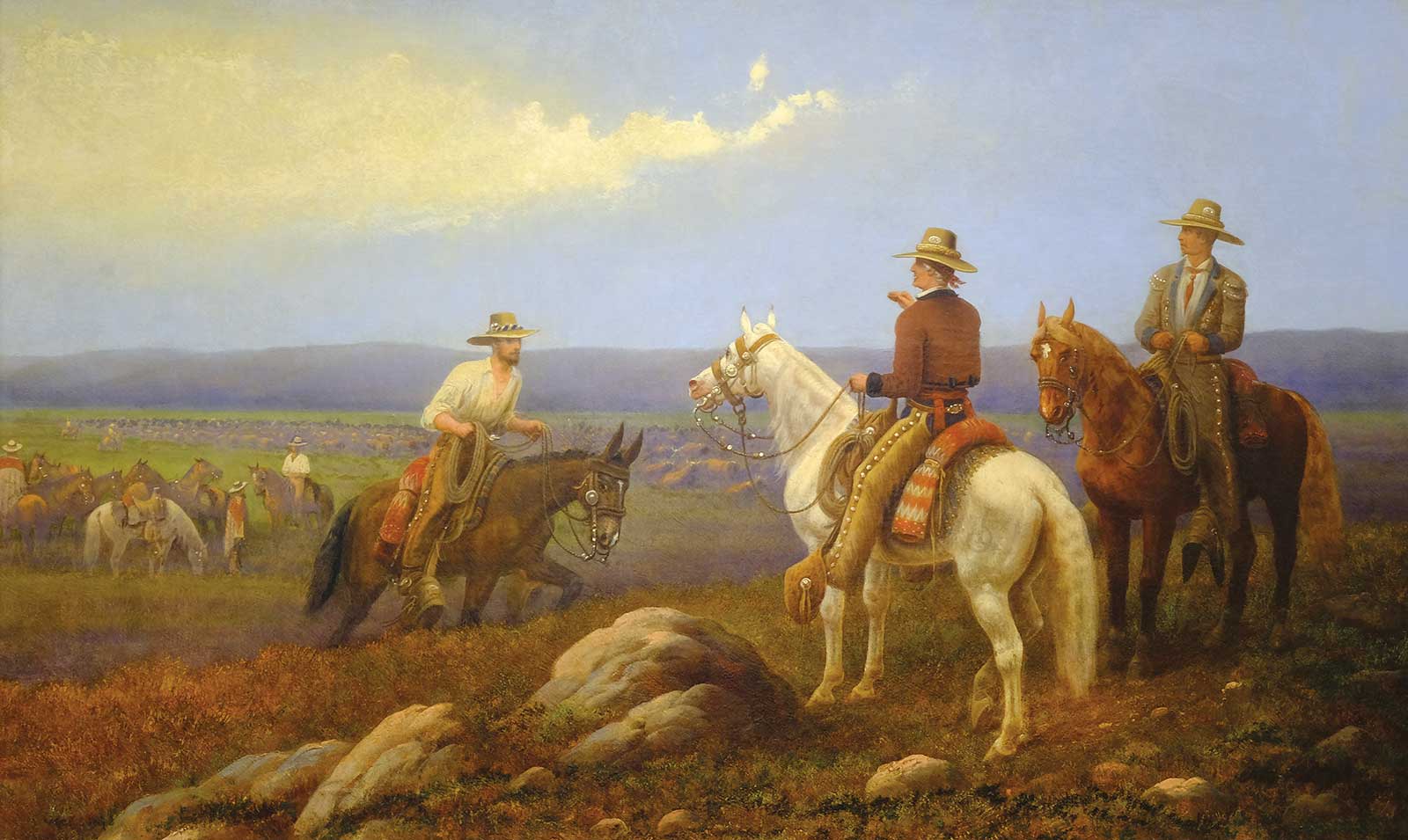
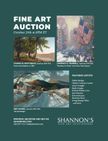
James Walker (1818-1889), California Vaqueros, 1877. Oil on canvas, 241/3 x 39½ in., signed and dated lower right. Courtesy Addison Rowe Gallery, Santa Fe, NM.
James Walker (1818-1889)
California Vaqueros
Born in England in 1818, James Walker moved to New York with his parents when he was a child. He lived there for most of his life, traveling frequently within the United States and to Mexico, where he became captivated by the people of Spanish America. He was living in Mexico City in 1846 when the Mexican War broke out and was briefly imprisoned. Upon his escape he worked as an interpreter for the U.S. troops and was present during the capture of Mexico City. Known for his scenes of the war, Walker moved to California in the 1870s, and became fascinated with California’s ties to Mexican history and culture, especially the vaqueros or Spanish ranch hands pictured in the present piece.
Addison Rowe Gallery, 229 E. Marcy Street • Santa Fe, NM 87501, (505) 982-1533 • addart@addisonrowe.com • www.addisonrowe.art
——————————
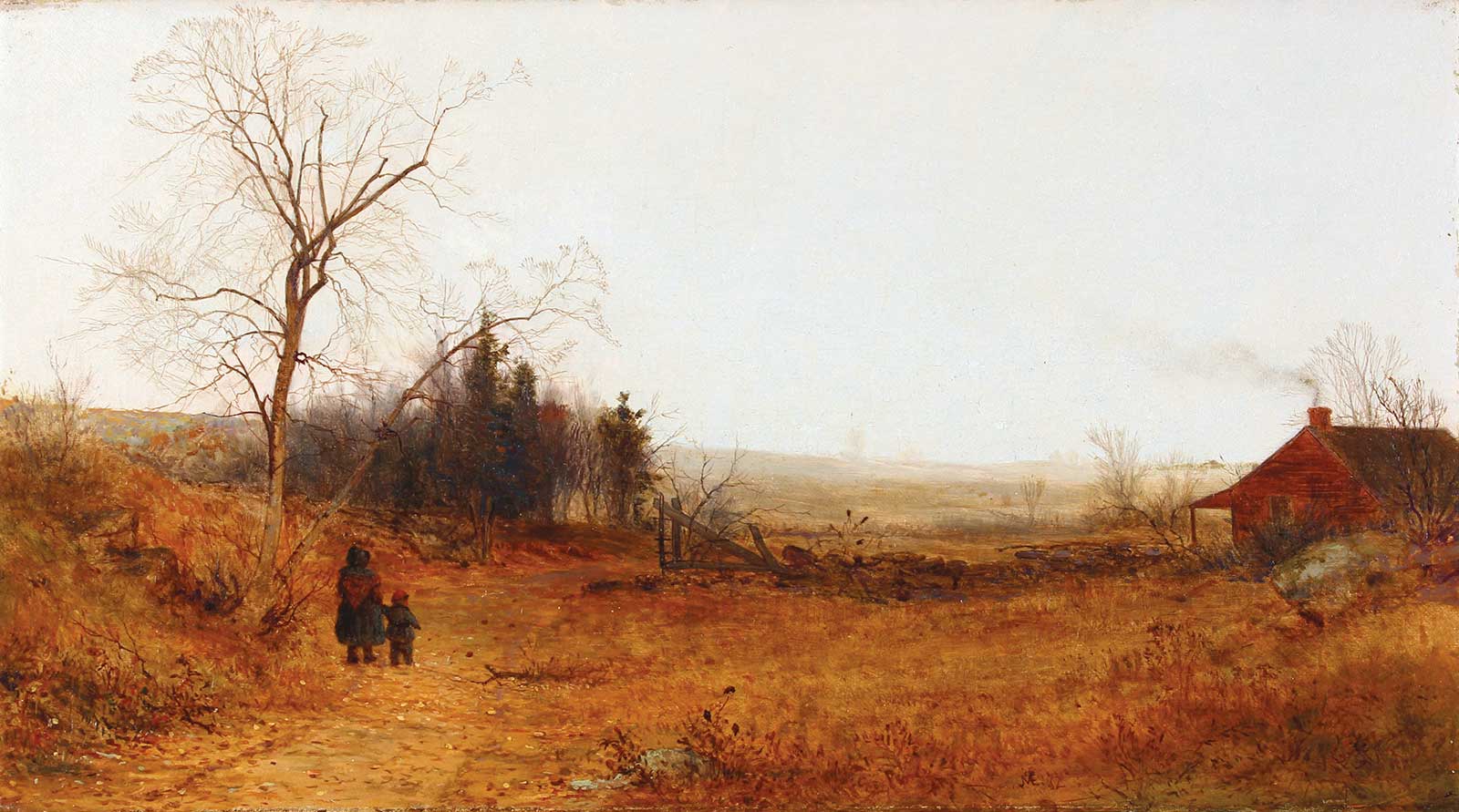
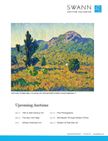
Jervis McEntee (1828–1891), Landscape with Mother and Child, 1862. Oil on canvas, 10 x 17 ¾ in., signed and dated lower center, Courtesy Godel & Co, Inc., Bedford, NY.
Jervis McEntee (1828-1891)
Landscape with Mother
Born in Rondout, New York, Jervis McEntee became an important member of the Hudson River School. He first exhibited his work at the National Academy of Design in 1850. He studied with Frederic Edwin Church in 1851, and in 1858 he took a studio in the Tenth Street Studio Building in New York City, joining Church, Sanford Robinson Gifford, Worthington Whittredge, and many other landscape painters. McEntee’s important diaries chronicle his successes and frustrations, his interactions with fellow artists, and his efforts to successfully navigate the changing art market after the Civil War.
More than most Hudson River School painters, McEntee filled his landscapes with poetic mood. McEntee excited his viewers’ emotions not through bold, panoramic compositions, like Church or Albert Bierstadt, but through quieter and more contemplative views. He found the changing colors of the autumnal landscape ideal for expressing his moods, and Henry James praised his work as “a genuine piece of melancholy autumn.”
Godel & Co., Inc., Bedford, NY • By Appointment • (203) 394-8649 • www.godelfineart.com
——————————
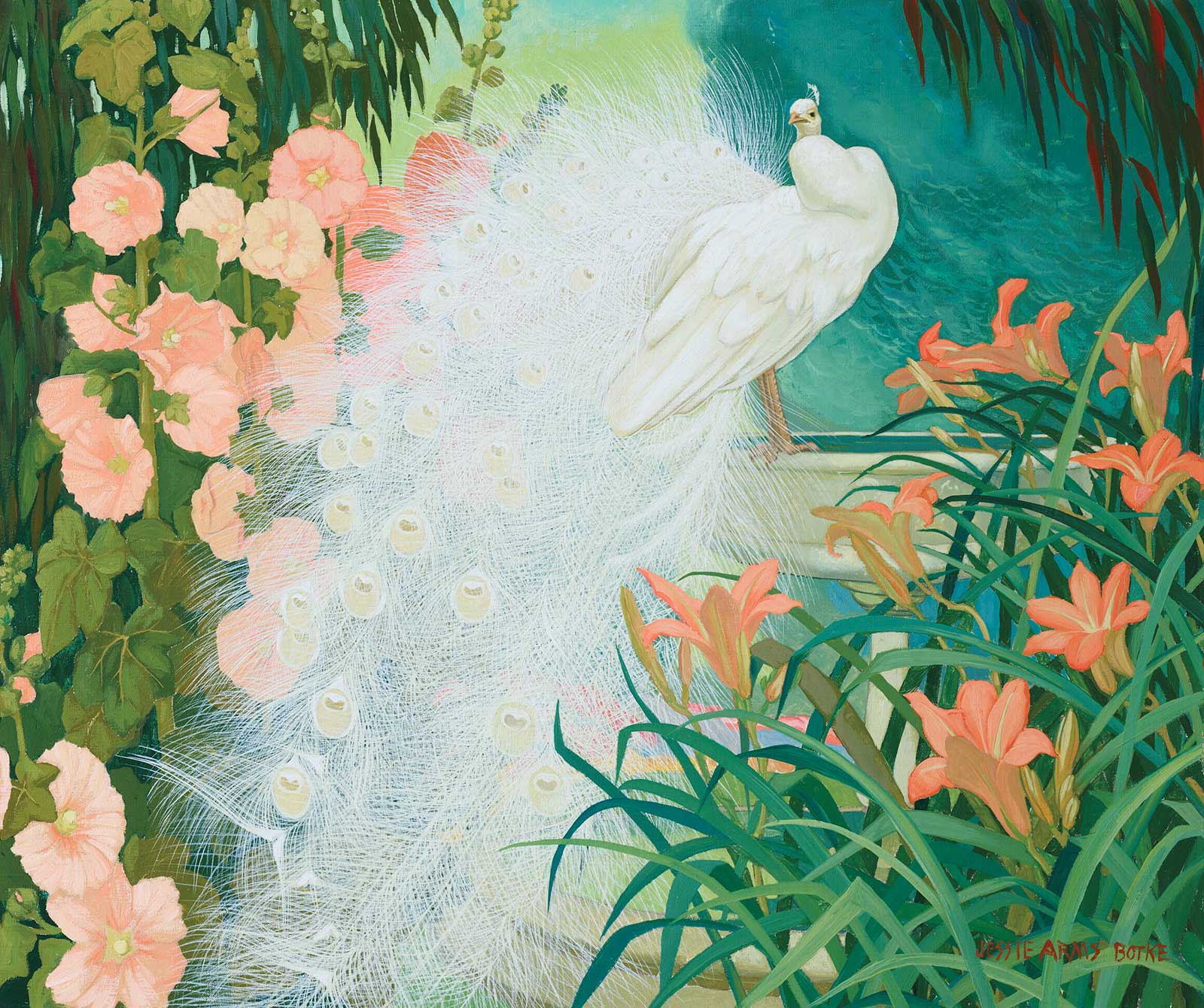
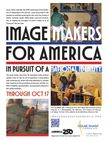
Jessie Arms Botke (1883-1971), Peacock, Hollyhocks and Lilies, ca. 1930. Oil on canvas mounted on Masonite, 27 ¼ x 32 ¼ in., signed lower rights. Courtesy Lincoln Glenn, New York, NY.
Jessie Arms Botke (1883-1971)
Peacock, Hollyhocks and Lilies
Painted shortly after Jessie Arms Botke and her husband, Cornelis Botke, established their beloved Wheeler Canyon estate near Santa Paula, Peacock, Hollyhocks and Lilies embodies the unique environment that became synonymous with the artist’s mature career. The property, affectionately known as Screaming Peacock Ranch, was home to aviaries filled with brilliant peacocks and exotic pheasants that Jessie observed daily, transforming them into some of the most iconic images in California art. While Cornelis painted the surrounding eucalyptus groves, Jessie devoted herself to luminous compositions in which birds and flowers merge into richly decorative arrangements inspired by both nature and her background in textile design.
In this elegant composition, the stately white peacock rises among towering hollyhocks and lilies, creating a harmonious balance between ornamental pattern and natural observation. Rather than functioning as a conventional still life, the painting evokes an idealized garden where flora and fauna exist in quiet harmony. The flattened decorative space, refined draftsmanship, and subtle luminosity reflect the influence of Japanese screens, Art Nouveau design, and the artist’s enduring fascination with gold-ground painting, hallmarks that distinguish her work from that of her contemporaries.
Lincoln Glenn, 542 W. 24th Street • New York, NY 10011
17 E. 67th Street, Suite IA • New York, NY 10065
(646) 764-9065 • gallery@lincolnglenn.com • www.lincolnglenn.com
Powered by Froala Editor