When George Lucas was writing Star Wars throughout much of the mid-1970s, he relied on several key existing sources to help inform the tone, mythology and characters of his nuts-and-bolts space opera. These included Buck Rogers and Flash Gordon comics, the books of J.R.R. Tolkien, the samurai films of Akira Kurosawa and writing by Joseph Campbell.
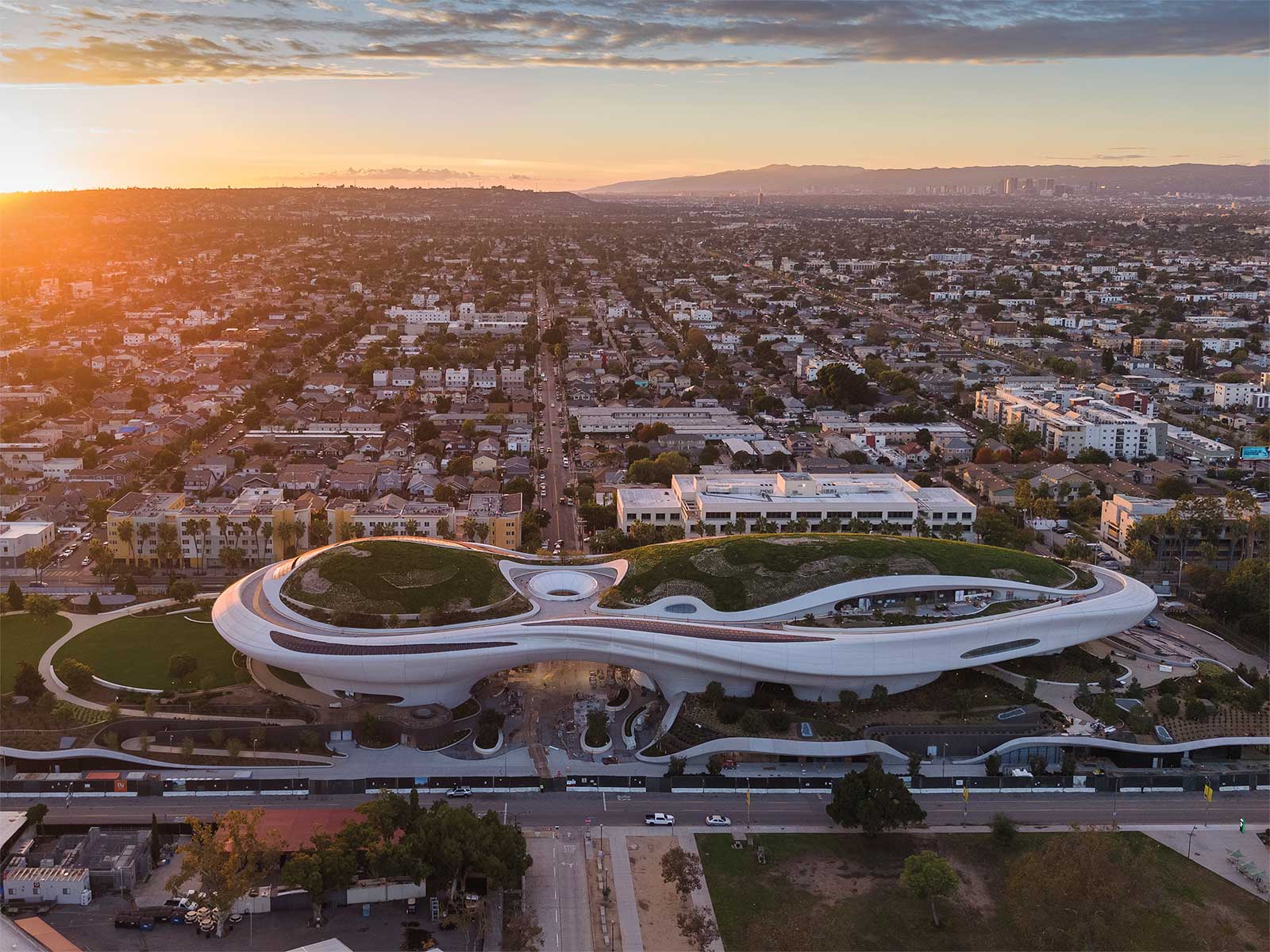
The Lucas Museum Campus. Photography by Patrick Price.
Although each influenced the young director in unique ways, none possibly more than Campbell’s book The Hero with a Thousand Faces, which laid out the archetypal framework that would come to define Star Wars and the “hero’s journey.” Referred to as the monomyth, Campbell’s popular and transformative take on heroes, villains and their various machinations rewired popular storytelling. Star Wars borrowed those narrative devices, and also supercharged them (“Punch it, Chewie!”) into hyperspace. For Lucas—writer, director, icon of science fiction, grandfather of modern pop culture—it was always about the story.
This lifelong fascination with story, myth and heroes will be the centerpiece of the new Lucas Museum of Narrative Art, which opens September 22 in Los Angeles. When the doors open for the first time, the museum will feature plenty of Star Wars material, including objects and memorabilia from the first six films (all made prior to Disney buying the franchise in 2012), but visitors will also see Lucas’ stunning art collection that includes more than 40,000 art objects, of which more than 1,300 will be on display at any given time. The museum’s co-founder and namesake considers fine art, illustration, comic books, culture and film as part of the same species of human interaction—storytelling.
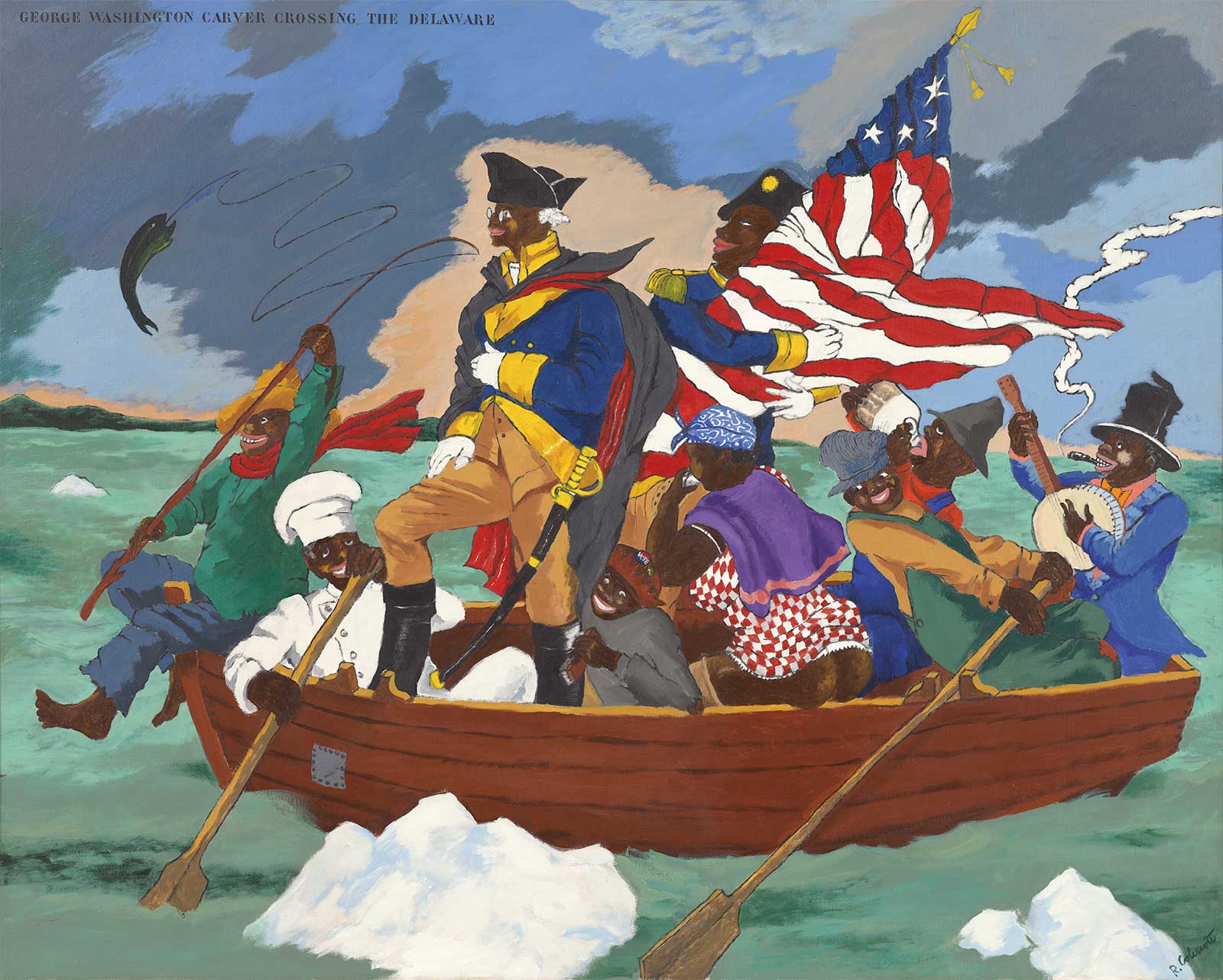
Robert Colescott (1925-2009), George Washington Carver Crossing the Delaware: Page from an American History Textbook, 1975. Acrylic on canvas, 78½ x 98¼ in. Lucas Museum of Narrative Art, Los Angeles, 2021.45.1. © 2025 The Robert H. Colescott Separate Property Trust / Artists Rights Society (ARS), New York.
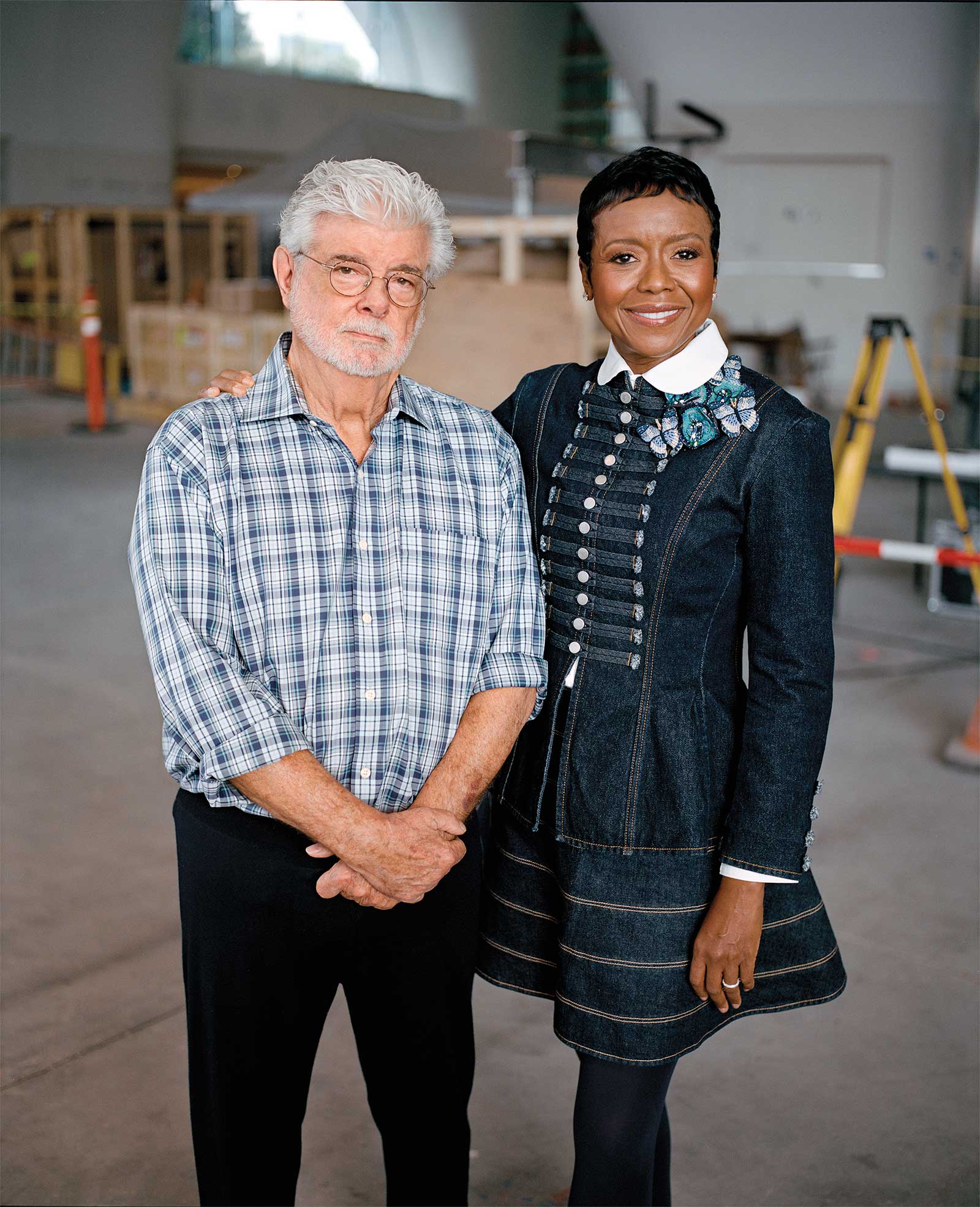
Founders George Lucas and Mellody Hobson in the lobby of the Lucas Museum of Narrative Art, 2025. Photograph by Deanna and Ed Templeton.
“Stories are mythology, and when illustrated, they help humans understand the mysteries of life,” Lucas said in a statement last year when the opening date for the museum was announced.
In the lead-up to the grand opening, the museum’s marketing and staff have been reinforcing the “narrative art” aspect of the museum’s name. It may be an unfamiliar term to some, but it’s a simple premise. “Narrative art is created to tell stories through images. Much of the world’s artistic expression has been motivated by storytelling, transmitting narratives rooted in religion, myth, history, literature or notable events,” the museum notes. “Narrative art appears in many forms, from cave drawings and hieroglyphics to paintings, murals, illustrations, comics and sculpture. Since the 19th century, narrative art has proliferated in photography, magazine and book illustration, film, and digital media, addressing wide audiences and giving new form to the myths and stories that shape beliefs, communicate values, spark the imagination and create communities. We empower people to engage with artworks through the compelling stories they tell.”
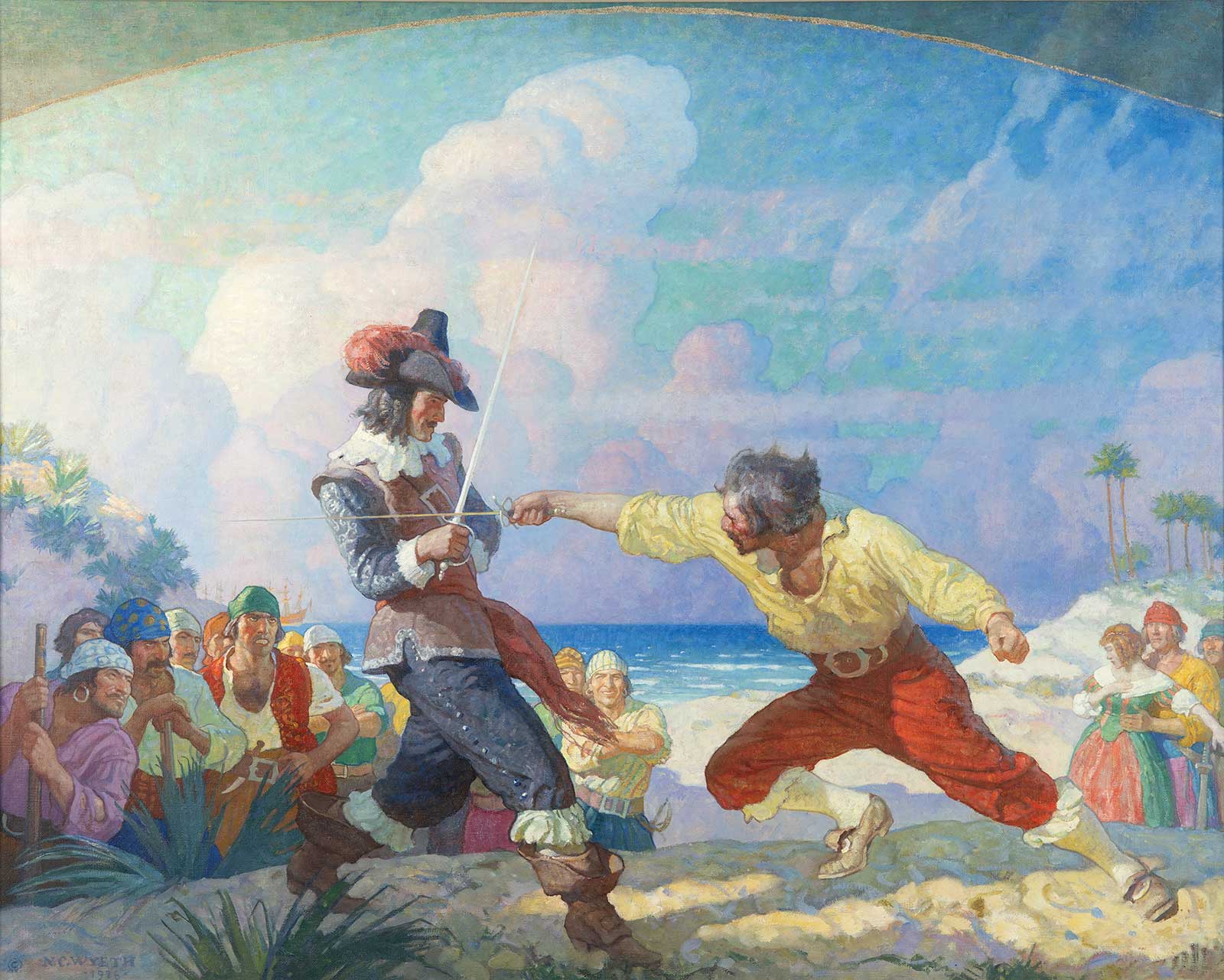
N.C. Wyeth (1882-1945), “‘Allons!’ said De Bernis. ‘It is time to make an end. So!’ He parried. ‘So,’” illustration for “The Duel on the Beach,” Ladies’ Home Journal, 1926. Oil on canvas, 48 x 60 in. Private collection.
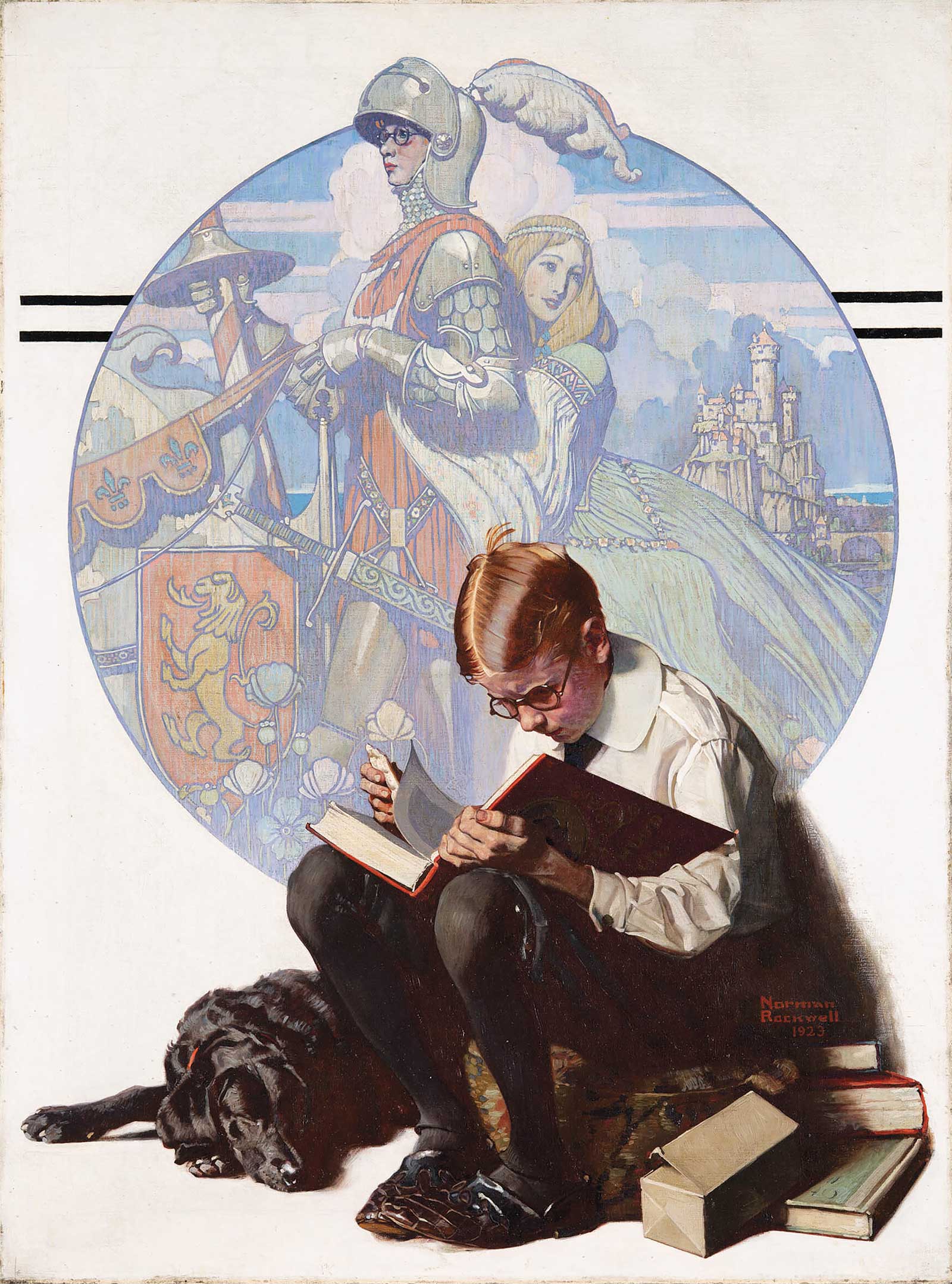
Norman Rockwell (1894-1978), Age of Romance, cover for The Saturday Evening Post, 1923. Oil on canvas, 34¾ x 26¾ x 2¾ in. Private collection.
Some of the most obvious examples of narrative art in the collection are the works of Norman Rockwell, who spent his entire career telling stories through paint. Consider Rockwell’s Age of Romance, featuring a young boy daydreaming of riding into battle as a brave warrior in a far-off land with a fair maiden clinging to his side. (Sound familiar?) Lucas, who owns numerous Rockwell masterworks, also acquired paintings by N.C. Wyeth, J.C. Leyendecker, Ernie Barnes, Thomas Hart Benton and many other storyteller artists. Other works have a stronger connection to illustration, such as comics (strips and books), men’s adventure magazines and pulp novels, political cartoons, murals and even concept art for film. These artists include Frank Frazetta, Alphonse Mucha, Boris Vallejo, Mort Künstler and Ralph McQuarrie, whose early Star Wars paintings helped dial the film into Lucas’ vision of a galaxy far, far away.
“Narrative art is this unified idea behind the project. In some ways, narrative is not a historical category, at least not until this museum came to be. This is opening a conversation about expanding the canon of artwork that belongs in a museum of this kind,” says Ryan Linkof, senior curator and head of film programs at the Los Angeles museum. “…The ideas and level of story, so much can be [included] here. The good and bad, the highs and lows. Story elements allow us to combine all kinds of art in an open rubric. They are all works that translate words and images.”
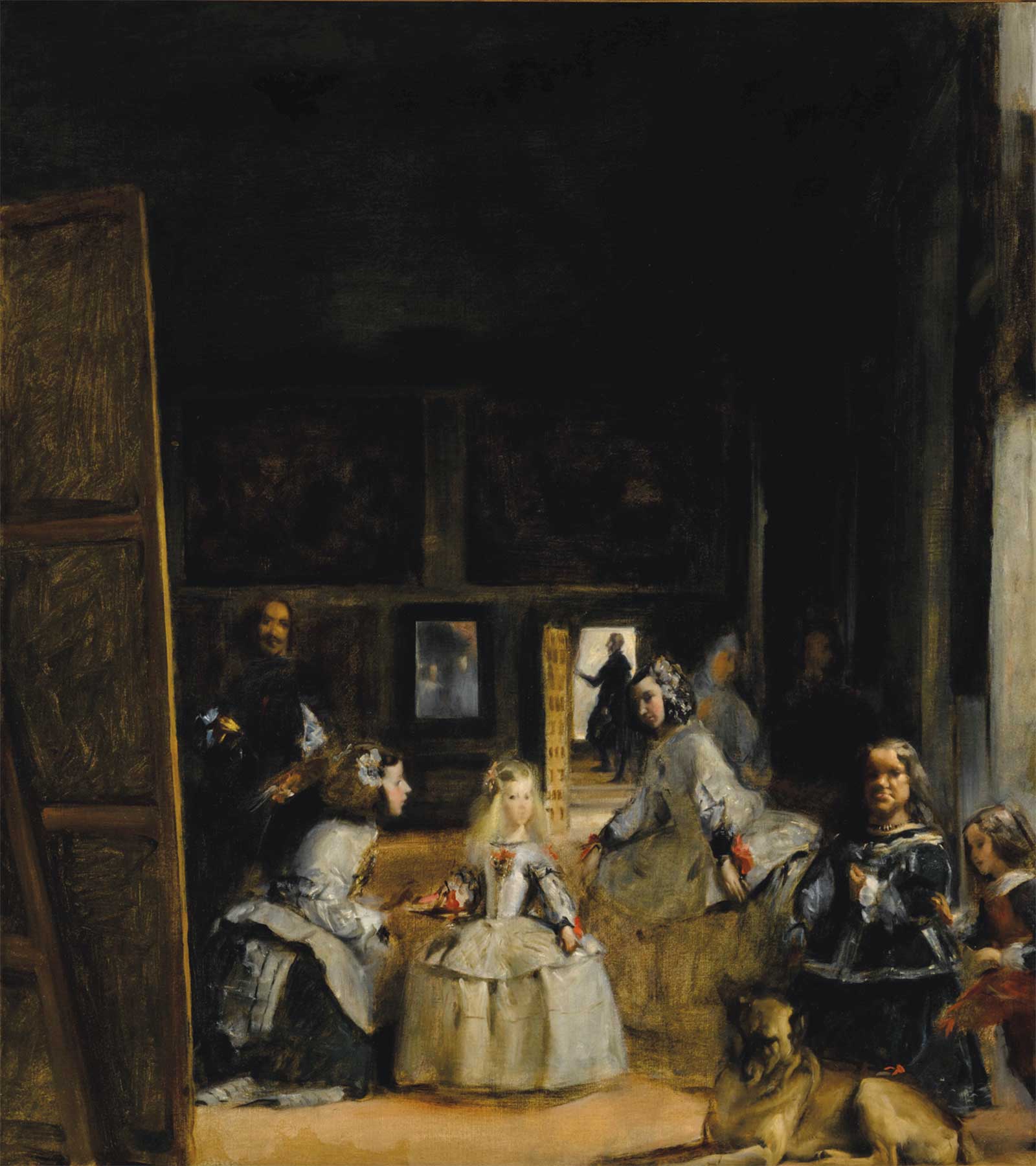
John Singer Sargent (1856-1925), Las Meninas, after Velázquez, 1879. Oil on canvas, 52 x 471/8 x 27/8 in. Lucas Museum of Narrative Art, Los Angeles, 2019.21.1.
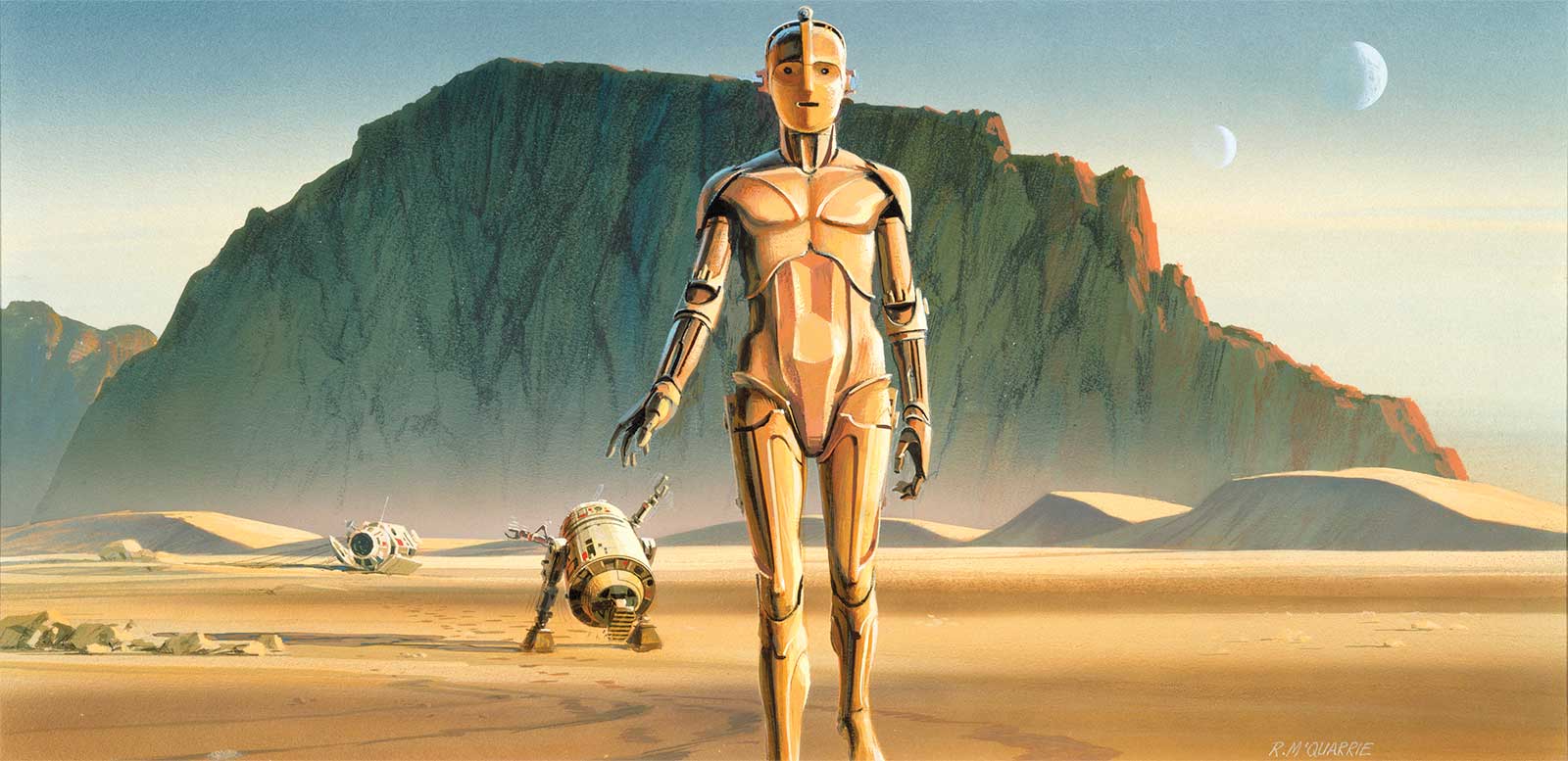
Ralph McQuarrie (1929-2012), Artoo and Threepio Leave the Pod in the Desert, production art for Star Wars: Episode IV – A New Hope, 1975. Gouache on board, 13¼ x 20 in. Lucas Museum of Narrative Art, Los Angeles, 2013.005241. © & ™ Lucasfilm Ltd. All rights reserved. Used under authorization.
The museum opens in September, but Linkof has been working on the project for more than eight years—“longer than I was in graduate school,” he laughs. He was hired not long after Lucas and the museum pulled out of its original home in Chicago during a long legal battle over land in Soldier Field. The project regrouped and moved to Los Angeles. It now sits on an 11-acre piece of land in Exposition Park. The five-story museum will have 100,000 square feet of dedicated gallery space, two cinema-quality theaters, a café and restaurant, retail and event spaces, rooms for education and programming, and 33 art galleries. The building could be right out of Star Wars, with long outdoor walkways, dramatic curved forms, raised pedestrian bridges and an elliptical oculus that rises four stories above the ground—the museum looks like a galactic cruiser docked into a spaceport.
“The building itself is a work of art. The moment you land on the campus and in this beautiful plaza, visitors will be immersed in this incredible architecture,” Linkof says. “The experience starts right away as visitors take gleaming elevators right up through this marvelous sculptural building. It’s a great place to hang art. The interior walls are rounded at the perimeter. There is a space at the nose of the building where you get this dramatic rounded wall. On the fourth floor there are three viewing areas where you can look out to see the outside world. It’s a very unique experience.”
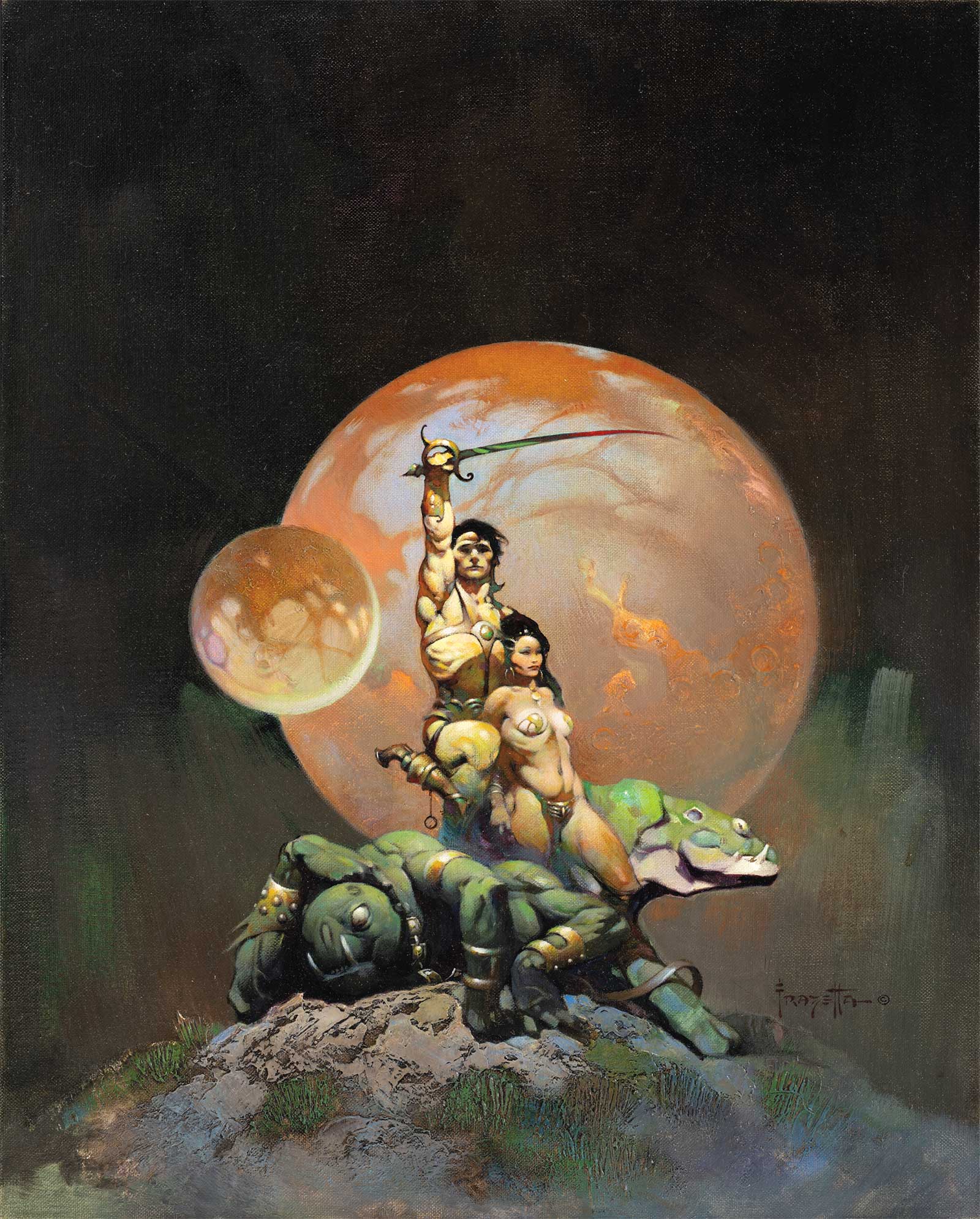
Frank Frazetta (1928-2010), cover for A Princess of Mars, 1970. Oil on canvas board, 19½ x 15½ in. Private collection.
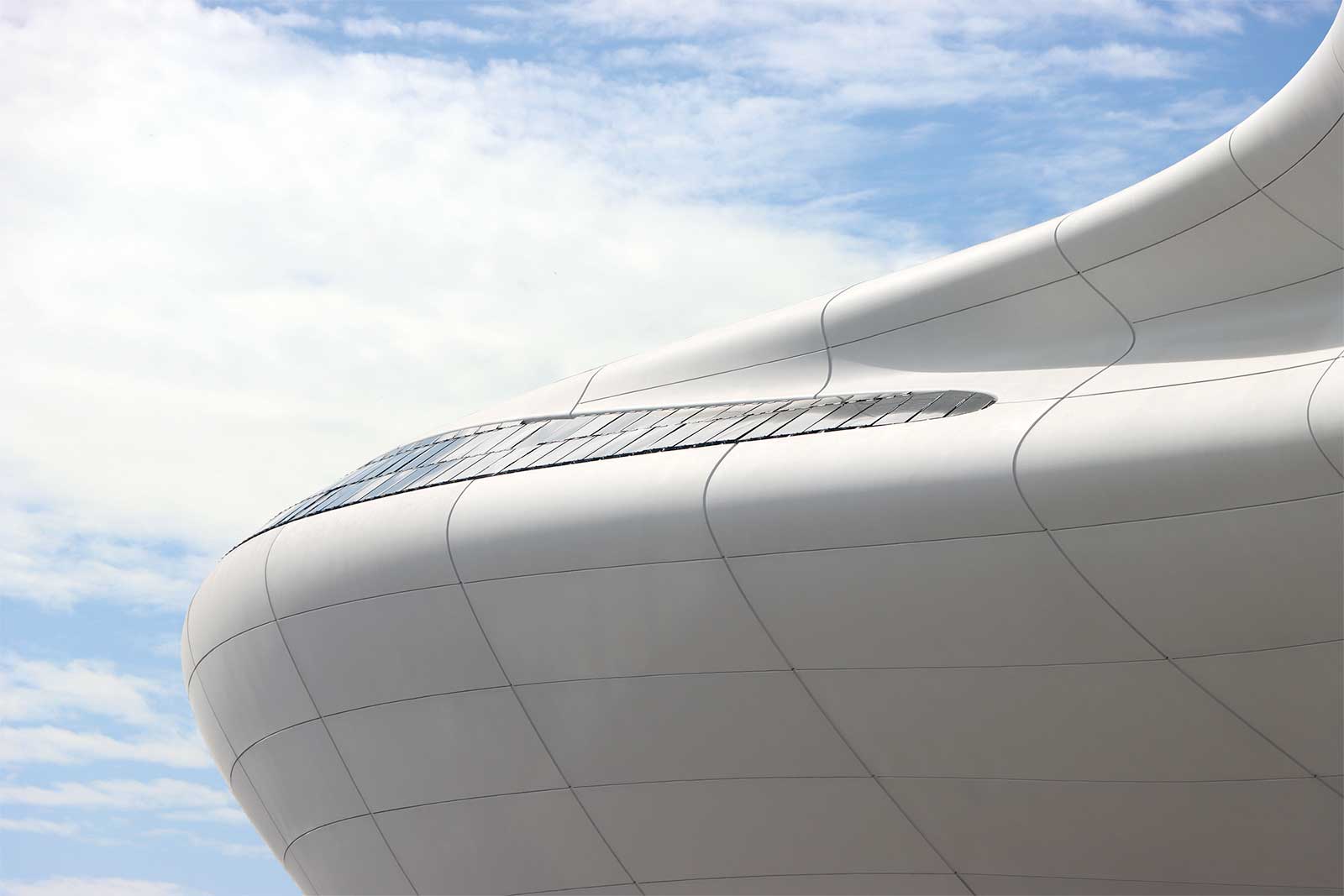
The round space-ship like edge of the Lucas Museum of Narrative Art.
On opening day, visitors will have access to 18 different themed exhibitions. These will include exhibitions related to the architecture of the museum, fantasy illustrator Frank Frazetta, regionalist Thomas Hart Benton, children’s stories and book illustrations, artwork related to civic life such as courthouses and polling places, comic books and graphic novels, illustrator Jessie Willcox Smith, history, manga, murals, illustrator Maxfield Parrish, photography, Western art and Star Wars in Motion, which will feature a selection of vehicle designs, props, costumes and illustrations from Lucas’ films. The museum will touch many art categories, mediums, styles and regions from around the globe.
Lucas and his wife, Mellody Hobson, are very active with the museum and its mission. Both are co-founders and co-chairs of the museum board. In addition to providing artwork for the museum’s collection, the couple has provided extensive funds for the museum’s acquisition program. They have also dedicated the majority of their wealth to improving education.
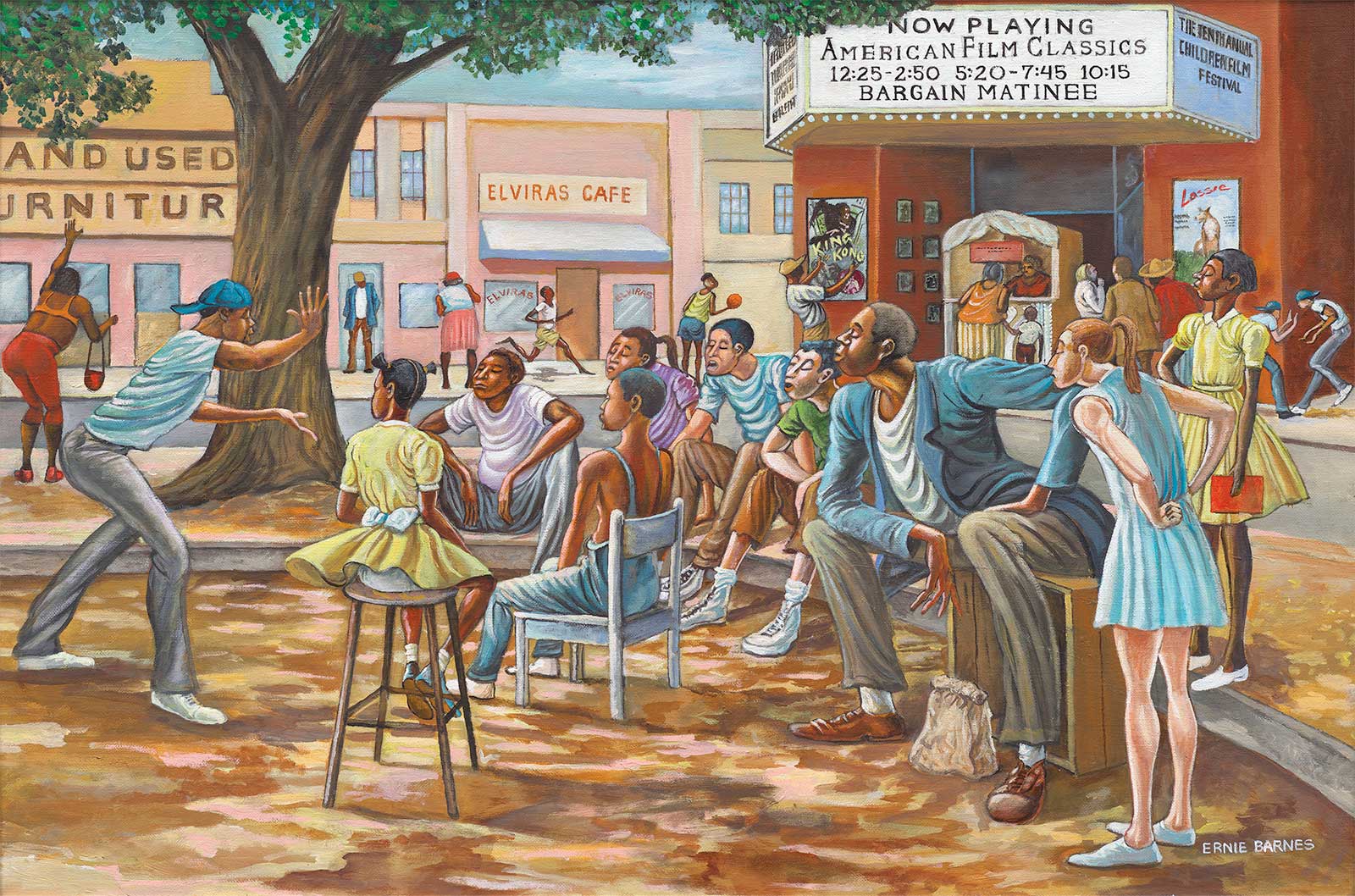
Ernie Barnes (1938-2009), The Critic’s Corner, 2007. Acrylic on canvas, 23½ x 353/8 in. Lucas Museum of Narrative Art, 2020.38.5. © ERNIE BARNES.
For Linkof, who worked closely with Lucas over the last eight years, he found his experience with the filmmaker rewarding. “I can say that it is endlessly enjoyable to work with him. He has a great sense of humor and a really clear understanding of the objects he has purchased over the years,” he says. “I learned something new from him every time we met. It has been an honor and privilege to work with him on his vision. He is not only a museum founder and a visionary business person, but he has created a museum of intense complexity. And he is also an artist, and I think that’s added something to this museum.”
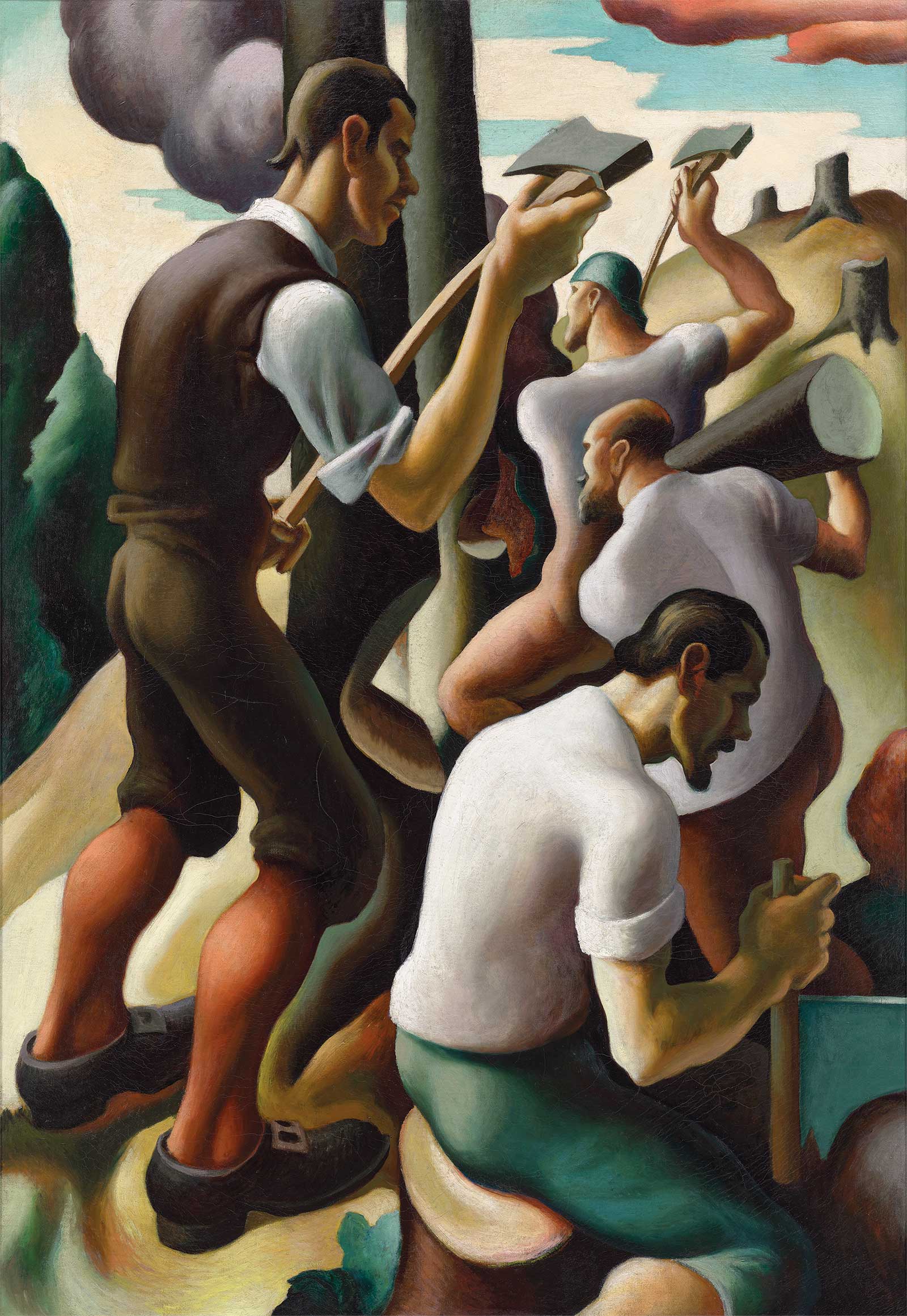
Thomas Hart Benton (1889-1975), American Historical Epic, Second Chapter: Axes (Clearing the Land), 1924-27. Oil on cotton duck, on panel, 671/8 x 49¼ x 23/8 in. Lucas Museum of Narrative Art, Los Angeles, 2017.4.1.
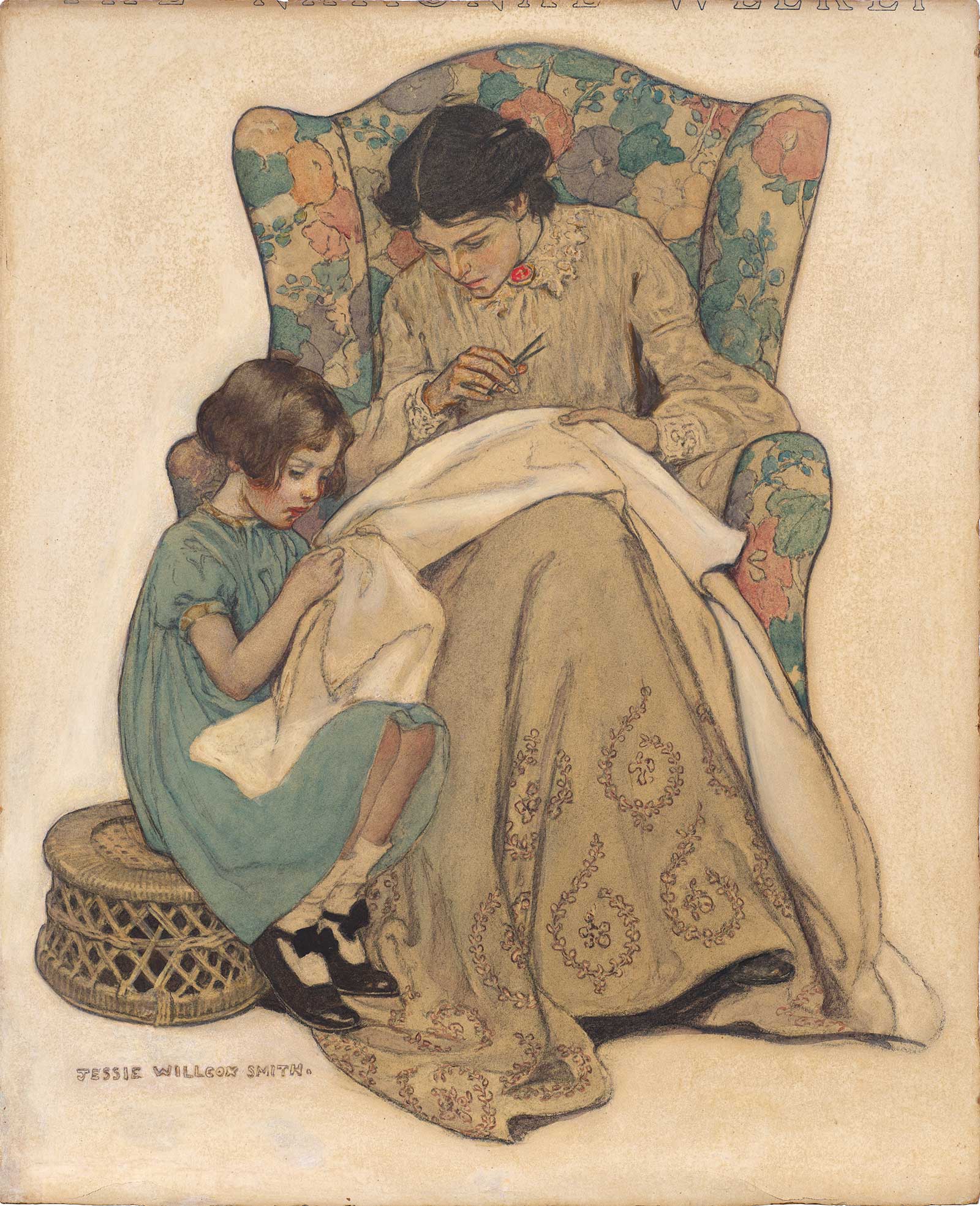
Jessie Willcox Smith (1863-1935), The Sewing Lesson, cover for Collier’s, 1907. Watercolor, gouache and charcoal on board, 311/8 x 271/8 in. Lucas Museum of Narrative Art, Los Angeles, 2018.2.2.
Lucas, who will be in attendance at a star-studded grand opening in September, has largely been out of spotlight since the big Disney deal in 2012, although he has emerged for projects he has ties to, including Star Wars and the Indiana Jones franchise. He spoke about the museum publicly at the San Diego Comic-Con in 2025. “I couldn’t afford real art,” he told the large crowd, adding that he would buy comic art and illustration because it was all he could afford at the time. “I love all art no matter what it is…It’s more about a connection, an emotional connection.”
The Lucas Museum of Narrative Art is a tribute to that, he said, “…A temple to the people’s art.” —
For more information about the museum, visit www.lucasmuseum.org.
Powered by Froala Editor