
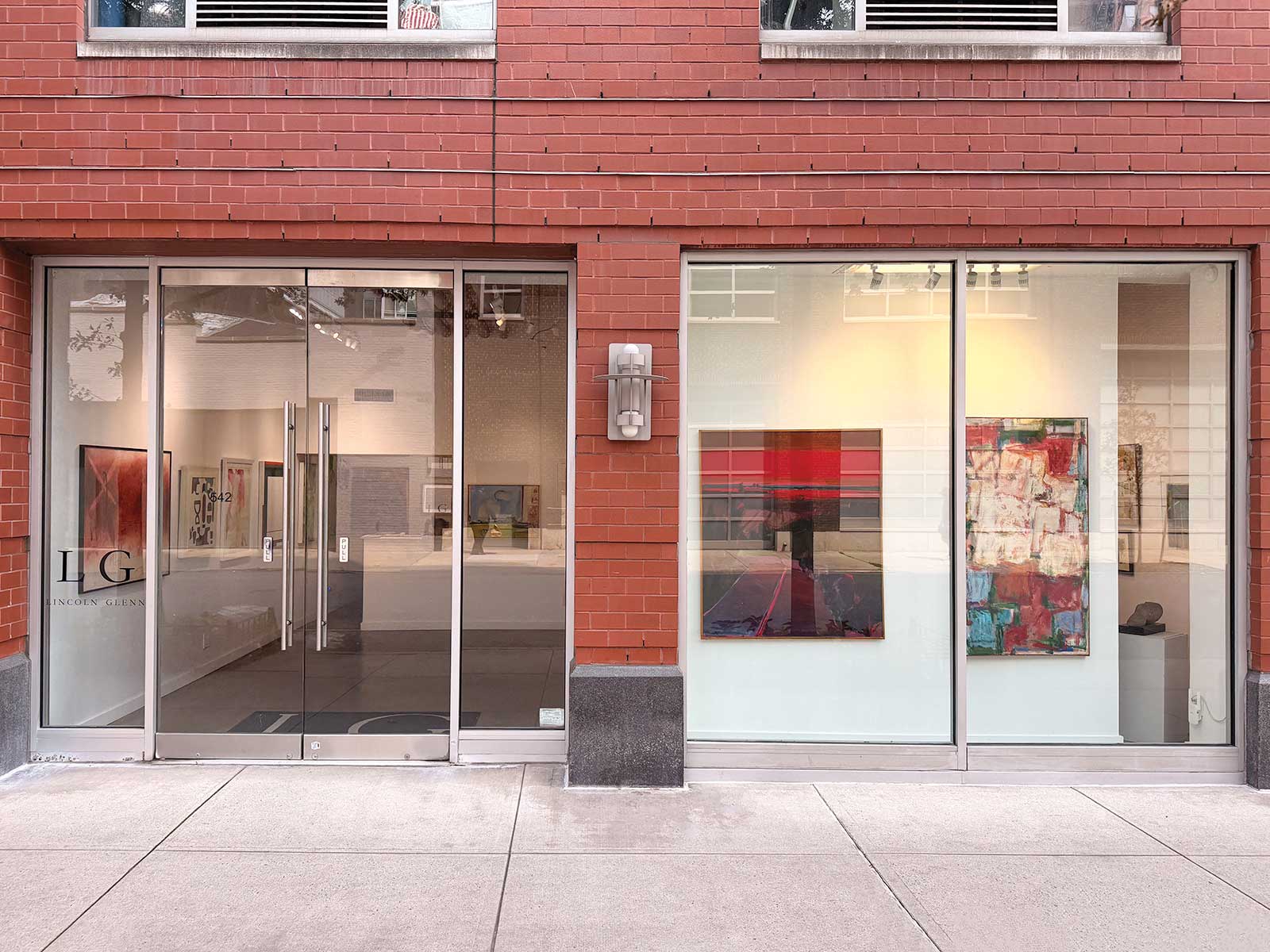
Exterior view of Lincoln Glenn.
Eli Sterngass
Partner
Lincoln Glenn
The last time I contributed to this column was nearly three years ago, when my partner Doug Gold and I opened Lincoln Glenn Gallery on East 67th Street. Since then, we have expanded with a second location in Chelsea, devoted to postwar art—particularly artists working between the 1940s and 1980s in abstract expressionism and color field painting. Spending each day moving between our two galleries has only reinforced a conviction I have held for years: one of the most compelling opportunities in today’s market lies not only in postwar art, but also in American art created before 1945.
For much of the past two decades, postwar American art has dominated museum programming, auction headlines and collector attention. That emphasis was justified. Abstract expressionism and the movements that followed fundamentally reshaped the course of 20th century art and established the United States as an international center of modernism. Yet every market cycle creates its own blind spots. The extraordinary attention devoted to postwar art has left significant areas of pre-1945 American art comparatively undervalued, despite their historical importance and growing institutional recognition.
The broader American art market has returned to growth after several difficult years, but the recovery has been highly selective. Collectors are rewarding rarity, impeccable provenance, rigorous scholarship and museum-quality examples rather than speculation. The correction across much of the contemporary market has only accelerated this shift, encouraging buyers to pursue works with lasting historical significance instead of short-term momentum. In many respects, today’s market is more disciplined than it has been in years.
One of the most encouraging developments has been the emergence of a younger generation of collectors discovering American art through digital platforms rather than traditional collecting pathways. These buyers often approach the field without the rigid distinctions that once separated “American art” from “modern art.” It is no longer unusual to encounter collections in which an Albert Bierstadt hangs comfortably alongside a Hans Hofmann. This more expansive view places greater emphasis on quality, historical significance and visual conviction, than on conventional categories or collecting labels.
Three artists that deserve more attention from the market right now are Theresa Bernstein, Jessie Arms Botke and Herbert Ferber. Bernstein’s nearly century-long career produced one of the most compelling visual chronicles of urban America and established her as one of the nation’s earliest and most accomplished modernists, yet her market remains modest relative to her historical stature. Botke developed a highly individual synthesis of California decorative painting, Asian influences and modernist design that occupies a singular place within American art, though she has never received recognition commensurate with her originality. Ferber, while better known than the others, likewise remains undervalued relative to his importance in the development of abstract expressionist sculpture. His pioneering in welded constructions fundamentally expanded the language of modern sculpture and deserves consideration alongside David Smith and the leading sculptors of the postwar era.
Markets rarely reward historical importance immediately. More often, they lag behind scholarship and institutional reassessment. For collectors willing to look beyond the most familiar names, that gap continues to represent one of the strongest opportunities in American art today. —
Lincoln Glenn
17 East 67th Street, Suite 1A
New York, NY 10065
542 West 24th Street, New York, NY 10011
(646) 764-9065 www.lincolnglenn.com
Powered by Froala Editor