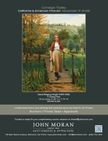
A new exhibition at Hawthorne Fine Art showcases more than a dozen works in oil and watercolor by historic women artists who were inspired by New England’s rural farmlands and scenic coastline. These artists were also active in regional colonies such as Old Lyme, Cos Cob, Provincetown and Ogunquit.
Town, Field and Brush: Women Impressionists Paint New England includes late 19th- and early-20th century paintings by Cecilia Beaux, Felicie Waldo Howell, Olive Parker Black, Mabel Woodward, Breta Longacre, Mary Lane McMillan, Anna Mary Richards Brewster, Laura Coombs Hills, Carolyn Campbell Mase and Mina Fonda Ochtman.
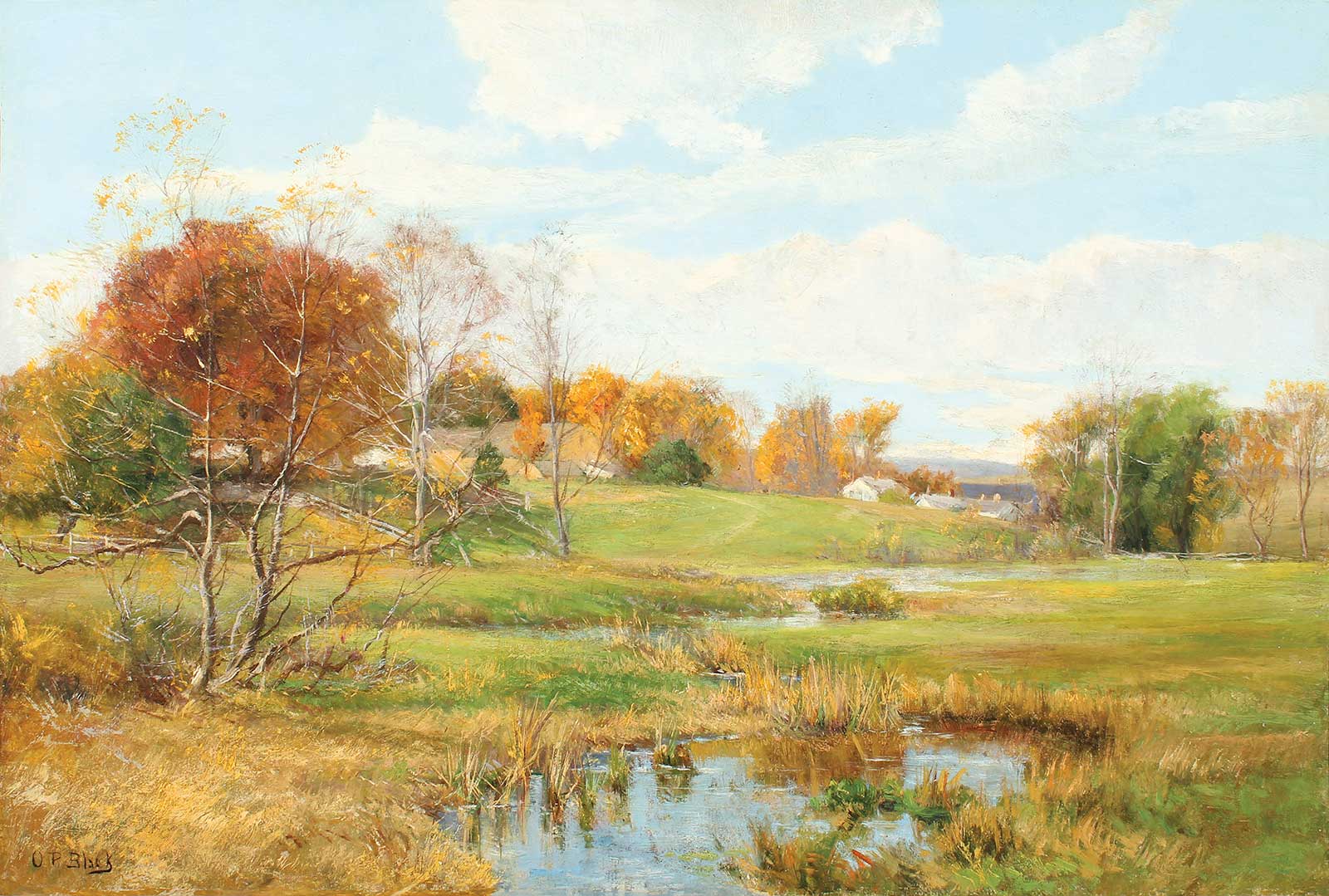
Olive Parker Black (1868-1948), Early Autumn Meadow. Oil on canvas laid down on board, 16 x 24 in., signed lower left.
“These women were active participants in the American impressionist movement working and exhibiting beside their male counterparts,” says Hawthorne Fine Art senior researcher Megan Bongiovanni. “The artist colonies of New England were central to the Impressionists. The colonies were inclusive to women artists, and boarding houses including the Bush-Holley House in Cos Cob and the Florence Griswold house in Old Lyme allowed women painters to live and work beside their male counterparts…Their contributions to art and their involvement in the leading art clubs and organizations of the day are worthy of recognition.”
Among the highlights Howell’s (1897-1968) painting of a quaint, tree-lined street in Newburyport, Massachusetts, that the artist executed in 1921. “Notable for her paintings of old Salem doorways and historic New England architecture, Howell was just 24 years of age when she captured this residential New England Street in autumn,” the gallery explains, adding that it garnered written praise from prominent artist and art critic Hamilton Easter Field.
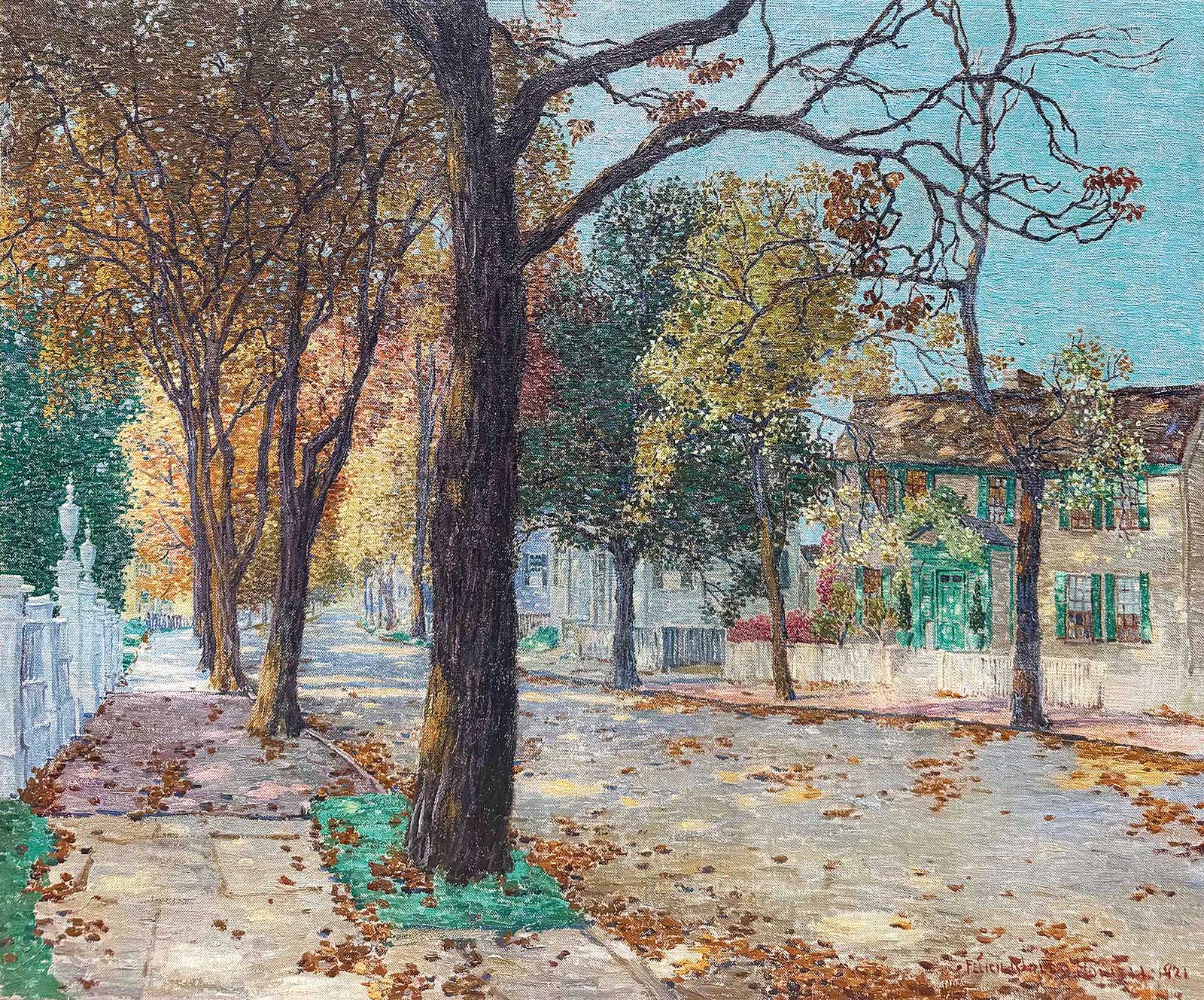
Felicie Waldo Howell (1897-1968), High Street Newburyport, Mass., 1921. Oil on canvas, 25 x 30 in., signed and dated at lower right.
Howell’s High Street Newburyport, Mass., 1921, is a favorite of Bongiovanni’s. “It captures all the senses for me—the crisp autumn air in New England, the beautiful afternoon light, the sound of leaves on the sidewalk crackling underfoot as I walk further into the scene along Newbury Street,” she says.
Black’s (1868-1948) Early Autumn Meadow depicts a marshy waterway meandering through a meadow below a pale blue sky. Beyond the fall foliage white houses peek up in the distance amid the gently rolling hills. A student of William Merrit Chase and H. Bolton Jones, Black’s style and subject matter demonstrates the influence of Jones, who also had an affinity for painting the streams and fields around South Egremont, Massachusetts where they both kept summer cottages.
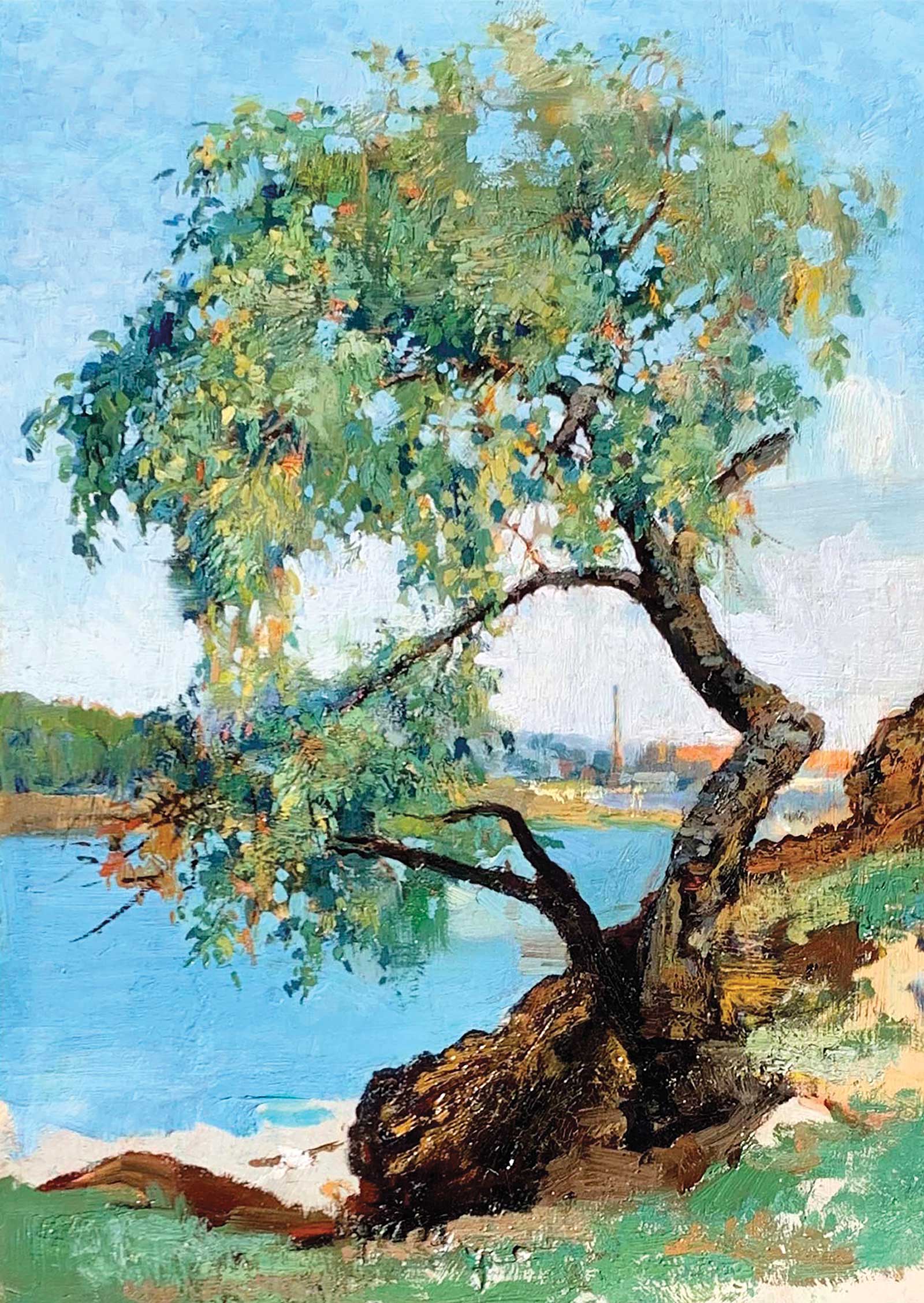
Mary Lane McMillan (1883-1976), View of Penobscot Bay. Oil on panel, 145/8 x 10¾ in., signed verso.
Woodward (1877-1945) and McMillan (1883-1976) were also students of Chase, and “were both heavily influenced by their teacher,” says Bongiovanni, “apparent in their vibrant palettes, loose brush strokes, and heavy impasto.” Woodward, the first woman president of the Providence Art Club, is represented by Portsmouth Harbor, 1917, a painting of three men tending to a small skiff on the shoreline against a cluster of waterfront structures and the bell tower of historic St. John’s Episcopal Church.
McMillan’s View of Penobscot Bay features a gnarled tree on a craggy seaside ridge. “A smokestack from what may be the Bucksport Mill, a paper mill built in the 1930’s, can be seen in the distance beyond the forked tree branches,” notes the gallery. The artist founded the McMillan School of Fine Arts and led classes at her Maine summer home in the 1920s and ‘30s.
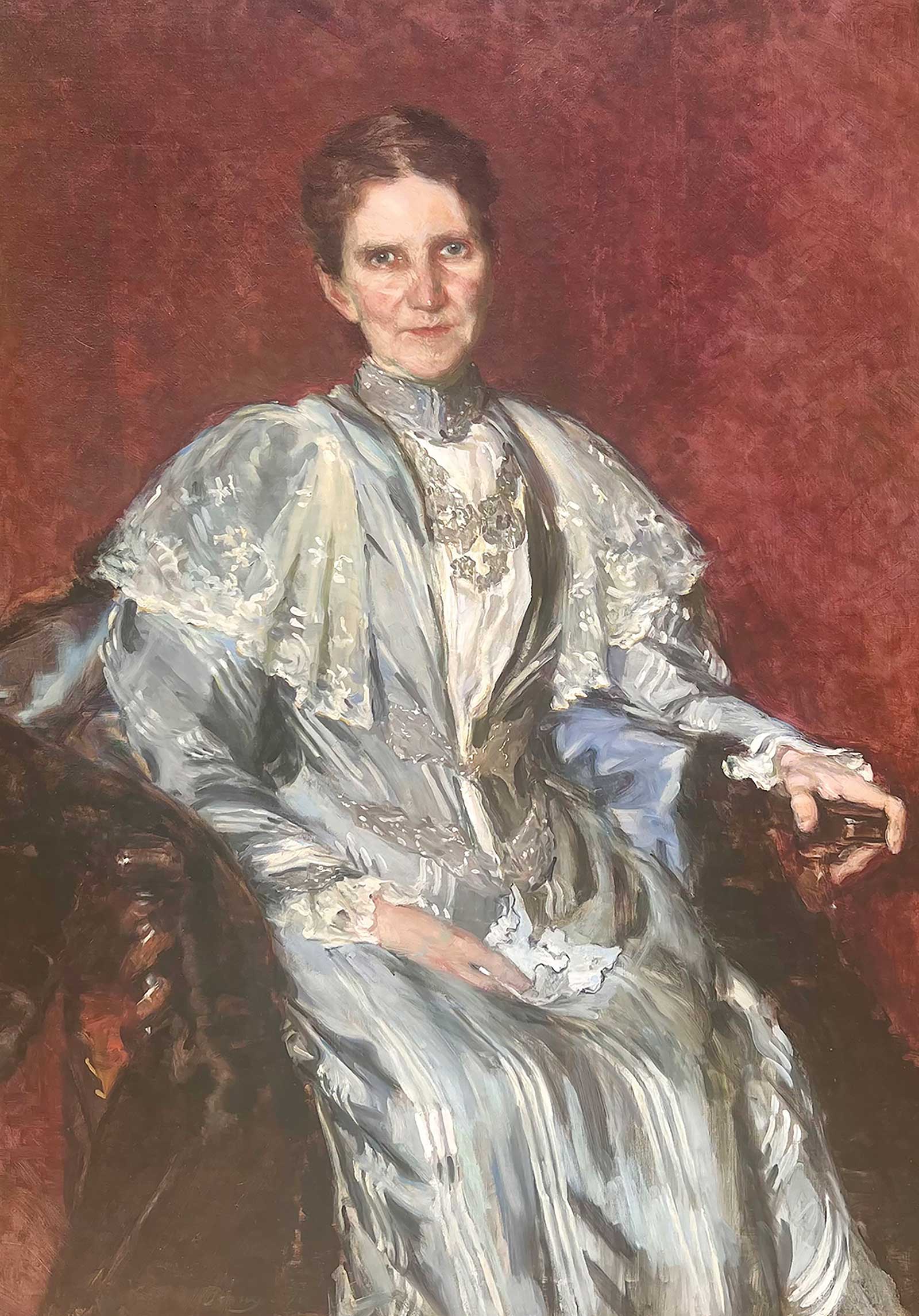
Cecilia Beaux (1855-1942), Mrs. Isaiah Stetson, 1893. Oil on canvas, 45 x 32 in., signed and dated lower left: ‘Cecilia Beaux -93’.
Also on view is a painting by Beaux, who was a celebrated portraitist during her lifetime. She is represented by a life-size depiction of the Sarah Jewett Griffin, the widow of Isaiah Stetson (1812-1880), one-time mayor of Bangor, Maine, and first president of the Bangor & Piscataquis Railroad Co. The piece was exhibited in the National Academy of Design’s 68th Annual Exhibition in 1893.
Bongiovanni adds, “While critics compared Beaux’s portrait of Mrs. Stetson to the work of John Singer Sargent, in March 1893 the New York Tribune wrote, ‘She has a way of her own. For after the echo of Sargent is reckoned with, there is a vitality in her portraits and a direct, sure touch in the painting of them with which no amount of interest in the more noted artist’s work could have supplied her.’”
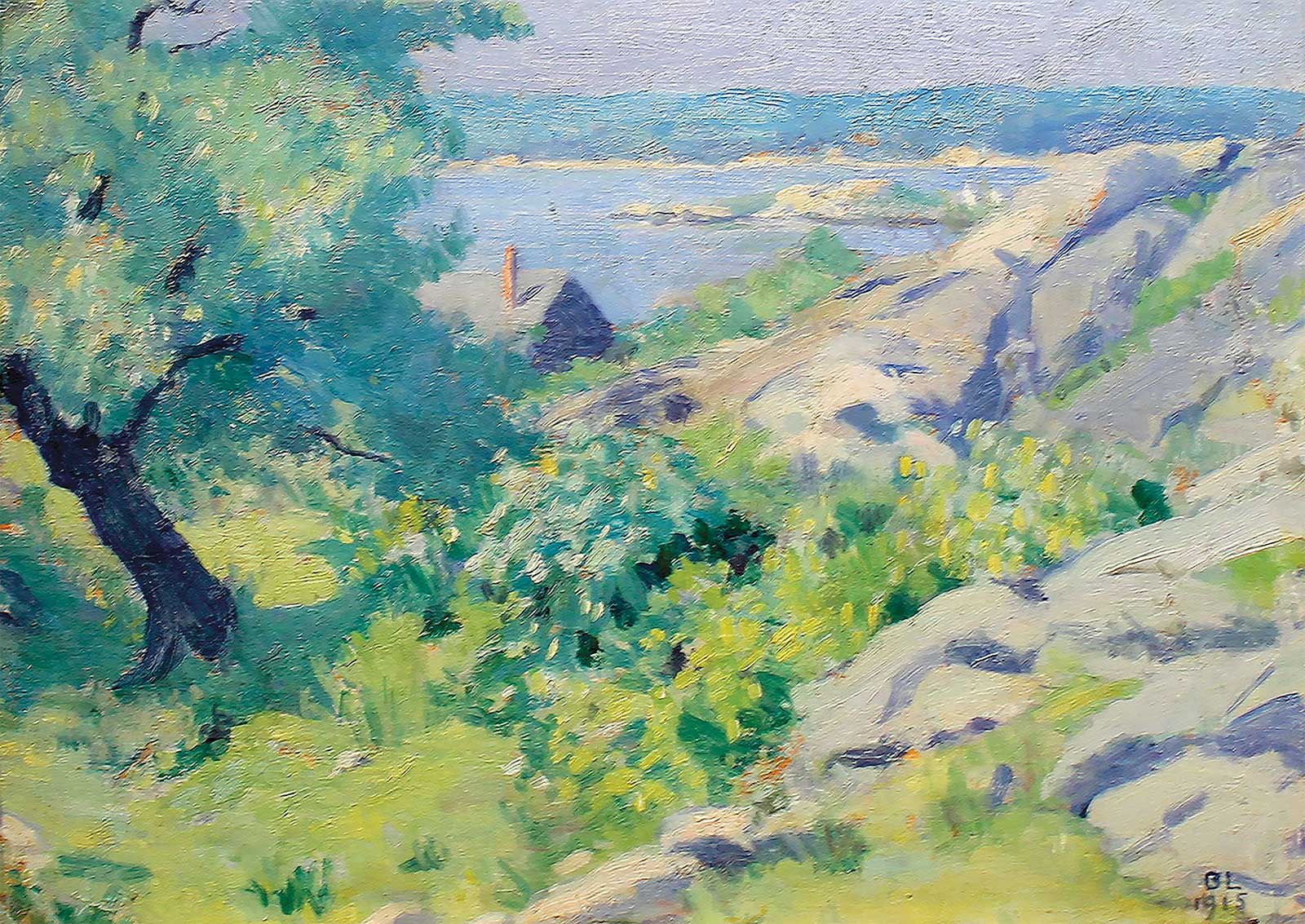
Breta Longacre (1887-1923), Shoreline with House. Oil on panel, 8½ x 11½ in., signed with initials and dated 1915 lower right.
Make an appointment to view Field, Town and Brush at Hawthorne Fine Art’s new Upper East Side location in New York City, where it hangs from September 8 to October 30. A full-color exhibition catalogue is available to download on the gallery’s website. —
Powered by Froala Editor