

Although Carl Sprinchorn (1887-1971) has long been associated with Maine—where he created many of his most popular paintings—an exhibition at the Ogunquit Museum of American Art draws attention to the breadth of the range and influences of an underrecognized, but important voices in American modernism.
Sprinchorn was born in Sweden and came to New York in 1903 to study with Robert Henri, establishing himself as a versatile painter whose work was informed by his extensive travels, industry, sexuality and a close community of artists that included Marsden Hartley, Charles Demuth, Marguerite and William Zorach, B.J.O. Nordfeldt and Florine Stettheimer.
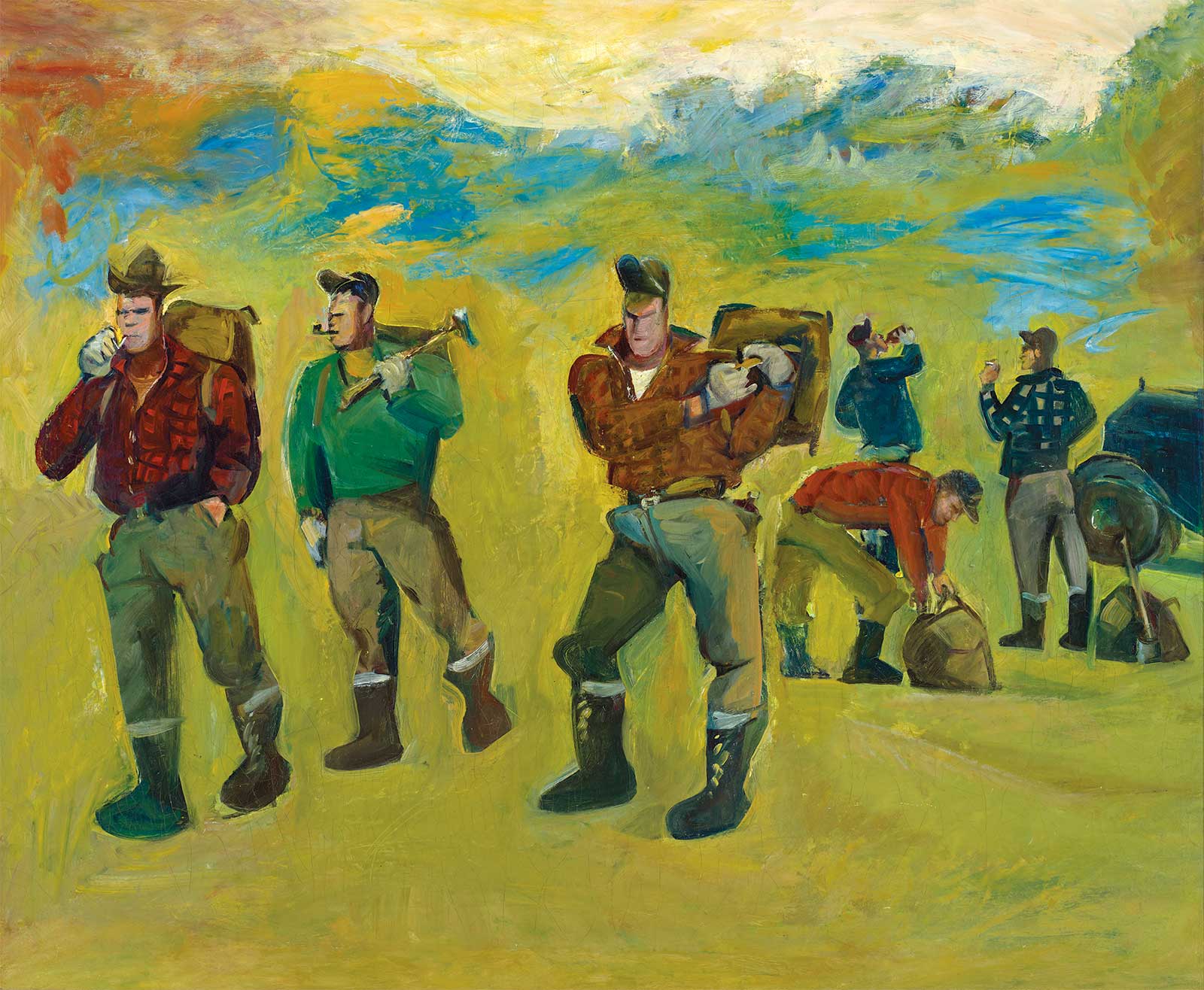
Carl Sprinchorn (1887-1971), Lumberjacks, Shin Pond, 1941. Oil on board, 36 x 41½ in. Collection of Jay DeMartine. Photo by Luc Demers.
On view through November 15, Carl Sprinchorn: All the World is a Painting includes 59 works by the artist (39 paintings and 20 works on paper) that that speak to his identity as a gay man and Swedish immigrant navigating the complexities of contemporary life, through the lens of modernism.
“As an immigrant working in the United States, Sprinchorn absorbed and synthesized a remarkable range of cultural influences that came to define both his life and his art,” explains Devon Zimmerman, curator of modern and contemporary art at the Ogunquit Museum. “His status as a Swedish immigrant, and his ties to the Scandinavian expatriate community, ultimately cemented his relationship with Maine and introduced him to the logging industry that became one of his defining subjects. At the same time, he embraced many of the most progressive artistic ideas of his era—from Edvard Munch’s psychologically charged approach to composition and emotion, to the Stieglitz Circle’s engagement with French and German modernism, to Robert Henri’s celebration of the dignity of working-class labor and leisure.
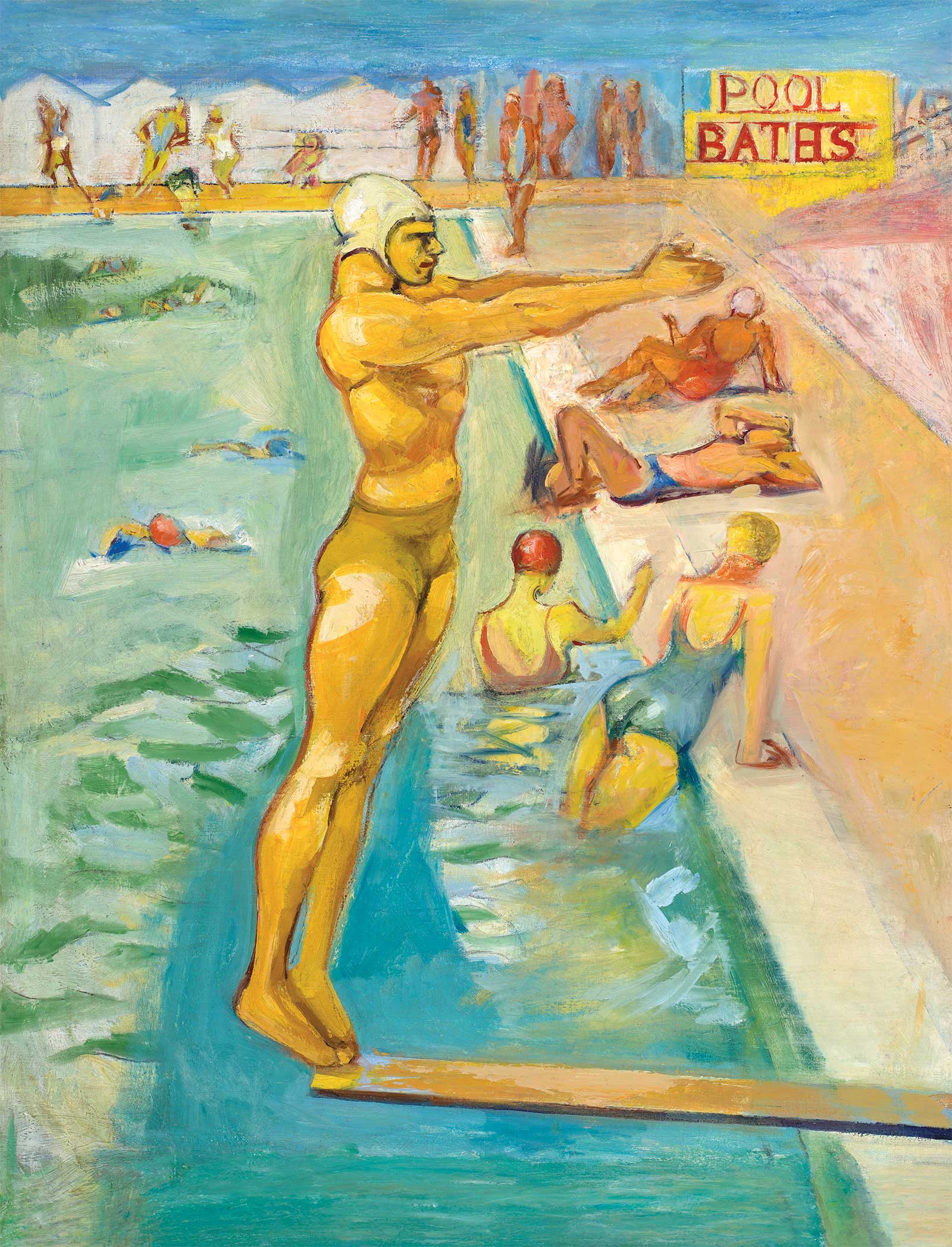
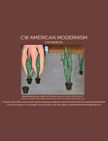
Carl Sprinchorn (1887-1971), The Diver–Coney Island, 1934. Oil on canvas, 48 x 36 in. Collection of Roy Goldberg and Keith Sherman. Photo by Luc Demers.
“Sprinchorn’s work was thus shaped not only by regional experience, but also embedded within broader transnational networks and produced at the intersection of diverse ideas, debates, and artistic currents in early 20th-century American art and culture. It is within this expanded context that this catalog seeks to reexamine his work.”
Zimmerman points to Lumberjacks, Shin Pond, as an example of Sprinchorn’s “weighty and fluid” brushwork, “allowing figures, interiors and landscapes to ebb across the threshold between representation and abstraction;” and his distinctive portrayal of the male figure as both masculine and sensual. Painted in 1941, it reflects Maine’s fraught relationship with the logging industry and subsequent pulping mills.
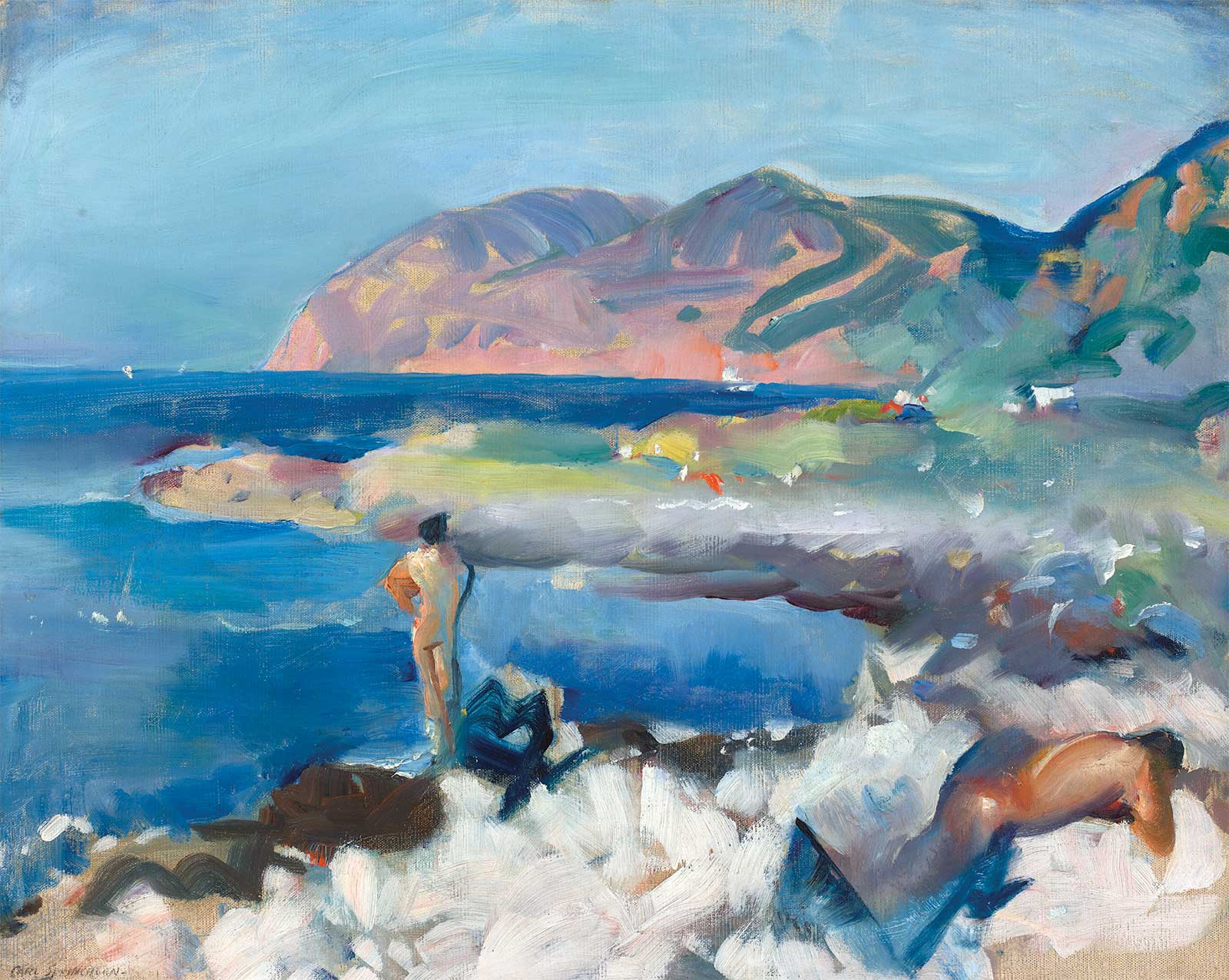
Carl Sprinchorn (1887-1971), California Beach Scene. Oil on canvas, 24 x 30 in. Collection of Jay DeMartine. Photo by Luc Demers.
Another highlight in the show is The Diver—Coney Island, which Sprinchorn painted in 1934, in the midst of the Great Depression, “when widespread male unemployment placed new strain on normative constructions of masculinity,” says Zimmerman. “While many artists of the period turned to heroic images of men at work as a way to stabilize these anxieties, Sprinchorn instead found, in sport, a distinct space through which to explore and reimagine masculinity in modern American culture. Yet, his divers complicate even this framework: the figures are not only muscular and athletic, but also rendered with a pronounced sensuality, their bodies imbued with an erotic charge that unsettles the boundaries between strength, vulnerability and desire.”
Another exhibition of Sprinchorn’s work at Bates College Museum of Art, Carl Sprinchorn: Points of View, will be on view from October 1 through December 19. Together, the two shows represent the most comprehensive presentation of his paintings and drawings to date.
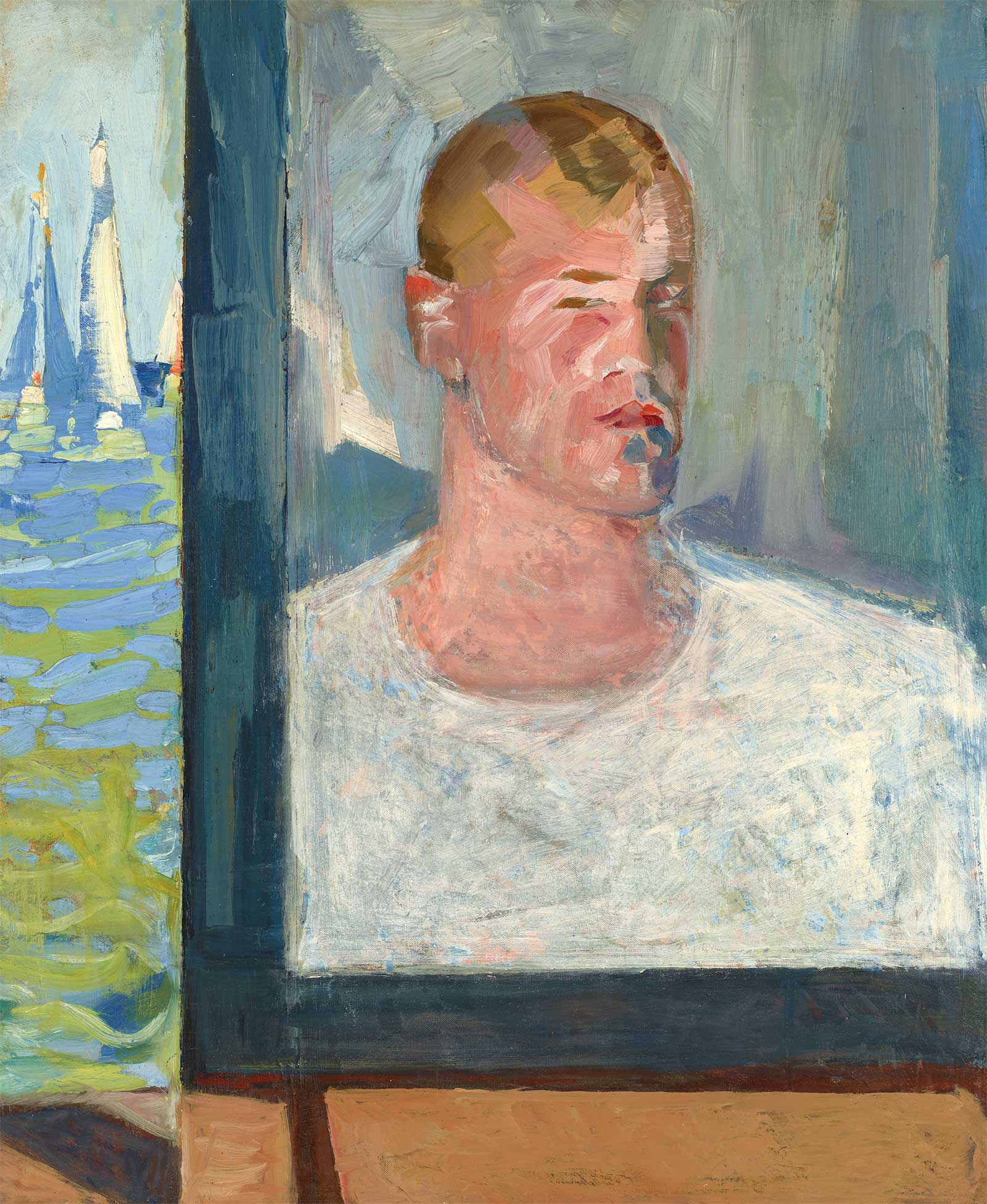
Carl Sprinchorn (1887-1971), Self-Portrait. Oil on canvas, 30 x 25 in. Collection of Jay DeMartine. Photo by Luc Demers.
Zimmerman concludes, “Across his career—from drawings of the urban demimonde in theaters and cabarets, to the lyrical, attenuated bodies of men on the beaches and at the pools of Coney Island, to the powerful figures of hunters and lumberjacks in the Maine woods—Sprinchorn consistently returned to the human figure as a vehicle for exploring desire, labor and belonging. Seen together, these works suggest that his gender and sexuality profoundly shaped how he envisioned the body and its relationship to the environments it inhabits, whether urban or rural, cultivated or wild.” —
Powered by Froala Editor