
The National Academy of Design was founded in 1825 “to promote the fine arts in America through exhibition and education.” Members of the academy, elected by their peers, donate a representative work of art as well as a portrait to the academy’s collection. The collection now consists of nearly 8,000 works including paintings, sculpture, works on paper, architectural renderings and models. The academy’s collection is a rich overview of 200 years of American art.
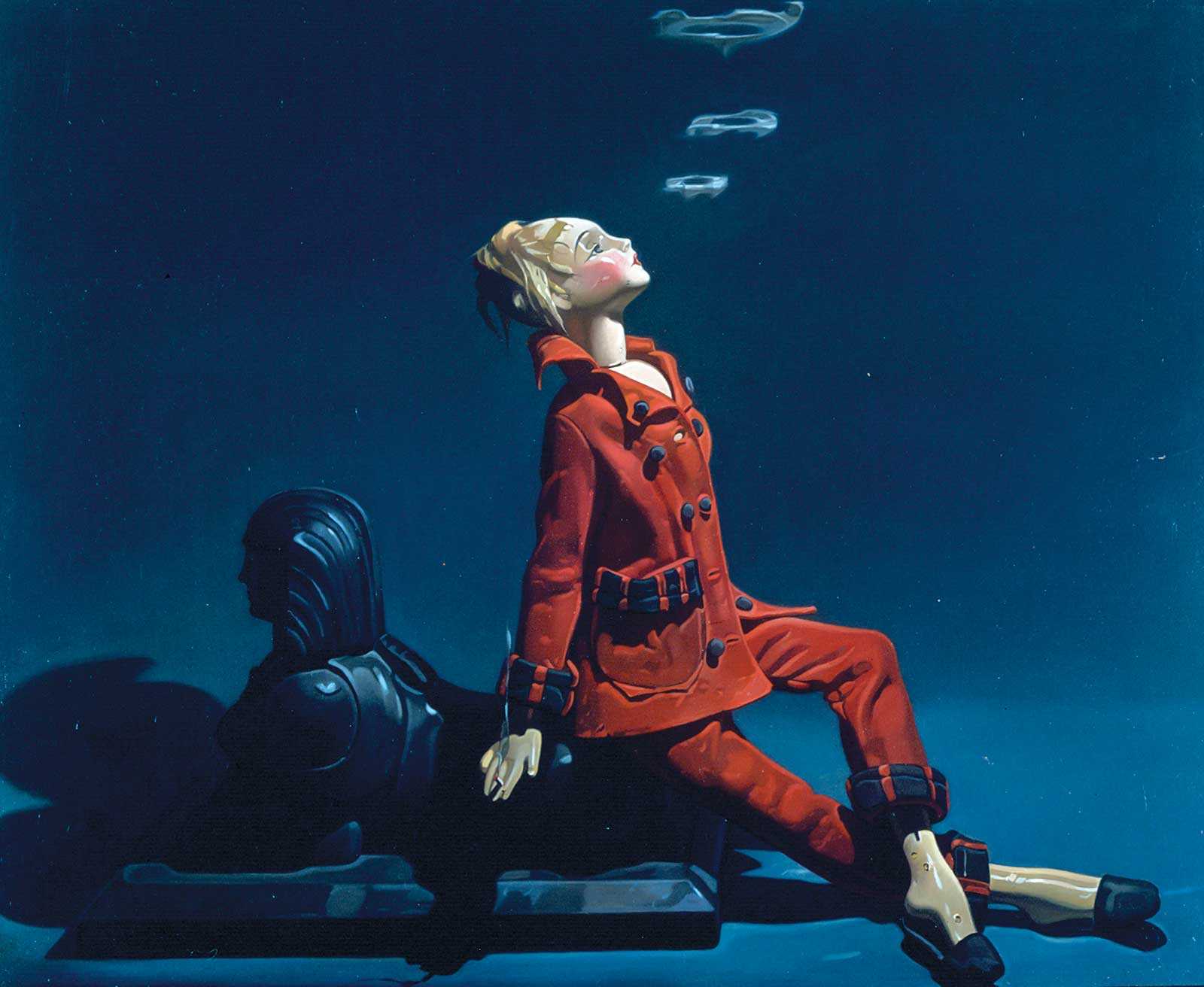
Priscilla Warren Roberts (1916-2001), Flaming Youth, ca. 1975. Oil on canvas, 20 x 24 in. The Westmoreland Museum of Art, Greensburg, PA. Gift of Jeremyn Davern, 1984.
Treasures from the National Academy of Design is being shown at the Westmoreland Museum of American Art in Greensburg, Pennsylvania, through January 18, 2027. The museum is also showing works by National Academicians in its own collection. The National Academy works are loaned as part of Art Bridges’s Partner Loan Network “dedicated to bringing American art out of museum vaults and presenting it in communities across the United States.”
Henry Ossawa Tanner (1859-1937) was the first African American artist to gain international acclaim. He moved to Paris in 1891, where he thought his work would gain more acceptance and to avoid the racism he experienced in the United States. In 1923, the French government appointed Tanner as a Chevalier of the Legion of Honor. He had been elected an associate member of the National Academy of Design in 1909 and a full academician in 1927.
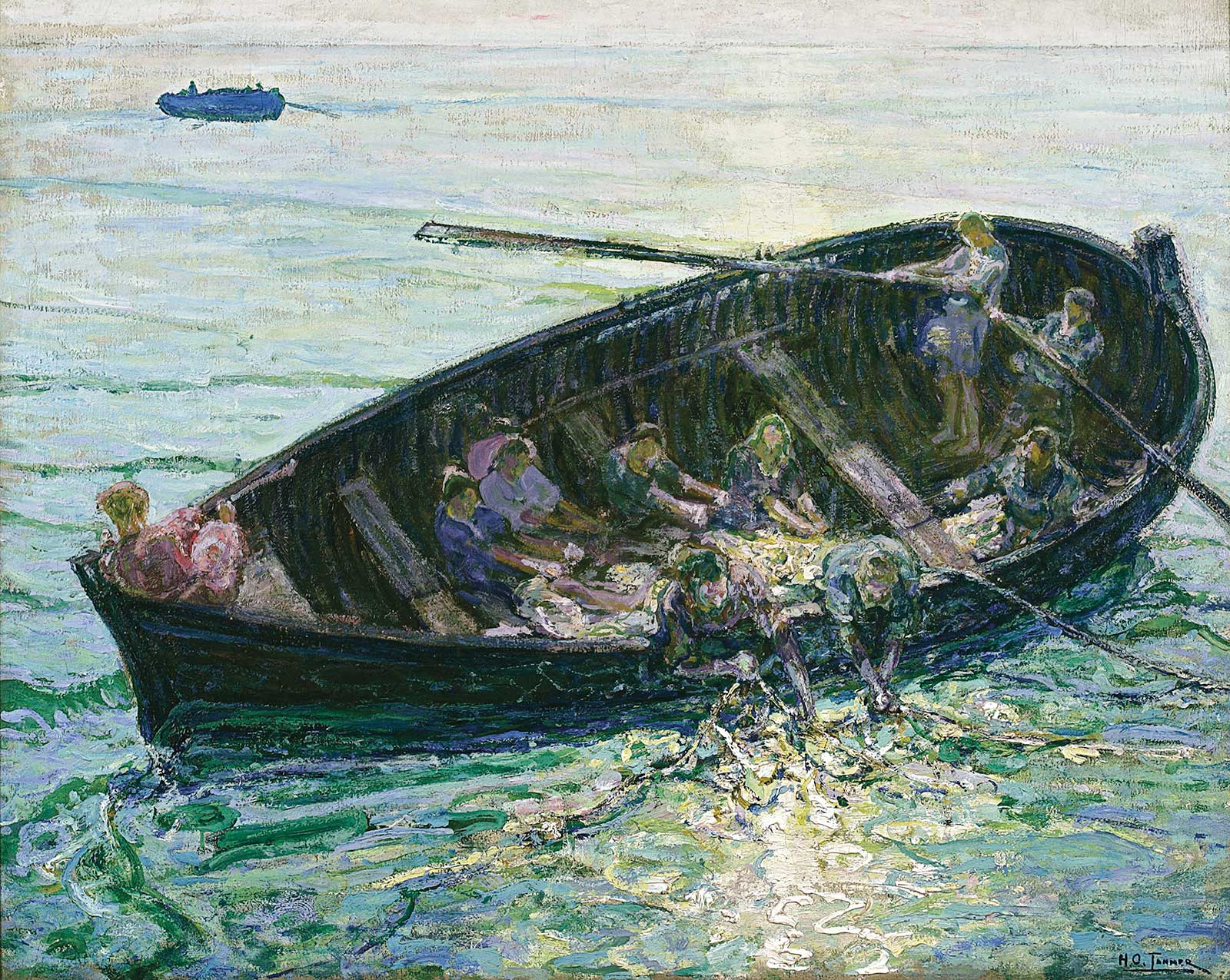
Henry Ossawa Tanner (1859-1937), The Miraculous Haul of Fishes, ca. 1913-14. Oil on canvas, 38 x 47½ in. National Academy Museum, New York, NY. Gift of the artist, NA diploma presentation. October 3, 1927.
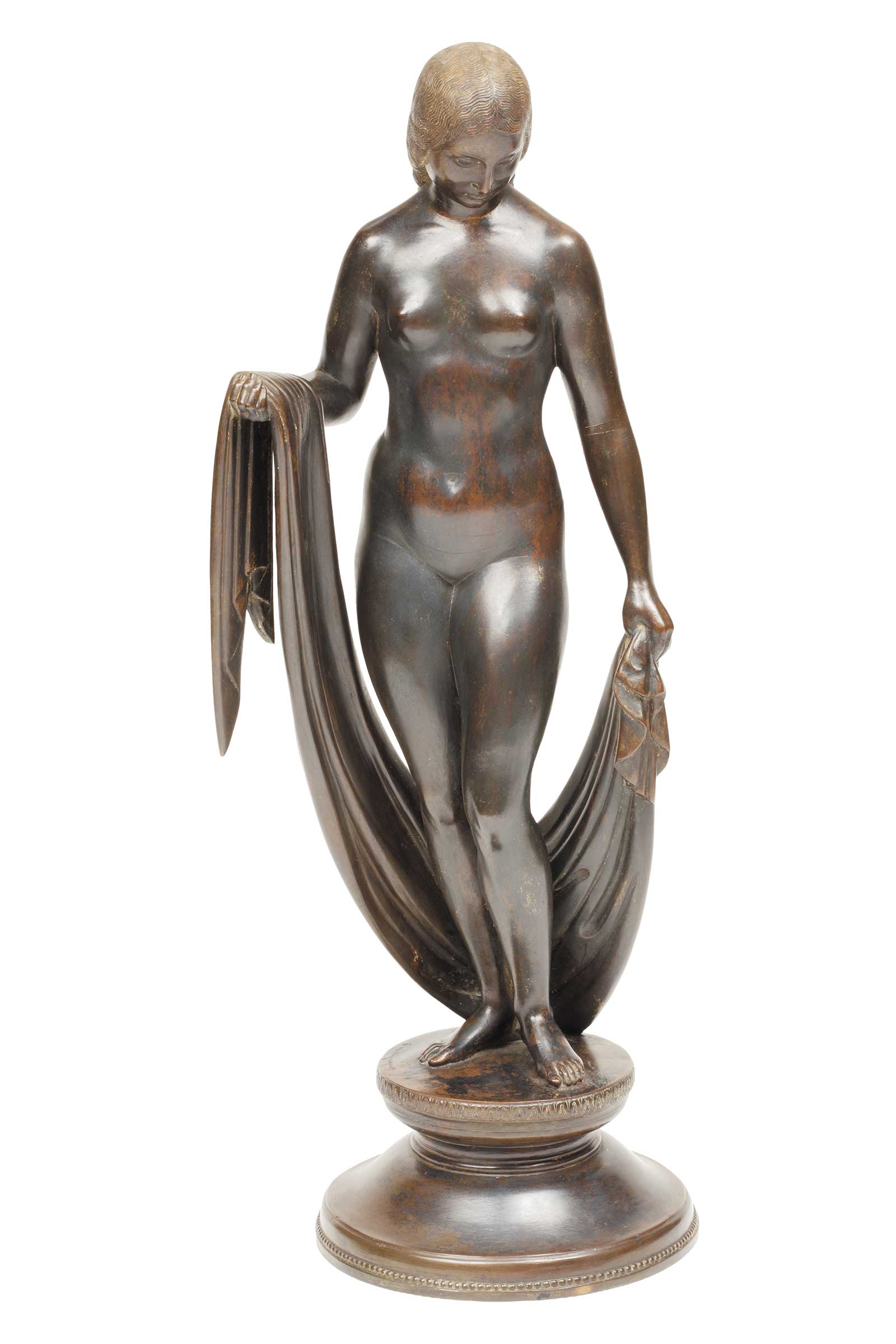
Paul Manship (1885-1966), Briseis, 1916. Bronze, 21¼ x 8 x 6½ in. The Westmoreland Museum of Art, Greensburg, PA. Gift of the Henry L. Hillman Foundation, Pittsburgh, PA, through The Westmoreland Society, 1996.
His painting, The Miraculous Haul of Fishes, circa 1913-1914, depicts the biblical story in which Paul had had an unsuccessful day fishing and Jesus sent him back out where he had a miraculous haul of fish. Tanner’s style was French-inspired realism. His unorthodox technique combined multiple layers of oil, tempera and resin which he often scratched back or sanded, creating a complex surface.
Paul Manship (1885-1966) sculpted Briseis in 1916, the year he considered he had reached his artistic maturity. In the Greek epic poem, the Iliad, Briseis was a princess who lost her family and was taken captive by Achilles during the Trojan War. The bronze in the Westmoreland Museum collection is a smaller version of the sculpture he displayed in his New York home. Manship was influenced by the simplicity of archaic Greek sculpture and adopted the stylizations of Art Deco as can be seen in the flowing fabric in the sculpture. He was elected an associate member of the academy in 1914 and an academician in 1916.
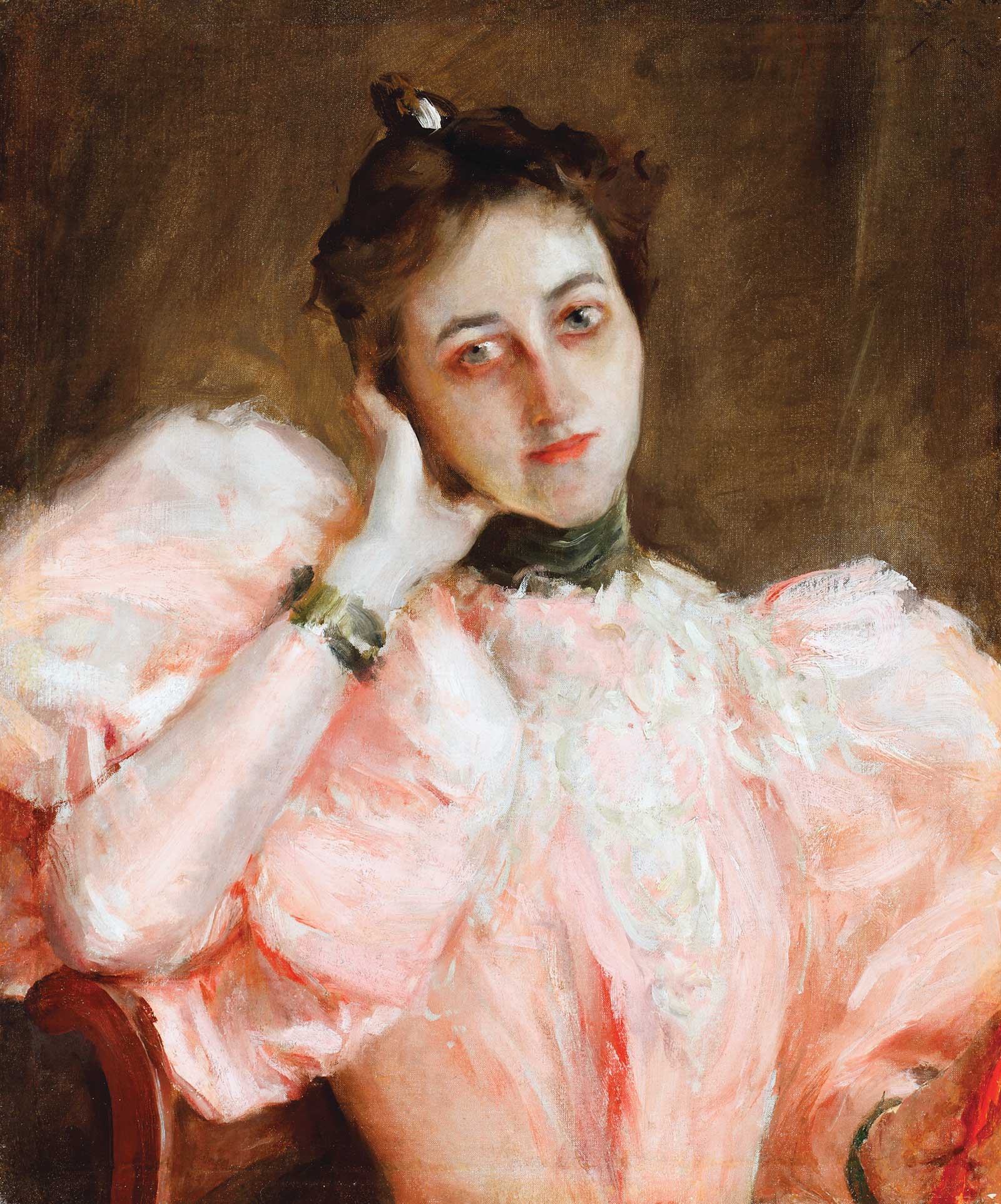
William Merritt Chase (1849-1916), Lady in Pink, ca. 1892. The Westmoreland Museum of Art, Greensburg, PAGift in Memory of G. Albert Shoemaker by his wife, Mercedes.
Priscilla Warren Roberts (1916-2001) had a retrospective exhibition at the Westmoreland Museum in 1984. Her painting, Flaming Youth, circa 1975, was given to the museum at that time. She had been elected an associate of the academy in 1951 and an academician in 1957.
“I am an arch-realist in my paintings, and I love super-realism,” she said. She would collect still life objects at antique shops, thrift shops and yard sales which she assembled in off-beat, surrealist compositions, often with dramatic lighting which she controlled by blacking out the windows in her studio. —
Powered by Froala Editor