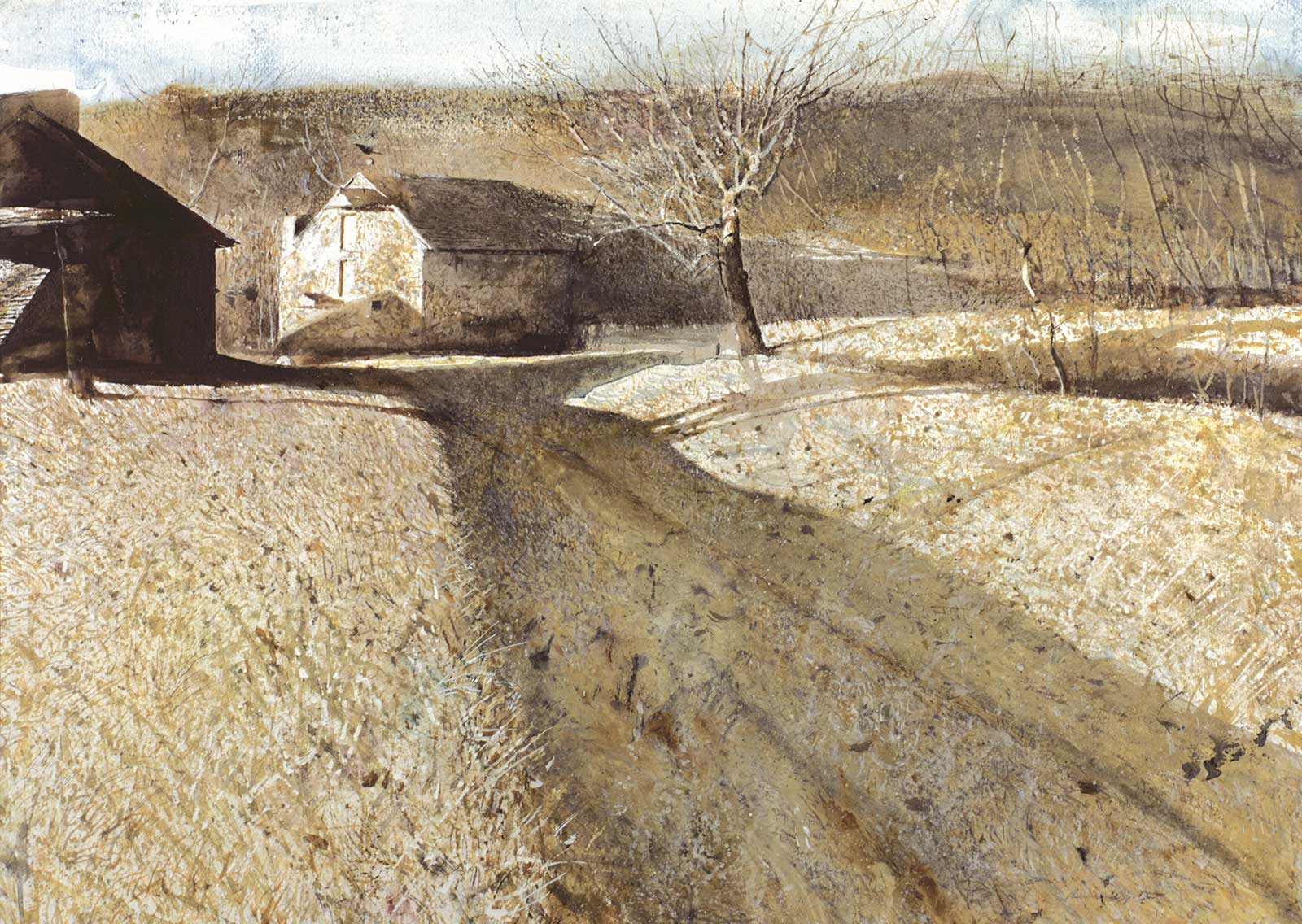
Andrew Wyeth (1919-2009), Old Road, 2002. Watercolor on paper, 19½ x 27 ½ in. © Andrew Wyeth / Artist Rights Society (ARS). Courtesy Somerville Manning Gallery, Greenville, DE.
Andrew Wyeth (1919-2009)
Old Road
Andrew Wyeth’s 2002 watercolor, Old Road is one of many works by N.C., Andrew and Jamie Wyeth that recently came under the care of Sommerville Manning Gallery after the passing of Frank E. Fowler, who represented the family and had some of their finest works in his private collection. The painting depicts the path leading to Brinton’s Mill, the 18th-century gristmill in Chadds Ford, Pennsylvania, that became the home of Andrew and Betsy Wyeth. One of Wyeth’s most enduring subjects, the mill embodied the fusion of place, memory and domestic life that defined much of his work. In Old Road, the quiet stretch of earth and winter grass carries the stillness and isolation characteristic of Wyeth’s late paintings, rendered in the subdued tones and spare detail that became his signature.
Somerville Manning Gallery
101 Stone Block Row, 2nd Floor, Greenville, DE 19807 (302) 652-0271 • info@somervillemanning.com www.somervillemanning.com
—————————————————
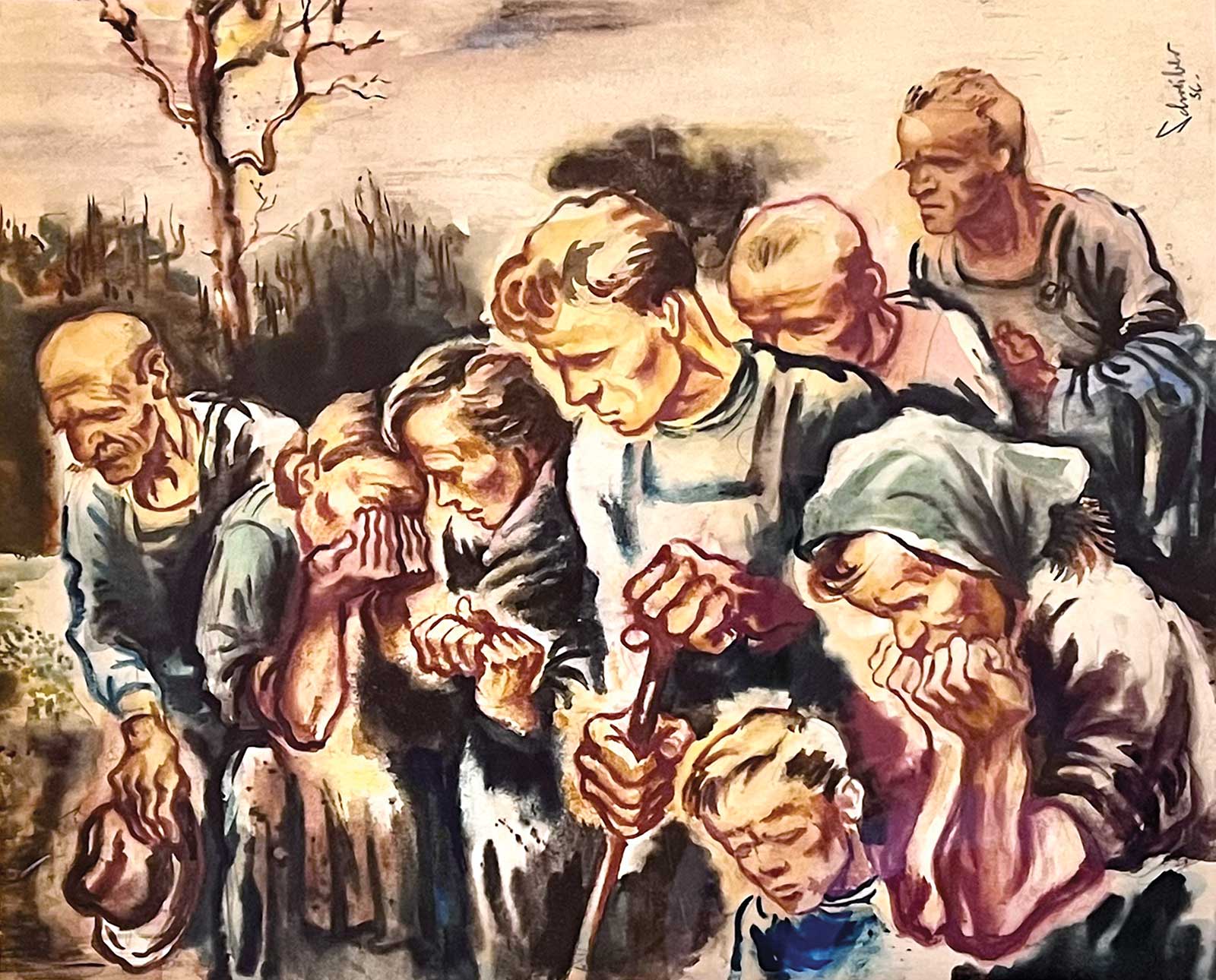
George Schreiber (1904-1977), Sharecropper’s Funeral, 1936. Watercolor on paper, 18 x 22 in., signed and dated upper right. Courtesy CW American Modernism, Los Angeles. CA.
George Schreiber (1904-1977)
Sharecropper’s Funeral
George Schreiber’s Sharecropper’s Funeral is an important artifact of the Great Depression. Painted in 1936, Schreiber’s watercolor tells the story of the loss of a loved one. When the painting was exhibited in Schreiber’s 1940 national traveling exhibition, A Panorama of America, one critic acclaimed, “Sharecropper’s Funeral, showing the agony in the faces of the inarticulate underprivileged farm people, is one of the most moving in the entire show.” Georges Schreiber was a painter and lithographer who rose to prominence during the 1930s and 1940s for his compelling American Scene paintings which today still have a wonderful narrative quality. Born in Brussels, Schreiber immigrated to New York in 1928 where he lived most of the rest of his life. Schreiber noted in his biography, “I don’t want to just be an American with citizenship papers, I want to completely associate myself with America.” Works like Sharecropper’s Funeral are a strong testament to Schreiber’s achievements.
CW American Modernism
By Appointment • Los Angeles, CA cwamericanmodernism@gmail.com www.cwamericanmodernism.com
—————————————————
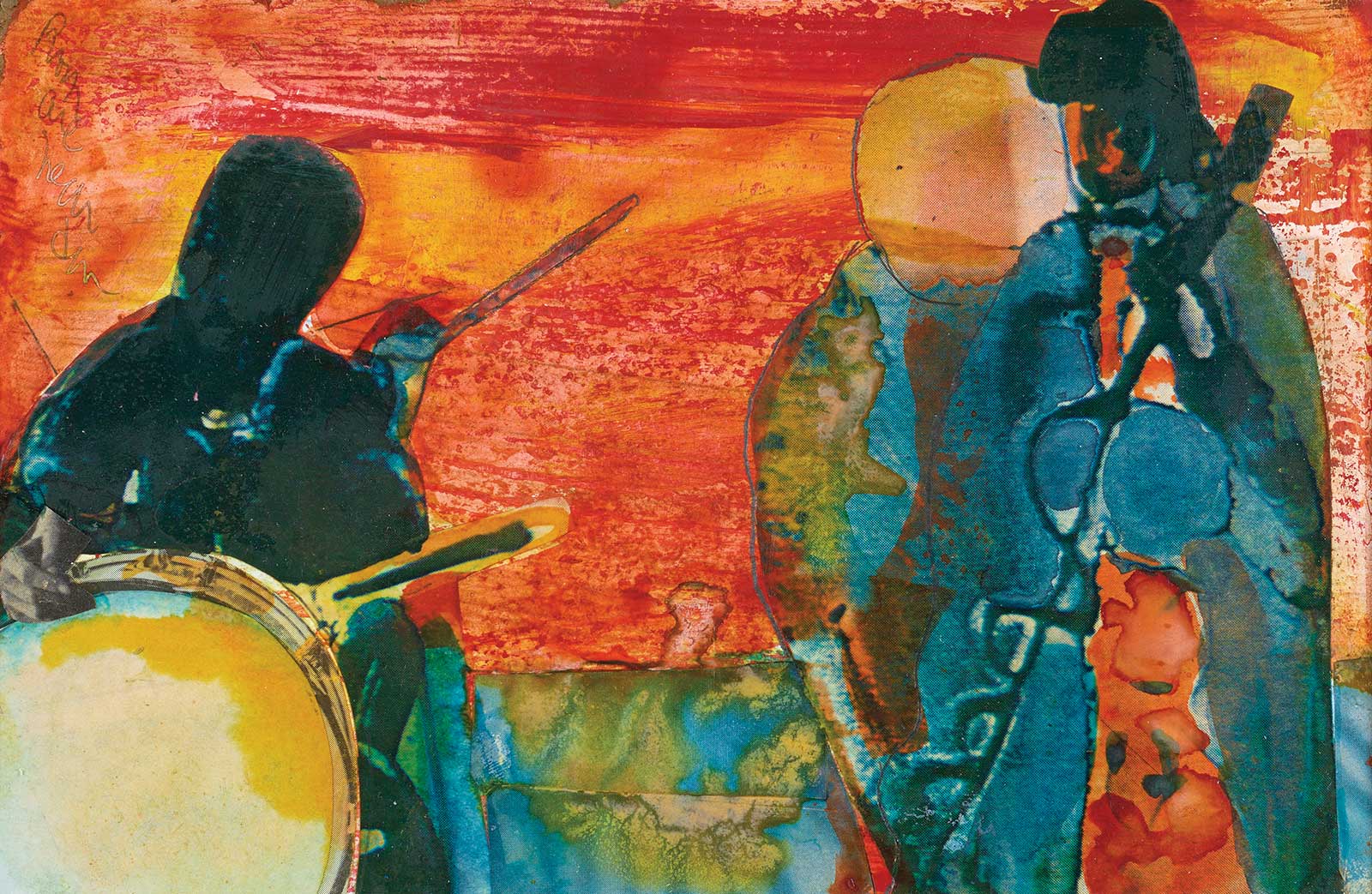
Romare Bearden (1911-1988), Time for the Drum, 1979. Collage with paper, oil, gouache and pencil on Masonite, 61⁄8 x 91⁄8 in. Courtesy Debra Force Fine Art, New York, NY.
Romare Bearden (1911–1988)
Time for the Drum
Jazz music was part of Romare Bearden’s life from an early age as he was surrounded by musicians in Harlem, and in 1941, his studio on 125th Street was in the Apollo Theater building. Jazz subjects appear in his paintings, collages and prints throughout his career. In Time for the Drum, the artist highlights the improvisational and collaborative nature of jazz by giving prominent placement to the drummer on the left, who appears to be beginning a solo, while the bassist and a third musician, likely a saxophone or trumpet player, are grouped together on the right. Time for the Drum was part of a group of 20 jazz-themed collages exhibited at Sheldon Ross Gallery in Michigan in 1980.
Debra Force Fine Art
13 E. 69th Street, Suite 4F • New York, NY 10021 (212) 734-3636 • info@debraforce.com www.debraforce.com
—————————————————
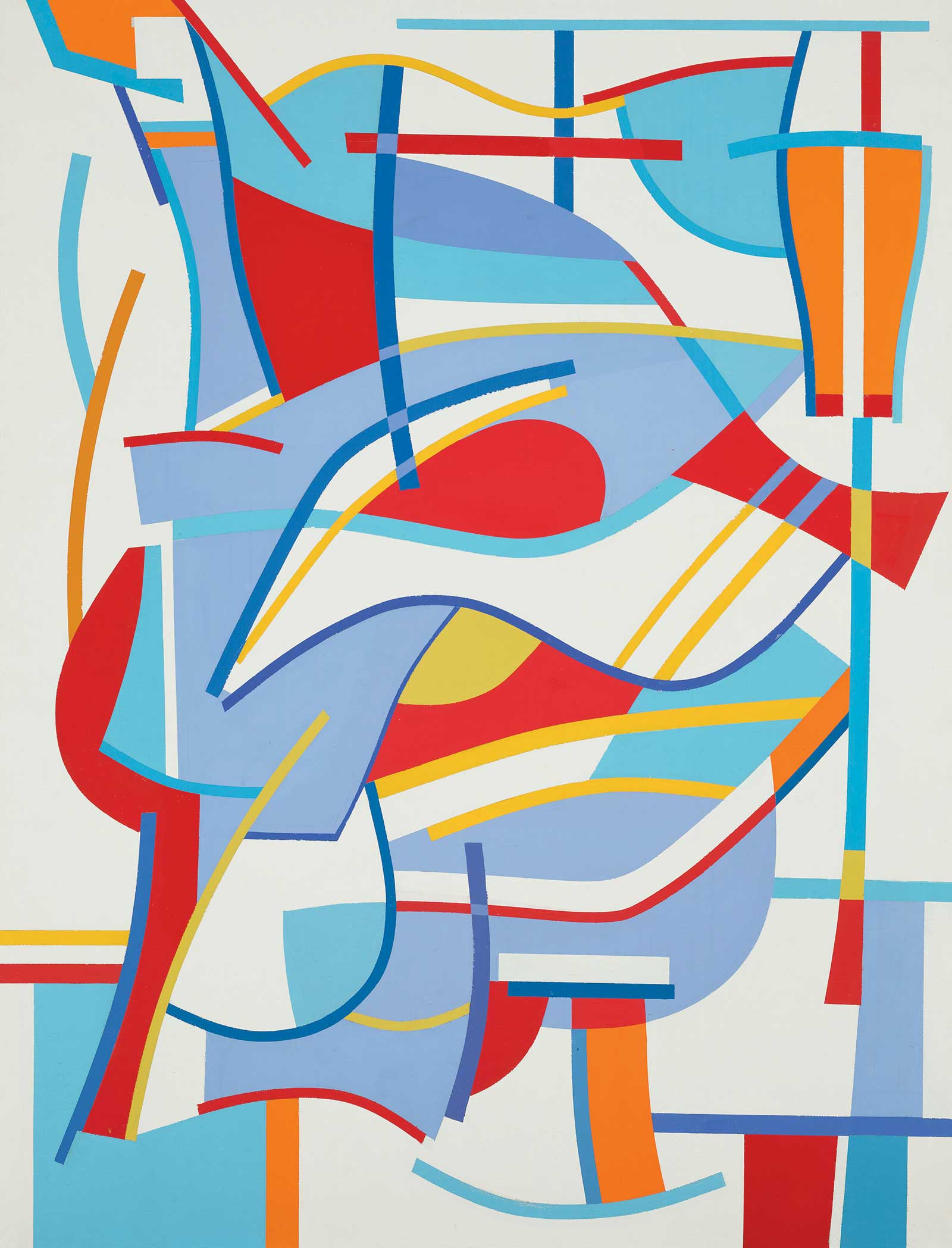
Carl Holty (1900-1973), Geometric I, ca. 1942. Oil on Masonite, 62¾ x 48 in. Courtesy Vallarino Fine Art, New York, NY.
Carl Holty (1900-1973)
Geometric I
Carl Holty was a key figure in early American abstraction and a founding member of the American Abstract Artists in New York City where, in the mid-1930s, he became a prominent figure in the avant-garde art scene and reinvigorated his friendships with Hans Hofmann, Vaclav Vytlacil and Stuart Davis, whom he had known in Paris. An active leader and member of the American Abstract Artists until 1944, his Geometric I, circa 1942, is a superb early example of large-scale abstraction (63 by 48 inches), reflecting the group’s commitment to structure, color and the reduction of form into abstracted shapes.
Vallarino Fine Art
222 E. 49th, Suite #1 • New York NY 10017 (212) 628-0722 • info@vallarinofineart.com www.vallarinofineart.com
—————————————————
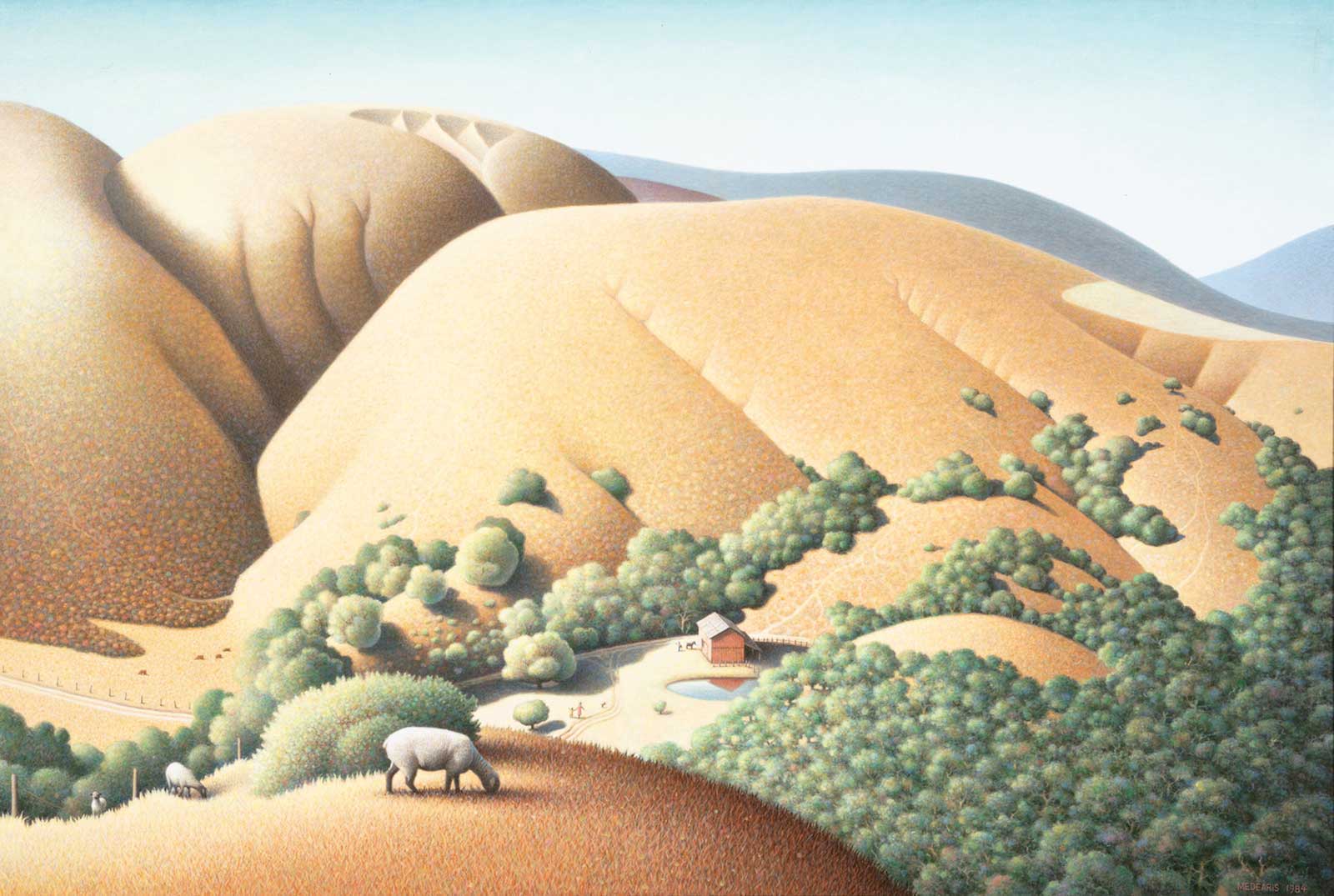
Roger Medearis (1920 -2001), Summer Pastoral, 1984. Acrylic on canvas stretched over board, 27 x 40 in., signed and dated 1984 lower right; Verso: Artist’s label with signature, title, and date. Courtesy Helicline Fine Art, New York, NY.
Roger Medearis (1920 -2001)
Summer Pastoral
American regionalist painter Roger Medearis, created Summer Pastoral in 1984, and it stands as one of his most celebrated works. Medearis was a standout student of Thomas Hart Benton at the Kansas City Art Institute. Summer Pastoral showcases his teacher’s stylistic influence with its rolling, lyrical and stylized landscapes. The painting features a quiet, idealized Midwestern rural scene, highlighting the rustic beauty, light and contemplative calm of the land.
After finding commercial success early in his career, Medearis largely stopped painting when Abstract expressionism took over. Summer Pastoral was painted during his highly productive later years (beginning in the late 1960s), when he returned to the Midwest, and subsequently California, to fully embrace his regionalist roots. Interestingly, Medearis created a painted bronze model as a three-dimensional study for this painting. The bronze versions of Summer Pastoral are deeply tied to a unique, old-school regionalist technique that Medearis learned directly from his mentor, Thomas Hart Benton.
Benton famously taught his students to build three-dimensional clay models of their subjects before picking up a paintbrush. This allowed the artist to perfectly map out realistic shadows, calculate the “weight” of objects and create a strong sense of depth. While these working models were traditionally clay or wax maquettes meant only for the studio, Medearis took the process a step further and cast the painting into bronze editions.
Helicline Fine Art
By Appointment, New York, NY • (212) 204-8833 hello@heliclinefineart.com • www.heliclinefineart.com
—————————————————
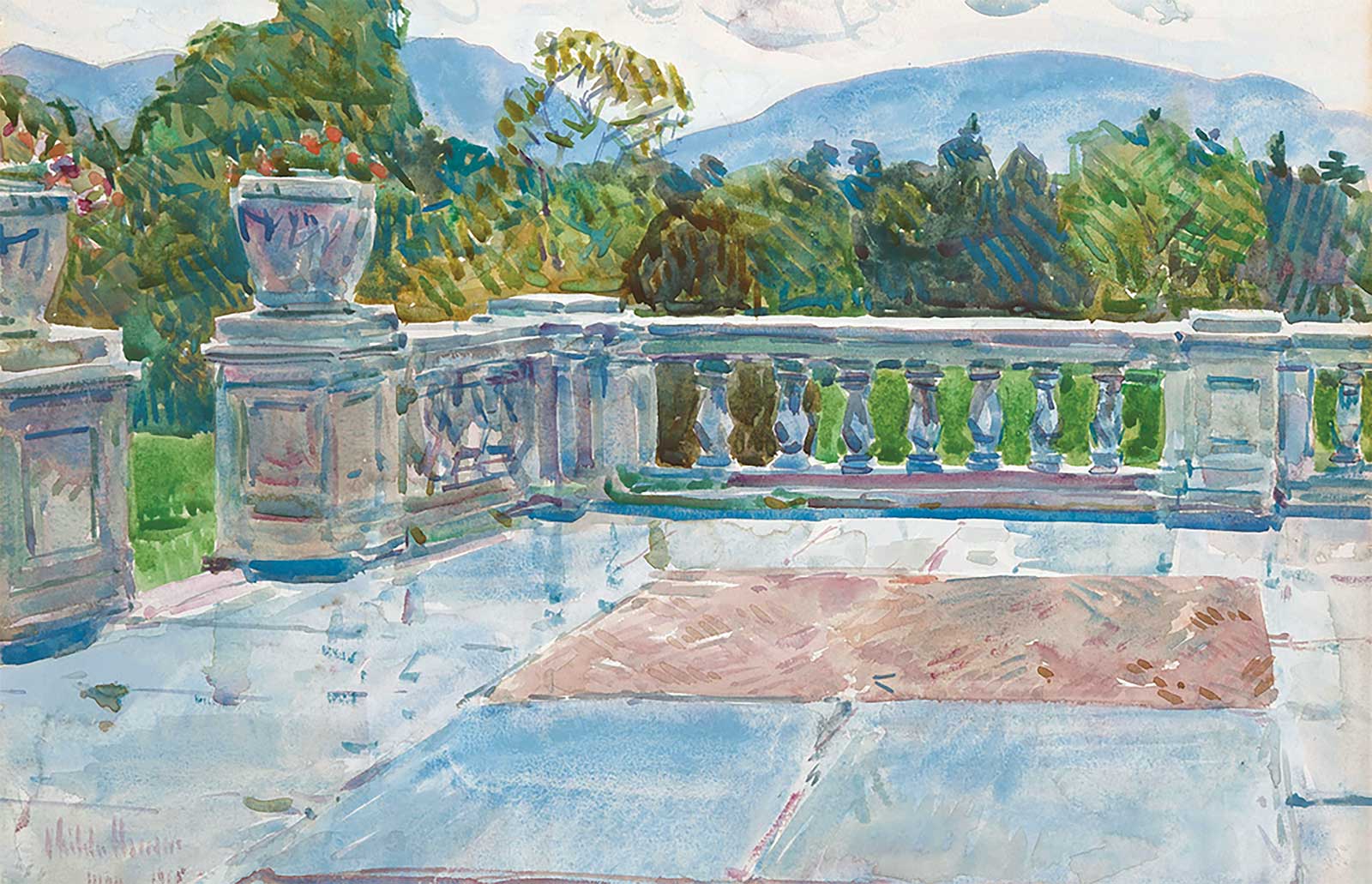
Childe Hassam (1859-1935), Terrace on the Hudson, 1915. Watercolor on paper, 13½ x 19½ in., signed and dated lower left “Childe Hassam / May 1915”. Courtesy Hawthorne Fine Art, New York, NY.
Childe Hassam (1859-1935)
Terrace on the Hudson
A watercolor by renowned American impressionist, Childe Hassam (1859-1935), Terrace on the Hudson, 1915, depicts a classical stone terrace overlooking a landscape of lush greenery and blue mountains. The work has an impressive exhibition history. It was included in several of Hassam’s one-man exhibitions including at the Albright Art Gallery in 1915 and the Montclair Art Museum in 1916. More recently, the work was included in the exhibition American Impressionism at the Columbus Museum of Art in 2003. Terrace on the Hudson, 1915 will be included in the forthcoming catalogue raisonné.
Hawthorne Fine Art
By Appointment • 575 Fifth Avenue • New York, NY 10017 • (212) 731-0550 • info@hawthornefine.com www.hawthornefineart.com
Powered by Froala Editor