For more than 250 years, artists have found inspiration in the lands of the Americas. As landscape shifted from a backdrop to the subject, land became a visual tool for exploring the possibilities and contradictions of national identity. The American art collection at the Toledo Museum of Art (TMA) presents one such narrative arc, spanning from early 19th-century settler vistas to contemporary depictions that center an Indigenous perspective on the land.
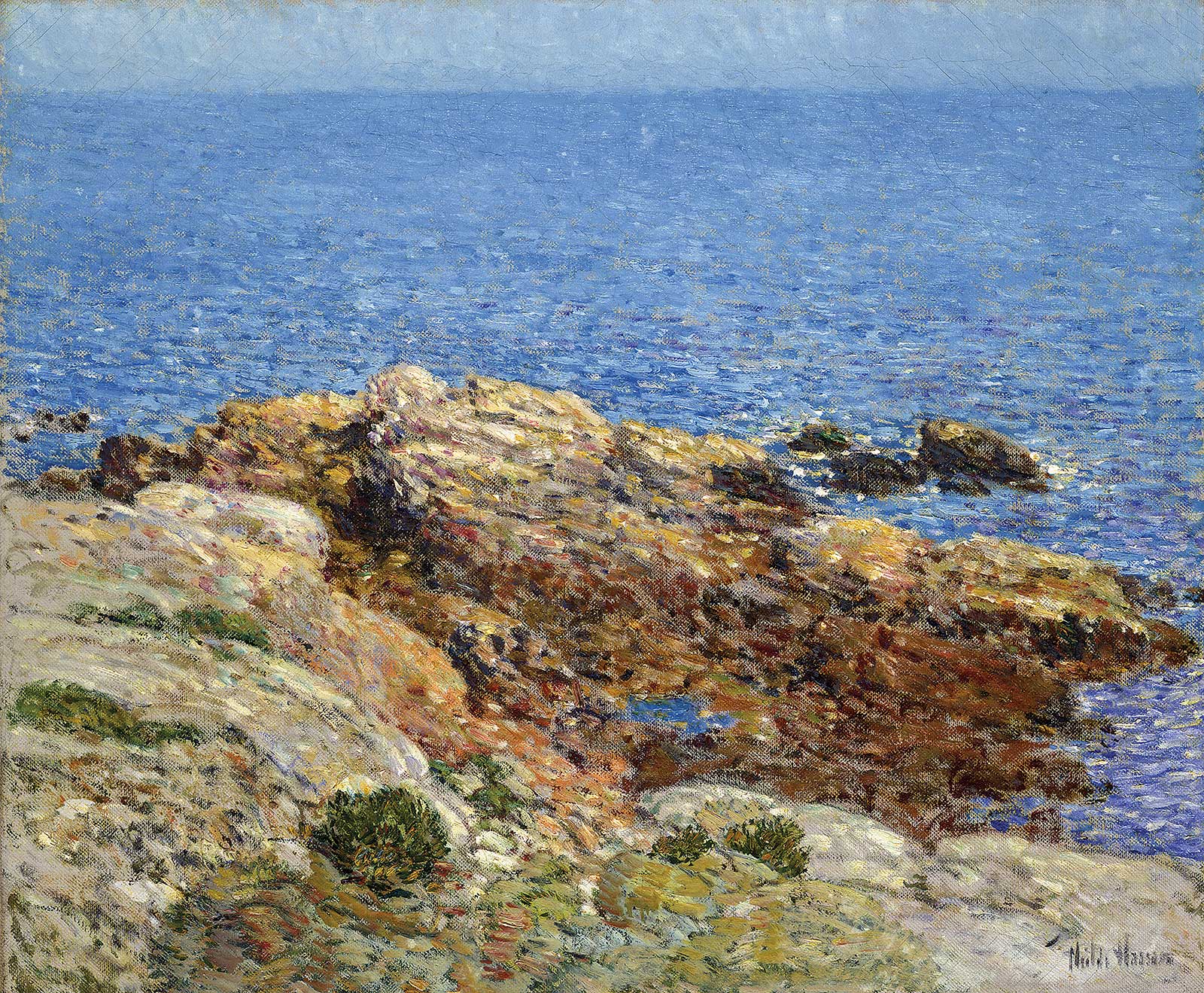
Childe Hassam (1859-1935), Summer Sea, Isles of Shoals, 1902. Oil on canvas, 253⁄16 x 305⁄16 in. Toledo Museum of Art, Gift of Florence Scott Libbey, 1912.3.
TMA’s earliest American landscape painting does not depict the environs of the United States, but of Europe instead. Washington Allston’s Italian Landscape, painted during his second period abroad, 1811 to 1818, demonstrates how American artists initially looked across the Atlantic to define their artistic language. Allston constructed an imagined scene in the Italian countryside complete with classical architecture and country peasants. His composition reflects the period’s Romantic ideals that privileged emotion and spirituality over empirical observation. Allston transforms the landscape into a space for reflection where ancient ruins evoke the passage of time and the fragility of human ambition.
A progenitor of America’s first artistic movement, the Hudson River School, English immigrant Thomas Cole experienced sublimity and sorrow over the United States’ natural environs. Yet in TMA’s The Architect’s Dream, Cole expands the possibilities of landscape painting by merging natural and built environments into a single imaginative vision. Cole presents a fantastical gathering of architecture from across time and geography: a procession of Greek, Roman, and Egyptian structures glows in warm sunlight, while a Gothic cathedral emerges from the shadowed pines of a dense forest. This juxtaposition reflects not only Cole’s interest in history, but the 19th-century fascination with revival styles. Cole thought his tribute to the styles of the past would appeal to his patron, the architect Ithiel Town; however, Town had asked Cole to paint a scene of Athens and rejected the work, much to the artist’s disappointment. The Architect’s Dream remained in the Cole family until TMA Director Otto Wittman acquired the painting in 1949.
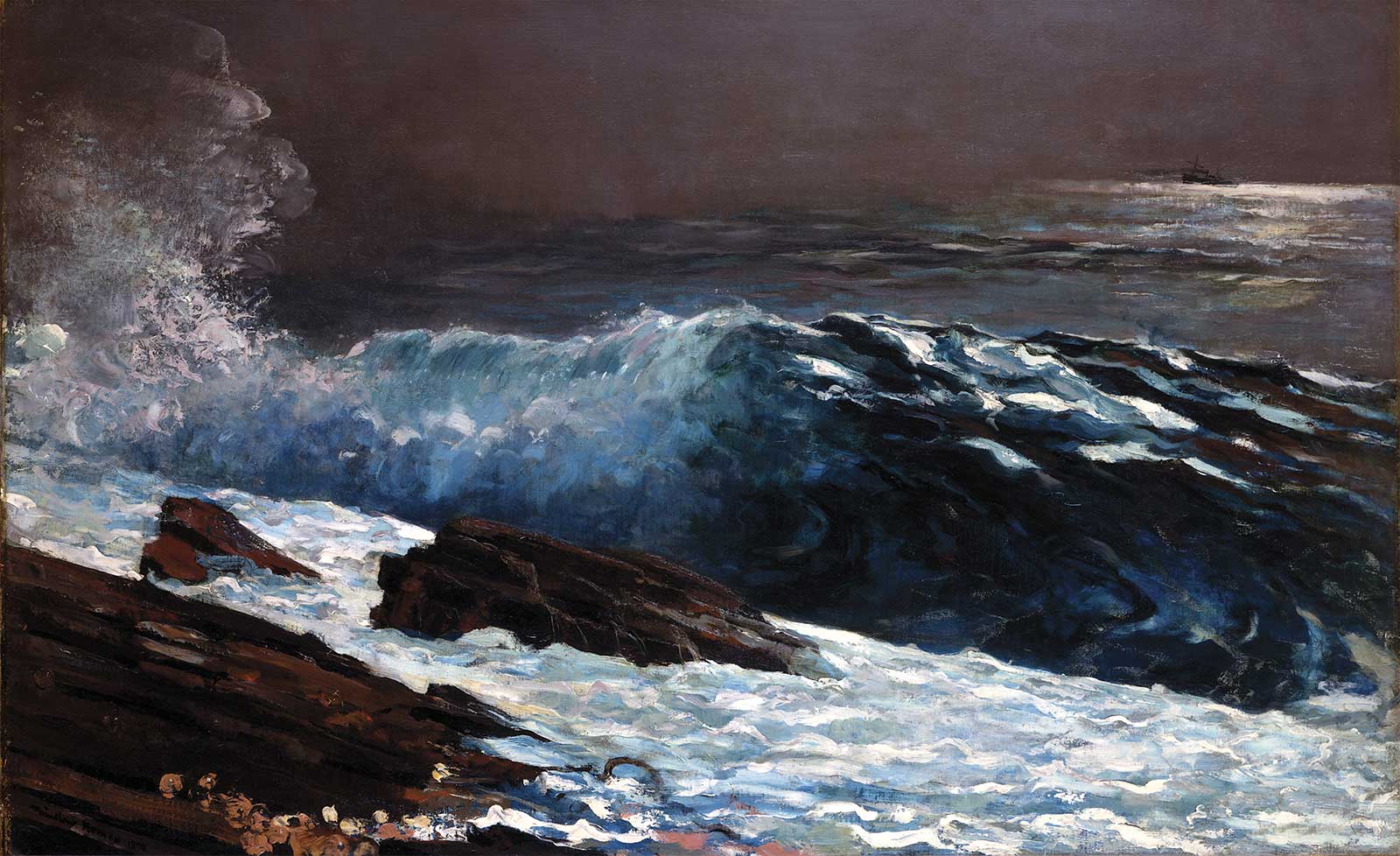
Winslow Homer (1836-1910), Sunlight on the Coast, 1890. Oil on canvas, 30¼ x 48½ in. Toledo Museum of Art, Gift of Edward Drummond Libbey, 1912.507.
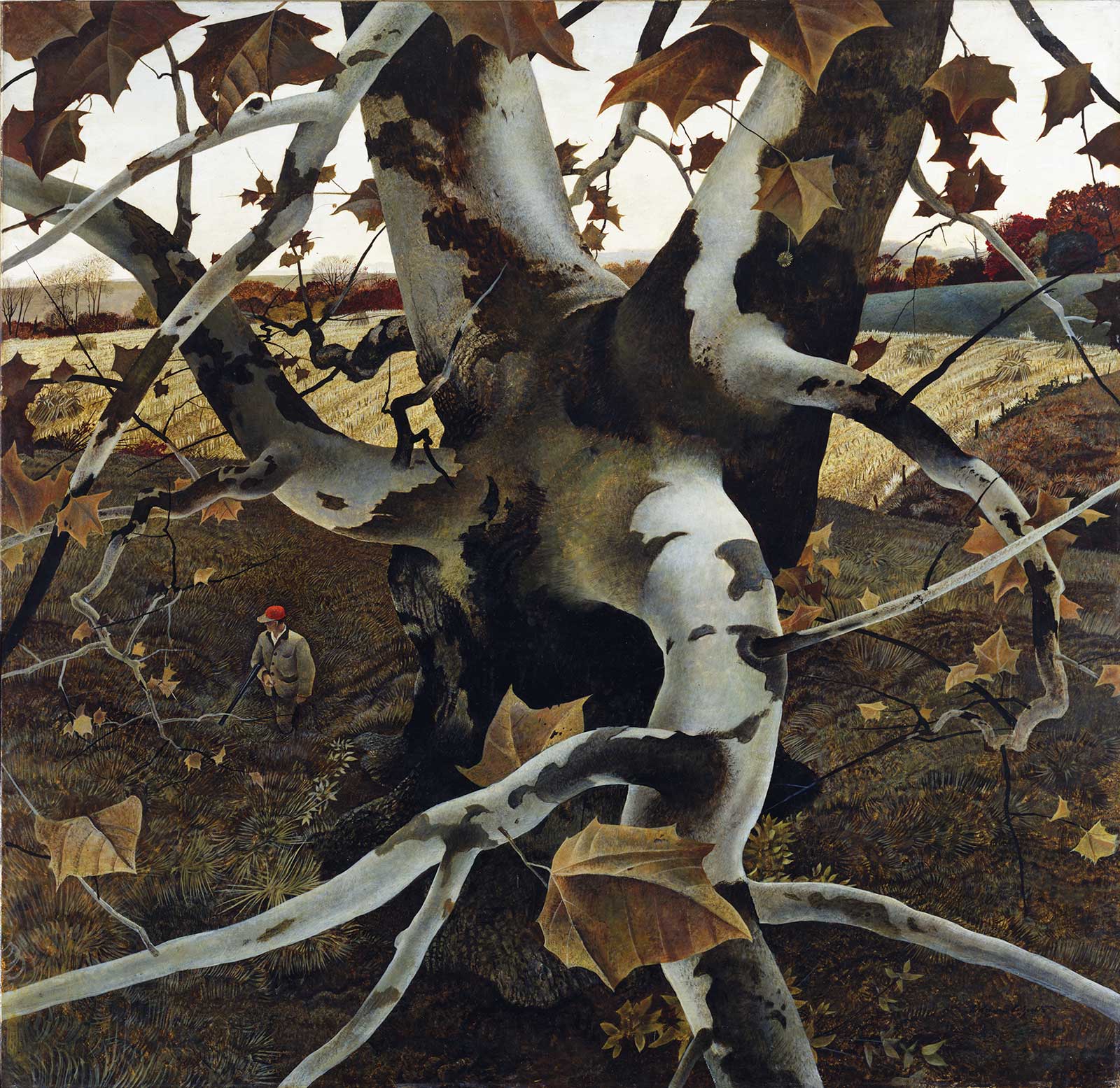
Andrew Newell Wyeth (1917–2009), The Hunter, 1943. Tempera on masonite, 337⁄8 x 33 in. Toledo Museum of Art, Elizabeth C. Mau Bequest Fund, 1946.25.
By the mid-19th century, American artists increasingly turned their attention to the landscapes of the United States, using it to articulate ideas about national identity. Sanford Robinson Gifford’s The Wilderness exemplifies this shift. Gifford rendered light and atmosphere with precision, creating a serene, expansive view suggesting untouched nature. A Native American family appears in the foreground, integrated into the landscape as part of a larger, seemingly timeless order. This painting reveals the contradictions embedded in American landscape representations—by celebrating wilderness as central to a national vision, they often ignore or obscure the realities of displacement and industrial expansion. The presence of Indigenous figures, rendered as part of a “vanishing” way of life, reflects a nostalgic narrative masking the violence of removal already underway.
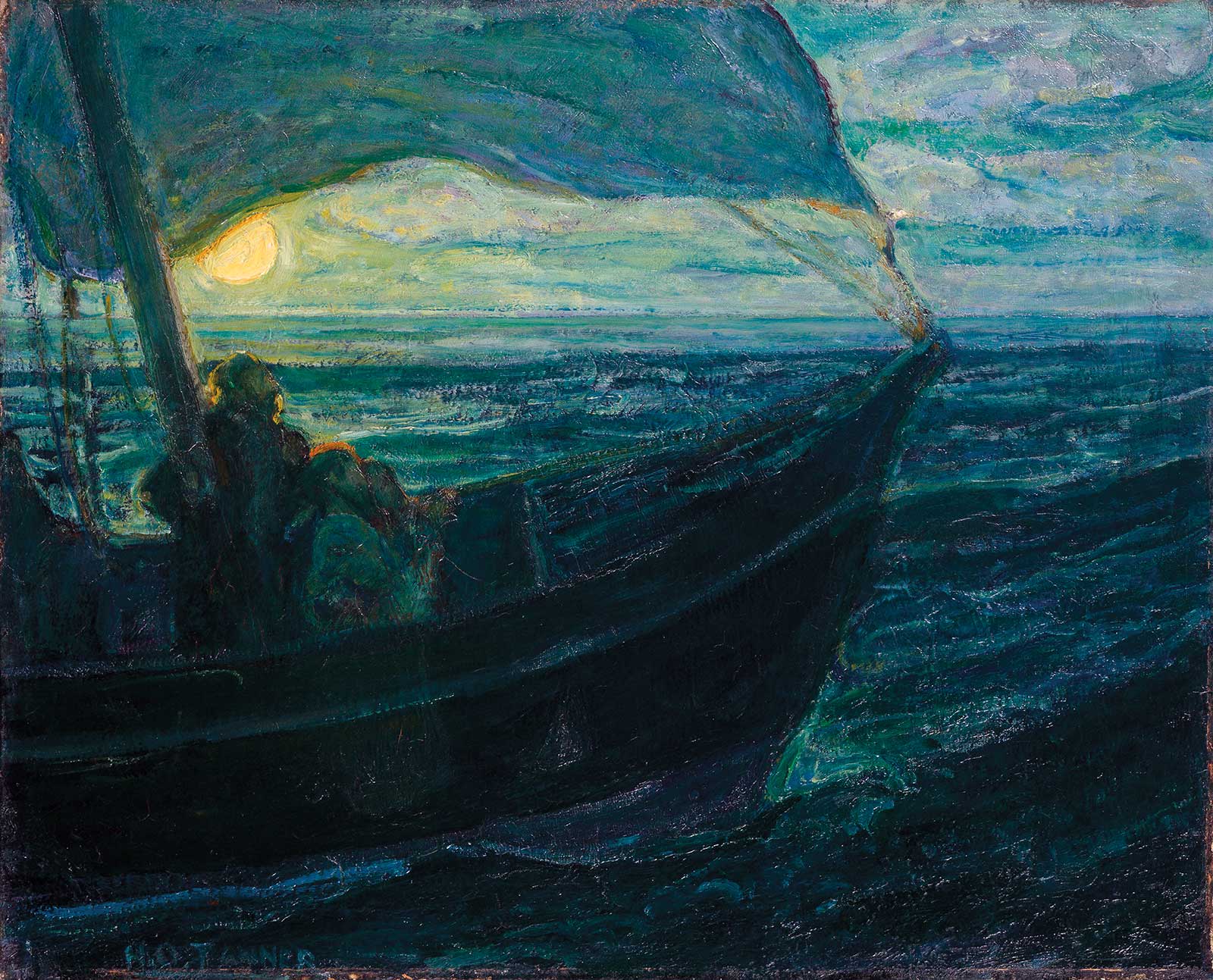
Henry Ossawa Tanner (1859-1937), The Disciples of the Sea, about 1910. Oil on canvas, 261/2 x 215⁄8 in. Toledo Museum of Art, Gift of Frank W. Gunsaulus, 1913.127.
Albert’s Bierstadt’s painting of El Capitan, Yosemite Valley, California transformed remote locations into icons of U.S. nationalism. Painted in the studio but based on sketches from his travels, this work and others offered mostly eastern urban audiences a vision of untouched wilderness in the American West defined by scale, beauty and divine grandeur. They also contributed to the emerging movement to preserve such landscapes as national parks. Sharing the same ideological tensions present in Gifford’s The Wilderness, Bierstadt presents these regions as uninhabited, ignoring the histories of Indigenous peoples such as the Ahwahneechee, who were forcibly displaced from Yosemite Valley during the California genocide of native peoples.
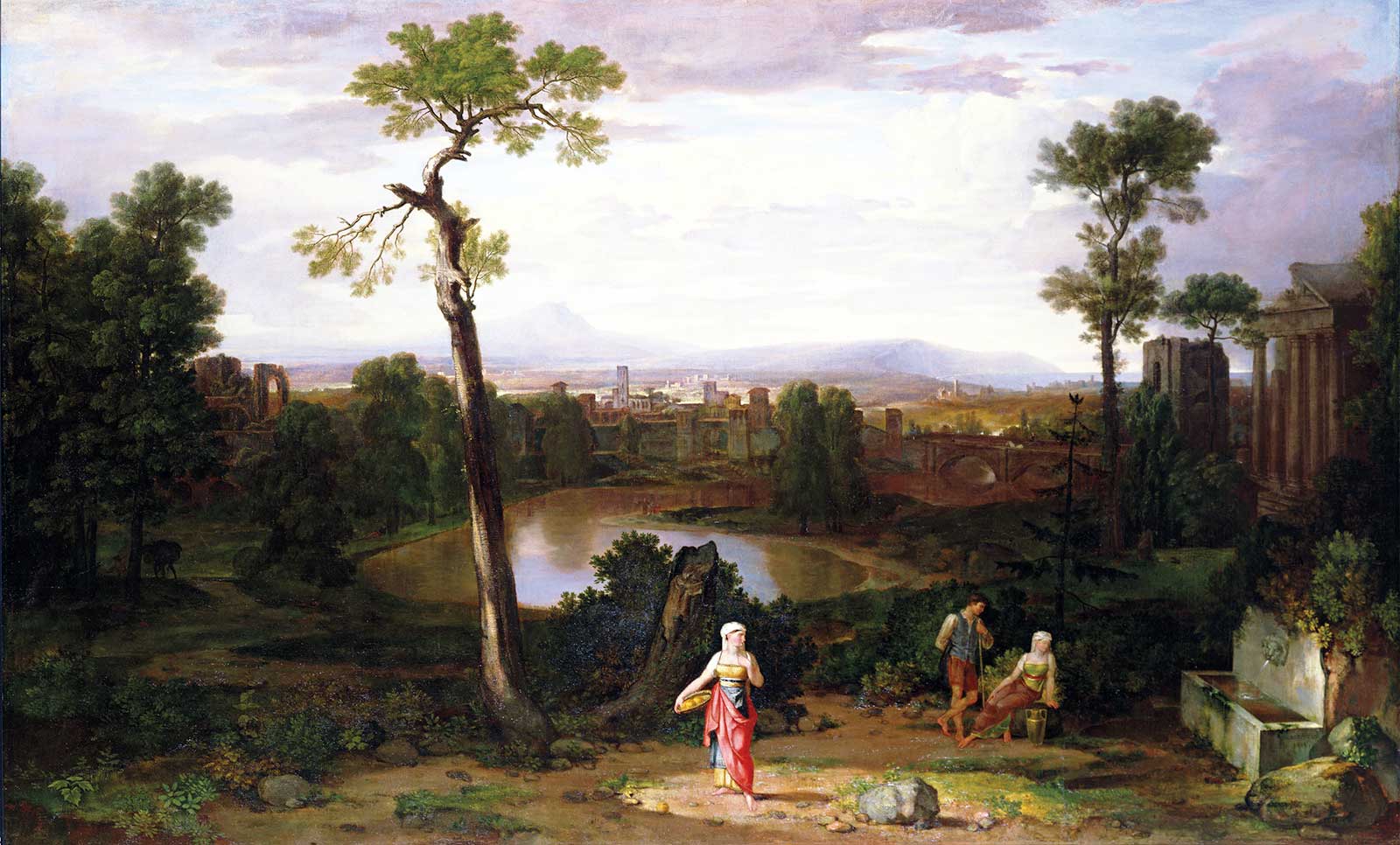
Washington Allston (1779-1843), Italian Landscape, 1814. Oil on canvas, 44 x 72 in. Toledo Museum of Art, Purchased with funds from the Florence Scott Libbey Bequest in Memory of her Father, Maurice A. Scott, 1949.113.
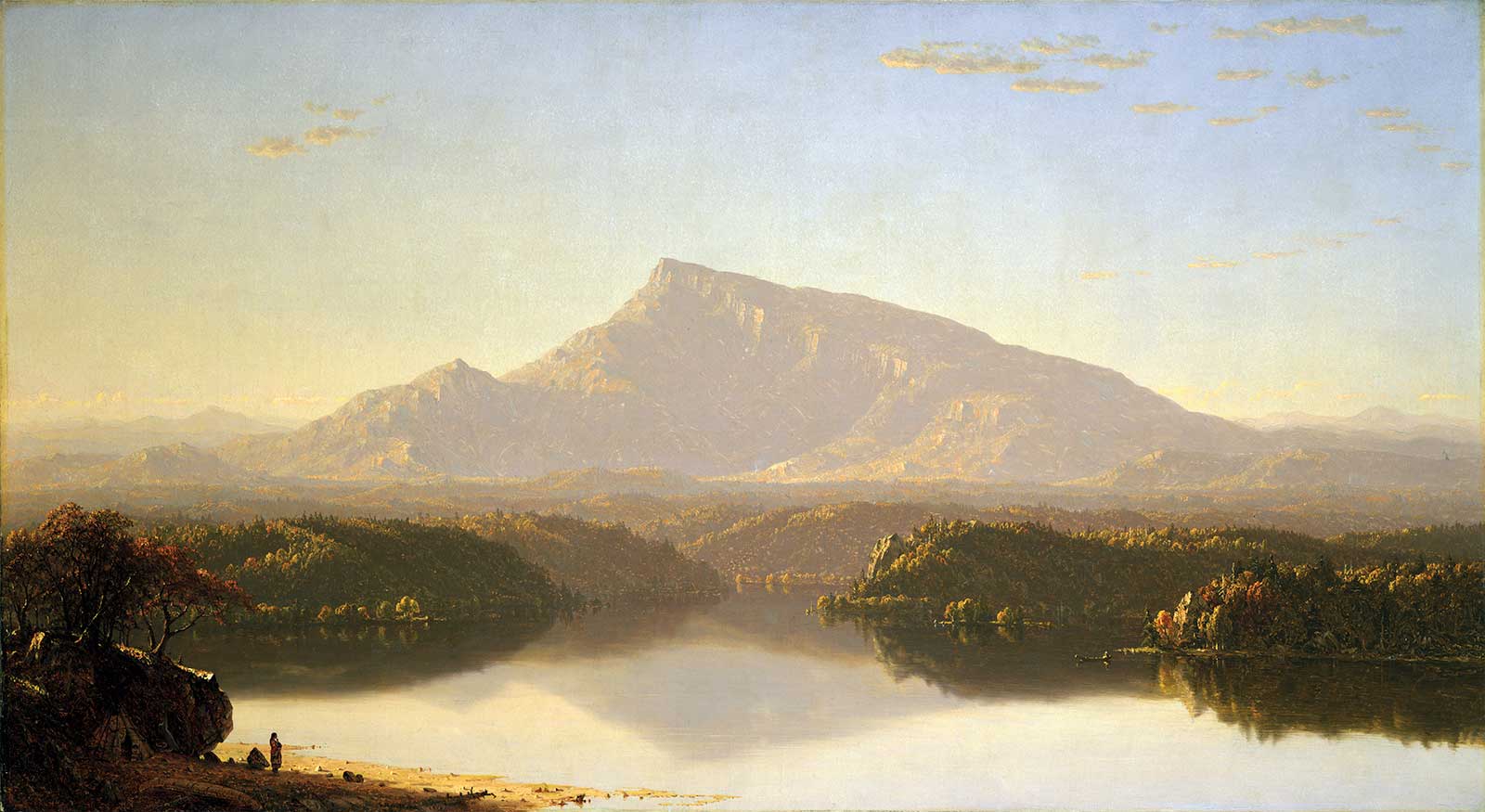
Sanford Robinson Gifford (1823-1880), The Wilderness, 1860 Oil on canvas, 30 x 545⁄16 in. Toledo Museum of Art, Purchased with funds from the Florence Scott Libbey Bequest in Memory of her Father, Maurice A. Scott, 1951.403.
The Hudson River School and its extended circle shaped professional and artistic opportunities available to women. Julie Hart Beers was one of the earliest professional female landscape painters in the United States. Trained alongside her brothers, she painted directly from nature, often traveling through demanding terrain. Her birches and ferns emphasize close observation and intimate scale, contrasting with the monumental vistas of her male contemporaries. At the same time, her career, supporting herself and her children while leading sketching excursions for other women, demonstrates how landscape painting could provide economic agency. Beers’ work expands our understanding of who participated in shaping the visual culture of American landscape and is a recent addition to the TMA’s collection.
By the late 19th century, some artists began to explore more direct, sensory engagements with nature. Winslow Homer’s Sunlight on the Coast, an early TMA acquisition, marks a decisive turn toward experiential painting. Abandoning the narrative subjects of his early career, Homer focused on the raw power of the sea, using vigorous brushwork to convey crashing waves and turbulent weather. Filled with ambiguities, from the ship in the distance and the eponymous sunlight barely visible through the approaching storm, Sunlight on the Coast is a meditation on nature’s untamable power and humanity’s place in the world. Homer’s move to Prouts Neck, Maine, reinforced his image as a solitary artist, which for critics embodied a distinctly American ideal of rugged individualism.
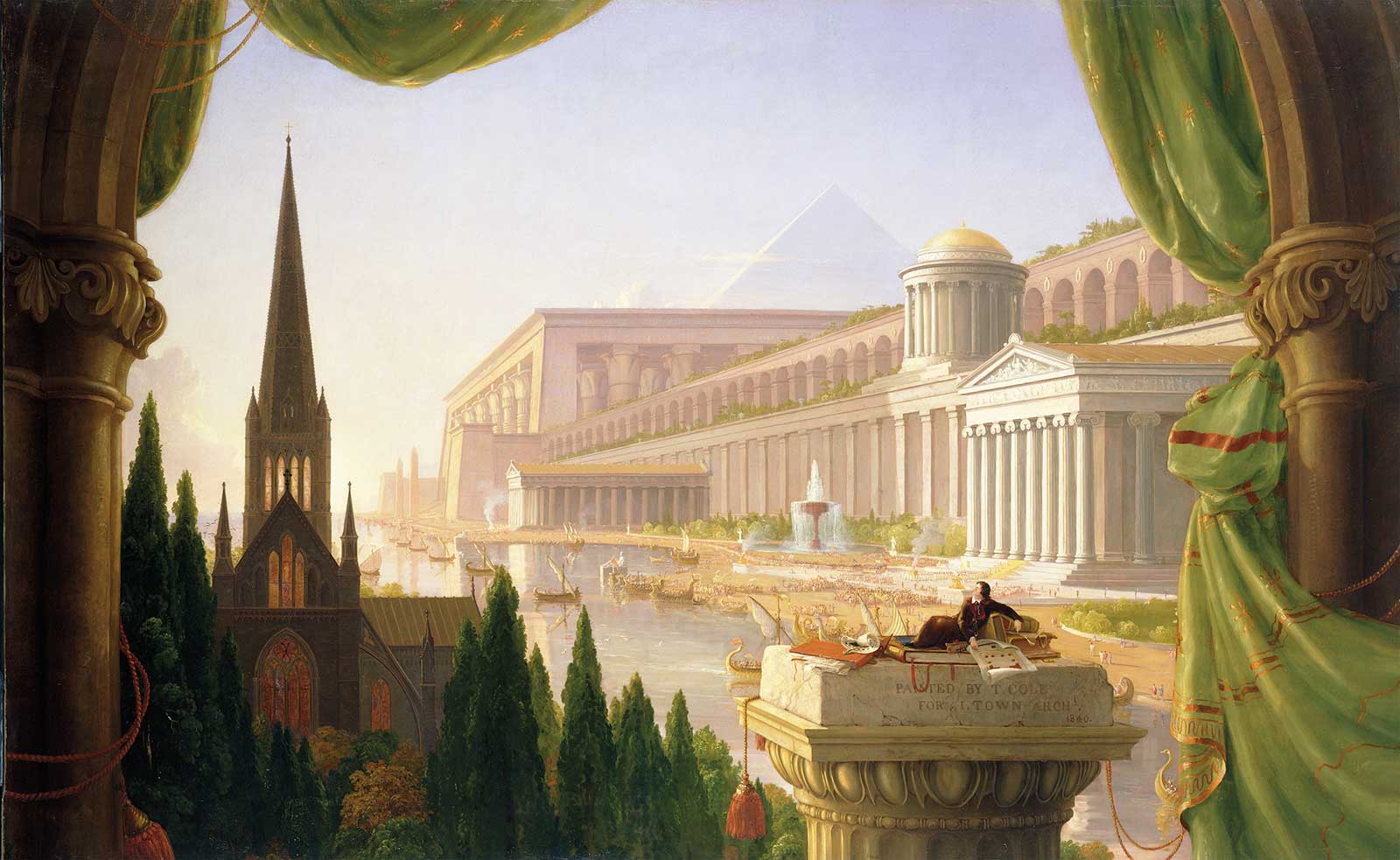
Thomas Cole (1801-1848), The Architect’s Dream, 1840. Oil on canvas, 53 x 843⁄16 in. Toledo Museum of Art, Purchased with funds from the Florence Scott Libbey Bequest in Memory of her Father, Maurice A. Scott, 1949.162.
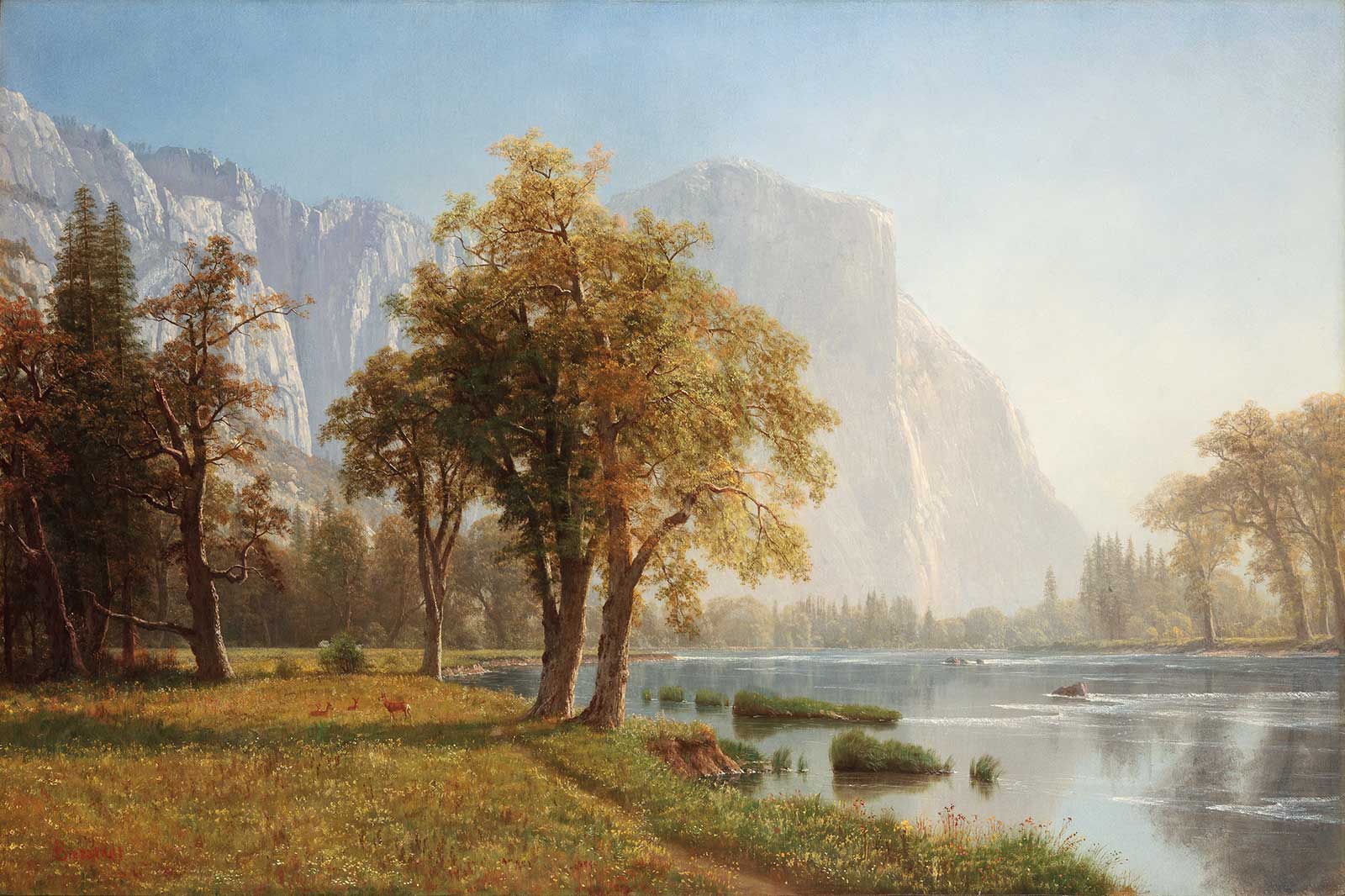
Albert Bierstadt (1830-1902), El Capitan, Yosemite Valley, California, 1875. Oil on canvas, 323⁄16 x 481⁄8 in. Toledo Museum of Art, Gift of Mr. and Mrs. Roy Rike, 1959.18.
In parallel, American impressionists like Childe Hassam investigated the fleeting effects of light and atmosphere. Influenced by his studies in Paris, Hassam painted outdoors, capturing the shifting colors and textures of coastal environments like the Isles of Shoals. His visible brushwork and focus on immediacy reflect a broader move away from painting landscape as a reflection on national identity and more about a record of perception of modern modes of vision.
The turn of the 20th century brought further experimentation with both technique and subject. Henry Ossawa Tanner, best known for his biblical scenes, used the language of landscape and seascape to convey spiritual intensity. In his depiction of a stormy sea, thick paint mimics the physical force of waves, while the narrative of divine intervention imbues the scene with emotional depth. Tanner’s career, shaped by his training in the United States and his eventual move to Paris to escape the racial violence of the Jim Crow U.S., also reminds us that the history of American art is inseparable from broader social and cultural dynamics.
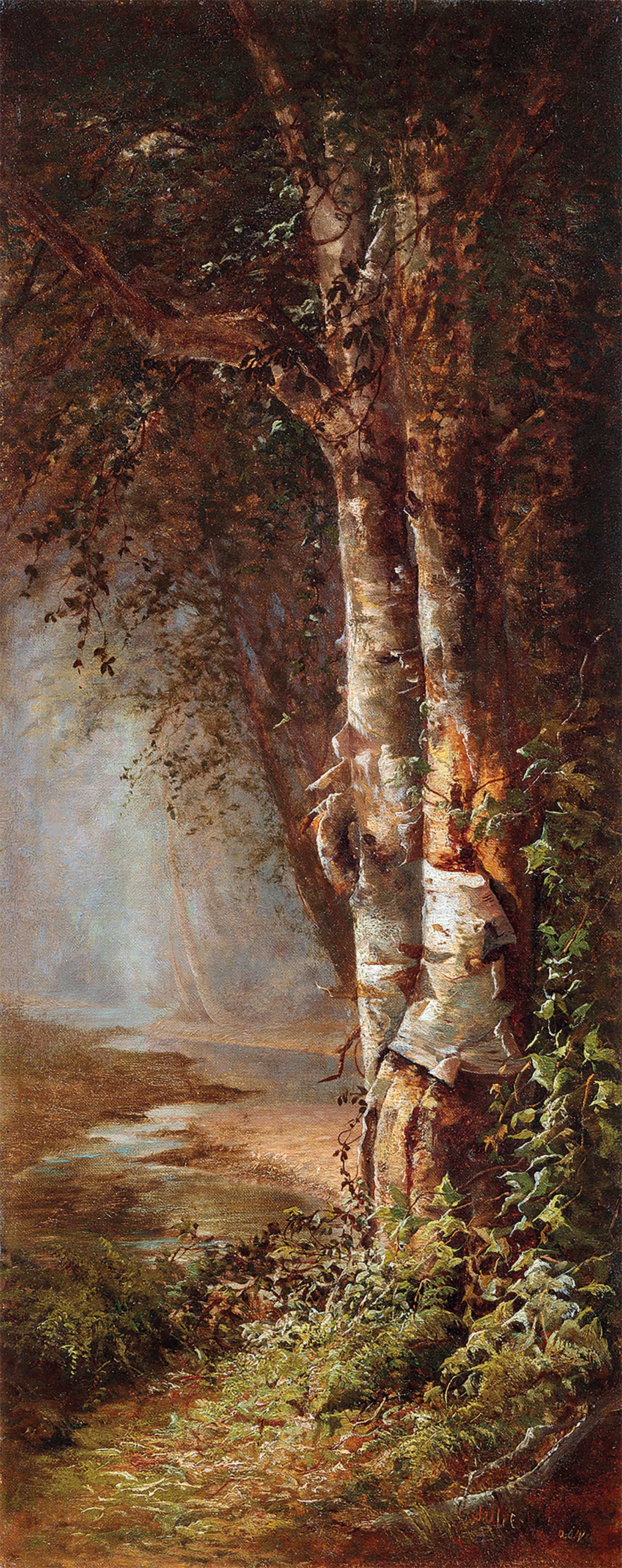
Julie Hart Beers (1835-1913), Forest Interior with White Birch, mid-19th century. Oil on canvas, 251/2 x 131/2 in. Purchased with funds given by Cheryl (Gurecky) and Richard O’Connor, 2023.333.
Later in the 20th century, artists continued to reinterpret the landscape through new narrative devices. Andrew Wyeth’s The Hunter offers an intimate and unconventional perspective, placing the viewer high within a tree as a solitary figure moves through a fall landscape below. Painted for the cover of The Saturday Evening Post in 1943, this work of psychological drama brought Wyeth to national attention. Wyeth’s meticulous use of tempera creates an almost tactile realism, inviting viewers to imagine the sensory experience of the scene.
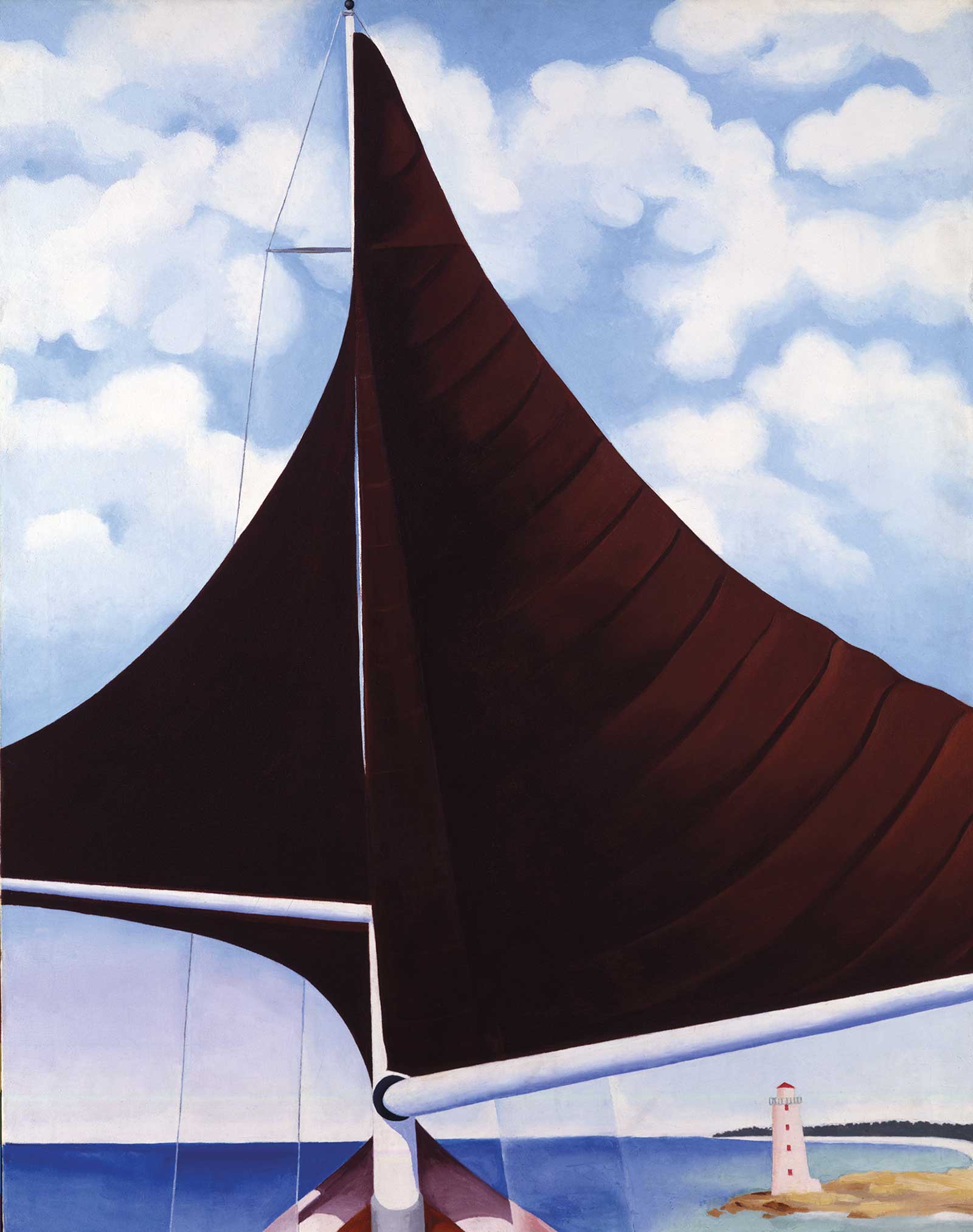
Georgia O’Keeffe (1887-1986), Brown Sail, Wing and Wing, Nassau, 1940. Oil on canvas, 38 x 301⁄16 in. Toledo Museum of Art, Museum Purchase Fund, 1949.106
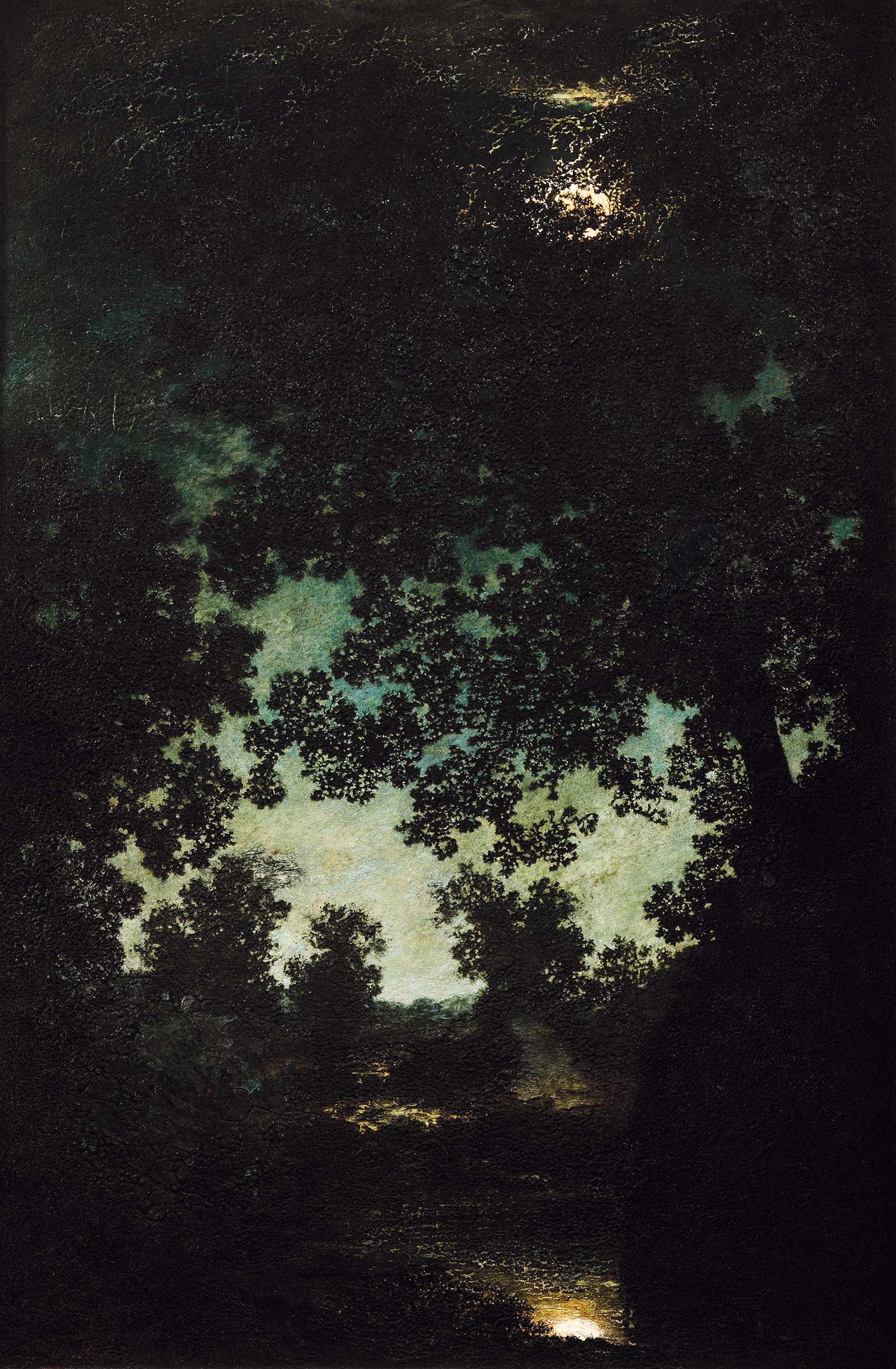
Ralph Albert Blakelock (1847-1919), Brook by Moonlight, before 1891. Oil on canvas, 72 x 48 in. Toledo Museum of Art, Gift of Mr. and Mrs. Edward Drummond Libbey, 1916.4.
A recent acquisition by the TMA, Kay WalkingsStick’s Seal Rock Storm, brings American landscape painting into contemporary conversations by challenging the assumptions embedded in earlier landscape traditions. Here, WalkingStick combines a representational seascape of Aquidneck, Rhode Island, with an abstract pattern derived from Pequot basketwork. This juxtaposition disrupts the illusion of the landscape as a distant, neutral view by inserting a reminder of Indigenous presence and continuity. WalkingStick’s work insists the land cannot be separated from the people who have lived on and with it. By emphasizing Indigenous communities exist not only in the past but in the present, she reframes the landscape as a site of ongoing cultural and political meaning.
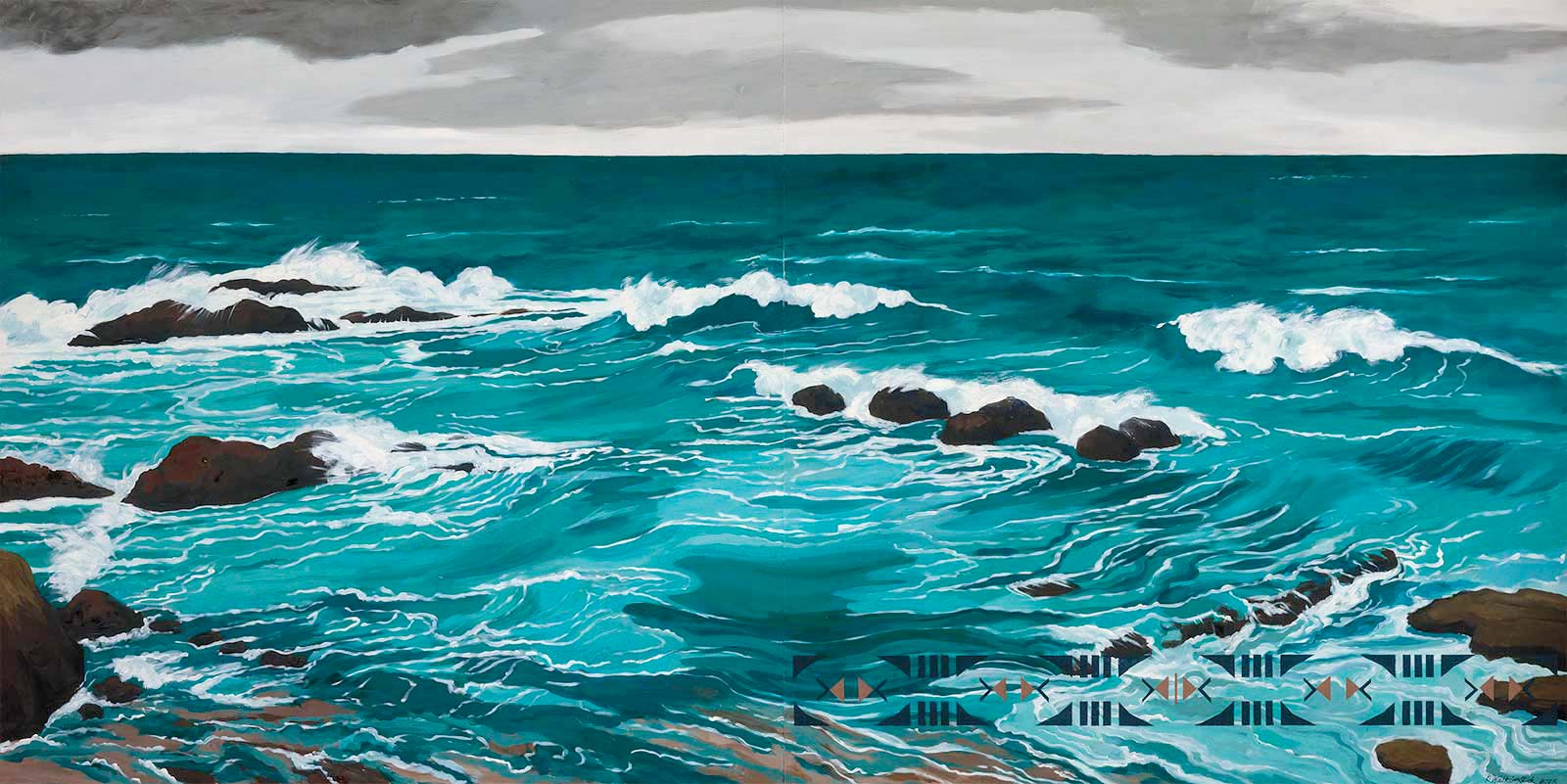
Kay WalkingStick (Cherokee), Seal Rock Storm, 2023. Oil on panel in two parts, 40 x 80 in. Toledo Museum of Art (Toledo, Ohio), Purchased with funds from the Libbey Endowment, Gift of Edward Drummond Libbey. 2024.4.
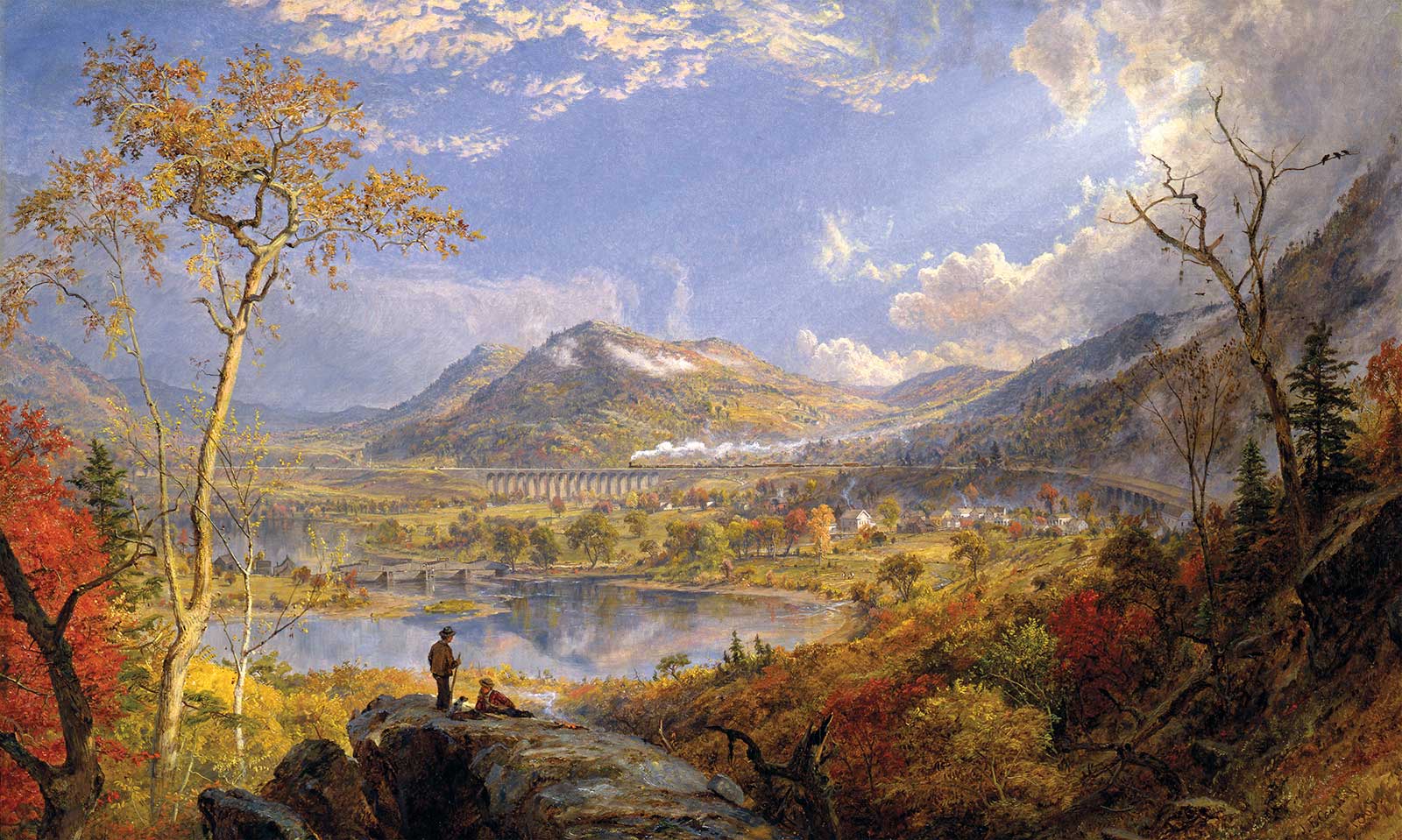
Jasper Francis Cropsey (1823-1900), Starrucca Viaduct, Pennsylvania, 1865. Oil on canvas, 223⁄8 x 363⁄8 in. Toledo Museum of Art , Purchased with funds from the Florence Scott Libbey Bequest in Memory of her Father, Maurice A. Scott, 1947.58.
The collection at the Toledo Museum of Art shows American landscape paintings as part of an ongoing conversation, beginning with early artists like Allston and continuing with contemporary artists today. As cultural milieus and artistic aims shifted over the course of the past 250 years, the land maintained its role as the subject of countless canvases. The works in this collection invite us not only to look at the land, but to question how it has been seen, represented, and invested with meaning over time. They help us to discover that a story of American landscape painting is also one about changing understandings of place and identity in both our past and our present. —
In the remainder of this special section dedicated to historic landscape painting, leading galleries and auction houses showcase important works in their collections and provide insight into this foundational, and enduringly popular, genre of American art.
——————————————————
These landscape paintings and more will be on view at TMA in late 2027 in the museum’s first major reinstallation of the collection in 40 years. Chronological galleries will guide visitors through a journey from ancient civilizations to today’s leading artistic voices. TMA is committed to expanding the narratives of art history to highlight a wider range of artists, communities, and creative traditions, while showcasing how the story of art reflects many voices, both global and local.
Powered by Froala Editor