As part of its yearlong commemoration of the 250th anniversary of the United States, the National Gallery of Art presents Dear America: Artists Explore the American Experience, a showcase of 100 works from its collection that examine American culture from the late-18th century to today. To provide a sense of the exhibition’s breadth, the earliest piece in the show is the 1770 engraving The Boston Massacre by Paul Revere (after Henry Pelham). The most contemporary artwork is a 2021 acquatintt by Charles Gaines.
On view through September 20, Dear America draws from the museum’s permanent collection, including new acquisitions that have never been shown at NGA before, and other rarely exhibited artworks.
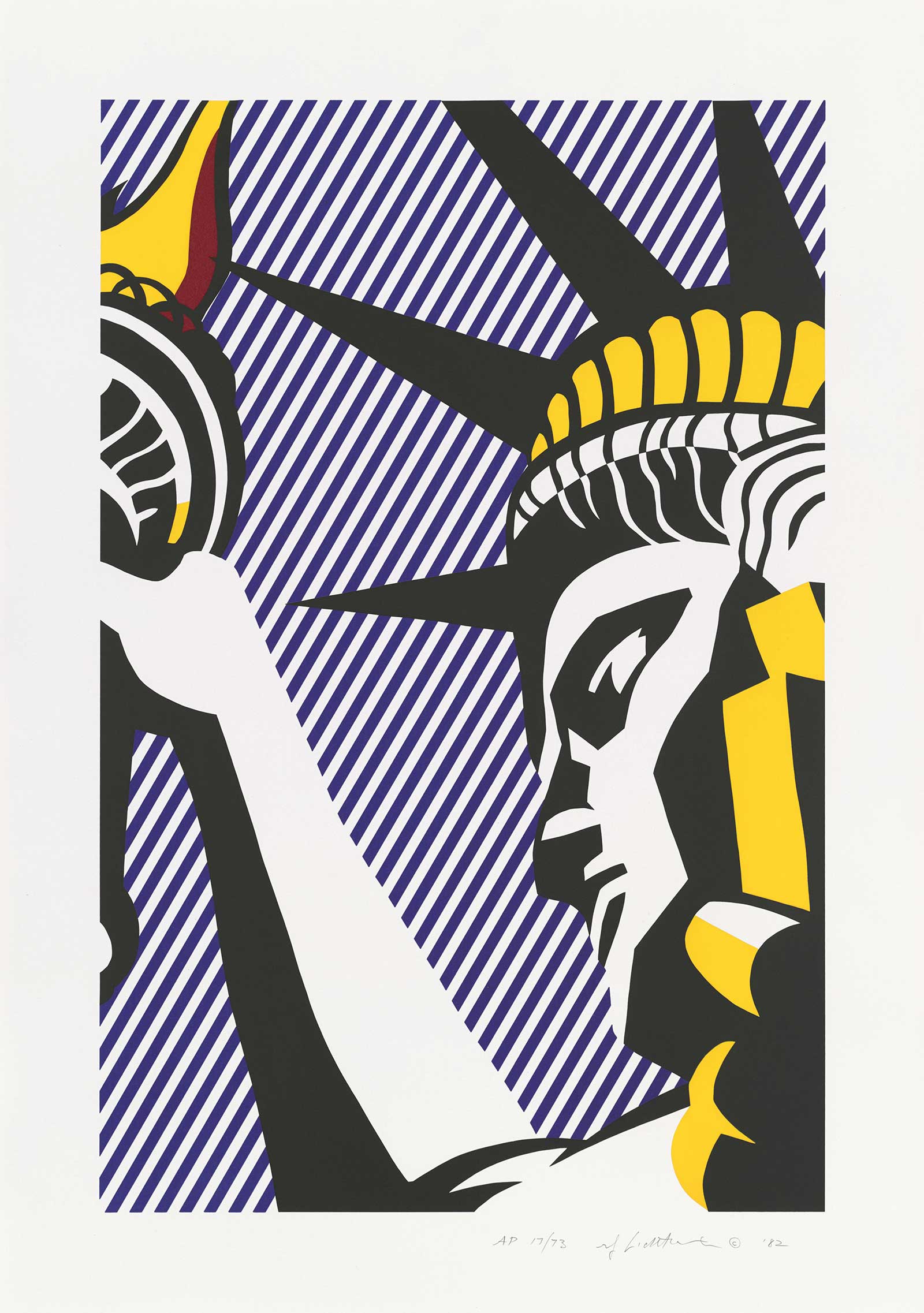
Roy Lichtenstein, I Love Liberty, 1982. Color screenprint on Arches 88 paper, image: 323⁄8 x 211⁄8 in., sheet: 383⁄8 x 271⁄16 in., framed: 42¼ in. x 30¾ x 1¾ in. National Gallery of Art, Gift of Roy and Dorothy Lichtenstein, 1996.56.110 © Estate of Roy Lichtenstein/DACS 2025.
The majority of pieces, 95 of them, are works on paper, including photographs by Ansel Adams, Richard Avedon, Margaret Bourke-White, LaToya Ruby Frazier, Tom Jones (Ho-Chunk Nation), Sally Mann, Timothy H. O’Sullivan, Gordon Parks, Alfred Stieglitz, James Van Der Zee, Carleton E. Watkins and Carrie Mae Weems; drawings by Thomas Moran, Tonita Peña, Eunice Pinney and John Wilson; artists’ books by Dindga McCannon and Kara Walker; and prints by Emma Amos, Ruth Asawa, Charles Gaines, Jane Hammond, Roy Lichtenstein, Marisol, Robert Rauschenberg, Ed Ruscha, Fritz Scholder and Juan Sánchez.
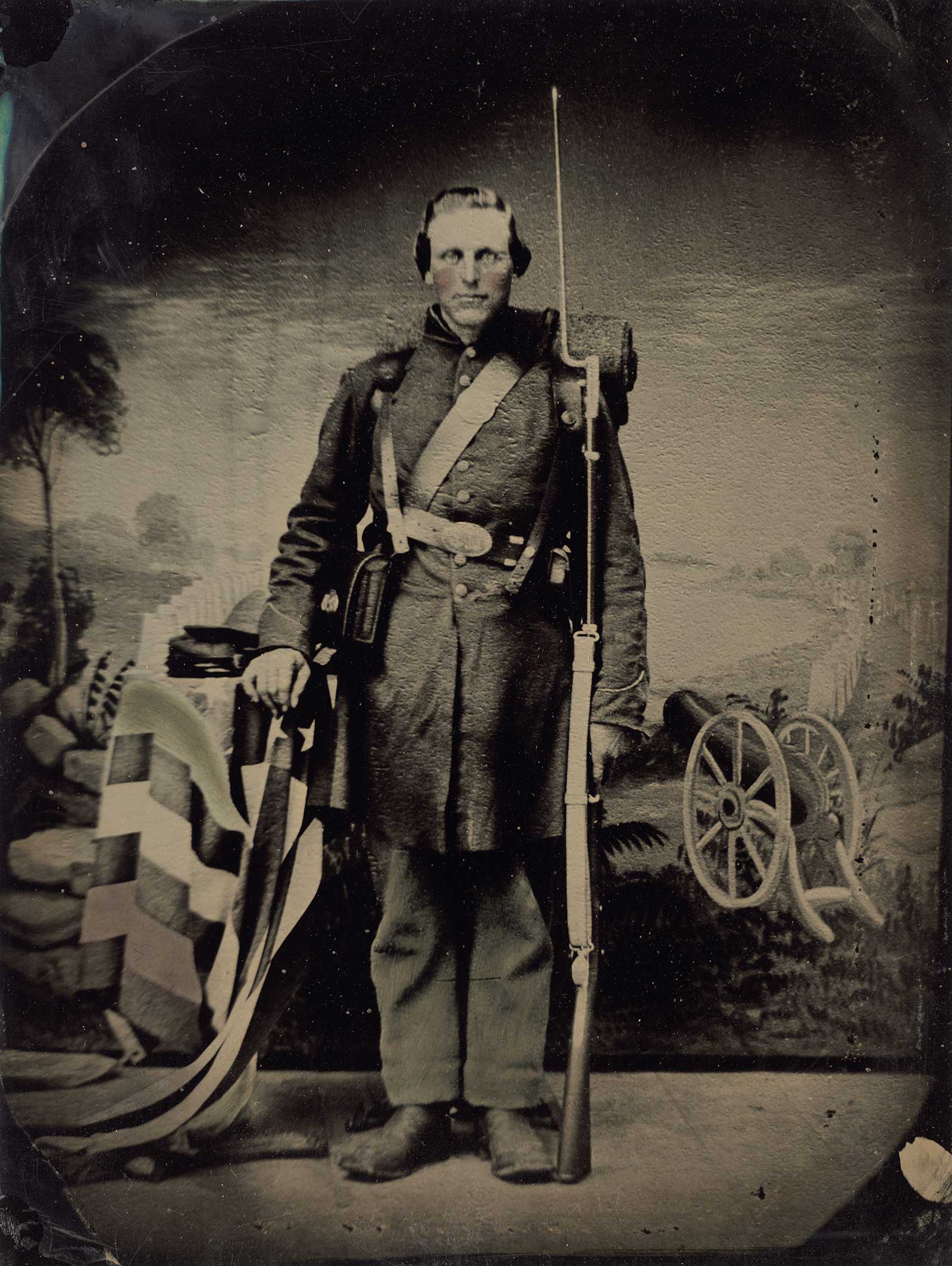
American 19th Century Portrait of a Civil War Soldier, 1860s. Ambrotype with applied color, overall: 87⁄16 x 61/2 in. National Gallery of Art, Gift of Mary and Dan Solomon, 2008.135.3.
“This exhibition has been years in the making,” explains E. Carmen Ramos, chief curatorial and conservation officer at the National Gallery of Art. “When we decided to focus on the permanent collection for our 250th exhibitions, we wanted to highlight the richness of our prints, drawings and photography holdings, which are not always on display due to their light sensitivity. We brought together a team of our photography and prints and drawings curators to work on the exhibition, each bringing their own expertise to explore our holdings. The exhibition concept and its themes grew out of their collective work.”
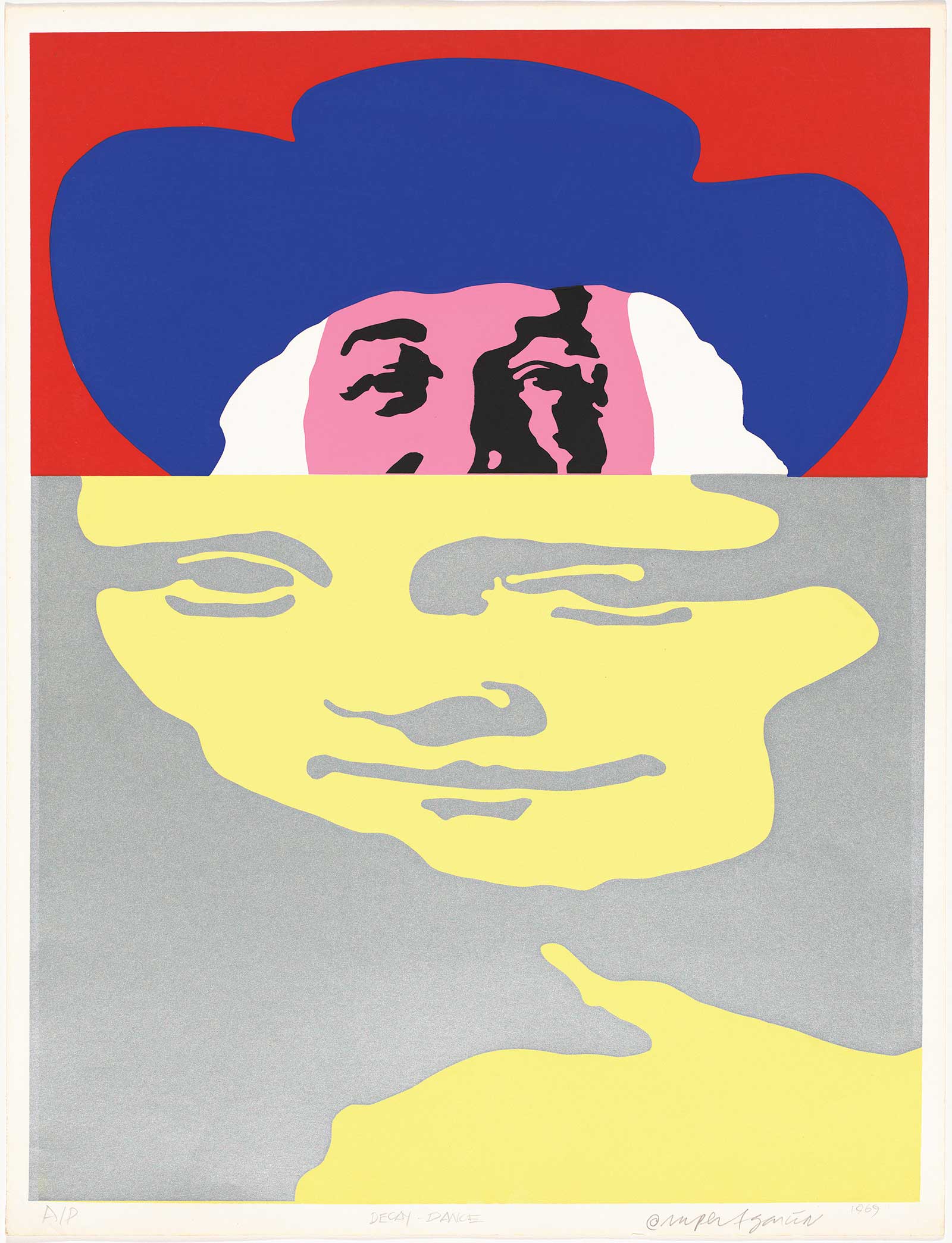
Rupert García, Decay Dance, 1969. Color screenprint on wove paper, image: 243/4 x 19 in., sheet: 26 x 197⁄8 in. National Gallery of Art, Corcoran Collection (Museum Purchase, Gift of Richard Rodriguez, 1996), 2015.19.3025 Courtesy of the artist and Rena Bransten Gallery, San Francisco.
Dear America is organized around the themes of land, community and freedom. “Ideas,” Ramos continues, “that artists across time came back to repeatedly, in different ways that were informed by their own experience, the experiences of others and/or the historical times in which they lived. These concepts were both capacious and specific enough to capture the depth and fullness of the American experience.”
In the section on Land, which explores the country as place of awe-inspiring natural beauty and as a canvas for the man-made environment, as a place of belonging, as well as struggle and survival. One key work in the section is Moran’s watercolor Yellowstone from 1872, which the artist created when he traveled out West as part of a geological survey. This watercolor and others were fundamental to the establishment of the country’s first national park.
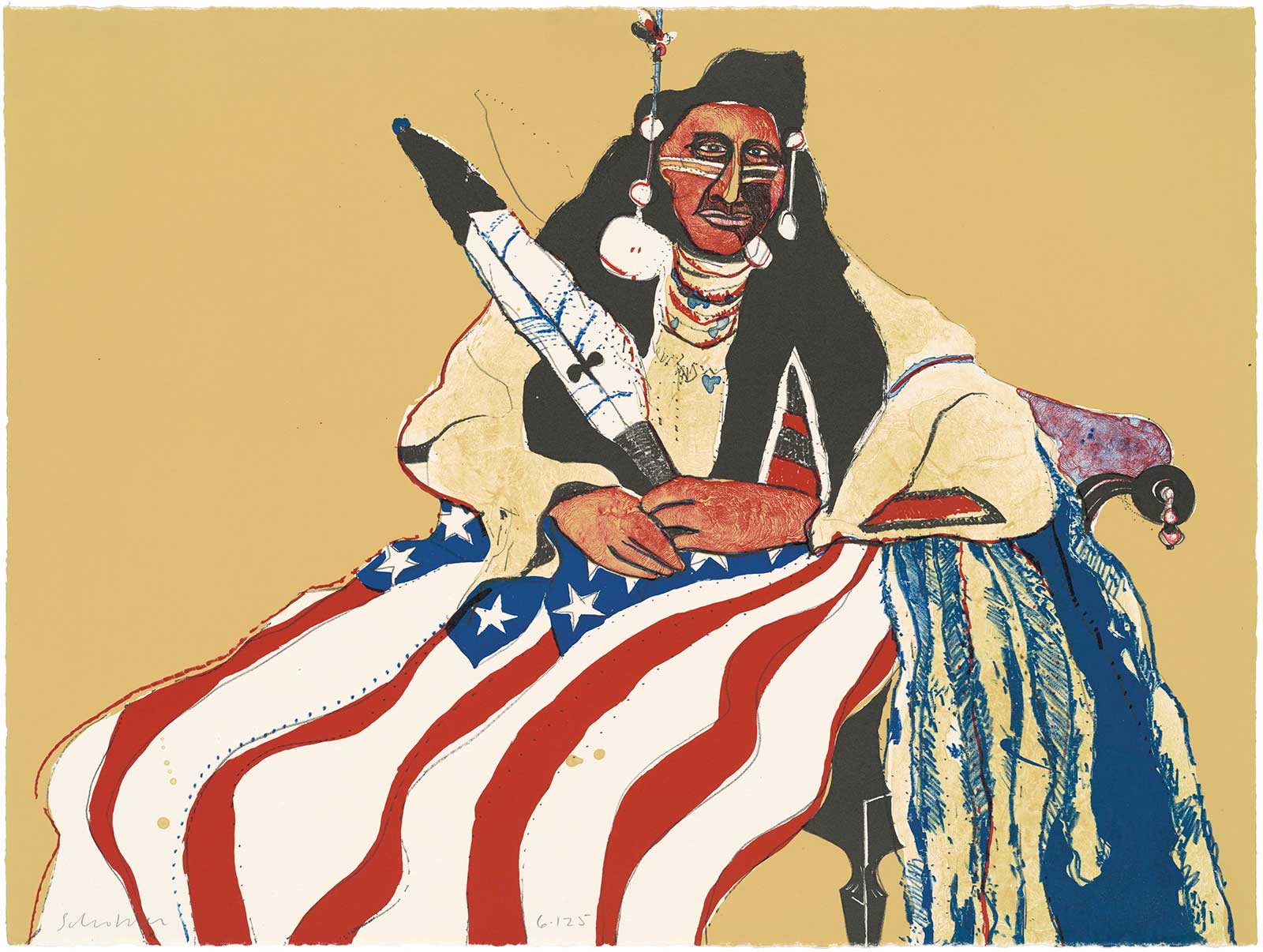
Fritz Scholder, Bicentennial Indian, 1975. Color lithograph on wove paper, sheet: 223⁄8 x 293/4 in. National Gallery of Art, Corcoran Collection (Gift of Lorillard Tobacco Company, 1975), 2015.19.2595 © Fritz Scholder Estate & LewAllen Galleries, Santa Fe, NM.
The Community segment showcases artists’ depictions of community in all its myriad forms—from social gatherings to the political, religious and cultural. One notable pairing is Avedon’s The Family, 1976, and Wilson’s Young Americans (1973-75). “These two bodies of work portray different segments of the population, from major historical figures to everyday people,” explains Ramos, adding that Avedon’s The Family is a series of 69 photographs made during the Bicentennial, portraying figures from America’s political and cultural leadership. “Wilson’s Young Americans consists of lifesize drawings made for an unrealized mural inspired by young people who frequented the Wilson home. The series reflects Wilson’s sense of optimism for the future, conveyed through the individuality, energy, and potential he saw in his children and their friends.”
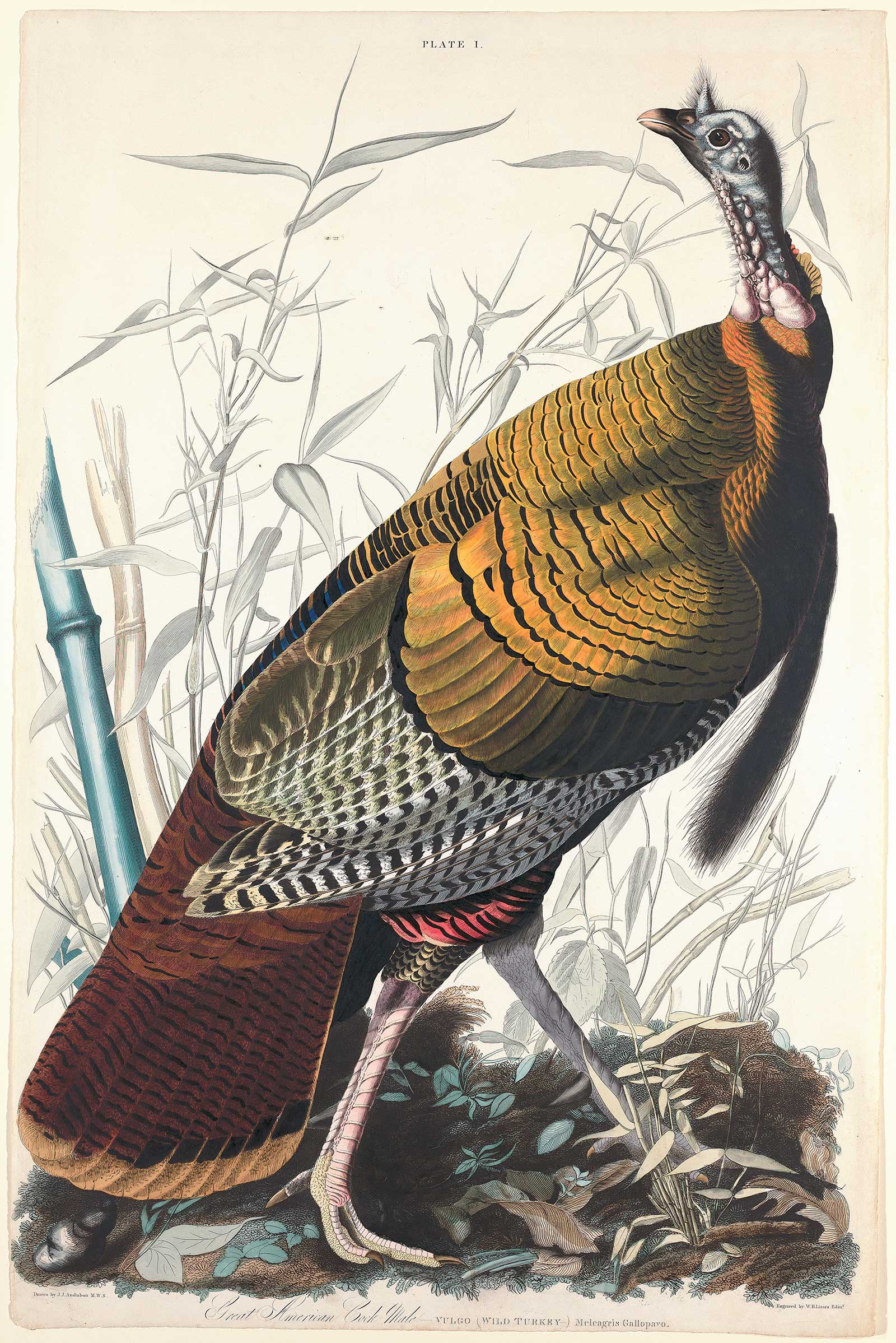
William Home Lizars after John James Audubon, Great American Cock, 1827. Hand-colored etching on Whatman paper, sheet: 39 x 253⁄8 in. National Gallery of Art, Gift of Mrs. Walter B. James, 1945.8.1.
The Freedom section explores American history through the lens of revolution and liberation, interspersed with intimate portraits of American life. “It explores artists’ considerations of the freedoms envisioned by the founders of the United States as well as by later generations who have continually sought to protect fundamental rights enshrined in the Constitution and promote greater freedom for all people,” says Ramos.
She points to the earliest work in the exhibit, Paul Revere’s The Bloody Massacre in King Street as an iconic work in the NGA’s collection, and one deeply intertwined with the American Revolution, and executed by a prominent figure in the country’s establishment. Two other key works in the Freedom section are portraits of orators and abolitionists Frederick Douglass and Sojourner Truth, formerly enslaved people who escaped and fought for the liberty and emancipation of others.
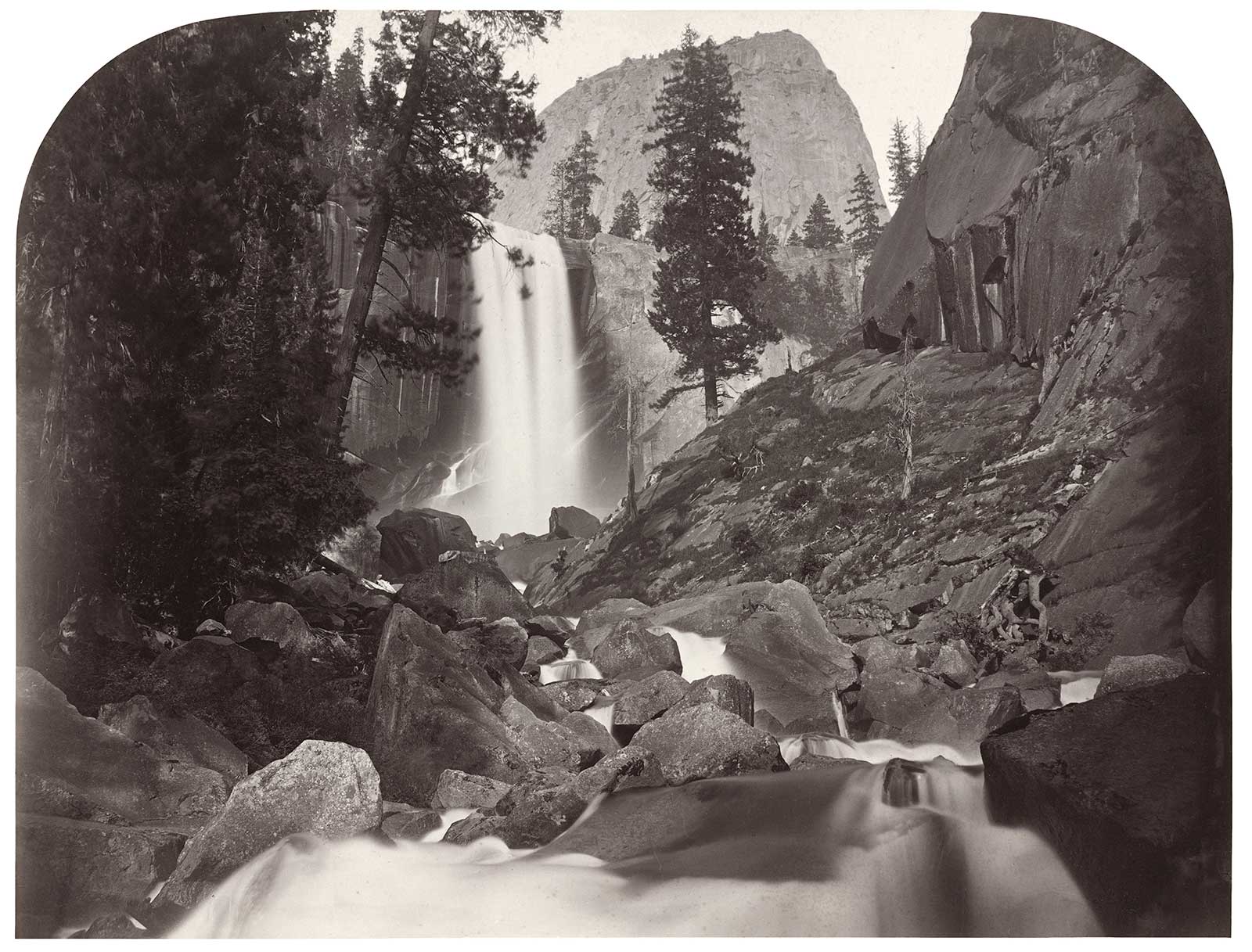
Carleton E. Watkins, Piwyac, Vernal Fall, 300 feet, Yosemite, 1861. Albumen print sheet (trimmed to image): 1511⁄16 x 209⁄16 in., mount: 2015⁄16 x 271⁄16 in., mat: 26 x 2915⁄16 in.). National Gallery of Art, Gift of Mary and David Robinson, 1995.35.23
“Together, the works [in this exhibition] offer a rich and multifaceted view of the many ways artists have reflected on life in the United States,” says Ramos. “I hope audiences leave with a new appreciation of the National Gallery’s collection and our ability to tell an exceptional—and unique—story about the American experience. Beyond that, the exhibition encourages visitors to think about how artists help us see America not just as a place, but as a living idea shaped by many voices.” —
Powered by Froala Editor