Marion Huse was a printmaker, painter and commercial artist whose innovative serigraphs and monographs received recognition during her lifetime, notably in Dallas Museum of Fine Arts’ exhibitions of the National Serigraph Society in 1947 and 1951.
Huse (1896-1967) was born in Massachusetts, where she left her mark by founding the Springfield Art School, which she ran from 1925 to 1940, and supervising several WPA art projects in the state from 1936 to 1938.
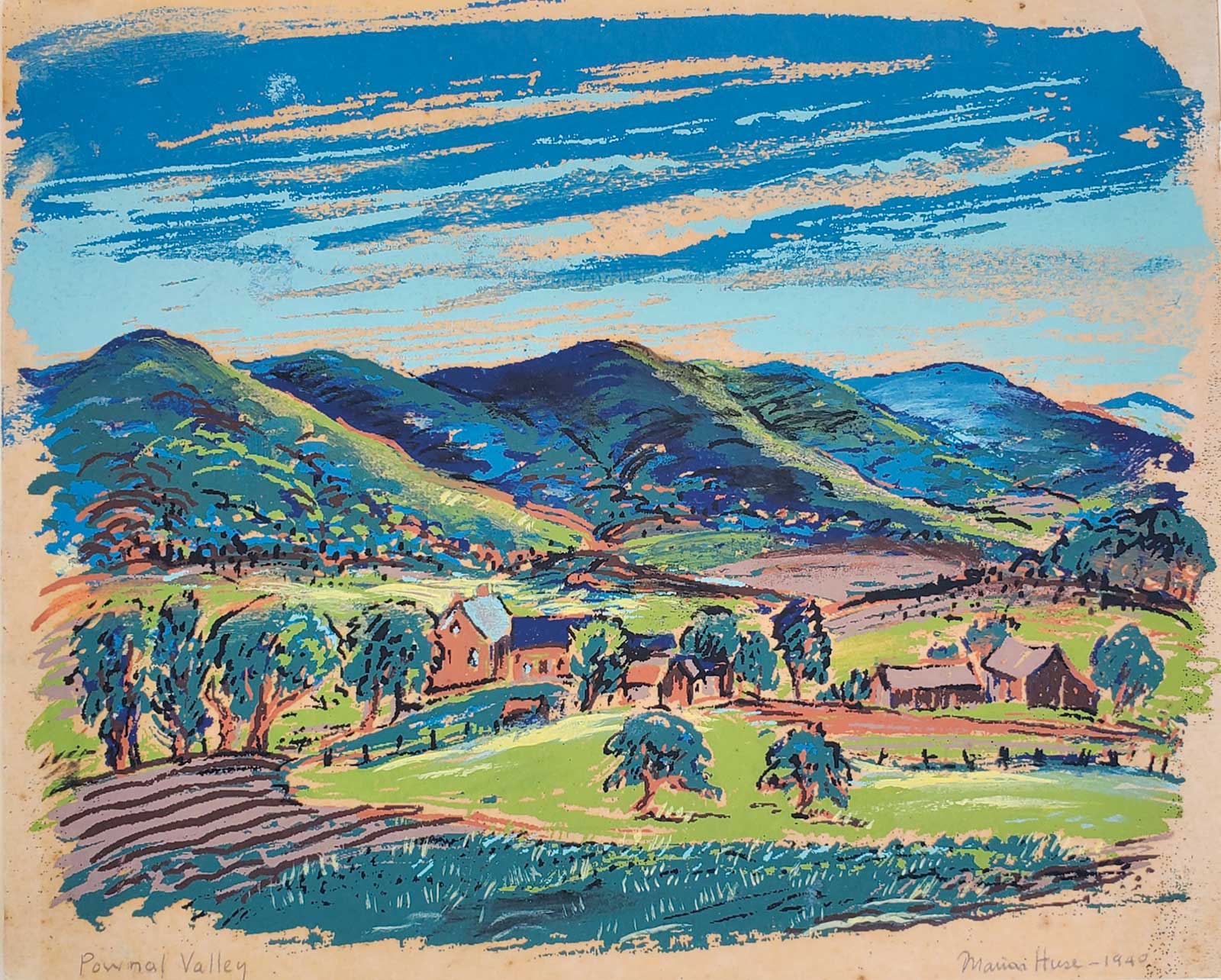
Marion Huse (1896-1967), Pownal Valley (Vermont), 1940. Serigraph with hand embellishments, 7½ x 9 in.
Around 1933, Huse acquired a summer studio in the small village of Pownal, Vermont, and moved there permanently in 1940, where she established a reputation for her undulating landscapes of the region.
Over the course of her lifetime—as Huse’s style evolved from realism to abstraction, and her subject matter shifted between portraits and figurative works and floral still lifes—Huse was an avid traveler, visiting places all over the world including New Mexico, Maine, Quebec, the Caribbean, Italy, Germany, France, the Netherlands and, of course, Vermont.
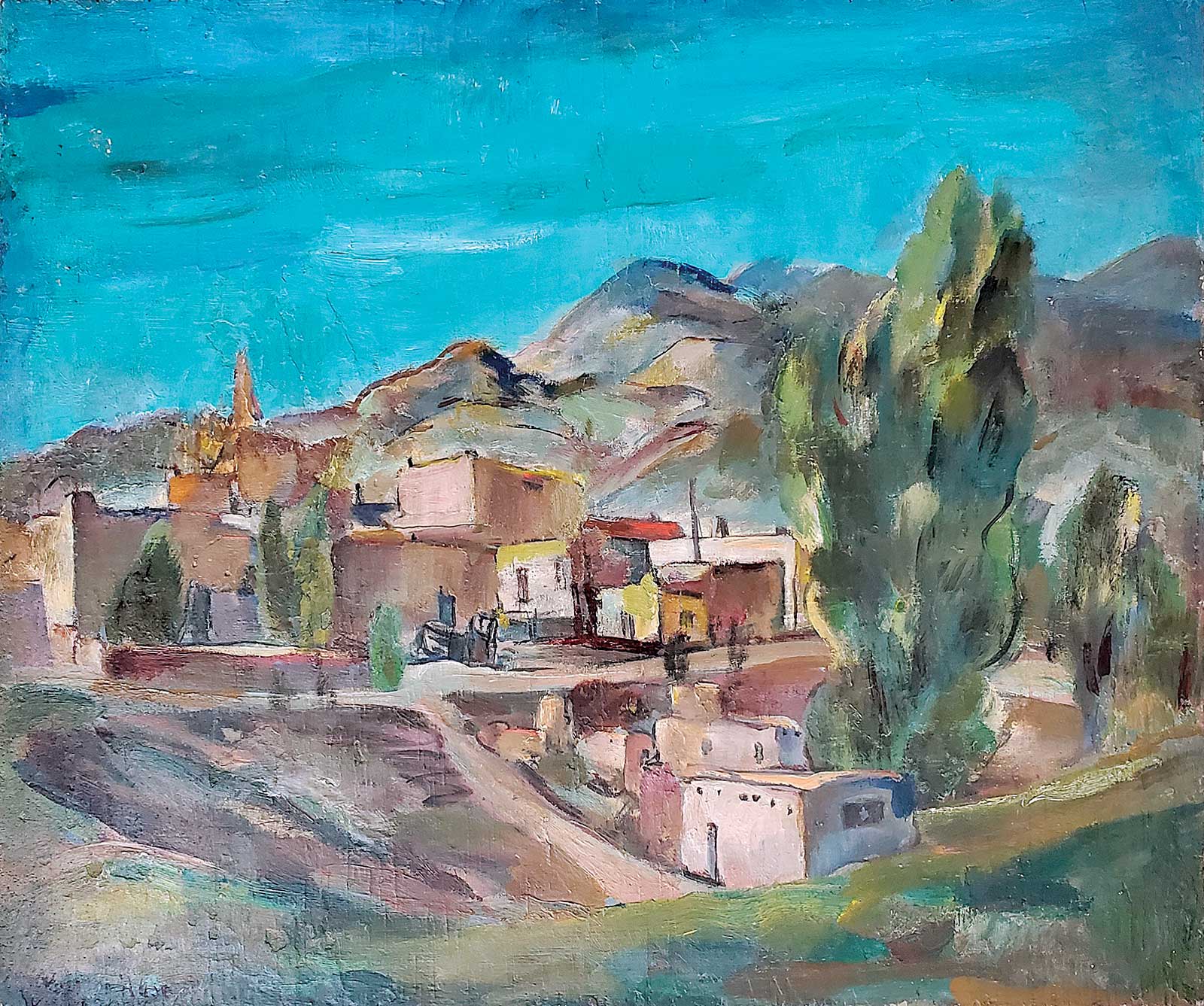
Marion Huse (1896-1967), Untitled (New Mexico), ca. 1937. Oil on panel, 20 x 24 in.
A new exhibition at J. Kenneth Fine Art explores Huse’s art through the lens of her extensive travels. Marion Huse: Traveler is on display at the Vermont gallery from July 1 through the end of the month.
“Marion Huse’s career as an artist spans several decades and multiple art movements from regionalism and American scene painting of the 1930s, to her expressionistic style of the 1950s,” says gallery owner John Kenneth Alexander. “She was deeply involved in the Works Progress Administration, the founder of an art school and a pioneering innovator of serigraphy.”
Huse attended the New School of Design in Boston and the Carnegie Institute of Art and Technology in Pittsburgh. “Like many New England artists, Huse participated in summer classes at the Cape Cod School of Art in Provincetown under Charles Hawthorne,” explains Alexander.
Moving to Springfield, Massachusetts, in 1924, she became an active member of the lively local arts community, which led to her opening the Springfield Art School in 1925.
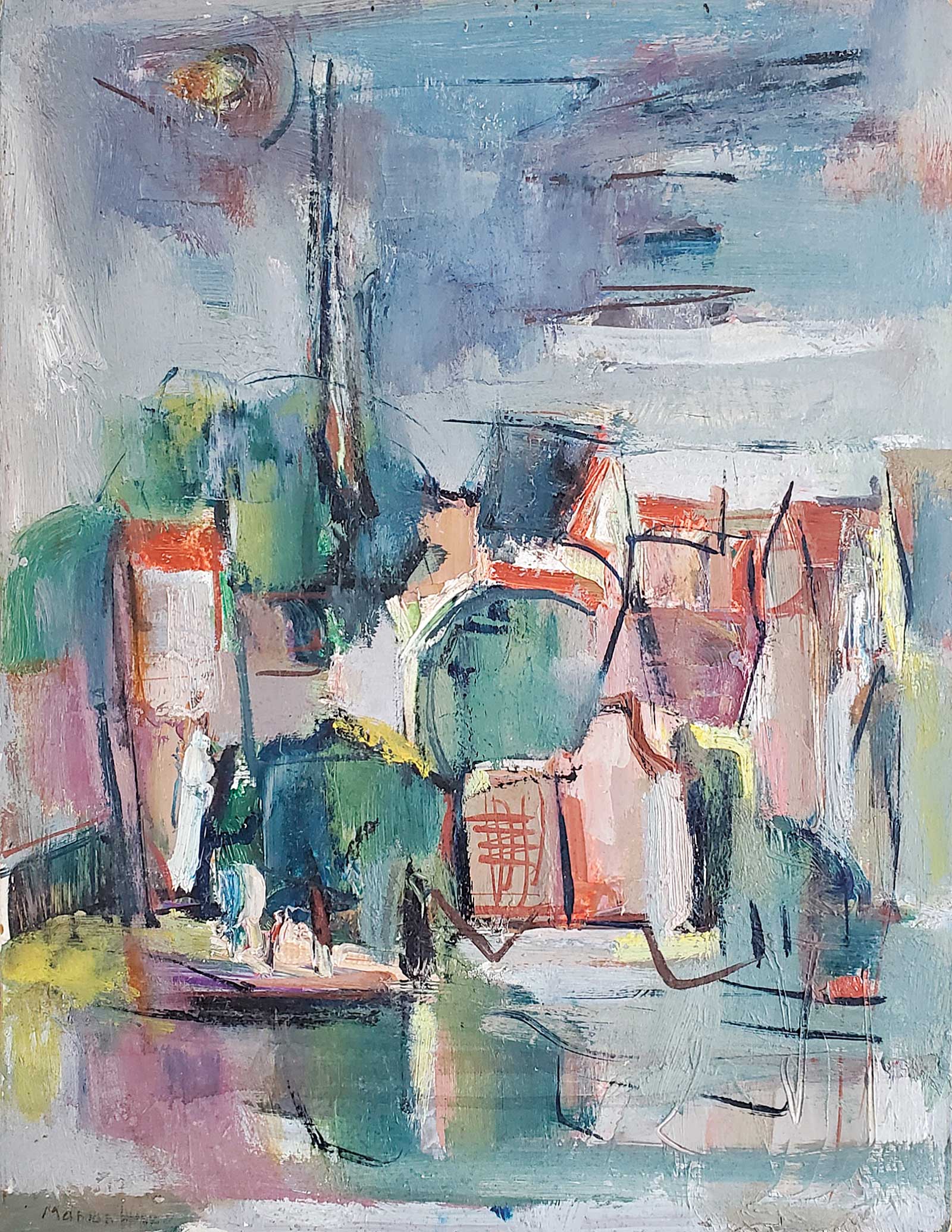
Marion Huse (1896-1967), Untitled (European Village), ca.1955. Oil on panel
In 1936, Huse served as a non-relief artist under the WPA and a supervisor of the program in the Springfield area. “The WPA and the overall interest in American scene painting of the 1930s greatly influenced Huse’s early painting style and subject matter,” explains Alexander.
At the same time, she was spending the summers at her studio where, Alexander notes, “the natural beauty of Vermont’s rolling hills and grand vistas had a profound influence upon her work. Many of her paintings depict the everyday life of rural Vermont and its people engaged in activities such as farming, daily chores, roadside attractions and the overall goings-on of small town life.”
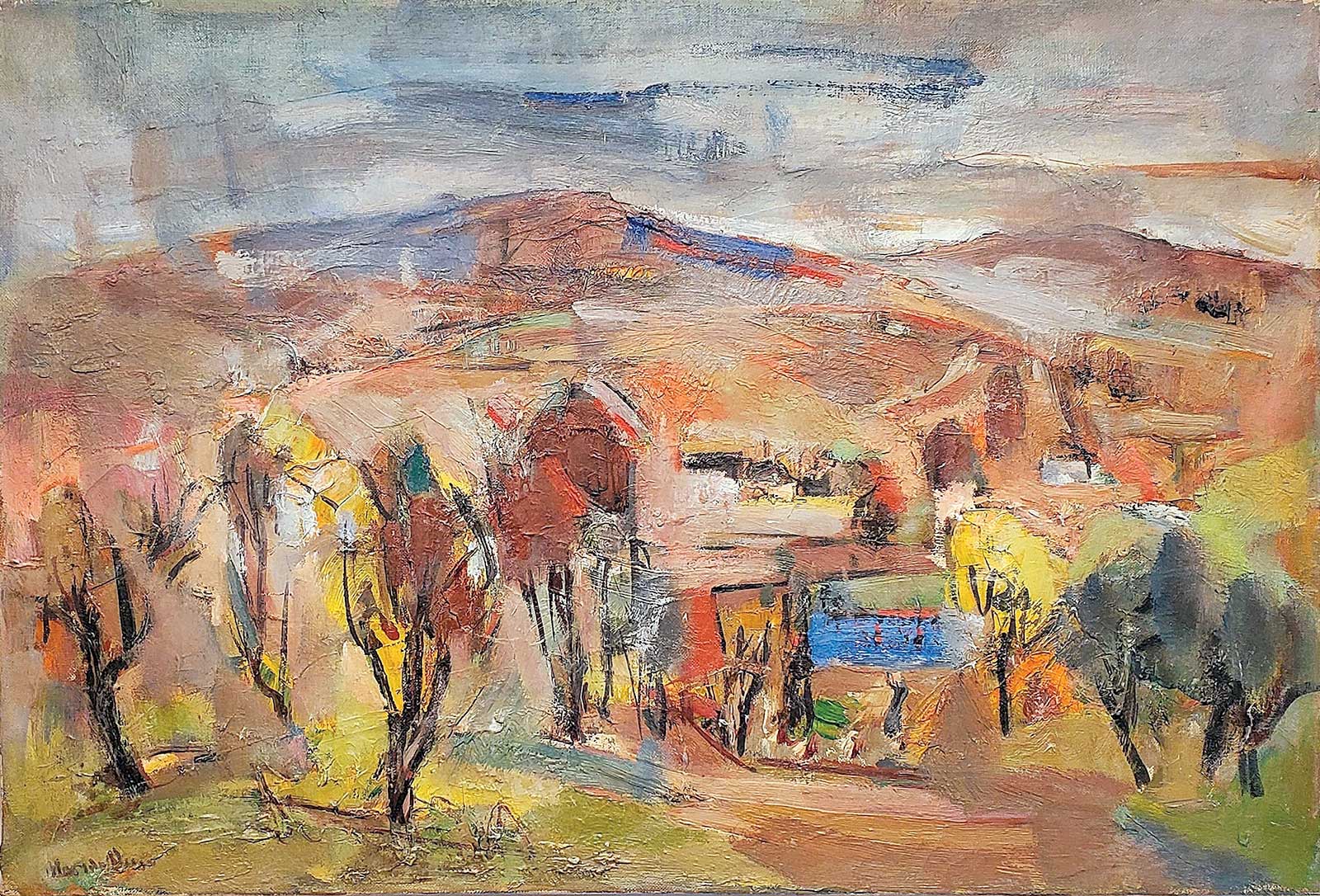
Marion Huse (1896-1967), Vermont Landscape, ca.1955. Oil on canvas, 17 x 25 in.
In 1937, Huse traveled to New Mexico, where created many paintings and prints, capturing the Southwest’s unique light, distinctive terrain and architecture, as seen in two untitled works created circa the same year. “Many of these works are imbued with a vivid and luminous turquoise hue,” says Alexander.
Huse married Dr. Robert Barstow in 1944 and joined him while he was stationed in Europe in the Army Medical Corps. “Having direct exposure to European Modernism and the School of Paris influenced Huse’s artistic style and approach to painting,” Alexander adds. Examples of work in the exhibition inspired by her time abroad include Untitled (European Village) and Italian Coast, both from 1955.
As a pioneer of serigraphy, Huse enjoyed a level of recognition that was rare for women artists of her time. She was also a master of the monotype, a medium which involves directly applying paint on a plate and transferring and imprinting that to a sheet of paper, a technique that generally only creates one impression. She had a solo exhibition of her serigraphs in Paris in 1947 and exhibited her monotypes in the Netherlands in 1948.
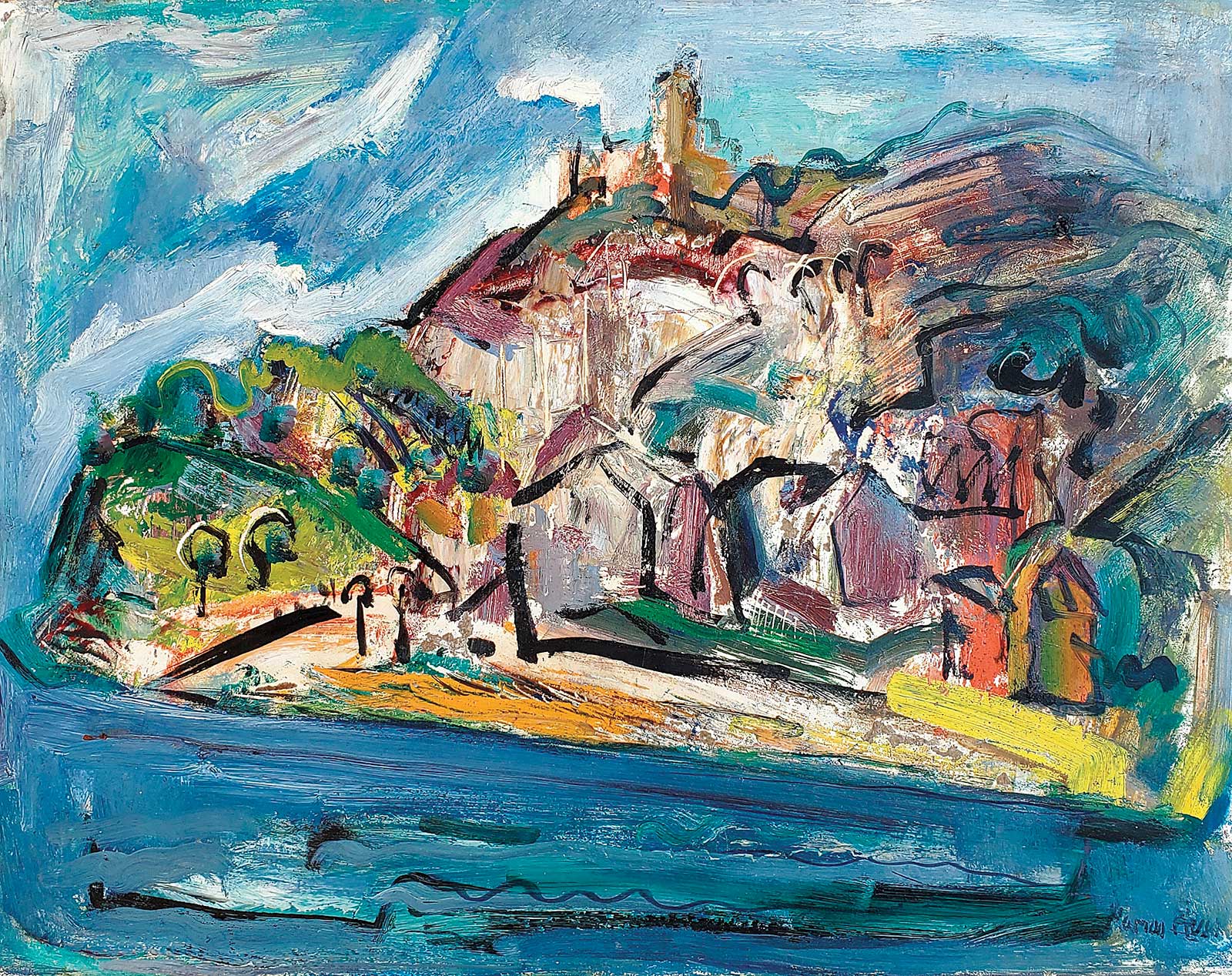
Marion Huse (1896-1967), Italian Coast, ca.1955. Oil on panel, 14 x 18 in.
Like many of her contemporaries, Huse’s paintings became more abstract throughout the 1950s. This evolution is evidenced by a comparison of her Pownal Valley (Vermont), executed in 1940, and Vermont Landscape of 1955.
“Rich impasto brushwork and cubist forms dominate much of her later work,” says Alexander, adding that Huse remained active into her final years. “The rolling hills and sweeping vistas of Vermont were consistent subjects within her body of work.”
Marion Huse: Traveler highlights a significant, but lesser known historic woman artist who created a body of work that celebrated the beauty of the distant shores she visited with equal attention as she did that of her own beloved Vermont. —
Powered by Froala Editor