As America celebrates its 250th birthday, the Portland Museum of Art in Portland, Maine, will be shining a light on one of America’s most quintessential artists, Winslow Homer. The museum will focus on one unique facet of the artist’s career, as hinted at in the new exhibition’s title: Winslow Homer: Painter, Etcher.
Homer, is one of the most celebrated American artists, known for his post-Civil War optimism, embrace of ground-level nature that was more personal than some of his counterparts, and also his coastal and nautical imagery. While Homer is predominantly known for his oils and watercolors, his exposure to the American public largely originated from his illustration work with Harper’s magazines and also through etchings produced in his studio during a five-year period. It’s these etchings, 10 in all, that serve as the backbone of the Portland exhibition.
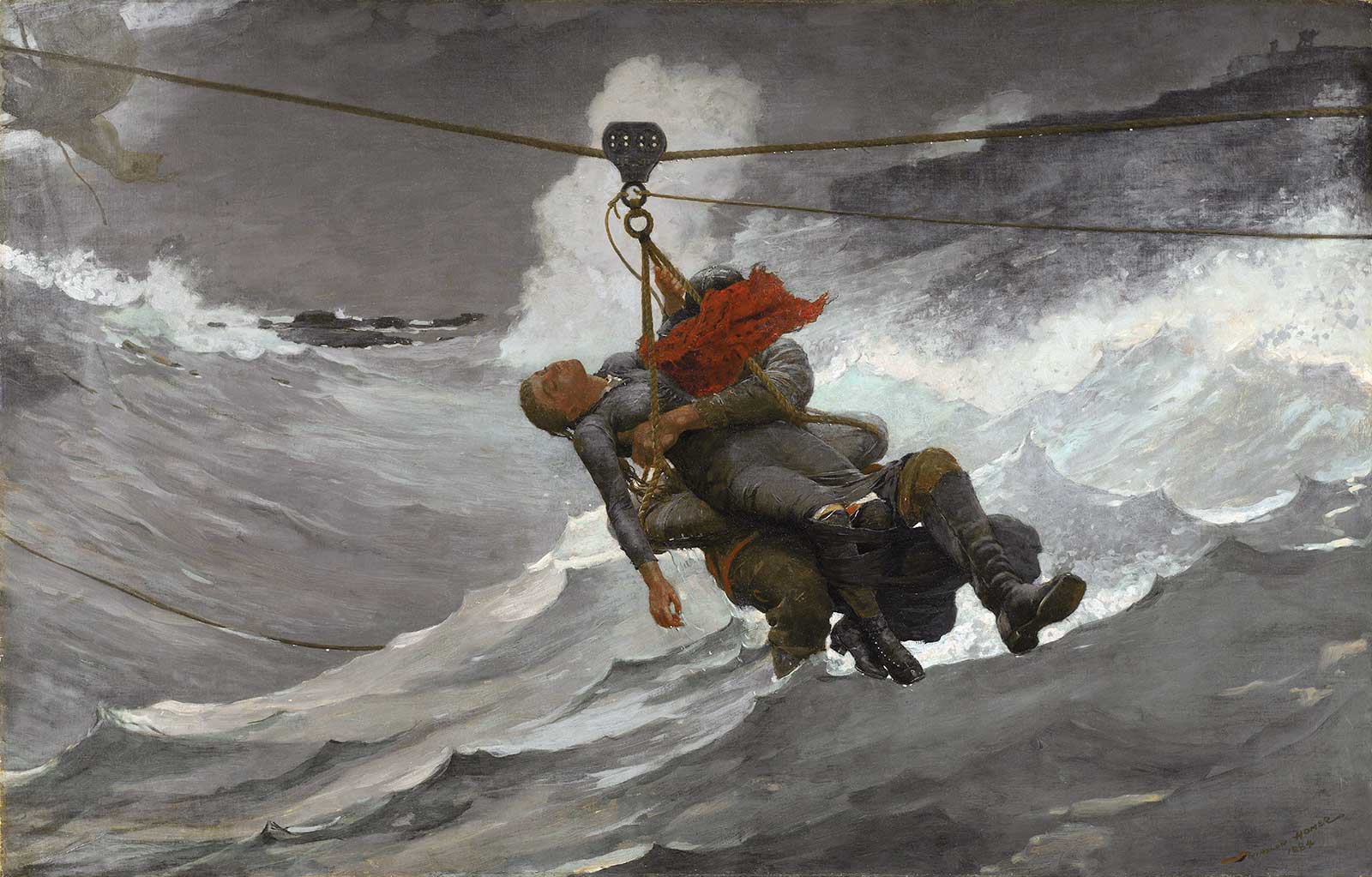
Winslow Homer (1836-1910), The Life Line, 1884. Oil on canvas, 285⁄8 x 44¾ in. Philadelphia Museum of Art. The George W. Elkins Collection, 1924, E1924-4-15.
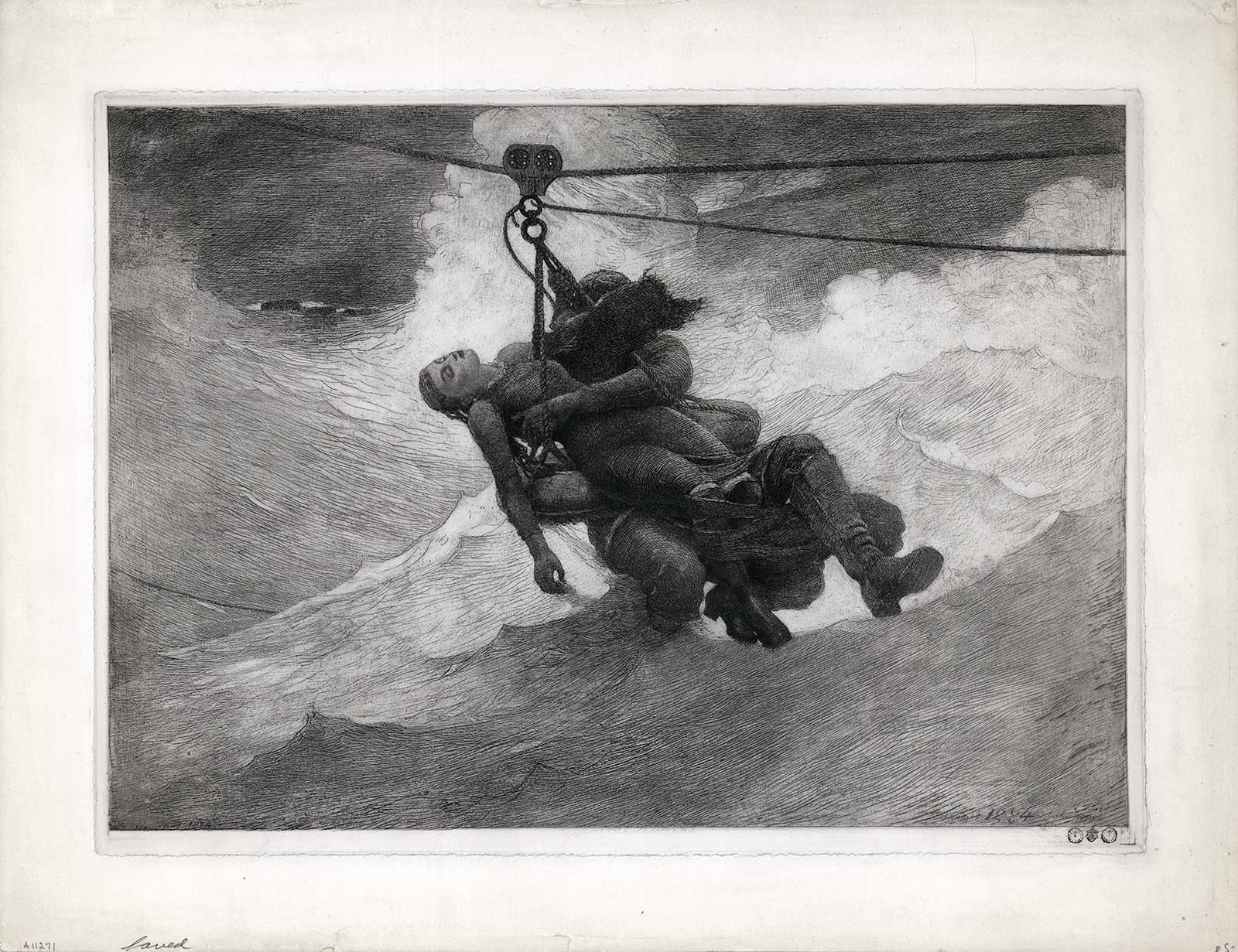
Winslow Homer (1836-1910), The Life Line [copyright proof], 1884|1887. Etching, sulfur tint, and drypoint with scraping, burnishing, and selective wiping in black ink on cream, very thick, moderately textured machine-made wove paper; plate paper, 125⁄16 x 175⁄16 in. Portland Museum of Art, Maine. Museum purchase with support from Elizabeth and Robert Nanovic, 2021.1. Image courtesy The Old Print Shop.
The museum has a long history with Homer’s work, including a 2006 acquisition of the artist’s studio in Prouts Neck, Maine, where the artist started painting in 1883. “Homer has always been part of the DNA of our museum,” says Mark Bessire, the Judy and Leonard Lauder Executive Director of the Portland Museum of Art, who notes that this etching exhibition is the first of its kind for Homer. “While the two early prints were conceived in New York, the bulk of them were designed in Maine and then later sent to New York. So it’s important for us to exhibit these pieces together.”
The exhibition will feature, in most cases, the original Homer painting next to the adapted etching or intaglio prints so viewers can see how Homer let the pieces evolve and change between the original work and various printings.
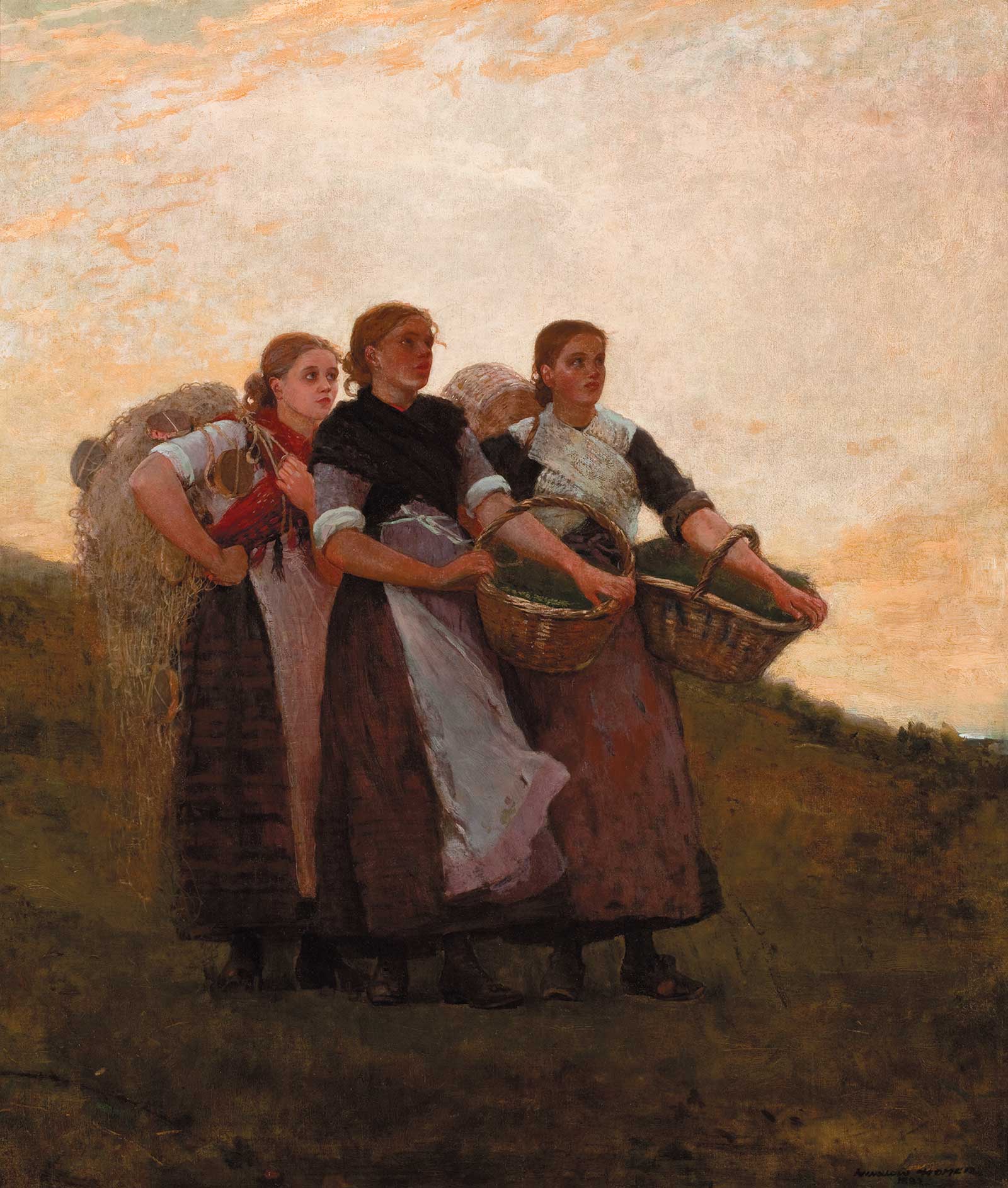
Winslow Homer (1836-1910), Hark! The Lark, 1882, oil on canvas, 363⁄8 x 313⁄8 in. Milwaukee Art Museum. Layton Art Collection, Inc., Gift of Frederick Layton L99. Image courtesy John R. Glembin.
“After Homer’s sojourn to Cullercoats, [England] in roughly 1882, he sold The Life Line in 1884, which was a huge hit that sold to a major collector for $2,500, and then he made a print of that specific work. He had experimented in printmaking, but had never gone fully into a print like this. He had even trained in a printmaker studio, although not formal academic training, with the commercial lithographer John Henry Bufford,” Bessire says. “For all his Civil War work for Harper’s he was making the images, but he wasn’t making his own plates…until later with The Life Line and other important pieces. The thing that’s great about his prints is he was involved in every aspect of printmaking, even laying down the wax, drawing in it and also adding ink—he worked the plates thoroughly.”
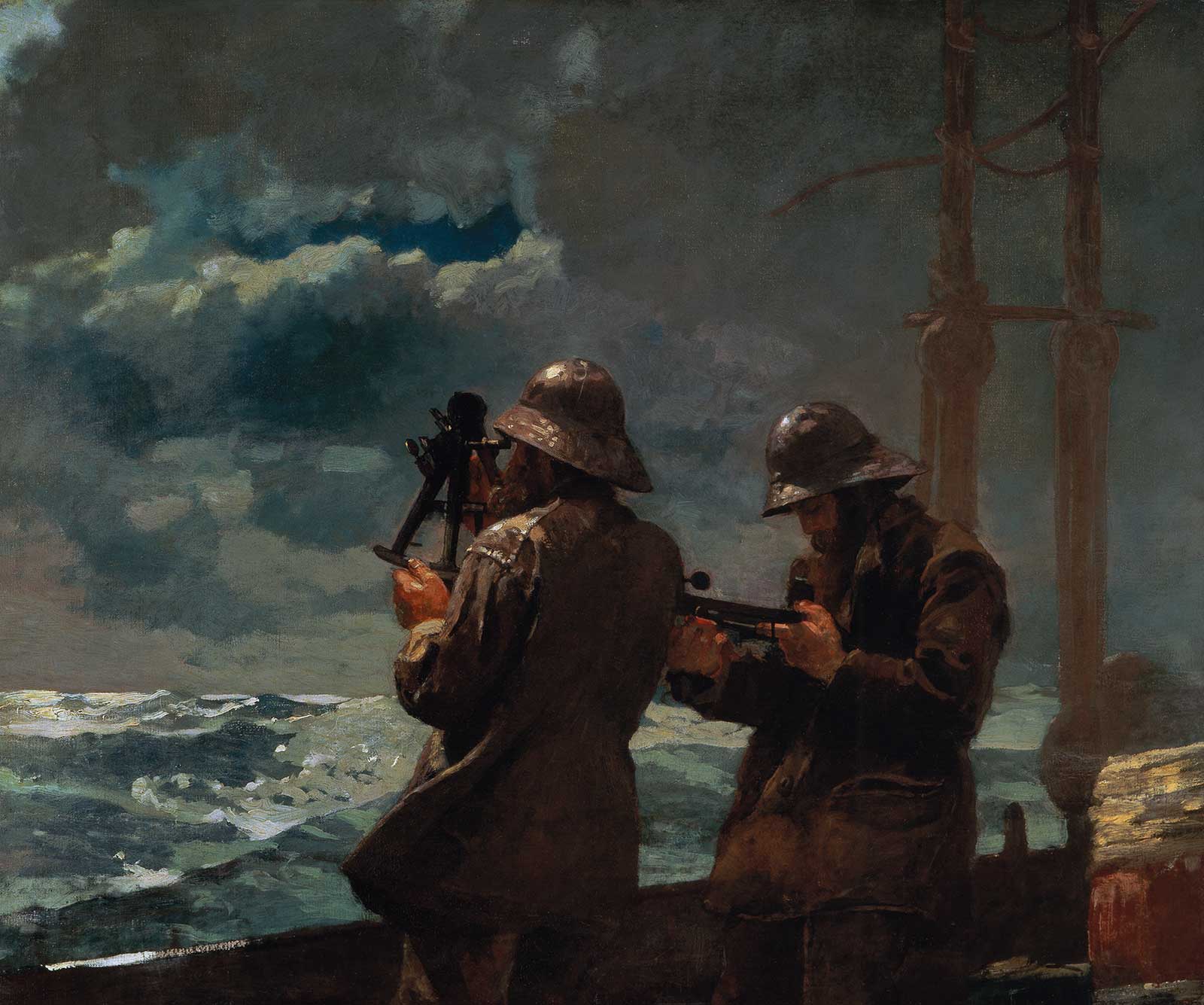
Winslow Homer (1836-1910), Eight Bells, 1886. Oil on canvas, 253⁄16 x 303⁄16 in. Addison Gallery of American Art, Phillips Academy, Andover, Massachusetts. Gift of anonymous donor, 1930.379. Image courtesy Addison Gallery of American Art, Phillips Academy, Andover, MA / Art Resource, NY.
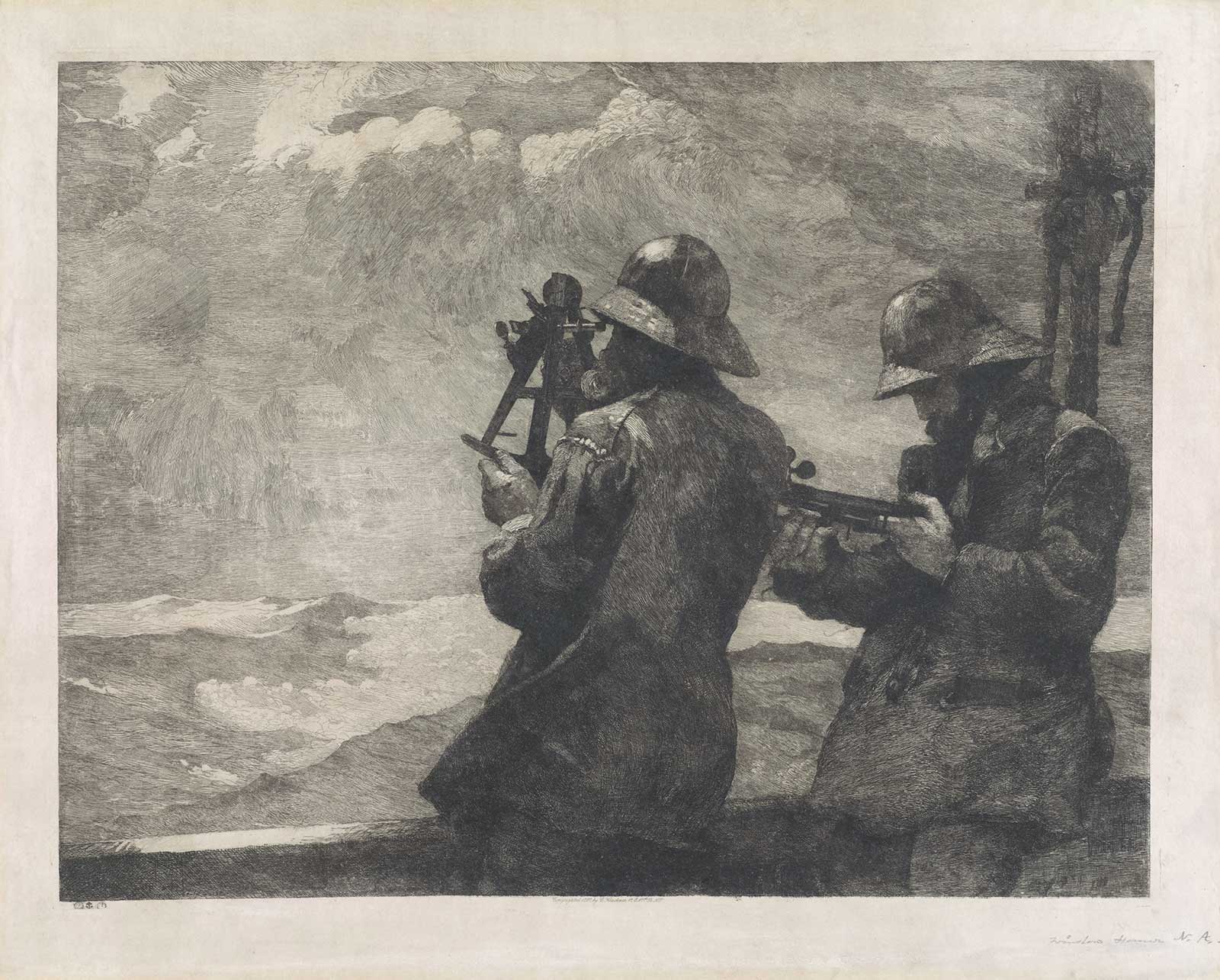
Winslow Homer (1836-1910), Eight Bells, 1887. Etching and drypoint with scraping, stopping out, burnishing, and selective wiping in black ink on parchment, 18¾ x 24¼ in. Portland Museum of Art, Maine. Museum purchase with support from the Peggy and Harold Osher Acquisition Fund and partial gift of Mr. and Mrs. Vaughan W. Pratt, 2014.3. Image courtesy Pillar Digital Imaging.
Among the images that will be on view in the exhibition are some of the artist’s most celebrated and recognizable images, including The Life Line, Eight Bells, Perils of the Sea and Saved, a rare work that did not originate as a traditional painting but as an etching. All of the etchings were produced in a narrow window for the artist, from 1884 to 1889.
“Winslow Homer is celebrated for his powerful paintings and watercolors, yet in the 1880s he turned to etching to revisit some of his most iconic subjects—prints which deserve a closer look and greater consideration in Homer scholarship,” says Ramey Mize, associate curator of American art at the Portland Museum of Art. “Putting these etchings in dialogue with related paintings, drawings and proofs will center Homer’s Maine studio as a critical site where these prints were conceived, connecting audiences to the physical and creative context of the artist’s work.”
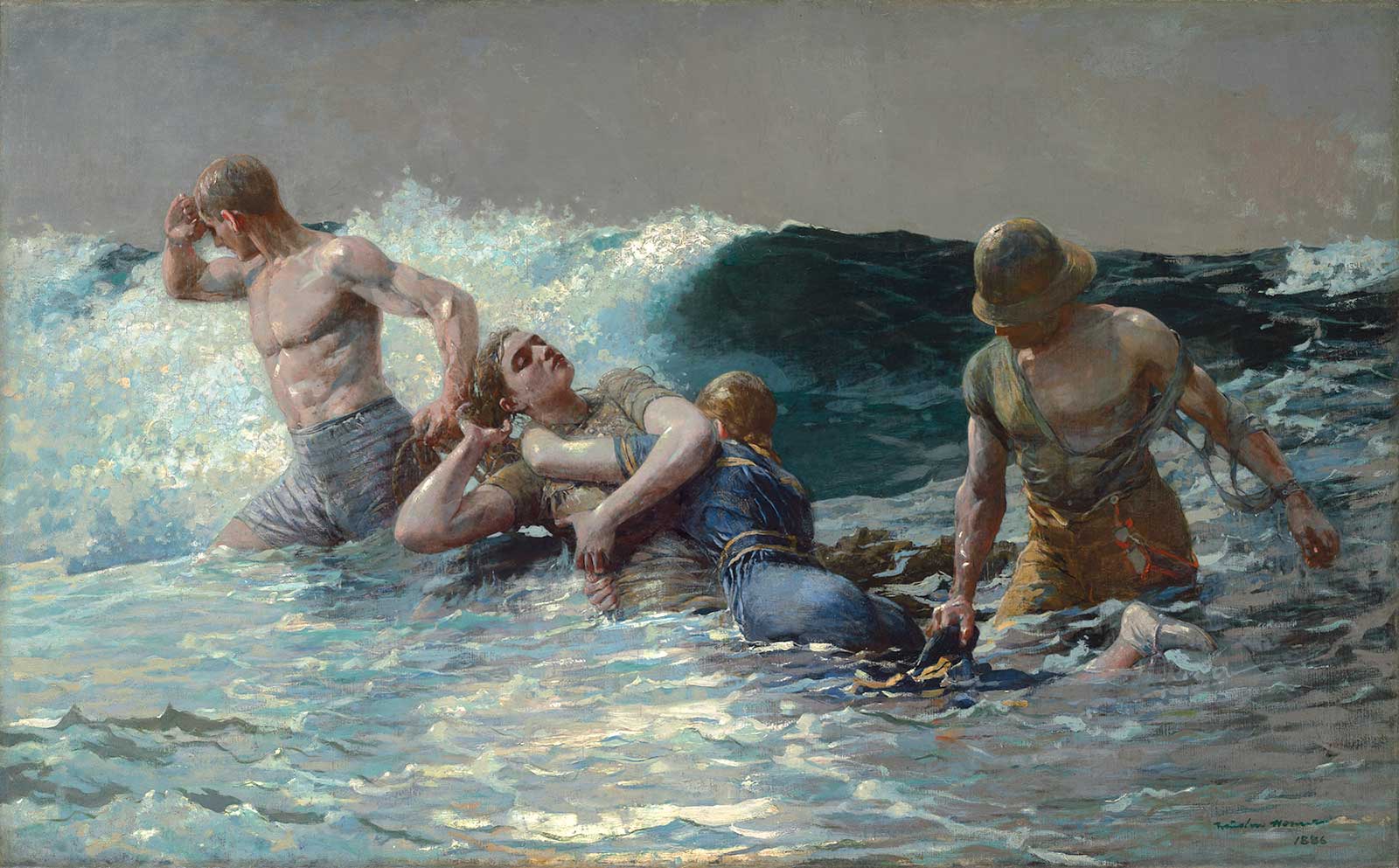
Winslow Homer (1836-1910), Undertow, 1886. Oil on canvas, 2913⁄16 x 475⁄8 in. Clark Art Institute, Acquired by Sterling and Francine Clark before 1955, 1955.4.
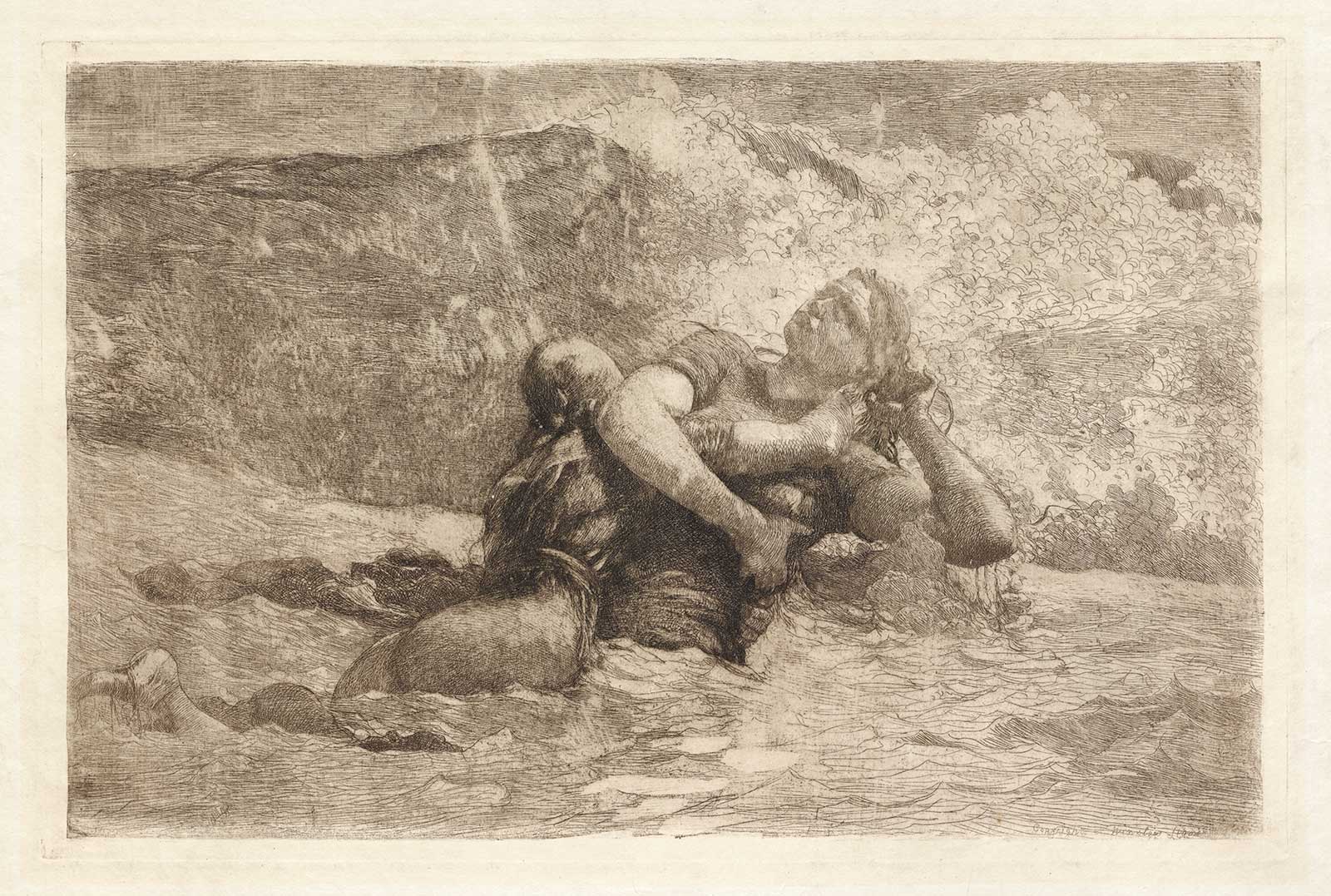
Winslow Homer (1836-1910), Study for Undertow, ca. 1886. Etching, open-bite, stopping out and scraping on cream simili-Japanese Vellum, 65⁄8 x 101⁄16 in. Clark Art Institute, Acquired by the Clark, 1968, 1968.20.
For Bessire, Homer’s time in Maine represents a turning point for the artist. “Homer was focusing a lot on figures by themselves, but then, by 1889, he stopped making prints. He had been in Maine for nearly 10 years and you really see his experience of Maine in his works. But then the figure starts to disappear and nature starts to take center stage,” Bessire says. “It really is a turning point for the artist, all around these very important years.”
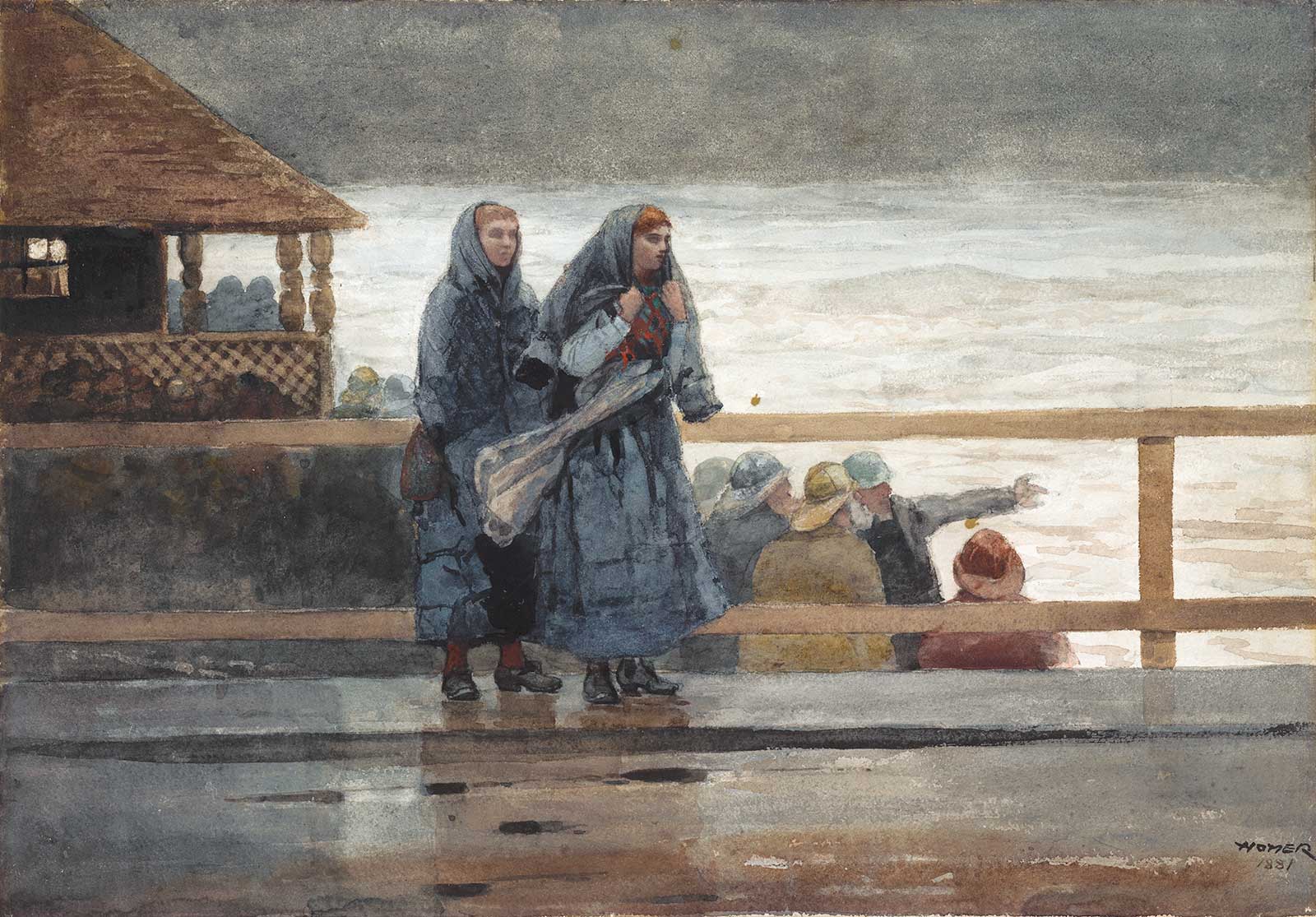
Winslow Homer (1836-1910), Perils of the Sea, 1881. Watercolor over graphite on cream wove paper, 145⁄8 x 2015⁄16 in. Clark Art Institute, Acquired by Sterling and Francine Clark before 1955, 1955.774.
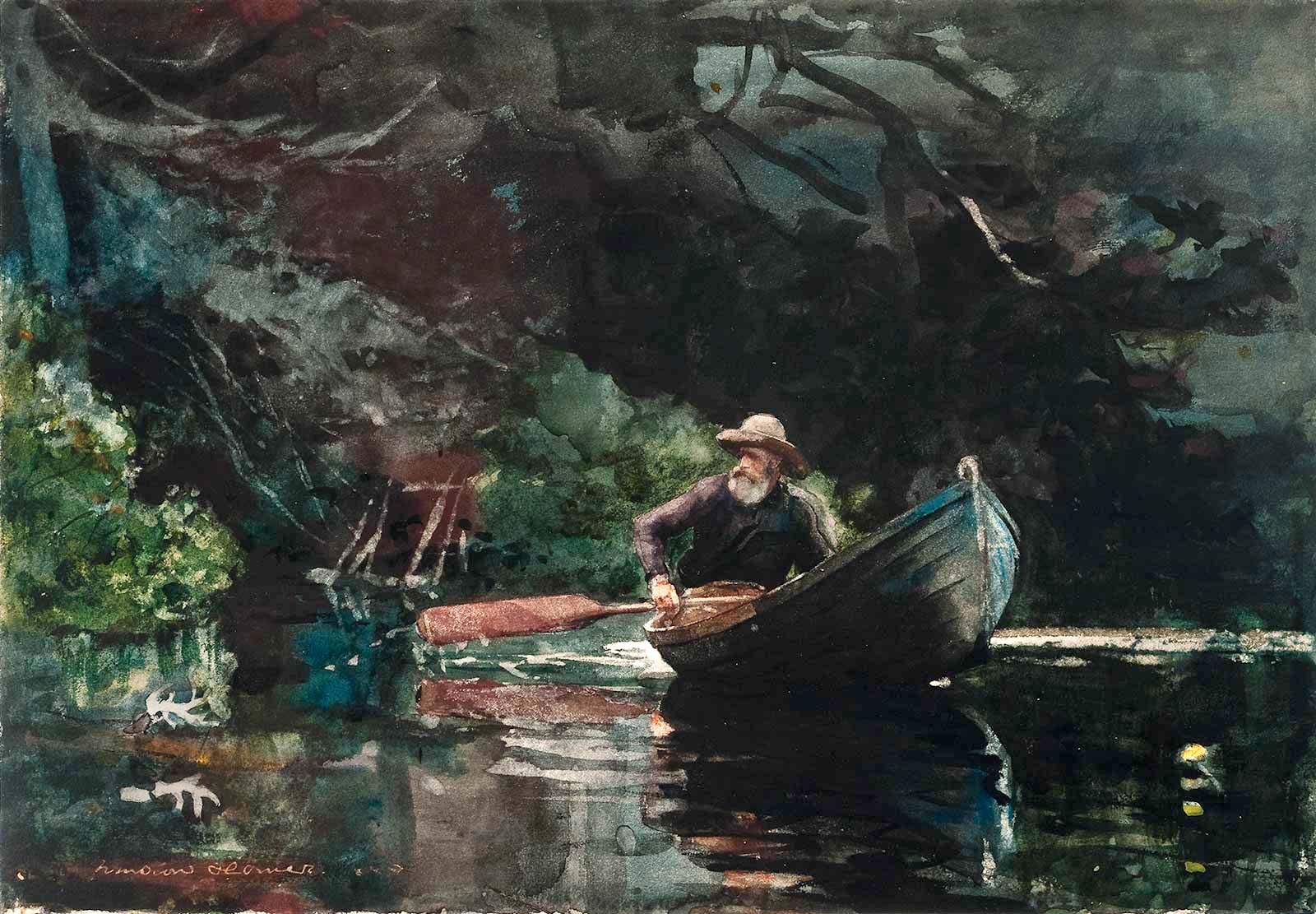
Winslow Homer (1836-1910), The Guide, 1889. Watercolor on ivory wove paper, 13¾ x 19½ in. Portland Museum of Art, Maine. Bequest of Charles Shipman Payson, 1988.55.8. Image courtesy Meyersphoto.com.
The museum was given access to nearly every work by Homer it requested, which is rare for the artist. “We are very grateful to all the lenders for this show. It can be very hard doing a Homer show simply because no one likes to take their Homers off the wall,” Bessire adds. “The timing for this show is really great. If you think about the culture of our country, particularly from the post-Civil War to the Guilded Age, we look back on these images. Homer had a way of recognizing the beauty in nature, and had a capacity for presenting nature in a way that was unlike artists like [Frederic] Church or [Thomas] Cole, artists who were more sublime and global in their treatment of nature. Homer was not about the sublime. He was about the detail in nature when we walk, fish or canoe through nature. He puts you into the situation in a way no other artist has. He’s one of those few and rare artists we keep coming back to because his work resonates with us even in our lifetimes.”
Winslow Homer: Painter, Etcher hangs through October 18. —
Powered by Froala Editor
Powered by Froala Editor