When Western art turns up in New York City, there’s a good chance it’s being handled by Michael Frost, owner of J.N. Bartfield Galleries. The American West, he argues, belongs in New York City just as much as any other genre.
The art dealer, who specializes in works by New York painter and sculptor Frederic Remington, has a long history with the American West, both in New York and in the West, where he co-owns the Scottsdale Art Auction in Scottsdale, Arizona. (The sale takes place April 10 and 11.) Frost sat down to talk with us about his experience as an art dealer and auction owner.
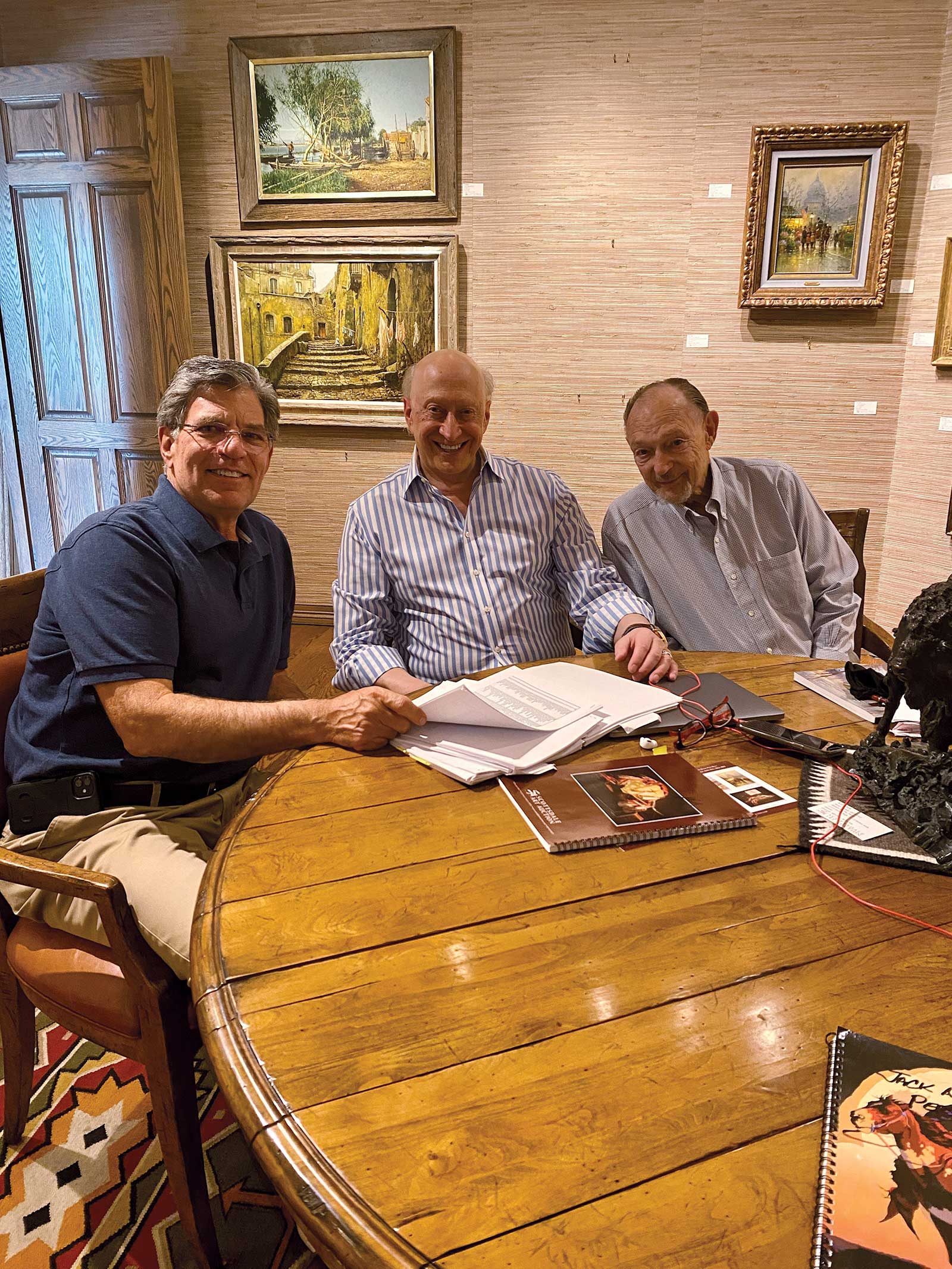
Scottsdale Art Auction founders Brad Richardson, left, Michael Frost and Jack Morris.
Where did your art journey begin?
My art journey began when I was in school and that really started when I went to Brooklyn College in New York and graduated from there, and I then worked for J.N. Bartfield Galleries, which was owned by Jack Bartfield who was my uncle.
What was Jack like?
Jack was an interesting fellow. He was my mother’s brother. Jack started out in his career early on as an attorney, and he loved books. He started buying and selling books after the Depression. In the early 1930s, he had bookstores in Harlem, New York, and then in ’37 he started J.N. Bartfield Galleries & Fine Books. He dealt in rare books, color-plate books, books in bindings and he was called the Audubon King because he was a world-class authority on John James Audubon. During his time, he had seven complete sets of the Audubon folio, which was very rare. He was an innovative character. He was the type of guy who was a very unassuming individual. He smoked, just chain-smoked cigars, so whenever he bought a new suit, it would very quickly look like an old suit because of all the ashes. He was a great guy. He was my teacher and he was like a father to me. He basically raised me and tamed me from my days in the ’60s. He was not an easy man to learn from because he didn’t communicate why a piece was good or why it was not. He just knew he was good. His initial love was books and that’s how he got into beautiful homes with beautiful artwork. So that’s how he started buying and selling art. And when he got into art, it was the American West that interested him most.
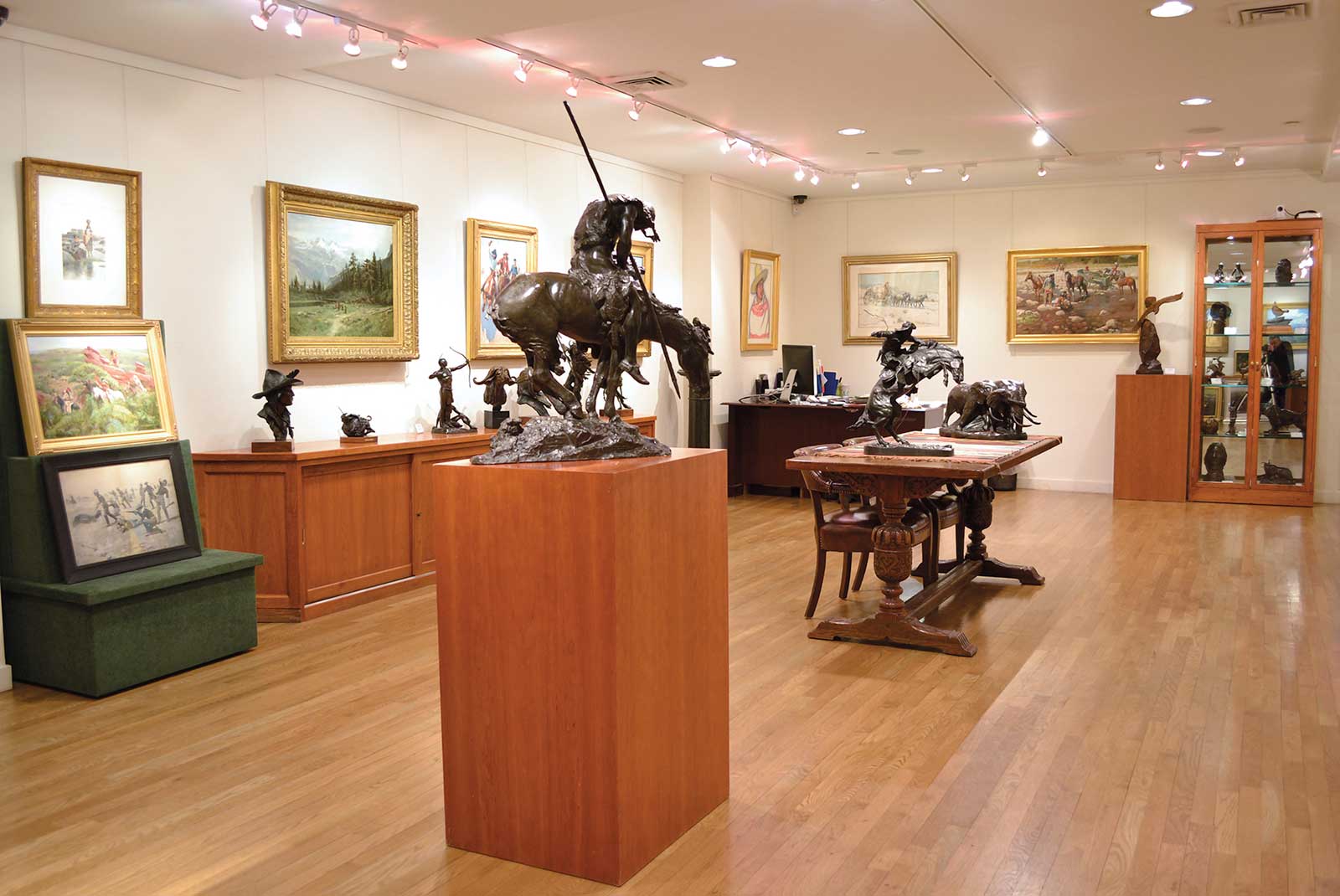
J.N. Bartfield Galleries in New York City in 2014.
Why the West?
There was another book dealer, a man by the name of Edward Eberstadt, who had a great antique bookstore that specialized in Americana. His store is now where Ralph Lauren is on 72nd Street and Madison [in New York City]. When you went there back then and went upstairs, hanging in there and on the metal bookshelves were works by Frederic Remington. My uncle was friendly with him and in 1958, he and Eberstadt had an exhibition of incredible Western works at the Gilcrease Museum. It was a tremendous collection of art that people hadn’t seen before. I remember when I started working for my uncle, we never had a gallery. When you walked in you were walking into a bookstore. It was just this mass of beautiful bindings. And all different types of literature, history, philosophy and all the classics like Dickens, Twain, Shakespeare. The bookshelves were about five-and-a-half feet tall, but the ceilings were 10 feet tall, which left plenty of space above the bookshelves for paintings of the American West. About 1970, I started begging him to let me take some space because I was falling in love with the art and wanted to have a dedicated gallery space to show these pieces. So, we took a small room in the building and put some lighting in, put two air conditioners in the windows and started selling art on a more regular basis. By 1973, we started being well known in the business. And there weren’t a lot of galleries in New York that handled Western themes. There was only one other person who was into that kind of art—Rudy Wunderlich at Kennedy Galleries—and, ironically, our windows faced each other on 57th Street. I was studying this art at the time, some of it in books, but mostly just by looking at the bronzes. We had an affinity for Remington paintings and bronzes, so I would study those bronzes, and we often had a lot of them. At one point we owned six Broncho Buster bronzes. We had these big library tables, because we were a bookstore, so we lined up the six bronzes at the same angles and I was really able to study them. This was back in a time when the bronzes were $25,000 or $35,000. I was able to see the differences between a lifetime cast and a posthumous cast done much later. It’s funny because all that research has been taking me on an art journey still today.
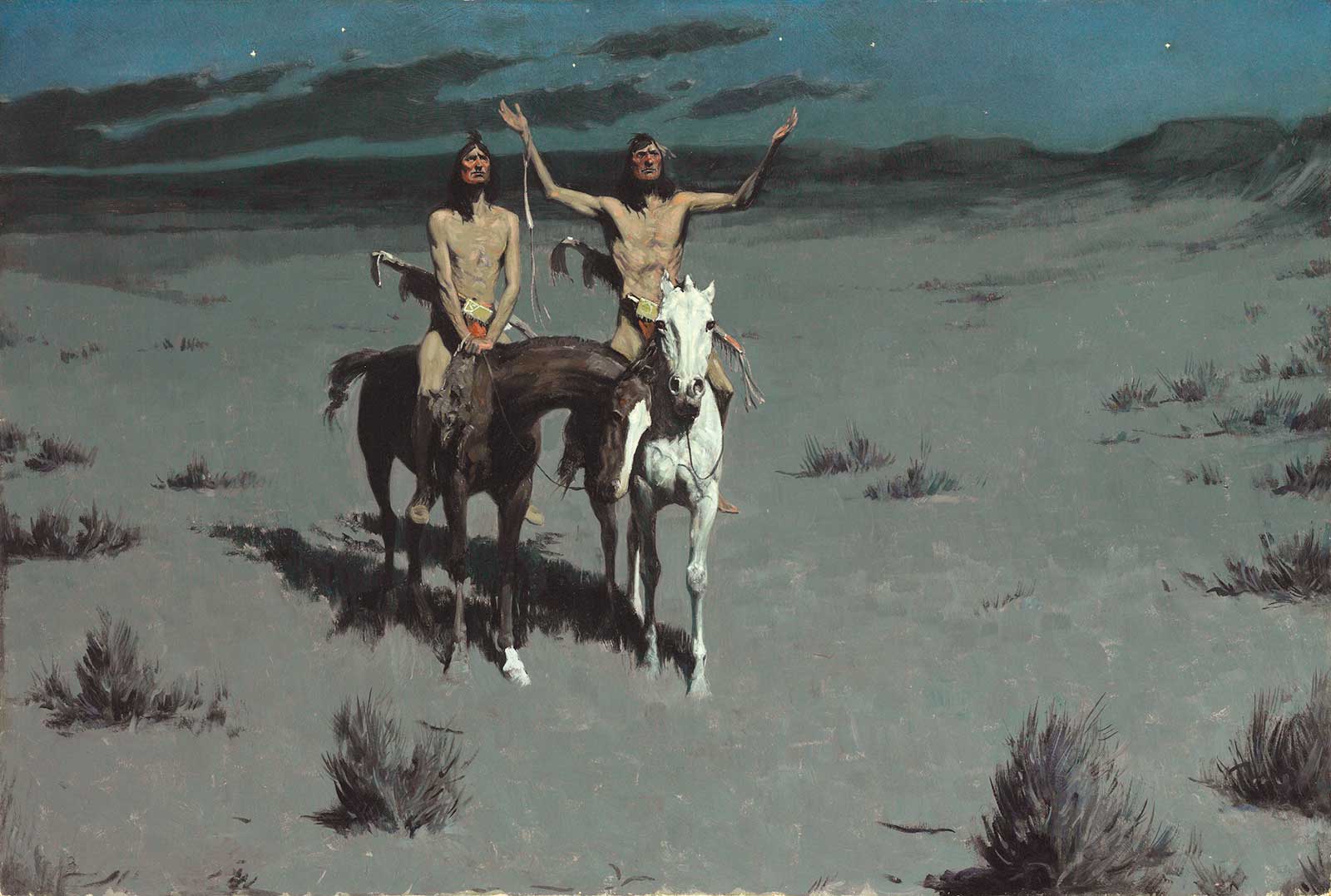
Frederic Remington (1861-1909), Pretty Mother of the Night—White Otter is No Longer a Boy, ca. 1900, oil on canvas, 27 x 40 in. Sold by Scottsdale Art Auction in 2011 for $1,583,000.
What happened to Jack?
He passed away in 1982. Before that, he became ill in the mid-1970s. So around that time, I took over the gallery and was doing all the buying and selling. When my uncle got a little better, he stayed with books. It was his first love. But he did great with Audubon. He bought a set of Audubons in London around 1966 or 1967. He paid $66,000 for the set. He made a comment to the newspapers that the set will be worth over $1 million someday. And before he passed, he sold the first set for over $1 million. Since then, the same set has come up and brought $9 million or so.
Back in the 1980s, what was the art market like?
The market was good. It had its ups and downs. Different collectors were coming up back then. We had a lot of people from the oil market who were buying art. Later, we saw more real estate and tech people who were collecting art. It’s never the same, though. I’ve seen booming markets and I’ve seen down markets. One thing I can say is that I’ve never sold a painting as an investment. Certainly, some collectors asked me if they are good investments, but it was always great selling a Russell or a Remington because people genuinely loved the work. Sometimes if people asked me about investments, I would tell them Citibank is on this corner or Chase is on that corner—go ask them because I sell artwork. You have to buy it because you like it. If it goes up, that’s a plus. I’ve had people really try to force me to tell them if something is a good investment, and I’ve told them if it was truly a great investment, I wouldn’t sell it to them because I would keep it for myself. They get a little ticked off with me, but I was just trying to be straight with them. People came back, though, because they were interested in building collections and they shared my love for Western art.
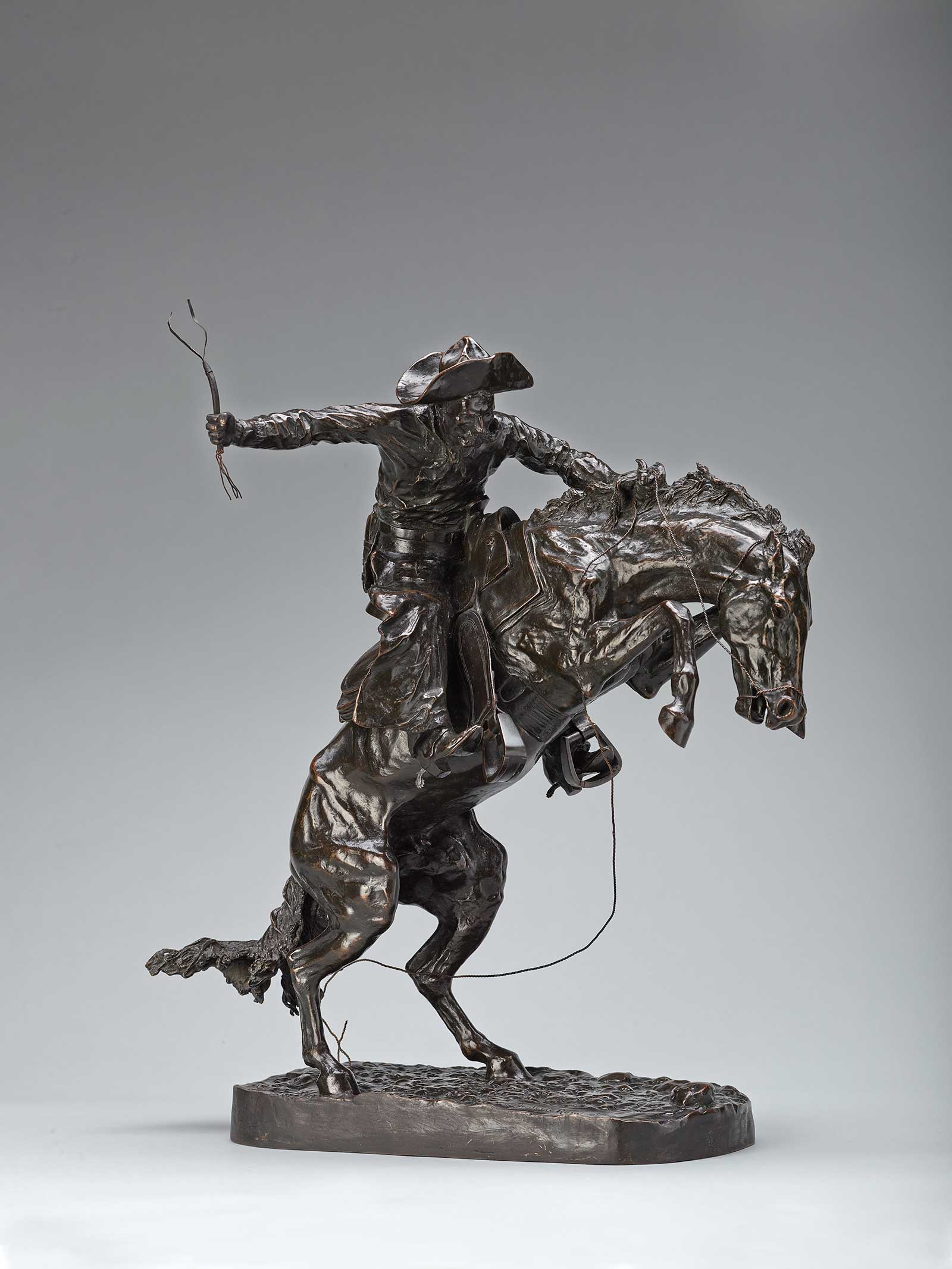
Frederic Remington (1861-1909), The Broncho Buster, bronze with smooth chaps, 24 in.
Western art, historically, has done very well in the West. Why have you stayed in New York City?
Well, number one, I’m born and raised in New York, so that keeps me here. Two, in the old days, there was more Western art in the city. When we talk about Western art, we’re talking about 19th- and early 20th-century artists like Remington, Russell, Henry Farny, Charles Schreyvogel, William R. Leigh and many others. They were sold in New York all the time because there was more art sold in New York than any place in the country. And there were numerous galleries that handled Western [material] in the old days. When you’re talking about the 1970s and 1980s, an individual that enjoyed Western art could come to New York and could spend four or five days looking at Western art in all these galleries. It was the center, the hub, the same way Scottsdale, Arizona, is a hub for contemporary Western painters. Little by little, the older gents like my uncle passed away, and there was fewer people to take over their businesses, which is why there is less Western art in New York these days. I’ve been fortunate that there is a cyclical interest in Western art from generation to generation.
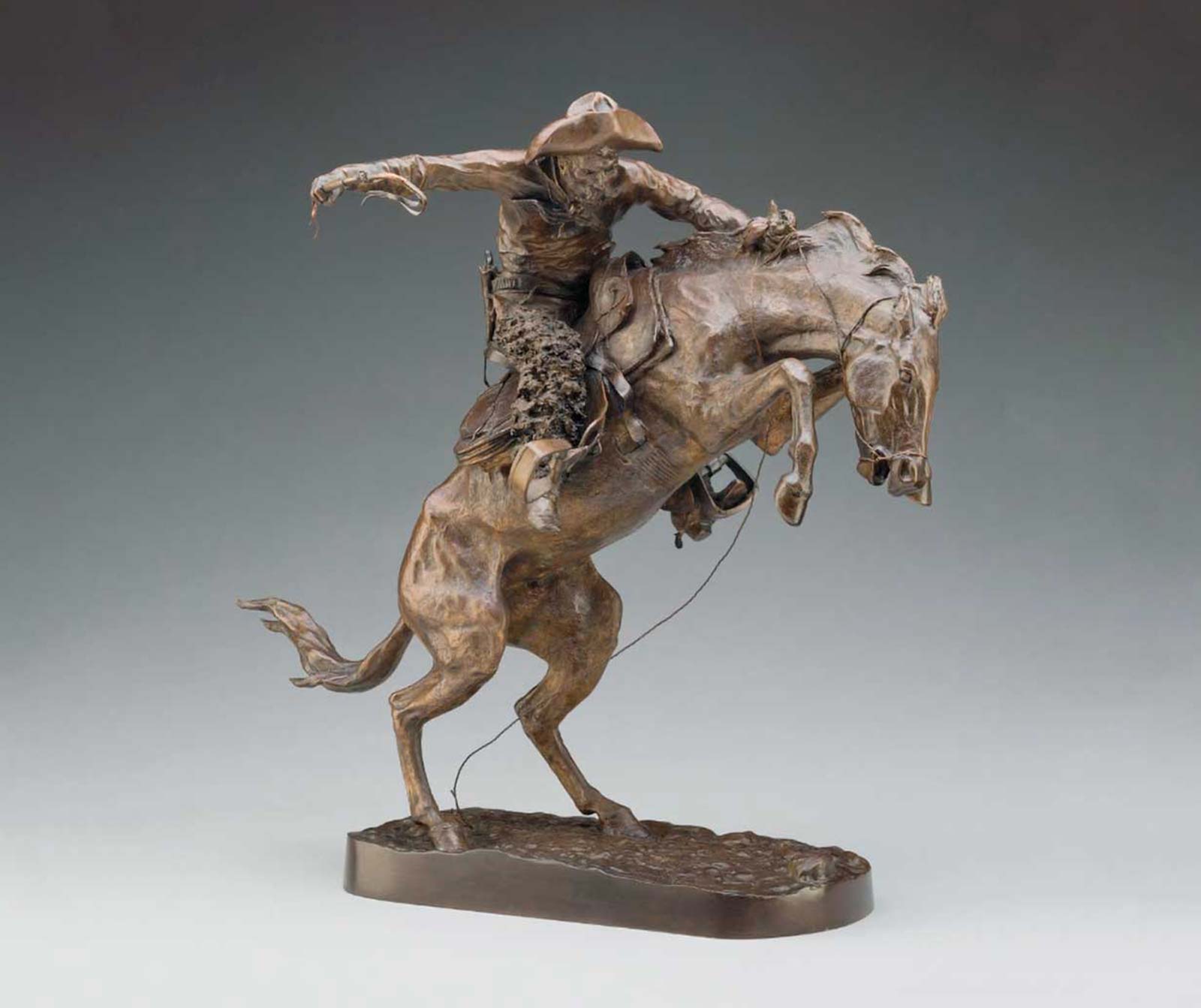
Frederic Remington (1861-1909), The Broncho Buster, bronze with wooly chaps, 24 in.
How did you help form Scottsdale Art Auction?
There was a fellow named Jack Morris, who unfortunately passed away recently. I knew Jack going back 40 or 50 years ago when he was in the museum business. He then worked for galleries, including Altermann & Morris, which had galleries and an auction. Jack approached my business partner, Brad Richardson, owner of Legacy Gallery. And then they approached me and I said, “No, I don’t want to do it.” And here I am 21 years later, I’m still doing it. But that’s how it started, with Jack having an idea that the three of us could put together into something promising. The best part about it is we never had one argument. Three partners and no arguments—that’s unbelievable. We’ve been going 21 years now.
Settle something on Remington. When it comes to The Broncho Buster, which is more desirable: wooly chaps or smooth leather chaps?
Wooly, 100 percent. There were only about eight wooly casts made. If you have a wooly chaps bronze, you have a seven-figure bronze on your hands. You just don’t see them very often. I’ve only had two wooly chaps versions in my lifetime, simply because most of them have the rider in smooth, leather chaps. If you get one, give me a call. —
Powered by Froala Editor