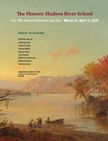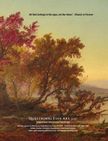
Currently on view at the Brandywine Museum of Art, is the exhibition Cropsey, Wyeth, and the American Landscape Tradition, inspired by a single, monumental piece by Jasper Francis Cropsey (1823-1900). The piece, titled Autumn in the Ramapo Valley, Erie Railway, has been held in British private collections since its creation in 1873 until its recent acquisition by the J. Jeffrey and Ann Marie Fox Foundation for American Art. This exhibition marks the first time the painting has ever been seen on a museum wall.
Through around 33 key works from the Brandywine and Wyeth Foundation of American Art collections, “a clear line of descent traces the further development of American landscape art, via Winslow Homer, George Bellows and N.C. Wyeth, to an especially rich flowering in the works of Andrew Wyeth,” explains William L. Coleman, Wyeth Foundation curator and director, Wyeth Study Center.
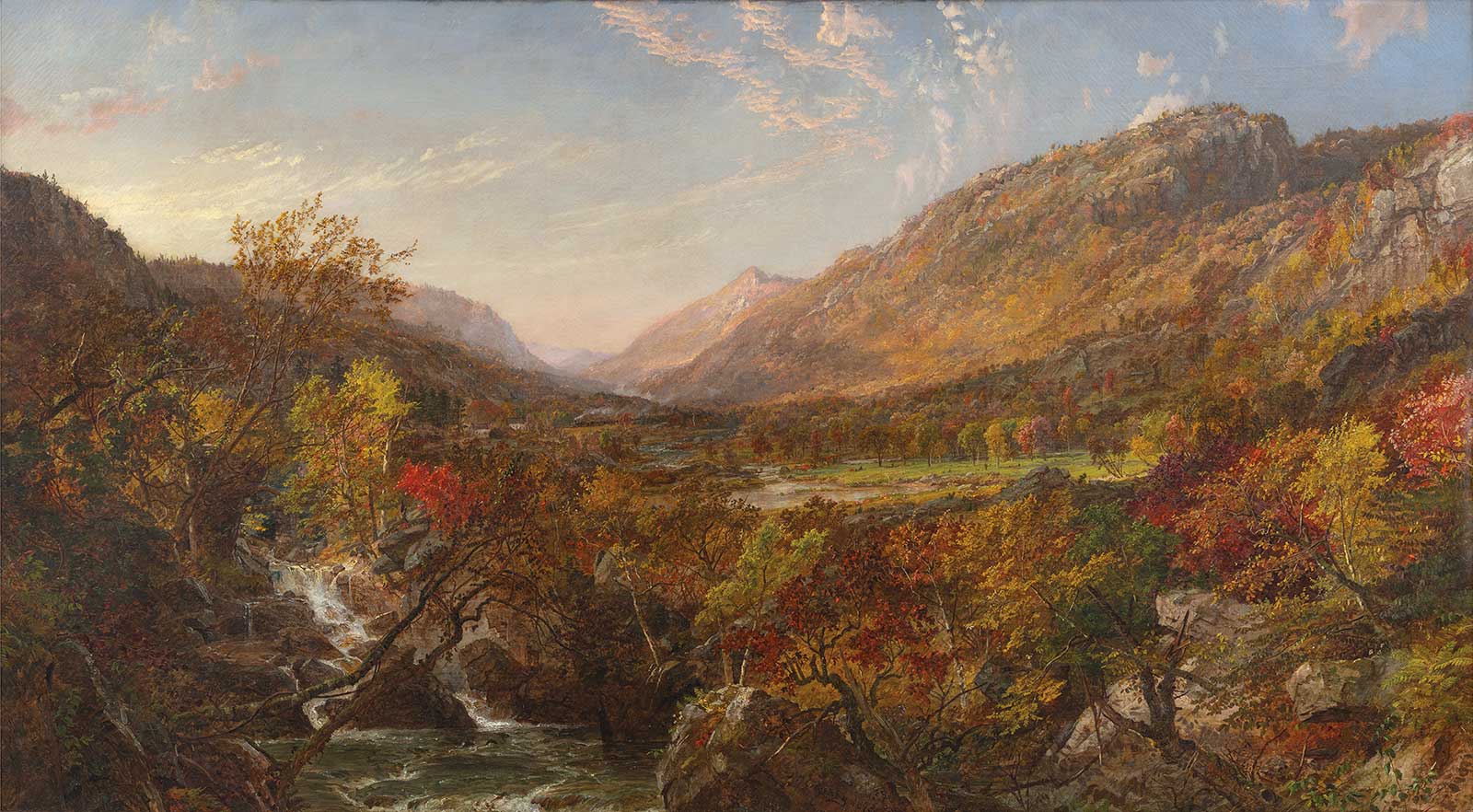
Jasper Francis Cropsey (1823-1900), Autumn in the Ramapo Valley, Erie Railway, 1873. Oil on canvas, 385⁄8 x 681⁄8 in. J. Jeffrey and Ann Marie Fox Foundation for American Art.
Nearly seven feet wide in its frame, this major landscape painting helps in telling a fuller story of this genre’s fascinating trajectory in the United States. “Because my professional background is as a scholar of the Hudson River School, this has been a welcome opportunity to reinsert this important painting into the context that surrounded it via the depth of the Brandywine’s permanent collection, and to continue the story with the evolution of landscape painting in the hands of Andrew Wyeth, through rarely seen works in the Wyeth Foundation collection,” says Coleman.
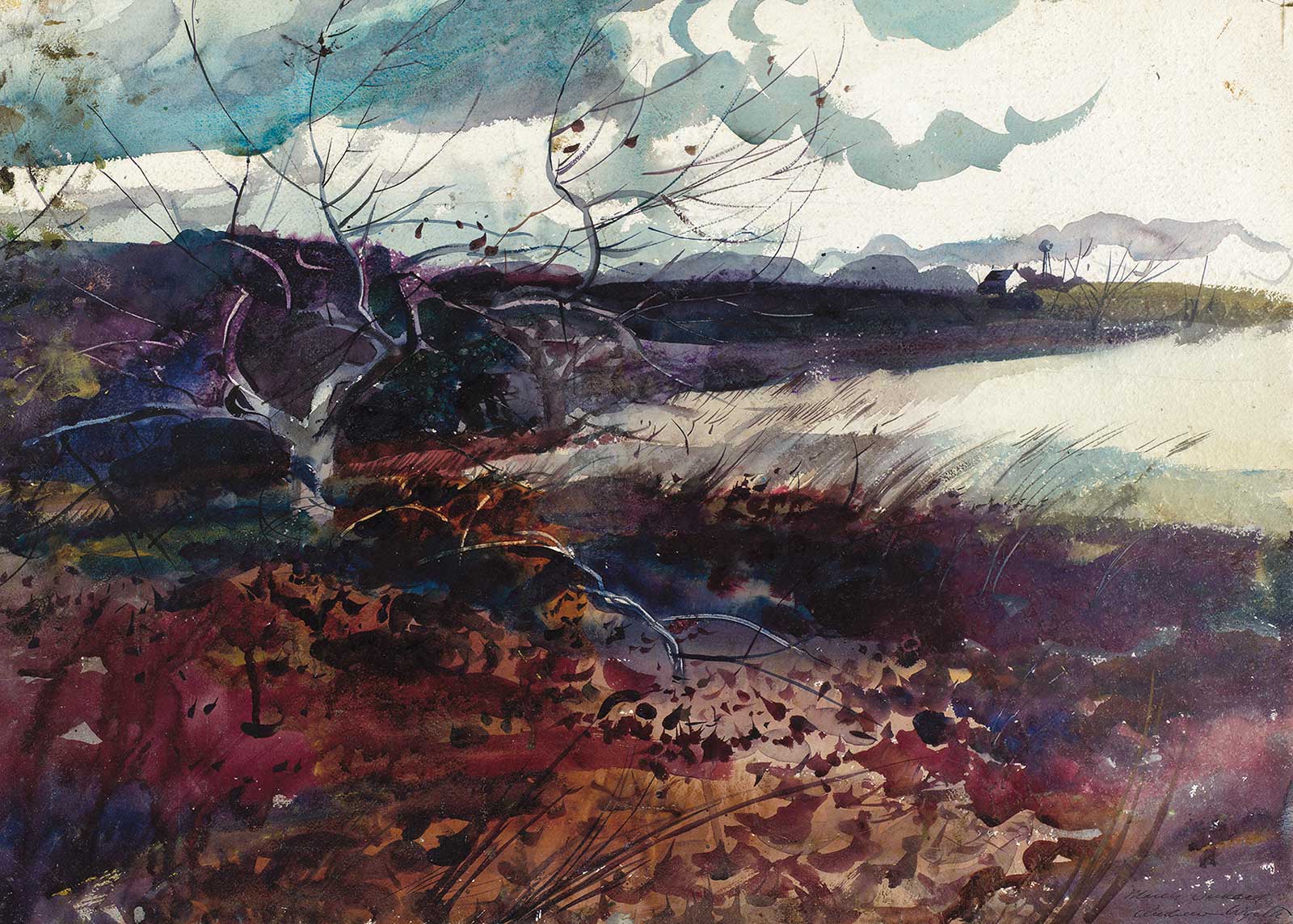
Andrew Wyeth (1917-2009), March Orchard, 1938. Watercolor on paper, 195⁄8 x 271⁄8 in. Wyeth Foundation for American Art Collection, M1794.
The “genre” that Coleman refers to is that of American landscape painting in the 19th century, and more specifically, the third quarter of the 19th century when the United States experienced the “landscape boom.” American landscape painting catered to new fortunes during this era, “with many artists making images that promoted the sources of those fortunes in logistics, resource extraction and further colonization of Native land,” Coleman adds. “…New tycoons were buying big paintings that often documented the sources of the patron’s wealth.” A devoted follower of Thomas Cole, Cropsey battled it out for the big jobs with Frederic Church and Albert Bierstadt, with Thomas Moran not far behind.
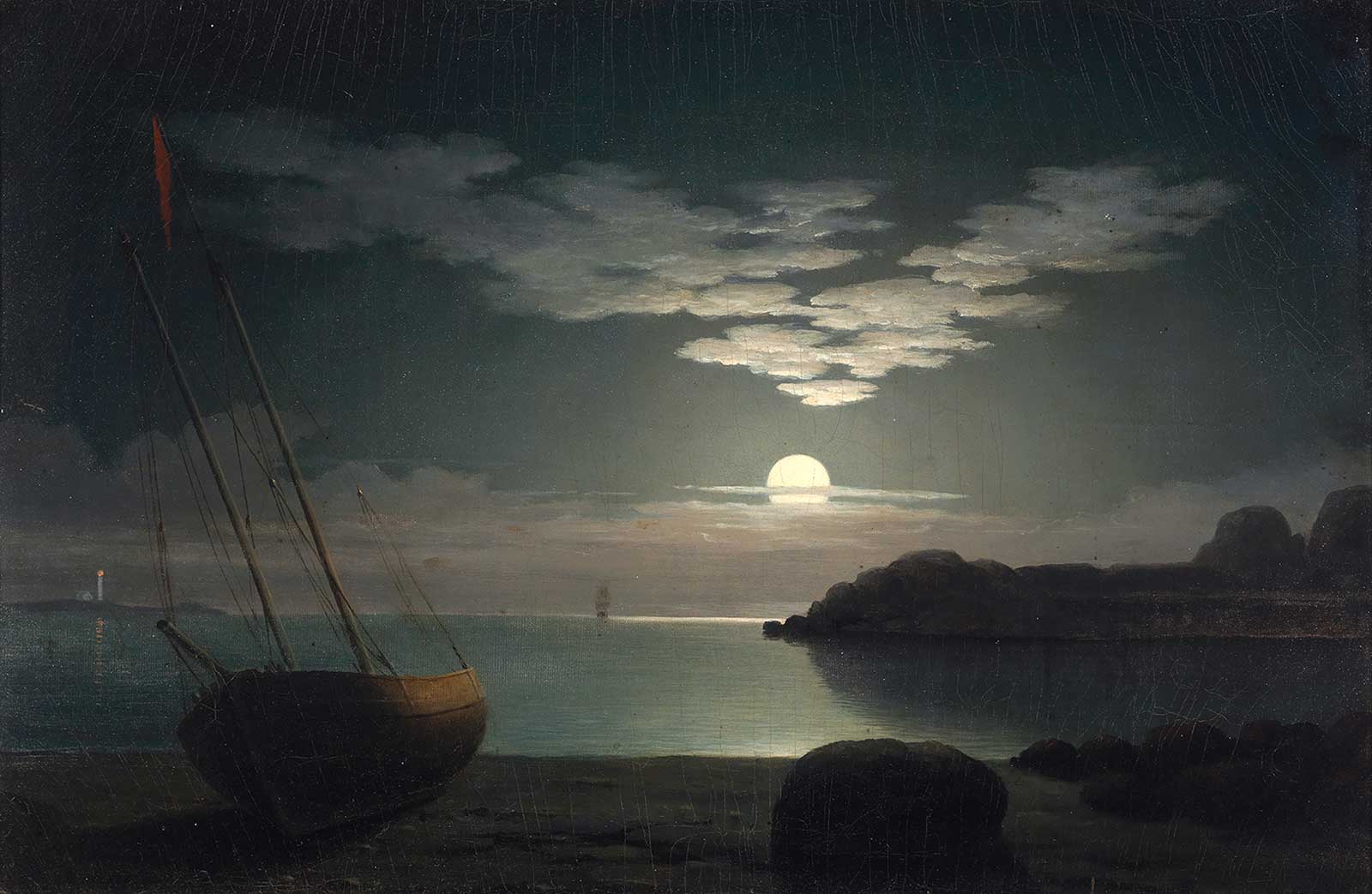
Mary Blood Mellen (1819-1886), Moonlight Night, Gloucester Harbor, ca. 1870s. Oil on canvas, 11½ x 17½ in. Wyeth Foundation for American Art Collection.
The rediscovered painting speaks to a particular part of Cropsey’s legacy. “While most major American artists of this period traveled internationally, and some enjoyed a degree of success abroad, Cropsey’s international engagement and audience were far deeper,” says Coleman. “He worked in London for seven years and exhibited 13 paintings at the Royal Academy of Art’s competitive annual exhibitions, was presented to Queen Victoria and sold numerous works to British buyers, including this painting. Part of what excites me about its return to public view is the ability it provides to tell a fuller story of the international reception of American art, even at this relatively early date. It truly is a missing link.”
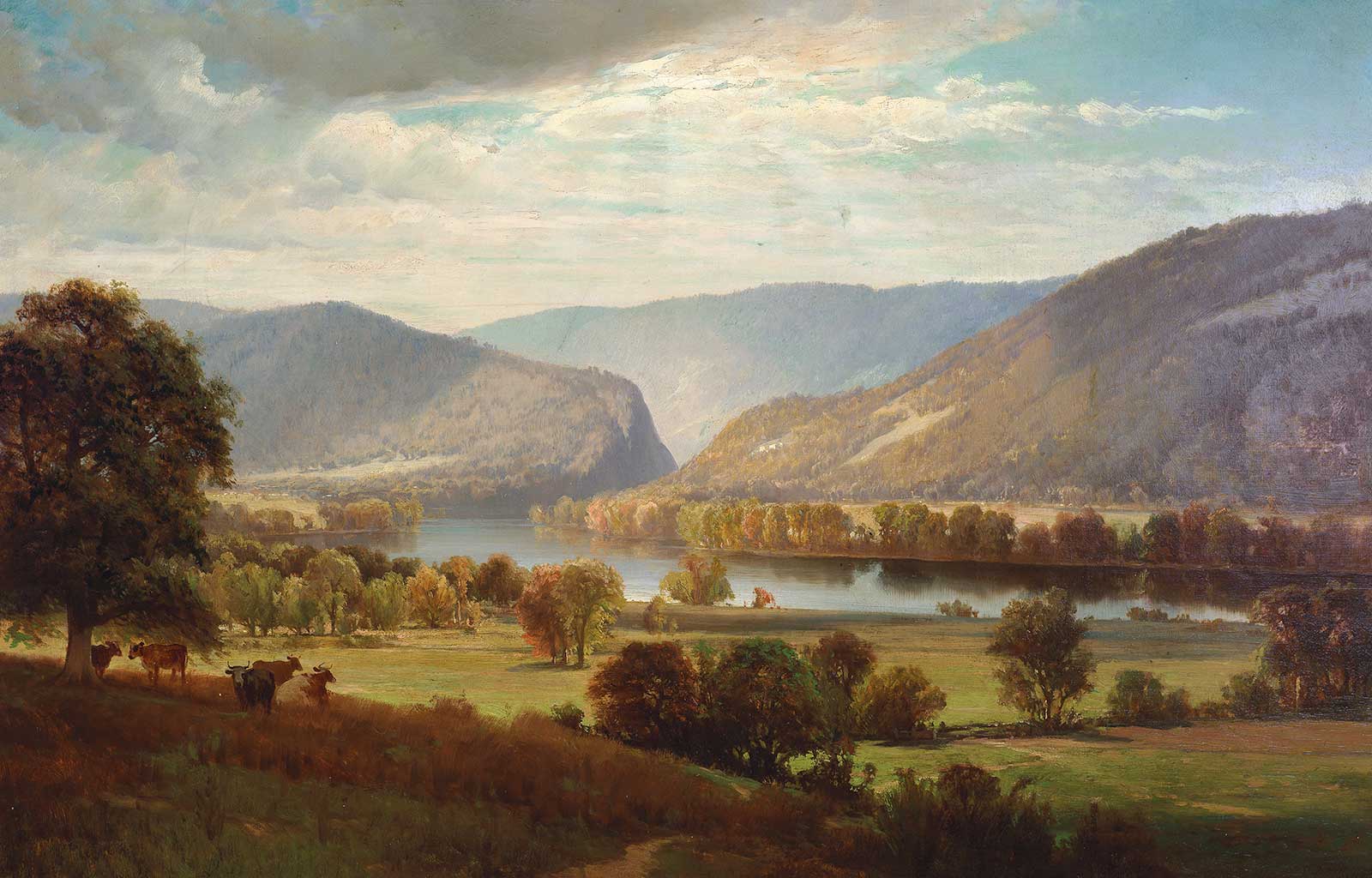
Thomas Hill (1829-1908), View of the Susquehanna River, 1867. Oil on canvas mounted on board, 26 x 40 in. Brandywine Museum of Art. Gift of Mrs. A. DeWitt Smith, 2003.13.1.
Coleman notes that Autumn in the Ramapo Valley is a bit of an entangled object: explicitly painted to depict the takeover of the Erie Railway by the patron, James McHenry, in some boardroom maneuvers. “While the train at the heart of the picture is tiny and is absorbed into a sweeping composition of the wonders of the natural world, it is no less the focus and motivation of the picture,” says Coleman.
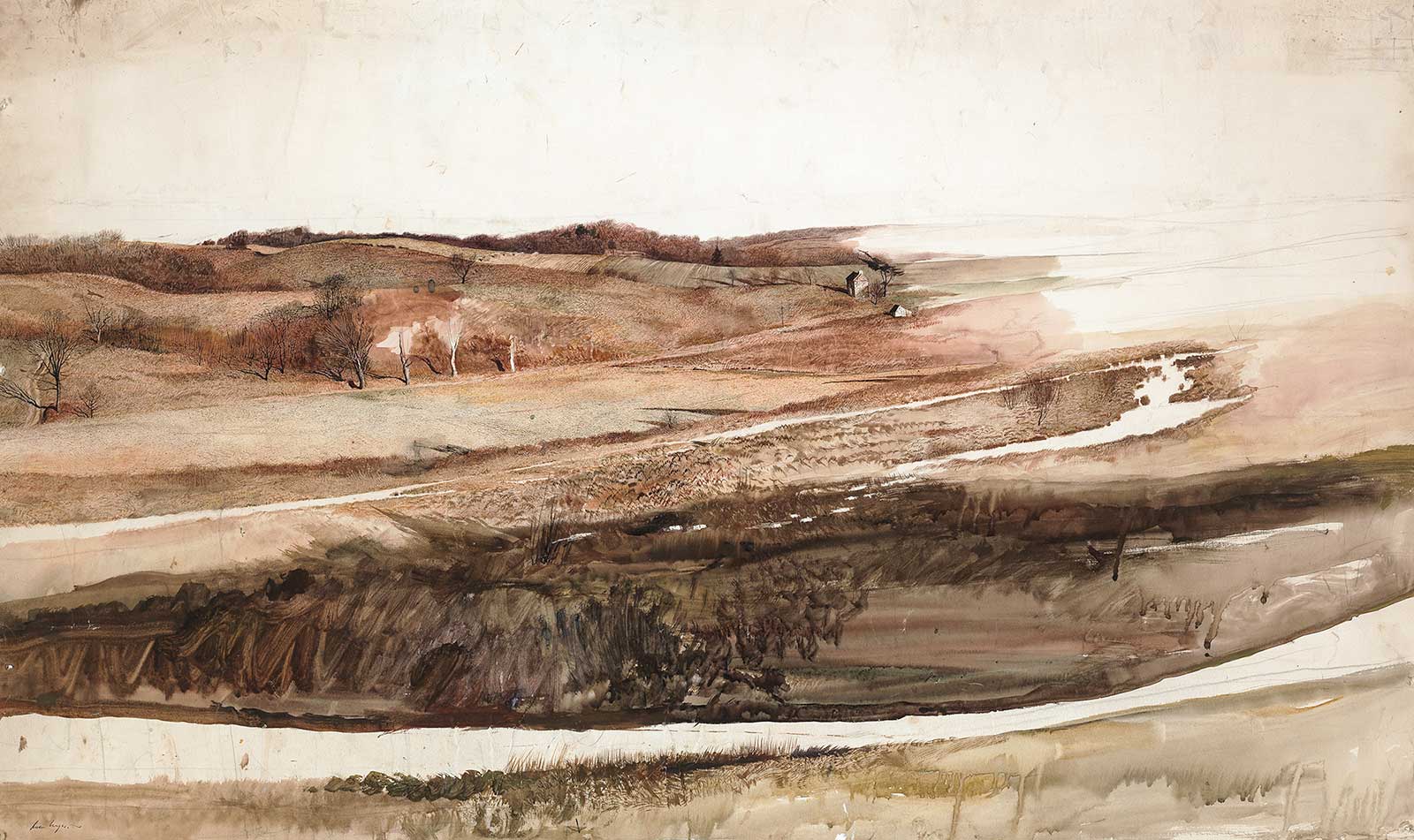
Andrew Wyeth (1917-2009), Hoffman’s Slough Study, 1947. Dry watercolor on paper, 29 x 41 in. Wyeth Foundation for American Art Collection, P2016r.
The impact of Cropsey and his contemporaries is evident in Andrew Wyeth’s (1917-2009) pieces like March Orchard, 1938. “Even at this early date, there is evidence of a quiet revolution coming, with a composition subtly shifting from the established formulas of the Hudson River School with sky narrowing and a look downward into the land emerging, which would become one of Wyeth’s signature perspectives,” Coleman shares. “For the Wyeth diehards, the rich autumnal color of this depiction of his father’s orchard in Chadds Ford, Pennsylvania, is a rare treat from an artist who moved to a more austere and restricted palette for most of his mature work.”
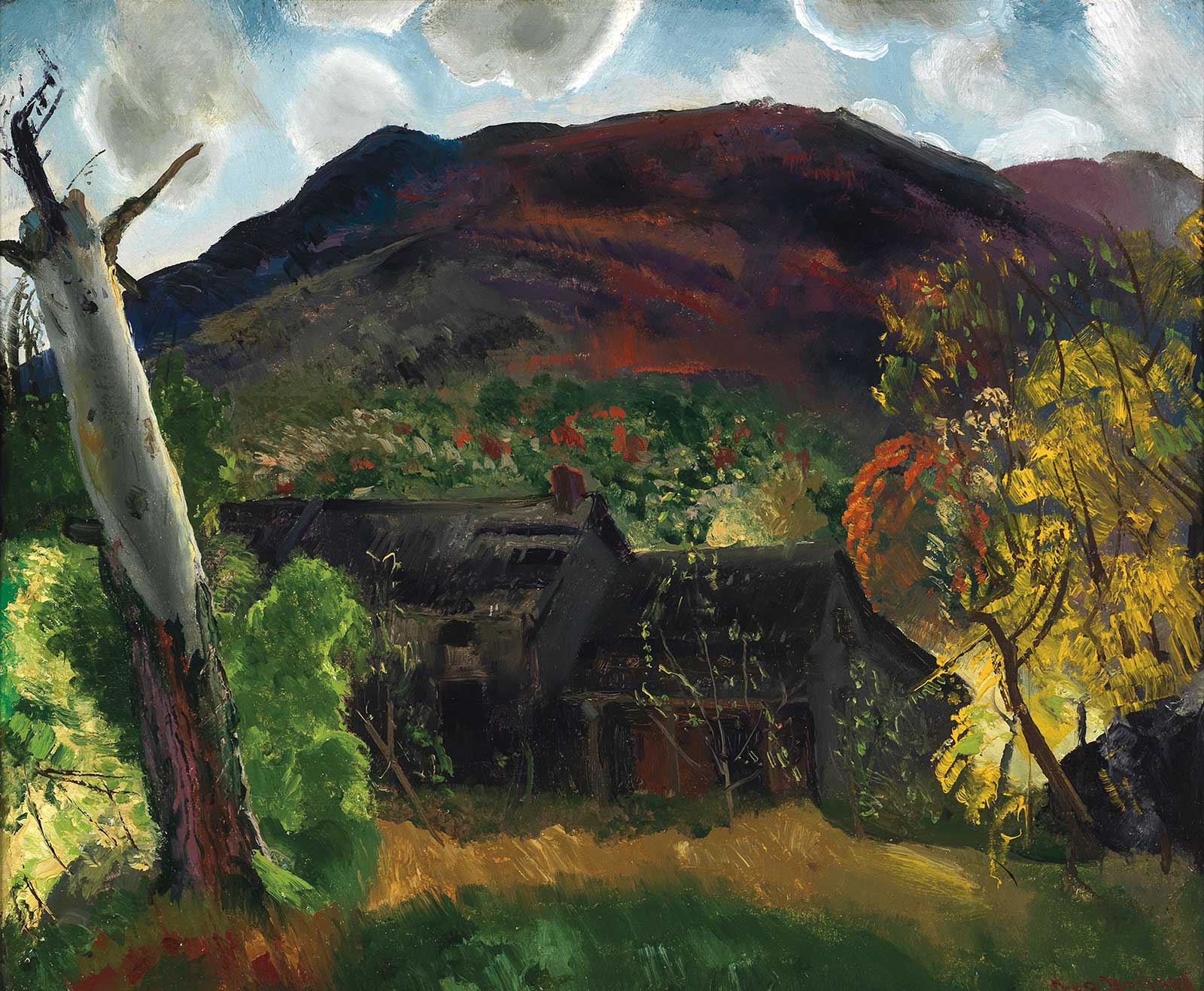
George Wesley Bellows (1882 -1925), Blasted Tree and Deserted House, 1920. Oil on panel, 18 x 22 in. Brandywine Museum of Art Purchased with Museum funds, 2023.11.
Other Wyeth works, illustrating the artist’s egg tempera skills, include Fall at Archies, 1937; Pennsylvania Landscape, 1941; and Winter Fodder, 1939, among others. His drybrush watercolor on paper technique is represented in Hoffman’s Slough Study, 1947.
While the exhibition is on view at the Brandywine through May 31, 2026, Cropsey’s piece will travel to other institutions through 2028. The next stop will be Dixon Gallery & Gardens in Memphis, Tennessee, from September 6, 2026, to January 10, 2027. —
Powered by Froala Editor