Currently on view at the Springville Museum of Art is a landmark exhibition that highlights the life and career of John Hafen (1856-1910)—a representational artist who was a founding member of the museum and a central figure in the Springville, Utah, art movement. The exhibition features around 67 artworks, a collection that honors Hafen’s belief that “art is companionship.”
“Enduring Beauty: John Hafen and the Power of Art celebrates Hafen’s lifelong belief in art’s ability to uplift individuals and strengthen communities,” adds Allison Pinegar, head of exhibitions and programs at SMA. “While Hafen’s influence on Utah’s artistic and cultural heritage is widely acknowledged, this exhibition marks the first major retrospective to explore his legacy at this scale and in such depth.”
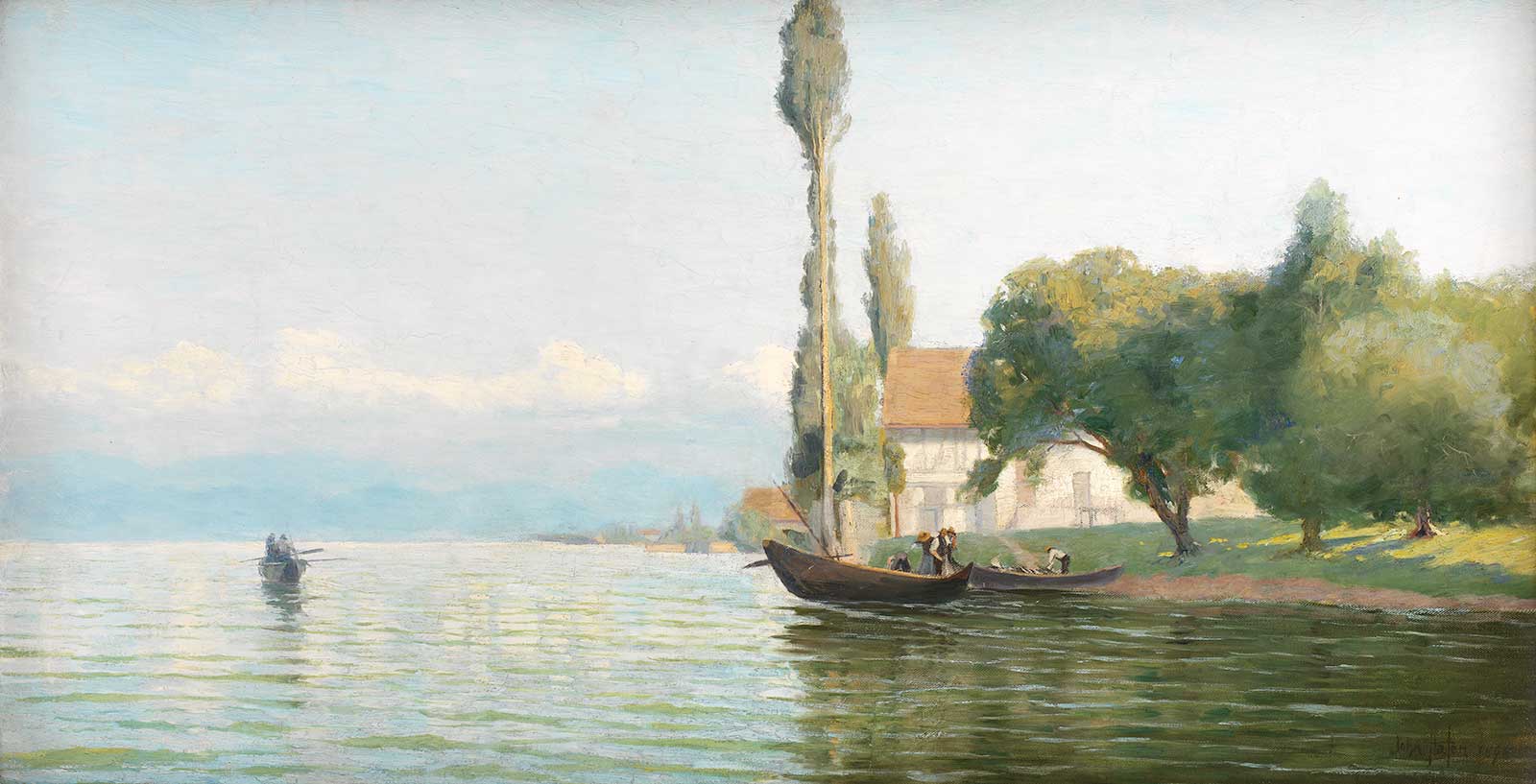
John Hafen (1856-1910), Geneva Dance Hall and Resort, Utah Lake, 1896. Oil on canvas, 20 x 38 in.
At the age of six, Hafen’s family joined the Church of Jesus Christ of Latter-day Saints and immigrated to the United States from his birth home in Switzerland, eventually traveling west with other LDS pioneers to settle in the Utah Territory. Hafen demonstrated an early interest in art and attended a small school that included drawing instruction, where his talent began to emerge. As a young adult, he formed close associations with many of Utah’s ambitious late-19th-century artists.
Over the course of his career, Hafen attended the Académie Julian in Paris, strengthening his skills; contributed murals to the Salt Lake Temple, refining his ability to depict the landscapes of Utah; and helped establish the Society of Utah Artists, and later, the Utah Art Institute. Despite his growing reputation, Hafen struggled financially throughout much of his life while supporting a large family. He worked various jobs at different stages of his career, which often limited the time he could devote exclusively to painting.
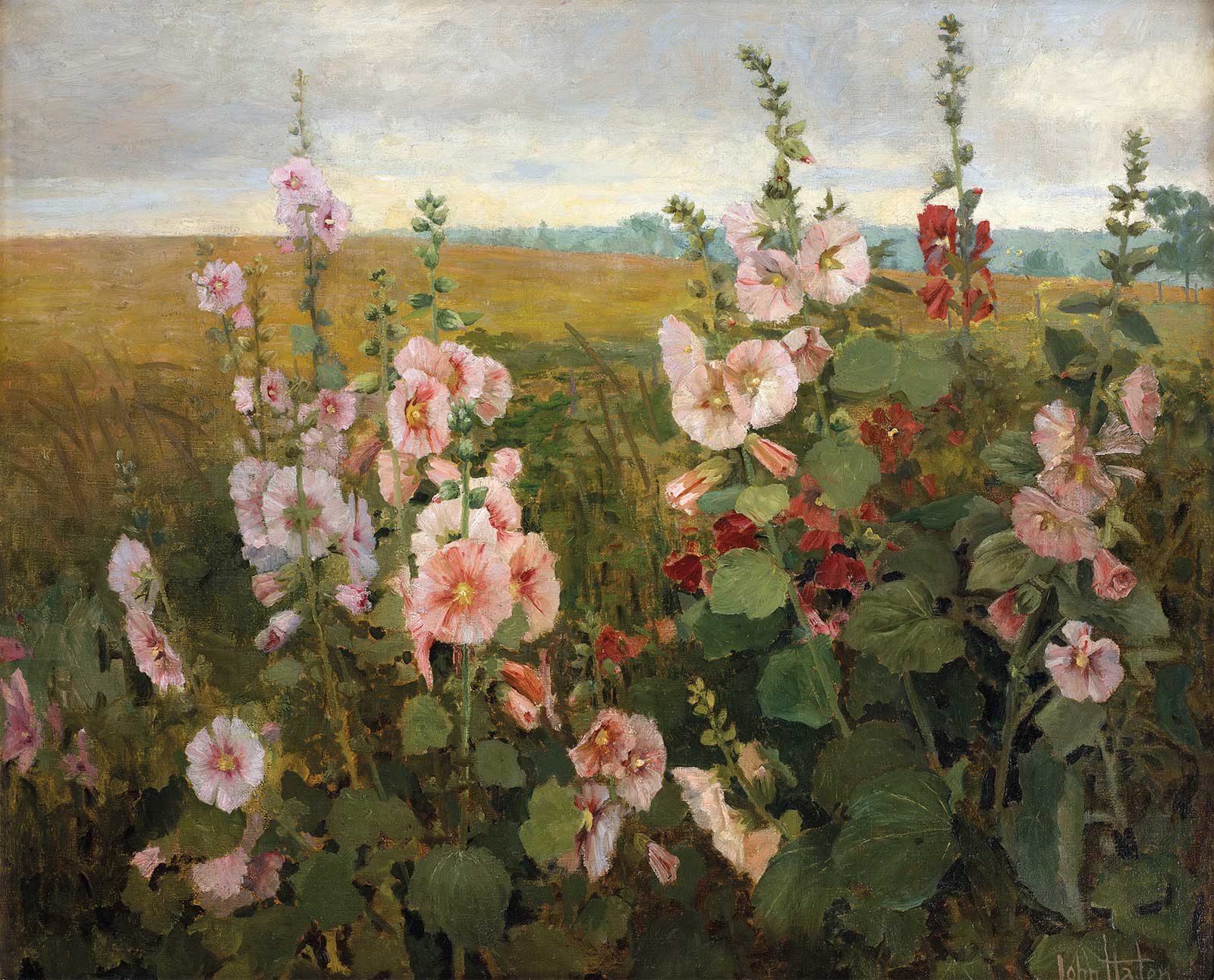
John Hafen (1856-1910), Hollyhocks, 1909. Oil on canvas, 36 x 42 in.
The development of the exhibition was shaped in part by the scholarship of Dr. Vern G. Swanson, director emeritus of the Springville Museum, and Angela Swanson Jones, co-authors of John Hafen: Utah’s Poet Painter. Their extensive research—including Hafen’s biography and catalogue raisonné—was foundational to the exhibition’s concept and made it possible to reunite works from both public and private collections that have rarely, if ever, been shown together.
We see works like Geneva Dance Hall and Resort, Utah Lake, 1896—a tranquil scene of the Geneva Dance Hall, owned by Hafen’s patrons Dr. George and Emma Smart. “[This piece] illustrates his mature painting style,” says Pinegar. “With its limited palette, soft brushwork and careful attention to light, the work captures a quiet moment infused with mood and atmosphere. Hafen believed that the emotional sentiment of an image was what made it truly great, and this painting beautifully embodies that philosophy.”
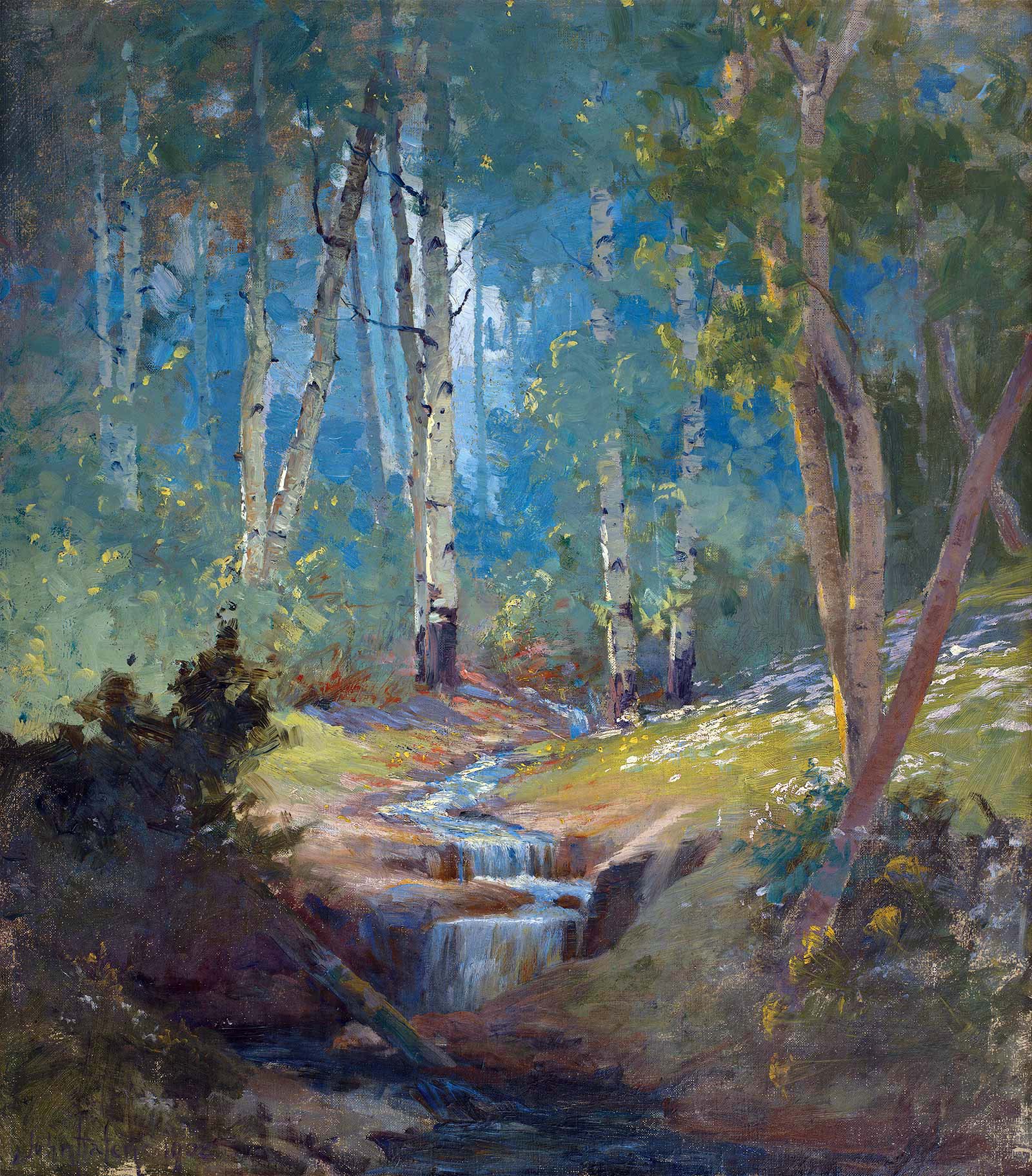
John Hafen (1856-1910), Mountain Stream, 1902. Oil on canvas, 26 x 23 in.
A gorgeous floral piece, Hollyhocks, 1909, was painted near the end of Hafen’s life while in Indiana. “Hollyhocks exemplifies his desire to evoke emotion through beauty,” Pinegar explains. “The flowers surge into the foreground—lush, leafy and luminous—commanding the viewer’s attention. The composition creates an immersive, almost transportive experience, demonstrating Hafen’s belief that beauty itself could carry meaning and emotional power.”
Pinegar notes that the exhibition is organized chronologically, tracing key periods in Hafen’s life and artistic development. “This structure allows visitors to follow his evolving style, influences and philosophies, from his early training and artistic ambitions to his mature works and lasting legacy,” she says. “Each section contextualizes Hafen’s work within the broader narrative of his personal experiences and the cultural environment in which he lived.”
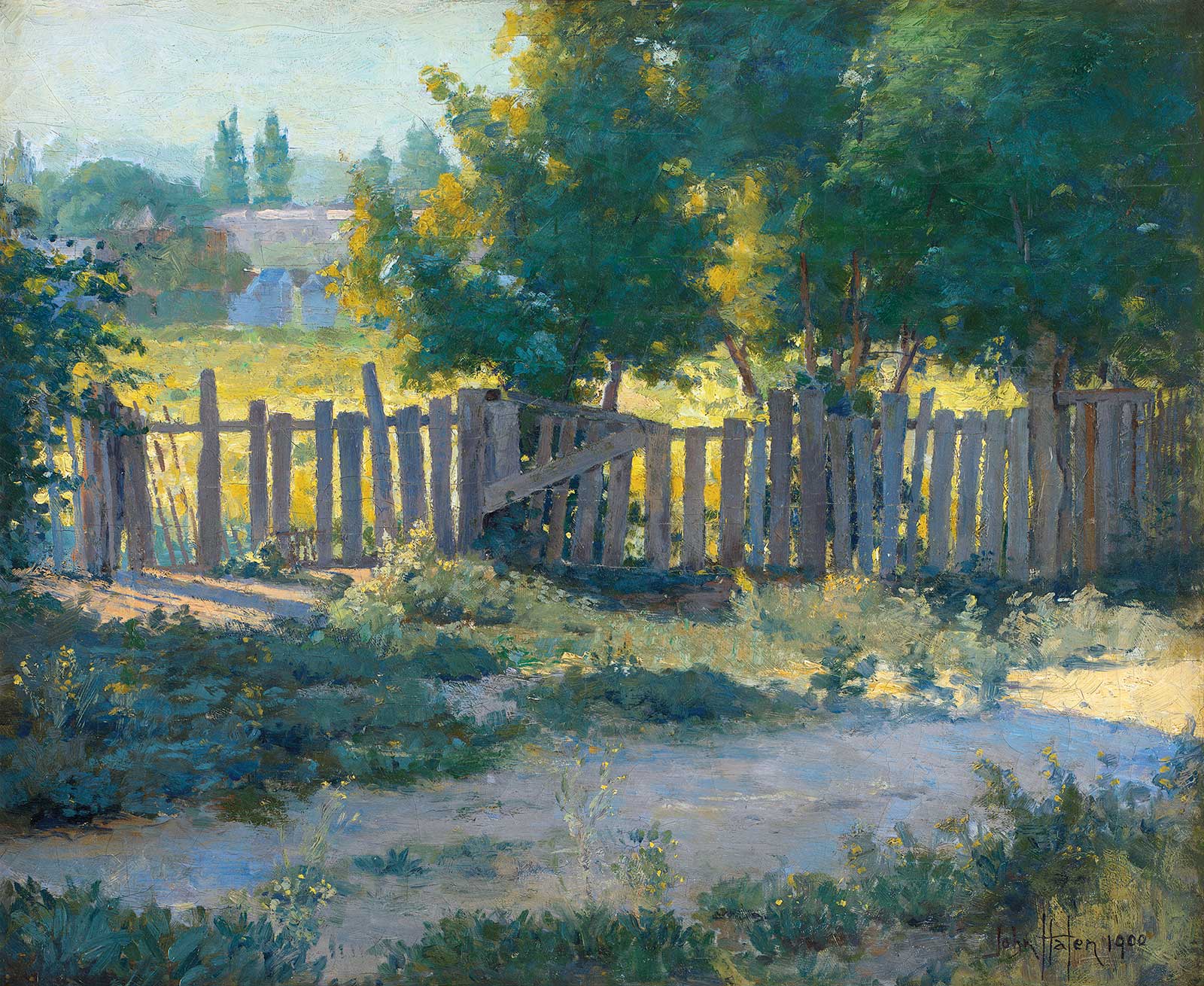
John Hafen (1856-1910), Morning Sunshine, Springville, 1900. Oil on canvas, 18 x 22 in.
Overall, Pinegar hopes this exhibition, running through July 25, encourages patrons to reflect on the enduring power of art, creativity and beauty—and to recognize their ability to improve and deepen our shared human experience. —
Powered by Froala Editor
Powered by Froala Editor