On view through May 31, Touring the Landscape: Art, Travel, and the Shaping of American Identity is a student-curated exhibition presented by the Cummer Museum of Art & Gardens that examines how late 19th- and early 20th-century artists explored American identity here and abroad through landscape painting.
“During the 19th century, as travel became easier and more accessible to a larger number of citizens, the exploration of America’s vast natural resources became a popular pastime,” says Cummer Museum chief curator Holly Keris. “As artists recorded the Adirondacks, the Rockies and Florida marshes, they not only increased the prominence of the American landscape but also taught visitors how and what to see. Dr. Fowler says, ‘Landscape painters taught Americans how to see the landscape—that is, showed them how to distinguish what was exceptional about American scenic beauty. These paintings and published images circulated widely, enabling citizens to visualize the country and establishing a sense of collective ownership of the nation.’”
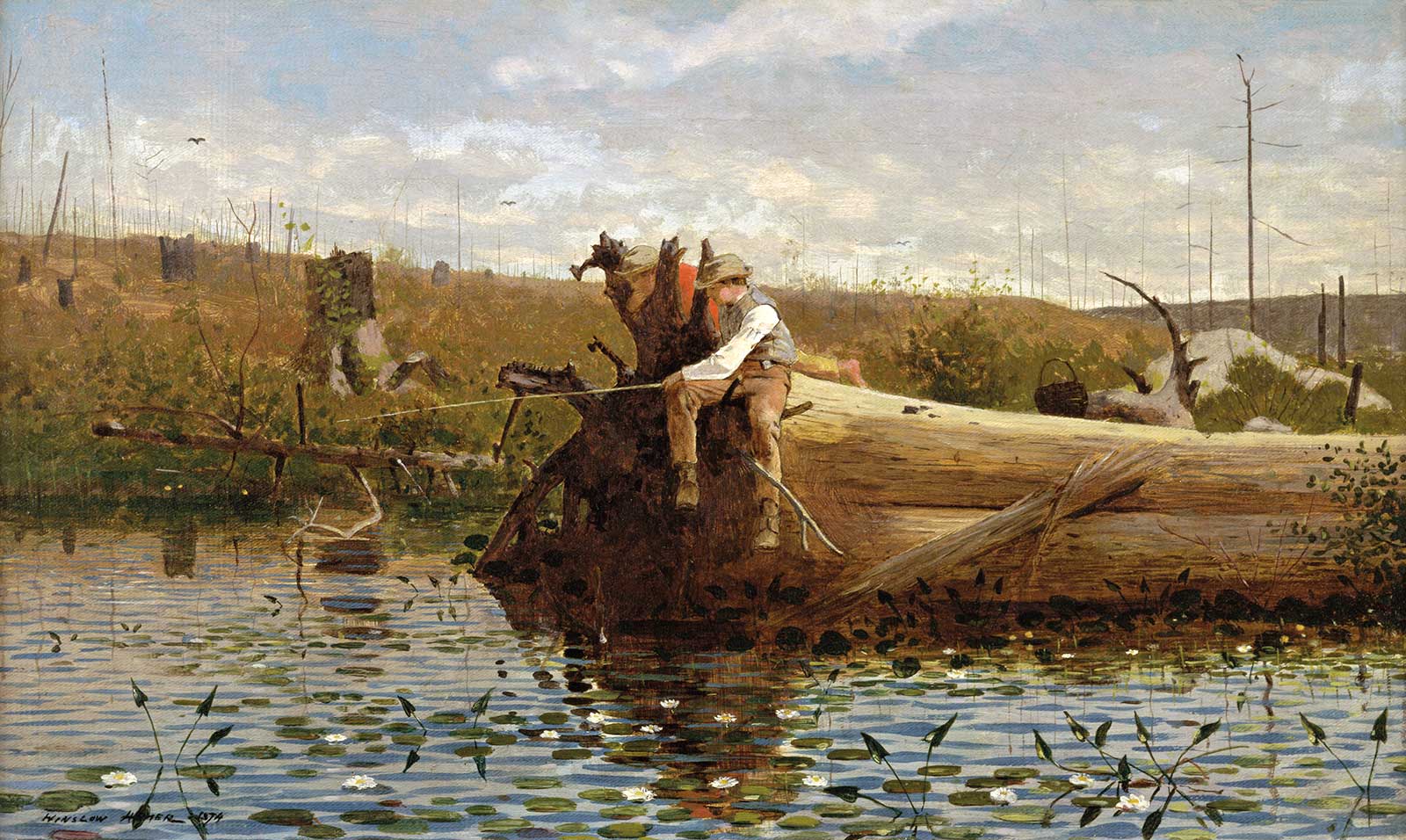
Winslow Homer (1836-1910), Waiting for a Bite, 1874. Oil on canvas, 1115⁄16 x 201⁄8 in. Bequest of Ninah M. H. Cummer, C.0.119.1.
Students in the class “Public Narratives: Museum Curation and Interpretation,” taught by University of North Florida visiting professor of art history Dr. Meg McCrummen Fowler, were tasked with creating an exhibition that showcases works in the Cummer Museum’s permanent collection in inventive ways.
“For undergraduates, co-curating an exhibition is a rare opportunity that offers meaningful experiential learning,” says Professor Fowler. “Students negotiated the real-world complexities of original research, archival work, curatorial practices and exhibition writing. They practiced the sort of collaborative curatorial work in which museum professionals engage daily. This collaboration between UNF and the Cummer Museum is an admirable example of how community-based partnerships can facilitate significant, meaningful and mutually beneficial projects.”
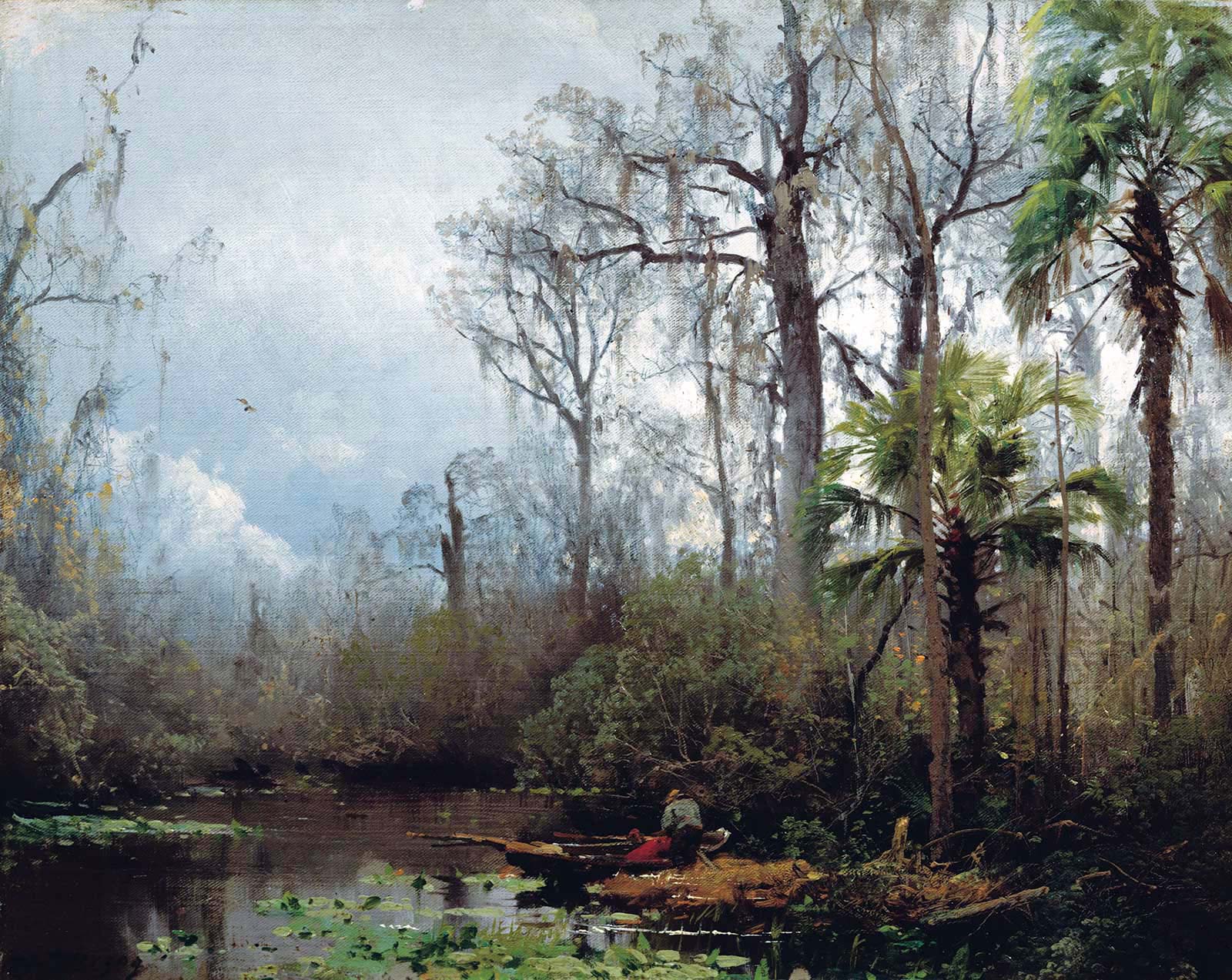
Hermann Herzog (1832-1932), Figure in a River Landscape, ca. 1910. Oil on canvas, 1513⁄16 x 197⁄8 in. Gift of Mr. and Mrs. C. Herman Terry, AG.1987.11.1.
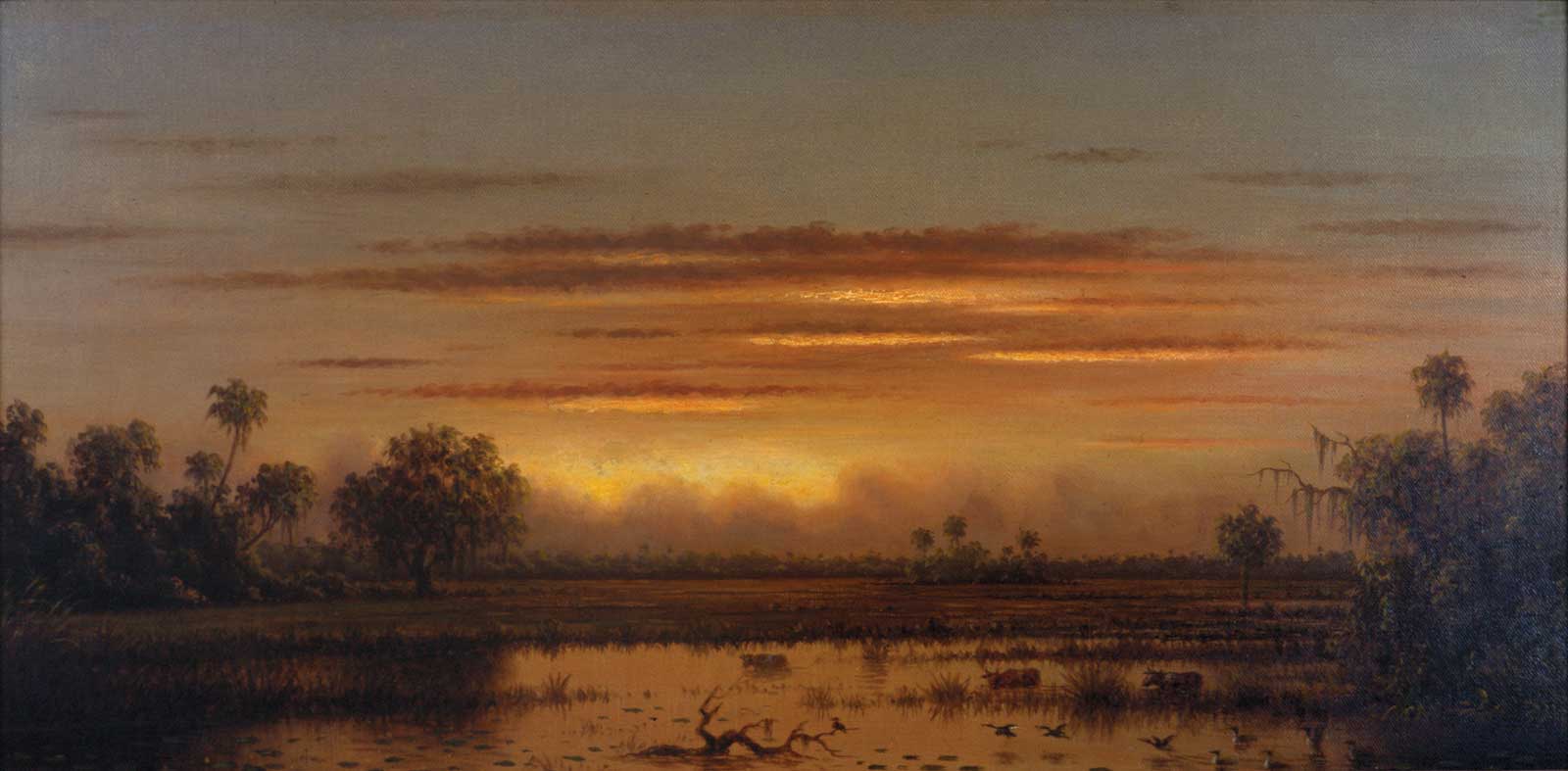
Martin Johnson Heade (1819-1904), The St. Johns River, ca. 1890s. Oil on canvas, 13 x 26 in. Purchased with funds from Membership Contributions, AP.1966.29.1.
Seventeen paintings by artists that include Jasper Francis Cropsey, Martin Johnson Heade, Winslow Homer and Hermann Herzog were selected for the show. While these works are some of the most prominent in the museum’s collection, the students’ intensive research and individual interests guided their goal to make those already familiar with them to see them through a new lens.
“The students represented a variety of majors including anthropology, art history, history and sociology,” explains Keris. “‘Dr. Fowler [their professor] writes, ‘American landscape paintings in the 19th century were deeply implicated in discussion of politics, literature, nation-building and nascent conservationism, so insights from the students’ various disciplines proved particularly apt. For example, senior Kenzie Bullen’s interest in environmentalism informed a reading of Hermann Herzog’s Figure in a River Landscape, from circa 1910, identifying nuanced difference in how tourists and locals would interact with the boggy Florida swamps at a time when many marshlands were being drained.”
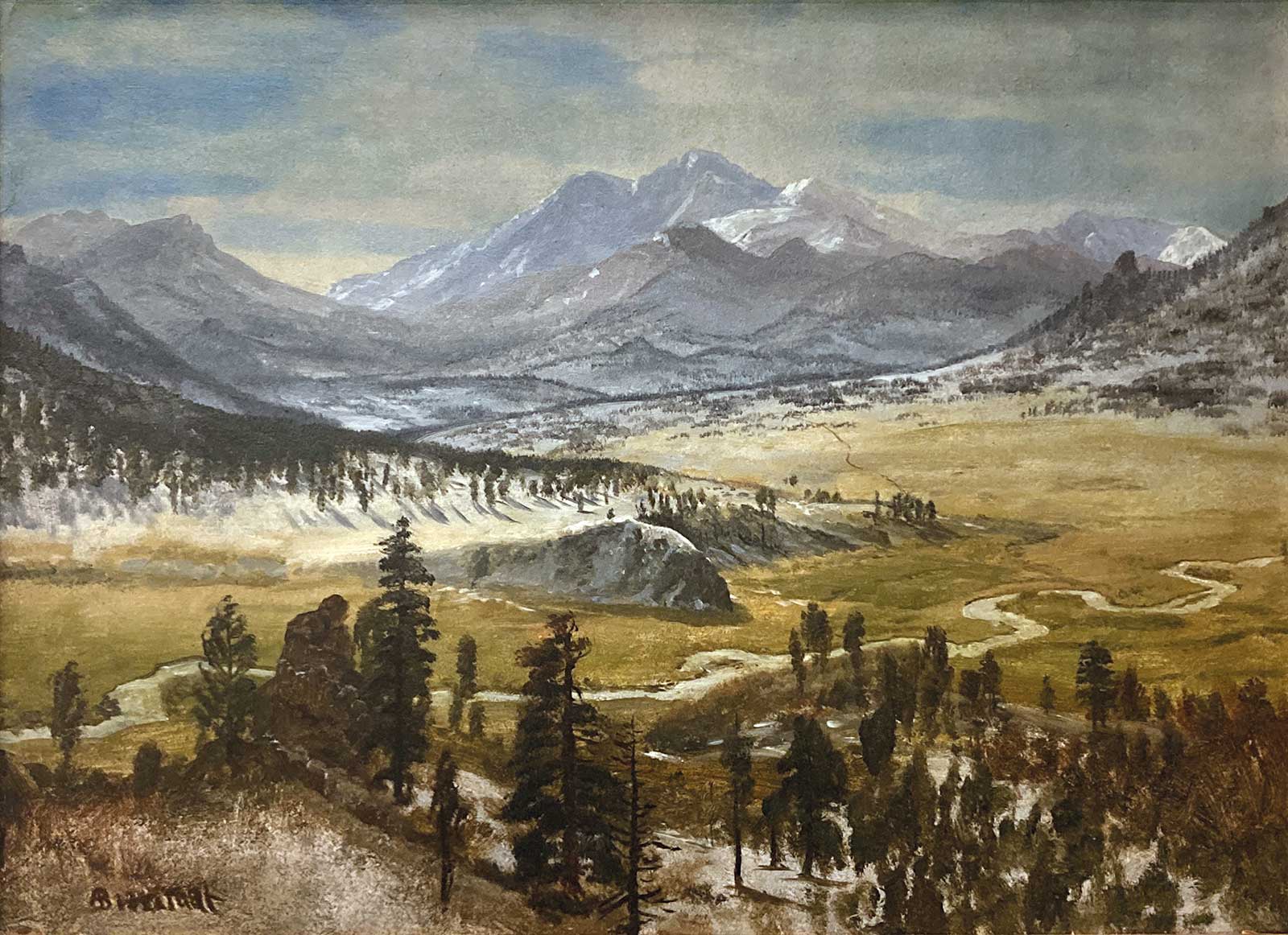
Albert Bierstadt (1830-1902), Estes Park, Colorado, ca. 1876-1877. Oil on paper mounted on canvas, 137⁄8 x 187⁄8 in. Acquired in memory of Thomas H. Jacobsen through generous contributions from family, friends and museum patrons, AP.2006.3.1.
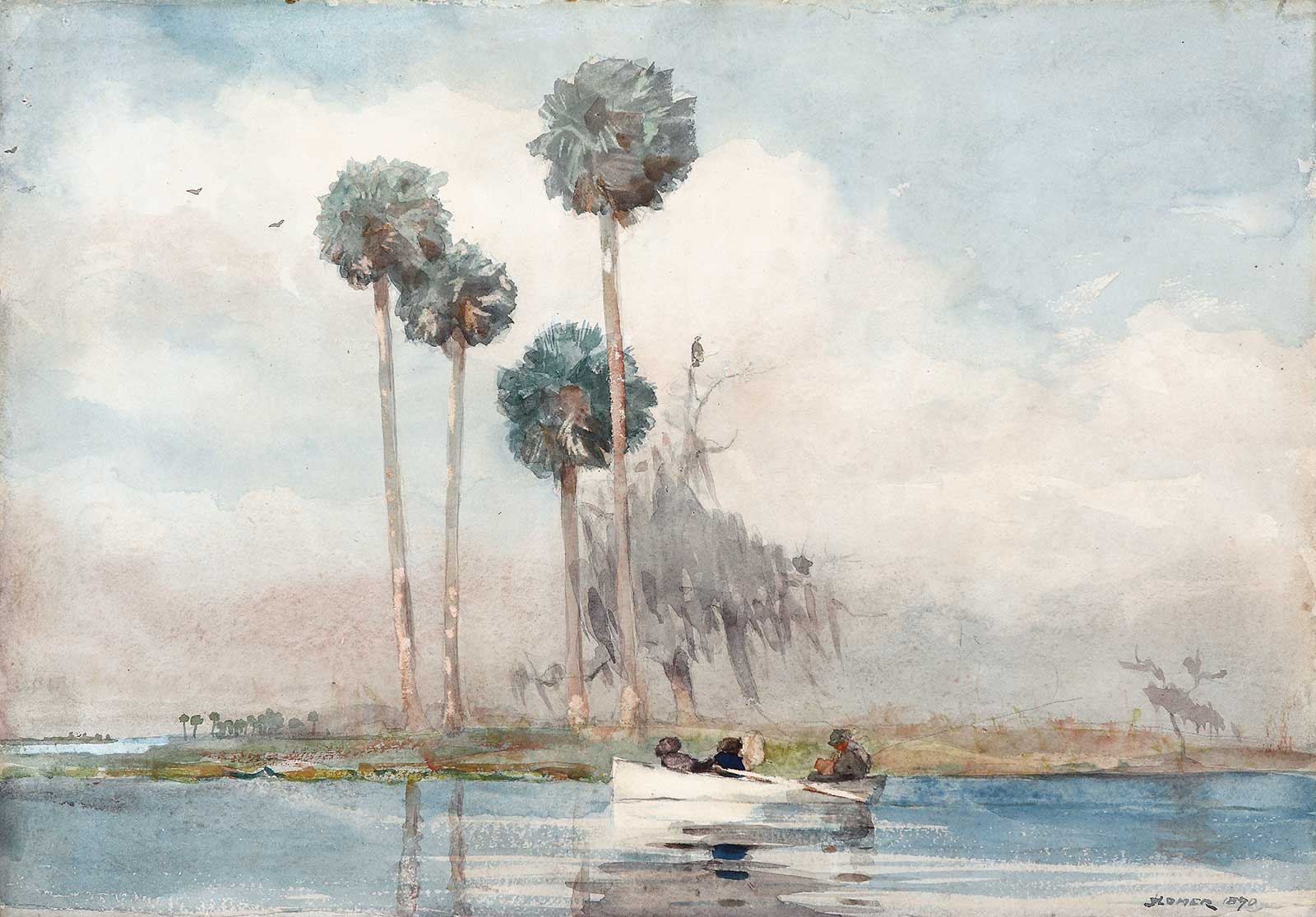
Winslow Homer (1836-1910), The White Rowboat, St. Johns River, 1890. Watercolor on paper, 14 x 20 in. Bequest of Ninah M. H. Cummer, C.0.154.1.
Other significant works in the exhibition include Homer’s 1874 painting Waiting for a Bite. It depicts a decimated landscape, presumably a response to the literal and figurative scars of the recent Civil War. “However, the two young boys fishing off a fallen log provide a sense of hope and renewal in the aftermath of the violent conflict,” adds Keris. “Interestingly, Homer published this scene as an engraving in Harpers Weekly, but it shows a lush and fertile landscape.”
Heade, who was intrigued by Florida’s subtropical climate, painted several scenes of the St. John’s River. His 1890s oil captures the humid haze of the region and its sultry sunset tones. John Frederick Kensett (1816-1872) takes us to Rhode Island with Marine View of Beacon Rock, Newport Harbor, 1864. The serene sail boat scene reveals his own fascination with the rocky shores of New England, having made a departure from the dramatic landscapes in the style of Thomas Cole in the 1850s to quieter, more contemplative works like this example.
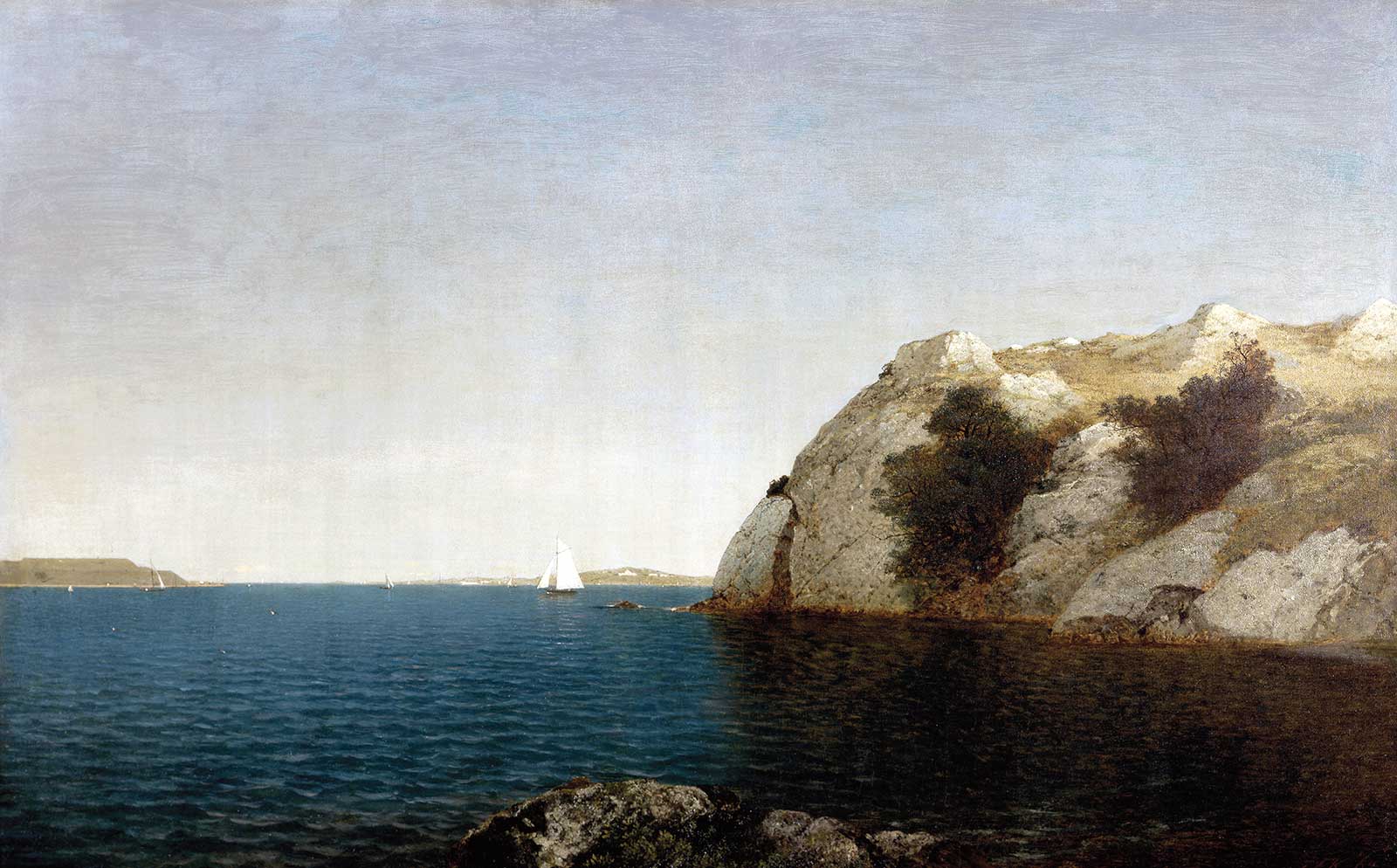
John Frederick Kensett (1816-1872), Marine View of Beacon Rock, Newport Harbor, 1864. Oil on canvas, 28½ x 45¾ in. Bequest of Ninah M. H. Cummer, C.0.157.1.
Keris hopes that those who experience the exhibition “leave with a deeper understanding of American history, the power of the visual arts in shaping shared meaning, and an appreciation for how museums use historical art to spark conversations that resonate today. For visitors within our Northeast Florida community, many of the included paintings are already well known, but there’s power in looking, and looking again, at old favorites to gain new context.” —
Powered by Froala Editor
Powered by Froala Editor