As a teenager growing up in Brooklyn, Rick Friedman would hang out at Yankee Stadium in the morning hoping to meet the players and get their autographs. One day, one of the players, Jimmy Lyttle, invited him into the stadium and gave him the job of throwing balls back during batting practice. He became a ballplayer himself in high school, college and with top semi-pro teams, ultimately trying out with the New York Yankees, Kansas City Royals and Philadelphia Phillies.
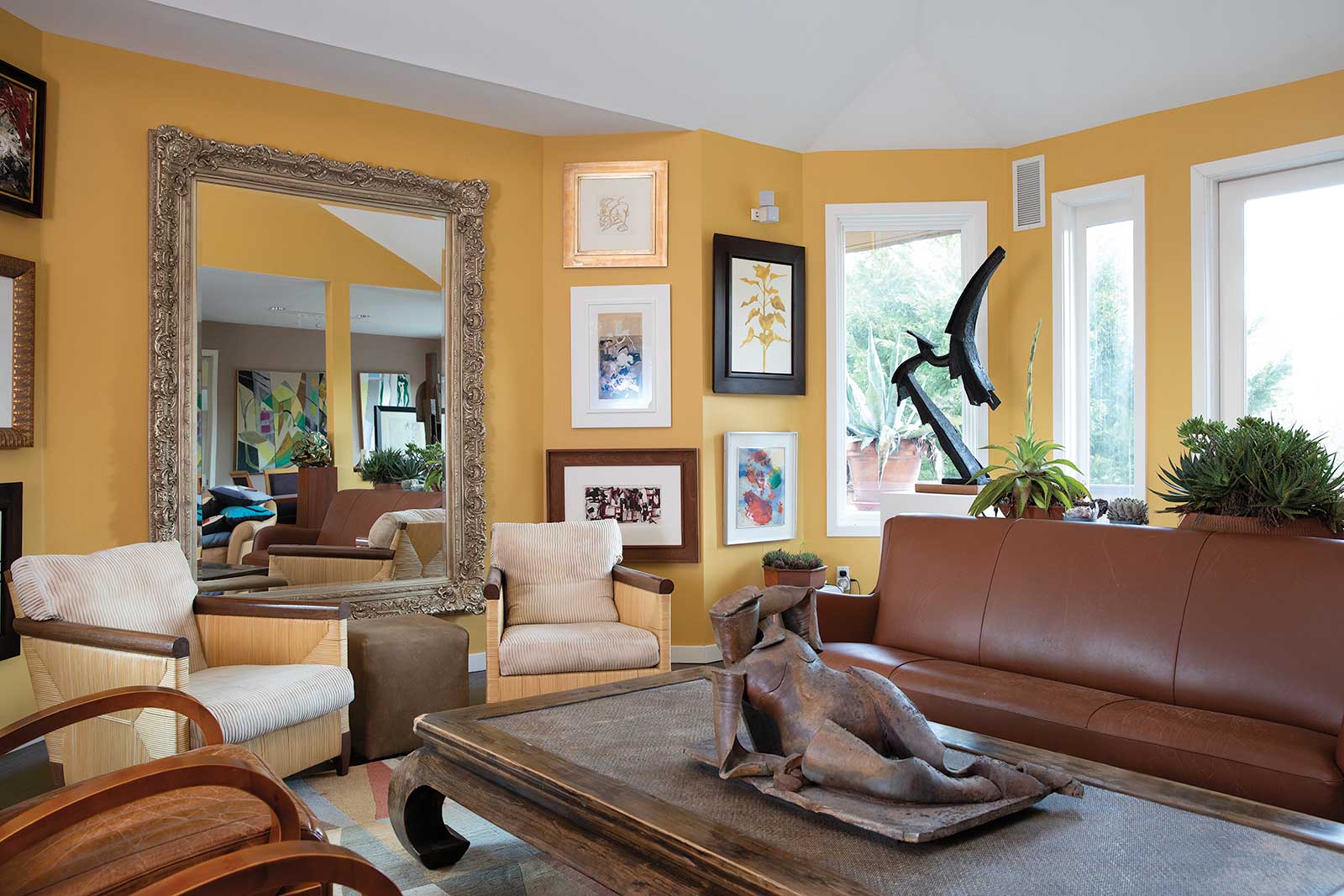
To the right of the mirror are (top to bottom) Psychoanalytic Series, 1939-40, ink on paper, by Jackson Pollock (1912-1956); Untitled, 1946-48, ink and gouache on paper, by Mark Rothko (1903-1970); Untitled, 1943, watercolor on paper on canvas, by Ad Reinhardt (1913-1967). On the adjoining wall are (top to bottom) Leaf Stem, 1957, watercolor on paper on canvas, by Ellsworth Kelly (1923-2015), and Blue and Red with Green, 1962, oil on canvas, by Hans Hofmann (1880-1966). By the window is a bronze sculpture, 1964, by Herbert Ferber (1906-1991). On the coffee table is Pot Ladies, 2000, steel sculpture, by Sir Anthony Caro (1924-2013).
That love of baseball later led him to collecting baseball memorabilia. At one time he had one of the largest collections of Hall of Fame player game-used bats. His collection of bats, autographed balls, gloves and other artifacts, now resides in the basement of his Long Island home. He often furnishes the National Baseball Hall of Fame and Museum in Cooperstown, New York, with baseball paintings by famous artists such as Alexander Calder, Saul Steinberg and Elaine de Kooning.
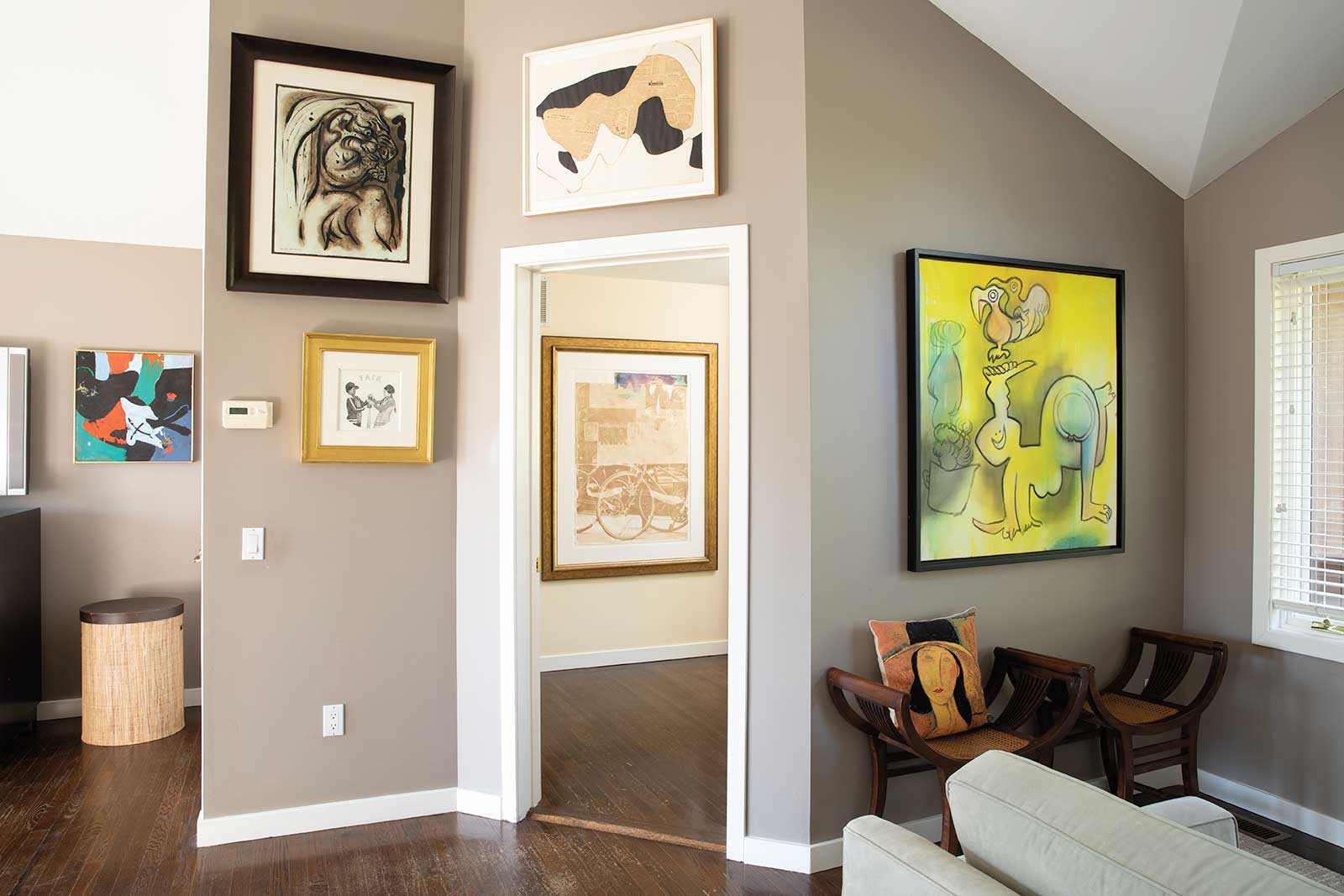
On the far left is Hone, 1973, acrylic on canvas by James Brooks (1906-1992). To the left of the doorway are (top to bottom) The Force, 1944, watercolor on paper by André Masson (1896-1987), and Fair, 1977, pencil on paper, by Norman Rockwell (1894-1978). Above the doorway is Untitled, 1973, oil on canvas, collage, by Conrad Marca-Relli (1913-2000). In the adjoining room is Untitled, 1992, vegetable dye, oil on paper by Robert Rauschenberg (1925-2008). On the right is, Les Dangers Interieurs, 1974, oil on linen, by Sebastian Roberto Matta (1911-2002).
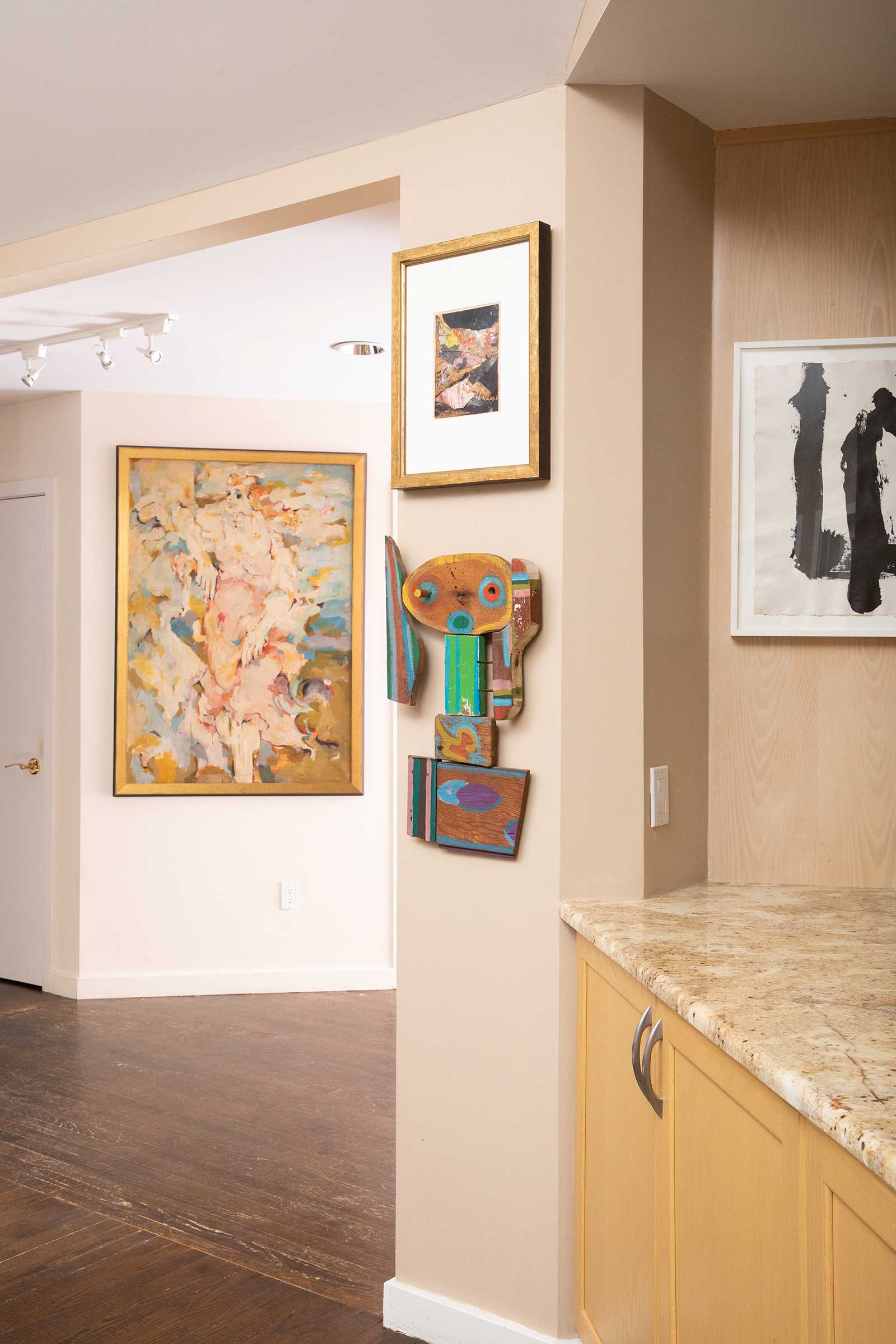
On the far wall is Waiting for Ulysses, 1952, oil on canvas by Audrey Flack (1931-2024). In the center are (top to bottom) The Amarillo, 1954, oil, collage on paper by Alfred Leslie (1927-2023), and The Crow’s Eye, 1976, wall sculpture, found beach wood, oil paint, nails, by Betty Parsons (1900-1982). On the right is Untitled, 1975, ink on paper by Robert Motherwell (1915-1991).
Friedman moved to the South Fork of Long Island in 2005 after a career as a serial entrepreneur from pioneering advanced software technology in the 1990s to owning ShowBiz Expo in Los Angeles, the largest convention for filmmakers in the world. In the 1970s, he created, directed and hosted televised disco dance competitions at Regine’s night club in New York. The program was sold to Merv Griffin Enterprises and became the format for the syndicated TV show Dance Fever.
On Long Island Friedman discovered fine art, purchasing his first piece when he was 50 and, subsequently, over 20-plus years, amassing a collection of more than 300 museum-quality works of mid-century art. Having started the exhibition Art Hamptons at the suggestion of his partner Cindy Lou Wakefield, he is now president of Hamptons Fine Art Fair. Its 20th edition will be held July 9 through 12 at the Southampton Fair Grounds in the Pollock and de Kooning Luxury Pavilions, honoring the many Hamptons’ 1950s- through 1970s-era artists and pioneers of Abstract Expressionism.

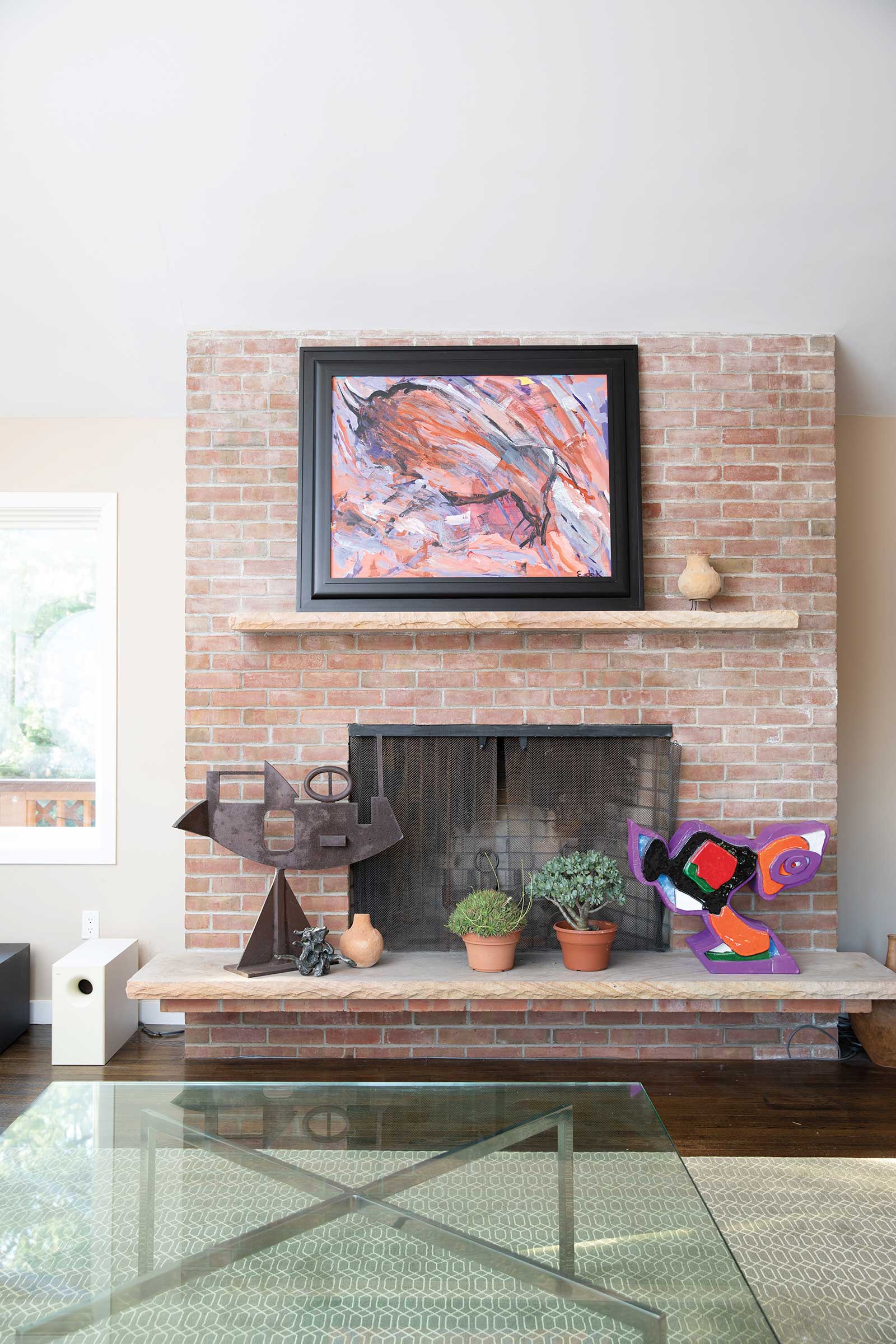
Above the mantel is Cave No. 24, ca. 1958, acrylic on paper on canvas by Elaine de Kooning (1918-1989). On the hearth are (left to right), a steel sculpture, 1960, by Wilfrid Zogbaum (1915-1965); a metal maquette, Woman, ca. 1975, by Willem de Kooning (1904-1997); and Violet Bird, 1974, painted ceramic by Karel Appel (1921-2006).
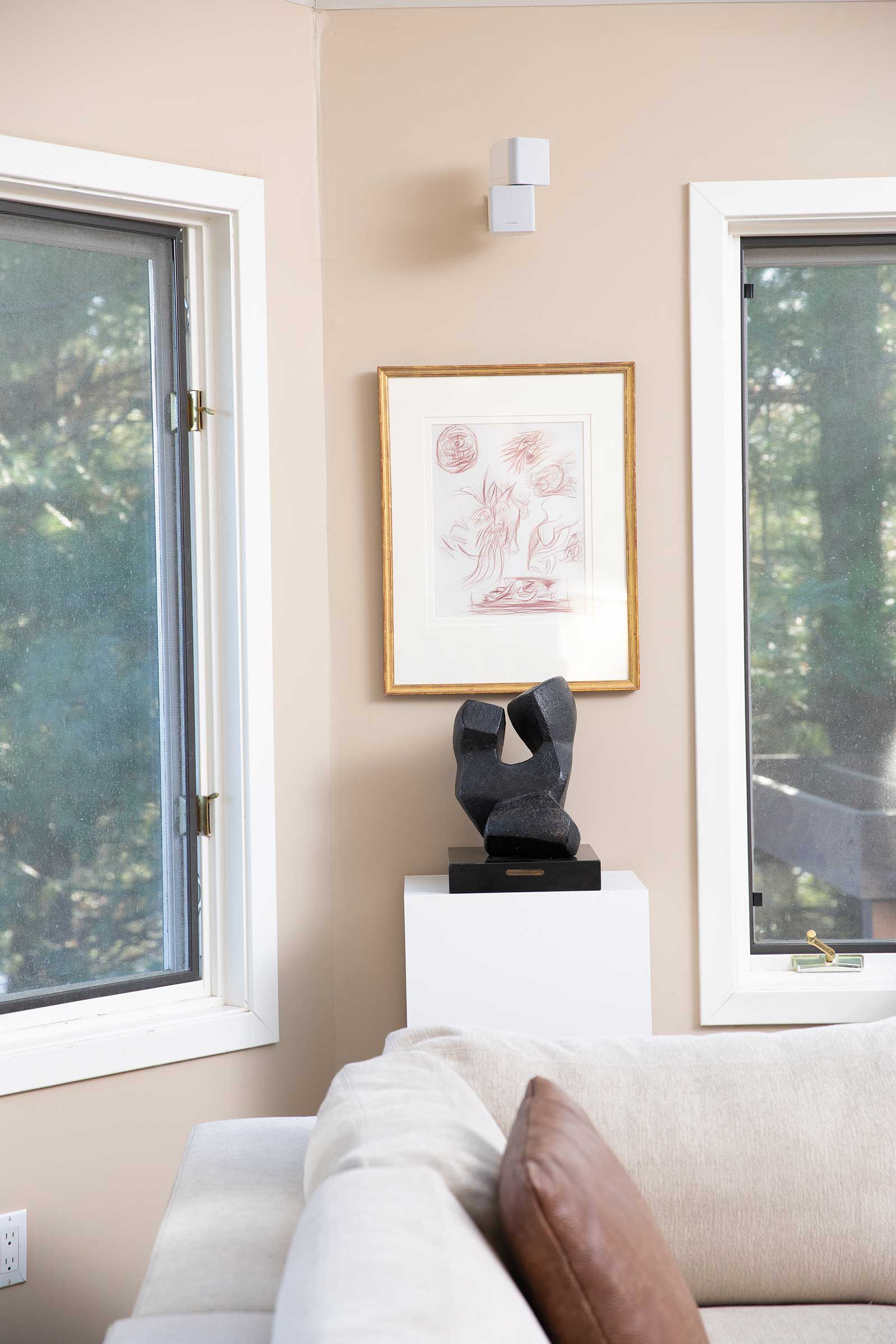
Psychoanalytic Series, ca. 1939-40, red pencil on paper by Jackson Pollock (1912-1956) hangs above, Abstract Sculpture, 1945, painted ceramic, by Louise Nevelson (1899-1988).
Friedman’s first art purchase was a Roy Lichtenstein print which he bought at Guild Hall in East Hampton for $2,000. “I had severe buyer’s remorse,” he recalls, “and didn’t sleep for three nights for fear I’d overpaid. But I loved it.”
He says, “I didn’t know what I wanted. I was reading magazines and researching artists of the Hamptons. I stared collecting ‘local’ artists but didn’t know how famous those local artists were.” He and Wakefield’s first date was over coffee to talk about many things, including Jackson Pollock. Wakefield had been doing some freelance writing for the Pollock-Krasner House and Study Center in East Hampton. She suggested he read Hamptons Bohemia: Two Centuries of Artists and Writers on the Beach, which Helen Harrison from the Pollock-Krasner House had written. Harrison’s co-author is Constance Ayers, and the foreword was written by Edward Albee.
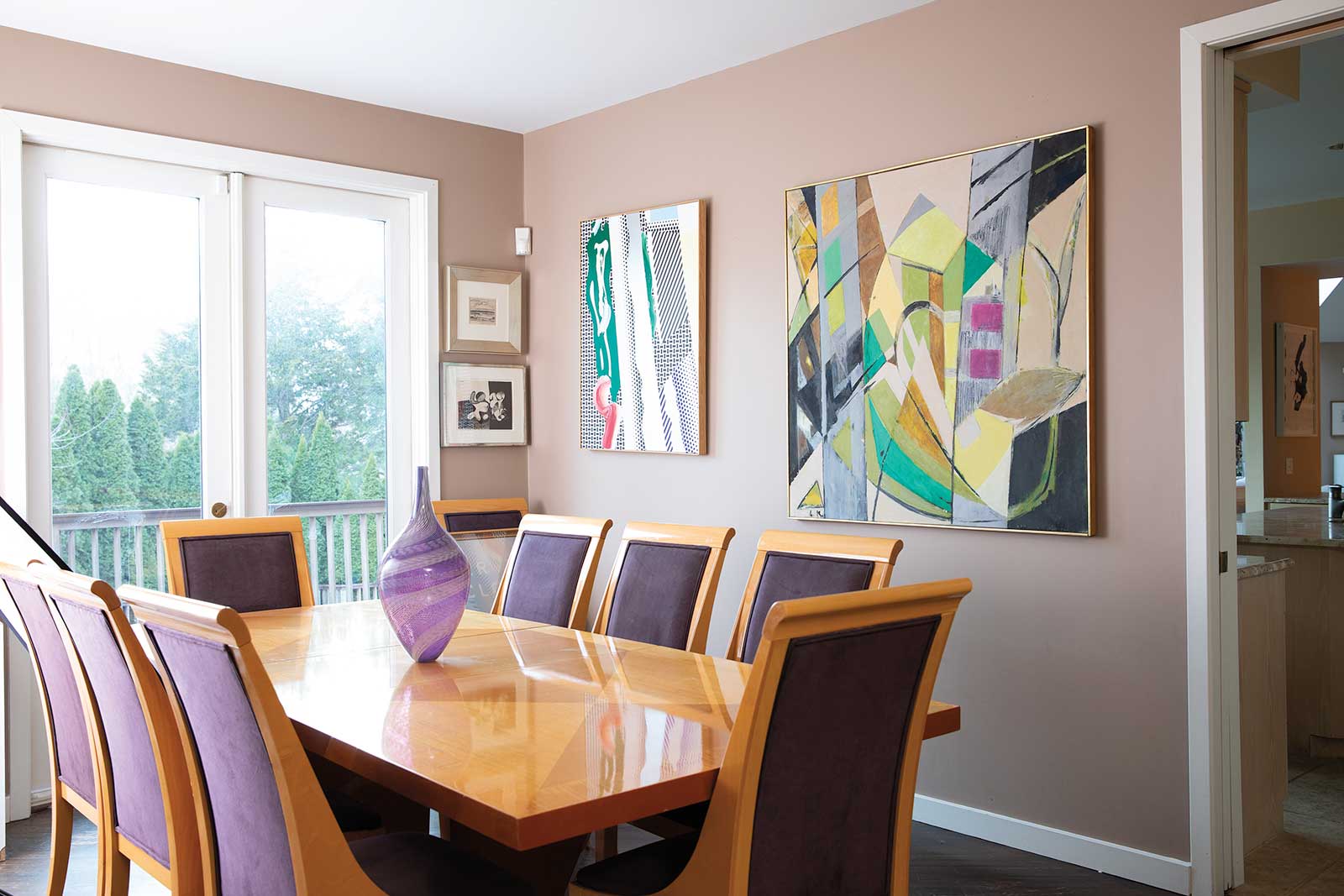
To the right of the window are (top to bottom) Study for Seascape with Clouds, 1963, colored pencil on paper, by Roy Lichtenstein (1923-1997), and Untitled, (2 Figures), 1936-38, ink on paper by Arshile Gorky (1904-1948). On the adjoining wall are (left to right) Lichtenstein’s Reflection, 1979, oil and graphite on canvas, and Outcast, 1956, oil on canvas by Lee Krasner (1908-1984).
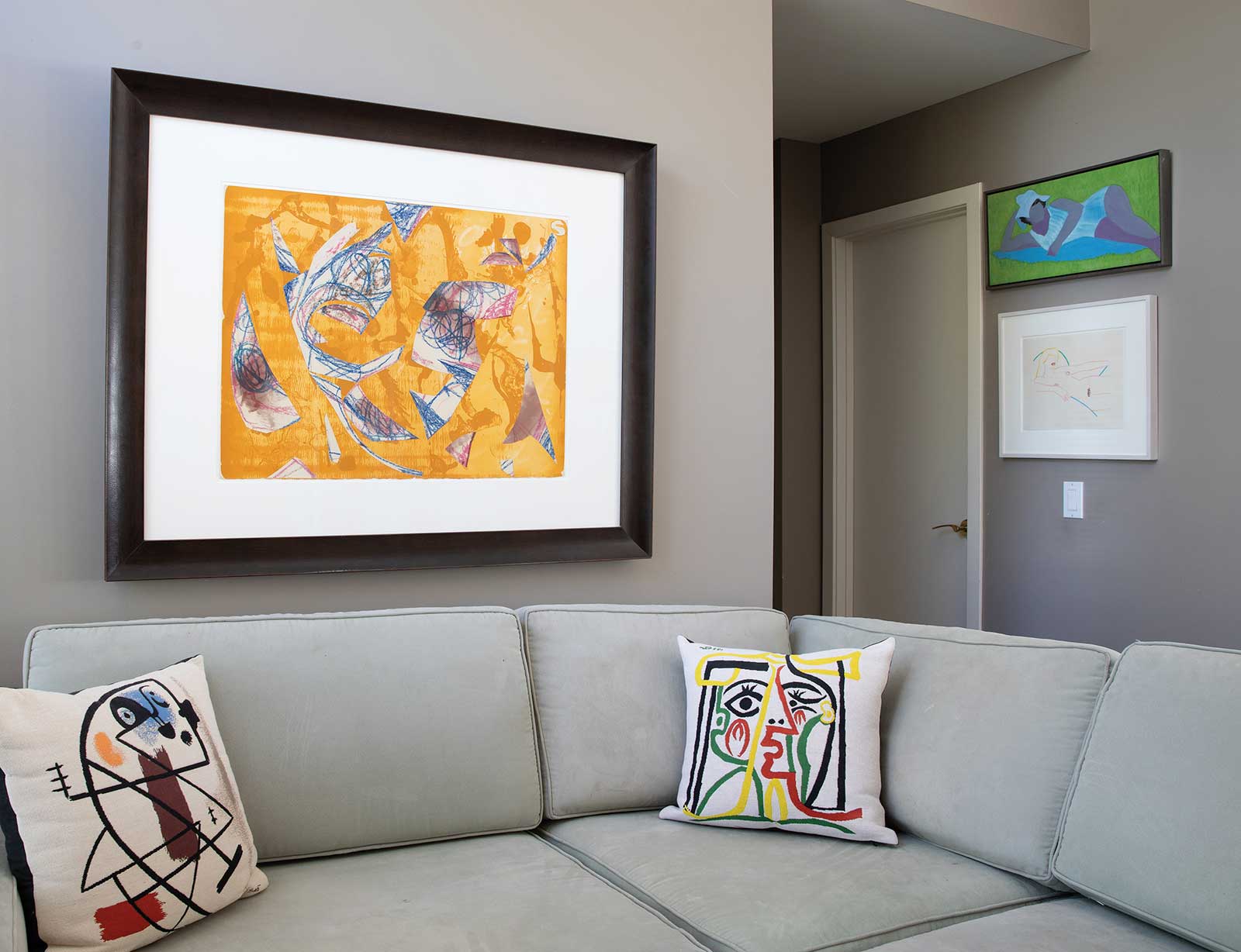
Above the sofa is September Twenty-third, 1980, torn 1960s pastel artwork on acrylic background on paper, by Lee Krasner (1908-1984). In the hallway are (top to bottom) Resting on the Green Grass, 1968, oil on canvas, by March Avery, and Study for Kate Nude, 1984, Liquitex on paper, by Tom Wesselmann (1931-2004).
Friedman now has six Pollocks, pre-drip paintings, including several from the Psychoanalytic Series,1939-40, produced when Pollock was undergoing Jungian analysis. Since he had difficulty expressing himself verbally, his analyst suggested that he do drawings and bring them to their sessions. The 83 drawings contain human figures, animals, cryptic figures and abstract forms. Pollock said, “I’m a little representational all the time. But when you’re painting out of your unconscious, figures are bound to emerge.”
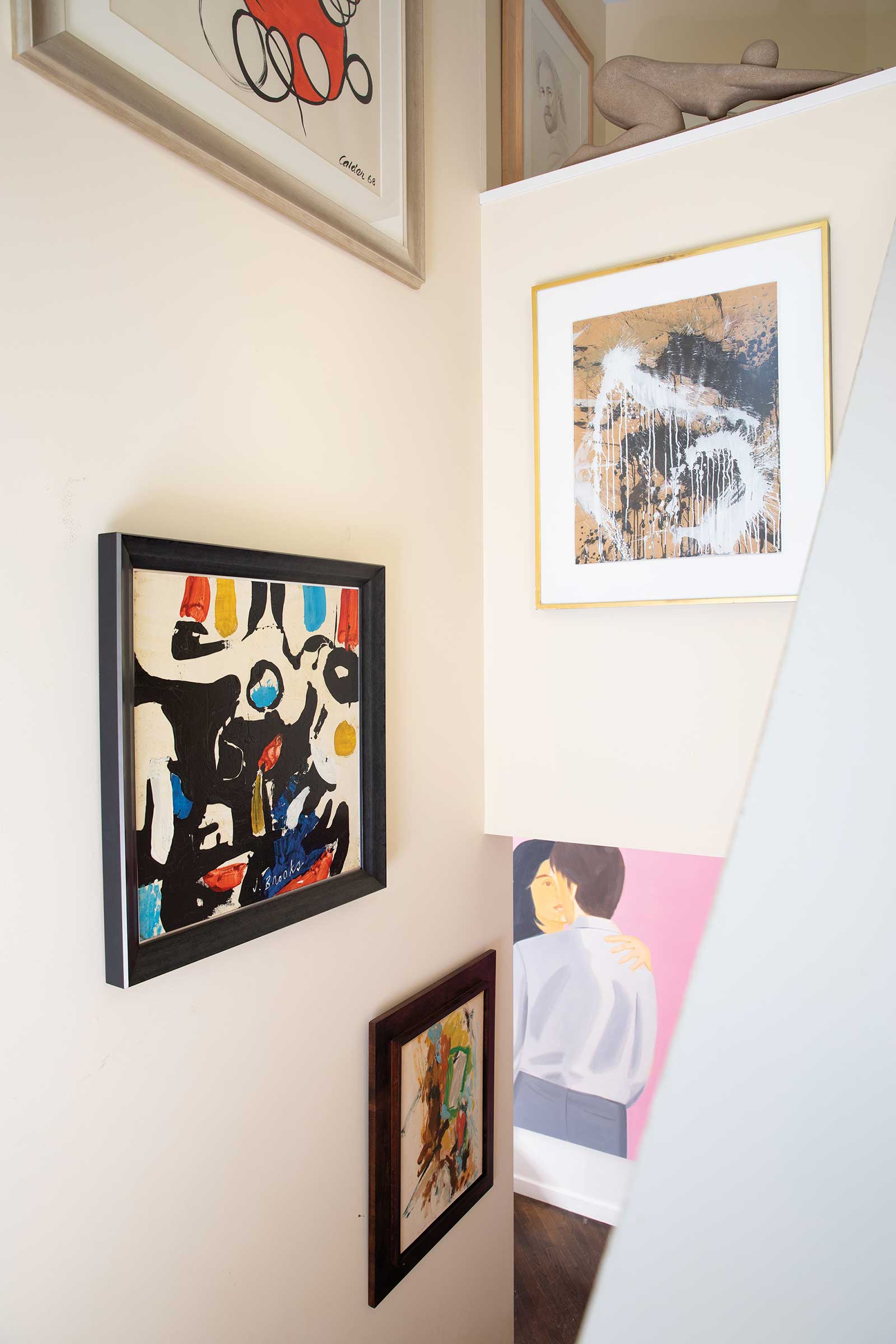
In the stairwell are (top to bottom) From Peace Tower, 1966, paint on board by James Brooks (1906-1992), and Untitled, 1960, oil on canvas by Herman Cherry (1909-1992). On the right, above, is Untitled, 1961, oil on paper Norman Bluhm (1921-1999). At the bottom is a partial view of the 12-foot New Pink, 2005, oil on canvas by Alex Katz.
Determining the authenticity of an historic piece has sometimes turned into an adventure. When Friedman purchased a Matisse drawing, Wakeman asked, “How do you know it’s real?” They made arrangements with Wanda de Guebriant, the foremost Matisse expert and authenticator, who could authenticate the piece, put it in an attaché case and took off for Paris. As they waited in the parlor, the scholar went upstairs to examine the drawing under a microscope. She returned to tell them it was authentic. Friedman asked about the building they were in and was informed, “Matisse’s house, naturally.”
Another Parisian adventure involved his purchasing a Picasso drawing. He wanted to take it home immediately but it was declared a national treasure and couldn’t leave the country without museum committee approval. Many months later, the approval was granted, he received the drawing and hung it on the wall. The next day he received an email from Sotheby’s that the Musée National Picasso-Paris wanted to borrow it for an exhibition.
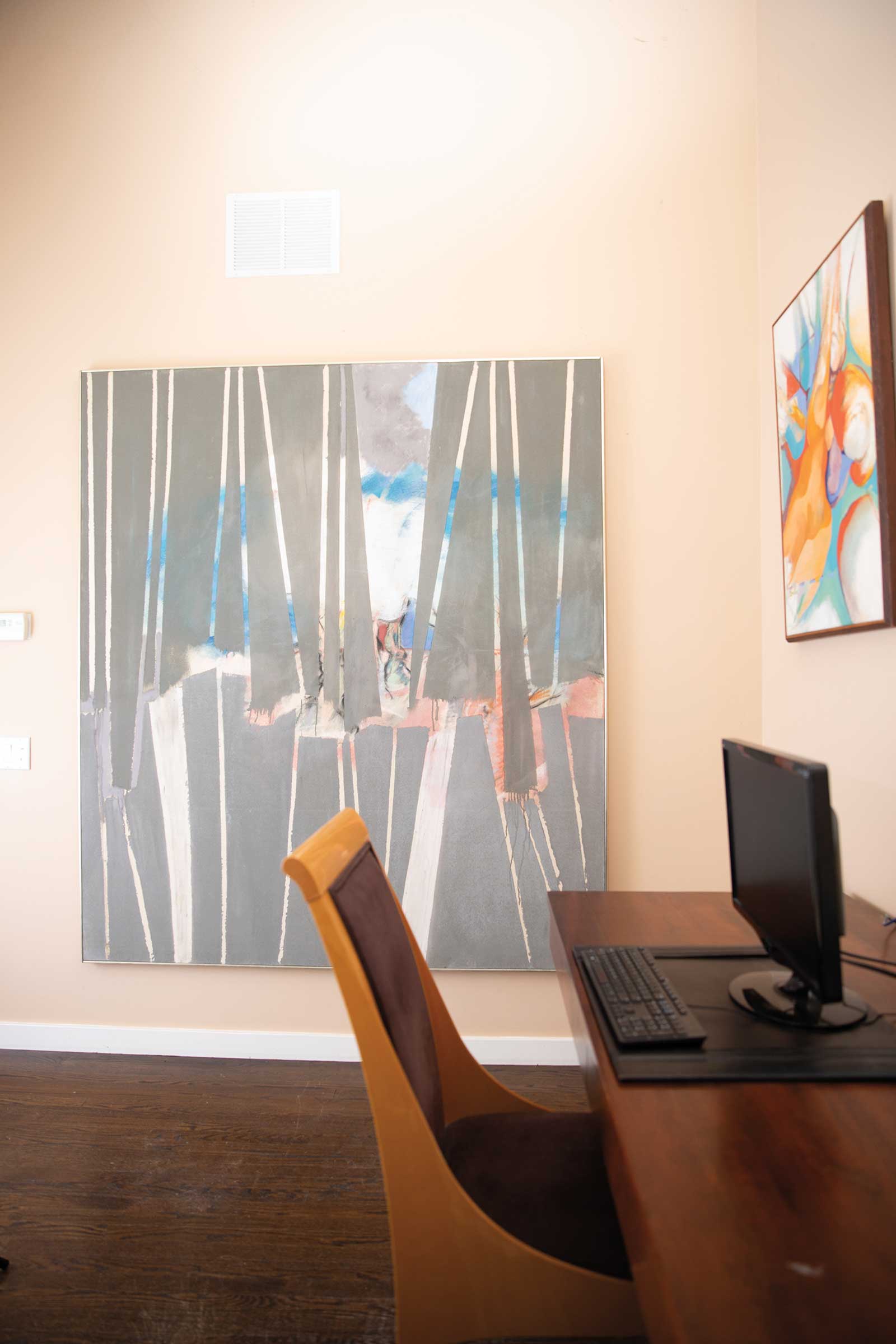
Southampton Bypass, 1966, oil on canvas, by Michael Goldberg (1924-2007) hangs in the office adjacent to Untitled, ca. 1948, oil on canvas, by Bradley Walker Tomlin (1899-1943).
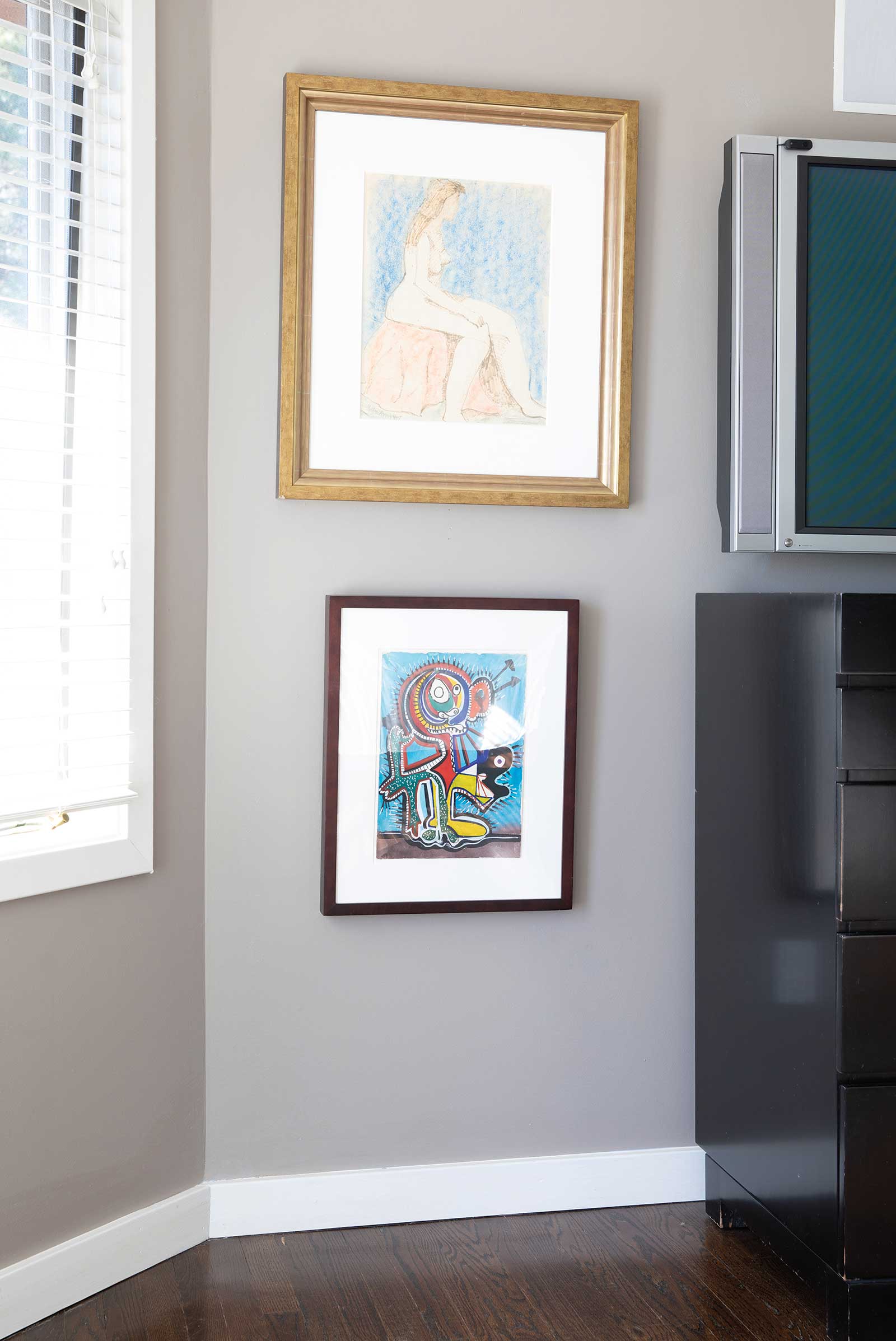
Seated Nude (March Avery), 1957, crayon and ink on paper, by Milton Avery (1885-1965) hangs above Figure with Arrow, 1939, gouache and watercolor on paper, by William Baziotes (1912-1963).
In the 1940s to the 60s, the East End of Long Island was a quiet place of fishermen hauling their nets, people catching crabs in the creeks and farmers tending their potato crops. Its bucolic environment attracted artists of the Abstract Expressionist movement like Pollock, Lee Krasner, Willem de Kooning, Robert Motherwell, Elaine de Kooning, Grace Hartigan, James Brooks and Esteban Vicente. It also attracted lesser-known but equally talented artists.
Friedman and Wakefield have concentrated on collecting the female artists who were often overshadowed by their male counterparts. Friedman recalls Corinne Michelle West, who was one of Hans Hofmann’s first students at the Art Students League, being advised by her close friend Arshile Gorky to change her name to Michael West to be taken more seriously.
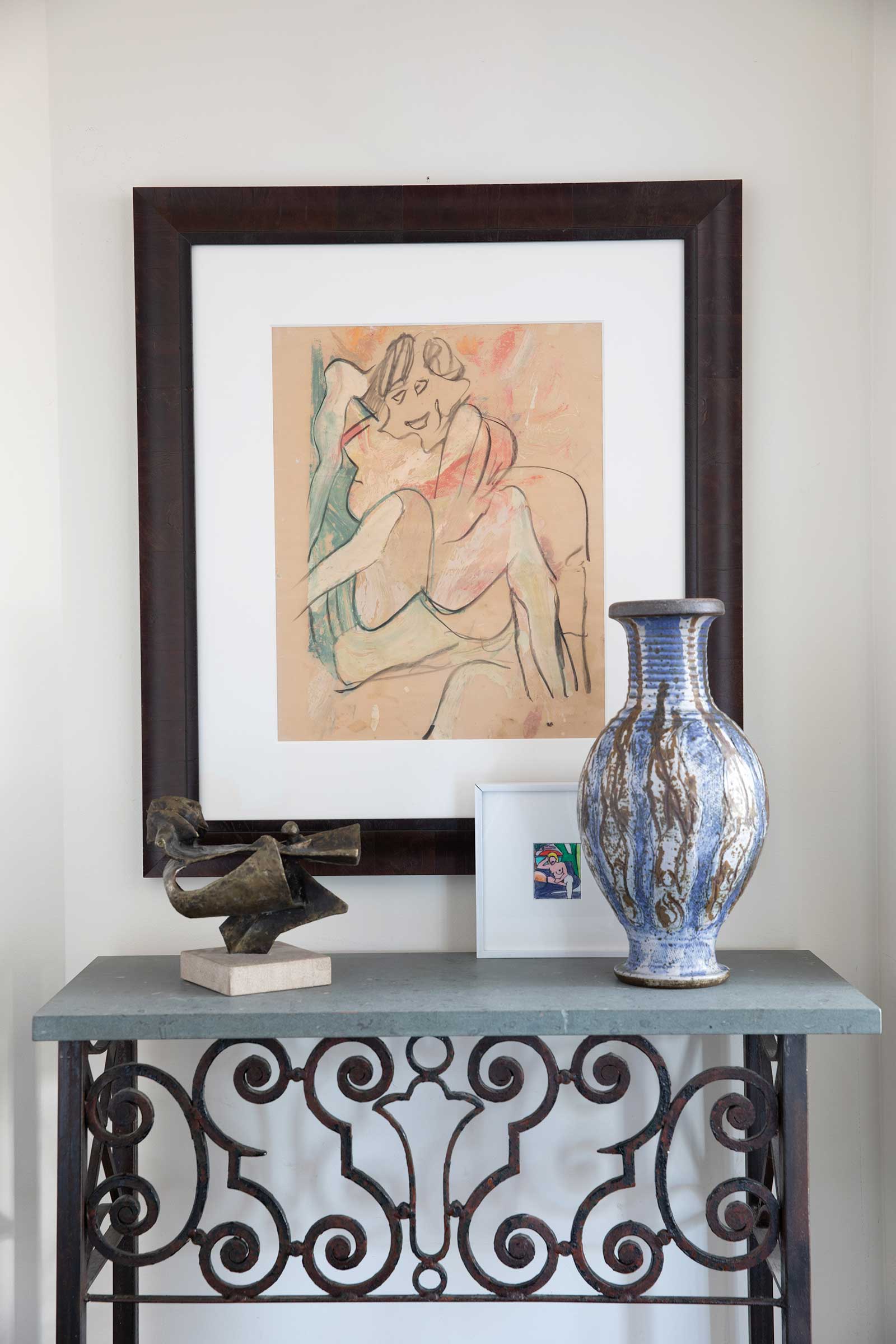
Woman, 1964, acrylic on paper, by Willem de Kooning (1904-1997) hangs above (left to right) Voyager, ca. 1960, by Seymour Lipton (1903-1986); Study for Sunset Nude, 2002, ink and pastel on paper, by Tom Wesselmann (1931-2004); and a ceramic vase, 1955, by Peter Voulkos (1924-2002).
From March 21 through July 12, Nassau County Museum of Art in Roslyn, New York, will observe the country’s 250th anniversary with the exhibition 250 Years of Art on Long Island. “The Trailblazers of Hamptons Abstraction” will be a featured room in the exhibition with paintings from Friedman’s and Wakefield’s collections. Friedman explains, “The exhibit will be a survey of the leading mover and shaker artists on the East End of Long Island in the 1950s through the1970s, an era that pioneered, developed and promoted the famed Abstract Expressionist movement, which is considered the nation’s great contribution to the art world.” At the same time, the museum will show the exhibition National Pastime: The Baseball Show, with items from his collection.
At the Hamptons Fine Art Fair, Friedman and Wakefield will show additional works from their collections to 12,000 guests as a complement to the museum’s exhibition The Trailblazers of Hamptons Abstraction.
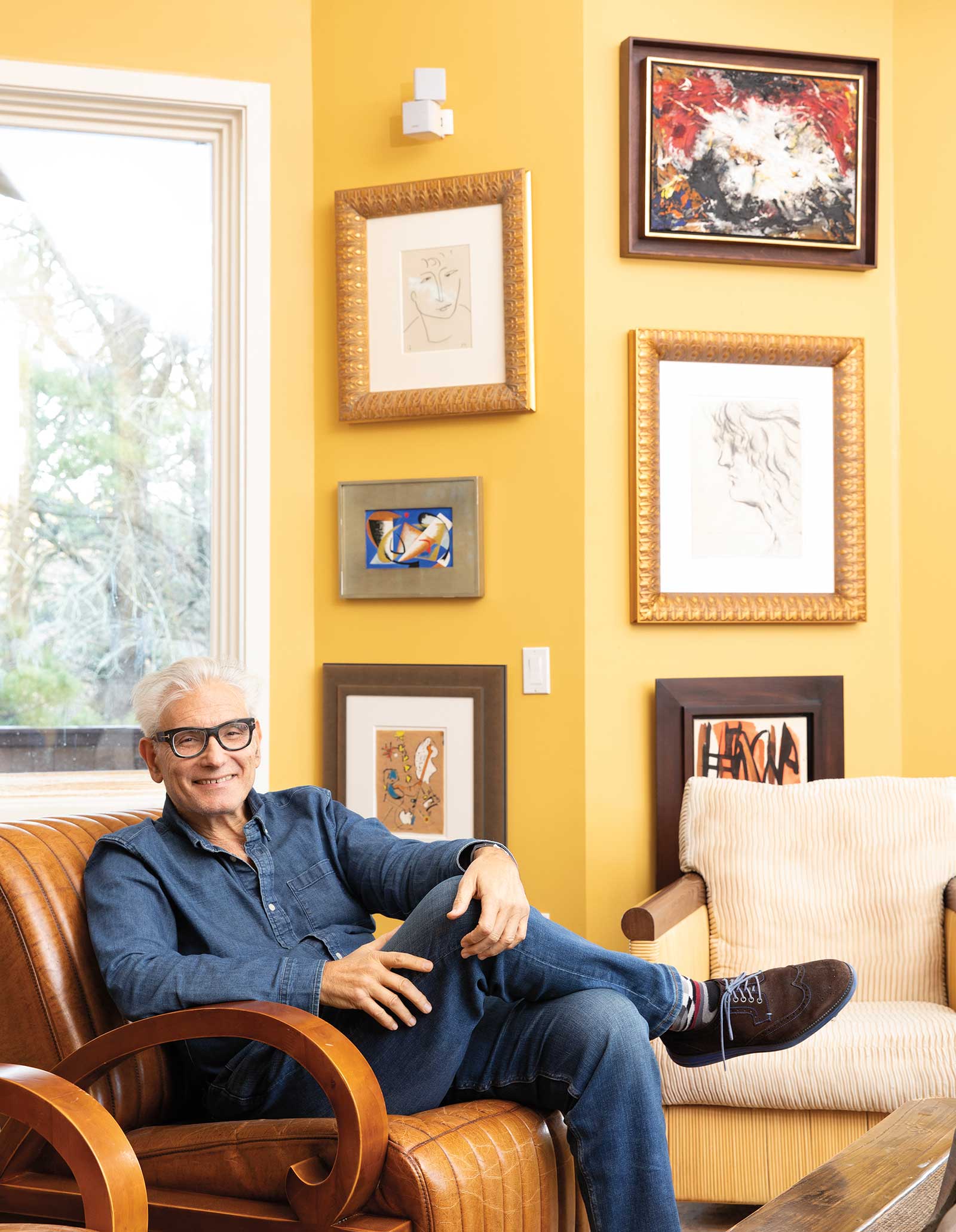
Rick Friedman sits beneath (top to bottom) Face, ca. 1955, ink on paper, by Henri Matisse (1869-1954); Gouache, #5, 1942, gouache on board by Lee Krasner (1908-1984); and Untitled, 1943, black ink and gouache on purple paper, by Jackson Pollock (1912-1956). On the adjoining wall are (top to bottom) Untitled, 1958, oil on board, by Alfonso Ossorio (1916-1990); Untitled, 1976, charcoal on paper, by Cy Twombly (1928-2011); and Untitled, 1948, oil, watercolor, paper collage on paper on canvas, by Elaine de Kooning (1918-1989).
Friedman advises collectors, “You can start collecting at any age. You don’t have to have a lot of money and can find good work for under $5,000. I suggest buying a prominent, striking piece from an undervalued, overlooked artist if you like the piece. When that artist gets ‘rediscovered’ you are golden. But you must see the potential. Sometimes, you just have to be lucky.
“When I get up in the morning I feel like I’m in a museum. I’m so honored to be in the company of so many of the greatest artists especially those who knew each other and worked here in the Hamptons. They continue to socialize within my house.” —
Powered by Froala Editor