
In his acclaimed 1826 treatise on cabinetmaking, English architect Peter Nicholson observed, “in the construction of objects, our first and chief consideration is utility; but when our actual wants are fully supplied, we naturally seek further gratification in their varied forms and external ornaments.”
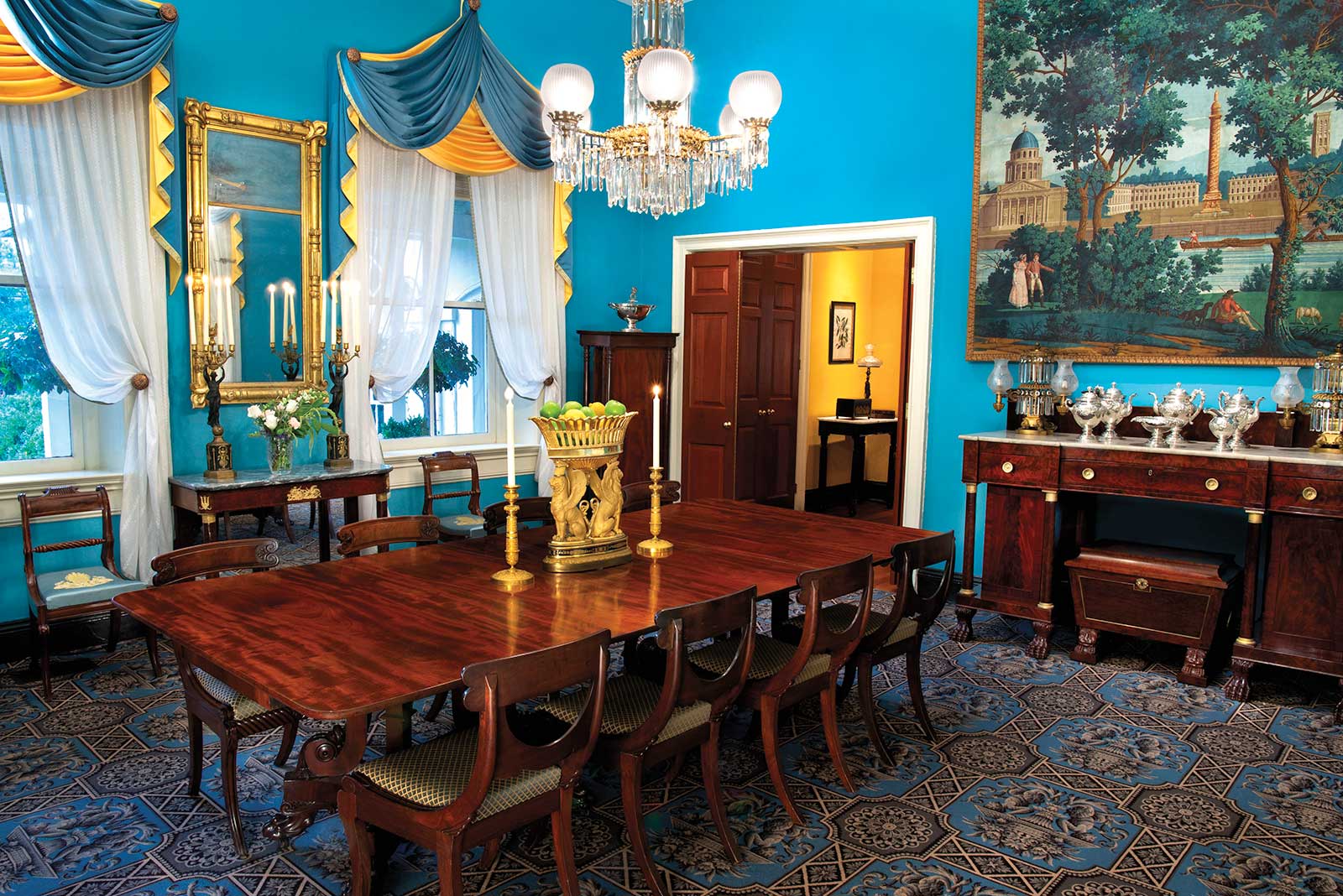
Working closely with curators, conservators, and architectural historians, the Schrimsher Foundation created classical interiors in two historic homes in Charleston, South Carolina, and Huntsville, Alabama, to exhibit its collection. When viewed amongst brightly patterned carpets, upholstery, silk wall hangings, and period lighting, “brown wood” is anything but.
Nicholson’s writings echo American sentiments during the Classical period, circa 1810-1840, as artisans and patrons alike sought to produce functional but tasteful wares that reflected the latest fashions. European design books, including Nicholson’s, widely disseminated Greco-Roman motifs, and were documented in every major American cabinetmaking center during this period.
However, American artisans were not mere imitators. Instead, they distilled and enhanced forms from European precedents until American Classicism emerged as a distinct style appropriate for a young republic with democratic ideals. Eschewing the excessively gilded ornamentation common in France and England, American cabinetmakers nevertheless experimented with bold expressions of furniture ornamentation to mimic ancient surfaces: painting, gilding, vert antique, ormolu mounts, brasses, molded glass, inlay, exotic woods, marble and sculptural carving.
 1
1
The choice of form or ornamentation, though, often said more about a patron’s status, wealth and identity than the artisan’s skill. Rooted in utility, the decorative arts operate as a visual social record that can contradict or nuance documented history. Their tactility and physicality distinguish them from paintings, works on paper and even sculpture. They were designed to be handled, endowing every scratch chip or dent with a story.
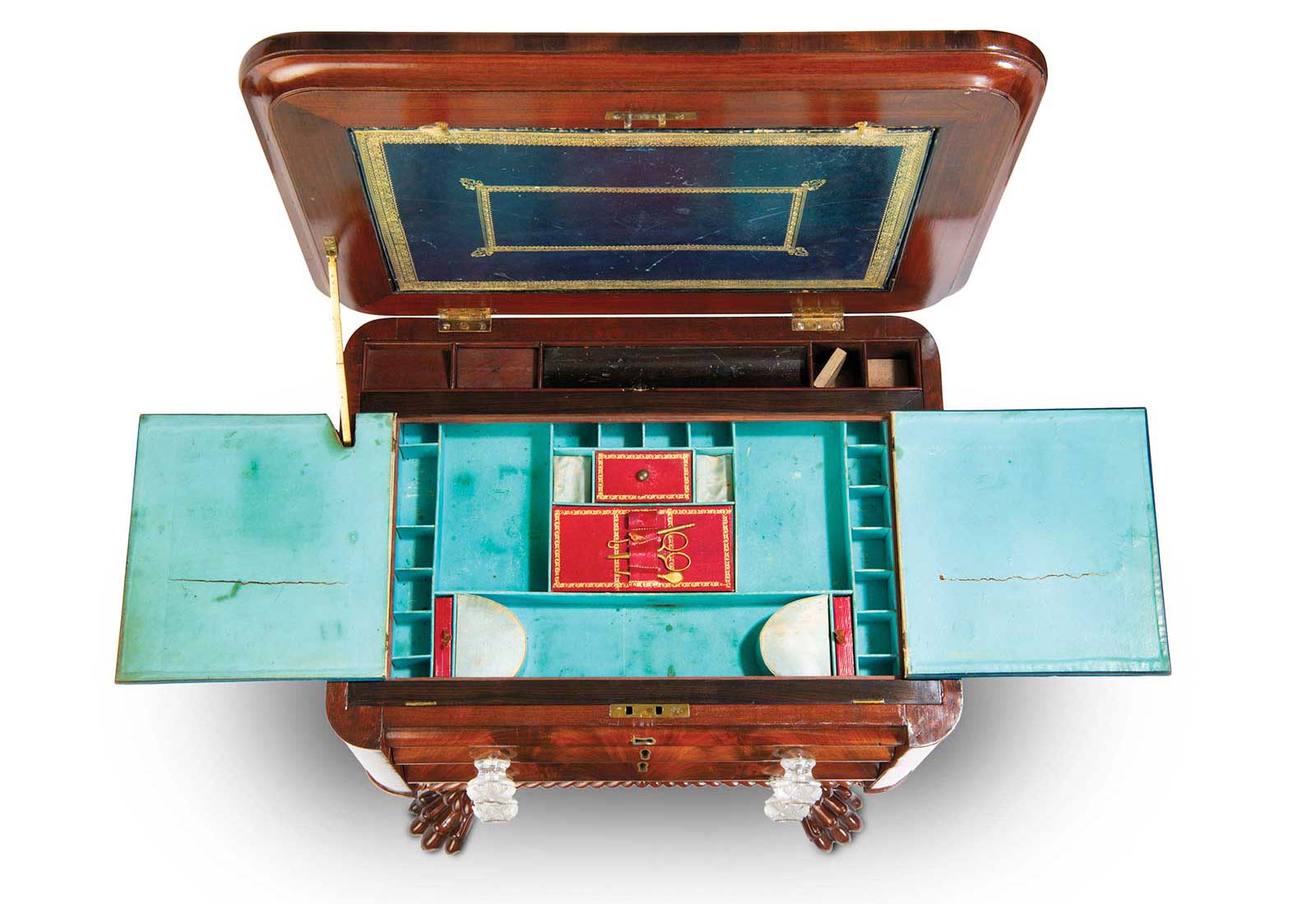
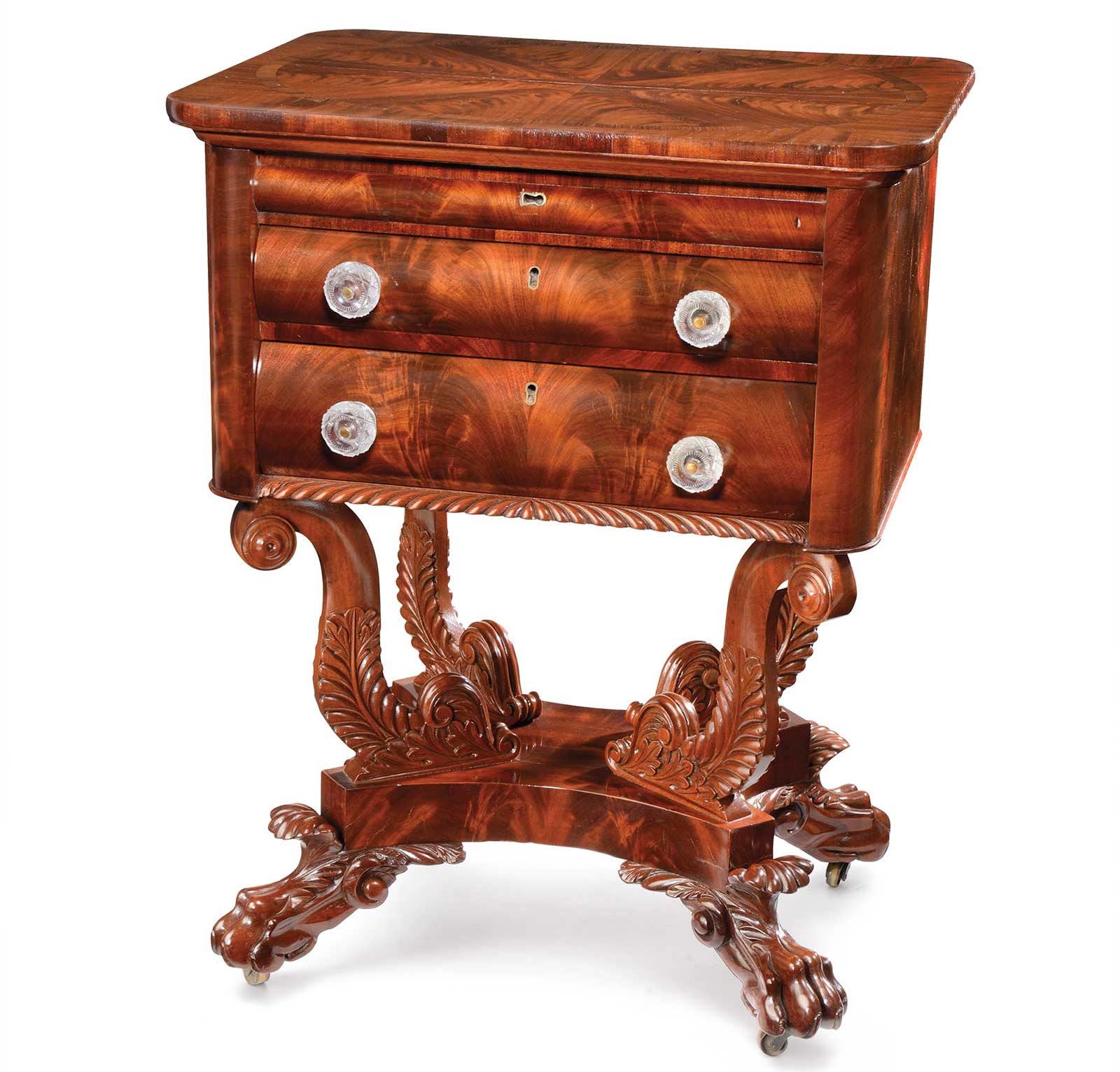
Take this pair of worktables (fig. 1-2) by the Philadelphia cabinetmaker Anthony Gabriel Quervelle. The worktable became a mainstay of women with means to facilitate domestic activities such as reading, writing and sewing. Commissioned as a pair for Robert Griffith and his wife Maria, they were part of a suite of furniture the young couple ordered from the cabinetmaker for their home in Philadelphia. The Griffiths clearly wanted to make a statement, and the level of sculptural carving, choice mahogany, and Prussian blue leather interior demonstrate their desire to showcase their wealth and status.

 2
2
 3
3
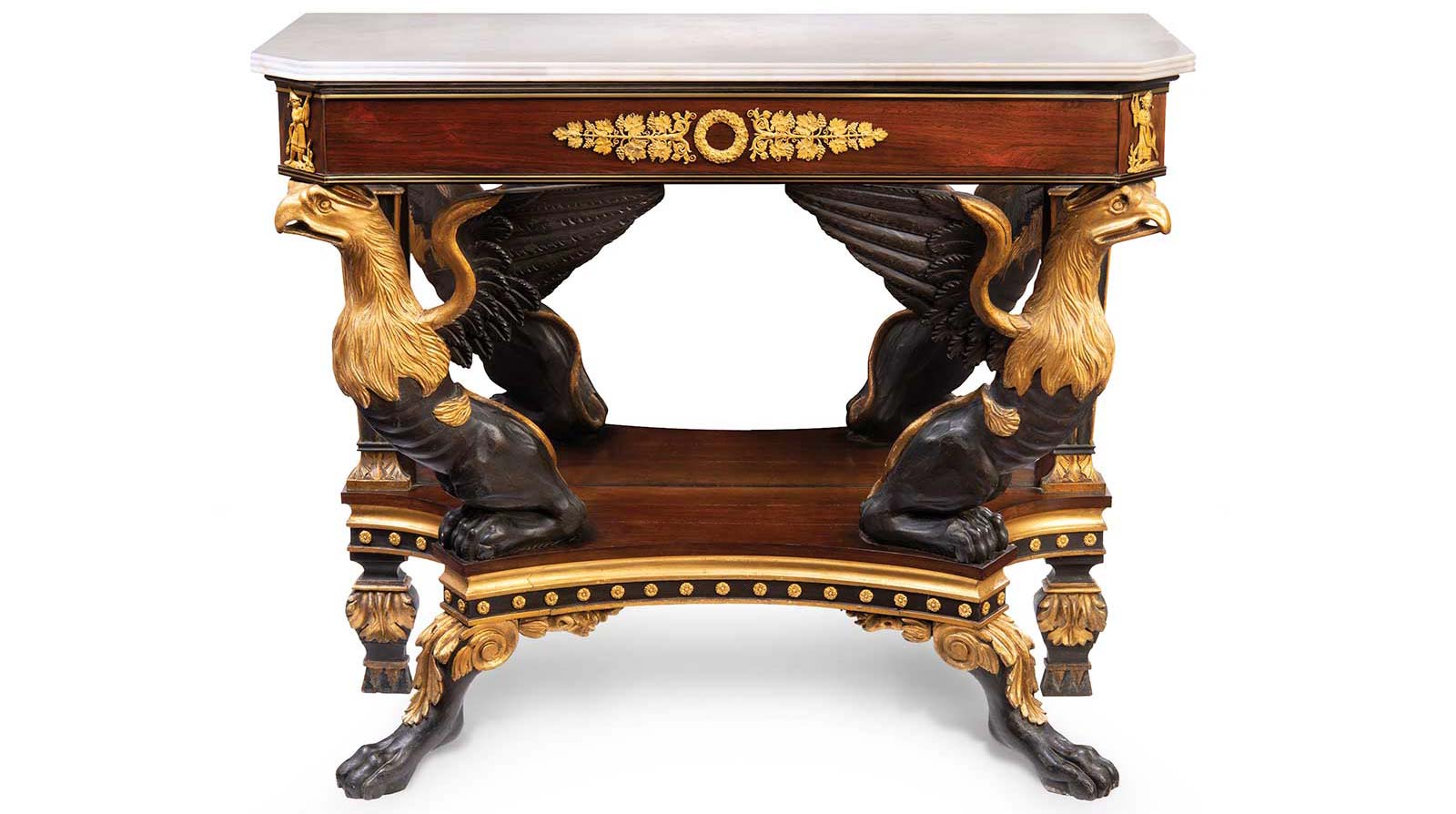
The lengthy waitlist for a piece of furniture from the New York cabinetmaker Duncan Phyfe was well known, but it did not deter a young couple from Baltimore. Secretary of the Navy, and later Secretary of State, Robert Smith and his wife ordered four tables, including this pier table (fig. 3), complete with griffin supports to outfit their home. The gilding, vert antique and brass mount ornamentation on the table are quintessential elements of the New York Classical style. They would have dazzled visitors in a city that was better known for its painted furniture.
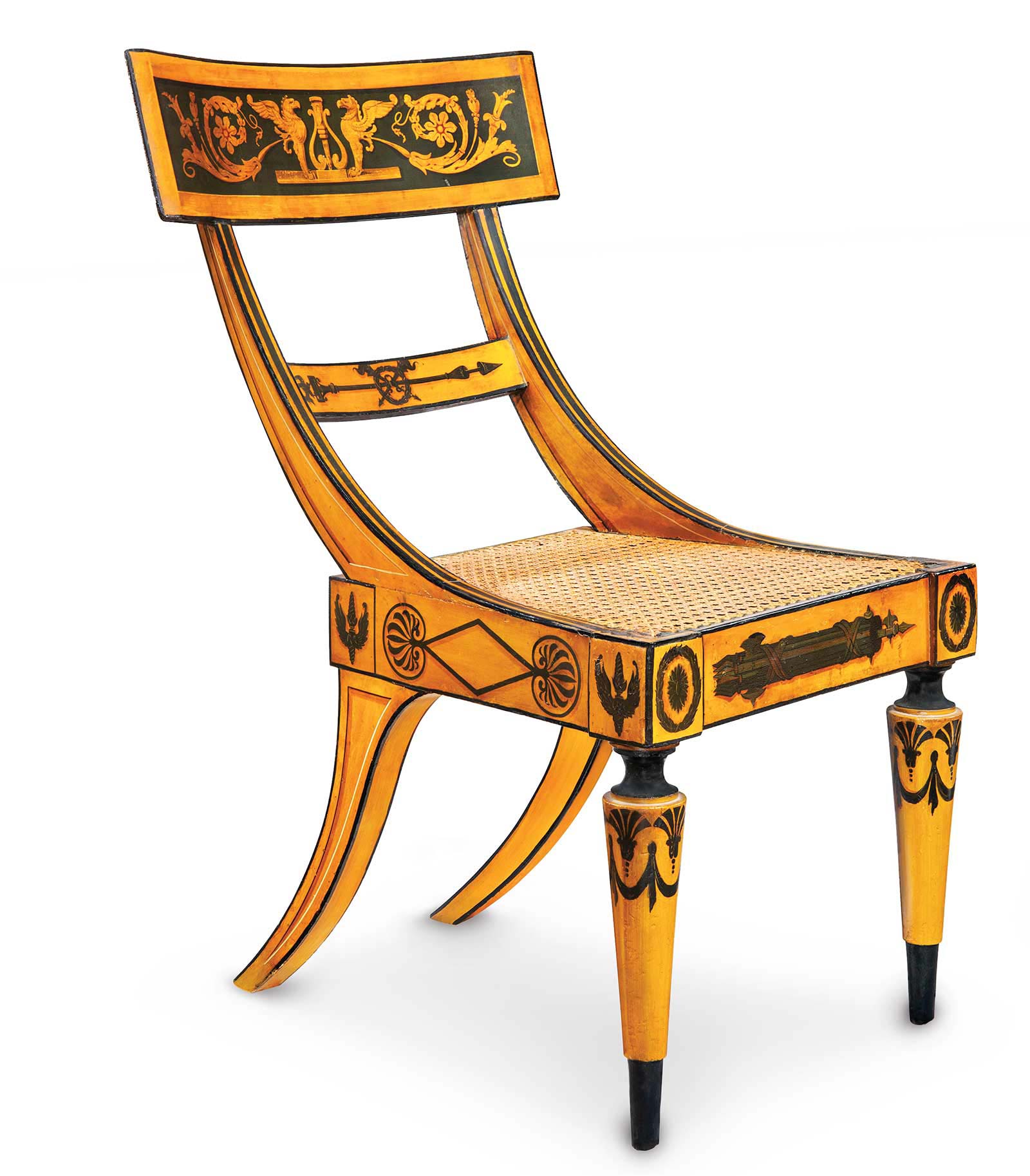
At the forefront of the painted furniture industry in Baltimore were the brothers John and Hugh Finlay. Paint was a far more economical surface treatment than brass or gilding, which led to its popularity. However, the Finlays produced highly intricate designs drawn from European pattern books, such as this spectacular side chair (fig. 4) from an original set of 12.
 4
4
 5
5
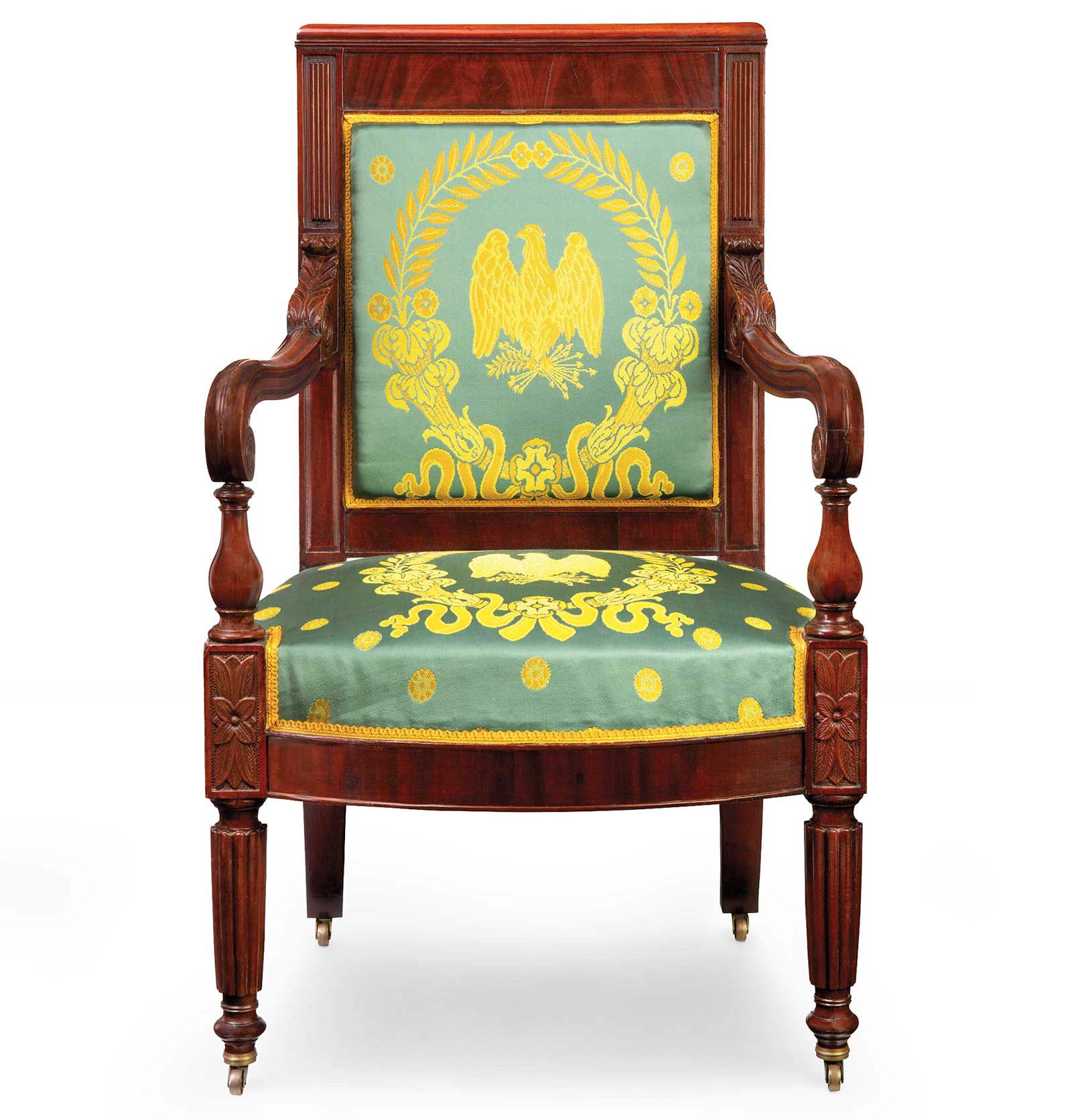
In nearby Washington, D.C., President James Monroe was eagerly furnishing the White House, or the President’s House as it was then known. Despite his penchant for European furniture in the French Empire style, the constraints of congressional purse strings necessitated purchasing furniture close to home. He commissioned cabinetmaker William King Jr. of Georgetown to produce a set of armchairs, including this example (fig. 5), for the East Room. When Monroe inevitably ran out of money, the chairs remained unupholstered until Andrew Jackson’s presidency.
These remarkable examples are among the hundreds of objects in the Schrimsher Foundation’s collection that define the height of the Classical American period. Through research and conservation, the foundation’s goal is to encourage modern audiences to reflect on and connect with the human experience of a pivotal moment in the early history of the United States.
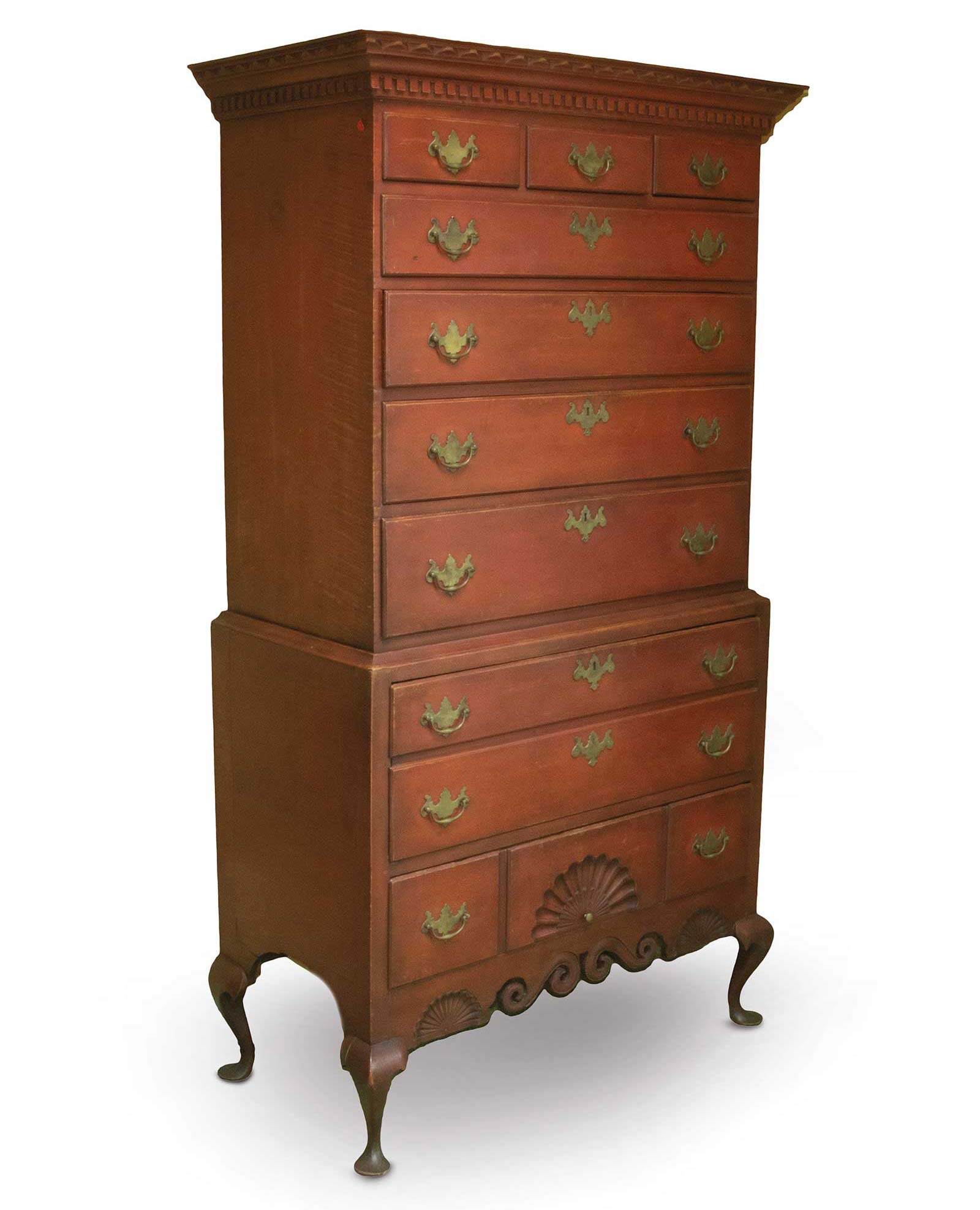
Thomaston Place Auction Galleries, Rare Dunlap two-part country Queen Anne chest on chest. Red painted maple, tiger maple and brass, height: 6 ft. x 3 in., width: 38½ in., depth: 20 in. From the estate of Linda Bean. Estimated $10/20,000 SOLD: $30,000

Roberto Freitas American Antiques & Decorative Arts, collection of velvet fruit, vegetables and butterflies, presented in a glass bowl, American, ca. mid 19th-century.
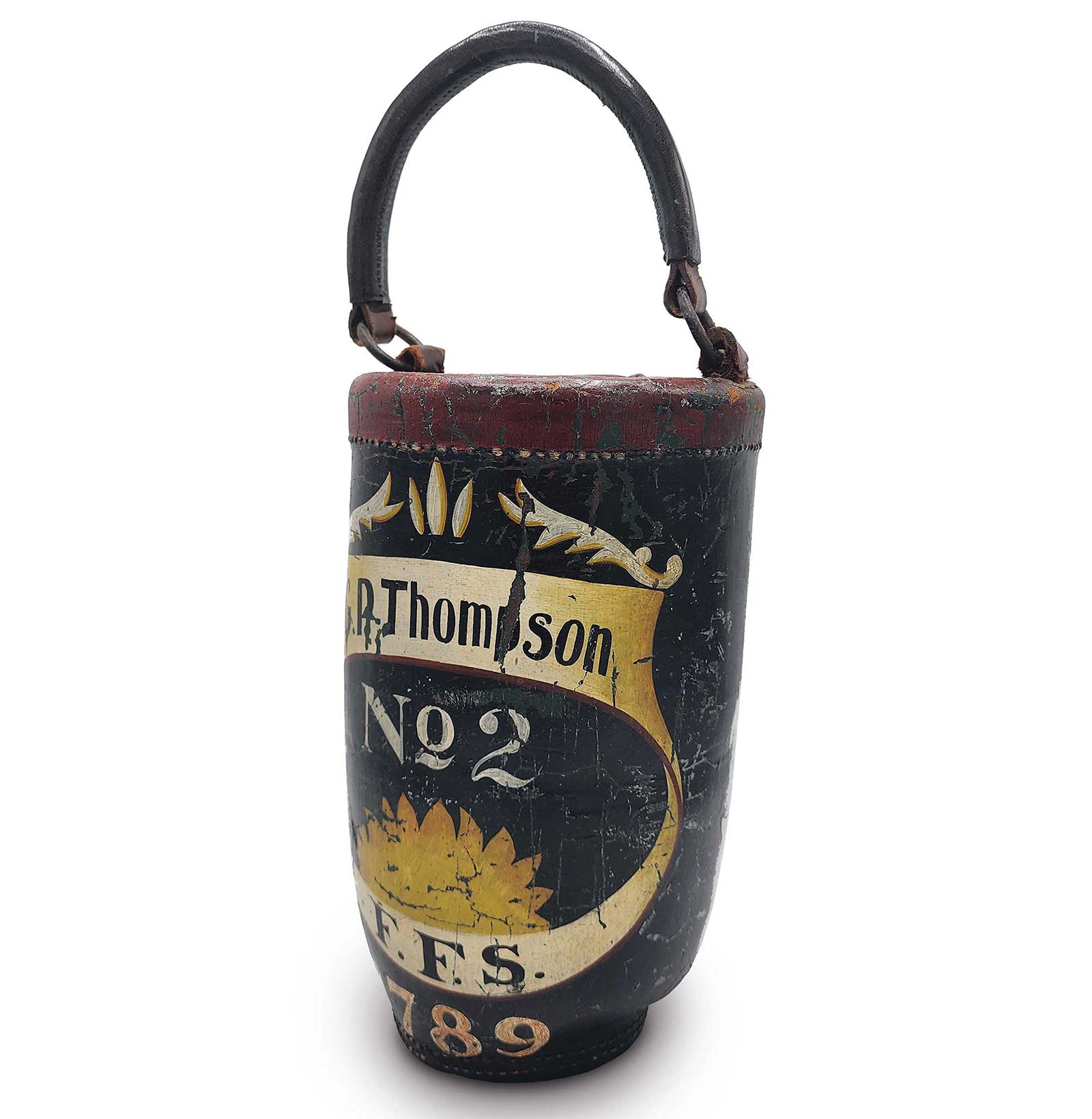
Roberto Freitas American Antiques & Decorative Arts, leather fire bucket from Portsmouth, New Hampshire, ca. late 18th / early 19th century. Painted with the initials of the Federal Fire Society, member name ‘G.P. Thompson’, ‘No. 2’, and the society’s founding date of 1789.
Continue reading through this special section dedicated to decorative arts and antiques to hear insights from galleries and auction houses specializing in the genre, and peruse highlights in their past and current collections.
Currently among the offerings at Roberto Freitas American Antiques & Decorative Arts is an important piece of Americana and New England history—an antique leather fire bucket. “To me it represents the American spirit, a sense of community through volunteerism and courage,” shares owner Roberto Freitas. In the early 19th century, Portsmouth, New Hampshire, was devastated by three Christmas fires, so-called because they each happened during Christmas week in 1802, 1806 and 1813. Members of the Federal Fire Society were essentially volunteer firefighters. Each member was required to have two fire buckets with their names on them, which they would bring when responding to the ringing of an alarm bell. They would then form a “bucket brigade” passing the water filled buckets hand-to-hand. This bucket is painted with the initials of the Federal Fire Society, member name ‘G.P. Thompson,’ ‘No. 2,’ and the society’s founding date of 1789. Freitas’ collection of velvet fruit is another example of great 19th-century Americana. “Presented in a large two-piece glass bowl, this is an exceptional collection, each piece in wonderful condition and retaining their bright color,” says Freitas. “My favorite piece is probably the pear, which is created so that a quarter of it opens, depicting the core of the fruit with its seeds.”
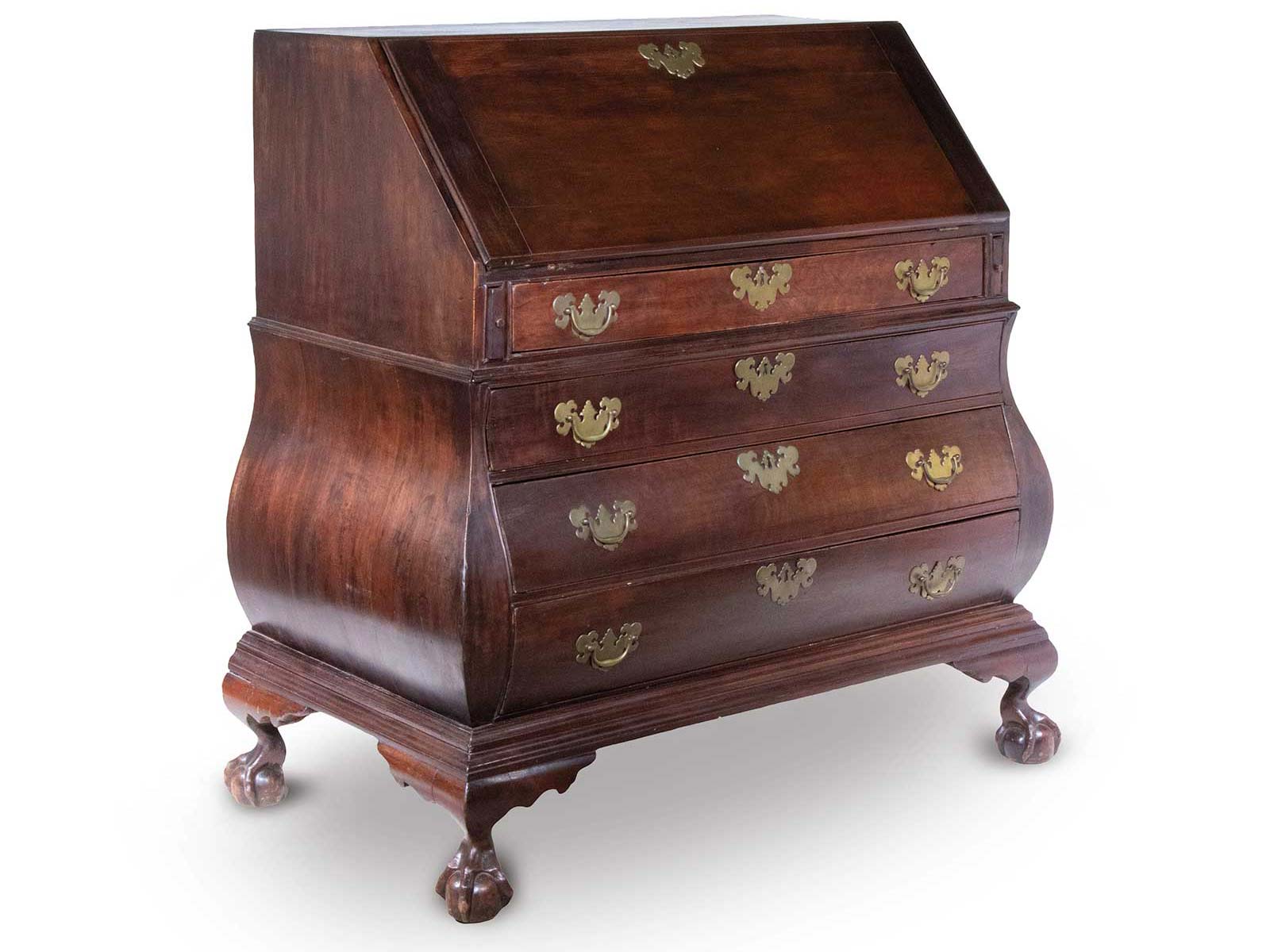
Thomaston Place Auction Galleries, Rare 18th century period Boston Chippendale Bombe Desk, ca. 1770. Walnut, brass, 46 x 45 x 26 in. From the estate of Linda Bean. Estimated $30/45,000 SOLD: $60,000
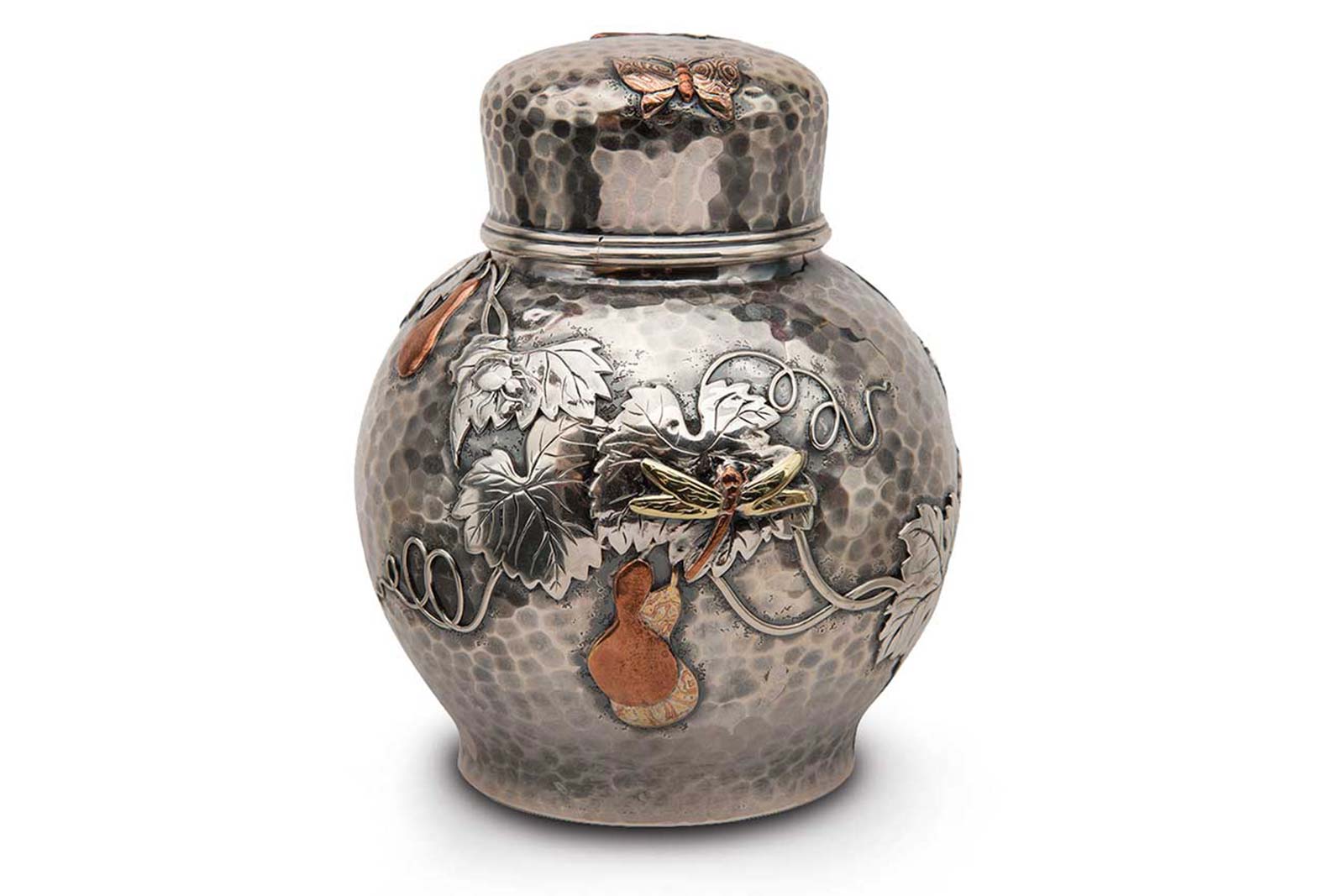
Grogan & Company, Tiffany & Co. Japanesque Tea Caddy, New York, ca. 1880. Hammered silver and mixed metal, 4¾ in. SOLD: $17,080
“There are as many ways to decorate a living space as there are people who inhabit those spaces, and here at Thomaston Place Auction Galleries in Thomaston, Maine, we are proud to serve them all,” says an auction house representative. Specializing in distinguished early American furnishings, fine antiques with a global pedigree and a broad range of Americana, the decorative arts feature prominently in the house’s four major annual auctions, as well as in specialty sales. Recent highlights include an Americana Collection showcasing the lifetime holdings of noted collectors Larry and Jean Dubord, and their Summer Grandeur sale included very rare American furniture from the Estate of Linda Bean, with realized prices substantially exceeding estimates in all categories. Consignments are now open for the house’s June feature auction, Summer Splendor, taking place June 26 through 28. Visit the company’s website for details.
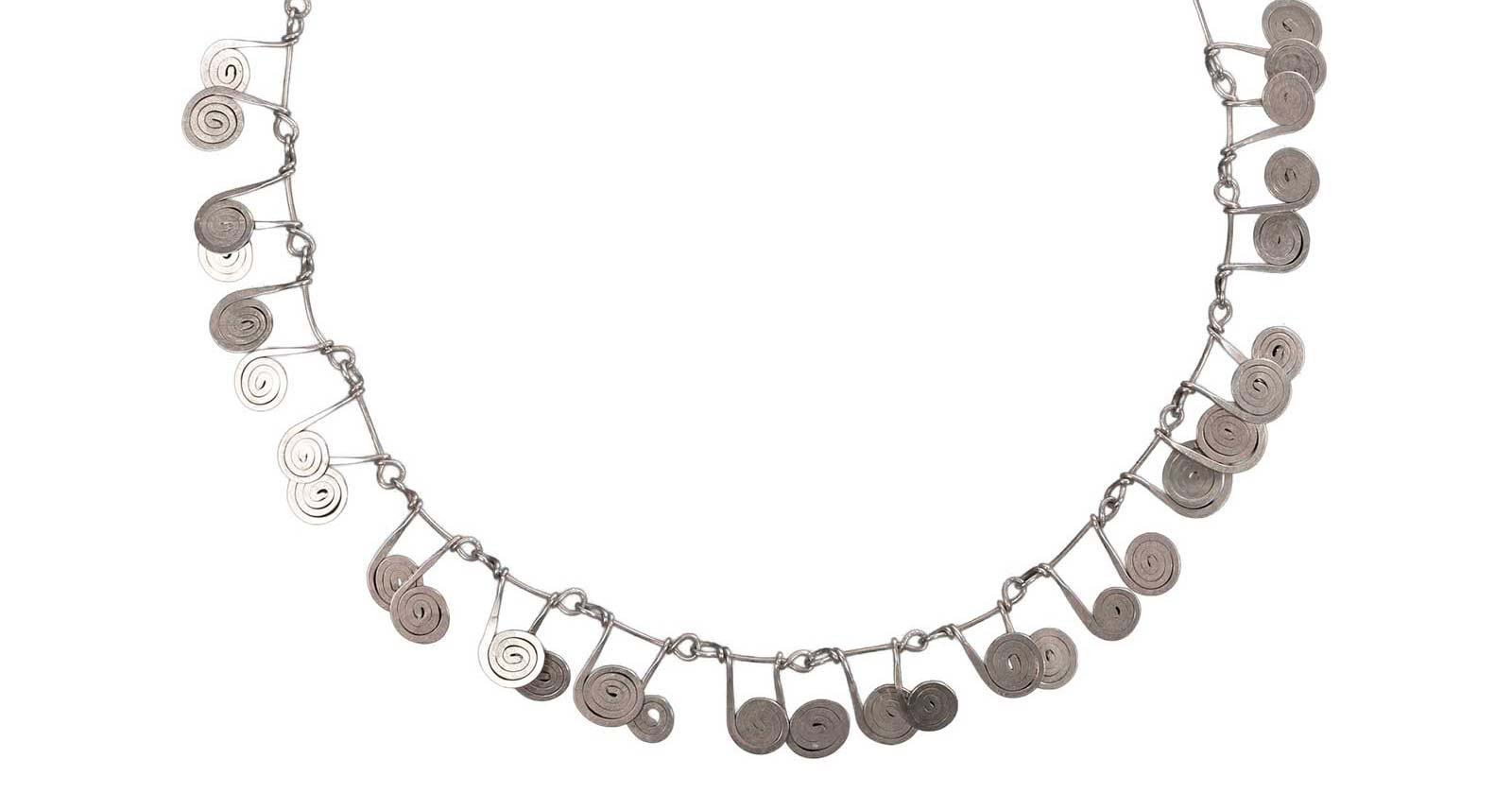
Grogan & Company, Untitled Necklace. Silver, composed of silver wire links suspending hammered silver scrolls in the form of stylized musical notes, scroll length: 5/8 to 3/4 in.; necklace length: 18 in., by Alexander Calder (1898-1977). Sold in a December 2015 sale. SOLD: $109,800
For over 35 years, Grogan & Company has been providing clients in the New England area and beyond with a thoughtful experience to both buy and sell their fine jewelry and silver, tailoring each interaction to meet their clients’ individual needs. The firm provides collectors with a trusted platform to acquire historically significant and rare decorative arts and jewelry, objects defined by craftsmanship and lasting aesthetic appeal. The works included here, highlight the firm’s strength in bringing jewelry and silver of artistic innovation and enduring design by renowned American makers such as Tiffany & Co., Raymond Yard and Paul Revere to auction. Working alongside individuals, families, and trust and estate executives, Grogan & Company provides a modern solution to selling, bringing fresh-to-market works that are always sure to catch the discerning collector’s eye. —
Featured Galleries, Auction Houses & Museums
Grogan & Company
20 Charles Street, Boston, MA 02114
t: (617) 720-2020
www.groganco.com
Roberto Freitas American Antiques & Decorative Arts
107 Water Street, Stonington, CT 06378
t: (860) 535-1797
info@robertofreitas.com
www.robertofreitas.com
Schrimsher Foundation
Huntsville, AL
www.schrimsherfoundation.org
Thomaston Place Auction Galleries
51 Atlantic Highway, Thomaston, Maine 04861
t: (207) 346-5870
www.thomastonauction.com
Powered by Froala Editor