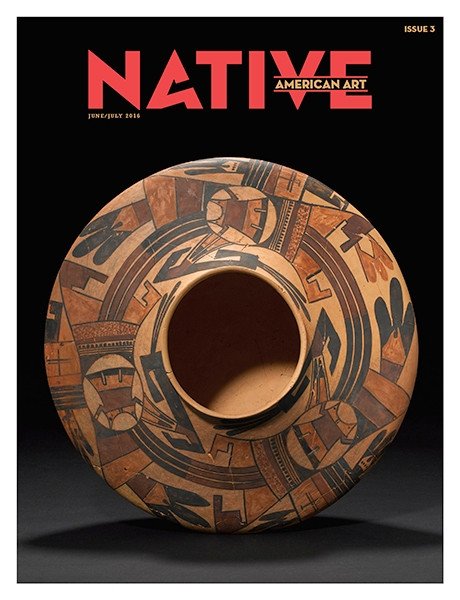
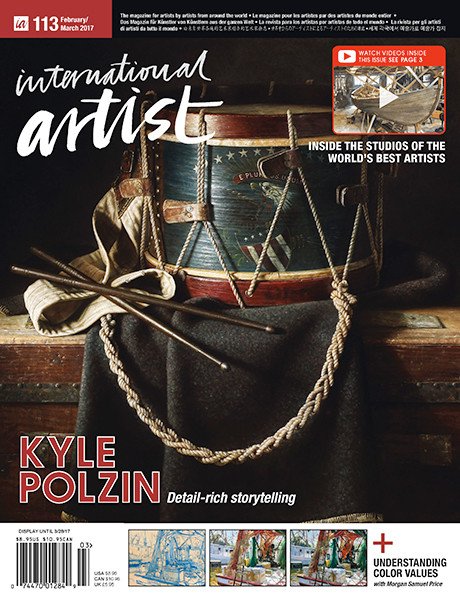
Portraiture is one of the most important genres of fine art, especially when you consider its historical significance to humankind. We have a good idea of what Nefertiti and King Tutankhamun looked like because of ancient paintings and sculptures made in their likeness. The enduring images of Marilyn Monroe and John F. Kennedy by Andy Warhol have long outlived the novelty of his soup cans. If one had to name the most famous painting in the world, it would likely be Leonardo da Vinci’s Mona Lisa over Vincent van Gogh’s Sunflowers. Grant Wood’s wonderful study of his sister and dentist in American Gothic remains among the most recognizable paintings in American art.
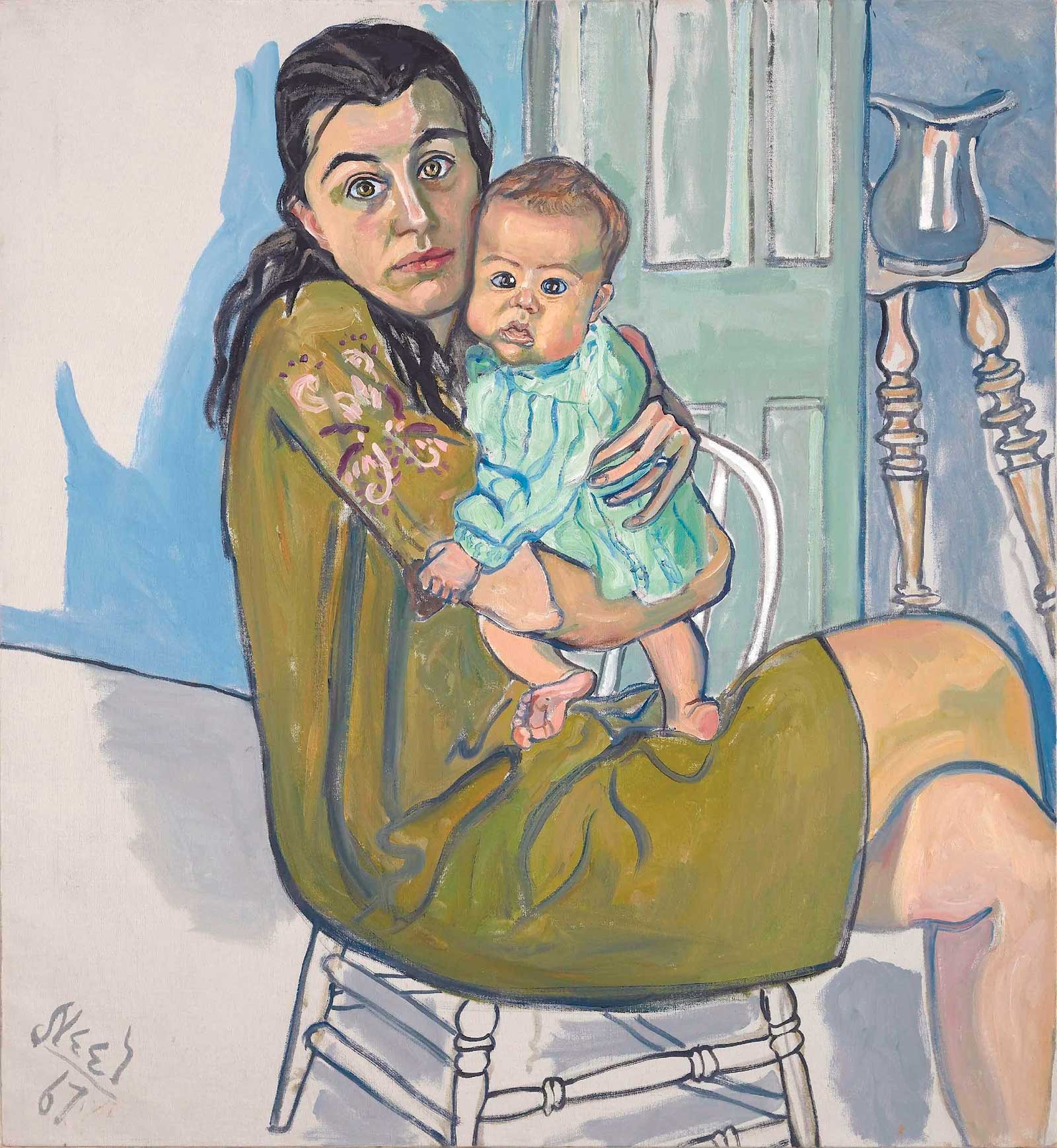
Alice Neel (1900-1984), Nancy and Olivia, 1967. Oil on canvas, 39 × 36 in. © The Estate of Alice Neel.
For a time, it was fashionable to denigrate portrait art as conservative, commercial or secondary. When Andrea Ericson, long-time gallery director of Portraits, Inc. in New York, encountered such criticism, she famously replied with two words: “Oh, nonsense!” For years, the gallery’s motto was drawn from Dr. Samuel Johnson: “Portrait painting is a reasonable and natural consequence of affection.” It is difficult to imagine a more enduring motivation for art. Portraits are created to express admiration, memory and esteem. For both sitter and collector, commissioning a portrait is an act of recognition and legacy.
The face and figure remain among the most demanding subjects in all of art. Drawing and painting from the human model have always formed the backbone of serious artistic training. From antiquity to the present, portrait artists have occupied a central role in recording history, power, culture and identity. Portraiture offers not abstraction, but presence.
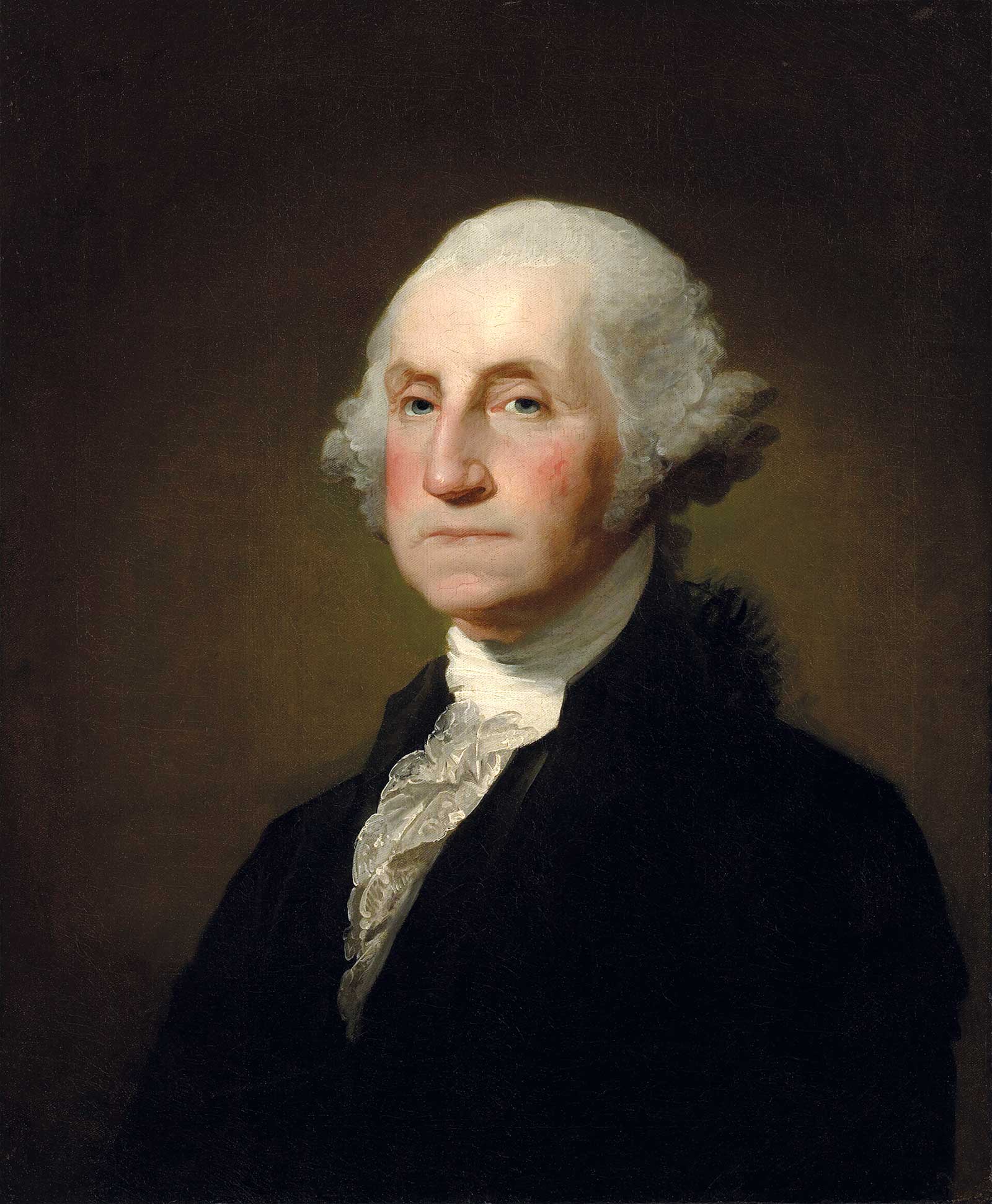
Gilbert Stuart (1755-1825), George Washington, 1803. Oil on canvas, 29 x 24 in. Sterling and Francine Clark Art Institute, Williamstown, MA.
Diego Velázquez (1599-1660) spent most of his life painting at the court of King Philip IV of Spain, chronicling both moments of grandeur and periods of hardship. Philip IV’s legacy is inseparable from Velázquez’s vision, and while the artist devoted much of his career to a single royal family, his influence would extend far beyond it, shaping the work of Goya, Sargent and even Picasso. These works endure not merely because of royal association but because a great patron allowed a great artist sustained freedom to observe and interpret.
Similarly, King Charles I of England, though a flawed ruler, proved a discerning collector. By bringing Anthony van Dyck (1599-1641) to England, he helped define the visual language of English aristocracy. Van Dyck’s portraits of Charles I remain among the most compelling examples of how art can construct and preserve authority long after political power has faded. French master Jacques-Louis David (1748-1825), teacher of Jean-Auguste-Dominique Ingres (1780–1867), left behind a remarkable portrait record of a nation in upheaval. His images of Louis XVI and Marie Antoinette, followed by portraits of revolutionary figures such as Robespierre, demonstrate the portrait’s unique capacity to document seismic shifts in history. Today, collectors value these works not only for their subjects, but for their proximity to pivotal moments in time.
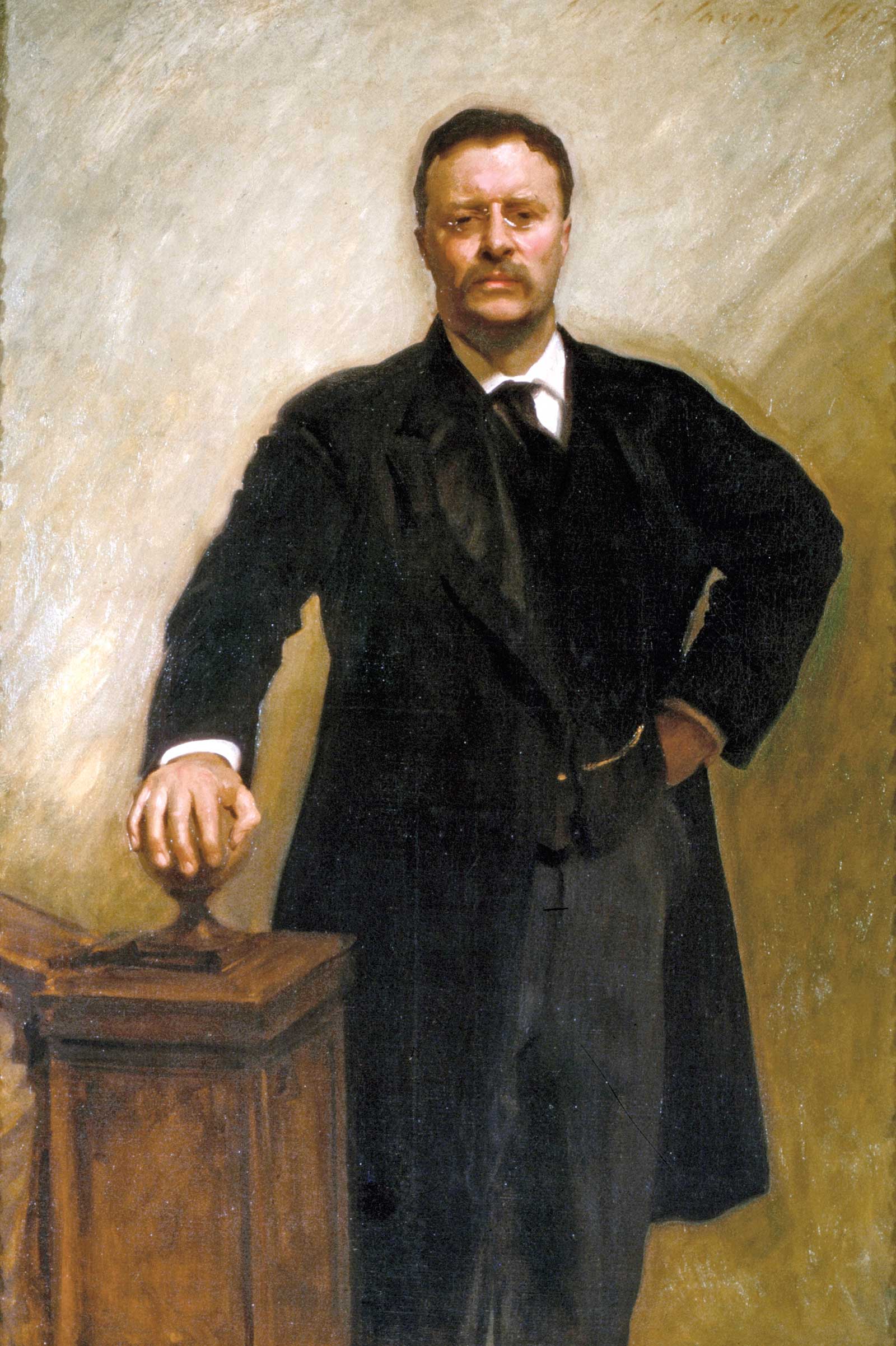
John Singer Sargent (1856-1925), Theodore Roosevelt, 1903. Oil on canvas, 58 x 40 in. The White House, Washington, D.C.
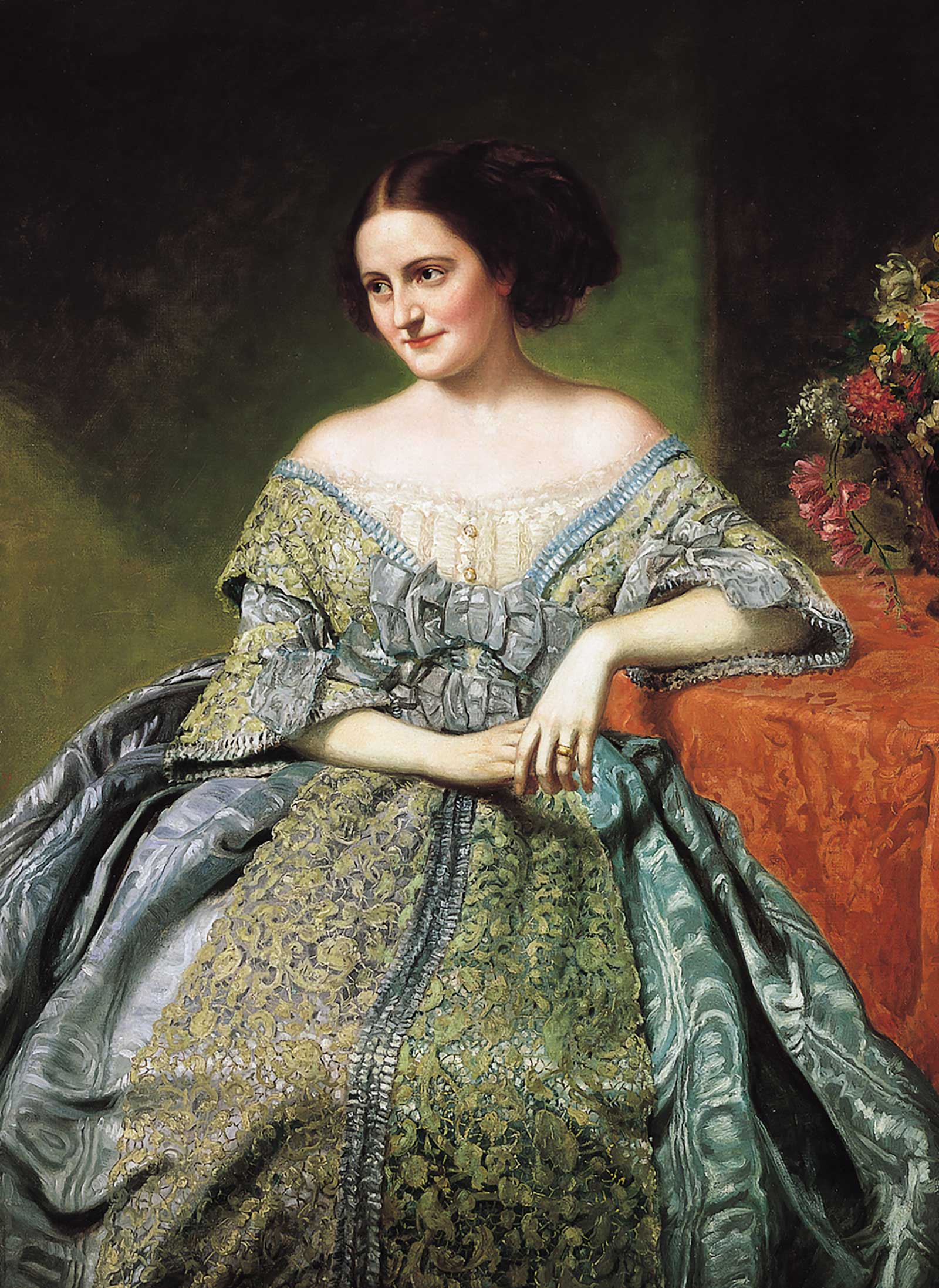
George Peter Alexander Healy (1813-1894), Portrait of Sallie Ward (1827-1896), 1860. Oil on canvas, 54 x 40 in. Speed Art Museum, Louisville, KY.
Portrait art has played an equally vital role in American history. Our most enduring image of George Washington comes from Gilbert Stuart, who produced so many versions for eager patrons that he jokingly referred to them as his “hundred-dollar bills.” Jean-Antoine Houdon’s sculpted bust of Washington still lives on today, reduced to bas-relief on American coinage. John Singer Sargent famously emerged from his self-declared “no more portraits” period to paint what many consider the definitive portrait of President Theodore Roosevelt, proof that even the greatest artists cannot entirely abandon portraiture’s pull.
Many accomplished portrait artists resisted being labeled exclusively as such. Artists including Ingres, Sargent, Everett Raymond Kinstler, William F. Draper, Daniel E. Greene and Burton Silverman maintained broader practices, believing, as did Sir Joshua Reynolds (1723-1792), that variety of subject matter sustained artistic excellence. Thomas Gainsborough agreed with Reynolds, even as both artists produced portraits now regarded as cornerstones of major collections.
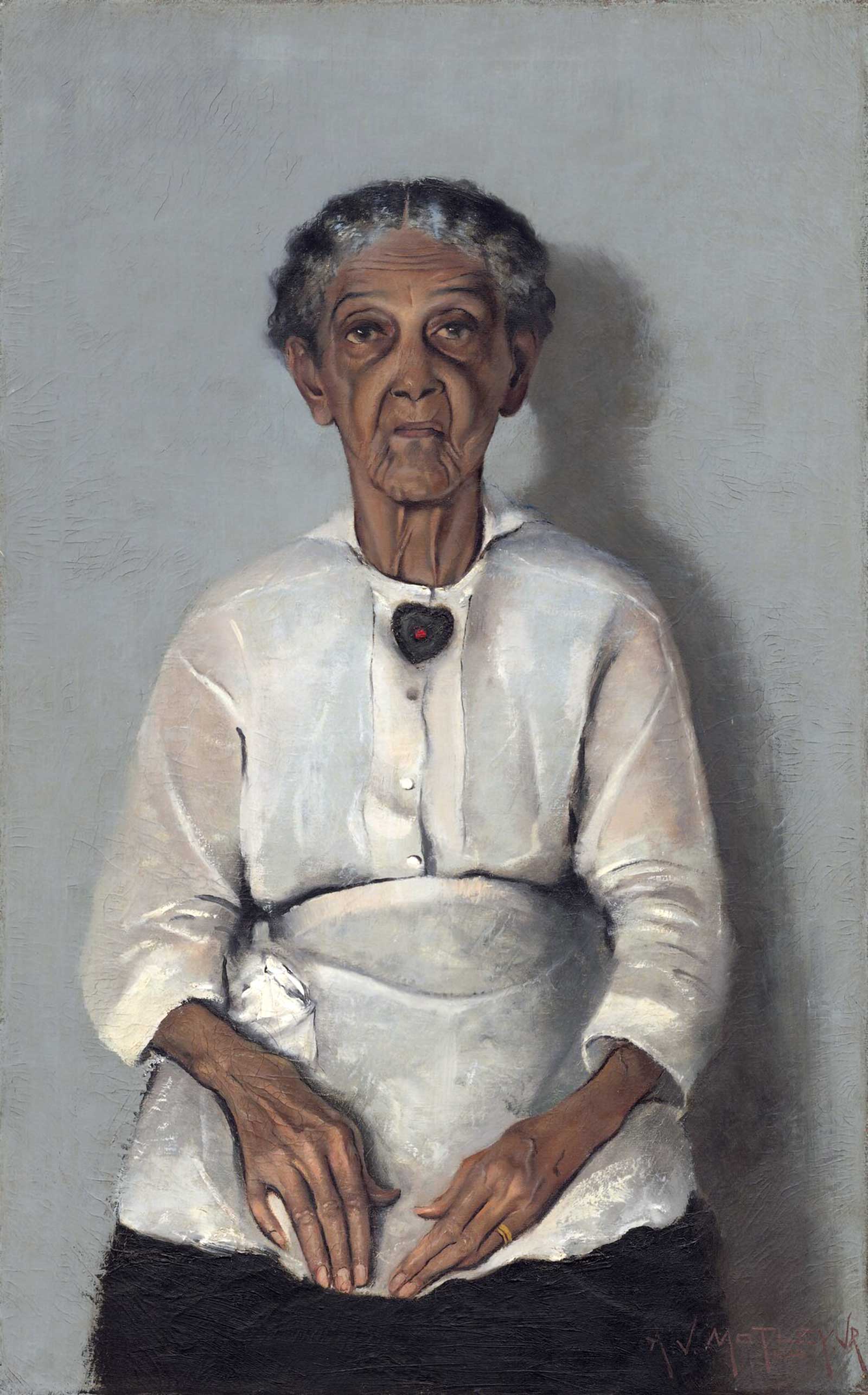
Archibald John Motley Jr. (1891-1981), Portrait of My Grandmother, 1922. Oil on canvas, 38¼ x 23¾ in. National Gallery of Art, Washington, D.C. Patrons’ Permanent Fund, Avalon Fund, and Motley Fund, 2018.2.1.
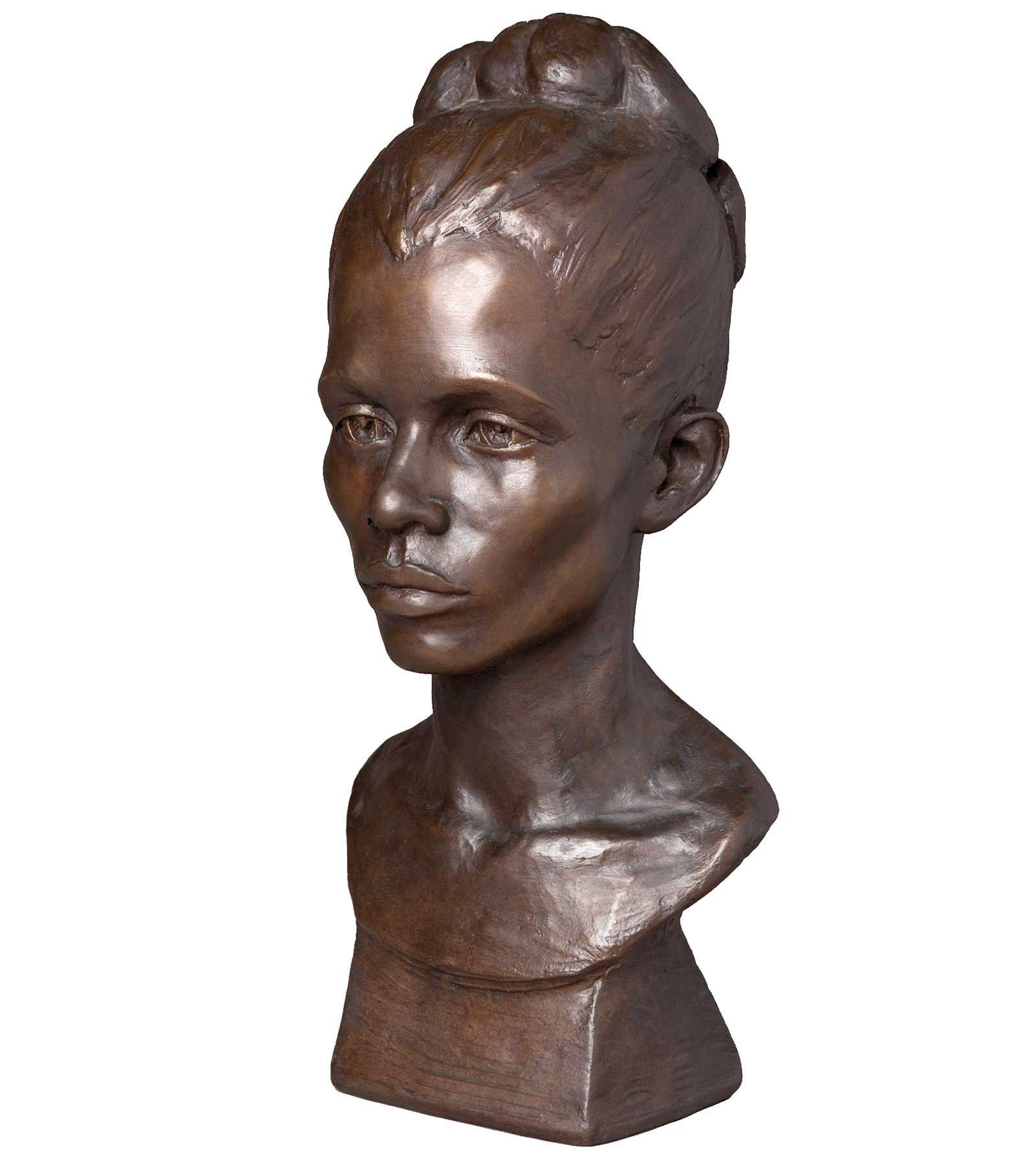
Augusta Savage (1892-1962), Gwendolyn Knight (Mrs. Jacob Lawrence, 1913-2005), 1934-35. Bronze, 175/16 x 8½ x 8 in. Courtesy Telfair Museums, Savannah, GA.
A working portrait artist may arrive at the studio each day to a schedule of commissions, yet the finest among them still step outside to sketch a passing cloud or a quiet landscape. Such discipline reflects a deeper truth valued by knowledgeable collectors: great portraits are the result of lifelong observation, not formulas.
Yet the portrait artist’s first love remains painting people. Early encouragement often comes from likenesses of friends and family, and after decades of practice, that satisfaction endures. For the collector, to commission or acquire a portrait is to enter into that lineage and become a steward of both craft and human presence.
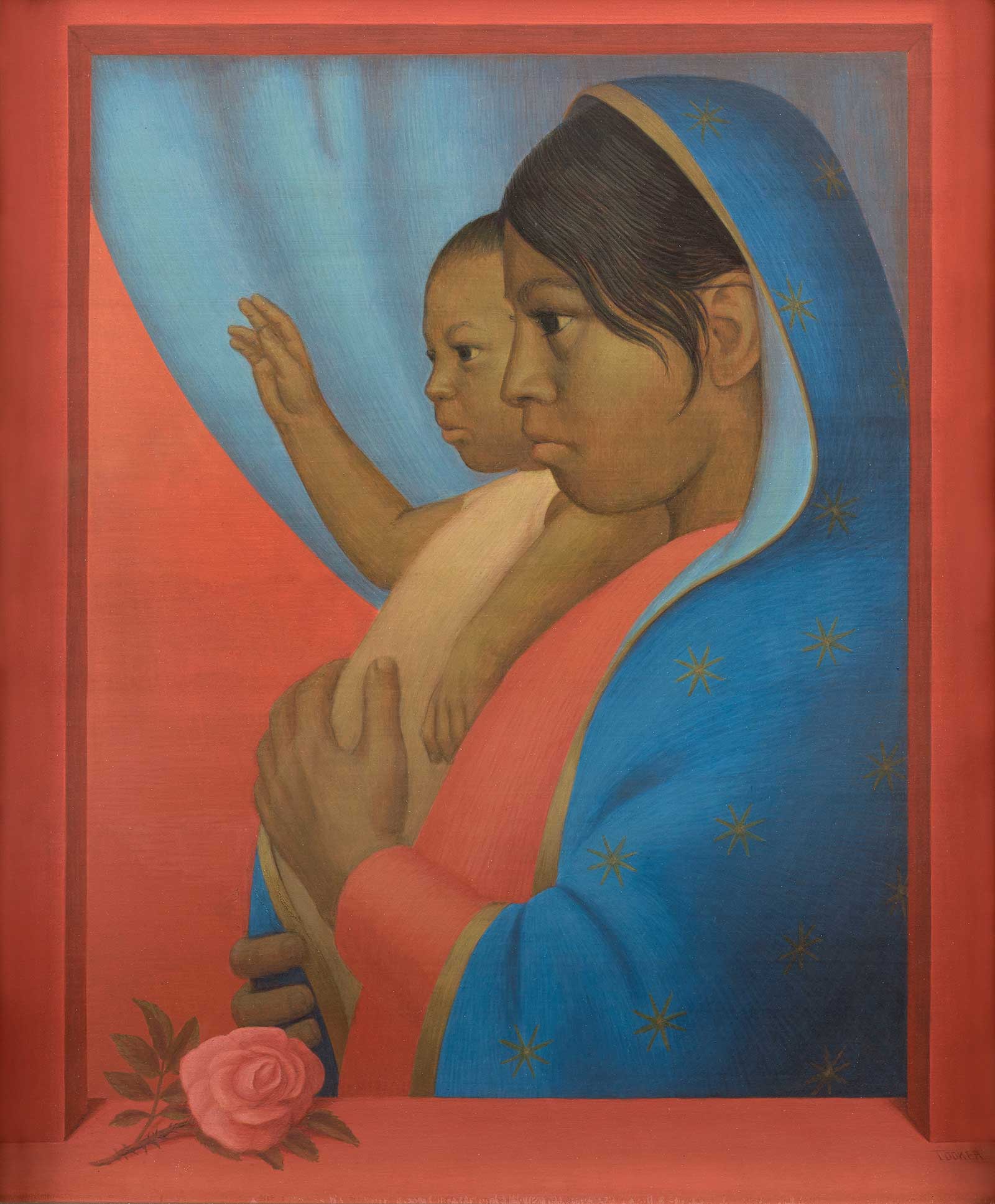
Debra Force Fine Art Mother and Child, 1982. Egg tempera on gessoed panel, 22 x 18 in., by George Tooker (1920-2011).
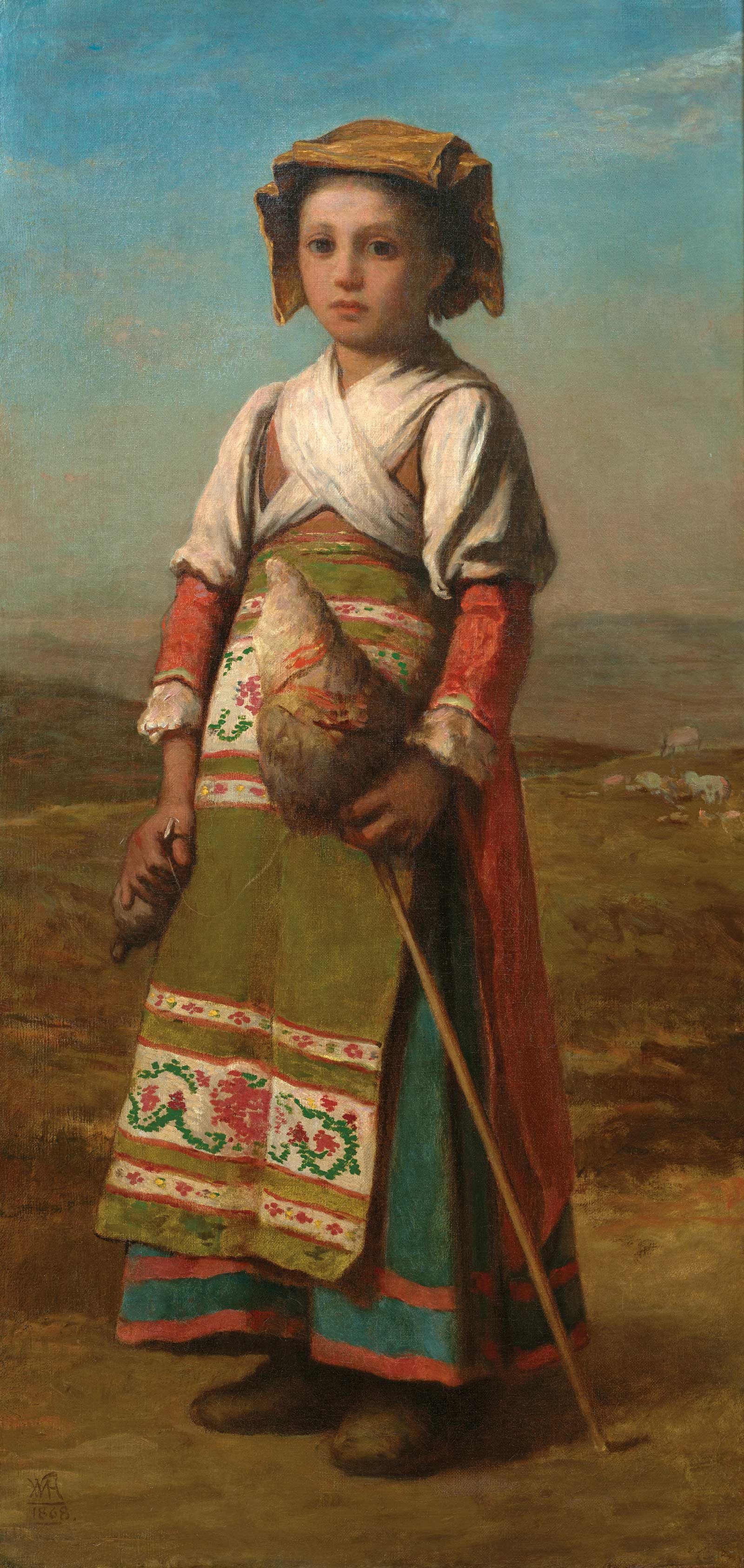
Debra Force Fine Art, Italian Girl, 1868. Oil on canvas, 54¾ x 27¼ in., by William Morris Hunt (1824-1879).
Serious reflection on a world without painted likenesses of its inhabitants makes one thing clear: portrait art is not a luxury. It is a record of who we are, how we see one another and what we choose to remember. From kings to private citizens, and from royal courts to contemporary collections, portraiture remains one of civilization’s most enduring and meaningful treasures.
In the remainder of this special section, prestigious galleries, fine art dealers, auction houses and museums highlight significant works of historic American portraiture in their collections and share insight into this timeless genre. Many of these works are currently on the market or will be featured in an upcoming auction, show or exhibition.
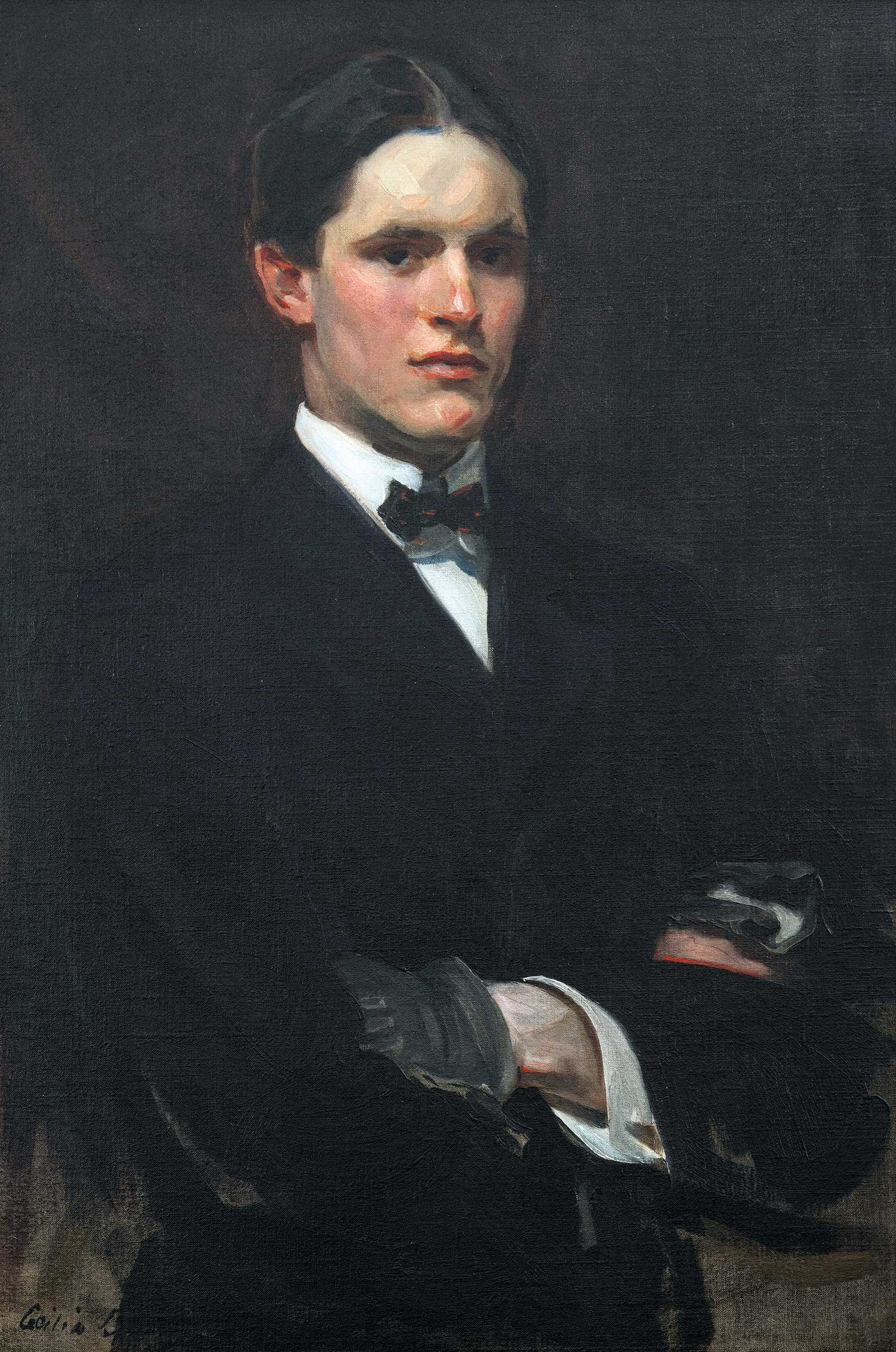
Godel & Co., Portrait of Henry Sandwith Drinker, 1901. Oil on canvas, 33 x 23½ in., signed lower left: Cecilia Beaux, by Cecilia Beaux (1855-1942).
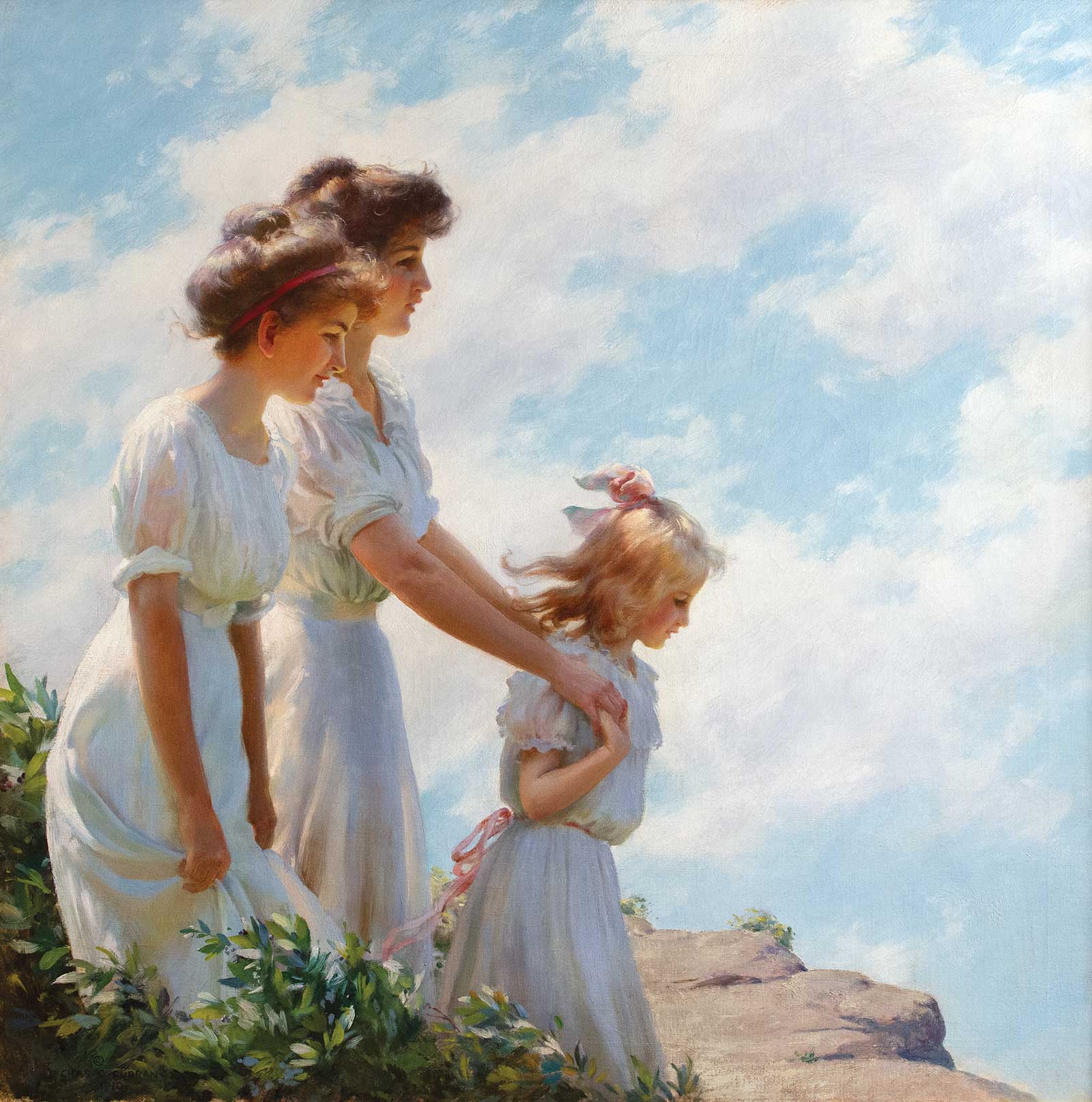
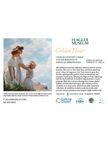
Flagler Museum, On the Cliff, 1910. Oil on canvas, by Charles Courtney Curran (1861-1942). Berg Family Collection. Image Courtesy Albany Institute of History & Art.
New York gallery Debra Force Fine Art is showcasing a painting by William Morris Hunt, “a powerful presence in American art from about 1860 until his death in 1879, transforming the artistic tastes and preferences of art collectors in Boston, where he was based, as well as throughout the country,” the gallery explains. “An 1866 trip abroad began in Paris and ended in Rome in 1868, where he painted Italian Girl, depicting a young girl holding a distaff and spindle.” This painting was included in the artist’s Memorial Exhibition at the Museum of Fine Arts, Boston in 1879-1880. The gallery also currently has a piece by George Tooker (1920-2011), a figurative painter known for dreamlike imagery that explores the relationship between society and self. “Throughout his life, George Tooker expressed his passionate commitment to social harmony and justice,” adds the gallery. “His paintings portrayed the human condition, and he rendered his figures in a sculptural style with clean lines and strong profiles using Renaissance techniques and painting styles, as seen in Mother and Child.”
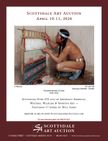
The Scottsdale Art Auction returns April 10 and 11 in Old Town Scottsdale with a two-day sale featuring more than 450 lots of historic and contemporary American, Western, sporting and wildlife art. This year’s auction brings together important works spanning the Taos legacy, first-generation Cowboy Artists of America, early masters of the American West, and leading contemporary painters who continue to shape the genre today. Among the major highlights is a distinguished grouping of works by Nicolai Fechin (1881-1955), including Consuelo (est. $175/275,000). “The offering includes several rare paintings that have not previously appeared on the market…Representing Fechin’s most sought-after subject matter, the works underscore his reputation as one of the most highly collectible figures associated with the Taos art community,” notes SAA. Other important pieces in the sale include a grouping of works by Leon Gaspard (1882-1964), one of the most distinctive artists associated with the Taos art community. “Known for his refined compositions and luminous surfaces, Gaspard’s work reflects a unique blend of European training and deep engagement with the American Southwest,” adds the auction house. “Rarely appearing at auction, these carefully selected paintings offer collectors the opportunity to acquire examples by an artist whose market has continued to strengthen in recent years.” Gaspard’s Portrait of a Young Girl from 1922 has a low estimate of $25,000.
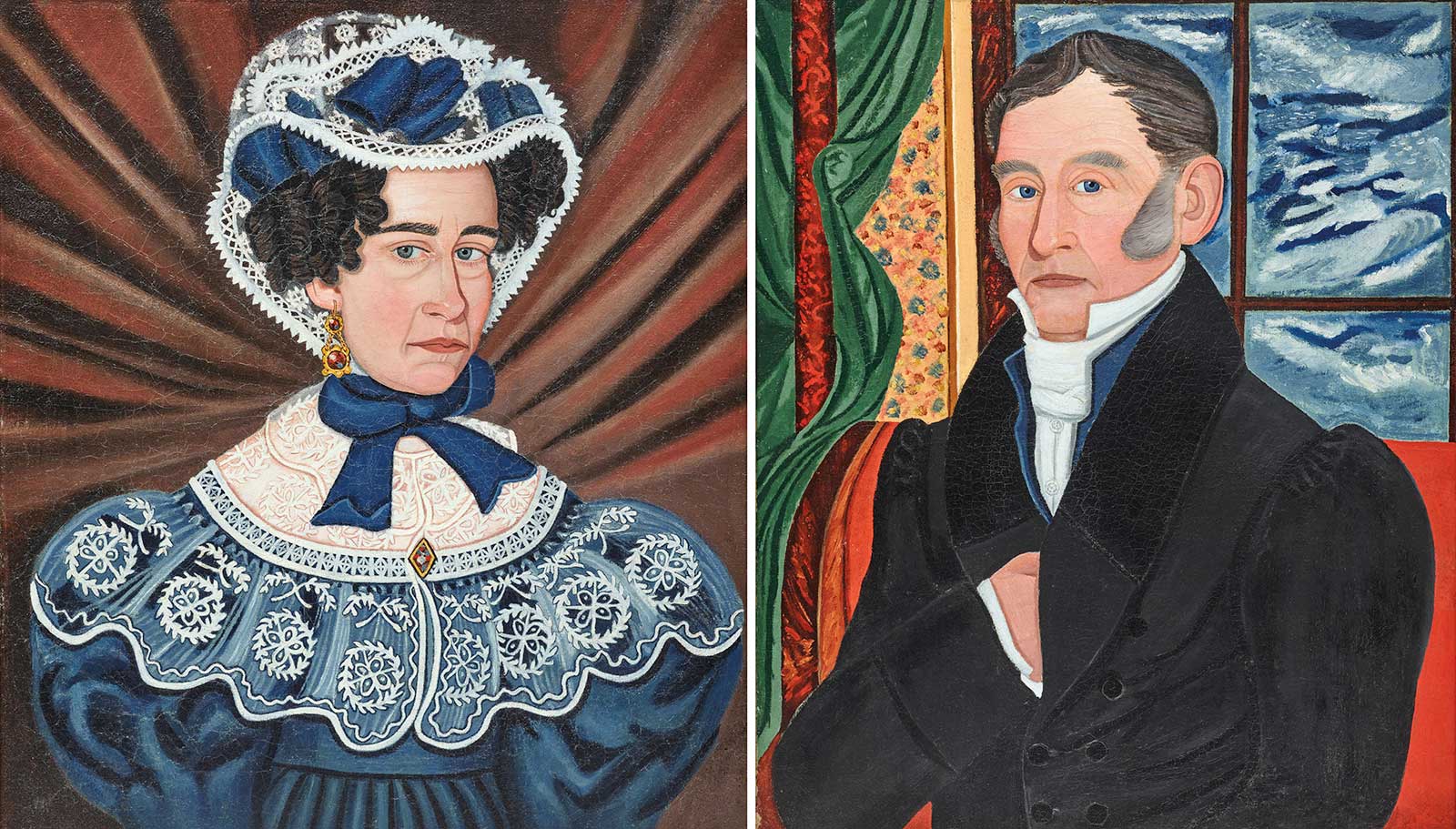
Grogan & Company, American School (Philadelphia, 1825-30), Pair of Portraits: A Lady and A Gentleman. The Lady: Lace and Frills. Oil on canvas, 28½ x 25¼ in. The Gentleman: Man with White Stock in Interior. Oil on canvas, 28 x 23½ in. Sold for $406,250 during the May 2021 Spring Auction.
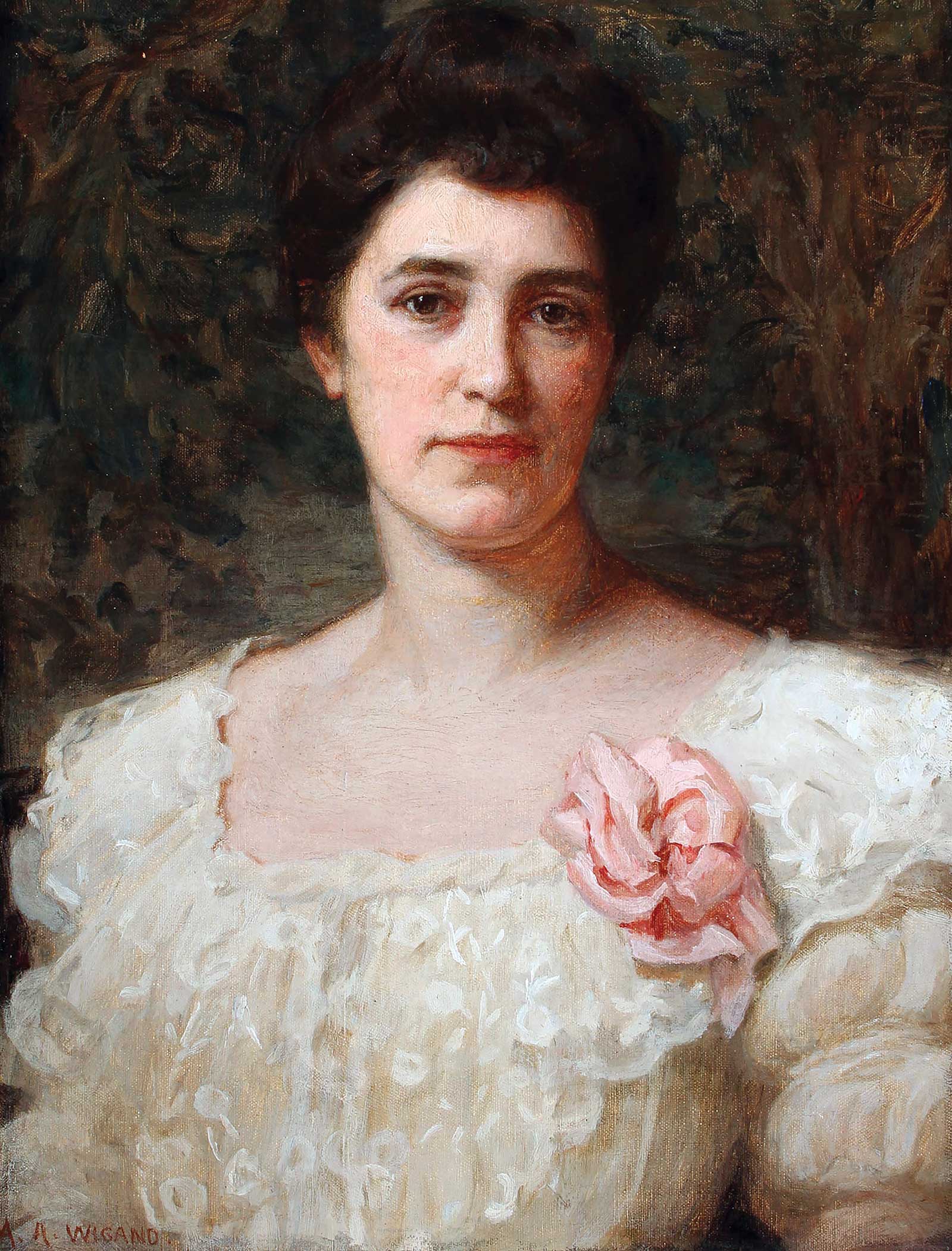
Hawthorne Fine Art, Portrait of a Woman in a White Dress. Oil on canvas, 15 x 115/8 in., signed lower left, by Adeline Albright Wigand (1852-1944).
Two significant portraits available through New York-based gallery Vallarino Fine Art include works by American painters Frank H. Desch (1873-1934) and Karl Albert Buehr (1866-1952). “Desch was an accomplished American painter known primarily for his refined figure studies and portraits, which bridged late academic traditions and the emerging modern sensibility of the early 20th century,” shares the gallery. “Active mainly in New York, Desch exhibited regularly and built a reputation for intimate, psychologically nuanced depictions of women, often set in quiet interior spaces…Red Peignoir is a particularly strong example of his mature work. The painting captures a moment of inward reflection, using the mirror and the figure’s downward gaze to suggest self-awareness and emotional depth. The luxuriant garment and confident handling of paint underscore Desch’s skill at combining intimacy with formal sophistication.” Trained at the Art Institute of Chicago and later in Paris, Buehr was a leading figure in American Impressionism, celebrated for his luminous outdoor scenes and refined depictions of women and children at leisure. His time in France had a lasting influence on his work, particularly his sensitivity to light, atmosphere, and the rhythms of everyday life. “Painted circa 1912, Afternoon Shadows (Giverny, France) captures the fleeting effects of dappled light through confident, broken brushwork,” shares the gallery. “The relaxed figure, parasol and still-life elements evoke a quiet moment of modern leisure, while the shimmering surface reflects Buehr’s deep engagement with French Impressionist techniques learned at Giverny, filtered through an American sensibility.”
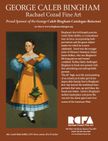
In addition to a wide range of museum-quality 19th- and 20th-century American paintings and sculpture, as well as select modern and contemporary art, Rachel Covad Fine Art specializes in the paintings of George Caleb Bingham (1811-1879) and Thomas Hart Benton (1889-1975).
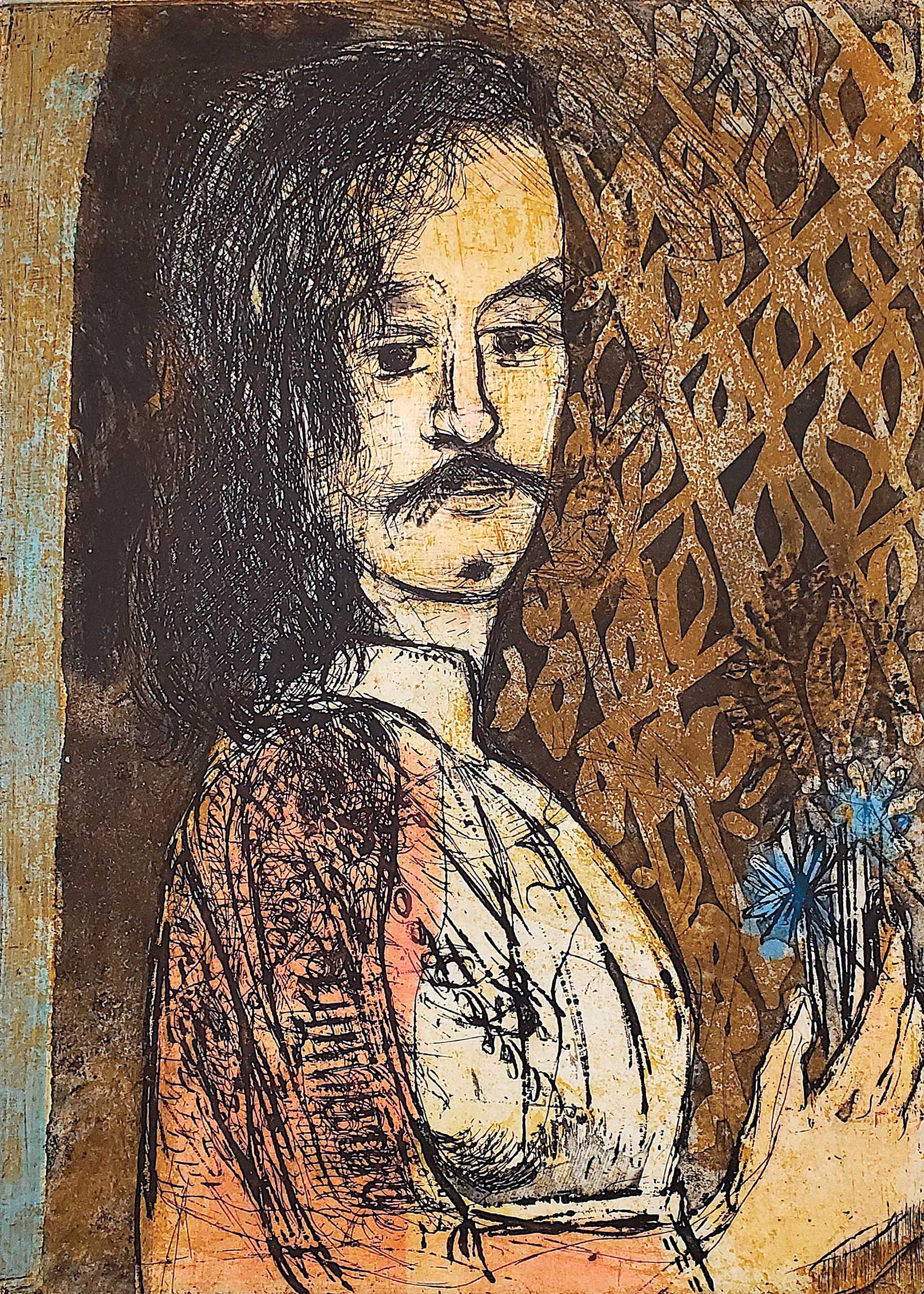
J. Kenneth Fine Art, Young Nobleman (self-portrait), ca. 1990. Intaglio and color stencil, 17¾ x 12¾ in., Malcolm Myers (1917-2002).
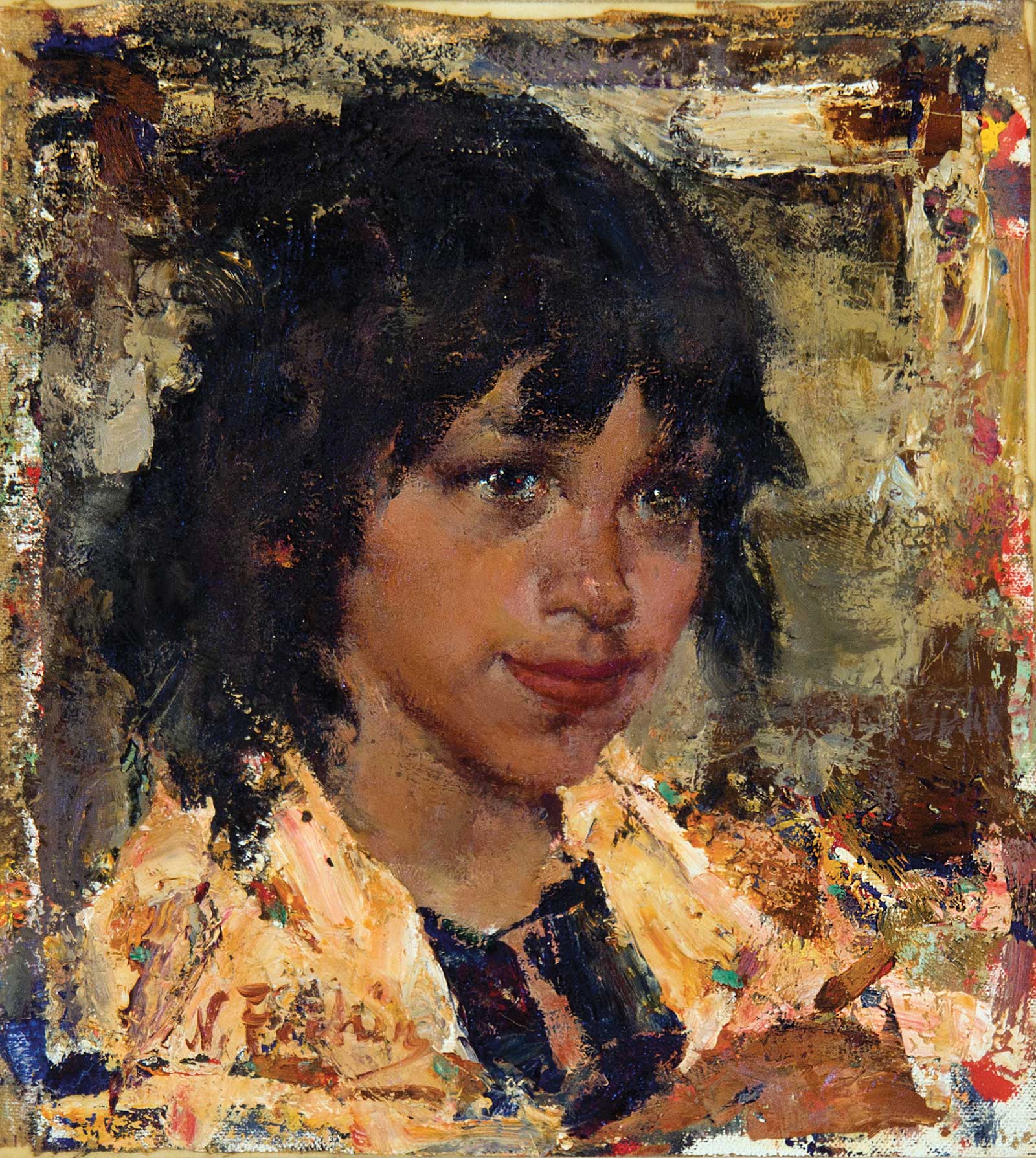
Scottsdale Art Auction, Consuelo. Oil, 13 x 23 in., by Nicolai Fechin (1881-1955). Available at the Scottsdale Art Auction on April 10 and 11. Estimate: $175/275,000
“Bingham is arguably the most beloved 19th century artist from the Midwest,” explains the gallery, which is headquartered in Kansas City, Missouri, with branches in Tucson and Fort Worth. “The majority of his portraits, landscapes, as well as river and genre scenes are in museum collections, thus this near life-sized portrait is a rare find in the marketplace,” says gallery owner Rachael Blackburn Cozad. “Miss Sarah Henry Rollins presents an important transitional moment between Bingham’s more folk-art style portraits and his later genre scenes.” Another highlight in her offerings is a portrait by Clinton Blair King (1901-1979) who is associated with the regional art of the Fort Worth School and Santa Fe Art Colony, during a period from 1924 up to the early 1940s. “Many of King’s early influences come together in this brilliant portrait of Pachita, having soft echoes of both Paul Gauguin and Diego Rivera,” says Covad. “An intimate portrait of a young woman braiding her hair, she offers an example of his early modernist spirit that developed in New Mexico and Texas and stands as a masterpiece of his portraiture.
Bedford, New York-based gallery Godel & Co. specializes in 19th- and early-20th-century American art, including landscapes in the Hudson River School and luminist styles, as well as still life, genre and marine subjects. The gallery’s inventory also encompasses impressionism, post-impressionism, the Ashcan School and early modernism. Currently in their holdings is a portrait by acclaimed painter Cecilia Beaux (1855-1942) depicting Henry Sandwith Drinker, Beaux’s nephew and a prominent Philadelphia lawyer. “Cecilia Beaux was among the leading portrait painters working in America around the turn of the 20th century, drawing a wealthy and socially prominent clientele in her home city of Philadelphia as well as in Boston and New York,” says a gallery representative. “Noted for her confident brushwork and balanced use of color, her portraits of men, women and children demonstrate her talent for conveying both a convincing likeness and the distinctive character of her subjects.”
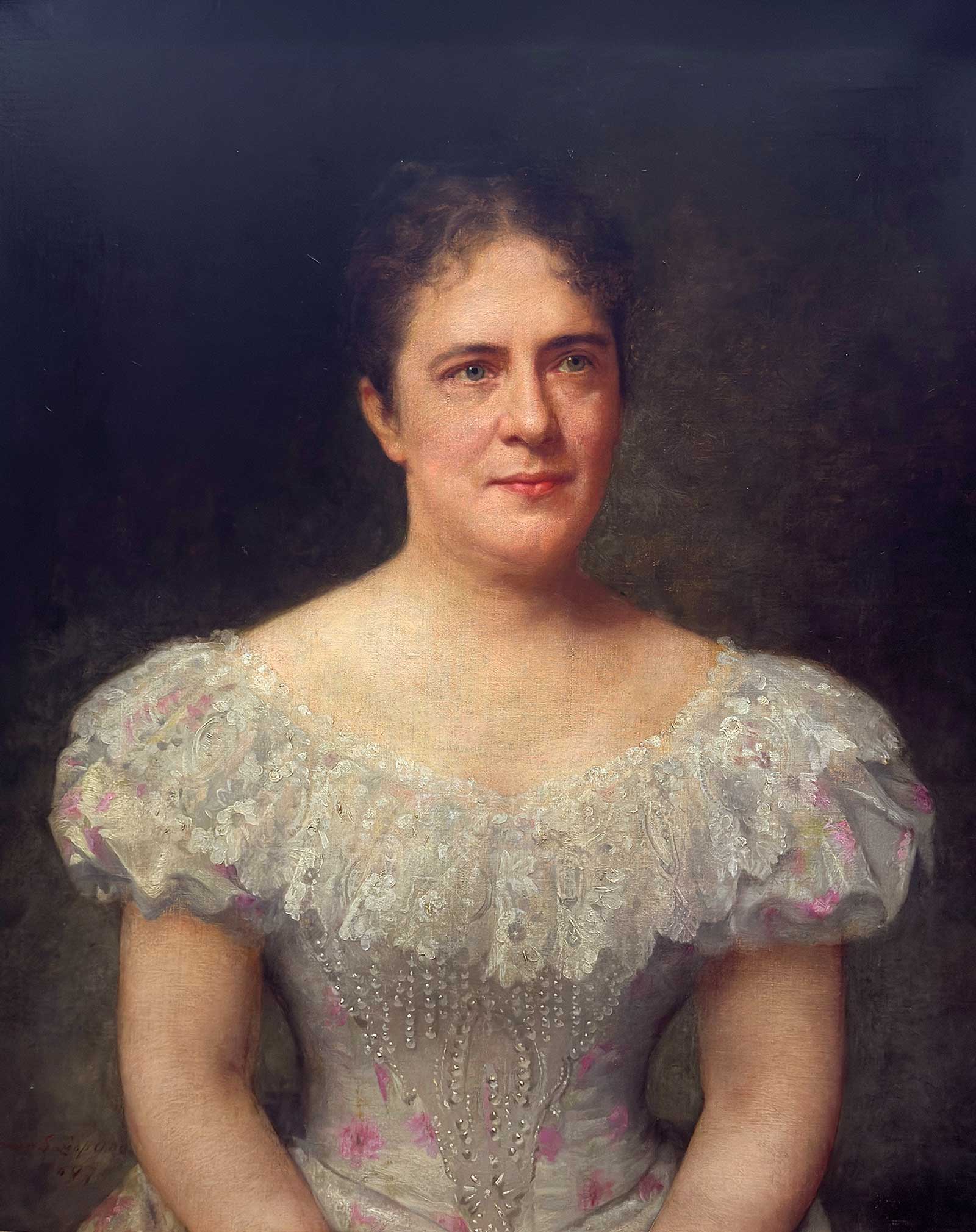
Mattatuck Museum, Julia Haring White, 1897. Oil on canvas, by Jeanette Shepherd Harrison Loop (1840-1909). Mattatuck Museum, Gift of H. Wade White, 1970; 70.17.2.
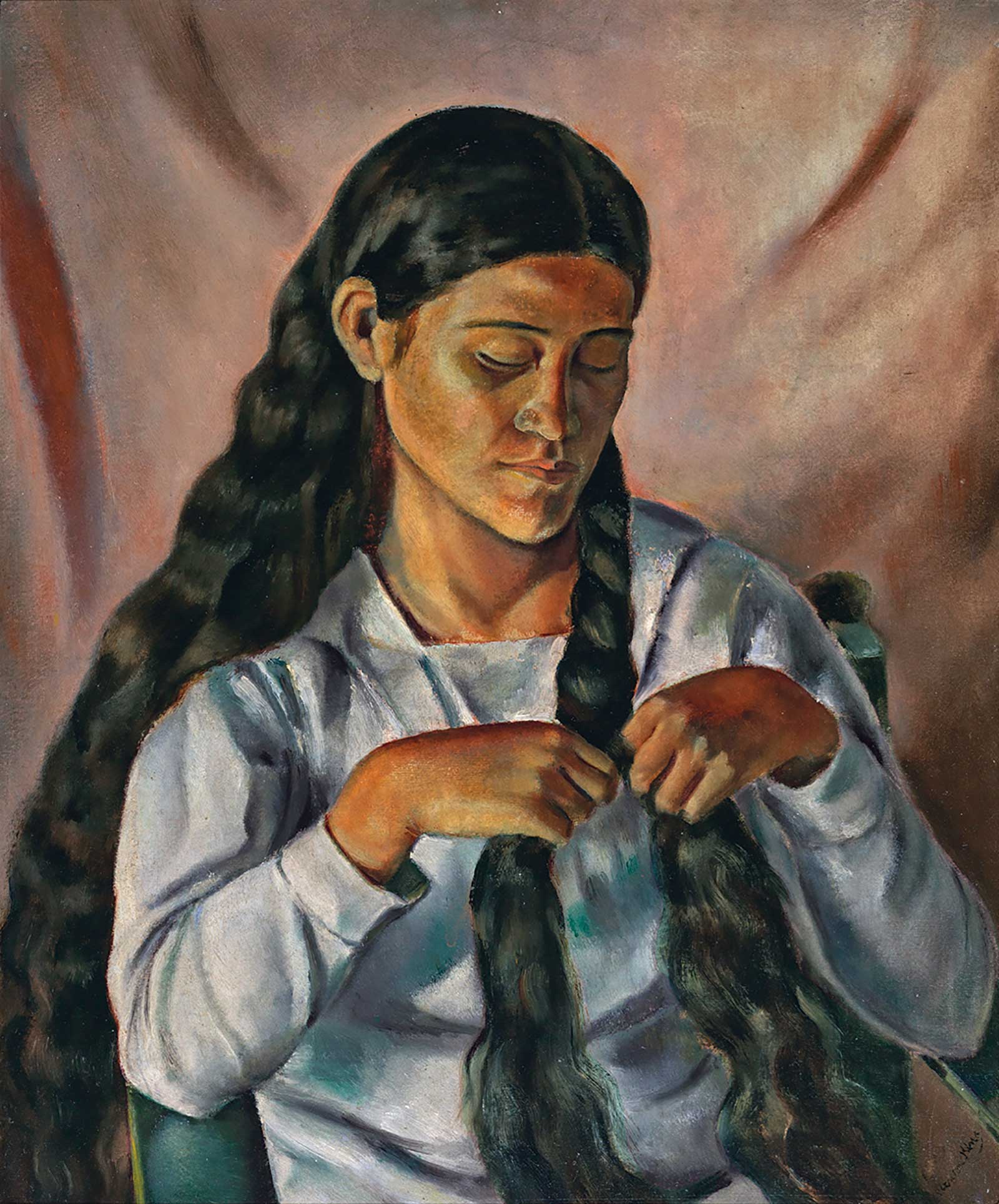
Rachel Covad Fine Art, Pachita, ca. 1925. Oil on board, 24 x 20 in., by Clinton Blair King (1901-1979).
Based in Shelburne, Vermont, J. Kenneth Fine Art is committed to a well-curated group of artists and estates with an emphasis on post-war artists who have been under appreciated or overlooked. He has recently become the East Coast representative of the estate of Malcolm Myers (1917-2002), a master printmaker, painter and teacher. He started the printmaking department at the University of Minnesota where he taught for more than 50 years. In 1951 and 1954 he received Guggenheim Fellowships to work in Paris and then in Mexico City. Young Nobleman is an intaglio and color stencil self-portrait created circa 1990.
With two locations in Charlotte, North Carolina, the Mint Museum is the state’s first art museum and home to one of the largest collections of fine art, craft and design in the southeastern United States. One highlight among their historic American artwork is a portrait by Robert Henri (1865-1929). “Robert Henri was a charismatic, independent-minded artist and teacher, best known as the leader of the Ashcan School of urban realists,” the museum explains. “Rejecting academic convention, he believed art should grow from direct engagement with everyday life, especially the energy of the street. This conviction challenged the art establishment but united artists including George Bellows, George Luks, Everett Shinn and John Sloan. Throughout his career, Henri devoted himself to portraiture, depicting people from all walks of life with empathy and psychological depth.” Henri painted this portrait of Brien O’Malley, his friend and guide, during his first visit to Achill, Ireland, in 1913.
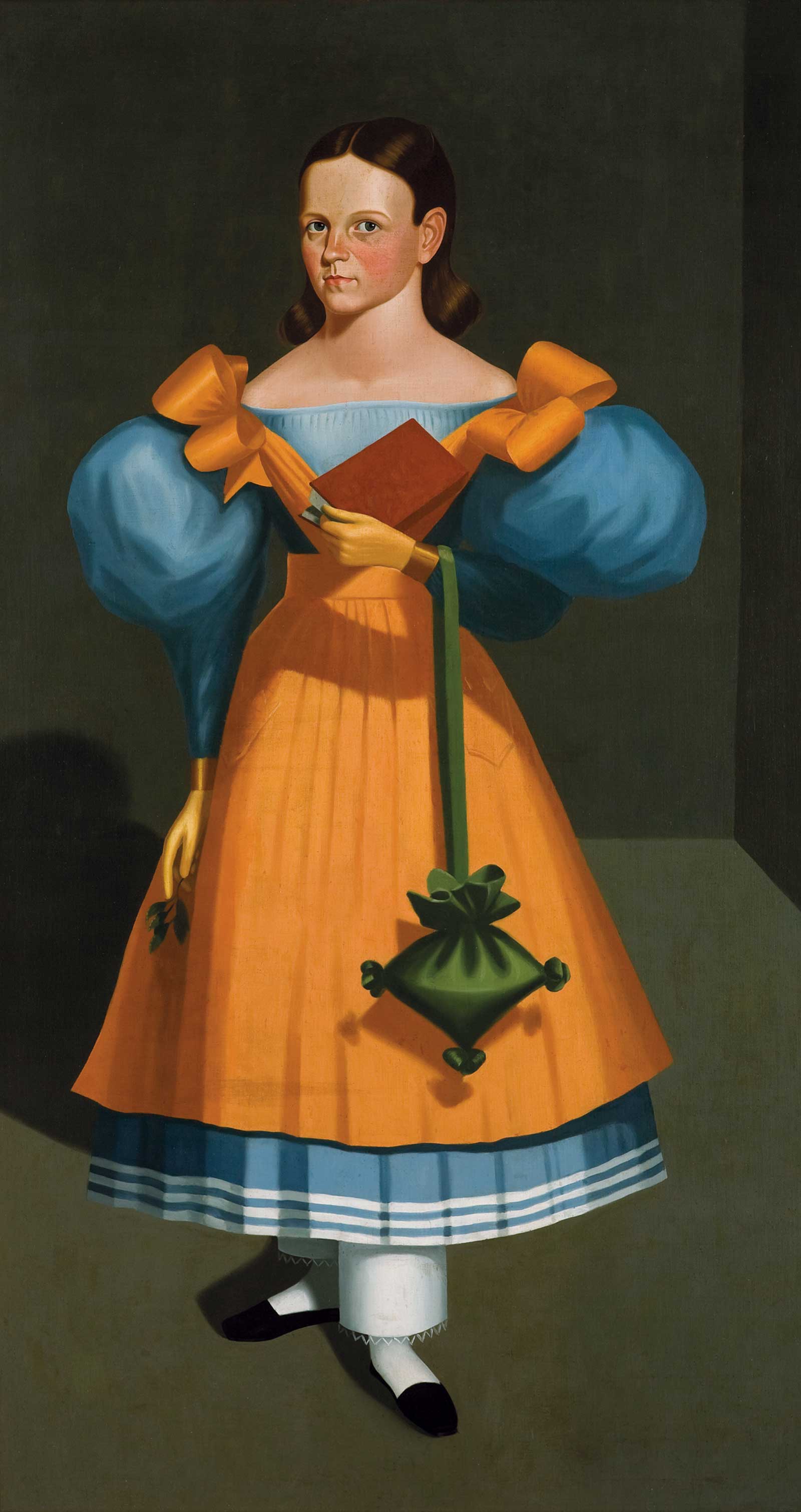
Rachel Covad Fine Art, Miss Sarah Helen Rollins, 1837. Oil on canvas, 60 x 32 in., by George Caleb Bingham (1811-1879).
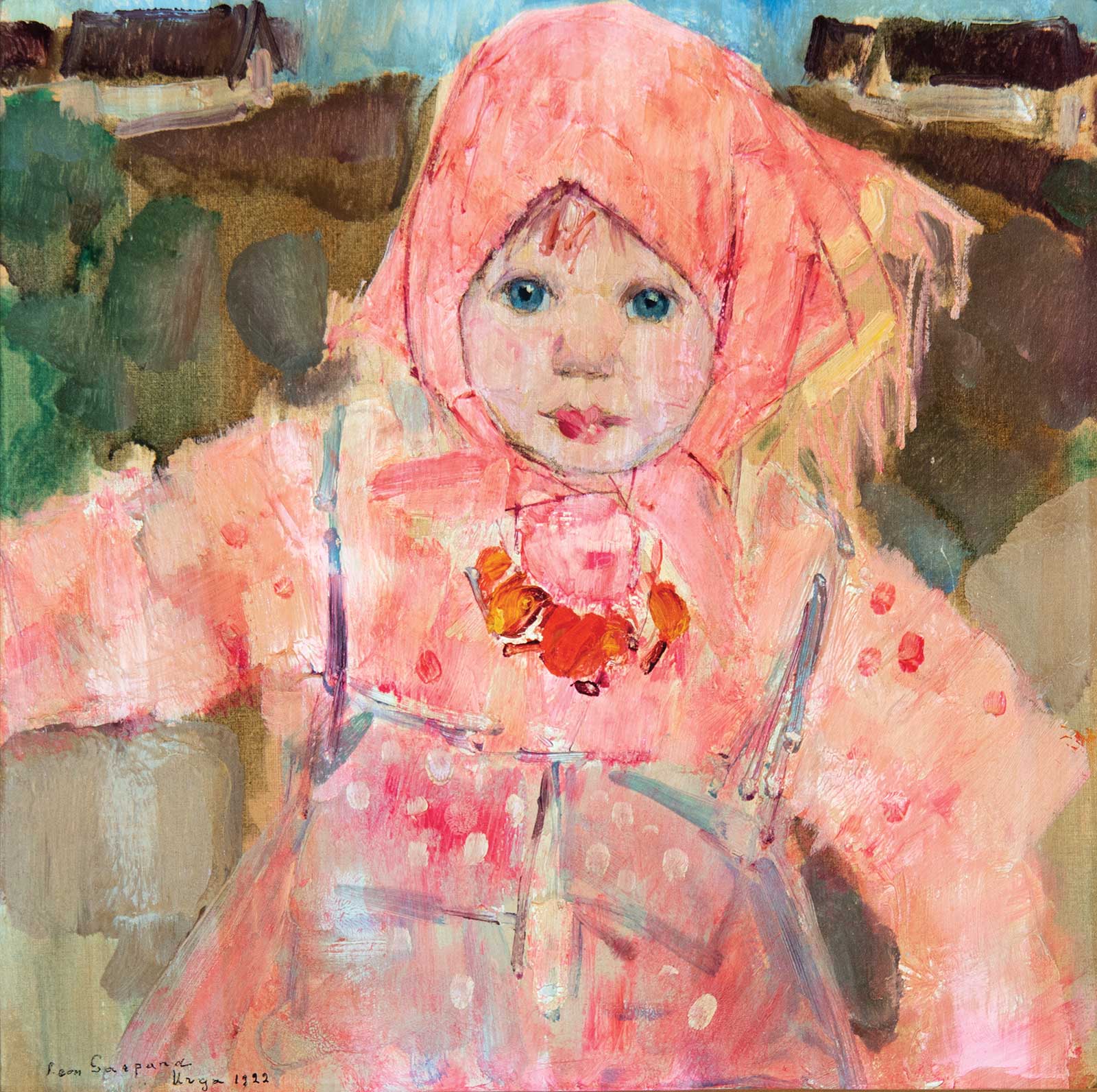
Scottsdale Art Auction, Portrait of a Young Girl (Urga, 1922). Oil, by Leon Gaspard (1882-1964). Available at the Scottsdale Art Auction on April 10 and 11. Estimate: $25/35,000
Located in Boston’s historic Beacon Hill neighborhood, Grogan & Company is a high-end, full-service boutique auction house. The firm routinely achieves top prices at auction across all collecting categories of American artwork and holds the record auction sales price for numerous New England artists. Grogan & Company’s commitment to providing personalized attention to consignors, buyers, and each item they handle makes them leaders in the fine art and jewelry auction industries. Whether you live around the corner from their gallery or across the country, and whether you have a single object or an entire collection, they will treat you like a neighbor while commanding their global reach to maximize the value of your items. This depth of experience has contributed to notable successes across many categories, including portraiture, where works by artists such as Mary Cassatt, Lilla Cabot Perry and John Singer Sargent have achieved top-of-market prices at auction.
Through May 24, the Flagler Museum is presenting Charles Courtney Curran and the Romance of American Impressionism, an exhibition that traces the celebrated American painter’s journey from his Ohio roots to New York, Paris, and the mountaintop artists’ colony of Cragsmoor, New York, where he spent four decades capturing sunlit gardens, breezy mountaintops and moments of quiet grace. “Blending the elegance of the Gilded Age with the airy brushwork of American Impressionism, Curran’s paintings, filled with women in flowing white dresses, playful children and lush floral landscapes, offer a luminous vision of summer at its most poetic,” notes the Palm Beach, Florida, museum. Drawn from public and private collections, the exhibition includes rarely seen works, early portraits and period fashions that bring his idyllic worlds to life, including the present piece, On the Cliff from 1910.
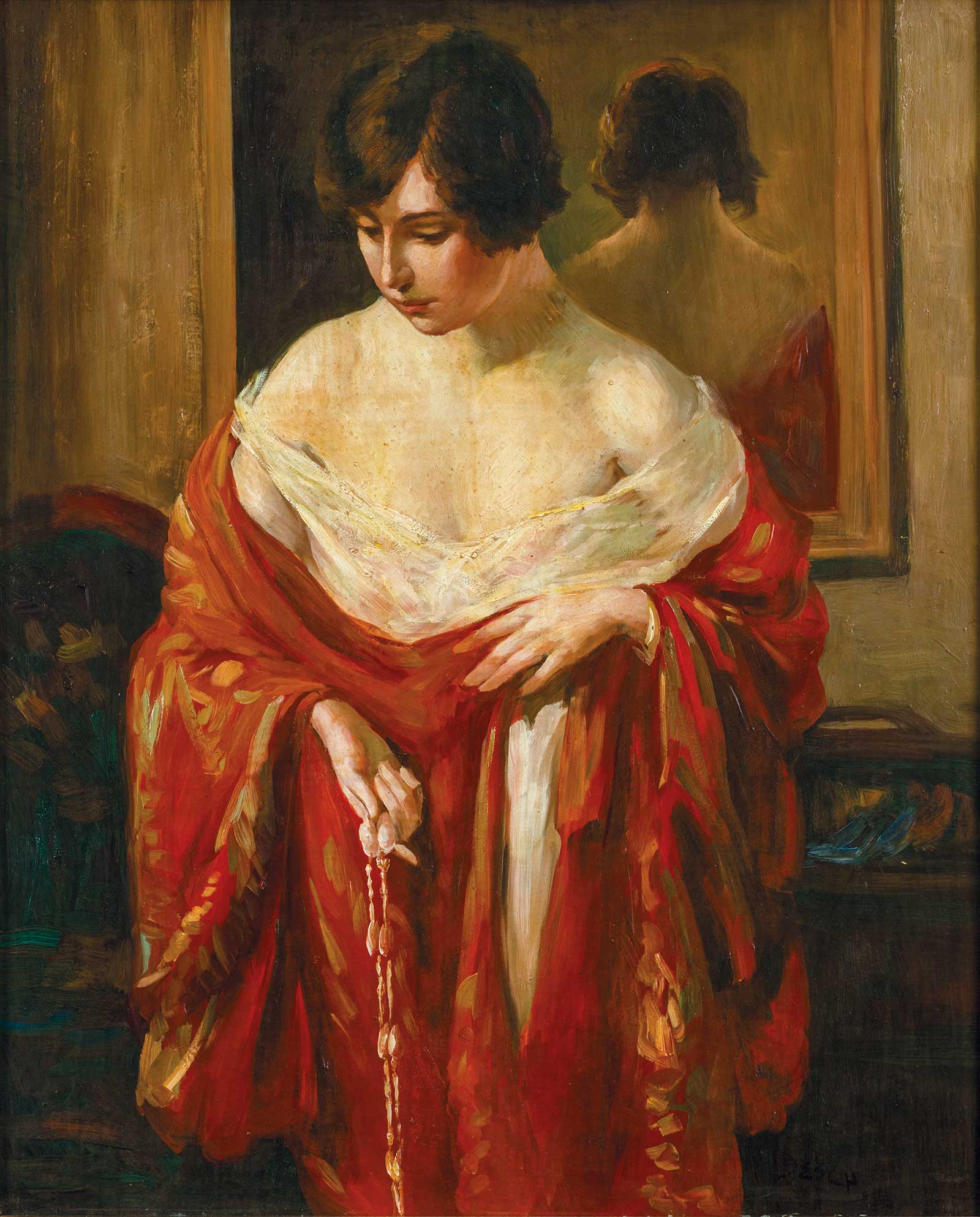
Vallarino Fine Art, Red Peignoir. Oil On board, 22 x 18 in., signed lower right, by Frank H. Desch (1873-1934).
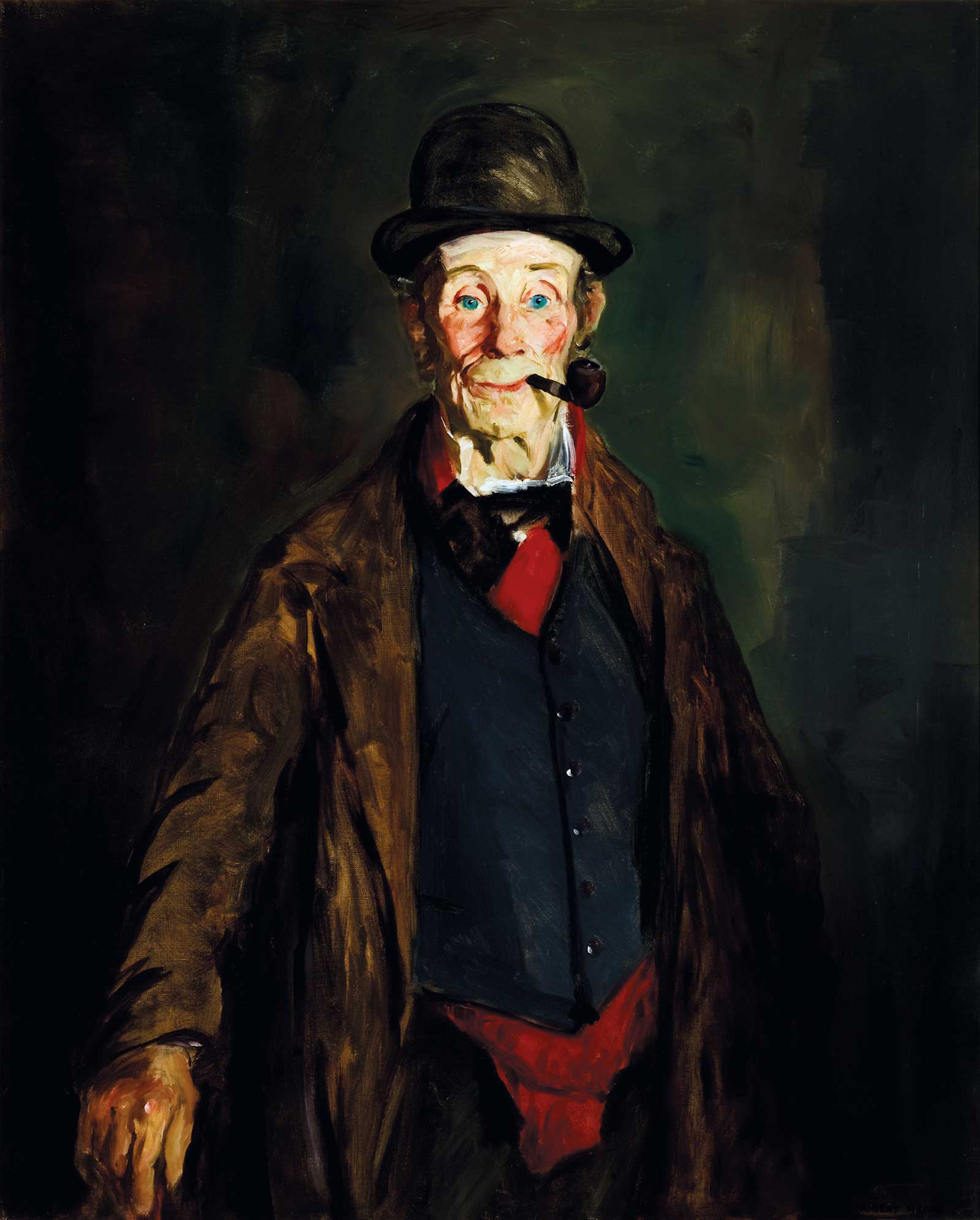
Mint Museum, My Friend Brien, 1913. Oil on canvas, by Robert Henri (1865-1929). Gift of Mr. and Mrs. John L. Crist, Jr. in memory of John L. Crist, Sr. 1966.14.
Hawthorne Fine Art is a Manhattan-based fine art gallery specializing in 19th- and early 20th-century American painting with a focus on works by historic women artists as well as the Hudson River School and impressionist movements. Hawthorne Fine Art has championed the work of historic women artists through regular exhibitions and scholarly research including the recent exhibition Illuminating Nature: Women of the Hudson River School, a collaboration between Hawthorne Fine Art and Sotheby’s. Here, Hawthorne Fine Art shares Portrait of a Woman in White Dress by Adeline Albright Wigand (1852-1944). The gallery adds, “A respected portrait artist during her lifetime, Wigand was an early president of the National Association of Women Artists. A student of William Merritt Chase, Wigand studied in New York City at the Cooper Union, the Art Students League and the National Academy of Design and in Paris at the Academie Julian. Her husband was artist Otto C. Wigand (1856-1944).”
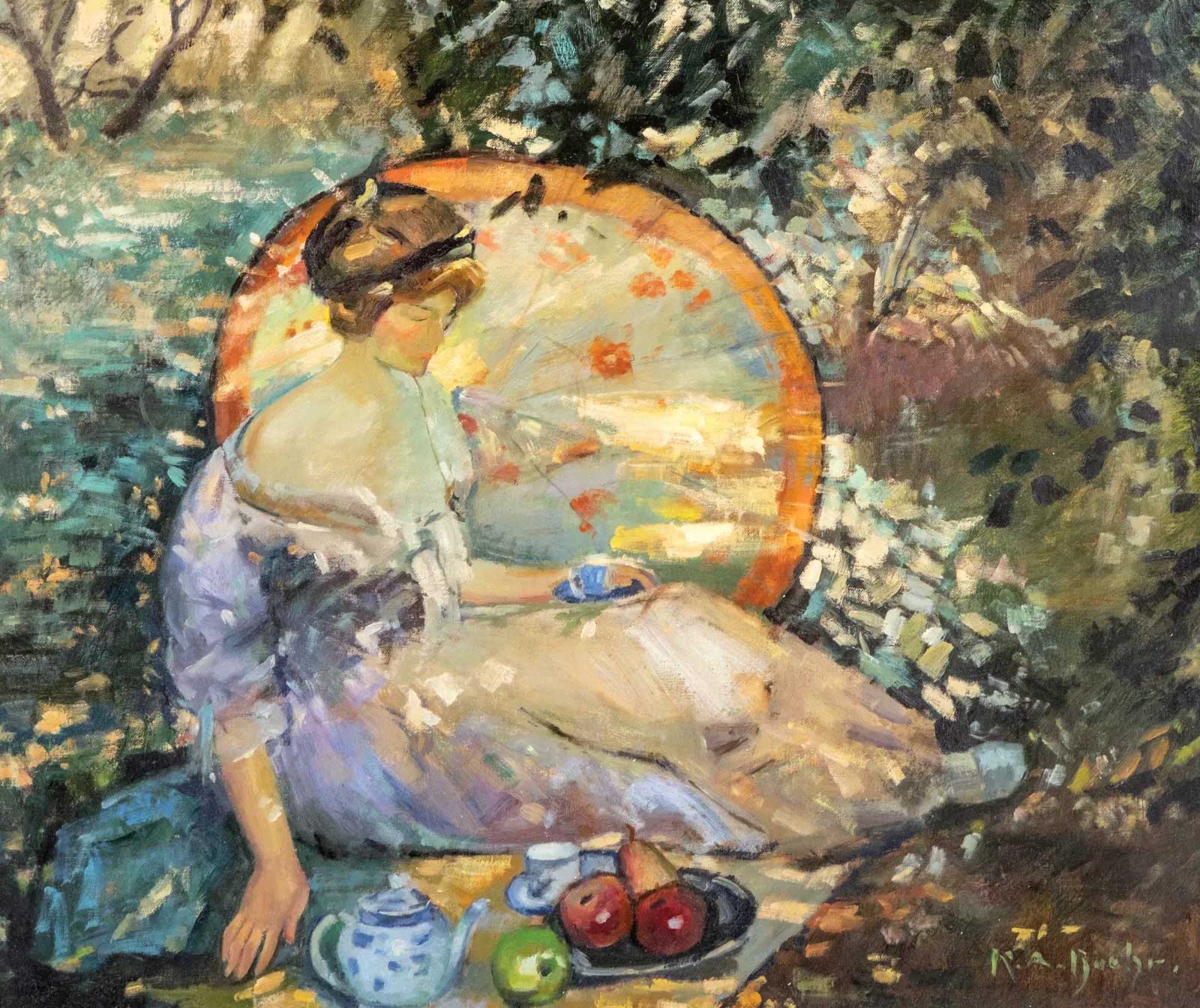
Vallarino Fine Art, Afternoon Shadows (Giverny, France), ca. 1912. Oil on canvas, 25 x 30 in., signed lower right, by Karl Albert Buehr (1866-1952).
The Mattatuck Museum, located in Waterbury, Connecticut, presents a season of exhibitions that consider portraiture as a powerful lens for identity, history, and community. About Face: 250 Years of American Portraits traces the evolution of American self-representation from the nation’s founding to the present, revealing how portraiture has shaped ideas of citizenship, belonging, and power. Ascendancy: The Self in Contemporary Art, guest curated by Camilo Alvarez, brings together more than 100 contemporary works that challenge stereotypes and foreground personal agency, offering expanded perspectives on femininity and the construction of the self. Complementing these presentations, Wende Caporale-Green: The Art of Feeding Community features finely rendered figurative portraits that honor everyday people and the sustaining role of shared meals. The museum comments, “Together, these exhibitions highlight the enduring relevance of portraiture in American art, inviting viewers to encounter both historical and contemporary voices and to see their own stories reflected within the broader American experience.” —
Featured Galleries, Auction Houses & Museums
Debra Force Fine Art, Inc.
13 East 69th Street, Suite 4F New York, NY 10021
t: (212) 734-3636
info@debraforce.com
www.debraforce.com
Flagler Museum
1 Whitehall Way Palm Beach, FL 33480
t: (561) 655-2833
flagermuseum.org
Godel & Co.
Bedford, NY
By Appointment Only t: (914) 205-3695
info@godelfineart.com www.godelfineart.com
Grogan & Company
20 Charles Street Boston, MA 02114
t: (617) 720-2020
www.groganco.com
Hawthorne Fine Art
575 5th Avenue, 14th Floor New York, NY 10017
By Appointment Only
t: (212) 731-0550
info@hawthornefineart.com
www.hawthornefineart.com
J. Kenneth Fine Art
145 Pine Haven Shores Shelburne, Vermont 05482
t: (802) 540-0267
jkennethfineart@gmail.com
www.jkennethfineart.com
Mattatuck Museum
144 W. Main Street Waterbury, CT 06702
t: (203) 753-0381
www.mattmuseum.org
Mint Museum Uptown
Levine Center for the Arts
500 South Tryon Street Charlotte, NC 28202 Mint Museum Randolph
2730 Randolph Road Charlotte, NC 28207
t: (704) 337-2000
www.mintmuseum.org
Portrait Society of America
Tallahassee, FL
t: (877) 772-4321
info@portraitsociety.org
www.portraitsociety.org
Rachael Cozad Fine Art
700 W. 31st Street, Suite 208 Kansas City, MO 64108
t: (816) 533-6766
www.rachaelcozad.com
Scottsdale Art Auction
7176 Main Street Scottsdale, AZ 85251
(480) 945-0225
www.scottsdaleartauction.com
Vallarino Fine Art
222 E. 49th Street New York, NY 10017
t: (212) 628-0722
info@vallarinofineart.com
www.vallarinofineart.com
Powered by Froala Editor