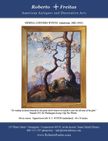
Made possible by a multiyear grant from the Robert C. Vance Foundation, the New Britian Museum of American Art has acquired Landscape, 1870, by Robert S. Duncanson (1821-1872), who was a second generation member of the Hudson River School painters. The artist is known for his pastoral scenes that often include rivers and mountains, and exemplifies the Hudson River School’s style of romantic landscape views.
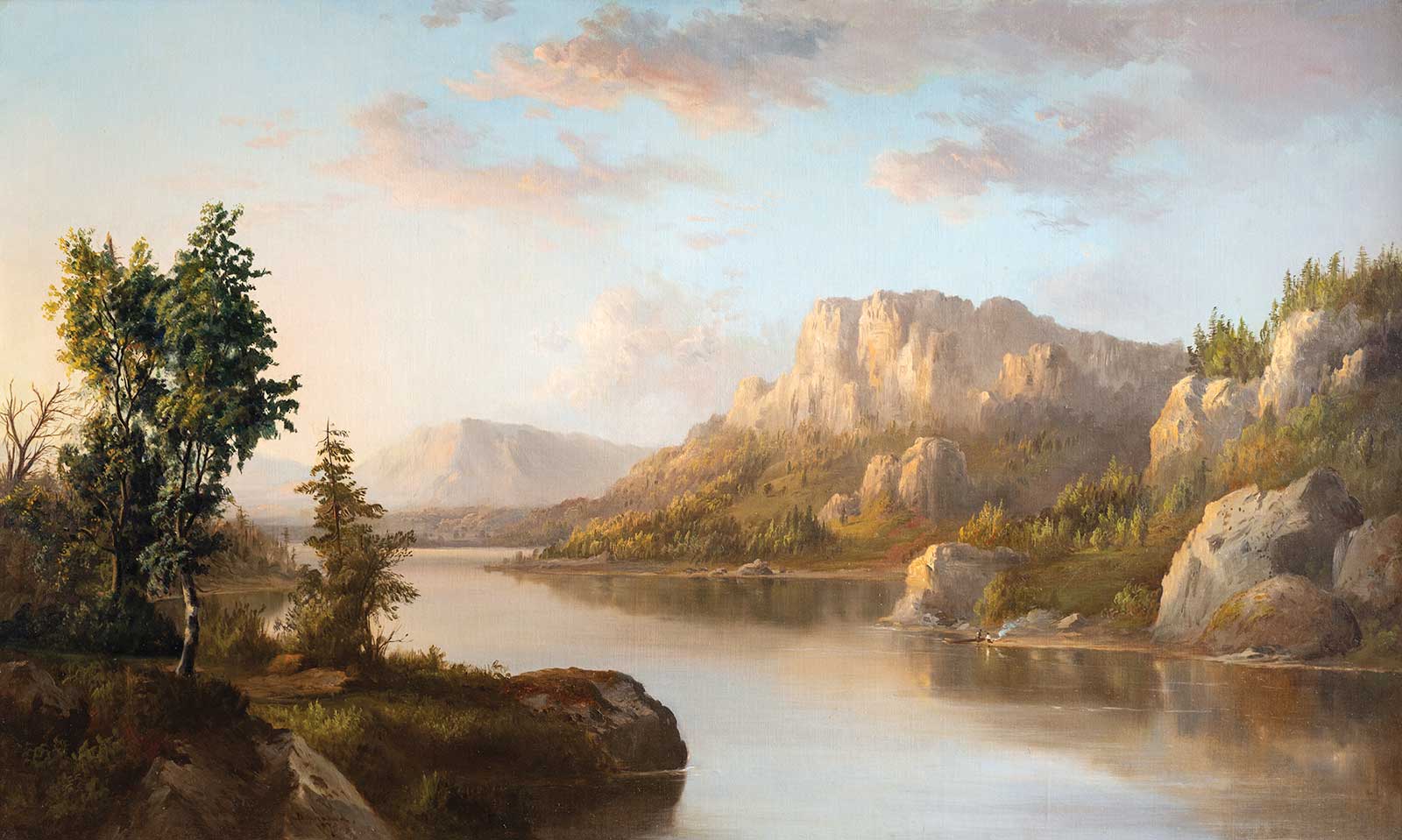
Robert S. Duncanson (1821-1872), Landscape, 1870. Oil on canvas, 30 x 50 in. New Britain Museum of American Art, Museum Purchase with funds provided by the Robert C. Vance Foundation, 2022.8.
“Successful during his lifetime, Duncanson was known in the 1800s by American press as the ‘best landscape painter in the West,’ and London newspapers hailed him as an equal to his British contemporaries,” say museum reps. “Born a freedman in Seneca County, New York, in 1821 to mixed-race parents, Duncanson moved to the prosperous city of Cincinnati in 1840 to pursue a career in the arts…Duncanson died at the age of 51, and while his work fell into obscurity for many decades, he is now recognized as a premier 19th-century landscape artist…”
The museum notes that Landscape is particularly extraordinary for its exceptional condition, size, supporting documentation and art historical importance. In 2004, Duncanson scholar Joseph D. Ketner wrote about Landscape: “The serene, wilderness landscape is one in a series of ambitious works that Robert Duncanson created in his Cincinnati studio in the late phase of his storied career. The painting exemplifies the artist’s vision of the picturesque beauty of the North American landscape.”
Within the context of the museum’s 19th-century landscape gallery, Duncanson’s work also introduces important insights into relationships and opportunities that existed across the network of artists represented.
“Denied access to formal art training due to his race, Duncanson taught himself by studying Thomas Cole’s work,” says the museum. “Landscape therefore demonstrates Cole’s legacy and impact on second generation Hudson River School painters, as well as Duncanson’s talent and resolve to become an artist despite the lack of formal education. Moreover, Duncanson’s friendship with Worthington Whittredge and William Sonntag, both represented in NBMAA’s collection, reveals exchanges of influence among artists of the 1800s, who worked, studied, and shared travels together across the American landscape and abroad. Finally, Duncanson’s story is one of inspiration and determination to pursue and achieve one’s artistic aspirations despite significant obstacles and to create pathways toward success for generations of artists to come.” —
Powered by Froala Editor