For the past 50 years, Vincent Vallarino has been involved in the arts, first as a photographer whose work was exhibited at major museums and institutions. Steeped in the history of fine art photography and technical expertise, he began collecting photographs as a young man and began dealing in the medium at a time when it was a niche market among galleries and museums.
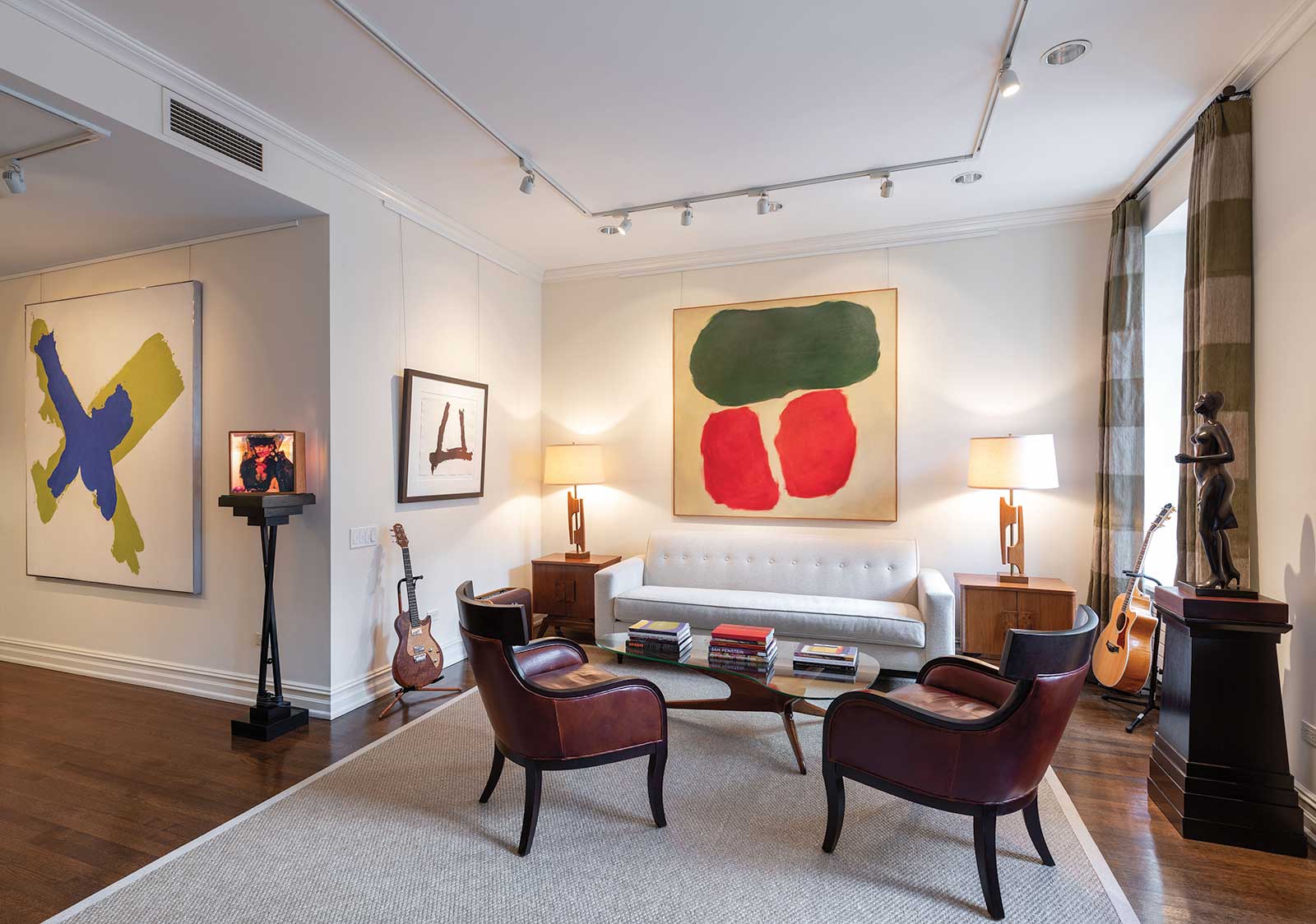
The interior of the Vincent Vallarino Fine Art showroom, a 3,000-square-foot private townhouse in New York City.
In 1987, Vallarino and his partner Abby Taylor started the Greenwich Gallery in Greenwich, Connecticut, which specialized in 19th- and 20th-century American and European paintings. In 1996, Vallarino was elected to the board of directors of the Fine Art Dealers Association where he served until 2010. During that time, in 2006, Vallarino started Vallarino Fine Art specializing in American post-war artists with a focus on the New York School of abstract expressionists. He has published 25 catalogues and short films on the subject, and has been influential in reintroducing numerous artists and many women artists from this period to the art market. A 50-year retrospective of Vallarino’s photographs is on view at Benrubi Gallery in New York City through the end of February.
Vallarino currently resides in Millbrook, New York, on what was the Henry Flagler estate. I sat down with Vincent to ask him about his life and career in the art world.
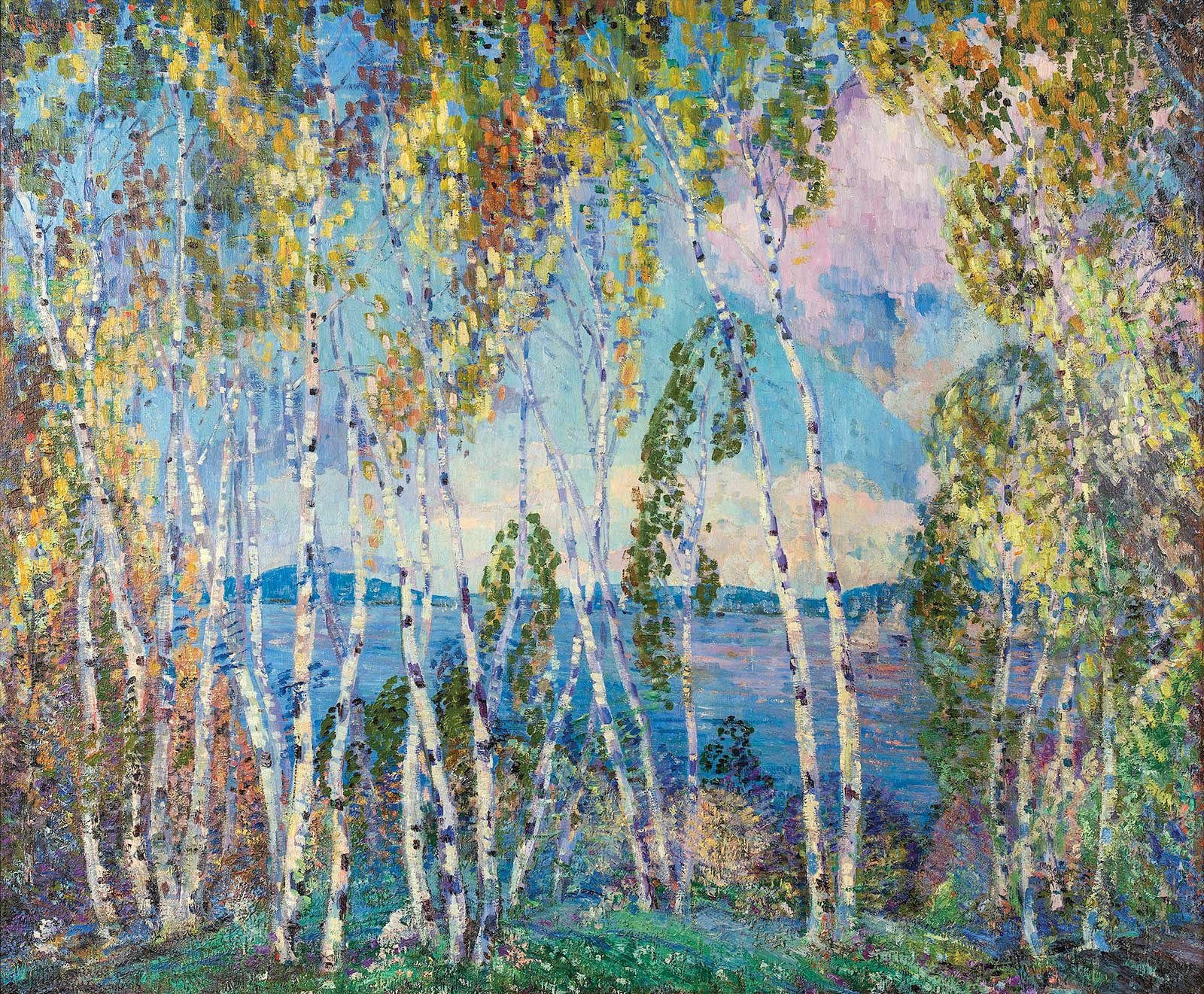
Dorothea M. Litzinger (1889-1925), Autumn Birches, ca. 1920. Oil on canvas, 50 x 60 in., signed upper left, ‘Exhibited: Pittsburgh, Pennsylvania, Carnegie Institute, International Exhibition, 1925’ label on verso. Courtesy Vincent Vallarino Fine Art.
How would you describe what you do?
I am a private art dealer who runs a very large small business with a very different business model. I have a townhouse in New York on Turtle Bay Gardens where we house our extremely beautiful private gallery. It is truly the most wonderful place to show art as it is in-situ as one would see it in a home, not a gallery white box setting. [We] are one of the largest sources of American mid-century art from the American Abstract Artist Group, New York School of the Abstract Expressionists, Color Field and own many important estates of artist’s works, such as Jack Roth, John Little, Jane Piper, John Stephan, Fred Troller and Francois Aubrun. We just purchased the estate of Alexander Liberman, who was the most important art director of the 20th century and editor in chief of Condé Nast for 54 years. We also recently purchased the estate of Walter Allner, the Bauhaus artist and art director extraordinaire who was the art director of Fortune magazine under Henry Luce.
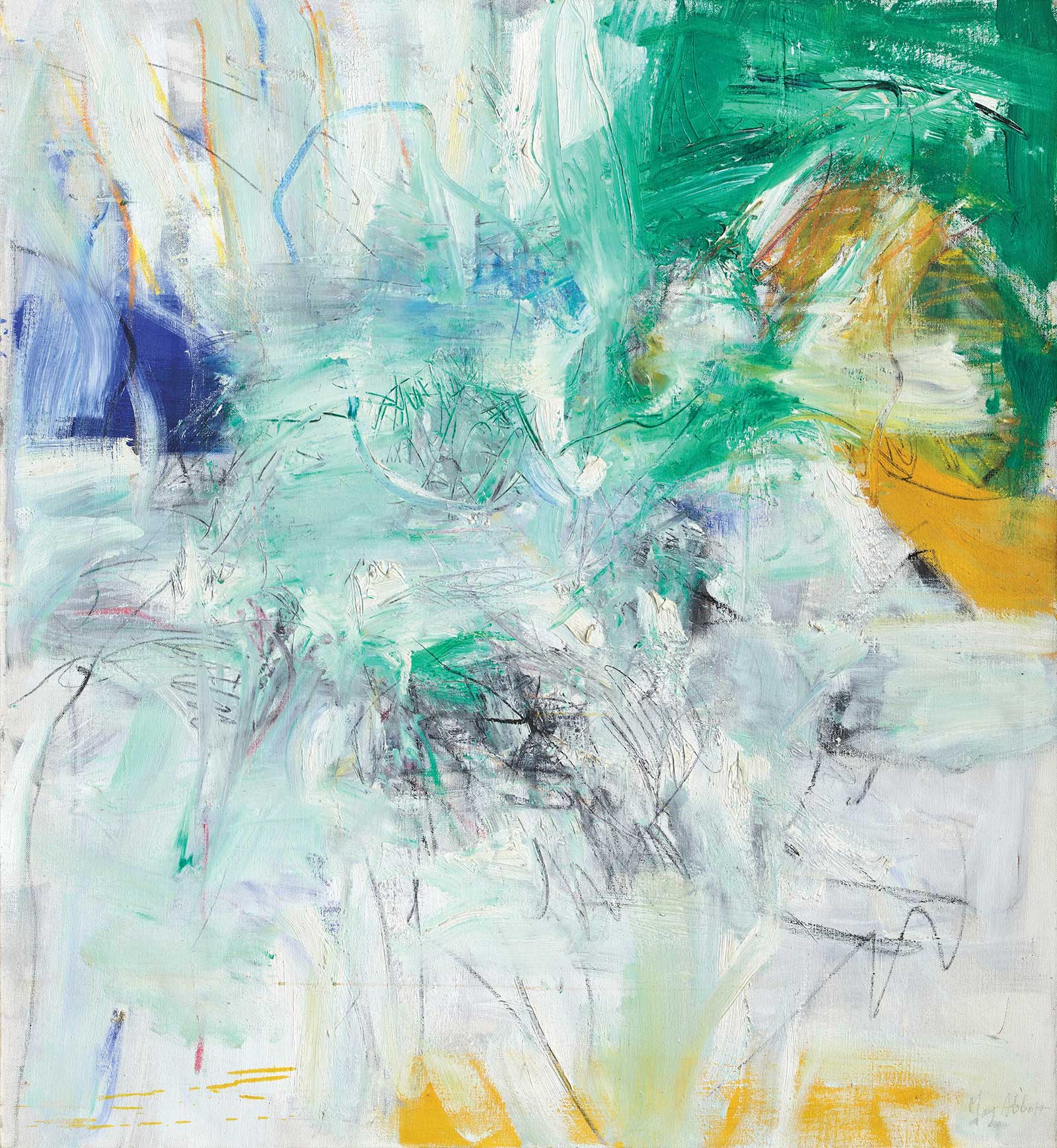
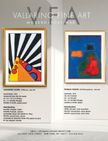
Mary Abbott (1921-2019), Untitled, ca. 1957. Oil on canvas, 49 x 45 in., signed lower right. Courtesy Vincent Vallarino Fine Art.
Tell me about your journey as a collector and how it led to becoming a prominent art dealer?
My initial start in purchasing and dealing photographs, and my growing knowledge of this medium’s market, led me to be exposed to unbelievable opportunities in finding masterpiece works on a daily basis, therefore I began purchasing works for myself and over the next 10 years or so I compiled a huge collection of the history of photography. I also was the first collector of fashion photographs by all the most important photographers from the 1920s onward. I eventually donated the history of photography collection to the Currier Museum of Art in Manchester, New Hampshire, whose director was Robert Doty (former director of the George Eastman House and the first director of the Whitney Museum), who put on the first photography exhibition at the museum, titled Photography in America in 1975. I then donated my fashion photography collection to the International Center of Photography.
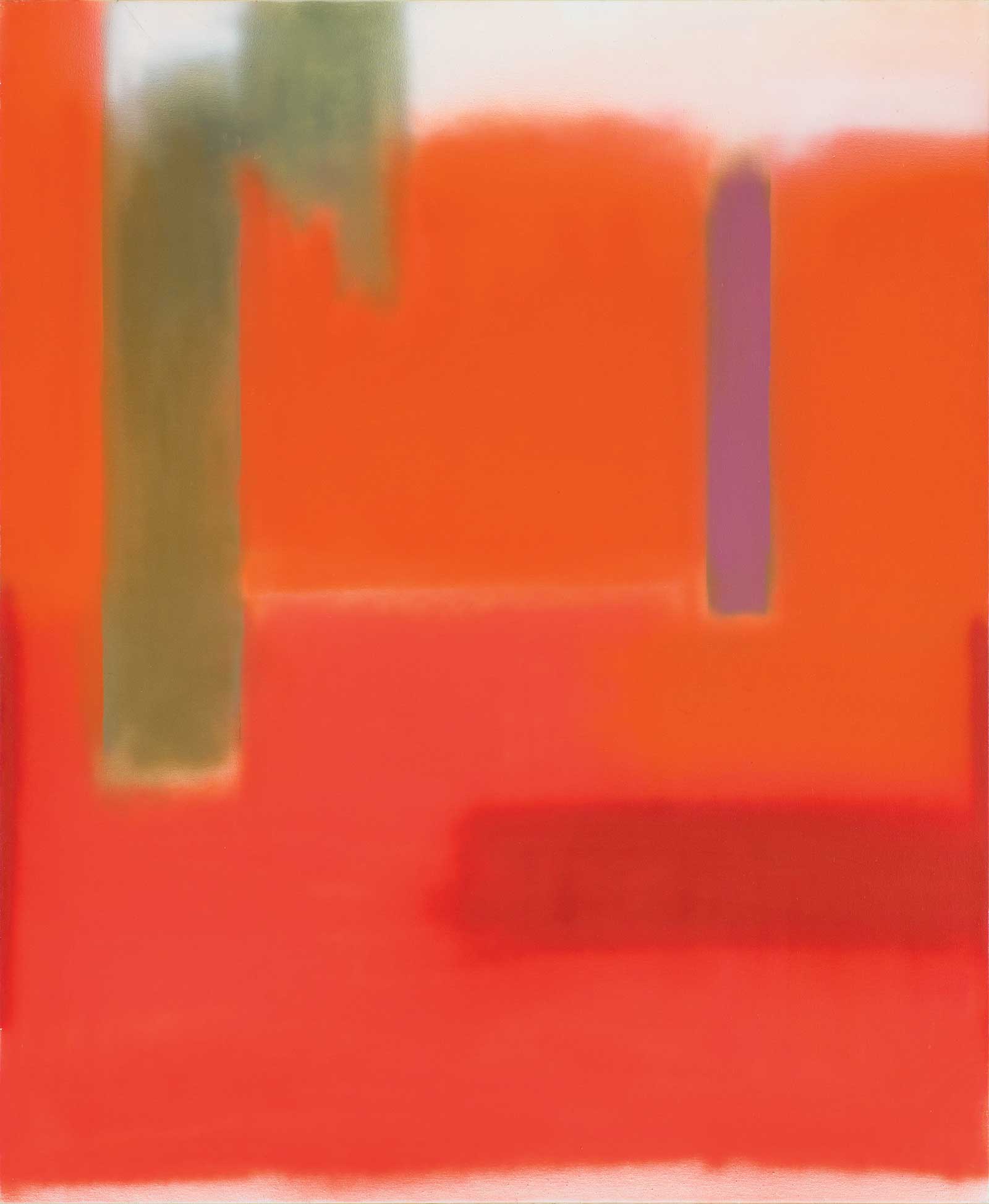
Esteban Vicente (1903-2001), The West, 1980. Oil on canvas, 68 x 56 in., signed, titled and dated verso. Courtesy Vincent Vallarino Fine Art.
How does having owned a gallery, being a collector and an artist, inform your business today?
I always say the future is all about the past, meaning knowing your history of art and all its different movements and understanding how they all relate to one another is the only way that really allows you to make judgements on what is good and bad and how the markets work, which is very complicated.
How do you determine the value of a piece of art?
Firstly, I own every work of art I sell. I rarely take works on consignment. This makes me a collector first as I am writing a check as a collector would. Purchasing everything I represent means I am 100 percent behind each work and believe in it. Do I purchase at auctions? Yes. Do clients hold that against you? Sometimes. But if I purchase at an auction I generally know more about the work than other competitors. We only purchase works of the highest quality and are extremely picky.
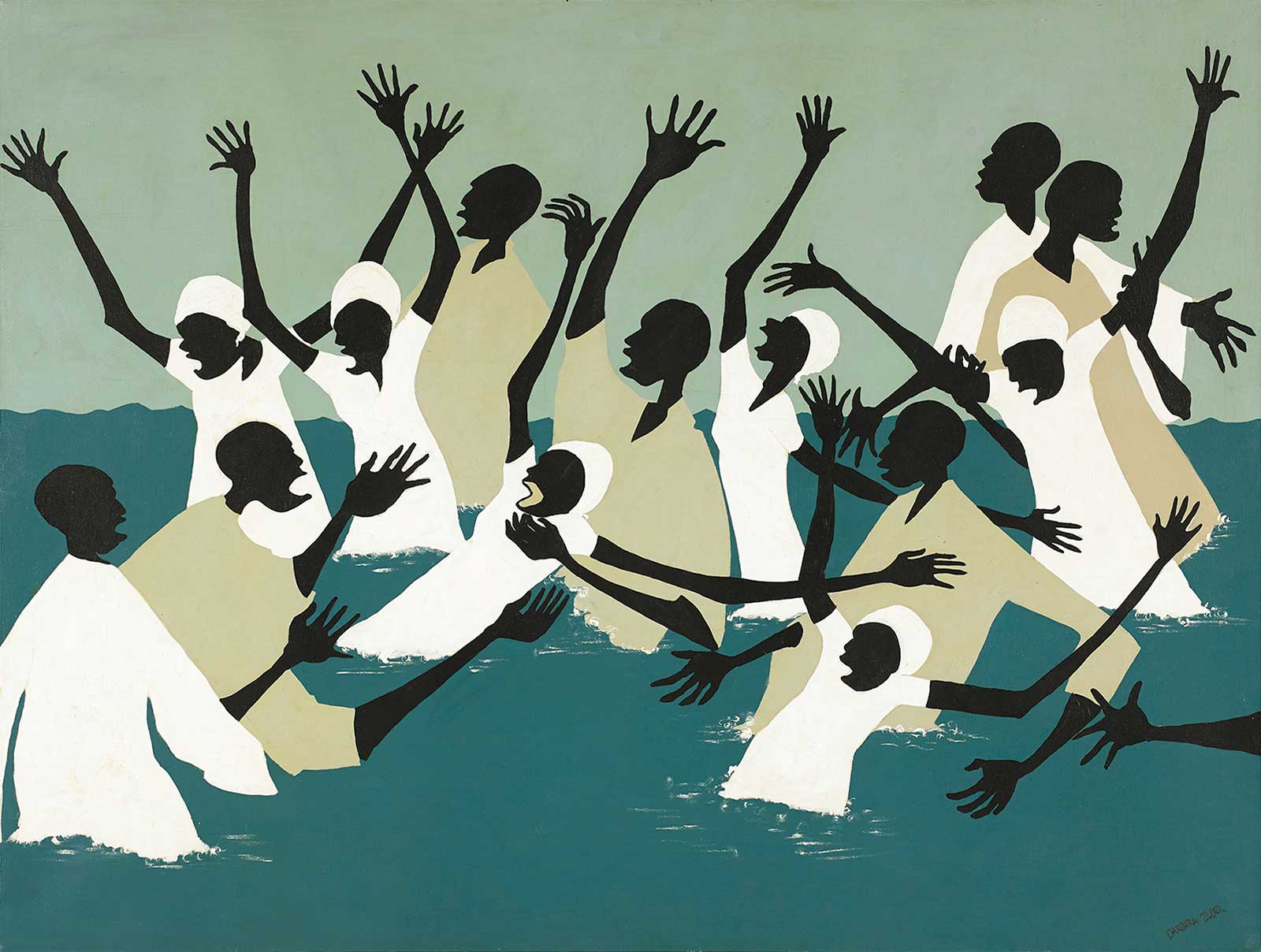
Barbara Johnson Zuber (1926-2019), Wading, 1974. Oil on cotton canvas 37 x 48 in., signed lower right. Courtesy Vincent Vallarino Fine Art.
What was your first experience with a major artist?
Georgia O’Keeffe. The first painting I ever sold was to Calvin Klein setting the O’Keeffe record. This was a very odd and groundbreaking occurrence which changed my life as a dealer.
How and why did the Abstract Expressionists, women in particular, become an area of focus for you?
Early on, back in the 1980s and 1990s, when I was dealing in 19th- and early 20th-century American paintings I realized how the women artists of the day were overlooked, and their struggle to be accepted by a mainly masculine group of male artists. This continued to be apparent when I began dealing in Abstract Expressionist artists of the 1950s with my colleague Tom McCormick in Chicago. We joined forces 20 years ago and introduced many of the women of abstract expressionism to the market.
We bought the Lynne Drexler estate of the important paintings from 1958 to 1962, much of Mary Abbott’s work before she passed, and the Vivian Springford estate.
When the Denver Art Museum’s exhibition Women of Abstract Expressionism opened in 2016, it changed everything in the mid-century women artist market taking the works to astronomical prices that are still holding.
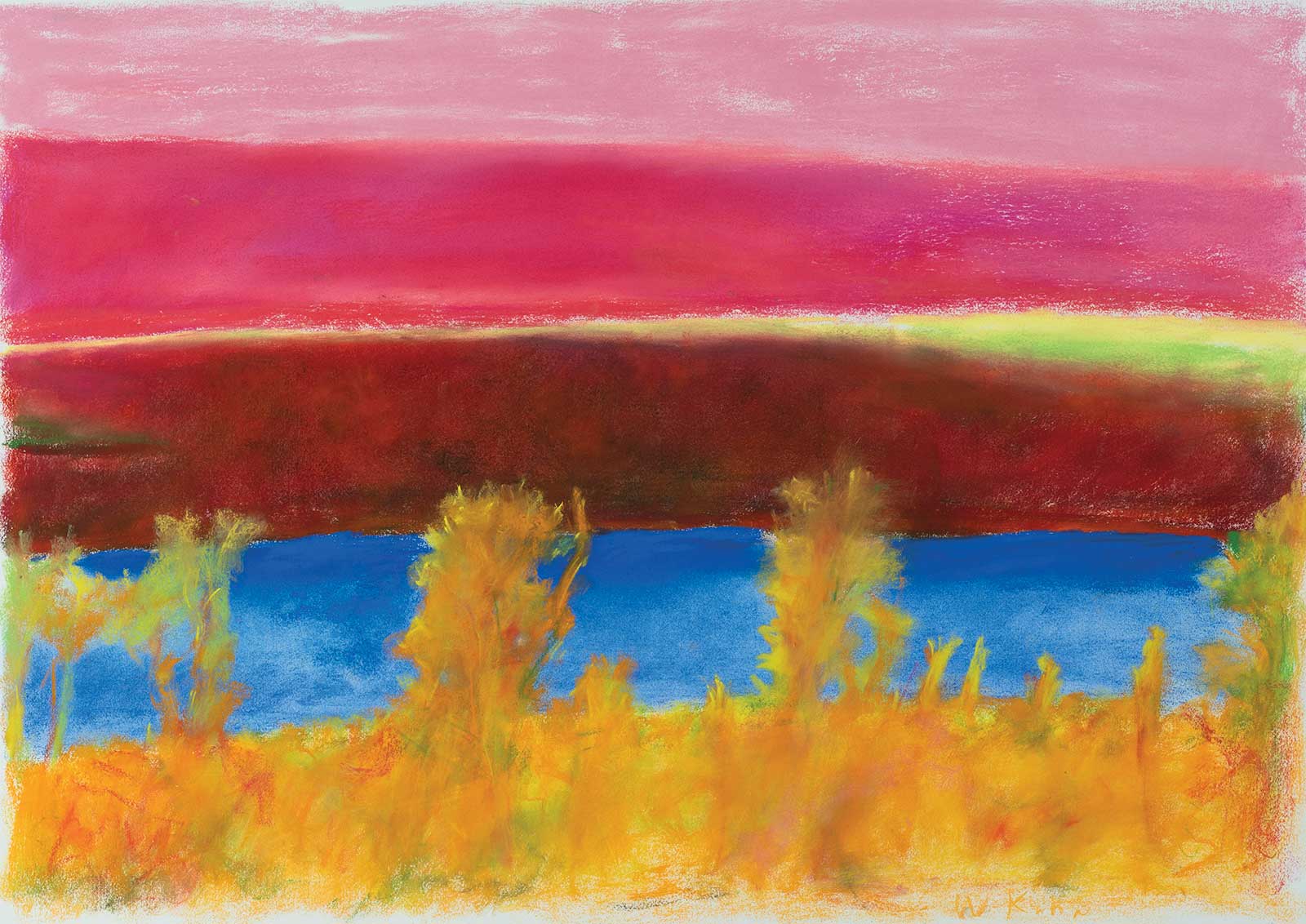
Wolf Kahn (1927-2020), Untitled (Palisades), ca. 1990s. Pastel on paper, 30 x 44 in., signed lower right. Courtesy Vincent Vallarino Fine Art.
How do you evaluate an artwork’s long-term value in a changing market?
I have been involved in all of the markets since the late 1970s with the exception of the contemporary markets. I am certainly aware of these markets but I want no part since they are totally manipulated and very faddish.
How do you navigate shifting trends in the market?
We grow every year, publishing a 230-page annual catalogue consisting of a taste of our holdings in a variety of categories. This is the ‘old world’ way of doing things but the outcome is a beautiful book that one can hold, and learn by looking at and perusing. This is something we do that other galleries have stopped doing and it goes a long way as our clients devour these catalogues and the outcome validates the undertaking and immerse expense.
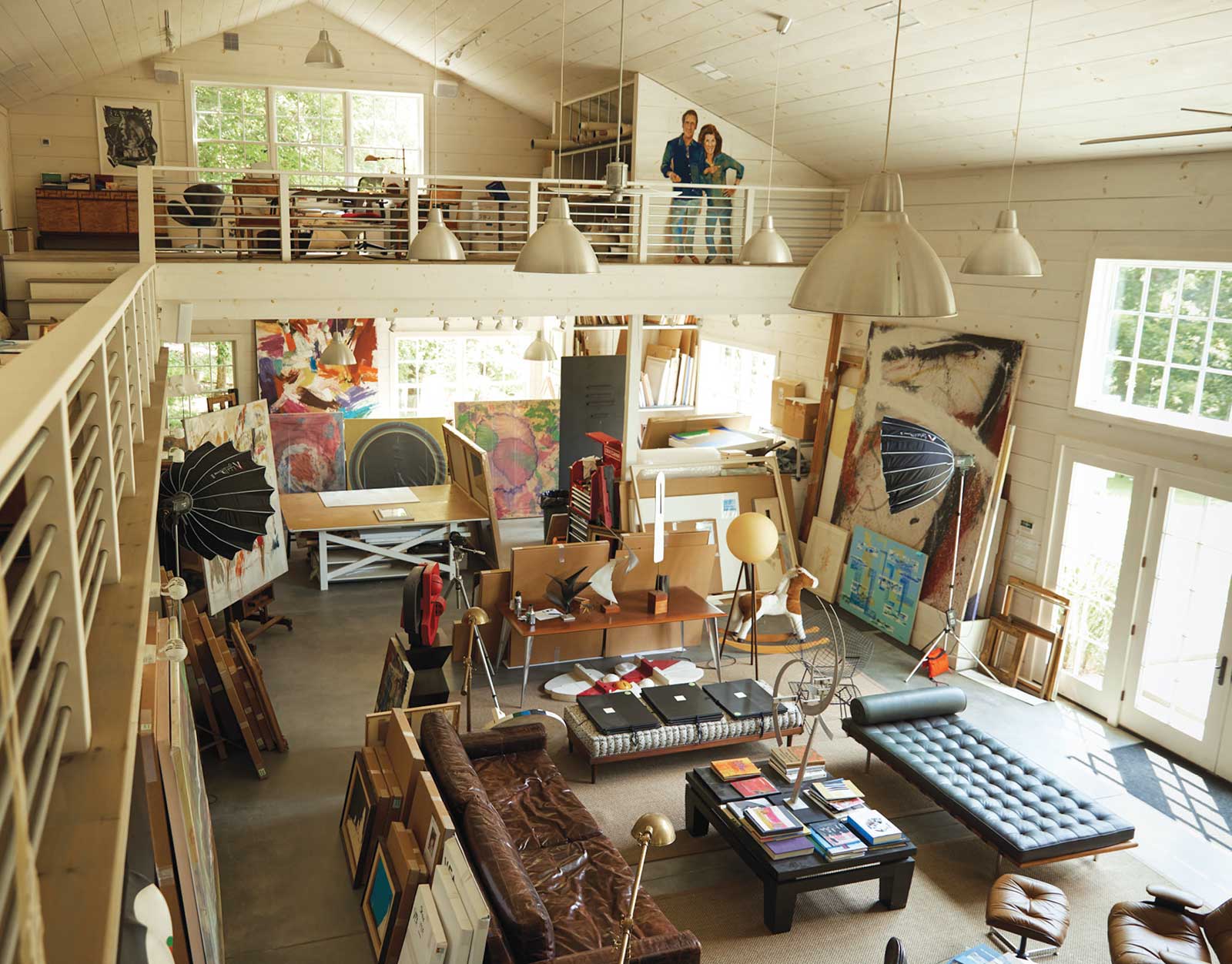
One of Vallarino’s studios, a refurbished barn, on his property in Millbrook, New York.
What trends are you seeing in the art market right now?
Things have changed continuously in the last few years. I see many galleries closing because of the economics within running a gallery. I see the cost of art fairs becoming so expensive and a gallery having a bad fair being detrimental and possibly the gallery having to close.
I have been very lucky being a collector, art dealer, artist and business man. The culmination of these four things have created a consistency in my business and my personal life where, after 50 years, I have become an expert on what not to do and credit my curiosity and intuition to take me to places I never dreamed of arriving at!
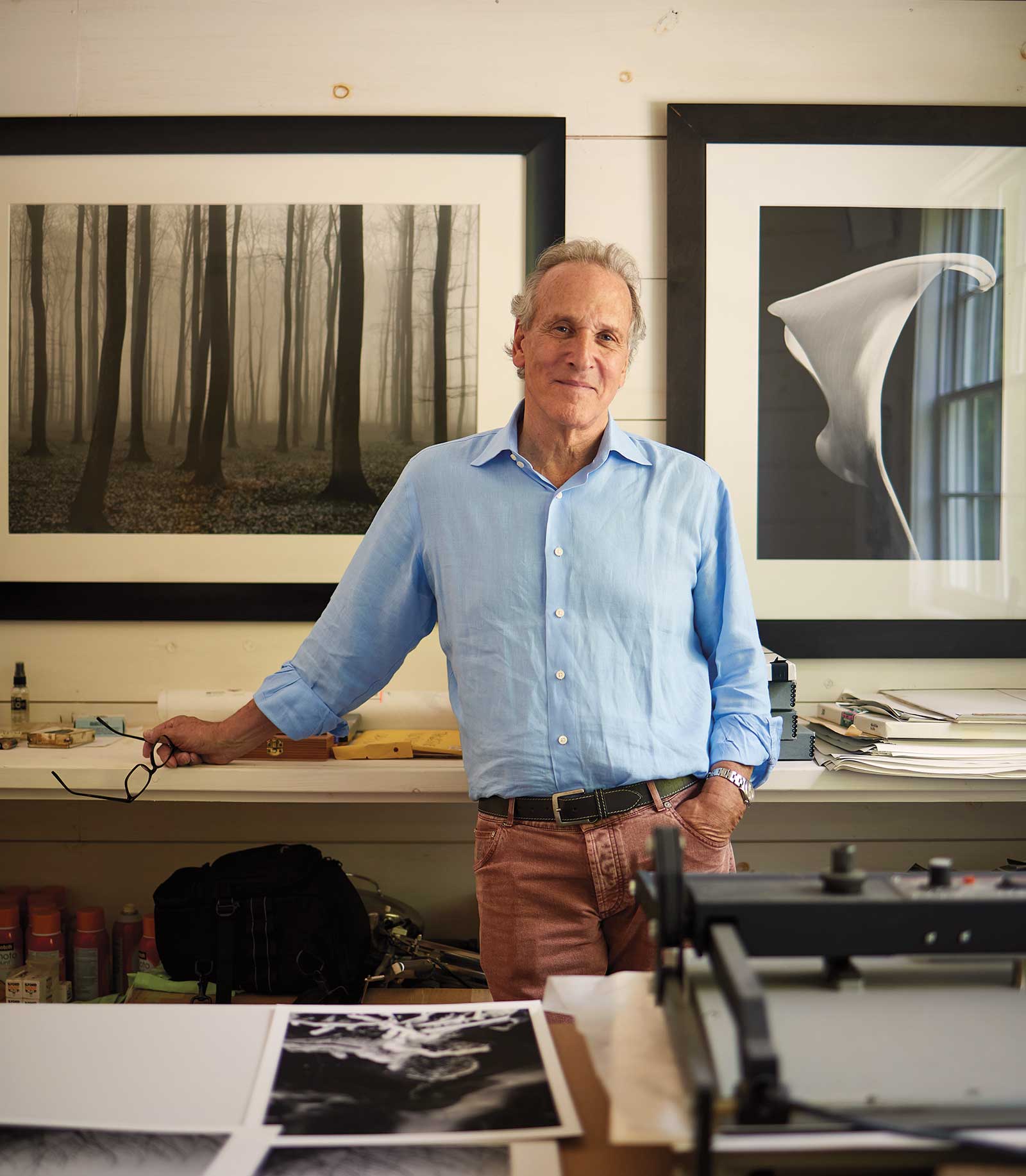
Vincent Vallarino in his studio.
Is there one piece or estate currently in your inventory that you are particularly excited about?
I recently purchased Alexander Liberman’s estate with Hollis Taggart which is incredibly exciting as Liberman was so much more than just a painter and sculptor. The other estate we recently purchased is by Walter Allner, a Bauhaus educated artist who studied under Kandinsky, Albers, Klee and Moholy-Nagy. These two artists and their personal work is so advanced because of their interactions with both Europe and then the United States, encompassing the many aspects of a total picture and them many moving parts of design and art history.
What do you love most about what you do?
I love what I do as it satisfies my curiosity and intuitive growth. Every day is a new creation waiting to evolve. I am extremely true to myself and know the importance of not fooling myself as I take what I do very seriously. I have studios all over my property allowing each a world of creativity to happen in which is something beyond my wildest dreams.
What is the best piece of advice you have ever received?
Do not lose yourself in this business as the greed involved in it will change you from who you are. The trick is to be true to yourself and grow. As they say “change is good and growth is optional.”
How do you stay passionate about art when faced with the pressures of the market?
I am experienced in life and trust myself and intuition, as I have 50 years under my belt on so many aspects of the art world and that goes a long way. —
Powered by Froala Editor