In 2013, Paula and Peter Lunder donated more than 500 works of American art to Colby College. In September of this year, the 11 galleries of the Lunder Wing of the college’s museum of art reopened with an extraordinary reinstallation of the museum’s collection.
The exhibition, titled Some American Stories, will showcase a variety of artworks, including paintings, sculpture, decorative arts and works on paper, drawn from the museum’s collection. Collectively, the new installation will span artworks created before the founding of the United States to current times, reflecting the great diversity of the American experience.
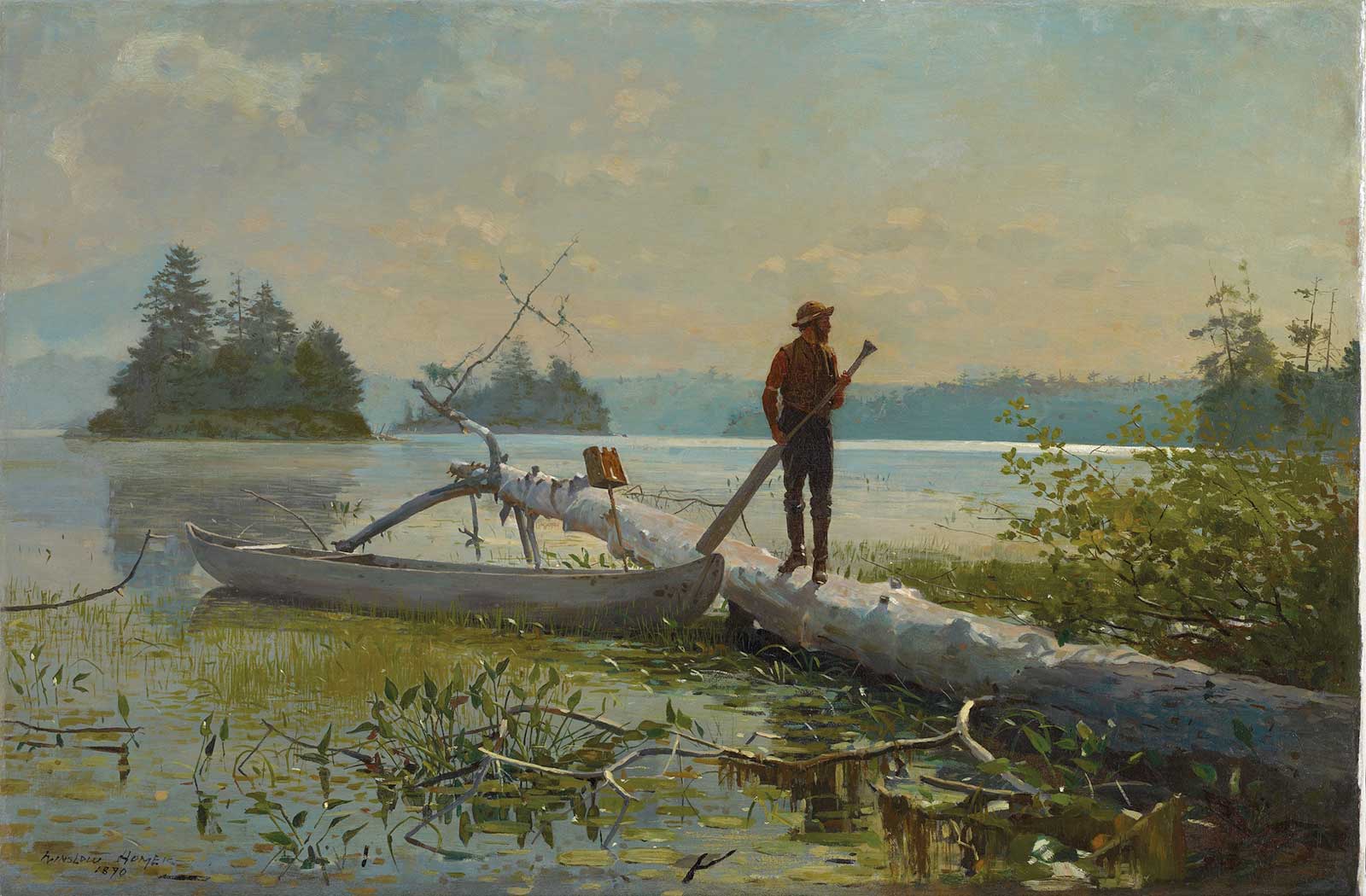
Winslow Homer (1836-1910), The Trapper, 1870. Oil on canvas, 191⁄16 x 29½ in. Gift of Mrs. Harold T. Pulsifer, 1949.002. Photo credit: Peter Siegel, Pillar Digital Imaging LLC
Each gallery contains works on a theme with an introductory wall text by members of the college’s faculty from anthropology to religious studies, integrating art into the educational experience of its students and visitors. Some American Stories is curated by Sarah Humphreville, Lunder Curator of American Art, with Augusta Weiss, Anne Lunder Leland Curatorial Fellow. Having worked with museum collections in the past, reinterpreting and discovering, I asked Humphreville about the experience of reimagining the Colby museum’s collection. She said, “Working on the reinstallation of collection galleries allows you to see objects in the museum’s holdings anew. Sometimes that means seeing an artwork for the first time in storage and having a ‘wow’ moment with it, sometimes it comes from new research, and sometimes it comes from reconsidering well-known works in new contexts, be that through the juxtaposition with other objects or examining it through a different lens than it had been previously. This aspect of our work, which reveals that there is always more to learn, is one of the most rewarding to me as a curator.”
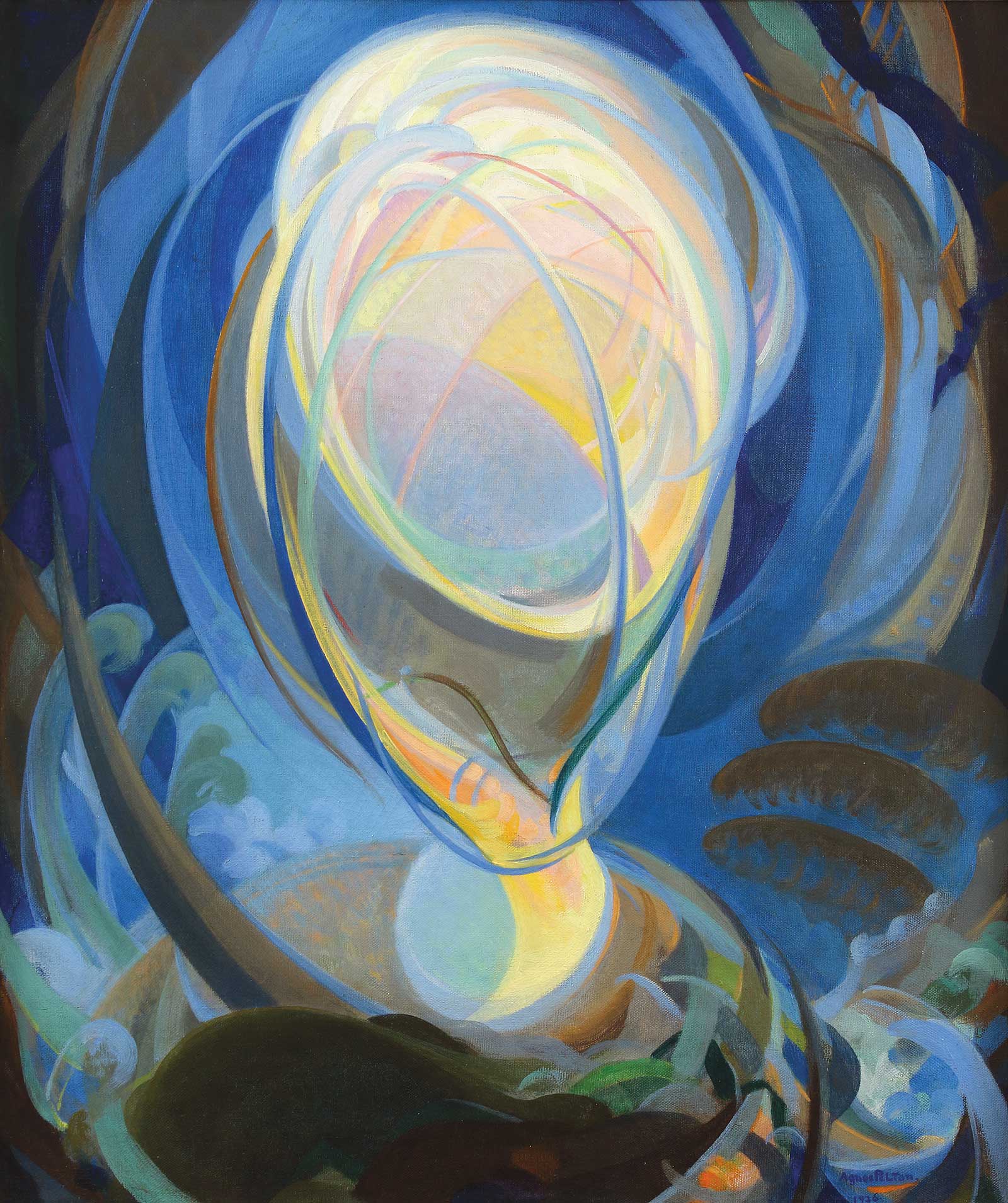
Agnes Pelton (1881-1961), Being, ca. 1923-26. Oil on canvas, 26 x 217⁄8 in. Gift of Laurie M. Tisch, museum purchase from the Jere Abbott Acquisition Fund, and gift of Peter and Paula Lunder, The Lunder Collection, 2023.061. Photo credit: Alexandre Gallery, New York.
Rotating selections from the museum’s collection of more than 7,500 prints, drawings and photographs are being shown in a gallery exhibition, Works on Paper: Drawn to Memory. Elisa Germán, Lunder Curator of Works on Paper and Whistler Studies, comments, “At a moment when America was becoming increasingly difficult to define and picture, artists frequently turned to drawing to render an unfiltered response or meditation on the world around them, exploring issues of artistry, identity, memory, geography, language and history. Here, we invite you to look closely at the drawings on view to question how these artists conceived of new approaches to the object, figure, use of text, and sense of place through drawing, one of the most versatile and intimate artistic mediums.”
Among the highlights of the reinstallation are iconic works by Frederic Edwin Church, Winslow Homer, Joshua Johnson, Augustus Saint-Gaudens, James Abbott McNeill Whistler and Edmonia Lewis.
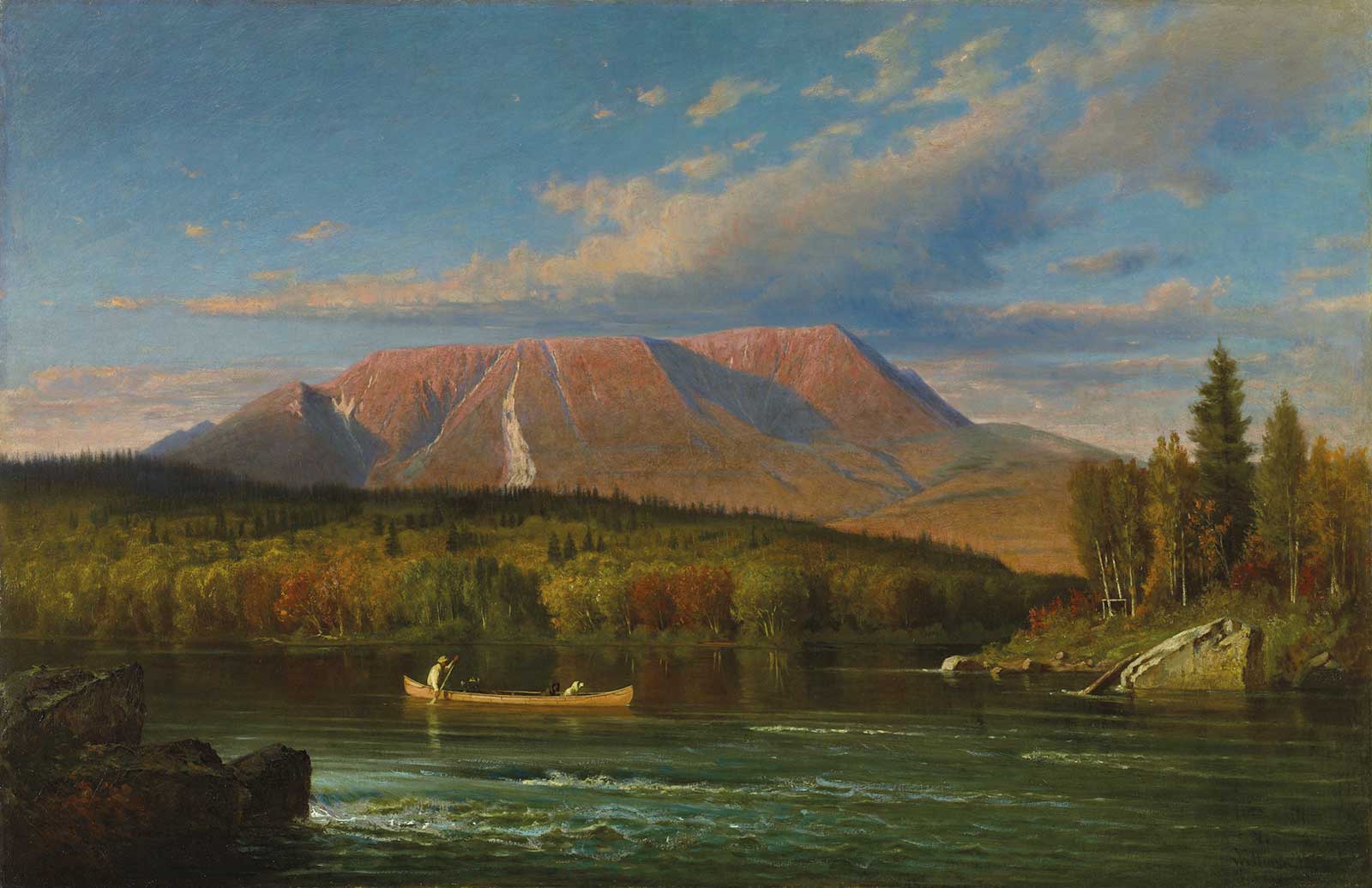
Virgil Williams (1830-1886), Mount Katahdin from the West Branch of the Penobscot, 1870. Oil on canvas, 26¼ x 40 in. The Lunder Collection, 001.2008. Photo credit: Peter Siegel, Pillar Digital Imaging LLC.
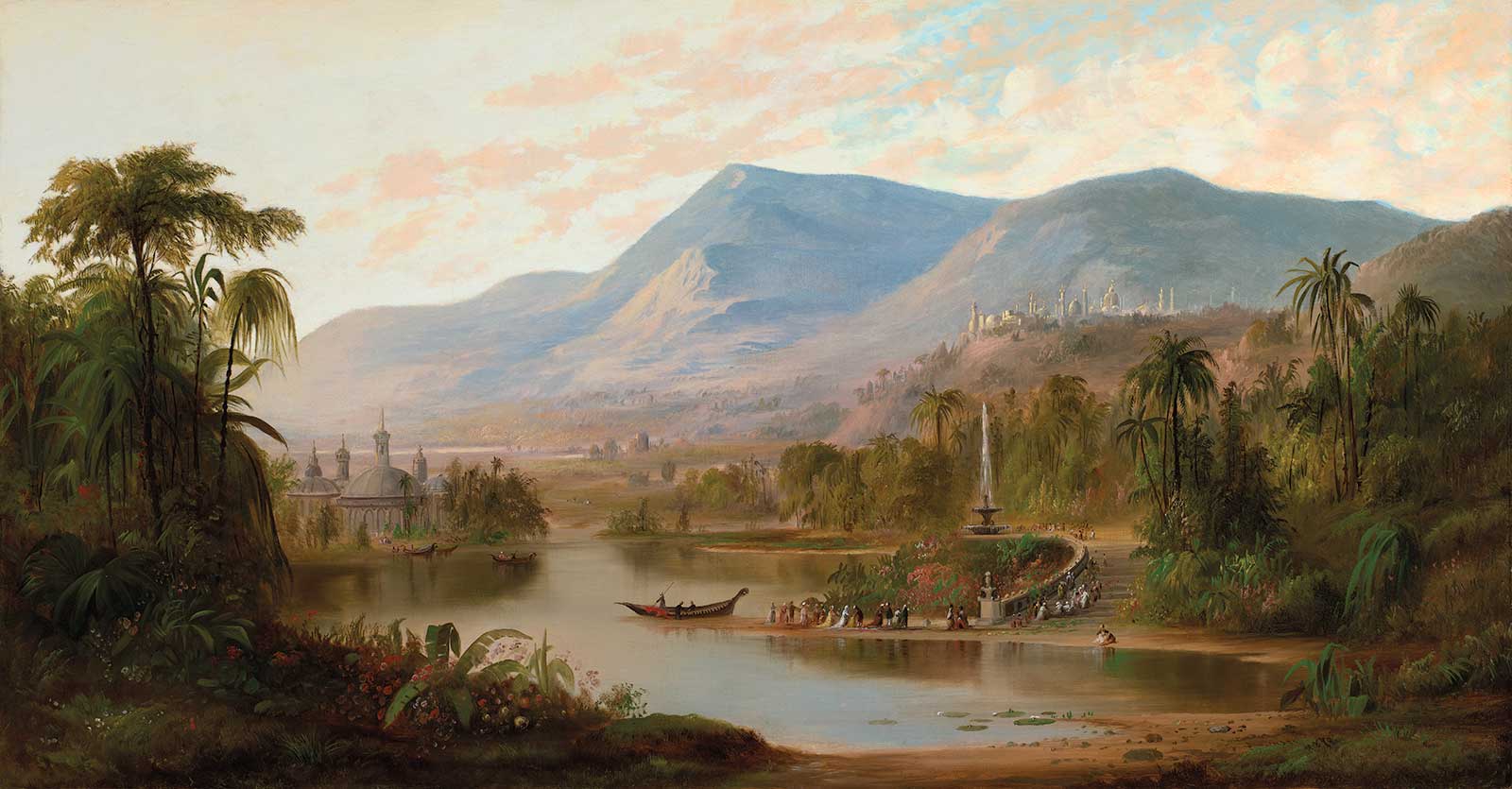
Robert S. Duncanson (1821-1872), Vale of Kashmir, 1870. Oil on canvas, 26 x 49½ in. The Lunder Collection, 2020.003. Photo credit: Luc Demers.
Among the historical paintings of Maine is Mount Katahdin from the West Branch of the Penobscot, 1870, by Virgil Williams (1830-1886), who was born in the state’s town of Dixfield. Williams became director of the San Francisco School of Design and was co-founder of the San Francisco Art Association.
Humphreville comments, “In assembling a gallery devoted to religious practices within the United States in the 19th- and early-20th centuries, it was of paramount importance to me to include objects that accounted for Indigenous practices, while also respecting the sacredness and in some cases privacy of those traditions. Including Virgil Williams’s Mount Katahdin from the West Branch of the Penobscot allowed us to show a painting that was part of larger 19th-century conversations about the natural sublime while also depicting a subject sacred to the Wabanaki. The accompanying extended label was authored by Penobscot artist and culture bearer Barry Dana (who also was Penobscot Nation Chief from 2002 to 2004); it references the spiritual significance of Katahdin while refusing to divulge the specifics of why in the context of the brutal history of colonialism.”
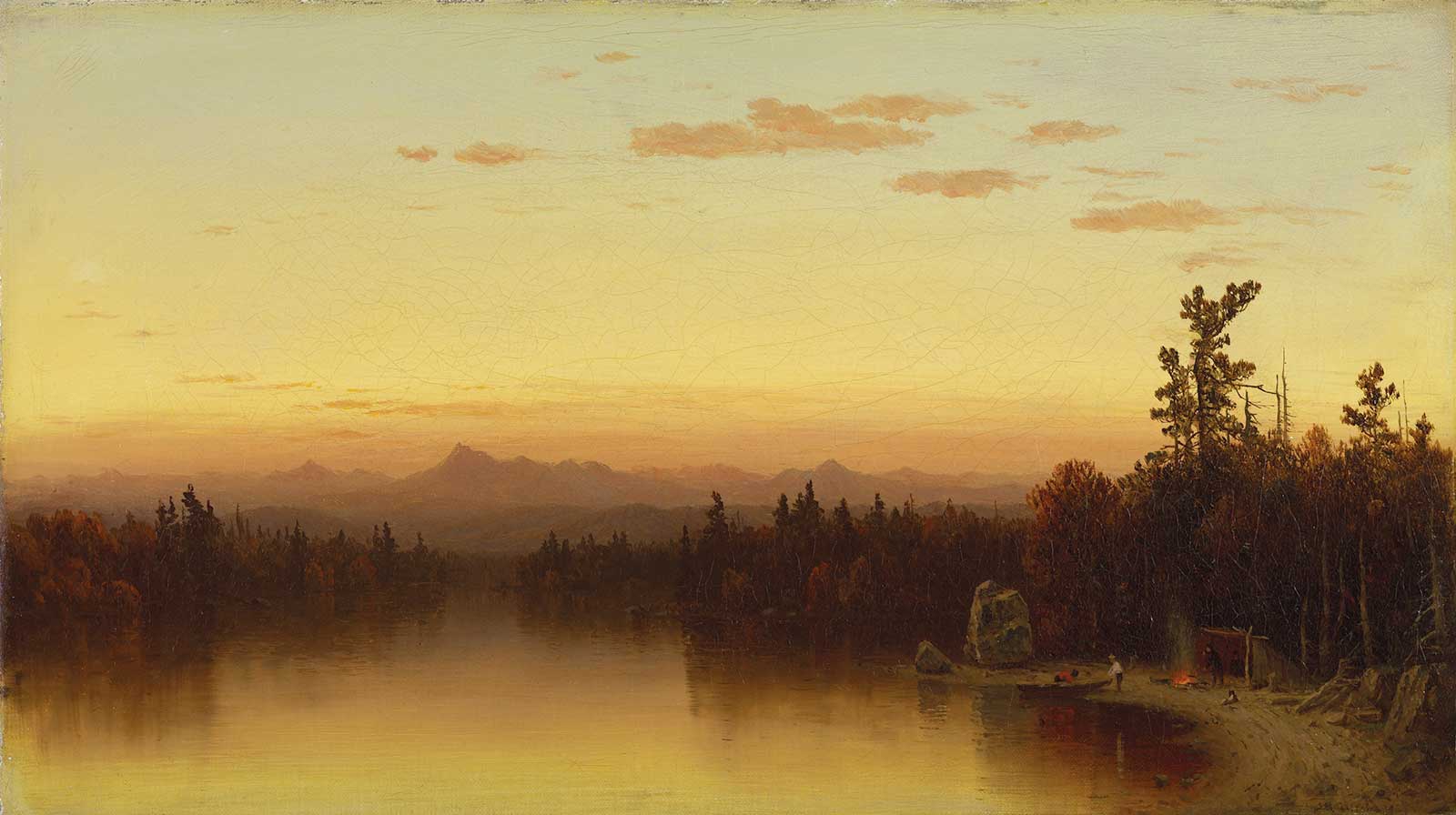
Sanford Robinson Gifford (1823-1880), A Twilight in the Adirondacks, 1864. Oil on canvas, 101/2 x 181/2 in. The Lunder Collection, 2013.130P. Photo credit: Peter Siegel, Pillar Digital Imaging LLC.
Also in the Religion and Spirituality gallery is Being, circa 1923-26, by the visionary symbolist Agnes Pelton (1881-1961). She was a founding member of the Transcendental Painting Group, a collection of artists focusing on spiritual works.
Known for her brown ash and sweetgrass woven baskets, Sarah Sockbeson (Penobscot) says, “In order for the tradition to survive, it must evolve. I see it as vitally important to acknowledge the traditions of the past and to honor my ancestors that have practiced the art of basketry long before I was alive.” Her Untitled Basket, 2023, in the Maine gallery, is woven of aluminum house siding, found vinyl, enamel spray paint, found plastic and faux leather.
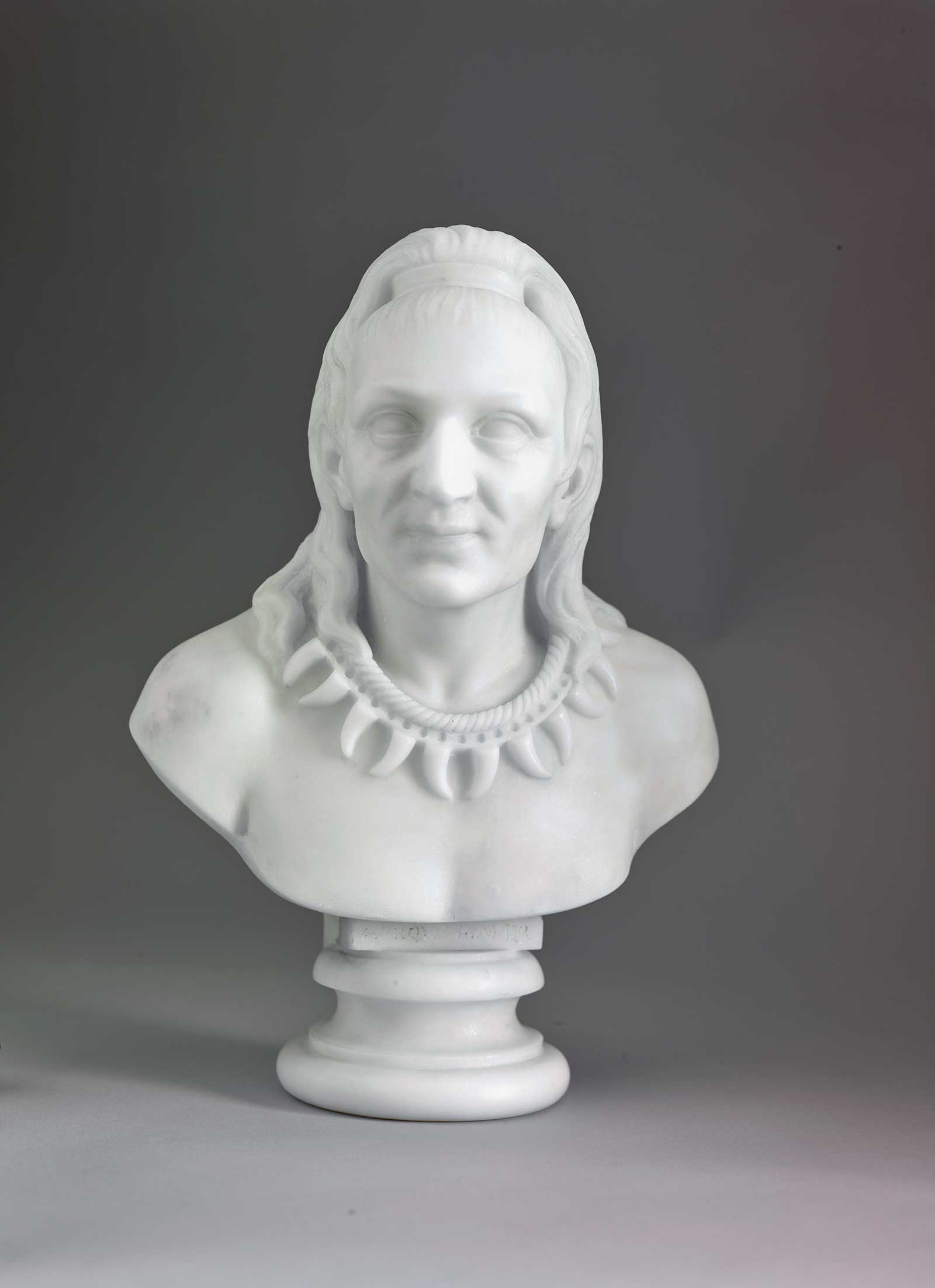
Edmonia Lewis (1844-1907), Arrow Maker, ca. 1868. Marble, 11½ x 8½ x 6½ in. Gift of Jane, Richard, and David Moss in honor of Doris Rose Hopengarten ’40, Fred Hopengarten ’67, Annie Hopengarten Mooreville ’06, Phyllis Rose Baskin ’39, and Michael Baskin ’70, 2023.014. Photo credit: Luc Demers.
In her introductory label for the gallery, Winifred Tate, professor of anthropology at Colby, writes, “What we now call Maine has long been a source of creative inspiration. Certain works in this gallery are by Wabanaki artists who are members of tribal nations—the Maliseet, Mi’kmaq, Passamaquoddy and Penobscot—who have lived here for time immemorial. Since Maine’s creation as a state in 1820, people have come to this place ‘from away,’ seeking out sublime views, transcendent light, wild forests, mountains, and coastlines as an antidote to urbanization and industrialization. Art focuses our gaze, The works on view here invite us to think about not only how we see nature, but also how we make and transform it.” —
Powered by Froala Editor