For illustrators and commercial artists in the first half of the 20th century, photography was an essential tool. It was no different for the iconic artist and illustrator Norman Rockwell (1894-1978), who went to great lengths to create scenes, captured by a camera, that portrayed his concepts fully realized. For Norman Rockwell: From Camera to Canvas, presented by the New Britian Museum of American Art and organized by the Norman Rockwell Museum, curators Lisa Hayes Williams and Stephanie Haboush Plunkett, bring together more than 130 works of original paintings, drawings and studies alongside Rockwell’s photographic references.
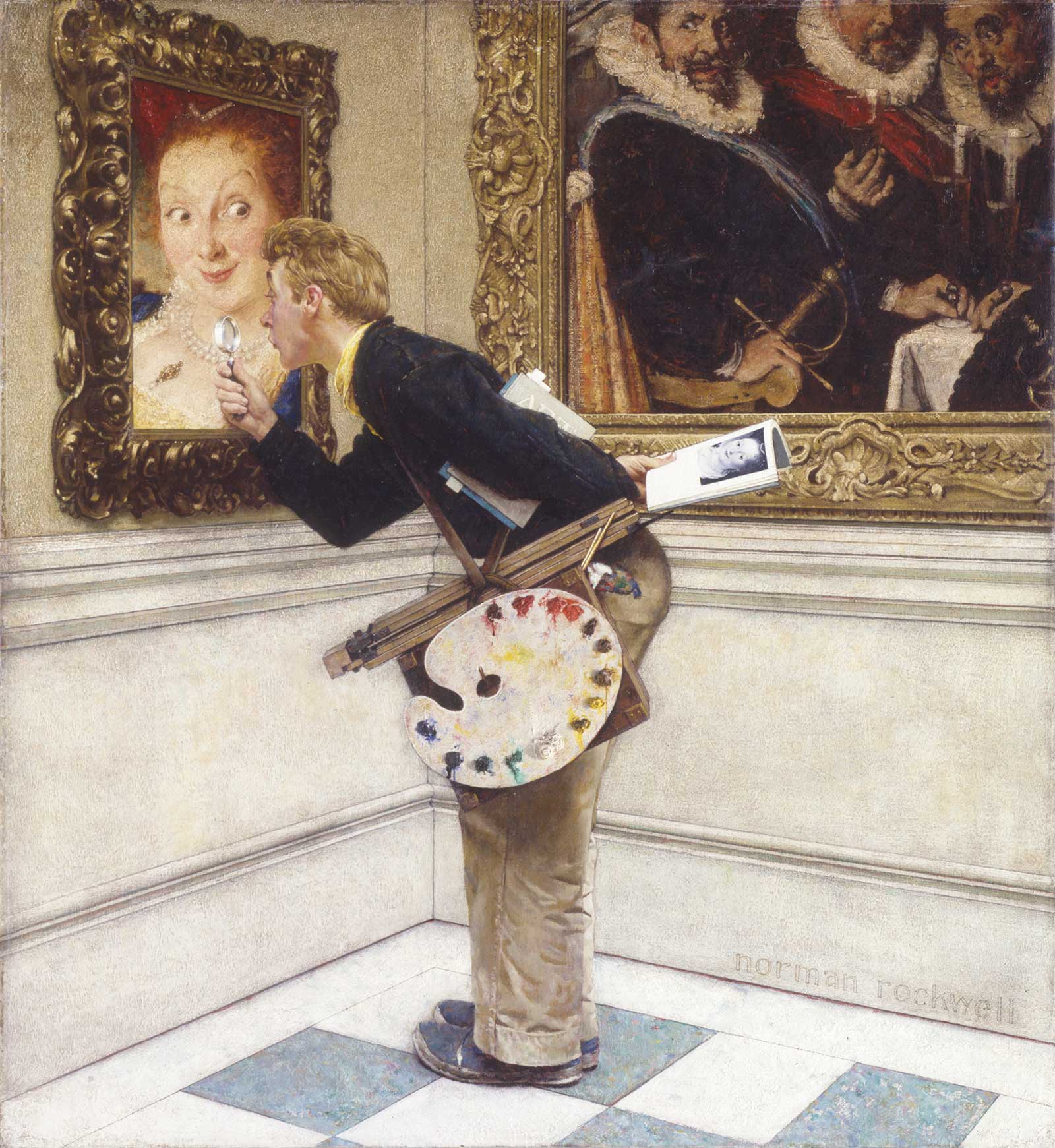
Norman Rockwell (1894-1978), Art Critic, 1955. Cover illustration for The Saturday Evening Post, April 16, 1955. Norman Rockwell Museum Collection. Illustration ©1955 SEPS: Curtis Licensing, Indianapolis, IN. All rights reserved.
“For more than 40 years, photographs were the building blocks of Norman Rockwell’s art,” Plunkett explains. “Following his preliminary sketches, they were the first depictions of his ideas. In this crucial stage between inspiration and canvas, Rockwell choreographed the elements of character, expression, setting and detail, creating photographic images that became the templates for his paintings.”
Rockwell’s process involved scouting models and locations, researching costumes and props, and carefully orchestrating each element of his design to be photographed before putting paint to canvas. “Staging his scenarios for the camera, the artist instructed his photographers when and what to shoot as he directed a cast of amateur actors,” says Plunkett. “Rockwell produced a wealth of photographs for every new composition, which he then transferred, in whole or in part, to his final work. The gifts for narrative and character that define Norman Rockwell’s illustration likewise distinguish his photographs.”
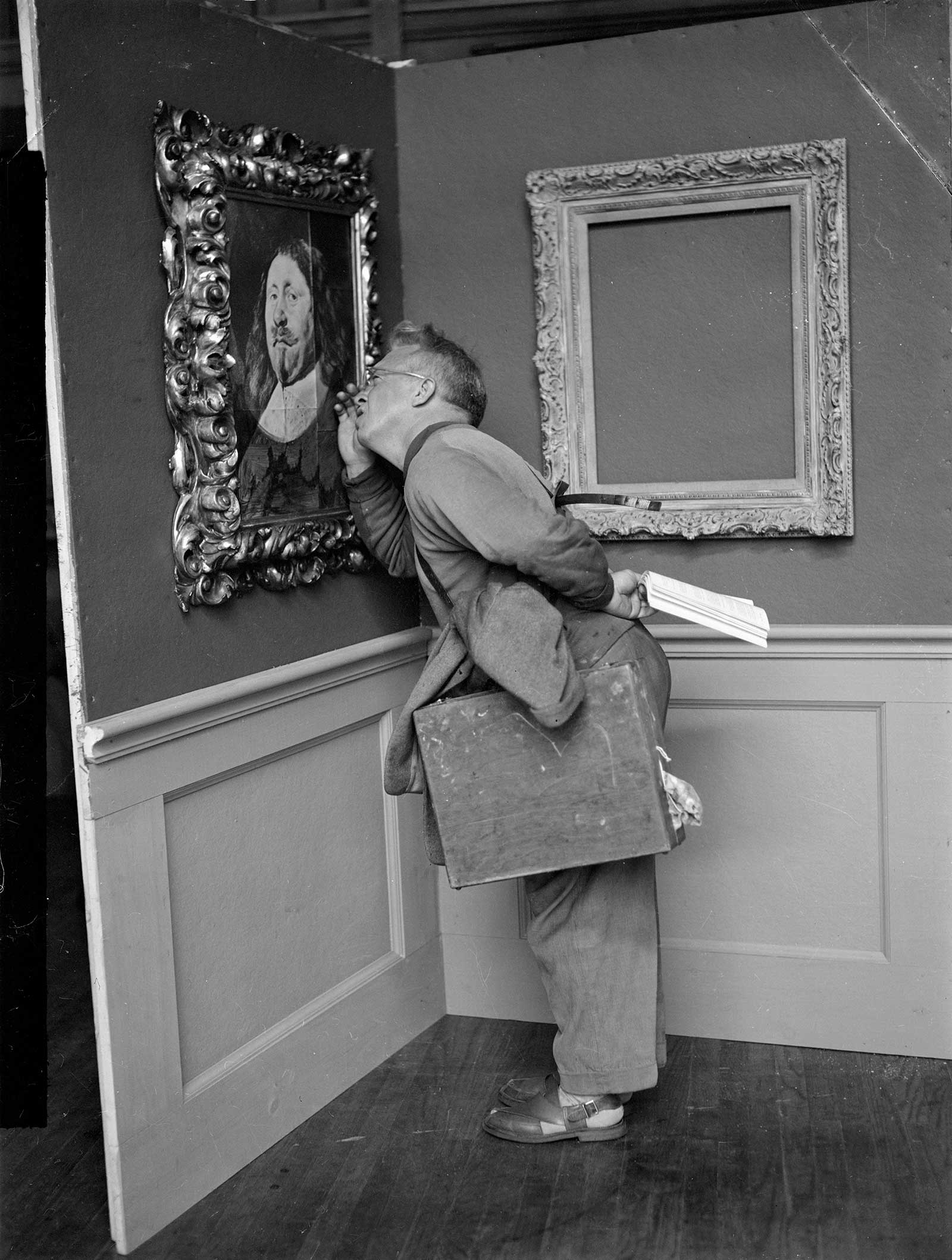
Gene Pelham, Reference Photograph for Art Critic, 1955. Cover illustration for The Saturday Evening Post, April 16, 1955. Norman Rockwell Museum Collection, Norman Rockwell Art Collection Trust, ST.1976.3365. Licensed by Norman Rockwell Family Agency. All rights reserved.
Rockwell worked with many photographers over the years, but three are responsible for the majority of his photographs—Gene Pelham, Bill Scovill and Louie Lamone. Pelham and Lamone were also called upon to model for Rockwell’s illustrations.
The exhibition is organized by theme, as related to Rockwell’s process of conceiving, creating and utilizing his reference photographs. This includes the thematic sections: An Artist or Photographer?, A Newfound Freedom, Norman Rockwell’s Photographers, Human Looking Humans, Illustrations and Features, The American Homefront: World War II, The Artist as Director and Advertisements and Commercial Commissions.
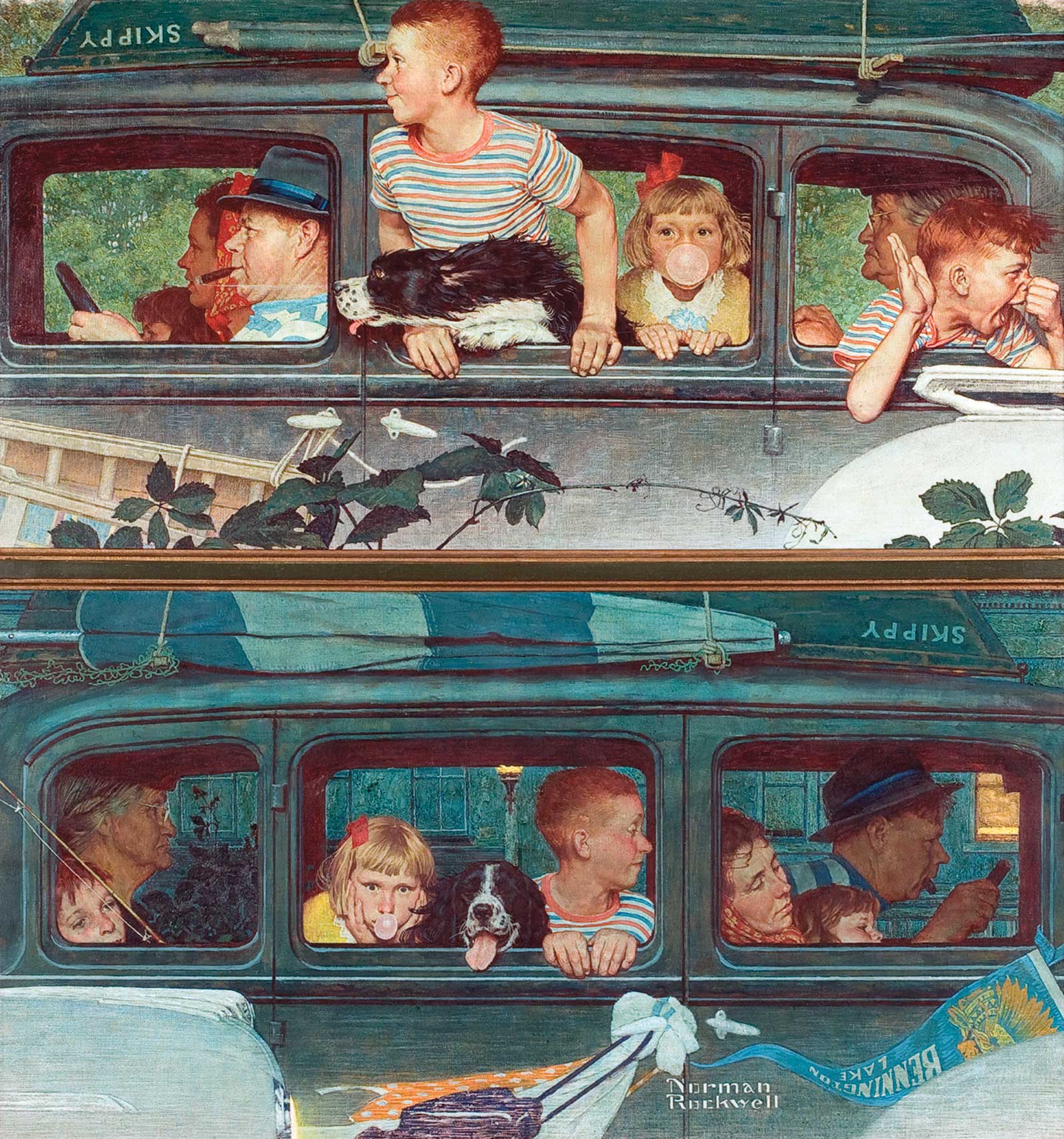
Norman Rockwell (1894-1978), Going and Coming, 1947. Cover illustration for The Saturday Evening Post, August 30, 1947. Norman Rockwell Museum Collection, Norman Rockwell Art Collection Trust. Illustration ©1947 SEPS: Curtis Licensing, Indianapolis, IN. All rights reserved.
A major highlight in the exhibition is the piece Art Critic, a cover illustration for The Saturday Evening Post, April 16, 1955, which reveals Rockwell’s process in the greatest detail through thumbnail sketch, large scale charcoal drawing, original painting and photographs.
“Rockwell’s drawings reveal careful consideration of small details that were later added and brought to life with color, shading and the texture of paint,” Plunkett says. “In Art Critic, Rockwell was far from beginning his final painting when he completed this drawing—he spent more time on this piece than on any other cover. The face of the woman in the portrait changed no fewer than 17 times. For each change, Rockwell painted a separate oil-on-acetate sketch, which he could then place for consideration within the portrait’s frame. At some point, this Frans Hals-style portrait turned into a Peter Paul Rubens, and Rockwell replaced the 17th-century landscape with a group of animated Dutch cavaliers who invite participation in Rockwell’s invented reality.”
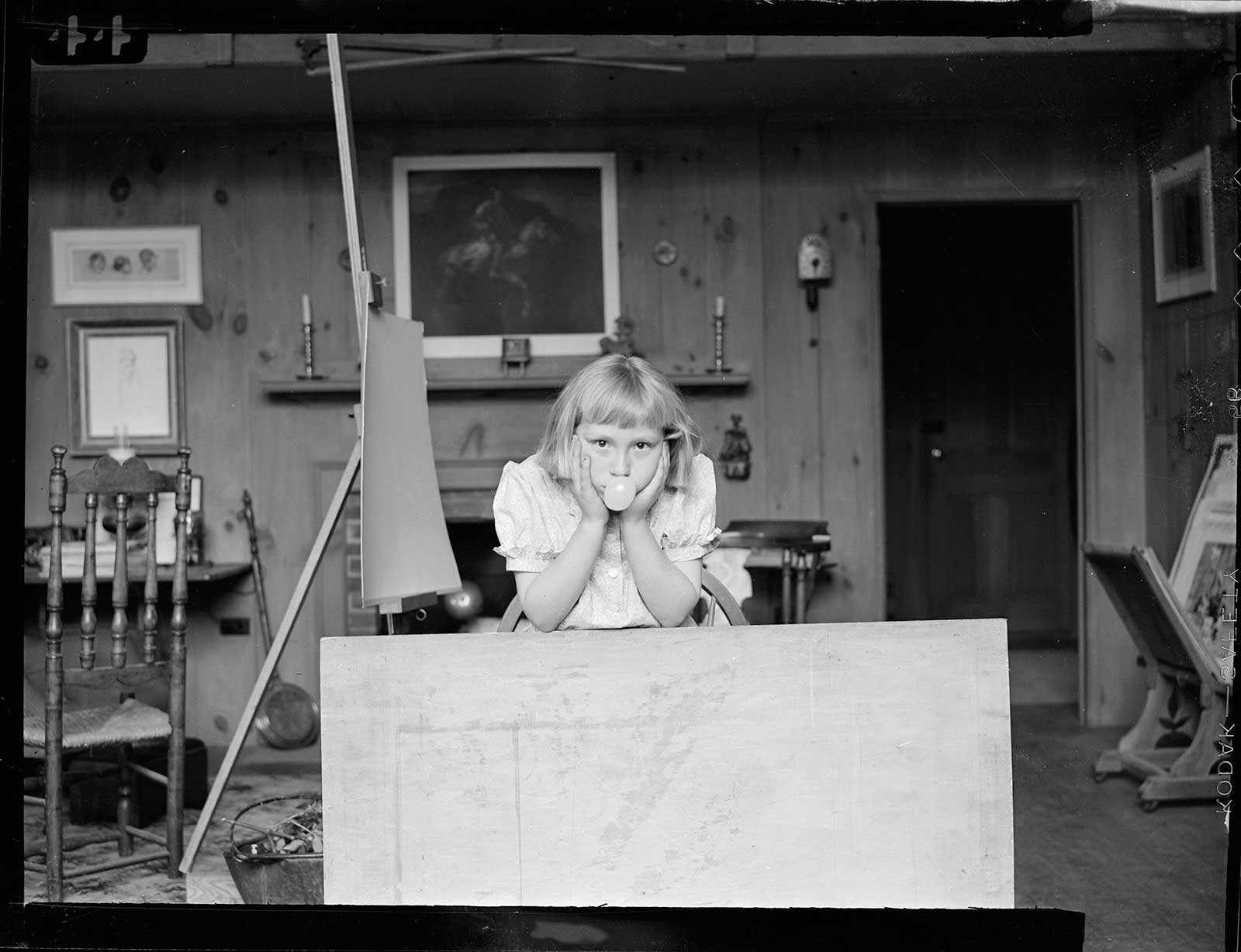
Gene Pelham, [One] Photograph for Going and Coming, 1947, Cover illustration for The Saturday Evening Post, August 30, 1947, Norman Rockwell Museum Collection, Norman Rockwell Art Collection Trust, ST1976_2992 © Norman Rockwell Family Agency.
Art Critic is one the artist’s most popular and extensively analyzed works. Rockwell’s photographer Bill Scovill, believed that it “gave him the most trouble and…agony of any. He had a terrible time finishing it.” At least 13 different studies preceded the finished painting. Plunkett notes that the modestly risqué nature of the composition itself might account for the artist’s struggles, or it may have been the delicacy of the fact that Rockwell’s final models were his wife, Mary Barstow Rockwell (photographed in at least two sessions) and their oldest son Jarvis.”
To view the exhibition in its entirety, visit the New Britian Museum of American Art in New Britain, Connecticut, through February 15, 2026. —
Powered by Froala Editor