Now open at the Norman Rockwell Museum in Stockbridge, Massachusetts, is Jazz Age Illustration, a new exhibition devoted to a unique period of American illustration. More than 120 original artworks from some of the biggest artists of the era will be on view.
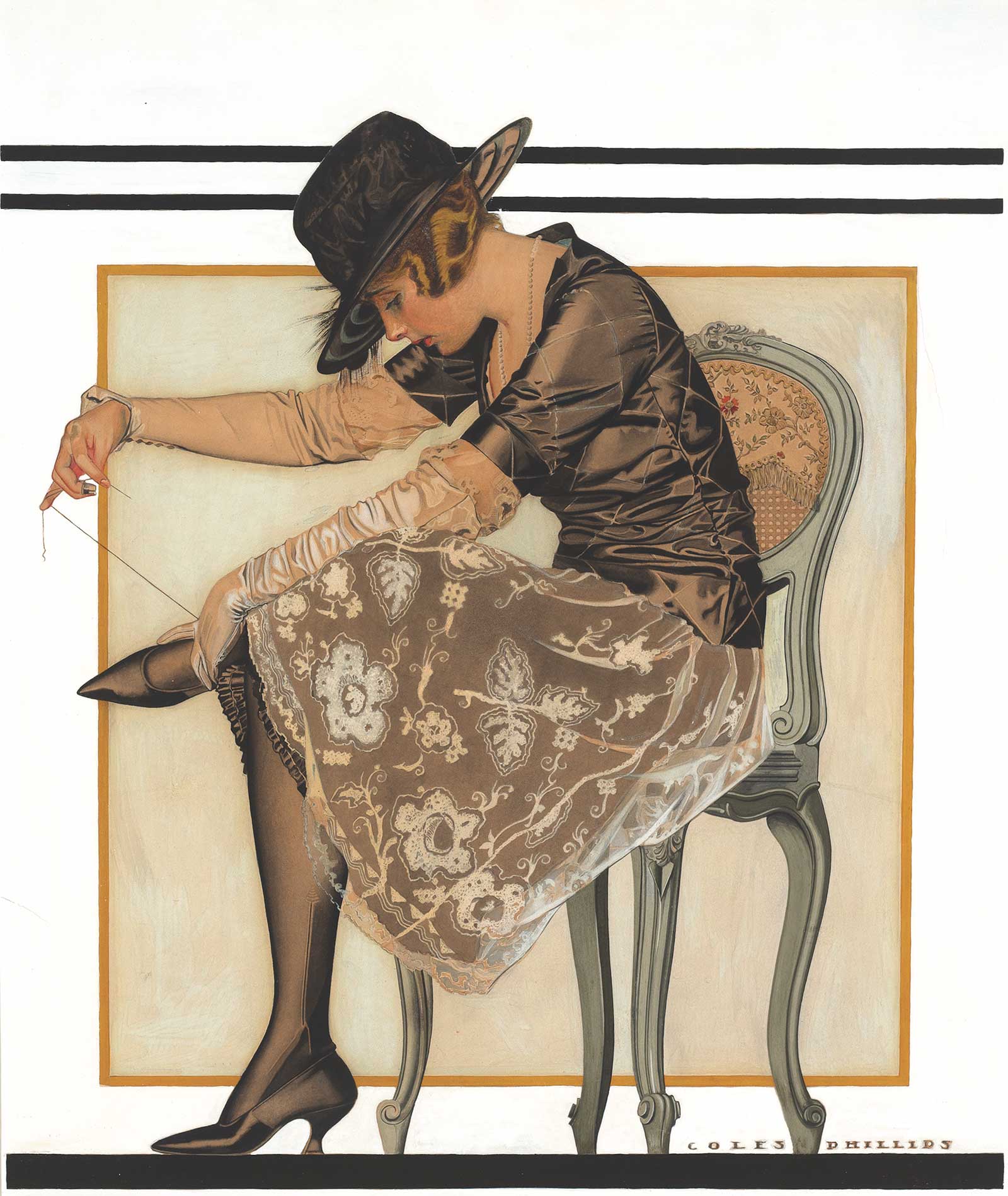
C. Cole Phillips (1880-1927), Cover for The Saturday Evening Post, October 2, 1920. Watercolor, gouache and graphite on illustration board. Delaware Art Museum, Acquisition Fund, 1988.
“We are thrilled to bring this culturally significant and vibrant exhibition to the museum,” says chief curator Stephanie Haboush Plunkett. “Jazz Age Illustration reveals the breadth of American illustration during one of the most exciting and critical eras in our history. From elegant fashion illustration and spirited Art Deco compositions to powerful portrayals of social progress, the works on view offer a dynamic window into American identity, creativity, and aspiration during the interwar years.”
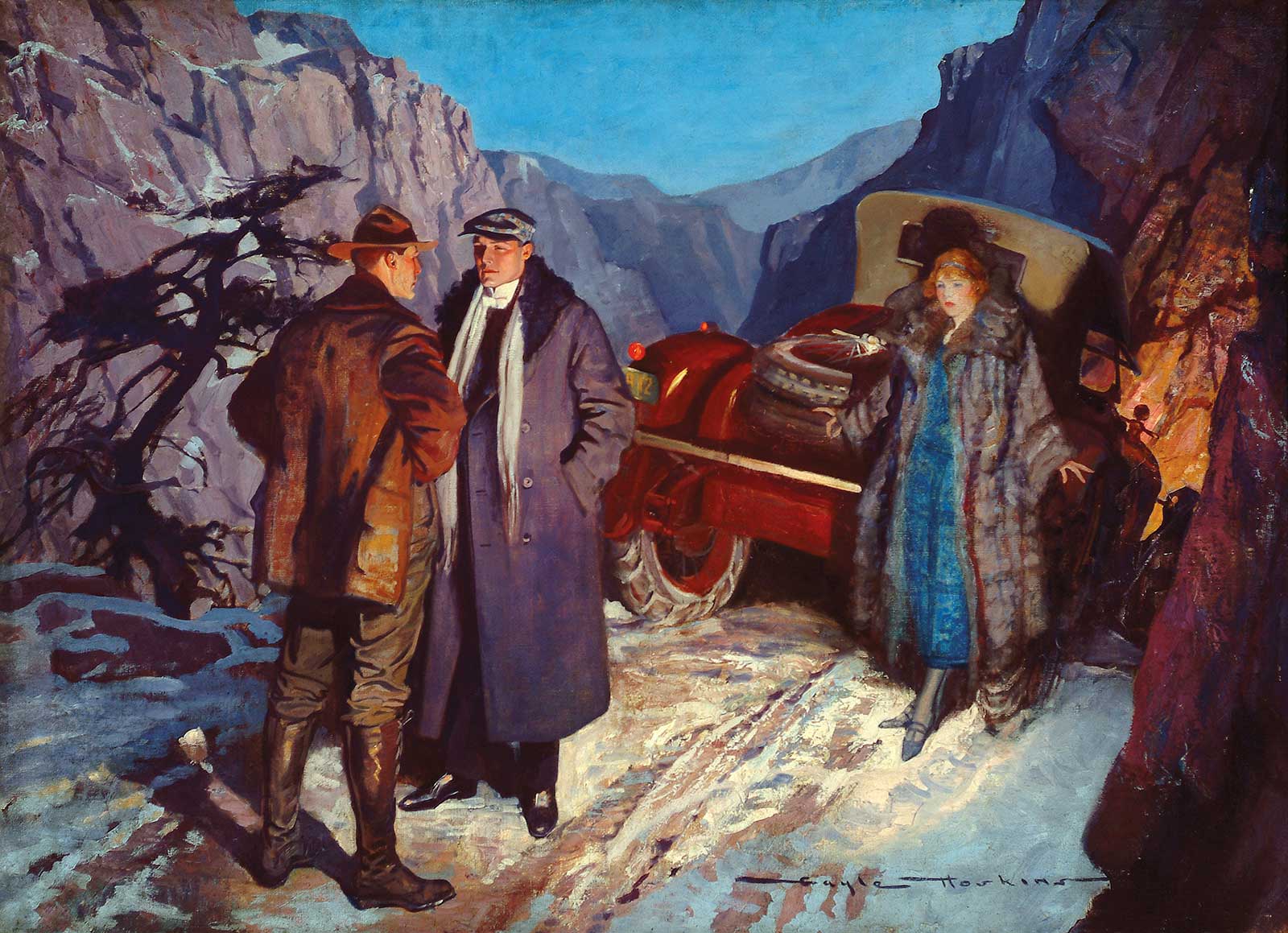
Gayle Porter Hoskins (1887-1962), You can’t leave her here to suffer. Whether you want to or not, you’ll have to do it. For “Roads of Doubt,” by William MacLeon Raine, Woman’s Home Companion, February 1925. Oil on canvas. Delaware Art Museum, Gayle and Alene Hoskins Endowment Fund, 1979.
The exhibition borrows heavily from the renowned illustration holdings of the Delaware Art Museum, which organized the exhibition. Other key material was loaned from private collectors, libraries and museums around the country. The artists themselves are well known—including Norman Rockwell, Beatrice Anderson, Aaron Douglas, Erté, Loïs Mailou Jones, Russell Patterson, N.C. Wyeth and others—but so are the authors, such as Herman Melville and F. Scott Fitzgerald. The works were seen in publications such as Vogue, Vanity Fair, the Saturday Evening Post and others.
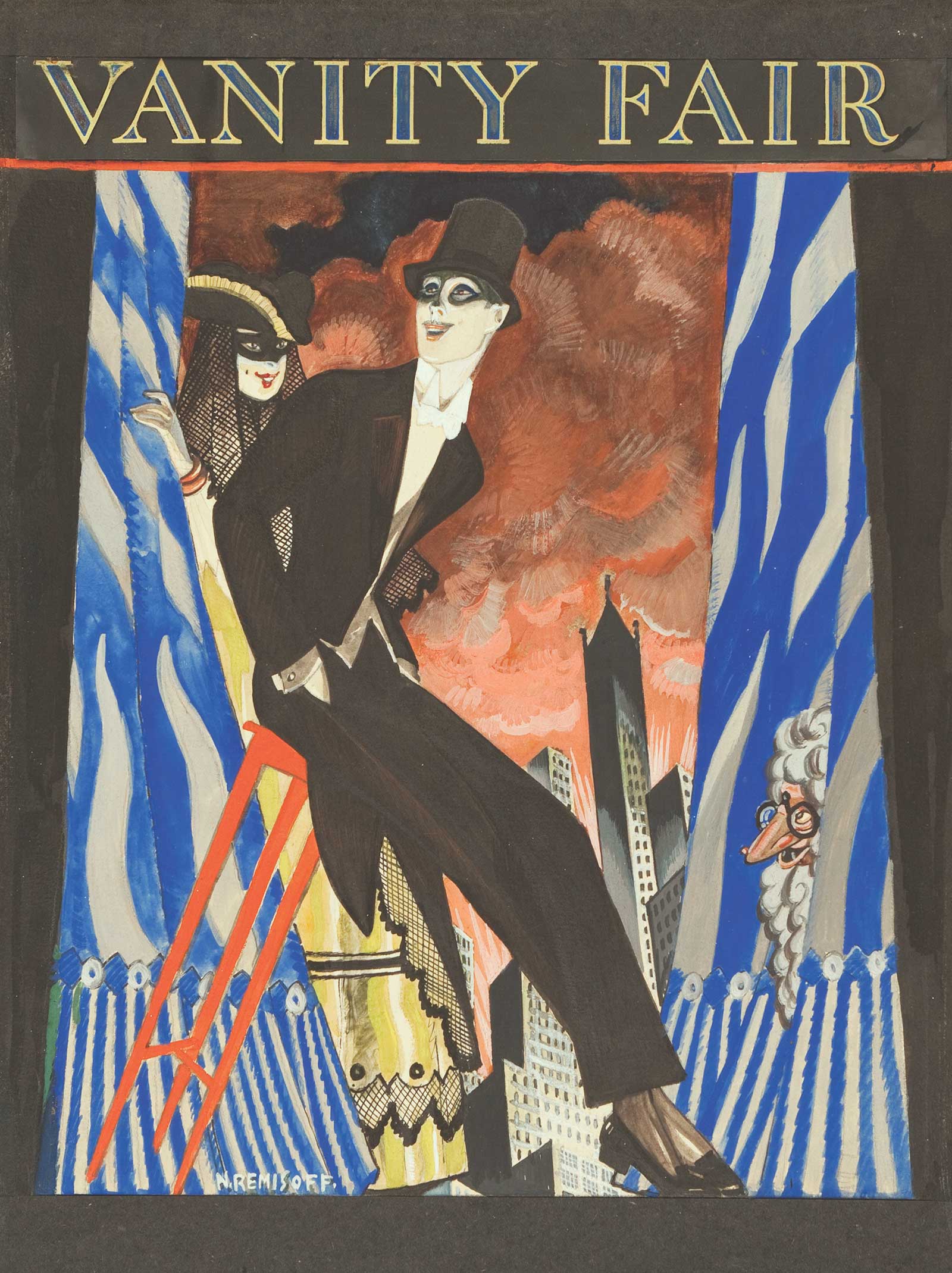
Nicholas Remisoff (1887-1975), Cover for Vanity Fair, March 1923. Gouache and black paper on illustration board. Delaware Art Museum, Acquisition Fund, 1991.
“…Jazz Age Illustration captures the sights, sounds and spirit of a nation in transition,” the museum notes. “The exhibition explores a wide range of themes—from the glamour of flappers and jazz musicians to the rise of cinematic stardom and the vibrant cultural flowering of the Harlem Renaissance. It highlights how illustration both reflected and influenced the evolving identity of modern American life between the two World Wars, including the emergence of publications created for and by Black audiences during this dynamic era.”
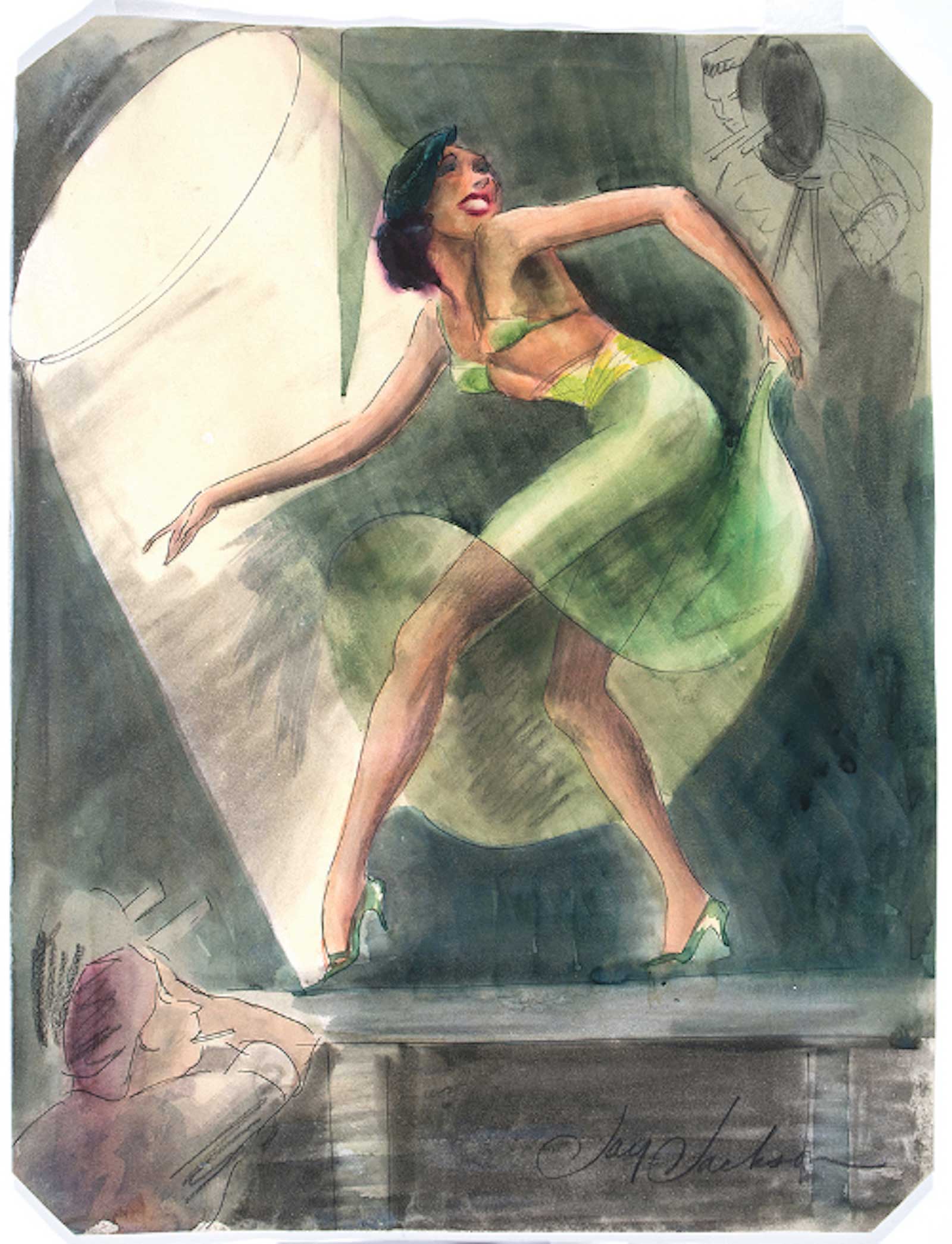
Jay Jackson (1905-1954), Etta Moten Barnett Dancing, 1940. Illustration for American Negro Exposition, 1940. Watercolor, ink and charcoal on paper. Delaware Art Museum, Acquisition Fund, 2022. © Estate of Jay Paul Jackson.
The exhibition is arranged thematically, and includes audio and visual material to help set the mood of the era. Additionally, an exhibition catalog is available with essays by Heather Campbell Coyle, Chris Dingwall, Colette Gaiter and Victoria Rose Pass.
Jazz Age Illustration will remain on view through April 6. —
Powered by Froala Editor